Historical issues affecting the church

Dancing in the Kingdom- Table of Contents

Dancing In the Kingdom – Part 2 – The Kingdom Revealed – Chapter 13 – Distinctives within the body of Christ

Historical issues affecting the church

[Bible references: Matthew 5:14-16; 13; 24; 26:6-13; John 15; 17; Romans 12;  1 Corinthians 1:26-31; 3-7; Ephesians 6:10-20; Colossians 2; 1 John 4]

Overcurrents – Historical issues outside the church that impact the development of the church.

The development of the church doesn’t happen in a vacuum, it happens in the midst of governments rising and falling, conflicts within and between nations, in the culture of the people around the church influencing the culture within the church, in the plagues and catastrophes and other events that happen to society. Within those events, sometimes it’s the world that impacts the church and sometimes it is the church that impacts the culture around it.

The church initially developed during the time of Pax Romana in which a stable empire and its infrastructure enabled the missionary efforts of the apostles and others. That same empire was also responsible for various persecutions of the church. However, the response of the church to those persecutions sometimes profoundly impacted not only by those who became witnesses of God’s glory displayed by the courage of the martyrs, but also the courage of those who risked their own health and well-being to give aid to the helpless and sick.

Those persecutions unfortunately created tension within the church as it had to deal with those who succumbed to the pressure of the persecution and denied Christ (a problem that would occur in future persecutions in other places and times). Some persecutions almost totally eradicated Christian populations. This happened with the Church of the East which almost entirely disappeared in the 14th century. This happened even though the church, which was established in Persia in AD 410, grew to be the largest denomination in the world and whose influence extended to the east coast of China.

In the age of our hyper-individualism, it seems strange for us to imagine that it has been common throughout history for communities to identify themselves with a single religious identity. In the time of the early church, Christianity did not conform to the Roman religion which was cause for the persecution of the church. However, when Constantine became emperor of Rome (AD 306-337) and identified himself with Christianity, the church now found itself tied to the secular power of the government which changed dynamics within the church, with people now seeking identity with the church as a way of seeking power. Later on, as kings broke away from the empire and nation-states began to form (beginning in AD 1848), the religious ties to the state were often hijacked in order to accomplish the goals of the individual secular governments.

As the church spread, the different cultural environments and different languages spoken within the church created problems. Prominently, the Latin language and culture caused different developments than within the Greek language and culture. Emperor Constantine’s decision to create a separate capitol in Constantinople (AD 324) laid the groundwork for the creation of a bifurcated (Eastern and Western) Roman Empire. The Latin/Greek language problem worsened when the Western Roman Empire was overtaken by invaders from the north (AD 410), creating further isolation between East and West, and would eventually result in the formal East/West Schism in AD 1054.

Larger cultural events impacted the church as well. The contributions of Greek philosophers Plato and Aristotle impacted the development of science and philosophy for many years. The contributions of Greece and Rome would be redeveloped during the Middle Ages in the development of sciences, although the church’s attachment to Aristotle’s geocentrism would hinder the development of astronomy for a while.

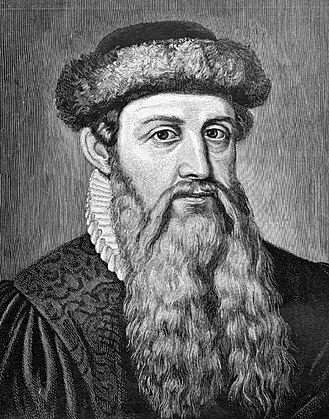
The invention of the printing press in 1439 supported the spread of ideas in science and humanism and would also be central to the Protestant revolution in the 1500s. During the same period, developments in shipbuilding and technology enabled the development of European empire and contributed to the age of Enlightenment (1714-1789) with the emphasis on reason having priority over theology, liberty, and progress[1].

Undercurrents – Issues within the church that have had a wide impact throughout the church

Christianity introduced new ways of thinking of the world, but those ideas did not change all patterns of thinking all at once. They needed a chance to develop and mature and then over time would challenge the older ways of thinking as the new patterns were gradually absorbed. In our current post-Christian era, new ways of thinking are developing, but the pattern continues. The now older Christian ideas are providing some of the framework for the current post-Christian ideas to build on, although the Christian contributions may not be recognized.

In that regard, as we examine the patterns of thought in Christian history, we find that there are various classic Greek ideas which have influenced the church. One of the classic Greek contributions, Platonism, developed into what has been termed Gnosticism. Within Gnosticism, one idea was that salvation is obtained through secret knowledge; this has led to the development of “secret” societies like the Freemason’s where only those within the society have that knowledge. Another gnostic idea is known as dualism, where spiritual things are considered to be good and material things are considered to be bad. The consequences of that thinking have led to heretical teachings about the nature of Jesus, severe asceticism, unhealthy thinking about sexuality, neglecting our stewardship of creation, rejection of the arts, etc.

Many disagreements have occurred through the years about the role of faith in respect to reason and revelation. When trying to balance these ideas with one another, some espoused fideism (in which faith is independent of and hostile to reason), some espoused special revelation (i.e., prophecies) over rationalism, and some espoused rationalism over faith or prophecies. These imbalances eventually fed into the conflict of faith vs. science in the 1800s highlighted by Darwin’s contribution to the evolution of species.[2]

There have been various moments in church life where there seems to have been a loss of focus on how Christianity is supposed to be lived out in our daily lives. When religious practices were perceived to be over-intellectualized, various pietistic movements were started where attention was paid to the spiritual aspects of the faith and on the transformation of our daily lives.

As the church grew it was natural that different personalities combined with different languages and cultures would result in differing ideas the nature of God and practice of Christianity. After all the apostles had died, the church had to learn how to determine which differences were acceptable and which differences were not. When someone’s practices seemed inappropriate the council would generate rules to address those practices. When ideas were taught that seemed to conflict with core beliefs of the church, the council created creedal statements, such as the Apostle’s Creed or Nicene Creed. The Creeds[3] were not designed to be all-inclusive statements of belief but were rather designed to address the emerging heresies of the moment.

Church developments outside the bounds of the Roman Empire, and eventually the fracturing of the Roman Empire itself, led to the fracturing of the church as well. The difficulty and sometimes outright inability of the church to hold a single large ecumenical council representing the whole church has contributed to the many branches of the church that can be seen today.

During the era of Enlightenment, reasoning and rationality were emphasized while the supernatural was rejected. In regard to the Bible, this meant that any miraculous events described in the Bible including miracles, healings, divine revelation, or God being active in any way in the world were rejected.

There was a view which postulated that God had created the world but then let it run according to natural laws without any further interference. This same viewpoint along with the acceptance of evolution, led to an evolutionary perception of historical and social development that led to the rejection of the traditional viewpoint of biblical development. One idea that became very popular in the 1800s (and is still popular today) was the idea that the Bible was created by piecing together various texts during Israel’s time of exile.[4]

Steering Currents

We should not assume that the church is dragged helplessly by overcurrents and undercurrents. Through all those influences, the Spirit of God is at work in the church. If the church sometimes behaves badly, it is a reminder that it is not the church that is the Savior of the world, that distinction belongs to God alone. Occasionally, even the church forgets that she is in daily need of a Savior as she brings the gospel to the world. Christ is the faithful one, not the church.

Those of us who are members of the visible church don’t even know with certainty which members of the visible church truly belong to Christ and who does not. Only God knows that. Only God knows whether we have the right balance of beliefs and practices,[5] and we most likely don’t. God’s ways are higher than the ways of those who are in the church as well as outside the church. This should call us to humility. But it should also call us to assurance that God is working His plan and His church even if we are broken and sometimes failing. The hope that we bring to the world is that God still works within us despite our weakness and failures.

In our unfaithfulness, we need to remember the words of Jeremiah. After many chapters of God accusing his chosen people, Israel, of prostituting herself to the love of other gods, at the end, God said, “Return, O virgin Israel …” Again, it is our faithful Yahweh who persists in seeking and holding onto us, despite our unfaithfulness – and yet He will cleanse us and put our unfaithful ways behind us. This is the good news that the church can receive and pass on to those not yet in the church. Our faithful Yahweh has not left us or abandoned us but leads us, able to redeem us even in our rebellion.

God loves His church, and He will restore us. We are therefore in no position to not love the church that God loves. He has not abandoned us but calls us by His Spirit. I have often said, “It is a miracle that the gospel has survived the church.” It is a miracle, and the miracle continues as it already has through the centuries. God will use the church and guide the church, despite herself. And there is the promise from Jesus to His followers, “Very truly I tell you, whoever believes in me will do the works I have been doing, and they will do even greater things than these, because I am going to the Father.


[1] Martin, Bruce. “Science and Faith: The Enlightenment;” Encyclopedia.com “Enlightenment and Empire” Explorations in Life, Theology, and Creation rossway.net/science-and-faith-the-enlightenment

[2] Darwin, Charles. “On the Origin of Species” John Murray 1859

[3] See Appendix I – Creeds of the Church

[4] Graf-Wellhausen Documentary Hypothesis University of Maryland Department of Computer Science www.cs.umd.edu/~mvz/bible/doc-hyp.pdf

[5] orthodoxy and orthopraxy Learn Religion www.learnreligions.com/orthopraxy-vs-orthodoxy-95857

Observe

Read John 17:13-25. In His love towards us, God has created many things in the world for us to enjoy. However, the world’s hatred of the things of God is sometimes masked by the sweet enticements that lure us away the love of God towards the love of those things. How do we discern when we are being lured away from God?
Diaspora

Dancing in the Kingdom- Table of Contents

Dancing In the Kingdom – Part 1 – Shadows of the Kingdom – Chapter 9 – The Prophets and writings

Diaspora

[Bible references: John 13:35]

The term “diaspora” is usually reserved to refer to a group of people that has been scattered from a single location. In this case, the term is used to refer to the scattering of Jews from the Promised land. But this particular diaspora is only a part of God’s larger plans for His people.

Our God is a God of overflowing love. His love caused Him to create us so that His love could overflow from Himself to us. He wanted His image-bearers to carry out His mission of overflowing love and overflow from Eden to fill the entire earth. When we rebelled against His overflowing desire so that we could make a name for ourselves instead, He confused our language at Babel so that we would continue to flow out over the earth. When God wanted to prepare His Holy Nation for His mission, He scattered them to Egypt. When Israel rebelled against His mission of overflowing love, He scattered them from the Promised Land. The Son of God came in overflowing love to offer Himself in sacrifice in order to restore us to Himself. When the scattered Jews from many nations gathered for Pentecost, God reversed the action of Babel, and His message of overflowing love was shared in many languages so that the message of overflowing love would be carried to the Jews in many nations. To continue the overflow, God worked with Peter and Paul so that His love could flow out to the Gentiles as well. God further ensured the flowing out by using the Romans to scatter both Jews and Christians from Jerusalem. To this day, when our focus is more on building our Christian institutions, becoming too ingrown, God continues to scatter His people so that His message of overflowing love will reach more people in more places across the earth.

This program of overflowing creates a Dynamic Tension between our scattering and our unity. It would be well if our scattering was motivated by love so that we would continue to stay unified as we scatter. It would be well if our scattering was to reflect and uplift the different cultural groups within the church. Sadly though, our scattering is often due to divisiveness rather than love, contrary to the intent that the world will recognize that we are disciples of Jesus because of our love.

Observe

Read John 13:35. How is our love strengthened by our learning to love people different from ourselves?

Rejecting God as King

Dancing in the Kingdom- Table of Contents

Dancing In the Kingdom – Part 1 – Shadows of the Kingdom – Chapter 8– Kings and kingdoms

Rejecting God as King

[Bible references: Judges 2:10-23; 21:25; 1 Samuel 8:1-22; Psalm 81:8-16]

Ever since the time of Adam and Eve, we have had a problem of thinking that we know better than God. After Israel started to settle into the Promised Land, that same problem appeared again with the diagnoses, “everyone did what was right in his own eyes.” That problem caused the cycle of 1) God disciplining Israel by allowing them to be dominated by one of the nations, which then caused 2) the people to cry for help, after which 3) God raised up a leader who overcame the dominating nation, 4) then once Israel is freed up, they turned from Yahweh and … the cycle repeated.

Eventually, Israel figured that they thought they knew what the problem was … that they needed a king … like everyone else. When the prophet, Samuel, was old and people became uncomfortable with Samuel’s sons leading the nation (Note: It seemed that Samuel had the same kind of problem with his sons as Eli had with his sons), the people rebelled against God and asked the prophet Samuel to ask God to give them a king. Samuel was troubled because he knew that their diagnosis was wrong. Yahweh confirmed that when he told Samuel that the real problem was not that they rejected Samuel, but rather they’ve rejected Yahweh as king. Unexpectedly, Yahweh said that he would grant their wish anyway. They will get a king (!!!) … like everyone else!!!. One of the lessons from this event is that we need to be careful; in our rebellion, God may condemn us to what we want.

Observe

Read 1 Samuel 8. Knowing that God may discipline us by giving us what we want instead of what we need, how should we then pray?

Slow and steady

Dancing in the Kingdom- Table of Contents

Dancing In the Kingdom – Part 1 – Shadows of the Kingdom – Chapter 5– Patriarchs

Slow and steady

[Bible references: Genesis 17:5; 21:4-5; 26:34; Psalm 6; 2 Peter 3:8]

Yahweh said that Abraham would be the “father of many nations, ” but there was only one child born to Abraham and Sarah – and that child, Isaac, was born to him and very late in his life. Isaac would have only twins. And Isaac’s only children, Esau and Jacob were born late in Isaac’s life, so the “father of many nations” would die only seeing two grandchildren.

Reflect

God answers prayers on his timeline, not ours. He will fulfill his purpose for us – also on his timeline. Does that make you frustrated or assured?

Observe

Read Psalm 6. Sometimes we suffer long. What keeps us going in such times?

Walk of faith

Dancing in the Kingdom- Table of Contents

Dancing In the Kingdom – Part 1 – Shadows of the Kingdom – Chapter 5– Patriarchs

Walk of faith

[Bible references: Genesis 12:1-20; 15:1-6; 16:1-5; 17:1-14; 20:1-13; 22:1-18; 24:7; 28:16; 50:24; Romans 4:9; Hebrews 11:17]

Sometime after the scattering of nations, from the line of Shem and Noah, Yahweh called a man named Abram to leave his country in the Euphrates River Valley and go to a land “I will show you.” As Abram left his home country, at the age of seventy-five, God promised not only to bless Abram and his descendants but to bless the entire world though Abram. Despite his occasional failures, Abram (later named Abraham) is noted for his faith because he believed God and showed this by being obedient in following God’s instructions even when they didn’t make sense.

When Yahweh called Abram to journey to another land, we don’t know what particular experience Abram and brother and father had with Yahweh, but Genesis 24 and 31 indicates that they all knew of knew of Yahweh, even if they thought of Yahweh as one of many gods.[1] Even so, Abram must have had great faith when he took that journey to the Promised Land?[2] Then after Abram arrived in the Promised Land, what further questions may Abram have had when he experienced a deep drought in that same land, such that he needed to take a brief trip to Egypt?

After Yahweh told Abram, that he would make a great nation from him, Abram initially expressed his faith by his obedience when he took that journey to the Promised land. Again, when Yahweh showed him the stars and told him that his descendants would be as numerous as those stars, Abram believed, and Yahweh credited that to him as righteousness. Then Yahweh reiterated the promise again when Abram was 99 years old and changed Abram’s name (which meant exalted father) to Abraham (father of many nations).

God told Abraham that a great nation would come out of him and Sarah. Yet, this did not look promising when the only son born to Abraham and Sarah was Isaac who was not even born until Abraham was one hundred years old and Sarah was ninety. No wonder that Isaac was given a name that means “laughter.”


[1] Garris, Zachary. “Did Abraham Worship Yahweh Before His Call in Genesis 12?” Knowing Scripture knowingscripture.com/articles/did-abraham-worship-yahweh-before-his-call-in-genesis-12

[2] Although the term “Promised Land” is not used directly as the place of where Abram and his descendants were called to settle down in, there are several references to the “land that is promised you.”

Observe

Read Genesis 12:1-20. This renowned Patriarch of faith, Abram, believed Yahweh, and left his homeland to some destination that Yahweh would show to him. When Abram arrived at the place Yahweh led him to, he built an altar and set up his tent. Good start at a life of faith. Sometime afterwards, Abraham winds up in Egypt where he is now afraid for his life and asks his beautiful wife Sarah to say that she’s his sister instead of his wife, so that they people won’t kill him to get her. This does lead to complications we won’t discuss here but just to point out that we, never mind Abram, are subject to a wavering faith. Do you have incidents in your life where your faith wavered?

Tower of Babel

Dancing in the Kingdom- Table of Contents

Dancing In the Kingdom – Part 1 – Shadows of the Kingdom – Chapter 4– Retreating to chaos

Tower of Babel

[Bible references: Genesis 11:1-8; Genesis 12:1-3]

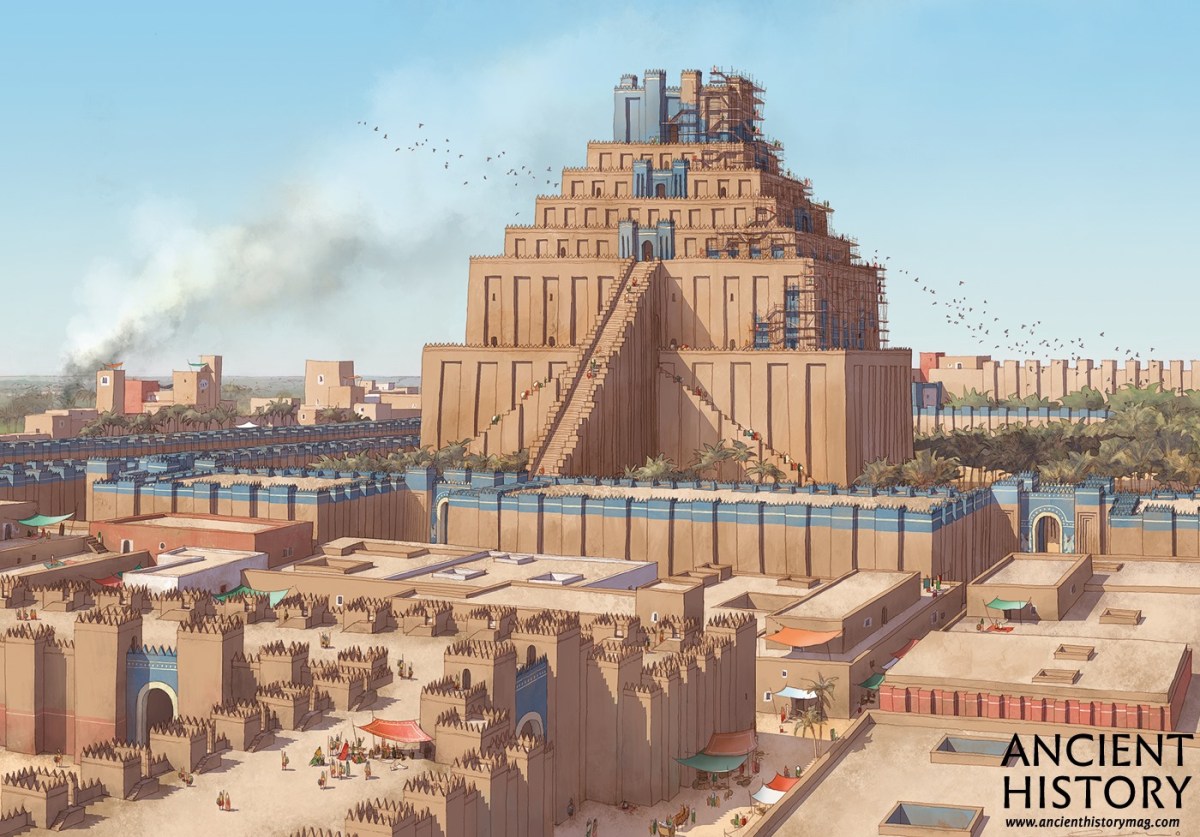
Despite the catastrophic destruction that destroyed all people except Noah and his family, the image-bearers’ defiance would emerge again. Instead of glorifying God, they attempted to “make a name” for themselves and not the God who provided their language and all the other skills with which they would try to build a tower, which would be a monument to their own God-given abilities.

God’s response was very measured. By causing them to speak different languages so that they could no longer communicate with each other, the image-bearers would no longer be able to come together to complete the tower, rather they were now forced to divide into seventy different groups and spread out across the earth, creating different nations.

From one of those nations, God would choose a man who was not out to make a name for himself, someone who did not put his faith in himself but would be willing to put his trust in God. It would be through this one man and his wife that God would form a nation for himself, a nation through which the whole world would be blessed, a nation through whom one called the Messiah would come, the anointed one through whom God would begin His work of restoration.

Reflect

Even within a family, different experiences cause people to think differently causing conflict. They all use the same words but have different thoughts about what is right. Larger problems occur when people grow up in entirely different environments. When people use different languages, those different languages amplify the differences in how people think. In your own situation, what different cultures do you interact with and how do you process conflicts with people in those cultures?

Observe

Read Genesis 11:1-8. What was the wrong motive for building the tower?

Nations form from descendants of Noah’s sons

Dancing in the Kingdom- Table of Contents

Dancing In the Kingdom – Part 1 – Shadows of the Kingdom – Chapter 1 – Prelude

[Bible references: Genesis 6-11]                                       

Following the introduction of sin into the world, the rebellion of God increased to the point where God saw fit to destroy all of mankind apart from Noah and his family with a great flood.[1] After the flood, the rebellion continued in the form of the tower of Babel where people saw fit to make a name for themselves instead of lifting up God. God responded by confusing their languages which caused them to spread out, and ultimately form different nations.

In general, the descendants of Japheth include the Europeans; the descendants of Shem include the Middle Easterners (including the nation of Israel), and the descendants of Ham includes the Africans, the Amorites and the Canaanites.


[1] Ball, Steven. “A Christian Physicist Examines Noah’s Flood and Plate Tectonics” LeTourneau University http://www.letu.edu/academics/arts-and-sciences/files/plate-tectonics.pdf; McDonald, David.  “The Flood: Mesopotamian Archaeological Evidence” National Center for Science Education ncse.ngo/flood-mesopotamian-archaeological-evidence; Trefil, James. “Evidence for a Flood” Smithsonian Magazine http://www.smithsonianmag.com/science-nature/evidence-for-a-flood-102813115; Isaak, Mark. “Flood stories from around the World” Talk Origins http://www.talkorigins.org/pdf/flood-myths.pdf “There is still some uncertainty about how to correlate the current understanding of the Biblical text with modern archaeology. There is some evidence of a local flood in the Mesopotamian area or in the Black Sea area. There is also abundant evidence of flood stories from around the world.”

Observe

Read Genesis 10 then find a map that show how the nations spread out. (e.g. www.columbiabible.com/2016/06/22/genesis). From which of Noah’s sons might you have descended from?

Turning from shalom

Dancing in the Kingdom – Table of Contents

Part 1 – Shadows of the Kingdom, Chapter 4 – Deforming the intended direction for creation

[Bible references: Psalm 53:1-3]

Although we try to cling to the hope of God and our final restoration, we, in our sin, face a world that is broken by sin. While waiting for the restoration of creation, we find ourselves continually turning from God and rather towards bringing further destruction into God’s good creation. We seem to be constantly bent on turning from shalom and towards a substitute that gives us pain and despair. The history of the world is filled with the flourishing of evil and injustice. The consequence of choosing to go our own way has put us on a path where we continue to separate ourselves from the source of goodness and shalom. Indeed, we find ourselves on a path of destruction despite God’s continual provision for us as he continuously and unrelenting pursues us and pours out his limitless grace. And so it is, that we find ourselves in a world where both good and evil abound, where the good things God created are corrupted continuing to turn us away from God.[1]

Rampant evil

[Bible references: Genesis 6, 9]

So that we can know what terrible direction we are headed without that intervening grace, God initially allowed his image-bearers to live long lifespans. The long lifespans seemed to postpone the penalty for sin such a long time by delaying the penalty of physical death, that the image-bearers behaved as if there were no consequences for their God-defiant behavior. The result was rampant unrestrained evil that infected nearly everyone, causing God to destroy all but one family. Sadly, even with that severe penalty, it would not be long before our God-defiant behavior would threaten to be our undoing again, but God would continue intervening with grace as He would gradually work out His plan to restore us to Himself beginning with the rainbow as a sign of hope.

Tower of Babel

[Bible references: Genesis 11:1-8; Genesis 12:1-3]

Despite the catastrophic destruction that destroyed all people except Noah and his family, the image-bearers’ defiance would emerge again when, thinking themselves to be wiser than God, they refused to spread out over the earth as God had commanded and then proceeded to build a tower as a monument to themselves. God’s response was very measured. By causing them to speak different languages so that they could no longer communicate with each other, the image-bearers would no longer be able to come together to complete the tower, rather they were now forced to divide into seventy different groups and spread out across the earth as God had intended. This breakup would lead to the creation of different nations – and eventually lead to God’s working out His solution to our predicament by the calling out from one of the nations, one man through whom God would begin His work of restoration.


[1] Brister, Tim. “6 Destructive Ways We Minimize Our Own Sin”

Reflect

Think about some things that should be inherently good but are used for evil purposes.

Observe

Read Gen 3:1. We often know in our mind what God’s instruction is when we are tempted to do our own thing apart from God’s instruction. We somehow find a way to justify our actions by questioning God’s authority. Does this give us a strategy for dealing with temptation?

Reflect

If there were no consequences for bad behavior, what do you think the world would be like?

Observe

Read Genesis 6 and 9. God sent a flood to deal with the rampant sin in the world but it wasnot long after the flood that signs of human rebellion sprung up again in Noah’s family. What kind of trajectory did this indicate for humanity?

Reflect

Even within a family, different experiences cause people to think differently causing conflict. They all use the same words but have different thoughts about what is right. Larger problems occur when people grow up in entirely different environments. When people use different languages, those different languages amplify the differences in how people think. In your own situation, what different cultures do you interact with and how do you process conflicts with people in those cultures?

Observe

Read Genesis 11:4. The construction of the tower at Babel was not a positive development, but God’s plans won’t be thwarted. What confidence does that give us about the difficult situations we see around us today?