A set-apart people

Dancing in the Kingdom- Table of Contents

Dancing In the Kingdom – Part 1 – Shadows of the Kingdom – Chapter 6– A nation emerges

A set-apart people

[Bible references: Exodus 23; Leviticus 11, 17; Deuteronomy 14; Hebrews 4:1-13; 10:24-25]

What does it mean to be created in the image of a holy God? What do we mean when we say, “God is holy?” We first encounter the term in Genesis 2:3 when God indicates that the seventh day will be made holy, the seventh day was to be set apart from the other days. When Moses encountered God’s presence in a burning bush, Moses was told to remove his sandals because the ground was holy. It was also God’s intention to make Israel a holy nation, set apart from other nations and through which all the nations on earth would be blessed.

There were a couple of ways in which the nation of Israel would be greatly distinguished from the nations around them, the food, and the calendar. There were some restrictions on the food they could eat (such as certain meats, fish, birds, and insects) and how they had to prepare their food that would have prevented them from intermingling with the peoples around them. But the calendar provides an even more distinguishing difference. While some cultures had recognized a seven-day calendar, it was the Israelites who set aside the seventh day of the week as a Sabbath on which no work was supposed be done. But that is not the only distinguishing characteristic of the calendar.

In the present day we have a universal calendar, and we prioritize journalistic chronology. That is, we remember historical events on the particular day that the events happened according to our calendar. For us, it is important for us to track events in the chronological order in which they happened. However, there are a few exceptions that we should note. Sometimes we don’t set aside remembrance days according to the actual date of the event but rather according to other values – for instance, we always celebrate days such as Martin Luther King’s birthday, not on his actual birth date, but always on a Monday because of our priority for extended weekends.

For the Israelite calendar, the priority was not chronology but liturgy. The remembrance days for events were not set according to the actual historical date on which they occurred but were set according to the liturgical calendar. This practice become clear when you trace out the timing of events in the Pentateuch (first five books of the Hebrew Bible) and compare them to the remembrance dates. It was more important to have events in the context of God’s activity rather than the contexts of the events themselves.

This concept provides the background for celebration of the Sabbath. The Sabbath was such an important concept for the Jews, that the account of creation in Genesis 1 was used to present the concept of Sabbath.[1] When we think about God’s creating activities, God did not need six days to carry out creation, nor did he need to stop working. So why do set up the remembrance of God’s creation in a seven-day timeframe? Once again, the important point is not the chronology but the liturgy.

The important point about the creation event was not the event itself, but what it was for. The purpose of creation was to create a “temple,” a place where God could be with his people. That’s the main point. “Resting” on the seventh day is not about “not working,” because God has not stopped doing things. The point of “resting” is to focus on doing what the temple was all about, which is to be with His people. For us to practice the Sabbath, the point is to be with God and join him in his creative work in the universe – the point is to be with God. When you look at Genesis 1-2, you will notice that the first six days have a defined beginning and end, an evening, and a morning. The seventh day, however, does not have a defined beginning and ending – that implies that we are in the seventh day. This “day,” or age, that we are in, is the “day” that we “rest” with God. It was intended at the beginning that all our activities done with, “at rest with,” God.

This brings us to a second distinguishing characteristic of the Jewish Biblical calendar: the first month was during the spring equinox, harvesting time, whereas in the surrounding cultures the first month of the calendar was set in the fall equinox, crop planting time. The difference in meaning was that since Israel’s year started with God’s work, the year begins God’s provision of the harvest which fed the nation and provided seed for the fall. This contrasted to the surrounding cultures which began their calendar with their work, so their year began with their work that provided for the next harvest.[2]

What can be confusing is that in current practice, Jews do not use the biblical (or liturgical) calendar but the civil calendar which places the first month in the fall instead of the spring. Christians do have an equivalent practice: our civil calendar begins in January, which was set by the Roman government and coincided with Roman elections whereas some in the Christian community observe a liturgical calendar which begins in the fall with the season of Advent.

The liturgical focus of the calendar with its de-emphasis of the chronology of historical events helps explain some interesting discontinuities and apparent conflicts in the Biblical text. If we allow the events described in Exodus to be interpreted liturgically instead of chronologically, we can make better sense of the flow of Exodus.

One of the “apparent conflicts” occurs in Exodus 19 when the Israelites arrived at Mount Sinai. At the beginning of the chapter, Yahweh made a covenant similar to the one with Abraham and declared that they were to be a “kingdom of priests,” and that all the Israelites were to prepare to go up the mountain after the sounding of the ram’s horn. And yet, at the end of the same chapter, Yahweh told Moses to not let the people, except thepeople designated to be priests, to go up the mountain. By noticing such apparent conflicts, we can better chronologically rearrange the events in Exodus so that they make better sense to chronologically minded folks such as we are.

A possible chronological arrangement of events looks like:[3]

  • The initial, Abrahamic-like covenant was given (including building earthen altars) followed by the Decalogue (10 Commandments).
  • The golden calf incident occurred.
  • There was a covenant renewal.
  • The code for priests was given along with instructions for building a tabernacle.
  • Another incident with idols, this time goats, was documented.
  • A Holiness code was given to the people.
  • The covenant is renewed again.

While the rearrangement may help us who are chronologically minded make better sense of the text, in the end we are left with Israel now being a nation with priests and the community centering its worship around a large tent called the Tabernacle. The liturgical intent of the text as it is written, is to focus on the immediate outcome, that Israel will be a nation under the Mosaic covenant, a nation with priests serving a holy God who may reside among them but who is not directly accessible. This is the necessary outcome until the Redeemer comes. The obscured intent was that Israel was meant to be a nation under the Abrahamic covenant, a nation of priests of faith, but now a nation that could not materialize until after the Redeemer comes. That is the present intent of the Christian community, by recognizing Jesus as our  Redeemer we can be a “nation” of priests serving a holy God who resides among us.

Worship at the tabernacle was a community event. No one could do this by themselves. Different people were assigned to different tasks, which not only included direct involvement in worship but also in the care of the tabernacle and its furnishings. Even one’s individual sins required the use of priest to handle the sacrifice. Before the tabernacle, offerings could be made by anyone, but with the tabernacle, only designated priests could perform the sacrificial offerings.

This arrangement continues the pattern of representing the holiness of God in creation. God’s image-bearing creatures are set aside from all other creatures; Sinful humans are separated from the Garden of Eden; Noah and his family are set aside in the ark from all other people; Abraham is set aside from all other people to usher in the blessing of all people; Moses is set apart from the other Israelites to see God face-to-face; the Levites are the tribe set apart from the other tribes to manage the care of the tabernacle; the priests are set apart from the other Levites to carry out the rituals in the tabernacle; the Sabbath is set apart from all the other days as a reminder of God’s provision– and the list goes on.


[1] LeFebvre, Michael. “The Liturgy of Creation: Understanding Calendars in Old Testament Context” Intervarsity Press 2019

[2] LeFebvre, Michael. “The Liturgy of Creation: Understanding Calendars in Old Testament Context” Intervarsity Press 2019

[3] Sailhammer, John. “Introduction to Old Testament Theology” (Appendix B) Random Publishing Theology 1995

Reflect

What does it mean that we are created in the image of a holy God?

Observe

Read Exodus 23:10-13. What is the purpose of the Sabbath observance?
Discipline, Miracles, and Death

Dancing in the Kingdom- Table of Contents

Dancing In the Kingdom – Part 1 – Shadows of the Kingdom – Chapter 6– A nation emerges

Discipline, Miracles, and Death

[Bible references: Genesis 15:13-14; Exodus 7-11; 12:31-36; 13:17-22; 16; 17:1-7; 20; 32; Numbers 13-14]

Miracles abounded.

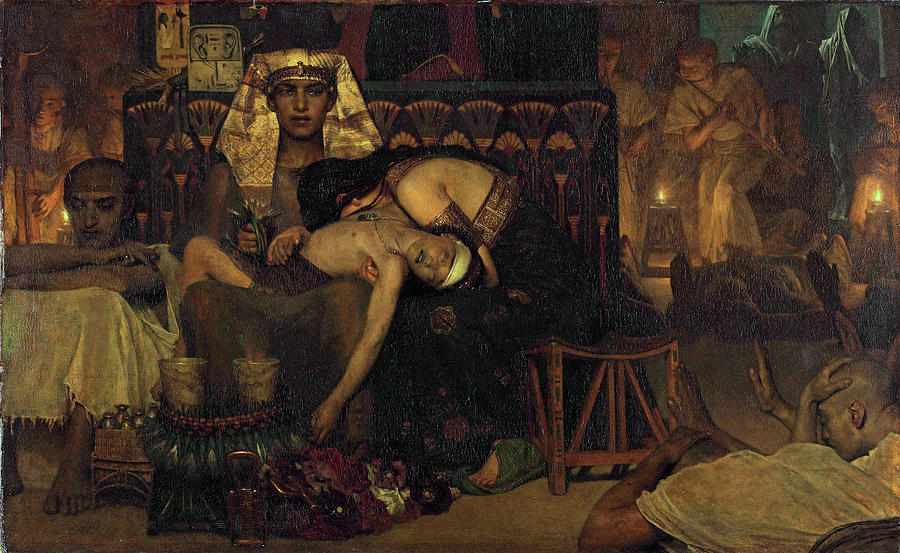
There were the ten plagues that God brought upon the Egyptian captors to show the Pharaoh that Yahweh was not just a local God in Canaan but that His power extended over all creation, even in the land of the Egyptian gods. In the process, the Pharaoh’s own heart continued to harden against Yahweh to the point where God would seal the Pharaoh’s fate and further harden the Pharaoh’s heart. In the end, it took the killing of the firstborn of Egyptian families, including the family of the Pharaoh to convince the Pharaoh to let people of Israel go. And even more, the people of Egypt also supplied the people of Israel with great wealth as they left. Some Egyptians even joined the people of Israel in their flight.

Then there was the miracles of the pillars of cloud and fire, which would continue until the nation entered the Promised Land, and the miracle which let Israel cross the Red Sea on dry land followed by the drowning of the Egyptian army. The pattern of punishing a nation that was used to discipline the people of Israel would be repeated throughout Biblical history.[1]

Once on their way, the Israelites experienced more miracles: a mountain enshrouded in a cloud where Yahweh talked with Moses and gave Moses the Commandments and other rules; manna and quail falling from the sky; springs of water in the desert. Despite seeing all those miracles, Israel wasn’t ready to have Yahweh lead them into the Promised Land to face the obstacles there, so God had them encamp in the wilderness for 40 years until all the adults who refused to trust Yahweh died. So many deaths must have happened, but scripture barely mentions them. Here we will see, not for the last time, that seeing miracles not only did not change hearts but that, even now, despite all the evidence that we see, that all our hearts seem predisposed to turn away from God.


[1] Ex: Egypt (Genesis 15:13-14), Babylon (Isaiah 13, 21,23),  and Assyria (Isaiah 10, 14; Zephaniah 2) were all used by God to discipline Israel

Observe

Read Exodus 8-10. In the narrative of the 10 plagues, several times we are told that Pharaoh hardened his heart, but then there came a time when Yahweh reinforced that trajectory and Yahweh hardened the Pharaoh’s heart. What kind of warning might that be?

Fullness of time

Dancing in the Kingdom- Table of Contents

Dancing In the Kingdom – Part 1 – Shadows of the Kingdom – Chapter 6– A nation emerges

Fullness of time

[Bible references: Genesis 15:16; Exodus 2-4; 7-11; Galatians 4:1-7; Ephesians 1:1-14]

The emerging story of the chosen people of God becoming a nation started slowly: Abraham and one child of the promise, Isaac, who had two children, only one through which the promise would come, Jacob, who then had had thirteen children. But it would take time for that family to grow into a size that could be called a nation – and that took a couple hundred more years – in which time the “sin of the Amorites would reach their full measure.”

Although the Bible does not specifically mention it, there may have been other things that God was waiting to happen such as the development of the Israelite community and the consequent interaction of the Israelite community with the Egyptian community during the Israelite captivity. God allowed events to gradually unfold until “the fullness of time” came for God to orchestrate a dramatic release of the Israelite community. This event would serve as a foreshadowing of another event, the spiritual release of all peoples from slavery to sin.

So it was, that in the fullness of time, when the sin of the Amorites reached its full measure,[1] Yahweh called Moses to release the enslaved Israelites from Egypt to bring Israel back to the Promised Land.


[1] White, James Emery. “Is God a Moral Monster? The Slaughter of the Canaanites” Church&Culture 22 Oct 2020 www.churchandculture.org/blog/2020/10/22/is-god-a-moral-monster

Reflect

Often, when we are younger, we think we know everything. But most of the time, we discover over time that we need maturing – to grow in wisdom – a process that takes time and experience. What things have you learned through time and experience?

Observe

Read Genesis 15:16; Galatians 4:1-7. What do these verses tell us about God’s sense of timing?

Process is important

Dancing in the Kingdom- Table of Contents

Dancing In the Kingdom – Part 1 – Shadows of the Kingdom – Chapter 6– A nation emerges

Process is important

[Bible references: Genesis 15:12-21; Exodus 1:1-22; 11:1-10; 12:31-37]

After Joseph and the Pharaoh who knew him died, the growing nation of Israel became enslaved in the land of Egypt just as it had been foretold to Abraham. There are various questions that surrounded the captivity of Israel in Egypt:

  • When there was a drought, why didn’t Yahweh provide for the Israelites in Canaan instead of having them go to Egypt?
  • If they needed to be in Egypt, why did they need to be enslaved instead of just living there as guests?

We know that Yahweh told Abraham that a great nation would come from him and that they would be given the land of Canaan to live in. But why the side-trip into Egypt and why the slavery? The only reason given to Abraham was that “the sin of the Amorites was not yet reached its full measure.” 

The reason given to Abraham for being in Egypt follows a general pattern. Although God occasionally supernaturally intervenes in the course of events, it seems that God most often allows natural, normal processes to take place, whether they be physical, psychological, sociological etc. We see that process in living things: plants, animals, and even ecosystems grow through specific physical processes[1]. Even the great flood in Noah’s time only occurred after evil gradually, through normal psychological and sociological processes, eventually reached a particular threshold.


[1] Natural, physical processes are so well fixed and so well understood that they have become known as scientific laws.

Reflect

Joseph’s discipline involved finding God in the midst of difficult circumstances and discovering how God could use him there. Are there any difficult circumstances you struggle with? Have you found God at work in your life in those circumstances?

Observe

Read Exodus 11:1-10; 12:31-37. How did Yahweh provide for Israel as they left Egypt?

Walk of faith

Dancing in the Kingdom- Table of Contents

Dancing In the Kingdom – Part 1 – Shadows of the Kingdom – Chapter 5– Patriarchs

Walk of faith

[Bible references: Genesis 12:1-20; 15:1-6; 16:1-5; 17:1-14; 20:1-13; 22:1-18; 24:7; 28:16; 50:24; Romans 4:9; Hebrews 11:17]

Sometime after the scattering of nations, from the line of Shem and Noah, Yahweh called a man named Abram to leave his country in the Euphrates River Valley and go to a land “I will show you.” As Abram left his home country, at the age of seventy-five, God promised not only to bless Abram and his descendants but to bless the entire world though Abram. Despite his occasional failures, Abram (later named Abraham) is noted for his faith because he believed God and showed this by being obedient in following God’s instructions even when they didn’t make sense.

When Yahweh called Abram to journey to another land, we don’t know what particular experience Abram and brother and father had with Yahweh, but Genesis 24 and 31 indicates that they all knew of knew of Yahweh, even if they thought of Yahweh as one of many gods.[1] Even so, Abram must have had great faith when he took that journey to the Promised Land?[2] Then after Abram arrived in the Promised Land, what further questions may Abram have had when he experienced a deep drought in that same land, such that he needed to take a brief trip to Egypt?

After Yahweh told Abram, that he would make a great nation from him, Abram initially expressed his faith by his obedience when he took that journey to the Promised land. Again, when Yahweh showed him the stars and told him that his descendants would be as numerous as those stars, Abram believed, and Yahweh credited that to him as righteousness. Then Yahweh reiterated the promise again when Abram was 99 years old and changed Abram’s name (which meant exalted father) to Abraham (father of many nations).

God told Abraham that a great nation would come out of him and Sarah. Yet, this did not look promising when the only son born to Abraham and Sarah was Isaac who was not even born until Abraham was one hundred years old and Sarah was ninety. No wonder that Isaac was given a name that means “laughter.”


[1] Garris, Zachary. “Did Abraham Worship Yahweh Before His Call in Genesis 12?” Knowing Scripture knowingscripture.com/articles/did-abraham-worship-yahweh-before-his-call-in-genesis-12

[2] Although the term “Promised Land” is not used directly as the place of where Abram and his descendants were called to settle down in, there are several references to the “land that is promised you.”

Observe

Read Genesis 12:1-20. This renowned Patriarch of faith, Abram, believed Yahweh, and left his homeland to some destination that Yahweh would show to him. When Abram arrived at the place Yahweh led him to, he built an altar and set up his tent. Good start at a life of faith. Sometime afterwards, Abraham winds up in Egypt where he is now afraid for his life and asks his beautiful wife Sarah to say that she’s his sister instead of his wife, so that they people won’t kill him to get her. This does lead to complications we won’t discuss here but just to point out that we, never mind Abram, are subject to a wavering faith. Do you have incidents in your life where your faith wavered?

Exodus

Dancing in the Kingdom – Table of Contents

Part 1 – Shadows of the Kingdom, Chapter 6 – A Nation Emerges

Fullness of time

[Bible references: Genesis 15:16; Exodus 2-4; 7-11; Galatians 4:4; Ephesians 1:1-14]

The emerging story of the chosen people of God becoming a nation started slowly with Abraham, with one child of the promise, Isaac, who had two children, only one through whom the promise would come, Jacob. Finally, Jacob had thirteen children. But it would take time for that family to grow into a size that could be called a nation – and that took a couple hundred more years – in which time the “sin of the Amorites would reach their full measure.”

Although the Bible does not specifically mention it, there may have been other things that God was waiting to happen such as the development of the Israelite community and the consequent interaction of the Israelite community with the Egyptian community during the Israelite captivity. God allowed events to gradually unfold until “the fullness of time” came for God to orchestrate a dramatic release of the Israelite community. This event would serve as a foreshadowing of another event, the spiritual release of all peoples from slavery to sin.

So it was, that in the fullness of time, when the sin of the Amorites reached its full measure,[1] Yahweh called Moses to release the enslaved Israelites from Egypt to bring Israel back to the Promised Land.

Discipline, Miracles, and Death

[Bible references: Genesis 15:13-14. Exodus 7-11; 12:31-36; 13:17-22; 16; 17:1-7; 20; 32; Numbers 13-14]

Miracles abounded.

There were the ten plagues that God brought upon the Egyptian captors to show the Pharoah that Yahweh was not just a local God in Canaan but that His power extended over all creation, even in the land of the Egyptian gods. In the process, the Pharoah’s own heart continued to harden against Yahweh to the point where God would seal the Pharoah’s fate and further harden the Pharoah’s heart. In the end, it took the killing of the firstborn of Egyptian families, including the family of the Pharoah to not only convince the Pharaoh to let people of Israel go, but the people of Egypt also supplied the people of Israel with great wealth as they left, with some Egyptians joining the people of Israel in their flight.

Then there was the miracles of the pillars of cloud and fire, which would continue until the nation entered the Promised Land, and the miracle which let Israel cross the Red Sea on dry land followed by the drowning of the Egyptian army. The pattern of punishing a nation that was used to discipline the people of Israel would be repeated throughout Biblical history.[2]

Once on their way, the Israelites experienced more miracles, the mountain enshrouded in a cloud where Yahweh talked with Moses and delivered the Commandments and other rules, manna and quail falling from the sky, springs of water in the desert. Despite seeing all those miracles, Israel wasn’t ready to have Yahweh lead them into the Promised Land to face the obstacles there and so God had them encamp in the wilderness for 40 years until all the adults who refused to trust Yahweh died. So many deaths must have happened, but scripture barely mentions them. Here we will see, not for the last time, which seeing miracles not only did not change hearts but that all our hearts seem predisposed to turn away from God.


[1] cp. Galatians 4:4; Ephesians 1:10; see also White, James Emery. “Is God a Moral Monster? The Slaughter of the Canaanites” Church&Culture 22 Oct 2020 http://www.churchandculture.org/blog/2020/10/22/is-god-a-moral-monster

[2] Ex: Egypt (Genesis 15:13-14). Babylon (Isaiah 13, 21,23), Assyria (Isaiah 10, 14; Zephaniah 2)

Reflect

Often, when we are younger, we think we know everything. But most of the time, we discover over time that we need maturing – to grow in wisdom – a process that takes time and experience. What things have you learned through time and experience?

Observe

Read Galatians 4:4; Ephesians 1:3-14. We do not have God’s perspective. We don’t know why God waited so long after the time of Adam and Eve before Messiah came – the first time. We don’t know why God is waiting to return. Not with all the pain and suffering we see around us. What hints do these passages provide for us?

Reflect

We discover in the Exodus narrative, that being able to see and to live in the midst of miracles, was not sufficient to change the hearts of the people. What does that say about us?

Observe

Read Exodus 8-10. In the narrative of the 10 plagues, several times we are told that Pharoah hardened his heart, but then there came a time when Yahweh reinforced that trajectory and Yahweh hardened the Pharoah’s heart. What kind of warning might that be?

Abraham

Dancing in the Kingdom – Table of Contents

Part 1 – Shadows of the Kingdom, Chapter 5 – Patriarchs

Walk of faith

[Bible references: Genesis 12:1-20; 15:1-6; 16:1-5; 17:1-14; 20:1-13; 22:1-18; 24:7; 28:16: 50:24; Romans 4:9; Hebrews 11:17]

Sometime after the scattering of nations, from the line of Shem and Noah, God called a man named Abram to leave his country in the Euphrates River Valley and go to a land “I will show you.” As Abram left his home country, at the age of seventy-five, God promised not only to bless Abram and his descendants but to bless the entire world though Abram. Despite his occasional failures, Abram (later named Abraham) is noted for his faith because he believed God and showed this by being obedient in following God’s instructions even when they didn’t make sense.

When God called Abram to journey to another land, we don’t know what earlier experience Abram or his family or any other citizens of Ur or Haran may have had with God. Was there any experience at all? If not, then with what confidence did Abram have that he was following God when he took that journey to the Promised Land?[1] Then after Abram arrived in the Promised Land, what further questions may Abram have had when he experienced a deep drought in that same land, such that he needed to take a brief trip to Egypt?

After Yahweh told Abram, that he would make a great nation from him, Abram initially expressed his faith by his obedience when he took that journey to the Promised land. Again, when Yahweh showed him the stars and told him that his descendants would be as numerous as those stars, Abram believed, and Yahweh credited that to him as righteousness. Then Yahweh reiterated the promise again when Abram was 99 years old and changed Abram’s name (which meant exalted Father) to Abraham (Father of many nations).

God told Abraham that a great nation would come out of him and Sarah. Yet, this did not look promising when the only son born to Abraham and Sarah was Isaac who was not even born until Abraham was one hundred years old and Sarah was ninety. No wonder that Isaac was given a name that means “laughter.”

Hospitality

[Bible references: Gen 18:1-8; Hebrew 13:1-2]

One day, while Abraham was sitting in the entrance to his tent, he saw three visitors approaching and offered them water to wash their feet and then went to much effort to offer them something to eat and drink. As we read this description of Abraham’s greeting his visitors, it may sound extravagant to us, but would have been normal for the culture of the time. The normal custom was to regard visitors as those who have been sent by God.[2]

Pleading to God

[Bible references: Gen 18:16-33]

We don’t know the moment that Abraham recognized that one of the visitors was Yahweh, but it apparently happened by the time the visitors talked about Sodom and Gomorrah, which they were going to destroy. Concerned about his nephew Lot, who was living down there, Abraham made a plea to save the city if there were righteous people living in the city. At first, Abraham asked what if there were fifty righteous people living there, would they still destroy everyone there. When Yahweh said no, then Abraham asked, what about if there were 45 or 30 or 20 righteous people there.[3] Each time, Yahweh said that he would not wipe out everybody if there were only that many righteous people there. As it turned out, both Sodom and Gomorrah were destroyed after Lot and his daughters were given the chance to escape.

Faith and obedience

[Bible references: Gen 22:1-19]

In one of the most controversial events, God called Abraham to take Isaac and go to a mountain, build an altar, and then offer Isaac as a sacrificial offering. Abraham must have severely tested, but Abraham did as he was told and went through the whole process to the point where he was about slay Isaac when God provided a substitute, a ram. Isaac would indeed be the next link in the genealogical chain connecting Abraham ultimately to the birth of the Messiah 2000 years later.

Slow and steady

[Bible references: Genesis 17:5; 21:4-5; 26:34; 2 Peter 3:8]

The man who Yahweh would say would be the “father of many nations” had only one son born very late in his life and that son, Isaac, would have only twins. Even then, Esau and Jacob were born late in Isaac’s life, so the “father of many nations” would die only seeing two grandchildren.


[1] Although the term “promised land” is not used directly as the place of where Abram and his descendants were called to settle down in, there are several references to the “land that is promised you.”

[2] Wight, Fred H. Manners and Customs of Bible Lands (Kindle Locations 863). 1953. Kindle Edition.

[3] De Young, Kevin. “Passionately Pleading with God is a Good Thing”

Reflect

Making long-term commitments is always an act of faith, because we never know what all the circumstances will be in the future. What long-term commitments have you made and held to even when you encountered circumstances you never planned on?

Observe

Read Genesis 12:1-20. This renowned Patriarch of faith, Abram, believed Yahweh, and left his homeland to some destination that Yahweh would show to him. When Abram arrived at the place Yahweh led him to, he built an altar and set up his tent. Good start at a life of faith. Sometime afterwards, Abraham winds up in Egypt where he is now afraid for his life and asks his beautiful wife Sarah to say that she’s his sister instead of his wife, so that they people won’t kill him to get her. This does lead to complications we won’t discuss here but just to point out that we, never mind Abram, are subject to a wavering faith. Do you have incidents in your life where your faith wavered?

Reflect

What kind of hospitality have you received that made you feel special?

Observe

Read Genesis 18:1-8; Hebrews 13:1-2. In the nomadic culture, hospitality was readily shown to any visitors as they were regarded as visitors from God. What keeps us from exhibiting the same attitude?

Reflect

What passionate concerns do you want to bring to God?

Observe

Read Genesis 18:16-33; 1 Samuel 7:1-9; 2 Chronicles 30:1-20; Nehemiah 1:1-2:10; Philippians 1:3-10. How are we encouraged to plead to God?

Reflect

The Hebrew word, “shema,” means not just “listen” but “listen and obey.” How often do we listen intently to a friend or loved one such that we are ready to provide for any need implied within the conversation?

Observe

Read Genesis 22:1-19; 1 Corinthians 10:13. Theologians have wrestled with this passage in Genesis as we cannot fathom how God could command a human sacrifice, even if He knew how He would intervene before it would happen. How confident are you that God will provide for you in the midst of difficult decisions?

Reflect

God answers prayers on his timeline, not ours. He will fulfill his purpose for us – also on his timeline. Does that make you frustrated or assured?

Observe

Read Genesis 17:5; 21:4-5; 25:19-26; 2 Peter 3:8. God renamed Abram to “Father of many nations.” Abraham. Abraham had one “child of the promise,” Isaac whose only children were twin born when Abraham was 160 years old.  How do you make sense of that in light of 2 Peter 3:8?