Beyond winsomeness

Dancing in the Kingdom- Table of Contents

Dancing In the Kingdom – Part 3 – Dancing in the Kingdom– Chapter 17 – Finding our place

Beyond winsomeness

[Bible references: Deuteronomy 18:15-19; Proverbs 21:22; Acts 3:22; 4:1-22; 12:1-19; 16:16-40; Romans 13:1-7; Ephesians 6:11-13]

Oftentimes, our first impulse when confronting evil in the world is to resort to the world’s tactics. It can seem more expedient to respond to evil with physical force or displays of anger – and there are occasions when such responses are justified – but wisdom is called for. We need to remember that our real enemy is not our “flesh and blood” fellow image-bearer but the forces of darkness. We also need to discern between when it is time for God to act and for us to act.

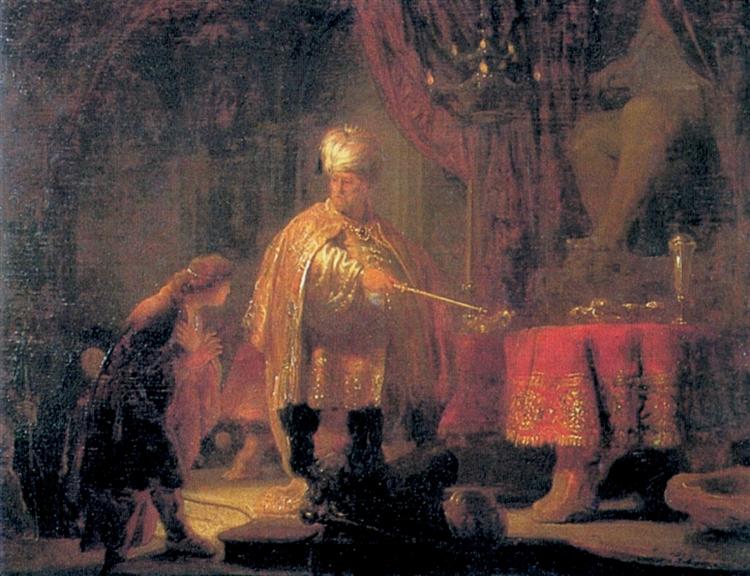
After David was anointed to be the future king, he had to wait several years during which period King Saul pursued David intending to kill him. Even though there were a couple of occasions when David could have killed Saul, he did not think it was his to take – he waited for the kingship to be given to him. Ever since Moses, Israel had been waiting for “one like Moses”. But David’s refusal to “take” the kingship is likely part of the reason that David was called a “man after God’s own heart,” because unlike those who came before him, he did not (at least in this case) succumb to the impulse to “see, desire, take.”

God has established government to keep the peace. What is our role if the government carries out its duty, what action should we take in support of it? What is our role if the government abuses its duty, what action should we take in opposition to it? The apostles defied the authority of the Sanhedrin and the Roman government, with God even releasing Peter from prison on one occasion and Paul in another. But on another occasion, Paul submitted to the Roman government as a means to get to Rome to continue his work there. Is there ever cause for a Christian to participate in violence? There is a debate in the Christian community about these questions that calls us to seek wisdom in our different situations.

Observe

Read Ephesians 6:11-13. How might “putting on the armor of God” help us determine when to take action or to wait for God?

Relation to Yahweh

Dancing in the Kingdom- Table of Contents

Dancing In the Kingdom – Part 3 – Dancing in the Kingdom– Chapter 17 – Finding our place

Relation to Yahweh

[Bible references: Exodus 6:1-6; 1 Corinthians 13:12]

Most English translations of the Bible obscure a very significant relationship. In Exodus 6, the Creator revealed himself to Moses as Yahweh for the first time in history. Our translations mask the personal nature of the name when they translate that name with the title, LORD. However, if when reading the Old Testament replacing the word LORD with the name, Yahweh, we will discover, particularly in the Psalms, a very personal relationship between us and Yahweh.

Not only is God not some impersonal force but He is a person with whom we can have a relationship. In fact, He created us to have a special relationship with Him. As such, the meaning of our lives cannot be found solely within ourselves as if we were isolated creatures or self-contained universes. We are image-bearers of Yahweh, the person who is a community, we are designed to be people in community. And since we are created as an outpouring of the love that was shared between the Father, Son, and Holy Spirit, we should outpour that very same love in our relationship with Yahweh and with each other.

We were created to be co-creators with Yahweh. Not that we have the same kind of powers, but we can use the materials and abilities He has supplied for us to create families, cities, nations, art, tools, and many other types of things. It was intended that our creations would glorify Him.

We know that we are not able to love Yahweh in the same way He loves us. Firstly, He is the Creator, and we are the creatures. Secondly, ever since our Rebellion, we were born in a corrupt state with a tendency to rebel against our Creator. Therefore, to discover the meaning of our lives, we need to search out the essence of the love of Yahweh toward us. In Chapter 15, we explored the various spiritual disciplines which could be helpful in guiding us in the search of who Yahweh is and how he loves us.

Even though our rebellion against Yahweh has harmed our relationship with Him, he continues to love us and has made provision for our relationship with Him to be restored. It is also because of his love, that he has had great patience to endure our constant rebelling and he is constantly working to draw us back to him. Our relationship with Yahweh does not require us to do great things or to do sufficient good things to outweigh the bad things we do. We “merely” need to be born again, to have his Spirit join with our spirit. When we are born of the Spirit, that is when we are born again, then we are not only image-bearers, but children of our heavenly Father. And one day, we will know him fully even as we are fully known by Him.

Observe

Read Exodus 6:1-6. What is the difference between knowing God as “God Almighty” (El Shaddai) vs. “Yahweh?”

Passion unto death

Dancing in the Kingdom- Table of Contents

Dancing In the Kingdom – Part 2 – The Kingdom Revealed – Chapter 11 – The Kingdom Enters

Passion unto death

[Bible references: Genesis 3:12; Matthew 16:21-23; 21:4-5; 26-27; Mark 9:30-37; Luke 22:54-62; John 1:14; 12:12-19; Romans 1:18-32; 5:20; 6:23; Ephesians 2:1-10]

There is a sense in which each moment of history is equally important to the next. Each moment is a moment which God pursues us as he guides us to our ultimate flourishing. There is no reason to suppose that our continuing flourishing will cease once heaven and earth are reunited, but we should expect that our flourishing will continue as a manifestation of his glory.

However, in our current state of affairs in which earth is broken from heaven, there are moments, epiphanies, in which heaven more noticeably breaks through. There are moments in which angels are more visible or in which Yahweh reveals himself through his prophets. Even more remarkable is the moment in which Yahweh submitted himself to taking on human form, even to the point of being conceived as an embryo inside the body of a human woman and then enduring the normal process of physically growing to become a human adult. Yet even that was not sufficient. Yahweh may have taken the form of a human, but it wasn’t a glorified human,[1] not yet the human as he intends for us to be.

To do that would require him to suffer the shame and justice that we ourselves have earned. The sin that brought us death would have to overcome by a sacrifice that would bring us life. In becoming human, Jesus identified himself with us, but in order for us to become like him he would have to make us ready to receive his spirit. We were helpless to make ourselves acceptable to God, to make ourselves free from sin and its consequences. Bonhoeffer once related his prison experience to Advent. He could not free himself – he needed someone to come from the outside to rescue him.[2] And that is our dilemma, we need someone to come from the outside to rescue us. The covenant revealed to Moses was given to increase our sin, to make it more evident than before about our inability to rescue ourselves. We were condemned by our sin to remain separated from God.

We saw in the previous chapter, that the world was very much like it is now, full of factions and frictions, the powerful and the poor, and everyone waiting and wanting the world to be a better place. The world into which Jesus was born was as broken as it is now. Jesus came into this world with a message of love and hope and with acts of healing and casting out of demons, but that would not be enough. Sin and death had a power over the world that needed to be broken. To rescue the world, to restore it to what it was intended to be, sin and death would need to be defeated. And there was no one who could carry out the rescue except God.

It was as true then as it is now, ever since Adam and Eve, people look at the problems around them and think that the problem lies somewhere else besides inside them. In particular, the more factions and frictions there are, the easier it is to find someone else to point to. So, when Jesus came, teaching, healing, and identifying with the common people more than the elite, it seemed that the more Jesus revealed himself the more the people seemed to think that Jesus would be the one – to rescue them from the Roman government.

Even Jesus’ chosen twelve disciples, the ones who would spend three years with him day and night … even they couldn’t understand the type of rescue they would need. Jesus would explain many times about what he needed to do, but the disciples couldn’t understand. The truth is, though, that even as we look back and see what Jesus had to do, we also have a hard time fully understanding just how desperately that we need rescuing. We don’t understand the depths of our own depravity.

When Jesus approached Jerusalem with his disciples for the last time, some of the disciples argued about which of them was the greatest, or who would sit next to Jesus on his throne. When Jesus showed his power with his resurrection of Lazarus, the crowds got more excited about the possibility of Jesus throwing out the Roman government and then they gave him a grand entry into Jerusalem. However, Jesus refused to act as they wanted, and the crowds eventually turned against Jesus. Even one of the disciples, Judas Iscariot, gave up on Jesus and agreed to betray him to the Sanhedrin. Then, when Jesus was arrested, the rest of the disciples went into hiding. Even Peter, who tried to follow the lynching party at a distance, refused to be identified with Jesus.


[1] Got Questions “How does the Bible describe glorified bodies we will possess in heaven?” Got Questions www.gotquestions.org/glorified-bodies.html

[2] Kincaid, Elisabeth Rain, “Bonhoeffer: Advent is Like a Prison Cell” Christianity Today www.christianitytoday.com/women/2018/december/bonhoeffer-advent-is-like-prison-cell.html

Observe

Read John 12:12-19. In this scene, the crowd is expecting a rescue from the Romans,  the Pharisees are worried about their competition becoming too popular, and the disciples are not comprehending what is happening. How did the disciples eventually understand what was happening?

Looking back – Signs and shadows of the kingdom

Dancing in the Kingdom- Table of Contents

Dancing In the Kingdom – Part 2 – The Kingdom Revealed – Chapter 11 – The Kingdom Enters

Looking back – Signs and shadows of the kingdom

[Bible references: Genesis 6:5-7; Exodus 25:17-22; Leviticus 16; Joshua 24:19; 2 Kings 17:6; 2 Chronicles 36:17-24; Ezra 1-2; Psalm 14:2; 53:6; Isaiah 43; Jeremiah 29:10; 31:31-39; Matthew 4:12-17; Romans 7:7-24; 8:20-22; Colossians 2:16-17; Hebrews 8:5; 10:1, 5-10; Revelation 21-22]

In the beginning, God created a good earth. Within that good earth, Yahweh created a special place, the Garden of Eden, where he could meet and live with the creatures who bore his image. The Garden was a place where the heaven and earth overlapped, a place where the goodness of Yahweh overflowed, a place of shalom, a place where his image-bearers were intended to thrive and develop as co-creators with Yahweh and ultimately create a civilization that would cover all the earth to the glory of God.

“Perhaps the most fitting symbol of the development of creation from the primordial past to the eschatological future is the fact that the Bible begins with a garden and ends with a city – a city filled with “the glory and the honor of the nations.”[1]

However, the image-bearers put Yahweh’s authority to the side and rebelled against him. The rebellion disrupted the union of the Yahweh’s kingdom with his creatures and all of creation was put into disorder. Human space and Yahweh’s space were separated and all of creation was damaged, including not only the relations between Yahweh and his image-bearers but between the image-bearers themselves.

In the Bible, the themes of heaven and earth can be thought of as heaven being God’s space and the earth being the human space. It may be helpful to think of these spaces as different dimensions. In the Garden of Eden these spaces overlapped, allowing God and man could dwell together. In the garden the humans were to be partners with God taking care of this garden, however they decided to do things their own way rather than God’s. This resulted in the humans being ejected from the space where heaven and earth overlapped, and the remaining story of the Bible is about how God is once again going to bring heaven and earth back together.[2]

The image-bearers found themselves in an increasingly vicious cycle of violence and corruption causing God to restart his project by creating a great flood. Fortunately, out of his deep love for his rebellious image-bearers, Yahweh was resolved to overcome the violence and oppression and had a plan to reunite heaven and earth, extending his kingdom over all the earth.

Yahweh set processes in place that would begin with Abraham and Sarah, continue through to the other patriarchs, and then continue with the nation of Israel. Under Moses’ leadership and with the guidance of the Holy Spirit, the tabernacle was constructed to be the place where heaven and earth would overlap within the Holy of Holies. The temple was decorated and designed to make people feel like they were going back to the garden.

The difficulty was that God’s space is perfect, pure, just, and holy but the human space is full of sin and corruption. This problem was somewhat resolved through the sacrifice of animals, where the animal absorbed the sin of the people and died in their place, creating a limited clean space. Within the Holy of Holies, the mercy seat on the ark was where God’s presence would be but could only be accessed once a year by the high priest.

However, the tabernacle with all its rituals were designed to only be a shadow of things in heaven and a shadow of the things that were coming, a shadow of how Yahweh’s relationship with his image-bearers would be restored and all of earth would be joined with Yahweh’s kingdom in heaven as was intended from the beginning.

In the meanwhile, in those shadows of the coming kingdom, Yahweh worked within the nation of Israel, his chosen people, to gradually reveal signs of his intended restoration. Within those shadows, the people of Israel could see the futility of their own efforts to reconcile with Yahweh despite their denial of the reality of Joshua’s words, “You are not able to serve Yahweh.” Within those shadows, the nation of Israel would rebel against the kingship of Yahweh, rejecting his reign and insisting on creating their own kingdom, like “all the other nations.”

The nation was reminded time after time that the law was good, but they were not, that their continual animal sacrifices were never a permanent solution to reconciling with Yahweh, that they needed a redeemer, they needed a change of heart. Prophets were raised up to warn the people of the consequences of their continual rebellion, but they also delivered messages of hope that, despite their rebellion, God would restore his people to himself.

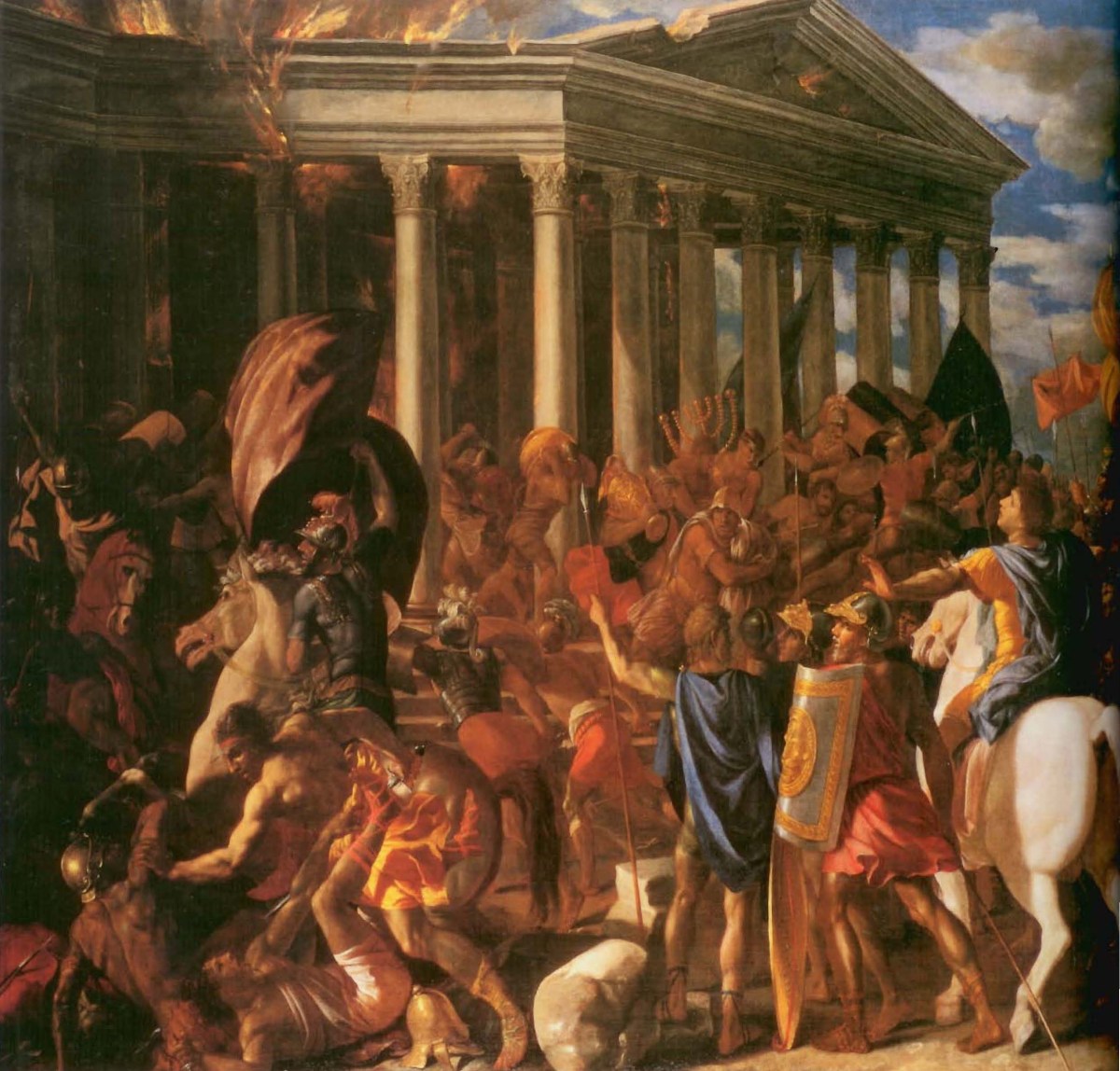
Then the promised judgment for their rebellion came: Most of the nation was lost to history as ten tribes of Israel were scattered through the Assyrian empire, which would be followed by the temple being destroyed and with a remnant of the remaining tribes being sent into exile in Babylon. If there was any hope that the ritual sacrifices at the temple could reconcile the people with Yahweh, now even that possibility was taken away. The restoration of their own kingdom seemed to be in doubt, never mind the kingdom of Yahweh.

However, the exile was promised to be temporary. After 70 years, the exiled nation had the opportunity to return to the Promised Land and rebuild the temple. Once the temple was rebuilt it was now possible for the temple worship to continue and even for their government to be restarted, although it would be under the auspices of a foreign nation. Yet in all that happened, one thing had not changed; the hearts of the image-bearers had not changed. There was still a need for a redeemer.


167 Wolters, Albert M. Creation Regained: Biblical Basics for a Reformational Worldview William B. Eerdmans Publishing 1985, 2005. eBook (Kindle Locations 581-583)

[2] Bible Project “Heaven and Earth” Bible Project thebibleproject.com/explore/heaven-earth

Taxation and Representation

Dancing in the Kingdom- Table of Contents

Dancing In the Kingdom – Part 2 – The Kingdom Revealed– Chapter 10 – The Class of Apparitions

Taxation and Representation

[Bible references: Matthew 22:15-22; 17:24-27; Romans 13:1-7]

One of the issues at the beginning of the United States was a dispute over taxation without representation. The government in Rome set up a taxation system like all other governments in those days, the burden imposed by the taxes on the people was not a consideration. Furthermore, the tax collection that was done on behalf of the Roman government was handled by people that were often unscrupulous. When challenged about whether to pay those taxes, Jesus did not directly challenge the right of the government to collect taxes, but he used the image on the Roman coin to make a more significant point about idolatry.[1] The coin bears Caesar’s image (eikon) and belongs to that realm but God created us as his eikon and we belong to him.

The temple tax was established by Moses as a way of paying for the upkeep of the Tabernacle and was continued to support the upkeep of the Temple.[2] When challenged to pay the taxes by representatives of the temple, Jesus had a conversation with Peter which implied, that kings require taxes from strangers but not family, so as children of God, they did not need to pay the temple tax. Yet, so as not to cause offense, Jesus arranged to pay the taxes for Peter and himself anyway.


[1] By highlighting the physical features of the denarius used to pay the tax, Jesus gives us a number of things to think about. In the first place, the image of the emperor stamped into the coin’s surface, along with the blasphemous inscription with its claim to divinity2, call to mind the prohibition against images in the Decalogue (Exodus 20:4). By pointing out that his opponents possess and display such an object within the Temple grounds (21:23), Jesus seems to raise, not lower, the stakes of the conversation about money and human loyalty. The issue at stake here is nothing less than idolatry. (And this is not a problem that we can solve simply by printing different words on our currency — even words that confess our trust in God.) Furthermore, when we think about Jesus highlighting the physicality of that denarius — the coin stamped out by human hands for human purposes, and the image of Caesar imprinted on it — it’s hard to ignore the connection to those words from the beginning of Genesis about what God said the first time God stamped out a human being: “Let us make humankind in our image, according to our likeness” (Genesis 1:26). (Pape, Lance. “Commentary on Matthew 22:15-22”) Working Preacher www.workingpreacher.org/commentaries/revised-common-lectionary/ordinary; Donavan, Richard Niell. “Biblical Commentary (Bible Study) Matthew 22:15-22” Sermon Writer  sermonwriter.com/biblical-commentary/new-testament-matthew-2215-22/

[2] Smith, Dean “Why Did Jesus Pay the Temple tax?”; Keener, Craig S. “The IVP Bible Background Commentary New Testament Open the Word Sept 16, 2016, opentheword.org/2016/09/16/why-did-jesus-pay-the-temple-tax/ p. 92-93

Reflect

In our system of representative government, we don’t have a direct say in how our tax money gets used. Some people feel that some of our tax money is used for immoral purposes. What do you think our response should be?

Observe

Read Matthew 22:15-22; 17:24-27; Romans 13:1-7. What is the link between paying taxes and loving our neighbor?

Originalism vs. Living interpretation

Dancing in the Kingdom- Table of Contents

Dancing In the Kingdom – Part 2 – The Kingdom Revealed– Chapter 10 – The Class of Apparitions

Originalism vs. Living interpretation

[Bible references: Mark 7:1-23; Acts 23:1-8]

In contrast to the Pharisees, both the Essenes and the Sadducees rejected the oral law,[1] and insisted that only that the books written by Moses were valid. In today’s Christian viewpoint, the Biblical canon has long considered to have been fixed (although there is disagreement between the Orthodox, Roman Catholic and Protestant traditions about what books to include in the canon) even though the accepted methods of interpretation have changed through the years. Outside the church, there is a debate about whether our national Constitution should be interpreted strictly as the writers of the Constitution intended in their context or whether it should be adapted to current circumstances.


[1] Chabad.org “The Oral Law” Chabod.org www.chabad.org/library/article_cdo/aid/2056/jewish/The-Oral-Law.htm

Observe

Read Mark 7:1-23; Acts 23:1-8. The Sadducees restricted their scripture to only Moses’ writings (the Torah). The Pharisees included those writings that were defined as “the prophets and the writings” as well as commentary written in the collections known as the Talmud and the Mishna. Jesus critique of the Sadducees was to have almost ignored the them altogether. Jesus’ criticism of the Pharisees was quite abundant. What were their errors?

For or against the secular culture

Dancing in the Kingdom- Table of Contents

Dancing In the Kingdom – Part 2 – The Kingdom Revealed– Chapter 10 – The Class of Apparitions

For or against the secular culture

[Bible references: Ezra 6:19-22; 2 Corinthians 6:14-18; Matthew 5:13-16; 28:18-20]

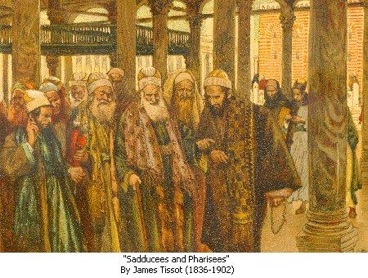
There are many ways people try to hold onto their subculture when they sense that the main culture around them has a corrupting influence.[1] The Sadducees were trying to blend in with the culture of the empire. The Essenes kept themselves as an isolated, communal society.[2] The Pharisees were trying to hold fast to the rules specified by Moses.[3]


[1] Elshtain, Jean Bethke. “With or Against Culture” Books and Culture www.booksandculture.com/articles/2006/sepoct/20.30.html; Niebuhr, Richard M. “Christ and Culture” Harper & Row 1951

[2] Gutierrez, Juan Marcos Bejarano, Forgotten Origins: The Lost Jewish History of Jesus and Early Christianity, Yaron Publishing, 2017 (Location 2343)

[3] Gutierrez, Juan Marcos Bejarano. The Judaisms of Jesus’ Followers: An introduction to Early Christianity in its Jewish Context, Yaron Publishing, 2017 (Locations: 738, 929)

Reflect

Do you try to blend in with the culture or do you try some method of keeping from being absorbed into the culture around you?

Observe

Read Matthew 5:13-16: How can one be “salt” and “light” within our world?

Sanhedrin

Dancing in the Kingdom- Table of Contents

Dancing In the Kingdom – Part 2 – The Kingdom Revealed– Chapter 10 – The Class of Apparitions

Sanhedrin

[Bible references: Matthew 26:59; John 11:46-57; 18:28-40]

The Sanhedrin served as a religious court for the Jewish nation. The beginnings can be traced to the seventy leaders that Moses selected to help him lead the Israelites. This council eventually developed into Great Sanhedrin who ruled over all the Jews with the Lesser Sanhedrin, councils of twenty-three judges, who ruled over the individual towns. The last Sanhedrin met in AD 358 when it was dissolved by the Byzantine emperor. There have been various attempts to restart it since the 1530’s but they have not been successful.

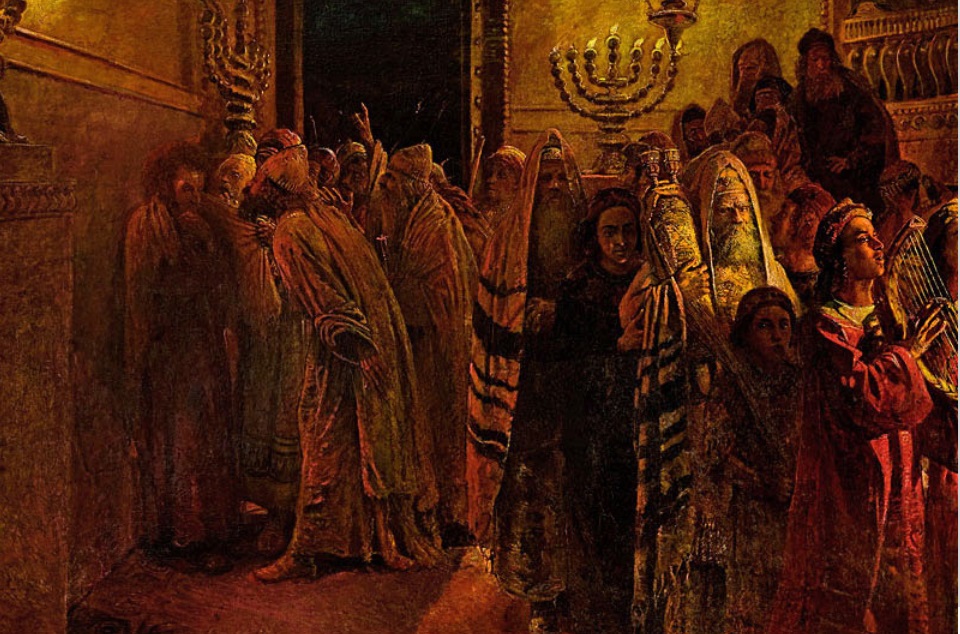
In Jesus’ time, the Sanhedrin served as a religious court while the Romans established civil laws. When Jesus was teaching in the temple courts, the Sanhedrin met to determine what to do with Jesus and made plans to arrest Jesus. It was also the Sanhedrin guards who initially arrested Jesus in the Garden of Gethsemane and brought him before the Sanhedrin for what turned out to be a mock trial. The Sanhedrin wished to put Jesus to death, but they had no authority to do that, so they sent Jesus to Pilate, the governor installed by the Romans, who was the one who ultimately authorized Jesus’ crucifixion.

Observe

Read John 18:28-40. Jesus constantly taught that his kingdom was not of this world, but he was seen as a threat by secular and religious authorities: first by King Herod and then by the Sanhedrin. Why do you think that is?

Samaritans

Dancing in the Kingdom- Table of Contents

Dancing In the Kingdom – Part 2 – The Kingdom Revealed– Chapter 10 – The Class of Apparitions

Samaritans

[Bible references: Matthew 10:5; Luke 9:51-55; 10:25-37; 17:11-19; 10:25-37; John 4:1-43]

King Omri made the city of Samaria the capital of the Northern Kingdom in the 9th century BC. The Assyrians conquered most of the Northern Kingdom in 722 BC and forced most people of the Northern into exile, never to be heard from again in history – and at the same time, Assyria repopulated the area with its own people who then intermarried with the remaining Israelites. Considered to be impure because of their intermarriage with the Assyrians, the Samaritans[1] were rejected as foreigners by the Jews returning from captivity in Babylon. This isolated the Samaritans who wanted to cling to the teachings of Moses but then consequently rejecting the further developments in the writings of the Jews and then developing their own customs, even claiming that their priests were the true descendants of the Levitical priesthood.

In response to being rejected by the main body of the Jews, around 400 BC the Samaritans built their own temple on Mount Gerizim near Shechem, the place where the tabernacle was placed after Israel entered the Promised Land. The Samaritans consider only the Torah, the five books of Moses, to be scripture, rejecting the writings or the prophets and others that the Pharisees incorporated into their scripture. Because of their close-knit community and their isolation, there is still a small community of Samaritans in existence today worshipping on Mt Gerizim.[2]

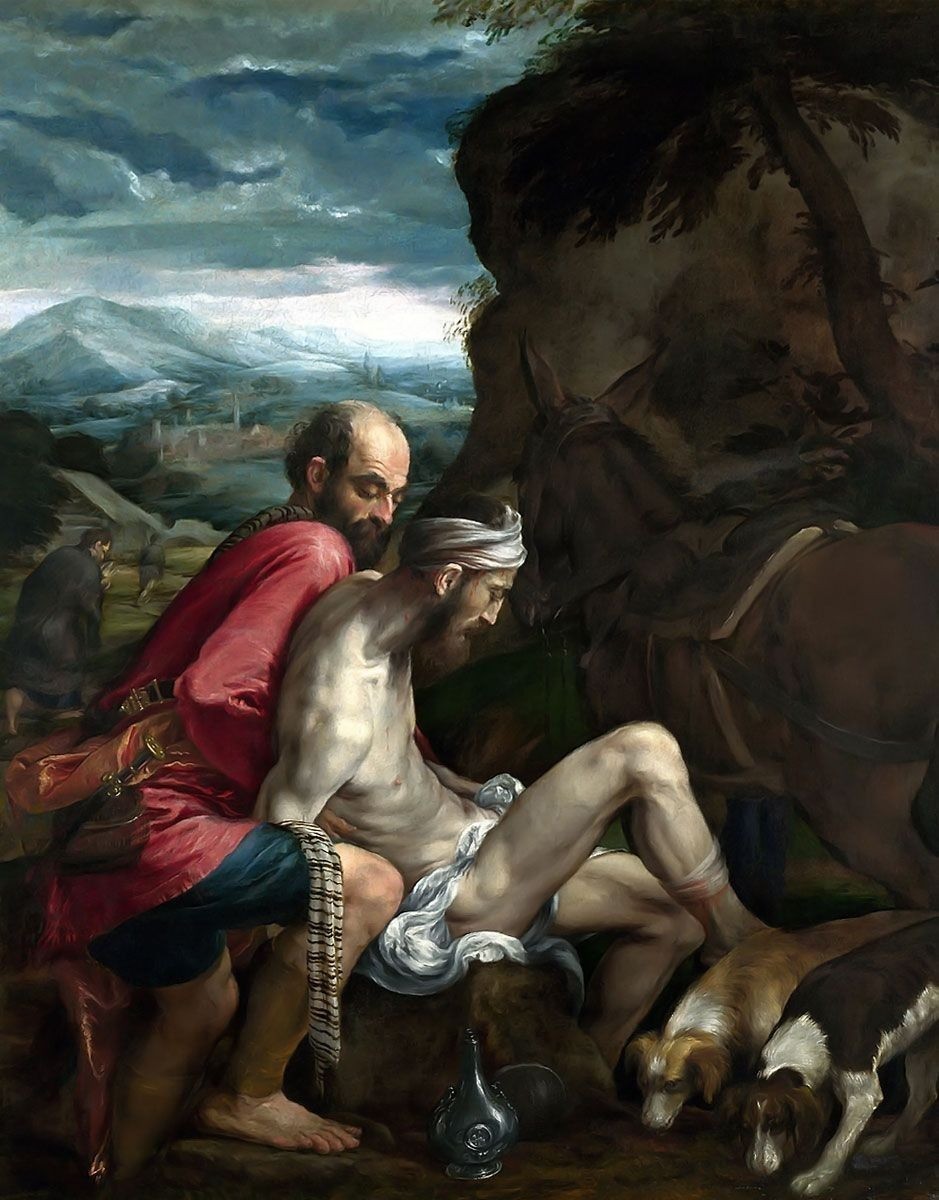
Although Jesus specified that he was sent ‘only to the lost sheep of Israel,’ he did interact a few times with others, Samaritans, and Gentiles. Samaritans and Jews normally avoided each other as they looked down on each other. When Jesus sent out the twelve apostles on an outreach mission, he specifically told them to avoid the Jews and Gentiles. Near the end of his earthly ministry as headed from Galilee, through Samaria to Jerusalem, Samaritans rebuffed his messengers. And yet on one trip from Jerusalem to Galilee he had an encounter with a Samaritan woman who was trying to draw water in the middle of the day and ended up spending two days in town. Another time the barrier also seemed to disappear when Jesus healed ten lepers and only the Samaritan leper came back to thank Jesus. When speaking to a Jewish lawyer who was trying to justify himself, Jesus shared a parable about loving neighbors and chose to show that it was a Samaritan who demonstrated love of neighbor.


[1] Riches, John. “The Word of Jesus: First -century Judaism in crisis” Chapter 1. The Political, Economic, Social, and Cultural Context of First-Century Palestinian Judaism Cambridge University Press, 1990 (p.17-18); NIV Cultural Backgrounds Study Bible eBook “Samaria and Samaritans” Zondervan 2016 (loc. 239865)

[2] UNESCO World Heritage Convention. “Mount Gerizim and the Samaritans” whc.unesco.org/en/tentativelists/5706

Reflect

How do you express love toward your neighbor?

Observe

Read John 4:1-43. What are the surprising things in this story?

Sadducees

Dancing in the Kingdom- Table of Contents

Dancing In the Kingdom – Part 2 – The Kingdom Revealed– Chapter 10 – The Class of Apparitions

Sadducees

[Bible references: 2 Samuel 8:15-18; Ezra 7; Matthew 3:7; 16:1-11; 22:23-34; Mark 12:18; Luke 20:27; Acts 4:1; 5:17; 23:6-8]

The Sadducees were priests who based their legitimacy on their descendance from Zadok, a priest who lived at the time of King David. It was the Zadokite line of priests that emigrated back to Jerusalem when Persians allowed the Israelites to return from captivity. They were intent on holding onto their power which came through the ministry of the temple. Like the Samaritans, the Sadducees regard only the writings of Moses to be scripture and they interpreted them very literally.

The corrupting influence of power caused them to cooperate with the Greeks when Israel became a client kingdom of the Greek empire. Although Pharisees were also in the Sanhedrin, the Sadducees became the prominent group controlling the Sanhedrin notably during the Greek and Roman occupation.

Because the Sadducees only included the books of Moses in the scripture, they did not develop any beliefs in the resurrection, which caused conflicts with both with Jesus and the Pharisees. The interactions that are recorded are all confrontational. There is an obvious tension between Jesus and the Sadducees. Jesus came to undergo death and resurrection and to eliminate the need for continual temple sacrifices, but the Sadducees did not believe in resurrection and their status was dependent on the continuation of the temple sacrifices. In contrast to the poor and needy ‘lost sheep of Israel,’ the Sadducees were the rich upper class. The Sadducees disappeared from history upon the destruction of the temple by the Romans in AD 70.

Observe

Read Matthew 16:5-11. What is the yeast of the Sadducees?

Pharisees

Dancing in the Kingdom- Table of Contents

Dancing In the Kingdom – Part 2 – The Kingdom Revealed– Chapter 10 – The Class of Apparitions

Pharisees

[Bible references: Matthew 5:20; Luke 13:31’ John 3:1-15]

The Pharisees developed out of the scribes who were copying the writings of Moses and, in doing so, were concerned with knowledge of the law, as well the writing of the prophets who came after Moses and the traditions of elders (rabbis). They were also concerned with how to interpret the law to make applicable to everyday life and there were many teachers of the law who wrote commentaries on the law, and the Pharisees also studied these commentaries. The people identified as rabbis came from this group.

The Pharisees became more identified with the everyday people, as opposed to the Sadducees who were identified with the wealthy ruling class. It is not known exactly when the Pharisees were identified as a group but may have happened as their opposition to the teachings of the Sadducees developed.

Jesus had a lot of interactions with the Pharisees. Most of what is recorded in scripture is confrontational, but the dynamics were more nuanced and could be misunderstood. By the times of Jesus, there were two main schools of rabbinic thought: the rigorist school of thought, led by Shammai the Elder, insisted on getting every detail right, particularly in the area of cleanliness, and was beyond the possibility of normal Jews to live out; the humanist school of thought, led by Hillel, was more intent on getting the spirit of the law right and was therefore within the realm of normal Jews.[1]

Another nuance had to do with the normal culture of conflict within Judaism (after all, ‘Israel’ means ‘wrestles with God’). It would have been normal for the scribes and Pharisees to question this new teacher, Jesus, and test his knowledge to see if he knew what he was talking about, although there may be a question about their motives – was the testing done to gain understanding or was the testing done to try to discredit Jesus. We shouldn’t forget the time that some Pharisees warned Jesus about Herod’s plot to kill him.


[1] Johnson, Paul. “A History of the Jews” Harper Perennial 1987 (p 127)

Observe

Read John 3:1-15. A closer reading of scripture shows that Jesus did not just have a confrontational relationship with the Pharisees but had a more nuanced relationship. This can be particularly seen with Jesus’ interaction with Nicodemus. Describe the type of interaction between Nicodemus and Jesus.

Return and Remembrances

Dancing in the Kingdom- Table of Contents

Dancing In the Kingdom – Part 1 – Shadows of the Kingdom – Chapter 9 – The Prophets and writings

Return and Remembrances

[Bible references: Deuteronomy 34:10; 2 Chronicles 36:23; Ezra 1, 2; 6; 7; 9-10; Nehemiah 1-2; Haggai; Zechariah 8; Malachi 1:6-14; 2:10-16; 3:6-9; 4:1-6]

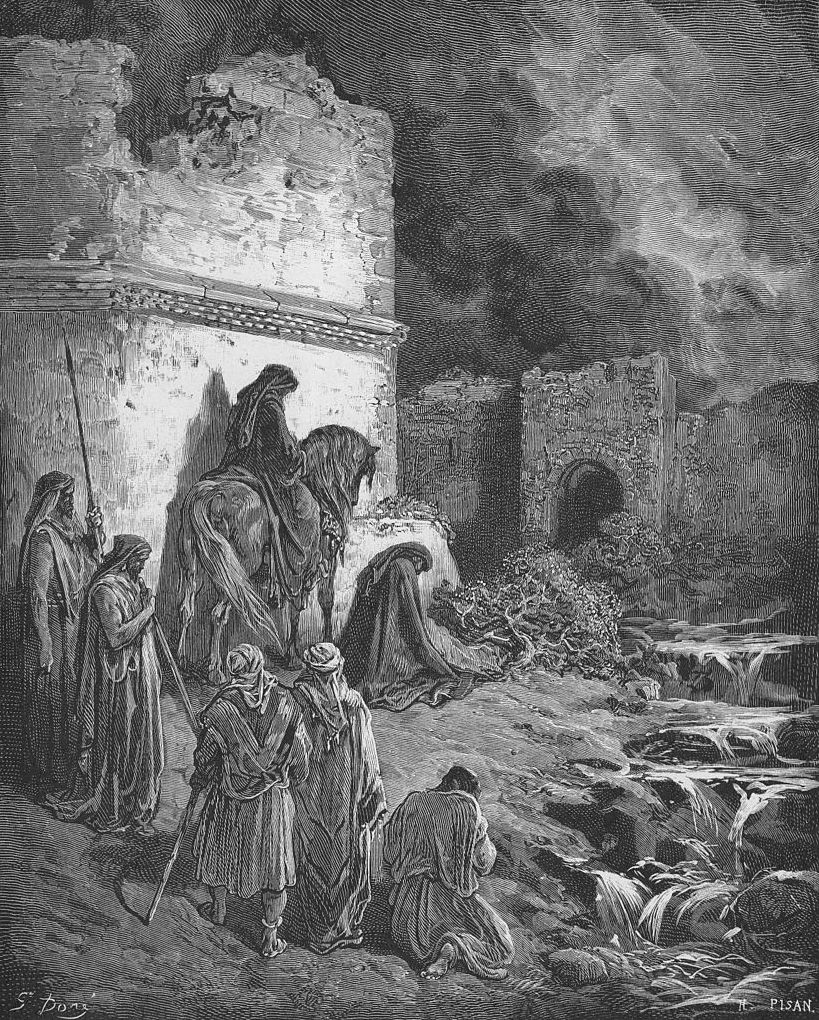
Assyria scattered the Northern Kingdom throughout their empire. Then the Babylonians overran Assyria but also captured Jerusalem and took the prominent citizens into exile. After the 70 years in captivity prescribed by God had passed, the Persians overran Babylonia, and they allowed the Jews to return to their homeland. The first batch of returnees went back with Zerubbabel to Jerusalem to rebuild the temple. A second batch would go back to Jerusalem with Ezra who confronted the Jews about their failure to keep separate from the nations around them. A while later, Nehemiah would go back to Jerusalem to rebuild the walls. And yet, with all the returnees, the majority of the Jews chose to remain in Babylonia – and even today, most Jews live outside the Promised Land.[1]

Only a remnant of Israel returned to the Land of the Promise, but the land was ruled by foreigners.  The temple was rebuilt but was only a remnant of the temple built by Solomon – which caused the people old enough to remember the former temple to weep. On the face of it, the Promise did not look promising. There must be something more. God had promised to bless the world through Abraham, but this remnant of the Davidic kingdom did not look poised to bring that promise. Israel was still waiting for the prophet “like Moses” to arrive.

But God did not choose Israel because it was the strongest kingdom. And Israel’s history is full of examples of God choosing to guide His people with the one who was thought weaker or the one who was younger. And there always seemed to be reminders that God was working in spite of Israel’s failures:

  • In a reminder of God’s provision, in all the returns to Jerusalem, the rulers of the Persian empire strongly supported the returns of the Jews who were given what they needed. God even provided prophets to encourage the Jews.
  • In a reminder of the times when contributions were needed to build the tabernacle, those who did choose to return to the Promised Land with Zerubbabel willingly contributed from the provisions given to them by the Persians to the rebuilding of the temple.
  • In a reminder of their own abilities to follow Yahweh, when the Jews first returned to the Promised Land they ended up once more intermarrying with the non-Jews and practicing their idol worship. So, when Ezra came to Jerusalem, he had to lead the Jews to repentance and to put away their foreign wives.

In the time of exile, the people of Israel compiled the writings of the prophets to serve as their scripture and discovered how to follow God without a system of animal sacrifice. In the time of their return to the promised land the people of Israel listened to that scripture and repented of their ways. And as the people of Israel waited for a prophet like Moses, God was still moving, working to fulfill His plan and His promises.


[1] Jewish Virtual Library “Vital Statistics: Jewish Population of the World (1882 – Present)” )” Jewish Virtual Library www.jewishvirtuallibrary.org/jewish-population-of-the-world

Observe

Read Malachi 4:1-6. This is the last passage written by the last prophet before Jesus would come. Even now at Passover celebrations, a place is set at the table for “Elijah.” In the Christian understanding, who is the “Elijah” that was prophesied to come?

Worship in exile

Dancing in the Kingdom- Table of Contents

Dancing In the Kingdom – Part 1 – Shadows of the Kingdom – Chapter 9 – The Prophets and writings

Worship in exile

[Bible references: Jeremiah 29:1-23; Daniel; Esther; Ezekiel]

During this exile, the Jews, as they would now be called, had to become more deliberate if they were going to preserve their culture. It was during this time that the Jews would begin to collect all their writings in order to begin to determine what would be their scripture. They had the writings of Moses, but they had to determine what else should be included.[1]

During this time, they focused more seriously on worshipping Yahweh. Before this time, the biblical and archeological records indicate that Israel had a habit of adopting the worship of any idols of the culture they were in contact with.[2] But now they had to preserve their culture while living amid a dominant foreign culture.

The books of Daniel, Esther and Ezekiel give examples of how the Jews were able to thrive, even while experiencing opposition while the nation was in exile: Daniel as an exceptional administrator, Esther as queen to the emperor and Ezekiel as a prophet.

From this time forward, most Jews have remained outside their homeland with no access to the one temple in Jerusalem. It was during this time that local synagogues were created, with worship now being focused either in the home or at the synagogue.[3]


[1] Waltke, Bruce. “How We Got Our Old Testament” Christianity Today, Christian History www.christianitytoday.com/history/issues/issue-43/how-we-got-our-old-testament.html; Hirsch, Emil G. Blau L, Kohler, Kaufmann. Schmidt, Nathaniel “Bible Canon” My Jewish Encyclopedia, www.jewishencyclopedia.com/articles/3259-bible-canon

[2] Gayle, Damien. “How idolatry continued in the Kingdom of Judah: Israeli dig uncovers temple and icons dating back to Old Testament era” Dailymail.com 27 Dec 2012 www.dailymail.co.uk/sciencetech/article-2253695/How-idolatry-continued-Kingdom-Judah-Israeli-dig-uncovers-temple-icons-dating-Old-Testament-era.html

[3] Bacher, Wilhelm and Dembitz, Lewis N. “Synagogue” Jewish Encyclopedia www.jewishencyclopedia.com/articles/14160-synagogue

Observe

Read Jeremiah 29:1-23. What did Jeremiah say that the exiles were to do while they were in exile?

The Tabernacle and the Temple

Dancing in the Kingdom- Table of Contents

Dancing In the Kingdom – Part 1 – Shadows of the Kingdom – Chapter 9 – The Prophets and writings

The Tabernacle and the Temple

[Bible references: I Kings 6-8; 7:13-51; 1 Chronicles 6:31-32; 2 Chronicles 6:18; Amos 9:11-15; Acts 15:1-21]

During the time of Solomon, the temple was built to replace the tabernacle. All the furnishings except the ark itself were built by a foreigner named Hiram from Tyre. The original furnishings of the tabernacle were probably put into storage in the temple. Although the temple was much more grandiose than the tabernacle, Solomon recognized that it still could not hold God. Solomon’s temple was eventually destroyed by the Babylonians.[1]

The interesting thing with this history is that during the time of King David all the rituals of Moses were carried out at the tabernacle in Gibeon where there was no ark (and therefore no “presence of God”), while the ark itself, with the presence of God, was in Jerusalem where there was a service of joy, dancing and singing instead of the ritual sacrifices. Also, the ark was no longer concealed in the Holy of Holies where there was limited access, it was now in a place where everyone could access it.

This brings us to the prophet Amos who prophesied that God was going to destroy most of Israel, except for a remnant, but that David’s tabernacle will be restored – not the one at Gibeon, not the temple Solomon built, but David’s tabernacle. This scripture passage in the Old Testament was quoted in Acts 15 where it was determined that Amos was referring to Gentiles now being accepted into the kingdom of God. The tabernacle of Moses and the temple of Solomon were restricted to the nation of Israel, but God was now going to make himself available to the whole world, Jews and Gentiles alike.


[1] Jewish Bible Quarterly “Reconstructing the Destruction of the Tabernacle at Shiloh” Jewish Bible Quarterly January – March 2016 jbqnew.jewishbible.org/jbq-past-issues/2016/441-january-march-2016/reconstructing-destruction-tabernacle-shiloh/

Observe

Read Amos 9:11-15; Acts 15:1-21. How was Amos’ prophecy used by the apostles to allow Gentiles into the church without needing to submit to Jewish practices?

A set-apart people

Dancing in the Kingdom- Table of Contents

Dancing In the Kingdom – Part 1 – Shadows of the Kingdom – Chapter 6– A nation emerges

A set-apart people

[Bible references: Exodus 23; Leviticus 11, 17; Deuteronomy 14; Hebrews 4:1-13; 10:24-25]

What does it mean to be created in the image of a holy God? What do we mean when we say, “God is holy?” We first encounter the term in Genesis 2:3 when God indicates that the seventh day will be made holy, the seventh day was to be set apart from the other days. When Moses encountered God’s presence in a burning bush, Moses was told to remove his sandals because the ground was holy. It was also God’s intention to make Israel a holy nation, set apart from other nations and through which all the nations on earth would be blessed.

There were a couple of ways in which the nation of Israel would be greatly distinguished from the nations around them, the food, and the calendar. There were some restrictions on the food they could eat (such as certain meats, fish, birds, and insects) and how they had to prepare their food that would have prevented them from intermingling with the peoples around them. But the calendar provides an even more distinguishing difference. While some cultures had recognized a seven-day calendar, it was the Israelites who set aside the seventh day of the week as a Sabbath on which no work was supposed be done. But that is not the only distinguishing characteristic of the calendar.

In the present day we have a universal calendar, and we prioritize journalistic chronology. That is, we remember historical events on the particular day that the events happened according to our calendar. For us, it is important for us to track events in the chronological order in which they happened. However, there are a few exceptions that we should note. Sometimes we don’t set aside remembrance days according to the actual date of the event but rather according to other values – for instance, we always celebrate days such as Martin Luther King’s birthday, not on his actual birth date, but always on a Monday because of our priority for extended weekends.

For the Israelite calendar, the priority was not chronology but liturgy. The remembrance days for events were not set according to the actual historical date on which they occurred but were set according to the liturgical calendar. This practice become clear when you trace out the timing of events in the Pentateuch (first five books of the Hebrew Bible) and compare them to the remembrance dates. It was more important to have events in the context of God’s activity rather than the contexts of the events themselves.

This concept provides the background for celebration of the Sabbath. The Sabbath was such an important concept for the Jews, that the account of creation in Genesis 1 was used to present the concept of Sabbath.[1] When we think about God’s creating activities, God did not need six days to carry out creation, nor did he need to stop working. So why do set up the remembrance of God’s creation in a seven-day timeframe? Once again, the important point is not the chronology but the liturgy.

The important point about the creation event was not the event itself, but what it was for. The purpose of creation was to create a “temple,” a place where God could be with his people. That’s the main point. “Resting” on the seventh day is not about “not working,” because God has not stopped doing things. The point of “resting” is to focus on doing what the temple was all about, which is to be with His people. For us to practice the Sabbath, the point is to be with God and join him in his creative work in the universe – the point is to be with God. When you look at Genesis 1-2, you will notice that the first six days have a defined beginning and end, an evening, and a morning. The seventh day, however, does not have a defined beginning and ending – that implies that we are in the seventh day. This “day,” or age, that we are in, is the “day” that we “rest” with God. It was intended at the beginning that all our activities done with, “at rest with,” God.

This brings us to a second distinguishing characteristic of the Jewish Biblical calendar: the first month was during the spring equinox, harvesting time, whereas in the surrounding cultures the first month of the calendar was set in the fall equinox, crop planting time. The difference in meaning was that since Israel’s year started with God’s work, the year begins God’s provision of the harvest which fed the nation and provided seed for the fall. This contrasted to the surrounding cultures which began their calendar with their work, so their year began with their work that provided for the next harvest.[2]

What can be confusing is that in current practice, Jews do not use the biblical (or liturgical) calendar but the civil calendar which places the first month in the fall instead of the spring. Christians do have an equivalent practice: our civil calendar begins in January, which was set by the Roman government and coincided with Roman elections whereas some in the Christian community observe a liturgical calendar which begins in the fall with the season of Advent.

The liturgical focus of the calendar with its de-emphasis of the chronology of historical events helps explain some interesting discontinuities and apparent conflicts in the Biblical text. If we allow the events described in Exodus to be interpreted liturgically instead of chronologically, we can make better sense of the flow of Exodus.

One of the “apparent conflicts” occurs in Exodus 19 when the Israelites arrived at Mount Sinai. At the beginning of the chapter, Yahweh made a covenant similar to the one with Abraham and declared that they were to be a “kingdom of priests,” and that all the Israelites were to prepare to go up the mountain after the sounding of the ram’s horn. And yet, at the end of the same chapter, Yahweh told Moses to not let the people, except thepeople designated to be priests, to go up the mountain. By noticing such apparent conflicts, we can better chronologically rearrange the events in Exodus so that they make better sense to chronologically minded folks such as we are.

A possible chronological arrangement of events looks like:[3]

  • The initial, Abrahamic-like covenant was given (including building earthen altars) followed by the Decalogue (10 Commandments).
  • The golden calf incident occurred.
  • There was a covenant renewal.
  • The code for priests was given along with instructions for building a tabernacle.
  • Another incident with idols, this time goats, was documented.
  • A Holiness code was given to the people.
  • The covenant is renewed again.

While the rearrangement may help us who are chronologically minded make better sense of the text, in the end we are left with Israel now being a nation with priests and the community centering its worship around a large tent called the Tabernacle. The liturgical intent of the text as it is written, is to focus on the immediate outcome, that Israel will be a nation under the Mosaic covenant, a nation with priests serving a holy God who may reside among them but who is not directly accessible. This is the necessary outcome until the Redeemer comes. The obscured intent was that Israel was meant to be a nation under the Abrahamic covenant, a nation of priests of faith, but now a nation that could not materialize until after the Redeemer comes. That is the present intent of the Christian community, by recognizing Jesus as our  Redeemer we can be a “nation” of priests serving a holy God who resides among us.

Worship at the tabernacle was a community event. No one could do this by themselves. Different people were assigned to different tasks, which not only included direct involvement in worship but also in the care of the tabernacle and its furnishings. Even one’s individual sins required the use of priest to handle the sacrifice. Before the tabernacle, offerings could be made by anyone, but with the tabernacle, only designated priests could perform the sacrificial offerings.

This arrangement continues the pattern of representing the holiness of God in creation. God’s image-bearing creatures are set aside from all other creatures; Sinful humans are separated from the Garden of Eden; Noah and his family are set aside in the ark from all other people; Abraham is set aside from all other people to usher in the blessing of all people; Moses is set apart from the other Israelites to see God face-to-face; the Levites are the tribe set apart from the other tribes to manage the care of the tabernacle; the priests are set apart from the other Levites to carry out the rituals in the tabernacle; the Sabbath is set apart from all the other days as a reminder of God’s provision– and the list goes on.


[1] LeFebvre, Michael. “The Liturgy of Creation: Understanding Calendars in Old Testament Context” Intervarsity Press 2019

[2] LeFebvre, Michael. “The Liturgy of Creation: Understanding Calendars in Old Testament Context” Intervarsity Press 2019

[3] Sailhammer, John. “Introduction to Old Testament Theology” (Appendix B) Random Publishing Theology 1995

Reflect

What does it mean that we are created in the image of a holy God?

Observe

Read Exodus 23:10-13. What is the purpose of the Sabbath observance?

Discipline, Miracles, and Death

Dancing in the Kingdom- Table of Contents

Dancing In the Kingdom – Part 1 – Shadows of the Kingdom – Chapter 6– A nation emerges

Discipline, Miracles, and Death

[Bible references: Genesis 15:13-14; Exodus 7-11; 12:31-36; 13:17-22; 16; 17:1-7; 20; 32; Numbers 13-14]

Miracles abounded.

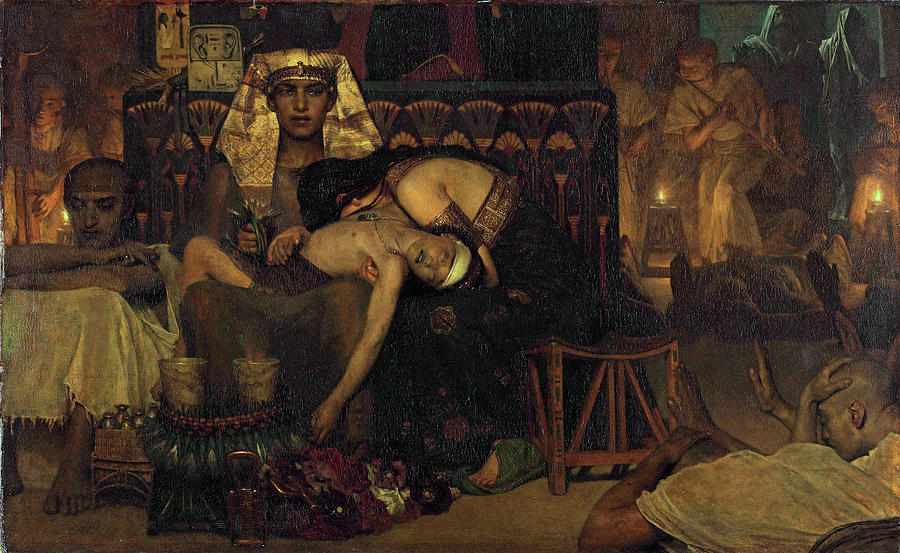
There were the ten plagues that God brought upon the Egyptian captors to show the Pharaoh that Yahweh was not just a local God in Canaan but that His power extended over all creation, even in the land of the Egyptian gods. In the process, the Pharaoh’s own heart continued to harden against Yahweh to the point where God would seal the Pharaoh’s fate and further harden the Pharaoh’s heart. In the end, it took the killing of the firstborn of Egyptian families, including the family of the Pharaoh to convince the Pharaoh to let people of Israel go. And even more, the people of Egypt also supplied the people of Israel with great wealth as they left. Some Egyptians even joined the people of Israel in their flight.

Then there was the miracles of the pillars of cloud and fire, which would continue until the nation entered the Promised Land, and the miracle which let Israel cross the Red Sea on dry land followed by the drowning of the Egyptian army. The pattern of punishing a nation that was used to discipline the people of Israel would be repeated throughout Biblical history.[1]

Once on their way, the Israelites experienced more miracles: a mountain enshrouded in a cloud where Yahweh talked with Moses and gave Moses the Commandments and other rules; manna and quail falling from the sky; springs of water in the desert. Despite seeing all those miracles, Israel wasn’t ready to have Yahweh lead them into the Promised Land to face the obstacles there, so God had them encamp in the wilderness for 40 years until all the adults who refused to trust Yahweh died. So many deaths must have happened, but scripture barely mentions them. Here we will see, not for the last time, that seeing miracles not only did not change hearts but that, even now, despite all the evidence that we see, that all our hearts seem predisposed to turn away from God.


[1] Ex: Egypt (Genesis 15:13-14), Babylon (Isaiah 13, 21,23),  and Assyria (Isaiah 10, 14; Zephaniah 2) were all used by God to discipline Israel

Observe

Read Exodus 8-10. In the narrative of the 10 plagues, several times we are told that Pharaoh hardened his heart, but then there came a time when Yahweh reinforced that trajectory and Yahweh hardened the Pharaoh’s heart. What kind of warning might that be?

Fullness of time

Dancing in the Kingdom- Table of Contents

Dancing In the Kingdom – Part 1 – Shadows of the Kingdom – Chapter 6– A nation emerges

Fullness of time

[Bible references: Genesis 15:16; Exodus 2-4; 7-11; Galatians 4:1-7; Ephesians 1:1-14]

The emerging story of the chosen people of God becoming a nation started slowly: Abraham and one child of the promise, Isaac, who had two children, only one through which the promise would come, Jacob, who then had had thirteen children. But it would take time for that family to grow into a size that could be called a nation – and that took a couple hundred more years – in which time the “sin of the Amorites would reach their full measure.”

Although the Bible does not specifically mention it, there may have been other things that God was waiting to happen such as the development of the Israelite community and the consequent interaction of the Israelite community with the Egyptian community during the Israelite captivity. God allowed events to gradually unfold until “the fullness of time” came for God to orchestrate a dramatic release of the Israelite community. This event would serve as a foreshadowing of another event, the spiritual release of all peoples from slavery to sin.

So it was, that in the fullness of time, when the sin of the Amorites reached its full measure,[1] Yahweh called Moses to release the enslaved Israelites from Egypt to bring Israel back to the Promised Land.


[1] White, James Emery. “Is God a Moral Monster? The Slaughter of the Canaanites” Church&Culture 22 Oct 2020 www.churchandculture.org/blog/2020/10/22/is-god-a-moral-monster

Reflect

Often, when we are younger, we think we know everything. But most of the time, we discover over time that we need maturing – to grow in wisdom – a process that takes time and experience. What things have you learned through time and experience?

Observe

Read Genesis 15:16; Galatians 4:1-7. What do these verses tell us about God’s sense of timing?

The Temple Maker

Dancing in the Kingdom- Table of Contents

Dancing In the Kingdom – Part 1 – Shadows of the Kingdom – Chapter 2 – The God who created

The Temple Maker

[Bible references: Genesis 1-2; Exodus 26; 1 Kings 6; Job; Psalm 8; 95; 100; 104 and others; Proverbs 8:22-31; Isaiah 44:21-28; 45:5-12; 51:4-12; 55:6-13; Matthew 26:61; I Corinthians 6:19-20; Revelation 21-22]

There has been much debate about how to interpret the creation account. There have been various attempts to understand creation as physical processes that had occurred (over shorter or longer periods, depending on your analysis) because in our current cultural context we default to thinking of creation in physical, scientific terms. But what if (surprise! surprise!) we consider the biblical text to be a theological text instead of a scientific one, about functional origins and not about material origins.[1]

The cosmos can only function as sacred space once God has inhabited it and people in his image are there. God is declaring purpose for the cosmos as an ordered space for people and as sacred space where he will dwell. This is what defines the divine activity …Adopting and promoting a vision and mission statement will not change how the institution operates. But it articulates a purpose and identity that may not have been realized or present before and proclaims that as its purpose. Genesis 1 is doing something similar. It is articulating a purpose through a mission statement (people living out their designated role as the image of God) and a vision statement (seeing the world around us as sacred space where God is living among his people and being in relationship with them). .[2]

In the last few decades, research has uncovered much more about the culture in the Ancient Near East than ever before. It has been discovered that in Ancient Near East cultures, the Genesis account would not have interpreted the creation account in terms of physical processes but rather in terms of assigning meaning and purpose. So, as we read the Creation account in Genesis 1, on the first three days the spaces of light and dark, waters above and below, and the land are being assigned a purpose. The next three days the populations of those spaces are assigned a purpose: the sun and the moon and stars, the birds and fish, the land animals.

In this perspective, the story of creation is seen more as a story about the dedication of a temple, where the universe and the world were dedicated as a sacred space, a space where God would dwell with his people. Therefore, the seventh day is when God rested from the act of dedicating the earth, which would now be the place where He would now live with his image-bearers. If you read Genesis 1-2, you will see that, unlike the other days, there is no “there was evening and there was morning.” That is because we are living in the seventh day.

The completion of God’s temple would be later remembered by the seventh day celebration of the Sabbath. Although God’s temple was completed by the seventh day, it was not a time where God ceased to do everything. The still continuing seventh day is the time when the “temple” which is our “home” is completed so that God and we, as his co-regents, can settle in and do the things that our home was designed for. Jesus in John 5:1-7 clarified this idea where he explained, “My Father is always at his work to this very day, and I too am working.” Living into this sacred space would entail us taking part with God in his continual acts of creating and sustaining the universe. That is the perspective of Eve, when she gave birth to Cain, she recognized that “I’ve created a man with Yahweh.”[3]

In Genesis 2, the focus moves to the humans God created and how they were to function in that sacred space where the Garden of Eden is the center. Genesis 2 is also where God’s name, “Yahweh,” begins to be used. Genesis 1 introduces the God as the Creator of the universe whereas Genesis 2 introduces the God who in establishing a personal relationship with the people he created uses a personal name.[4]

The cosmos that God created was intended to be a temple, the place where He would meet with his people. The temple/creation imagery permeates and unites all of scripture from the first book, Genesis, to the last book, Revelation. The temple/creation theme shows up in places like in the stories of Noah, Moses, and Abraham, in the construction of the Tabernacle and the Temple, in Job’s dialog with Yahweh, in the poetry of Psalms[5], in prophecies of Isaiah, in the body Jesus and in us as his Body and finally in the depiction of reuniting of heaven and earth. Each instance shows its own unique aspect of the temple, so that when combined with each other, they show a more complete picture of how God meets with us and provides for us and what he has intended for us. We see a complex picture of the temple as a physical place in Creation and at the same time the temple is within us, inside the bodies of all of those who call on his name. In both those cases we can see the provision of God who 1) abundantly fills all of Creation in ways that exceed our imagination and exceed the capacity of any book to tell and, 2) abundantly fills us with His strength and His Spirit so that we can fulfill the desire He has for us to “cultivate and keep” the abundant place He has provided for us.

One of the benefits of considering only the theological aspects of the Creation accounts, or the why of creation, is that we don’t have to be as highly concerned about the how of creation, or the scientific/physical accounts of creation. When scientific creation accounts are proposed and are not perceived to be correct because they don’t seem to theologically fit, we don’t need to despair. It may be that the various proposed scientific explanations simply don’t theologically fit because they just don’t or because we just don’t understand just how they could theologically fit. We know that the sciences are limited and that theories will change as more discoveries are made. Sometimes those theories may seem to move closer or further from our limited theological understandings, but our theology is not constrained by whatever the current science may indicate. In the meanwhile, we are free to explore the science and wonder in awe and marvel at just how God managed to do it all while humbly admitting that we don’t have the mind of God and how much higher his ways are than our ways.


[1] Walton, John. “The Lost World of Adam and Eve,” Proposition 3, InterVarsity Press. 2015 Kindle Edition. pp. 35-45; Driver, Cory. “Commentary on Genesis 1:1-5” Working Preacher 10 Jan 2021 www.workingpreacher.org/commentaries/revised-common-lectionary/baptism-of-our-lord-2/commentary-on-genesis-11-5-5; Carlson, Reed. “Commentary on Genesis 1:1-2:4a 12” Working Preacher Sept 2011 www.workingpreacher.org/commentaries/narrative-lectionary/creation-by-the-word/commentary-on-genesis-11-24a-5; Throntveit, Mark. “Commentary on Genesis 1:1-2:4a; or 1:1-5,26-2:4a 1 Working Preacher 1 Sept 2011 www.workingpreacher.org/commentaries/narrative-lectionary/creation/commentary-on-genesis-11-31-21-4

[2] Walton, John. “Material or Function in Genesis 1? John Walton Responds” Biologos 3 Apr 2015 biologos.org/series/reflections-on-the-lost-world-of-genesis-1-by-john-walton/articles/material-or-function-in-genesis-1-john-walton-responds

[3] Friedman, Richard Elliot, Commentary on the Torah, Harper Collins, 2003 Location 6942 of 37412

[4] There will be more discussion on that name in “Hope in the Brokenness,” Chapter 4

[5] Muran, Alexej. “The Creation Theme in Selected Psalms” Geoscience Research Institute 1 May 2015 www.grisda.org/the-creation-theme-in-selected-psalms

Reflect

Does viewing the universe as a temple affect the way we look at it?

Observe

Read Proverbs 8. This proverb personifies God’s wisdom. Read how God is describing how His wisdom is built into the very framework and fabric of this temple we call Creation. How can we sense God’s presence with us because of how His wisdom should be speaking to us?

Mystery of God’s name

Dancing in the Kingdom- Table of Contents

Dancing In the Kingdom – Part 1 – Shadows of the Kingdom – Chapter 2 – The God who created

Mystery of God’s name

[Bible references: Exodus 2-3]

 Many English-speaking Christians would say that, of course we know God’s name – it’s “Jesus,” or if you want to pronounce it in Hebrew it would be “Yeshua.” That would be true for the name of the Son of God. But what about God? The mystery of the name of God in the Old Testament has to do with the original Hebrew.

When God introduced himself to Moses, His name using modern Hebrew letters[1] would look like the next to the last line in the picture above. In older Hebrew it would have looked like the lines above it – the original characters are the top line . The original Hebrew language had no written down vowels, so these letters all represent consonants. In modern reading practices we mostly read silently to ourselves, but for most of history, it was more common to read out loud, so having written words with no vowel marks would not be a problem, because everyone would always be hearing the vowel sounds.

The difficulty in this case, is that in Old Testament times when Israel was in exile in Babylon, it came to be considered that the name of God was too holy to be pronounced. So, whenever someone would read that name, they would substitute the word “LORD,” which in Hebrew would be “Adonai.” In less formal settings, the Hebrew word, “Hashem,” which means “the name” would be used.

 That means that over time, the actual pronunciation of the word became forgotten. By the time English translations were produced, the translators adopted the Hebrew practice of using the word “LORD,” however, to distinguish the special name, the practice was to use a special way of spelling, “LORD.” What you will see in the English Old Testament, is the word “LORD,” using a capital “L” followed by “ORD” in smaller capitals.

As the centuries went on, Hebrew in general started to become less used and there was a concern about the pronunciation of all the Hebrew words. So back between the 7th and 10th centuries AD, a group of Jews called the Masoretes, added vowel markings to the Hebrew letters, except for the name of God.

During “Enlightenment,” many Christians started to feel less constrained by the holiness of God. So back in the 1800s, when Germany was center of the academic world, and the Christian academics made an attempt to try to pronounce the long unpronounced יהוה. In Hebrew, the letters are written right-to-left and corresponded to the English letters YHVH. The next step was to figure out the vowels, so they used the vowels for the Hebrew word for God, Eloah. And then, because the German language didn’t handle words beginning in “Y,” the “Y” became “J” with the resulting pronunciation being “Jehovah.” So that became the standard pronunciation in English for more than a century.

In recent decades there has been accelerating research in archeology of the Ancient Near East and researchers started to question the standard pronunciation. Currently, most scholars are in agreement to use ‘Y’ instead of ‘J’ as the first consonant and now understand that in Old Hebrew the third consonant should have a “W” pronunciation instead of “V.” Then they determined that they should use the vowels from the word “Hashem” which led to the pronunciation of “Yahweh” for the Hebrew name of God.

A new level of understanding can be obtained if we take another type of look at the letters in the name, יהוה or  . Particularly, if we look at the older letters of the Hebrew language, we can see that the letters are pictorial, that is they represent objects or actions.  The first letter represents either a hand or an activity of doing something. The second and fourth letters represent windows or revealing something. The third character represents a nail or fastening something. That means that the name God revealed to Moses means, according to the letters, “Hand revealed, Nail revealed.”


[1] Shurpin, Yehuda. “What is the Authentic Ancient Hebrew Alphabet?” Chabad.org www.chabad.org/library/article_cdo/aid/3582435/jewish/What-Is-the-Authentic-Ancient-Hebrew-Alphabet.htm

Observe

Read Exodus 3. What difference would it make to the Israelites that their God has a name?

Settling into the Promised Land

Dancing in the Kingdom- Table of Contents

Dancing In the Kingdom – Part 1 – Shadows of the Kingdom – Chapter 1 – Prelude

Settling into the Promised Land

[Bible references: Joshua, Judges]                                     

Moses died on the east of the Jordan River. Joshua, one of the 12 spies, led Israel into the Promised Land. After the conquest was complete, the land was divided among the 12 tribes and the tabernacle was moved to Shechem, the place where God promised his descendants would dwell, where Abraham, Sarah, Isaac, Jacob and Joseph were buried.

After Joshua’s death, no one was appointed to be the leader of the people. The people did have the Books of the Law as written by Moses to guide them. God was supposed to be their king. But particularly when things were going well, Israel was inclined to forget about God and not be obedient to the Law. To encourage Israel to return to Him, God would allow some of the neighboring tribes harass them. When things got too bad, the people would complain to God, who would raise up leaders (called judges) to help them overcome their enemies, after which Israel would remember to their old ways. The process would repeat several times.

Observe

Read Judges 2:10-19. What habits did the Israelites find hard to break? What habits are hard for you to break?