New Testament Missions

Dancing in the Kingdom- Table of Contents

Dancing In the Kingdom – Part 1 – Shadows of the Kingdom – Chapter 1 – Prelude

New Testament Missions

[Bible references: Acts 8-28; Romans 9-10]

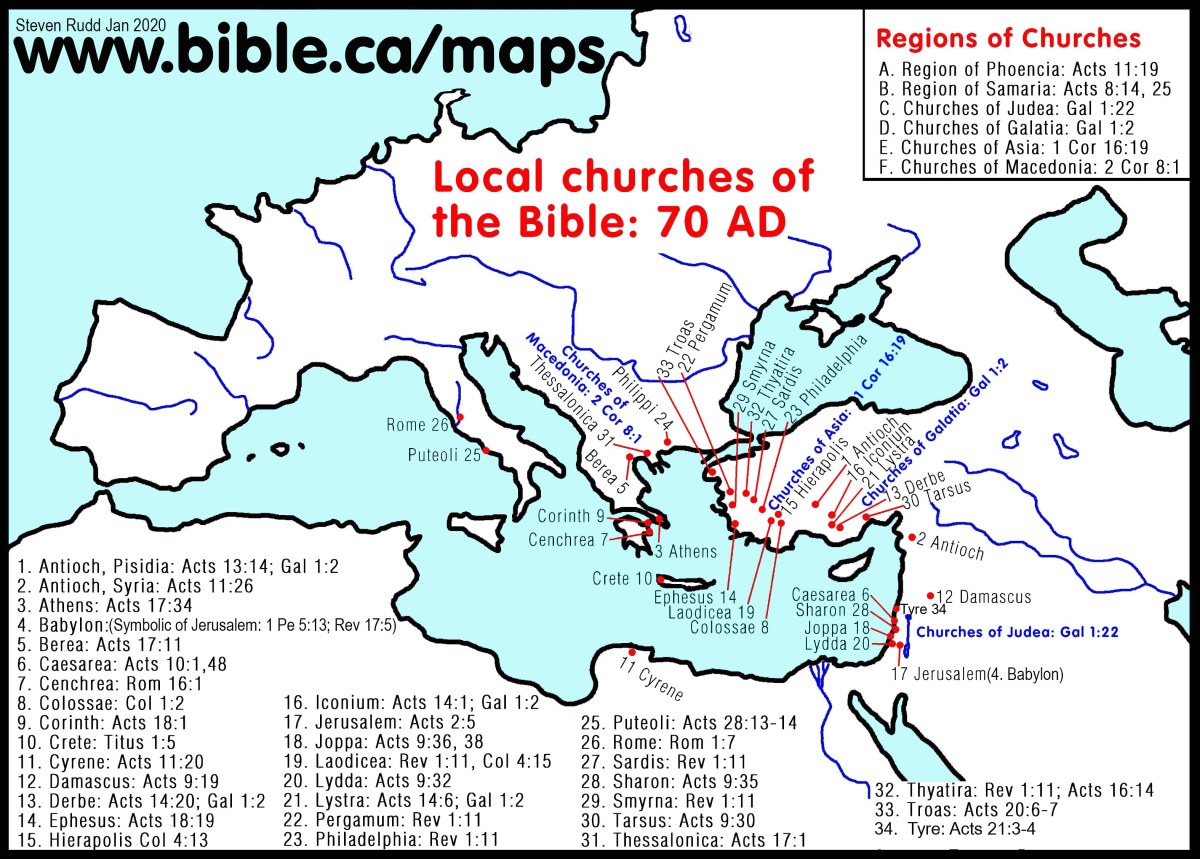
In the Bible, the most extensive effort to bring the Gospel to the world was carried out by Paul. Paul’s efforts are recorded in the book of Acts and in the letters Paul wrote. Paul undertook four missionary journeys. The first journey covered parts of what is now Turkey. The second and third journeys expanded the mission in that area and then also expanded into the area we now call Greece. Paul’s fourth journey was to Rome. [The Bible hints about the possibility that Paul went to the are we now call Spain, but there is no corroborative evidence of that.]

The Bible doesn’t talk much about what journeys the other apostles went on, but there is evidence that the other apostles did their own missionary journeys. According to the information we have, Peter went to Rome, Andrew to the Greek city of Patras, James stayed in Jerusalem, John to Ephesus, Philip to the Greek city of Hierapolis, Bartholomew and Thomas to India, Matthew to Ethiopia, James of Alphaeus to Egypt.

Observe

Read Romans 9:1-19; 10:1-7.  The early church was mainly Jews and did not seek out non-Jews on their own initiative but eventually God directed the church to do so. What would God need to do to convince you to serve in a place where you were not comfortable?
Biblical eras

Dancing in the Kingdom- Table of Contents

Dancing In the Kingdom – Part 1 – Shadows of the Kingdom – Chapter 1 – Prelude

Biblical eras

The following table provides a quick outline of the different periods of history covered in the Bible and can serve as a guide as you read different sections of the Bible. The table is followed by a brief outline just a bit to help see the larger story whose details are filled out in the rest of the book.[1]

Biblical eventSummary
CreationGod dedicates the universe as His temple, a place for him to be with his people.
SinGod created us in his image, which included the ability to freely love. But we freely to not love God with devastating consequences
NationsGod floods the world and restarts the human project. The beginning of nation forming.
PatriarchsOut of all the nations, God chooses one nation through whom his people can be redeemed. The new nation, which is promised a land of their own, starts with the family line of Abraham, Isaac, Jacob
ExodusGod’s new nation begins its formation in Egyptian slavery and then leads them out to the land he promised them.
JudgesOnce settled in the Promised Land, God raises up people to lead and administer justice
KingsThe people reject God’s kingship and demand human kings like the nations around them. Sin initially causes the kingdom to be split into two and further sin causes the two kingdoms to be sent into exile
ExileThe Northern kingdom is captured by and exiled into Assyria then disappears from history, leaders from the Southern kingdom are brought into Babylon. which is eventually overtaken by the Persians who allow the exiles to return home
Return from exileOnly some of the exilees return. Against opposition they attempt rebuild the temple and the wall around Jerusalem, but not to its previous splendor
IntertestamentThere is a gap between the last inspired text written in the Old Testament and first inspired texts written for the New Testament
GospelsGod takes on human form in Jesus, grows up in Galilee, begins his ministry and then is executed and resurrected
ChurchUpon receiving the Spirit, the apostles begin building the church
MissionsThe church is scattered and begins spreading around the Roman Empire
End timesJesus’ return and His restoration of the Kingdom

[1] For a more detailed timeline see Appendix E – Bible Timeline