Disciplines of our hearts

Dancing in the Kingdom- Table of Contents

Dancing In the Kingdom – Part 3 – Dancing in the Kingdom– Chapter 15 – Reforming our Souls

Disciplines of our hearts

[Bible references: Matthew 6:24; Romans 12:1-2; 1 Corinthians 3:16; 6:12-19; 9:25-27; 1 Timothy 4:7-8,12; 2 Timothy 3:16–17; Hebrews 4:1-11; 5:14; 2 Peter 1:3-25]

Anyone who remembers learning … remembers choosing to engage in repeated practice over and over and over precisely so that the rhythms become practices.[1]

Spiritual disciplines are personal and interpersonal practices (habits or activities – not attitudes or character qualities) that are taught or modelled in Scripture which promote spiritual growth among believers in the gospel of Jesus Christ. The spiritual disciplines derive from the gospel and take us deeper into an understanding of the gospel and they are the sufficient means by which we can know and experience God so that we can become more like Him.

“Spiritual discipline, then, is developing soul reflexes so that we know how to live. We discipline ourselves to develop soul memory in normal times so that we’ll be equipped for the times of high demand or deep crisis.”[2]

A few words of caution: Although spiritual disciplines are the means to godliness that does not mean that we are godly just because we practice them. The great error of the Pharisees was that they felt by merely doing these things they were godly. The disciplines are meant to provide opportunities for Christ to transform us – they are not meant to be a burden or an end in themselves. Although we engage in the disciplines to pursue God we should not rely on our effort or our strength, but by resting in power of the Spirit.

Although God will grant Christlikeness to us when Jesus returns, until then He intends for us to grow toward it. We aren’t merely to wait for holiness; we’re to pursue it.”[3]

“The Disciplines allow us to place ourselves before God so that he can transform us . . . The inner righteousness we seek is not something that is poured on our heads. God has ordained the Disciplines of the spiritual life as the means by which we place ourselves where he can bless us. In this regard it would be proper to speak of ‘the path of disciplined grace.’ It is ‘grace’ because it is free; it is ‘disciplined’ because there is something for us to do.” [4]

Maturity requires incremental growth, accumulation of experience

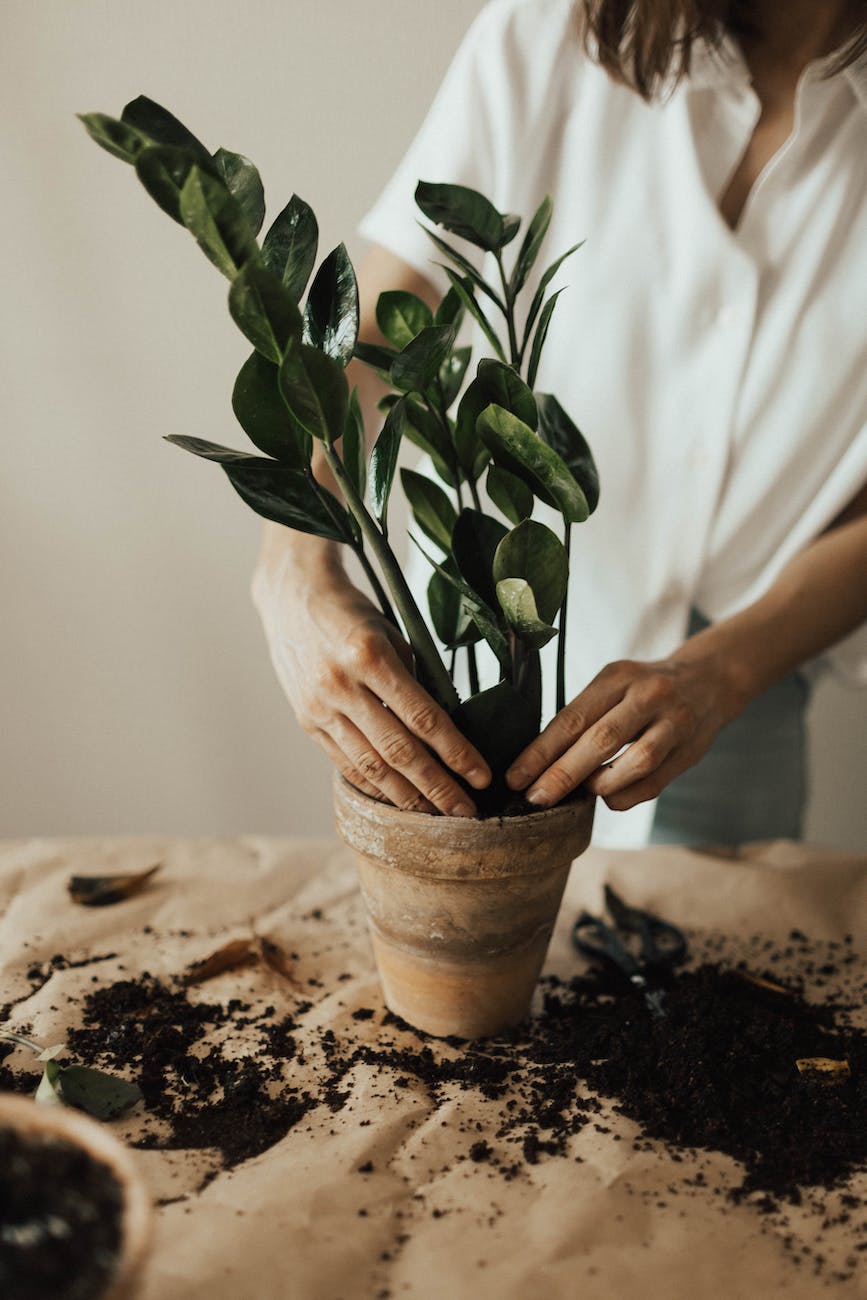
Before we begin to look at the specific disciplines available to us, we should consider their overall purpose. We are beings created in the image Christ, and although we are not Christ, we can become more like Him. Becoming like Christ is a process. We have examples all around us to show us that growth is a process. Plants start from a seed then, in time, grow and develop new parts until the plants become mature and can reproduce. The same with animals. These examples indicate to us that not only is growing a process but that there is an aspect to growth that is built in to automatically happen. Animals and plants, with proper nutrients and environment, will just naturally become mature.

Allowing intentional choices to become habits and the habits to shape our character

But image-bearers of Christ are not merely plants or animals. Our growth is dependent on the development of culture, which are aspects of our way of life that are not automatic but rather are chosen. We can make choices, moral choices, about what we think is important, to set priorities and values. Those choices started in a garden full of abundant food, but we had a choice to not eat the fruit from one particular tree, we had a choice to make based on love and obedience.

Allowing different disciplines to strengthen each other

The spiritual disciplines provide us with choices, to be intentional about how we want to grow. We will see that each discipline is dependent on the others, and each discipline can then weaken or strengthen the others. So, we may enter the disciplines at any point, but we should not neglect the others. We can choose to start from an area of strength or an area of weakness, but we should not neglect the other paths to growth.

The discipline of the soul is not disconnected from the discipline of the body

We are embodied creatures. As we engage in disciplines, we should consider the interplay of soul and body and how they affect each other. We see this effect when, on the one hand it is true that if we are feeling confident then our bodies tend to present a confident posture and on the other hand, it is also true that if we are not initially feeling confident then intentionally assuming a confident posture can produce the feeling of confidence. This leads us to the phrase, “fake it till you make it.” We should keep the interplay of spiritual and material, body, and soul, in mind as we engage in our spiritual disciplines.

Our bodies are the very temple of the Holy Spirit within us, and it is through our bodies that we exercise our faith – and through which we are capable of exercising immorality. To that end, the apostle Paul saw fit to discipline his body as part of his overall ministry.

Forming our virtues

Virtues are the qualities of Christ in our lives that are provided by Him: qualities such as compassion, kindness, humility, gentleness, patience, forgiveness. These qualities help us escape “the corruption that is in the world through lust. (KJV)” But although these qualities are given by Him, we are exhorted to strengthen those virtues with spiritual disciplines. For example, we should add virtue to our faith and virtue to our knowledge for knowledge without virtue only makes someone a walking textbook. Virtue helps add to our faith, to our knowledge, to our self-control, to our perseverance, to our godliness, to our brotherly kindness and to our brotherly love. It all hinges on godly virtues being added to our faith.

As Christians, we all want to grow in spiritual maturity and Christlikeness. Elders should be models of Christian maturity, qualified to the office primarily based on their character. While the Bible provides one quality related to skill (the ability to teach) and one related to the amount of time a man has been a Christian (not a recent convert), all the other qualifications are related to character. Yet while these traits are demanded of elders, they are not unique to elders. Elders are to be exemplars of the Christian graces which all Christians should aspire to. Every congregation is meant to be full of men and women who are above reproach, sober-minded, self-controlled, respectable, hospitable, sober, gentle, peacemaking, not lovers of money, mature, humble, and respected by outsiders.


[1] Smith, James K.A. “You Are What You Love: The Spiritual Power of Habit.” Brazos Press 2016. eBook

[2] Rumford, Douglas. SoulShaping. Tyndale House Publishers 1996

[3] Whitney, Donald S. Spiritual Disciplines for the Christian Life Navpress 2014

[4] Foster, Richard J. Celebration of Discipline Harper & Row Publishers ©1978

Observe

Read Romans 12:1-2; 1 Corinthians 9:25-27; 2 Timothy 3:16-17; Hebrews 4:9-11; 2 Peter 1:3-25. We are paradoxically called to both work and to rest. How do we do both at the same time?

Our limits

Dancing in the Kingdom- Table of Contents

Dancing In the Kingdom – Part 3 – Dancing in the Kingdom– Chapter 14 – Remembering our creation

Our Limits

[Bible References: Genesis 1-2; Deuteronomy 15:11; Psalm 40:17; 1 Corinthians 12]

As we seek to fulfill our cultural mandate, there are various constraints which control how we exercise our call.[1] First and foremost, as God’s image-bearers, we are to act in accordance with God’s character: holding to the balance and tension of acting with sovereignty and servitude, mercy and justice, playfulness, and orderliness, along with his attributes of overflowing goodness, generosity and peace, trustworthiness, faithfulness, self-sacrifice and forgiveness. Although we are not transcendent in the same way God is, as his image-bearers his character of transcendence can be reflected in the ways we manifest His other qualities: Our ability to creatively imagine the ways in which we establish dominion, live into our relationships, display fruitfulness, and fulfill our responsibilities as God’s image-bearers.

We also need to remember that there are limits with which we should exercise our responsibilities. God has given us finite resources of materials or time to work with along with the reminder of Sabbath to help us refocus, to remember that although we are designed to work that we are not designed solely for work. It is not work that gives us value, rather it is God who gives us value and our work only has value if it gives God the glory.

Part of our limits are tied to our embodiment. Our earthiness is a reminder of our dependance on the earth, each other, and God. Our earthiness should help us lean into the humility worthy of image-bearers of God. Our need to sleep is a constant reminder that we are not God who never sleeps.

The multi-faceted call God has given us, requires us as God’s stewards to weave together the call to glorify God, to bring to maturity God’s rule over the earth, to reflect God’s triunity within the community of his image-bearers. This call is not for us to fulfill individually, but rather together as the Body of Christ with whatever God provides.


[1] Theology of Work Commentary, “Genesis 1-11 and Work” Hendrickson Publishers Marketing 2015, 2016

Reflect

We have built-in limits to what we, in our bodies, can do. How do these limits remind us of our dependency on the earth where we live, on each other, and on God?

Observe

Read Deuteronomy 15:11; Ps 40:17; 1 Corinthians 12. Why do we need each other?

Our relationships

Dancing in the Kingdom- Table of Contents

Dancing In the Kingdom – Part 3 – Dancing in the Kingdom– Chapter 14 – Remembering our creation

Our Relationships

[Bible references: 1 Peter 4:7-11]

All of these activities are done in context of our relation to God, to each other, and to our land. God has created us in His image, in the image of a triune God in which Father, Son and Holy Spirit exist as three persons united into one. Within that framework, God created us as male and female, each created as creatures made in God’s image yet different from and interdependent upon each other. When God made a woman for Adam, He specified that the woman would be an ‘ezer kegnedo,’[1] a strength corresponding to him. God created us from the dust of the earth, so although we are stewards of the earth, we are also dependent on the earth. In the earth, God has provided for us the resources we need to do our tasks. In all these relationships, God has intended that we are to live in unity with Him, with one another and with our environment.

Over time, our unity in all these areas got more complicated as our numbers grew. We needed to create organizations which necessarily became more complex as our societies grew and as our collective impact on the earth became more substantial. We needed extra discipline to maintain our relationship with God. We also needed to develop more skills in diplomacy, administration, and hospitality as we deal with more and different people. We needed to pay closer attention to the effects of our culture on the earth and its creatures to minimize the damage from so many people using our physical resources.

All of our work, our stewardship, is intended to have a direction, to bring maturity, fruitfulness, and growth to God’s work. The work we were charged to begin in the Garden of Eden was designed to end in the filling and subduing of the earth, in the cultivation of the whole earth where heaven and earth overlap so that work and worship are the same thing.[2]


[1] God’s Word to Women. “Ezer Kenegdo” God’s Word to Women godswordtowomen.org/ezerkenegdo.htm; Francois, Mark Steven. “(Ezer Kenegdo) in Genesis 2:18” Between the Perfect and the Doomed markfrancois.wordpress.com/2013/07/22/%D7%A2%D6%B5%D7%96%D6%B6%D7%A8-%D7%9B%D6%B0%D6%BC%D7%A0%D6%B6%D7%92%D6%B0%D7%93%D6%B4%D6%BC%D7%95%D6%B9-ezer-kenegdo-in-genesis-218/

[2] Huber, Dave. “Avodah Word Study” EFCA Today Summer 2012 www.efcatoday.org/story/avodah-word-study

Observe

Read 1 Peter 4:7-11. What are we charged to do?

Growth in the faith

Dancing in the Kingdom- Table of Contents

Dancing In the Kingdom – Part 2 – The Kingdom Revealed – Chapter 12 – Launching the church

Growth in the faith

[Bible references: Genesis 2:9; 1 Samuel 2:6; Isaiah 61:1-11; 1 Corinthians 3:7; Ephesians 4:15-16; Colossians 1:10]

In the book of creation, God has shown us that it is a normal process for living things, plants and animals, to grow from seed to maturity and to the production of new seeds. That gives us a template for the process of spiritual growth as well, not only for us as individuals but for the church as a whole. When Christ planted His church, it took time for the church to study the mysteries of the faith and then to develop its doctrines and teachings about things such as the mysteries of who God is, who we are as individuals and how we can grow in our knowledge of Christ. This process would happen in the context of changing situations and emerging challenges such as growing numbers of new members in the church and the expansion of the church into new territories which add growing numbers of new languages to think and communicate in. Adding new languages and cultures makes things more complex, but at the same time provides the church new opportunities for learning and growing in the faith.[1]


[1] Richards, Olly. “9 Surprising Health Benefits of Learning a Foreign Language” Story Learning storylearning.com/blog/9-health-benefits-of-learning-a-foreign-language

Observe

Read Isaiah 61:1-11. What seeds are being referred to in Isaiah 61:11?

Desires and truths of the faith

Dancing in the Kingdom- Table of Contents

Dancing In the Kingdom – Part 2 – The Kingdom Revealed – Chapter 12 – Launching the church

Desires and Fruits of Faith

[Bible references: Psalm 1:1-3; John 15:1-5; 1 Corinthians 13; Galatians 5:22-23; Ephesians 4:11-16; Colossians 1:10; James 2:14-26]

A part of faith is the mental assent to the truth of who Jesus is who we are, but that is just the beginning. If the assent is real, then faith should include a submission of the will which will then lead to a lifestyle that demonstrates trusting in Jesus and submitting to His Lordship. This faith should affect who we are and should show up in our behavior as Jesus starts the process of transforming our character. The fruits of the Spirit ought to be increasingly visible in our lives. Becoming a mature Christian ought to seen in the maturity of the fruits of the Spirit in our lives.

For us to grow and mature, and produce spiritual fruits, we need to think like a farmer; growing fruit requires feeding and nurturing. To this end, Jesus cautions us to remember that we are like branches on a vine, we need to stay connected to him to grow. Staying connected to God however is not an easy thing for us as we tend to be like sheep mindlessly wandering around. Thankfully, we have a God who has never stopped pursuing us.[1]

Our dance with God is a dance where He works on the process of transforming our lives to look more like Him. Our personalities will not all be the same, but there are certain characteristics that should become more evident in our lives. One concise list of those characteristics can be found in a short sentence within the letter to the Galatians, “But the fruit of the Spirit is love, joy, peace, forbearance, kindness, goodness, faithfulness, gentleness, and self-control. Against such things there is no law.” (Galatians 5:22-23). The first and most primary characteristic is that of love, a fuller expression of which can be found in 1 Corinthians 13. The epitome of love is described in John 15:13, “Greater love has no one than this, that someone lay down his life for his friends.” God created us out of the outpouring of His love, and He has created us to be in His image. Love is the characteristic that permeates all of God’s other characteristics and it should be the driving force in all we do.


[1] Compelling Truth “Does God Pursue Us?” Compelling Truth www.compellingtruth.org/does-God-pursue-us.html

Reflect

Our lives should be increasingly marked by a love that has responded to the love of God. We should not be driven by fear or hatred or legalism. In what ways do we seem to be motivated by something other than love?

Observe

Read Psalm 1; John 15:1-5; 1 Corinthians 13. What should mark a life of faith?