Discovering how we are formed

Dancing in the Kingdom- Table of Contents

Dancing In the Kingdom – Part 3 – Dancing in the Kingdom– Chapter 15 – Reforming our Souls

Discovering how we are formed – for each other

[Bible references: Romans 12, 1 Corinthians 12, 13:1-3; Ephesians 3:6-8; Ephesians 4, 1 Peter 4:7-10]

Once we have centered ourselves on Christ and have learned to submit to God and to one another, we are in a good place to evaluate the unique ways in which God has formed us.[1] One of the more holistic tools developed by Saddleback Church provides an evaluation of several aspects of how we are formed: the spiritual gifts, the desires, the abilities, the personality, and the experience God gives us.

The reality is that much is life is filled with, “I just gotta do what I gotta do.” Parenting is like that, housekeeping is like that, etc. Diapers need to be changed, the house needs to be cleaned, the bills must be paid, grocery shopping needs to be done, etc. Much of life is filled with responsibilities that need to be done regardless of what capacity we think we may have. There may be no luxury of just doing “what I think I am best at.”

But where it is possible, when we gather in a sharing community, there is the opportunity to allocate different tasks to those people who are best equipped for it. God has intended that we be in such communities, so described in scripture as “the body of Christ,” where different people serve in different functions. At such times, there are opportunities for us to discover in what unique ways God has designed us so that we may serve each other in the best way possible.

Scripture reveals that all who are in Christ are indwelt by the Holy Spirit, and that the Spirit has given us various gifts that we can use to help build up other members of the body of Christ. A few Bible passages give us an idea of the kinds of gifts of some of these gifts, but the lists are not exhaustive: exhortation, giving. leadership, mercy, prophecy, service, teaching, administration, apostle, discernment, faith, healing, helps, knowledge, miracles, prophecy, teaching, tongues, tongues, interpretation, wisdom, evangelism, pastor, teaching, celibacy, hospitality, missionary, voluntary poverty.

One way to discover what gifts we may have, is by serving in our community. As we serve in various ways, we may discover that God has particularly blessed our service in various ways. Sometimes others may point out those abilities or gifts to us. Another way to discover our gifts is to read about those gifts and certain gifts may become apparent to us that way. Another way is to take a questionnaire and the results of that questionnaire may reveal certain gifts to us. It may be helpful to take such a questionnaire with someone else because they may have different insights into the questions.

As we mature and encounter different life experiences, we may discover that different gifts emerge or that God has provided differently for us in our different circumstances. God knows us and our circumstances and may provide differently as we change, and our circumstances change.


[1] Links to various assessment tools: Spiritual gifts: Carver, Jeff. “Spiritual Gifts Test – Adult Version”Spiritual Gifts Test spiritualgiftstest.com/spiritual-gifts-test-adult-version ; Granger Community Church. “Spiritual Gifts Test” Granger Community Church spiritualgiftstest.com/spiritual-gifts-test-landing; Ministry Tools Resource Center. “Take Online Spiritual Gifts Test Inventory Assessment” Ministry Tools Resource Center mintools.com/spiritual-gifts-test.htm; Rock Church, “Gifts Test” Rock Church giftstest.com. Personality test sites: Hayes, Robert. “The Best Free Enneagram Tests You Can Take Online” Tech Junkie www.techjunkie.com/best-free-enneagram-tests; Truity Psychometrics. “The Enneagram Personality Test” Truity Psychometrics www.truity.com/test/enneagram-personality-test; Barkers, Ewald. “Eclectic Energies Enneagram Tests (Free) Eclectic Energies www.eclecticenergies.com/enneagram/test; Shape test: Hill, Kevin M. “S.H.A.P.E. Test” Free Shape Test www.freeshapetest.com; Saddleback Church “You Were SHAPED for Serving God” Saddleback Church www.ministryideas.com/doc/shape_discovery_tool.pdf

The context of theology

Dancing in the Kingdom- Table of Contents

Dancing In the Kingdom – Part 2 – The Kingdom Revealed – Chapter 13 – Distinctives within the body of Christ

The Context of Theology

[Bible references: Matthew 22:37-39; John 13:34-35; 15:1-17; Romans 12:3-8; 1 Corinthians 12; 13; Ephesians 4:11-16]

More than doctrine

Everybody has an opinion of some sort when it comes to ideas about God. That is, everybody practices theology. According to one classical definition, theology is “faith seeking understanding.”[1] The only question is. whether our theology is good or bad. That said, there are some who may question whether or not to make a big deal of theology because it seems to create such divisiveness and others think that we should just keep everything as simple as possible.

We were created by God with mind, body, and soul – and it is through all those means that we can come to know God. The formal field of study that we call “theology” has often been restricted to academia, focusing on the intellectual – the mind; but as beings created in the image of God it would be a mistake to restrict our theology to just our mind. It is through our whole being that we can come to know and be transformed by God. Jesus once said that this transformed people would be recognized not by their knowledge, but by their love. Although it is beneficial if our love is informed by our knowledge, love is expressed in its action. In fact, Jesus identified the greatest commandments as loving God and loving our neighbors. Therefore, the practice of following Jesus (aka discipleship) is something we practice in community.

Once we understand all this, that our understanding of God requires the effort of our whole being, then we can see that while theology may have an academic component, it is more than an intellectual exercise. In fact, our soul, or spirit, is the first place in our being to examine our theology. Our theology is lacking if our God’s love is not overflowing through us into the rest of our lives.

To evaluate what our overflowing love might look like, we can consider the descriptions we find for the “fruit of the spirit” as shown in Galatians 5 and in 1 Corinthians 13: love, joy, peace, patience, kindness, goodness, faithfulness, gentleness, and self-control, does not envy or boast, is not proud, rude or self-seeking, is not easily angered, takes no account of wrongs, takes no pleasure in evil, rejoices in truth, bears all things, believes all things, hopes all things, endures all things. We can also consider how we express our love through the various gifts of God that He provides each one of us for the purpose of building each other up in the faith: wisdom, knowledge, faith, healing, miracles, prophets, discernments, tongues and their interpretation, leadership, serving, exhortation, giving, mercy, helps apostle, prophet, pastor, teacher.

It is interesting that many non-Christians, even those with limited knowledge of the Bible or of the church, are able to critique Christians by contrasting Christians with Christ. They may possibly misunderstand Christ, but because they have been designed as image-bearers of God, even they have some basis to compare the behavior of others to Christ.

The whole of faith

Meanwhile, in this in-between time, even disciples of Jesus are affected by sin and our theology is subject to corruption. We misuse theology in various ways: sometimes using it as a tool to achieve something else such as gaining power or justifying bad attitudes (e.g., arrogance or hatred), sometimes by focusing on just the academic side while neglecting the spiritual or practical aspects; or sometimes neglecting the academic side and try to avoid the truth or complexities of theology and simply stop asking questions, preferring instead to yield to fideism, which can be described as the “exclusive or basic reliance of faith alone” [2]

A robust faith is not a blind faith, but rather a thinking faith, a faith with eyes wide open to the realities of life’s circumstances and the reality of God’s providence,[3] a faith that seeks God with our whole self: body, mind, and spirit. So, we should not ignore the academic side of our faith or our theology. The process of taking all the knowledge we have gathered about God and then using that to “build up into an organic and consistent whole all our knowledge of God and of the relations between God and the universe” is called systematic theology.[4]

The all-encompassing nature of systematic theology requires care. Scientific models are helpful in understanding natural phenomena but are limited in predicting future behavior because the models are only approximations of the phenomena they describe. Similarly, our systematic theologies are helpful in understanding the infinite God and his works, but we need to be aware of its limitations. One of those limitations is how our perceptions are influenced by our particular personality, our particular environment/culture, our particular language, and our particular historical context.[5]

The problem of the other

Ever since the creation of humanity, we have continually chosen to idolize ourselves and to not love God, which also meant we have chosen to not love others. This mindset then causes us to blame whatever problems we have on others or even to blame God. It is this sort of mindset that would cause the New Testament church to disconnect itself from its Judaic heritage, setting the church up for continued divisiveness in the future. So it is worth exploring what led to the church to the severing its Judaic roots.

We know that Jesus spoke of how scriptures – and he could only be referring to what we call the Old Testament scriptures – pointed to him and his ministry, and how he was the fulfillment of those scriptures. That would mean that Jesus’ ministry was a continuation of God’s love and grace as set out in the Old Testament. Later on, as the ministry of the church strongly expanded to Gentiles, the apostle Paul spelled out that the Gentiles in the church were like the branch of a wild olive tree being grafted into nurtured tree; the tree being the Jews that were in the church and whose roots went back to the Old Testament people of faith. Paul then warned the Gentiles not to become arrogant about any of the other branches that were broken off because God is capable of grafting the original branches back onto the tree.

As the ministry to the Gentiles proceeded and expanded, Christian Jews still met in the temple and the synagogues with the non-Christian Jews, increasing their ministry there even as many of the non-Christian Jews strongly resisted. But there were two events that would change the trajectory of the church.

In AD 66 the zealots started to revolt against the Roman government. The Christians in Jerusalem want to avoid getting caught up in the rebellions and moved to Pella, causing tension between the zealots and the Christians. After the rebellion was defeated by the Romans in AD 70, the temple was destroyed and the Jews were scattered, but now there was increased tension between the Christian and non-Christian Jews.

Later on, in AD 132, a zealot nicknamed Bar Kokhba (meaning “son of the star”) arose to start another rebellion. He, with the support of a prominent rabbi, declared himself a messiah. Now, the Christian Jews not only did not want to participate in a rebellion, but they had to refuse to acknowledge a messiah other than Jesus. And the zealots, who supported Bar Kokhba, declared Bar Kokhba as messiah, thus rejecting Jesus as messiah, which quickly led to a hardening of those non-Christian Jews against the church, making them more resistant than before to the gospel. When the Romans defeated the zealots, Jews were now banned on penalty of death, from entering Jerusalem.

After this point, when leaders in the church tried to reach the Jews with the gospel, they encountered hardened hearts. However, instead of the recognizing that it had been foretold that Jews hearts would be hardened until the time of the Gentiles was over, the leaders in the church now arrogantly hardened their own hearts and became increasingly anti-Semitic. This resulted in the church increasingly turning away from their own roots and thus becoming susceptible to increasing influence of Greek philosophy. This would create dramatic effects in the development of theology in such areas as the rejection of the human body and sexuality as evil and sinful, and the conversion of asceticism from a form of spiritual discipline to a rejection of the pleasures God created as good things.[6]

The limits of language

Early on, in church history, there was an attempt to overcome the problem of the language barrier in the church. It was thought that the church could be united if theologians across the church world could use a common theological language. This attempt in the 5th century, when the languages included Aramaic, Greek, and Latin as well as all the local languages, did make it easier to find solutions to theological problems, but the negative consequence was that differences in theological views became heightened, leading to what may be the inevitable schisms in the church.

Theologians believed that one faith has to be expressed in one language … Distortion of language, they believed, inevitably leads to distortion of the common faith … ‘Byzantine scholasticism’ emerged in the post-Cyrillian era. This shift had both positive and negative consequences. The positive ones were that theologians started speaking one language. This helped them to easier find solutions to theological problems … The negative consequences of language-centrism were that when theologians disagreed on terms or categories, the regarded their disagreements about theological formulas as essential theological difference. This became one of the most important reasons of the church schism in the post-Cyrillian era.[7]

We cannot approach any field of study as a blank slate. All of our particular factors contribute to which particular theological method people may choose to use. Charles Hodge identified three general classes of methods used within the field of systematic theology: Speculative, Mystical, and Inductive.[8] Given all of that, we can see that there can be many approaches to even framing the questions we might ask about God, never mind the types of answers towards which we may lean. Engaging in the quest of trying to understand the current multi-faceted state of the current church can be overwhelming and most people don’t have the time to study a typical church history book of 800-1000 pages. To make this task more bearable, the approach here will not be to present a comprehensive study but to develop an overview of the church by focusing on 1) the internal and external issues that affected the development of the church, and 2) the main questions that the church has asked and briefly sharing the different answers formulated by different congregations.


[1] Migliore, Daniel L. “Faith Seeking Understanding”  William B. Eerdmans Publishing, third edition. 1991

[2] Amesbury, Richard. “Fideism” Stanford Encyclopedia of Philosophy ©2016 plato.stanford.edu/entries/fideism

[3] Migliore, Daniel L. “Faith Seeking Understanding” William B. Eerdmans Publishing, third edition. 1991 (pp. 3-5)

[4] Bible Study Tools “Chapter III – Method of Theology” Bible Study Tools www.biblestudytools.com/classics/strong-systematic-theology/part-i-prolegomena/chapter-iii-method-of-theology.html

[5] Migliore, Daniel L. “Faith Seeking Understanding” William B. Eerdmans Publishing, third edition. 1991 (p.205) Confession of Jesus Christ takes place in particular historical and cultural contexts … our response to questions of who we say Jesus Christ is and how he helps us will be s shaped in important ways by the particular contexts in which these questions arise … all theology is contextual

[6] Dualism rejects the physical world as evil or not desirable. “Mystery of Wisdom.” (p. 166)

[7] Hovorun, Cyril. Studia Patristica Vol. LVIII, Volume 6: Neoplatonism and Patristics, Peters 2013.  Importance of Neoplatonism on Formation of Theological Language” (p. 17-28)

[8] Hodge, Charles, “Systematic Theology” (Chapter I: On Method) Eerdmans Publishing Company, (Chapter I: On Method) 1940

Reflect

How can love affect your ability to know someone?

Observe

Read John 15:1-17; Ephesians 4:11-16. How do these passages relate to each other?

Doctrine of unity

Dancing in the Kingdom- Table of Contents

Dancing In the Kingdom – Part 2 – The Kingdom Revealed – Chapter 12 – Launching the church

Doctrine of unity.

[Bible references: John 17:23; Philippians 2:1-11; 4:1; Ephesians 4:11-13; Philippians 1:27: 2:2; Colossians 3:14; 1 John 4:8]

There are several types of doctrine that ought to lead to unity in the church, such as our knowledge of God, our love of God and others, and our maturity in the faith. Working together these doctrines will increase our knowledge of God and His love not just to us but to those around us. The more aware of we are of God’s holiness and, consequently how far short of that we are in our sinfulness, should be led to greater humility and acceptance of others. When we are called to God, we are called to His Body of which we each have a part in building one another up.

Observe

Read Philippians 2:1-11. What might be our biggest barrier to developing unity with others?

Doctrine and the knowledge of God

Dancing in the Kingdom- Table of Contents

Dancing In the Kingdom – Part 2 – The Kingdom Revealed – Chapter 12 – Launching the church

Doctrine and the knowledge of God

[Bible references: 1 Corinthians 1:10; 8:1-13; Romans 12:1-8; 15:5-6; Philippians 1:27; 2:2-5; 1 Peter 3:8]

We can see the apostle Paul tackling the issue of doctrine and the knowledge of God in the book of Romans, written in the context of much hostility between Jew and Gentile, where he explains in many different ways how the doctrine of the faith actually binds Jew and Gentile together. Then towards the end of that lengthy exposition he says to be of one mind and accept one another in the same way as Christ who came to serve us and has accepted us.

Unfortunately, in our attempts to become more knowledgeable about doctrine, we get off-balance, forgetting that “love builds up” and instead get caught in the trap of “knowledge puffs up,” starting to think of ourselves “more highly than we ought.” In those same passages that remind us of that trap, we are also reminded of our responsibility to remember God’s grace to us and to remember that we all belong to the same Body of Christ.

Our knowledge gets distorted when we focus on the knowledge of the Biblical text and not the knowledge of the God who gave us the text. Our knowledge of doctrine should not become an end to itself. Our habitual forgetfulness to seek our unity in Christ has led to the claim that “doctrine divides.”  However, doctrine, as the properly taught knowledge of God, should lead to unity.

Observe

Read Romans 12:1-8. How can this passage help us handle issues of doctrine?

Guardians of the truth

Dancing in the Kingdom- Table of Contents

Dancing In the Kingdom – Part 2 – The Kingdom Revealed – Chapter 12 – Launching the church

Guardians of truth

[Bible references: Psalm 25:2; 45:4; 145:18; Proverbs 12:19; 22:21; Isaiah 45:19; 59:15; Jeremiah 5:1; Zechariah 8:16-19; John 1:14-17; 4:23-24; 8:44-45; 14:6; 16:13; Acts 20:30; Romans 1:18-25; 2:1-20; I Corinthians 11:18-19; 1 Timothy 4:6; 2 timothy 2:14-29; 1 John 2:20-21; 3 John 1:1-12]

God is always in part incomprehensible, mysterious, and paradoxical, which leads to an inevitable diversity of ideas about Him. And yet He has left us with a challenge, He has declared Himself to be the Truth and He has charged the church to be His instrument in making disciples, therefore making us the guardians of that truth. This means that when the church goes about its business of growing in the knowledge of God and developing doctrines about the One who always mysterious, there will be an inevitable tension of trying to discern when the developing diversity of ideas about the Truth will lead to ideas that oppose the gospel or lead to the revealed knowledge of God.

Observe

Read 2 Timothy 2:14-19. What lies are Timothy told to be concerned about?

Growth in the faith

Dancing in the Kingdom- Table of Contents

Dancing In the Kingdom – Part 2 – The Kingdom Revealed – Chapter 12 – Launching the church

Growth in the faith

[Bible references: Genesis 2:9; 1 Samuel 2:6; Isaiah 61:1-11; 1 Corinthians 3:7; Ephesians 4:15-16; Colossians 1:10]

In the book of creation, God has shown us that it is a normal process for living things, plants and animals, to grow from seed to maturity and to the production of new seeds. That gives us a template for the process of spiritual growth as well, not only for us as individuals but for the church as a whole. When Christ planted His church, it took time for the church to study the mysteries of the faith and then to develop its doctrines and teachings about things such as the mysteries of who God is, who we are as individuals and how we can grow in our knowledge of Christ. This process would happen in the context of changing situations and emerging challenges such as growing numbers of new members in the church and the expansion of the church into new territories which add growing numbers of new languages to think and communicate in. Adding new languages and cultures makes things more complex, but at the same time provides the church new opportunities for learning and growing in the faith.[1]


[1] Richards, Olly. “9 Surprising Health Benefits of Learning a Foreign Language” Story Learning storylearning.com/blog/9-health-benefits-of-learning-a-foreign-language

Observe

Read Isaiah 61:1-11. What seeds are being referred to in Isaiah 61:11?

Scribes

Dancing in the Kingdom- Table of Contents

Dancing In the Kingdom – Part 2 – The Kingdom Revealed– Chapter 10 – The Class of Apparitions

Scribes

[Bible references: Jeremiah 8:8; Matthew 13:52; Mark 12:28-34; 11:27-33]

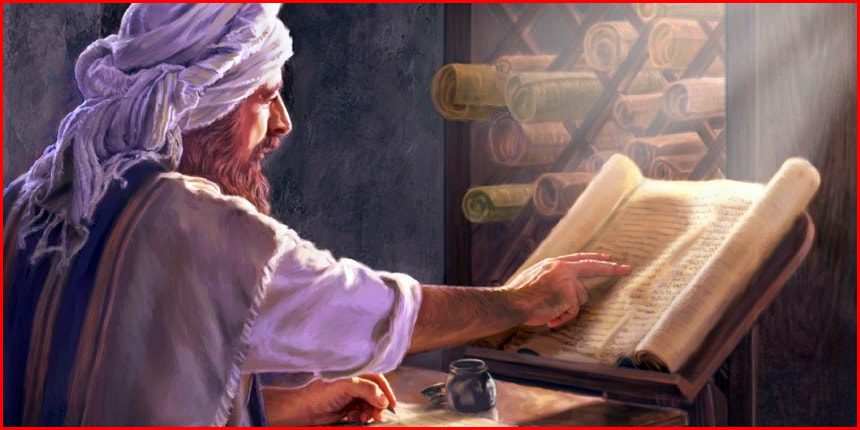
The scribes were trained in writing legal documents, deeds and copying scriptures and, because of their knowledge of scripture, they sometimes acted as interpreters and teachers of the Law. Sometimes they were referred to as lawyers. Although at times they opposed Jesus there were times when they were neutral, or even praised by Jesus.

Observe

Read Matthew 13:52. Who do you look to bring “treasures out of the storeroom” of the Bible?

Hope in the brokenness

Dancing in the Kingdom- Table of Contents

Dancing In the Kingdom – Part 1 – Shadows of the Kingdom – Chapter 4– Retreating to chaos

Hope in the brokenness

[Bible references: Genesis 2:16-17; 3:14-15, 23; Psalm 4; 102; Isaiah 1:26; Jeremiah 29:11; Acts:318-26; Galatians 3:13-14; Ephesians 1:11-12; Romans 5:12; 8:18-3; Hebrews 1:1-4]

Grief is the normal response to loss or separation. We may grieve when we lose dreams, jobs, health, family members or friends and many other things. Death is separation. Physical death is the separation of the soul from the body. Spiritual death is the separation of the soul from God.

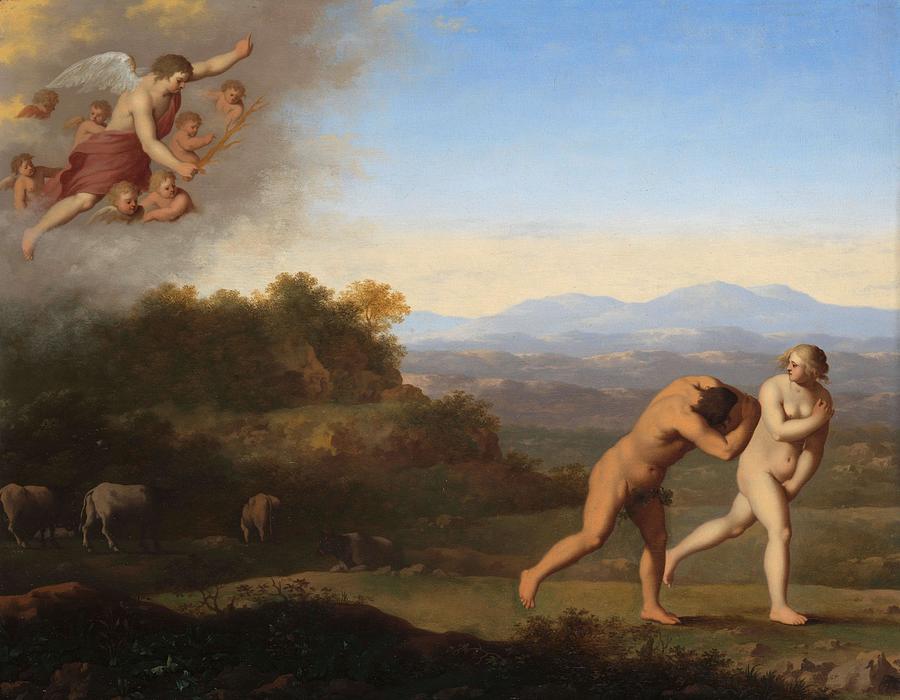
The first humans voluntarily separated themselves from God so that they could grab what they wanted. This was spiritual death. When the non-physical angels rebelled against God, they too suffered spiritual death. For the angels, the separation was permanent with no hope of reconciliation with their Creator. But the first humans were given the possibility of hope.

Humans were also physical creatures, with mortal bodies, physical bodies that could die. Indeed, the humans needed access to the Tree of Life in order to keep on living. When the humans rebelled, they immediately suffered spiritual death. When the humans were also denied access to the Tree of Life, then their physical death was ensured. Spiritual death followed by physical death. A double grief. But the double grief contained the possibility of hope.

The consequences of rebellions created a great tragedy that could not be undone, not by the image bearers. But even so, as we look around us, we can see that despite the tragedy around us, things aren’t totally bad. Even though evil is very evident around us, goodness is also evident. It is in that observation that we can glimpse the possibility of hope. Amidst the consequences of rebellion, there are hints of hope.

When God confronted the first humans with the consequences for their rebellion, He also gave them a hint of the undoing of death, a solution to the problem created by sin. This hint would only be the first of many other hints to come that we can see revealed in the Biblical text.

We can also see evidence for hope in the continued creation by God, as he continues to sustain the universe he created, continuing to create new living things, plants, and animals alike. There is also hope hidden in the mandate given to the image-bearers. Their mandate of stewardship of God’s creation was still in force, although there would now be suffering involved in the fulfillment of the mandate. There was hope hidden in the name of God’s Son.[1] There was also a strange hope in the banishment from the Tree of Life; the consequence of physical death would provide a way to free us from an eternity of being separated from God and open a way for our redemption.

The sacrifice of Jesus followed a life in which Jesus successfully waited to receive those things that His Father intended to give, resisting the temptation to grab those things for himself. In his life and death, Jesus successfully accomplished what Adam and all those who came after Adam had not.

In the beginning, we were eager to grasp for ourselves wisdom and the knowledge of good and evil on our own terms. What we didn’t plan on was the consequences that would follow. Sometimes God gives us what we think we want even though it would bring us the suffering that God was trying to steer us from. It’s a continuing pattern we see from the beginning until now, that it is not always a good thing when we get what we think we want.[2]

But Jesus life did not end with his crucifixion. Jesus’ resurrection was the proof of redemption and of the hope of restoration. Sin had corrupted all of creation and all of creation is groaning and awaiting its restoration.

The universe is not what it’s supposed to be. We are not what we are supposed to be. We are creatures created with the imprint of the image of God but broken in body, soul and spirit. Our brokenness shows up in our actions, words and thoughts. Our brokenness shows up in the way we are treated and the way we treat others. And our brokenness even shows up in the bodies we are born with. But in His death and resurrection, God is able to redeem and restore all of us, all of who we are, all of what we have done, all of what has been done to us, and even all of creation. God is able to use all of our suffering and use it for our good, making something beautiful out of what was broken.


[1] See Chapter 2, The Mystery of God’s Name

[2] See Chapter 8. Rejecting God as King

Reflect

It’s not hard to see signs of brokenness around us. Are there any signs of hope that can be seen?

Observe

Read Isaiah 1:26; Jeremiah 29:11; Matthew 17:11; Acts 3:18-26; Galatians 3:13-14; Ephesians 1:11-12;. Throughout the Bible, God has chosen to share his future plans in pieces at a time. What those plans are, have been the subject of much debate within the church. What is your understanding of God’s plans for the future?

Sovereign and Servant

Dancing in the Kingdom- Table of Contents

Dancing In the Kingdom – Part 1 – Shadows of the Kingdom – Chapter 2 – The God who created

Sovereign and Servant

[Bible references: Psalm 147:5; Isaiah 52; Matthew 20:25-27; Romans 11:33-35; Philippians 2:1-11]

There is a contemporary name for this juxtaposition of attributes: servant leadership. In this case, the one who is the creator and sustainer of all things does not wield that power in a self-centered way but uses that power to serve the needs of the very beings he created – even though they defied his authority and cost him much anguish.

When the Creator decided to make creatures in his image, creatures that had the ability to love (and therefore the ability to choose whom to love or whom to not love), he imbued these creatures with the ability to make independent decisions. Doing that required releasing some control and then providing enough space be given so that those creatures would be free to make choices.

However, those creatures violated that love and incurred an awful penalty. Fortunately, the Creator did not just mete out the penalty, but with compassion, and at great cost to himself, put in place a plan that would restore his relationship with his image-bearers. This costly plan would highlight an attribute that already had been revealed, the attribute of servanthood in which the Creator acts on behalf of his creatures.

Not to be overlooked, the ability to create and sustain the universe needs tremendous knowledge and wisdom as does the ability to create creatures in his image and then to guide them amid their missteps and varied circumstances. Although God, through his sovereign will and power, could simply control each and every action in the universe, he gives us the option for his creatures to act according to his desires or not.[1] We cannot even begin to understand the vast knowledge and wisdom that God needs in order to carry out His will despite our continued insistence on disobeying his desired will. In fact, His wisdom is so pervasive, not only in creation but as part of the many ways God interacts with us, that Wisdom is metaphorically portrayed to us in Proverbs as a person.


[1] Piper, John, “What is the Will of God and How Do We Know It” Desiring God, 22 Aug 2004, www.desiringgod.org/messages/what-is-the-will-of-god-and-how-do-we-know-it

Reflect

God’s rule is contingent on God’s love. His power is not focused on controlling but on releasing his image-bearers to participate with him in taking care of his creation and of each other. In what ways do humans misuse their power over others?

Observe

Read Isaiah 52. The end of this chapter gives a picture of the Sovereign God who goes before us and behind us and then prophesies about Servant Jesus dying on the cross for us. How should we respond?

A brief account

Dancing in the Kingdom- Table of Contents

Dancing In the Kingdom – Part 1 – Shadows of the Kingdom – Chapter 1 – Prelude

A brief account

[Bible references: Acts 17:22-31]

The following is an Extremely Brief Account of the Very Long Story.

There was, and is, and will be, a complex person we call God, who exists as three people that we have come to know as the Father, Son, and Holy Spirit. God decided that he wanted to expand the love that was shared between the Father, Son, and Holy Spirit. To that end, he created an entire universe so that on one of its planets he could create an abundance of living creatures.

On that planet, he created special creatures, humans, who were made in his image such that they could love him in the way that he loved them. This universe then, would be a form of temple, a place where God can meet with his people. The garden he placed them in was where the dimensions of heaven and earth overlapped. The garden was a place where God’s good and beautiful kingdom of heaven was fully present.

Of course, these humans were not duplicate spiritual beings who were gods themselves, but physical creatures who had enough of God’s characteristics so that they could love in the way God loved. But love is a voluntary thing that we must choose to do, we cannot love unless we have the option to not love.

God placed his first people in a garden and gave them an assignment. They were to be his representatives, priests if you will, in this garden. They were to take care of it as His representatives, His stewards in the garden. Their long-term task was to multiply and fill the earth so that the whole earth would become the place where God could meet with all his people. The entire earth was intended to be filled with God’s abundant provision for his people who would then take care of what God provided, and all the while giving and receiving and sharing the love which God would freely bestow. In this way, the kingdom of heaven would overlap with the entire kingdom of earth and God would freely mingle with his people.

The option to love or not love was provided by a test of trust. There was in the garden a tree whose fruit not only looked appealing but promised to provide the gift of all knowledge if one ate it. The humans were told to trust God and not eat the fruit of that tree. Eating that fruit would not only provide certain knowledge but would also provide death.

The results of that test are now apparent all around us. Death comes to us not only in the form of physical death, the separation of our souls from physical life, but also in the form of spiritual death, the lack of love which separates us from each other and from God. Fortunately, our current situation is not our destiny – and that is what the rest of the story is about.

God intended that death would not merely be a penalty for not trusting (or loving) but would also be the very mechanism by which he would restore us to himself. From the descendants of the first people, God separated out a family through which he would bring blessing to the entire world. Through that family that a nation would be raised and through that nation the eternal God would choose a family to accomplish the inconceivable. In that chosen family, the eternal God would cause himself to be conceived within the womb of a woman who would then give birth to a being who was both fully God and fully human. He would then be raised as a human and eventually would suffer death by execution as a human and then be resurrected as a human.

In that resurrected human body, the eternal God would return to heaven, but before doing so, he invited us, in essence, to represent Him on earth by becoming part of his body on earth. By trusting him and accepting his Spirit, we could join with him in His death and resurrection by dying to our own self-interests and uniting with his loving interests.

He then promised to return to us again in bodily form, at which time the kingdoms of heaven and earth will again overlap. Heaven will be rejoined to earth to fulfill the intention God had from the beginning. But meanwhile, in this time between His incarnation and His eventual return, we are still called to be stewards of our currently broken world, bringing slivers of the light and hope of heaven into a world now very dark with evil and suffering and pain.

Observe

Read Acts 17:22-31. How could we use Paul’s gospel message to people we speak to today?