Inheriting the kingdom

Dancing in the Kingdom- Table of Contents

Dancing In the Kingdom – Part 2 – The Kingdom Revealed – Chapter 11 – The Kingdom Enters

Inheriting the Kingdom

[Bible references: Matthew 5:1-12; 18:1-9; 19:13-14; 25:34; Luke 18:15-17; John 3:1-8; James 1:4]

The Beatitudes are not parables but rather descriptions of the type of people who are in the kingdom of heaven (first and last beatitudes) and the blessings that they shall obtain.[1] The poor in spirit are those who see themselves powerless, helpless in themselves and unworthy regarding Yahweh;[2] they know that they may be loved by God, but they are broken and not worthy of that love. Those who mourn are those who mourn for their sin, for loss, injustice, etc.[3] The meek are those who trust in Yahweh are will wait for Yahweh even in the face of opposition.[4] Those who hunger and thirst after righteousness are those who want justice as much as they do food and are willing to take action for it.[5] The merciful are those who respond to the mercy shown them by Yahweh by showing mercy to those who need it.[6] The pure in heart are those who stay away from deceit and want the glory of Yahweh.[7] The peacemakers are those who pray for and pursue peace even for those who persecute them.[8] Those who are persecuted for righteousness’ sake are those who are persecuted because of their pursuit of righteousness but not because they were not merciful or not poor in spirit.[9] The beatitudes show the rewards and blessings and shalom  (peace, wholeness, and well-being) for all those types of people.

No one enters the kingdom of Yahweh by their own merit, it is strictly only by family ties. Children only. Only those who are born-again, that is born into the family of Yahweh, are eligible to inherit the kingdom of God. The beatitudes describe the kind of children that one should find in the kingdom. Jesus reinforces this again when answering the question about who is greatest in the kingdom of God. Furthermore, Jesus cautions the adults in this world that not only should they become like children but that they should not cause problems for the children in this world.


[1] Piper, John. “The Beatitudes and the Gospel of the Kingdom” Desiring God 26 Jan 1986 www.desiringgod.org/messages/the-beatitudes-and-the-gospel-of-the-kingdom ; Kauffman, Richard A. “Blessed are those who mourn” Christianity Today www.christianitytoday.com/ct/2007/july/22.50.html

[2] Piper, John. “Blessed are the Poor in Spirit who Mourn” Desiring God 2 February 1986 www.desiringgod.org/messages/blessed-are-the-poor-in-spirit-who-mourn

[3] Biblehub “Matthew 5:3” Biblehubbiblehub.com/matthew/5-3.htm

[4] Piper, John “Blessed are the meek” Desiring God 9 Feb 1989 www.desiringgod.org/messages/blessed-are-the-meek

[5] Piper, John “Blessed are those who hunger and thirst after righteousness” Desiring God 16 Feb 1986 www.desiringgod.org/messages/blessed-are-those-who-hunger-and-thirst-for-righteousness

[6] Piper, John, “Blessed are the Merciful” Desiring God 23 Feb 1986 www.desiringgod.org/messages/blessed-are-the-merciful

[7] Piper, John, “Blessed are the Pure in Heart” Desiring God 2 Mar 1986 www.desiringgod.org/messages/blessed-are-the-pure-in-heart

[8] Piper, John, “Blessed are the Peacemakers” Desiring God 9 Mar 1986 www.desiringgod.org/messages/blessed-are-the-peacemakers

[9] Piper, John, “Blessed are the Persecuted” Desiring God 16 Mar 1986 www.desiringgod.org/messages/blessed-are-the-persecuted

Observe

Read Luke 18:15-17; James 1:4. James encourages us to become mature in the faith. Luke encourages us to receive the kingdom of God like a little child. How do we reconcile these two thoughts?
A brief account

Dancing in the Kingdom- Table of Contents

Dancing In the Kingdom – Part 1 – Shadows of the Kingdom – Chapter 1 – Prelude

A brief account

[Bible references: Acts 17:22-31]

The following is an Extremely Brief Account of the Very Long Story.

There was, and is, and will be, a complex person we call God, who exists as three people that we have come to know as the Father, Son, and Holy Spirit. God decided that he wanted to expand the love that was shared between the Father, Son, and Holy Spirit. To that end, he created an entire universe so that on one of its planets he could create an abundance of living creatures.

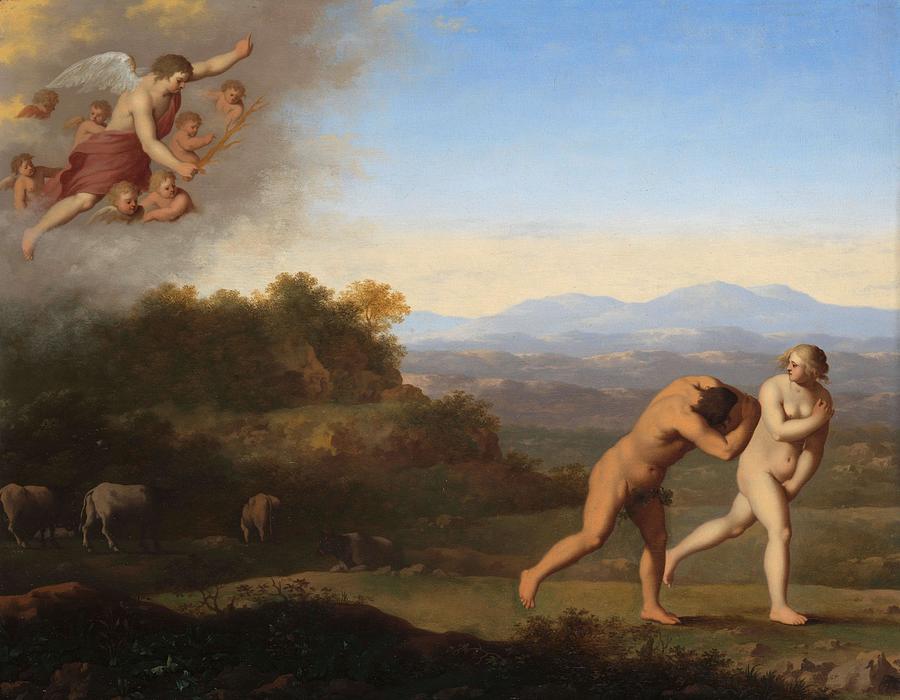
On that planet, he created special creatures, humans, who were made in his image such that they could love him in the way that he loved them. This universe then, would be a form of temple, a place where God can meet with his people. The garden he placed them in was where the dimensions of heaven and earth overlapped. The garden was a place where God’s good and beautiful kingdom of heaven was fully present.

Of course, these humans were not duplicate spiritual beings who were gods themselves, but physical creatures who had enough of God’s characteristics so that they could love in the way God loved. But love is a voluntary thing that we must choose to do, we cannot love unless we have the option to not love.

God placed his first people in a garden and gave them an assignment. They were to be his representatives, priests if you will, in this garden. They were to take care of it as His representatives, His stewards in the garden. Their long-term task was to multiply and fill the earth so that the whole earth would become the place where God could meet with all his people. The entire earth was intended to be filled with God’s abundant provision for his people who would then take care of what God provided, and all the while giving and receiving and sharing the love which God would freely bestow. In this way, the kingdom of heaven would overlap with the entire kingdom of earth and God would freely mingle with his people.

The option to love or not love was provided by a test of trust. There was in the garden a tree whose fruit not only looked appealing but promised to provide the gift of all knowledge if one ate it. The humans were told to trust God and not eat the fruit of that tree. Eating that fruit would not only provide certain knowledge but would also provide death.

The results of that test are now apparent all around us. Death comes to us not only in the form of physical death, the separation of our souls from physical life, but also in the form of spiritual death, the lack of love which separates us from each other and from God. Fortunately, our current situation is not our destiny – and that is what the rest of the story is about.

God intended that death would not merely be a penalty for not trusting (or loving) but would also be the very mechanism by which he would restore us to himself. From the descendants of the first people, God separated out a family through which he would bring blessing to the entire world. Through that family that a nation would be raised and through that nation the eternal God would choose a family to accomplish the inconceivable. In that chosen family, the eternal God would cause himself to be conceived within the womb of a woman who would then give birth to a being who was both fully God and fully human. He would then be raised as a human and eventually would suffer death by execution as a human and then be resurrected as a human.

In that resurrected human body, the eternal God would return to heaven, but before doing so, he invited us, in essence, to represent Him on earth by becoming part of his body on earth. By trusting him and accepting his Spirit, we could join with him in His death and resurrection by dying to our own self-interests and uniting with his loving interests.

He then promised to return to us again in bodily form, at which time the kingdoms of heaven and earth will again overlap. Heaven will be rejoined to earth to fulfill the intention God had from the beginning. But meanwhile, in this time between His incarnation and His eventual return, we are still called to be stewards of our currently broken world, bringing slivers of the light and hope of heaven into a world now very dark with evil and suffering and pain.

Observe

Read Acts 17:22-31. How could we use Paul’s gospel message to people we speak to today?