Principles

Dancing in the Kingdom- Table of Contents

Dancing In the Kingdom – Part 3 – Dancing in the Kingdom– Chapter 18 – Entering the Dance

Principles

[Bible references: Genesis 1; Psalm 19:1-4; Isaiah 28:23-29; Romans 1:18-20; 2:14-15; 13:1-2; 1 Peter 2:13]

We cannot establish the kingdom of God nor overcome the powers of evil in our own power. While Jesus has overcome the powers of the world, we do not know when he will return to finish the deed to fully establish his kingdom and fully rid the world of the presence of evil. But we can continue to work on the mandates he gave us at the beginning and rephrased at the Great Commission to make disciples of all nations, teaching them to obey all that I have commanded you, which extends from our original directives to be fruitful and multiply and fill the earth, and to subdue it and rule over all the creatures.

From the beginning of the church, we can see that while some people were sent out with the express purpose of spreading the gospel, most people stayed within whatever vocation they had, living in their own communities, sharing their resources, and supporting one another. Those that stayed in their vocations, did not change their vocations although they may have changed the way they pursued their vocations.

Albert Wolters suggests several principles that can help guide the way in which we pursue our vocations:[1]

  • The universe that God created was good.
  • The structures/institutions created by people should reflect God’s character and his wisdom as revealed through creation and his word.
  • The structures/institutions created by people are vested with God’s authority.
  • The universe reveals God’s glory.
  • Wisdom is “ethical conformity to God’s creation.”
  • The will of God for our life can be known through his creation, our conscience, His word, spiritual discernment.
  • Since God’s initial creative activity in forming the universe, God has been creatively developing the universe either directly through his own work or indirectly through his people. Part of that development includes the development of societal and cultural institutions.
  • Even without the fall, people would still be expected to develop the garden and other aspects of civilization as part of our role in stewarding what God has given us
  • When Christ returns, He will restore the earth.[2]

Whether we are directly communicating the gospel in our vocation or not, we may hold the narrative of the gospel as public truth to be shared.[3] The first communicators of the gospel were eyewitnesses who could say, “That which we have seen and heard … we declare to you.” As the church, we are entrusted with the responsibility of sharing that same truth, not in a forceful way but in the way of Jesus and his apostles who affirmed what they knew and invited others to respond in dialog.


[1] Wolters, Albert M. Creation Regained: Biblical Basics for a Reformational Worldview, William B. Eerdmans Publishing 1985, 2005. eBook Chapter 2

[2] Wolters, Albert M. “Worldview and Textual Criticism in 2 Peter 3:10” Westminster Theological Journal 49 (1987) 405-413 allofliferedeemed.co.uk/Wolters/AMW2Peter3.pdf

[3] Newbigin, Leslie. . “An Introduction to the Theology of Religions: Biblical, Historical & Contemporary Perspectives” Gospel As Public Truth, Intervarsity Press 2003

Observe

Read Psalm 19:1-4. How can our work reflect the glory of God?
Re-envisioning our inhabited environment

Dancing in the Kingdom- Table of Contents

Dancing In the Kingdom – Part 3 – Dancing in the Kingdom– Chapter 18 – Entering the Dance

Re-envisioning our inhabited environment

[Bible references: Exodus 25:1-9; 31:1-11; 35:30-36:7; Isaiah 65:17-25; Revelation 21:24-26]

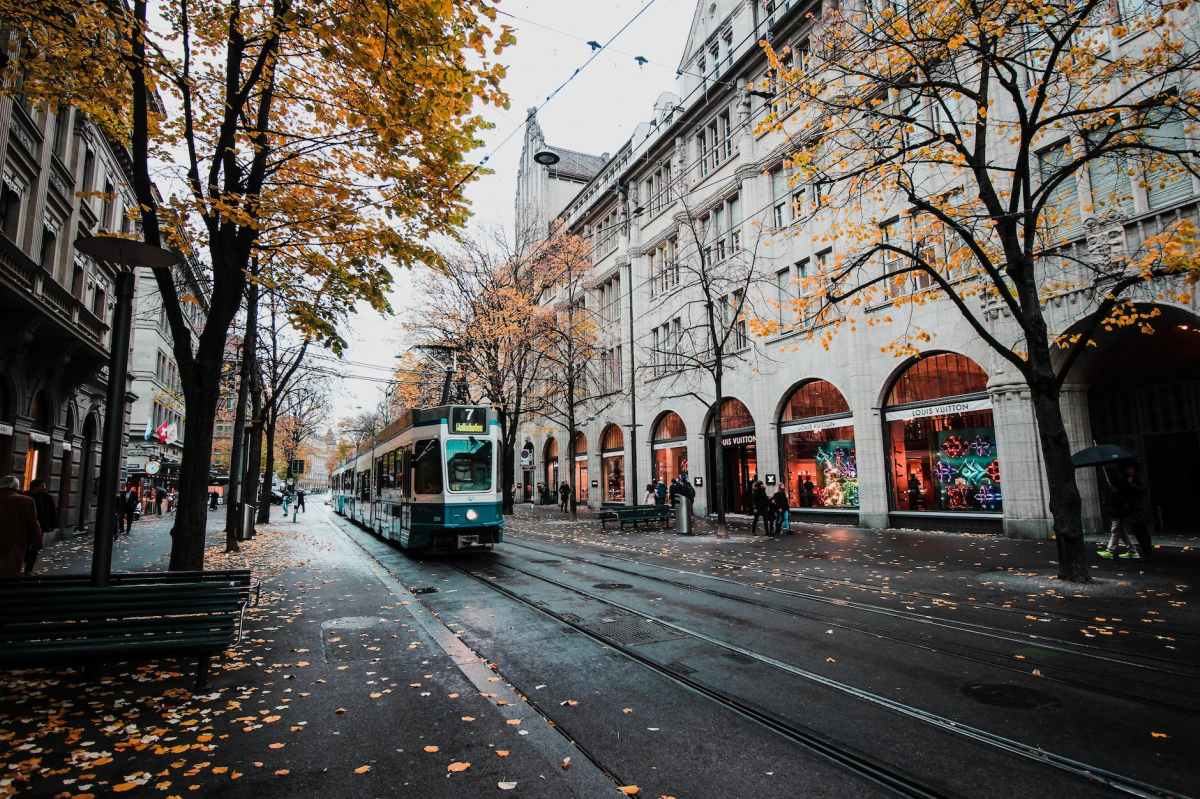
Within our given environment, we create communities, culture, and institutions to support all that. Our homes, neighborhoods, towns, and cities reflect our potential to create either beauty or corruption. The power we have as bearers of God’s image which provides our God-given ability to transcend our environment, is the source of great good or great sin.

“And decades of persuasive experiments have shown that built environments can be a factor in shaping us in ways that have significant long-term implications, in educational or workplace performance, or our physical and mental health and wellness. The point is that architecture, an integral part of essentially all cultures, is one of many interacting cultural factors—like entertainment and marketing, politics, belief systems, or charismatic individuals, for example—that together, in large and small ways, are involved in shaping behavior and who we are over a lifetime.” [1]

“On the night of May 10, 1941, with one of the last bombs of the last serious raid, our House of Commons was destroyed by the violence of the enemy, and we have now to consider whether we should build it up again, and how, and when. We shape our buildings, and afterwards our buildings shape us.”[2]

We possess the abilities to create works of art, some of which are designed simply to be enjoyed or give us cause to think and some of which have practical uses such as buildings we live, work, or play in, the outdoor areas between those buildings that can serve to connect us together, the vehicles which transport us. These practical works of art also require feats of all sorts of engineering, technical and organizational skills.

It is also clear that those same abilities are regularly misused, and our constructions look less like works of art and more like works of neglect and corruption. Instead of works which build us up and add to the flourishing of all, our works sometimes are simply not as helpful as they can be and sometimes even outrightly abuse our environment as well as our fellow humans.[3] Poor building design sped up Covid spread.[4]

 A Christian architect, Dave Greusel, suggests that we should construct our buildings with the attitude that they serve as “gifts to the community,” purposely constructed to advance God’s Kingdom, expressing grace, beauty, justice, creativity.[5] There are many different ways in which we enhance the quality of life not only within the buildings we create, but also the environment around those buildings, designing our spaces with consideration for how we live not only in, but around our buildings.

In the U.S., planning our cityscape around automobiles has seemed natural because of the way that our automotive technology has allowed us to flexibly expand in the large space afforded by our country. Sadly, that type of planning has caused us to sometimes neglect the way that life is normally lived with the communities of the city. Sometimes, it has been after the fact that cities have paid attention to how to better design the city spaces for people to navigate on foot or bicycle and to live in community.

Enacted space is “activated by the people using it.” that is, it is not enough to design particular spaces, but to make them attractive so that people use them. [6]

Additional features that can be considered for our spaces are how we situate housing for people and where they work, how we create enclosed spaces that give a sense of protection and safety, monuments that provide particular spaces with meaning and the thresholds (doorways or openings) between the building interiors and the spaces outside.[7]

“Connectivity is measured by the number of intersections per square mile. One hundred fifty connections per square-mile is considered to be the minimum for a vibrant community.” [8]


[1] Hart, Robert Lamb. “How Buildings Shape Us” Common Edge commonedge.org/how-buildings-shape-us

[2]Churchill, Winston. Made in a speech in the House of Commons on October 28,1943 about replacing the bombed-out House of Commons chamber. Quote given Automated Buildings automatedbuildings.com/news/aug20/articles/lynxspring/200721102909lynxspring.html

[3] Rethinking the Future. “Some Examples of Bad Architecture Ideas” Rethinking the Future www.re-thinkingthefuture.com/article/some-examples-of-bad-architecture-ideas; Staczek, David. “Is Bad Architecture Harmful to Our Health” Architizer architizer.com/blog/inspiration/stories/bad-architecture-harmful-to-health; Husock, Howard. “How Public Housing Harms Cities” City Journal Winter 2003 www.city-journal.org/html/how-public-housing-harms-cities-12410.html

[4] Ing, Will. Architects’ Journal 3 Oct 2021; www.architectsjournal.co.uk/news/poor-building-design-sped-up-covid-spread-says-academic 2021

[5] Greusel, Dave. “Architecture for Human Flourishing” Denver Institute for Faith and Work 15 Apr 2015 denverinstitute.org/david-greusel-architecture-for-human-flourishing-videos

[6] Jacobsen, Eric O. The Space Between  A Christian Engagement with the Built Environment” Baker Academic, 2012 (p. 17).

[7] Jacobsen, Eric O. The Space Between  A Christian Engagement with the Built Environment” Baker Academic, 2012 (Chapter 2)

[8] Jacobsen, Eric O. The Space Between  A Christian Engagement with the Built Environment” Baker Academic, 2012 (p. 43)

Reflect

As you consider the town or city you live in, what might be done better to make the places we live and work to be a gift to the entire community?

Observe

Read Isaiah 65:17-25. How can we build things that point to our future hope?

vocational stewardship

Dancing in the Kingdom- Table of Contents

Dancing In the Kingdom – Part 3 – Dancing in the Kingdom– Chapter 18 – Entering the Dance

Vocational stewardship

[Bible references: Ephesians 6:5-9; Colossians 3:1-17]

In-between those basic strategies, the question we all need to discover is, within the context we find ourselves in, what are the practical ways for us to use the gifts and talents God has equipped us with. For some of us, we can find ways to use our gifts and talents directly within the church. But all work, whether done in the church or outside can be done as unto the Lord. For others, Amy Sherman has identified four different strategies outside the church itself for us to consider.[1]

  • Promote the kingdom in and through your daily work
  • Volunteer your skills to an agency outside your employer.
  • Launch your own social enterprise
  • Participate in your church’s targeted initiative.

Whatever strategy we use, the goal is to bring hope to the world around us by bringing in Kingdom values of justice, righteousness, and peace.[2]

We do have to consider the reality that many of us have jobs that consign workers to demeaning labor: either doing tasks that treat workers as if they were biological robots on an assembly line doing repetitive tasks, or just doing unskilled tasks that require no creativity and that fail to regard the humanity of those workers.[3] Then sometimes, we simply find ourselves in a job which could easily be more meaningful if we were appreciated. What should we do then? Dorothy Sayers’ position is that we should have the same attitude as given to us in Genesis 2, we should serve the work. We can hope that the work was designed to serve the community, so that in serving the work we serve the community.

“The only true way of serving the community is to be truly in sympathy with the community, to be oneself part of the community and then to serve the work without giving the community another thought. Then the work will endure, because it will be true to itself. It is the work that serves the community; the business of the worker is to serve the work.”[4]


[1] Sherman, Amy. Kingdom Calling: Vocational Stewardship for the Common Good. Intervarsity Press, 2011 eBook Chapters 9-13

[2] Sherman, Amy. Kingdom Calling: Vocational Stewardship for the Common Good. Intervarsity Press, 2011 eBook Chapter 1

[3] Smith, James K.A. “The Beauty of Work, the Injustice of Toil” Comment comment.org/the-beauty-of-work-the-injustice-of-toil/

[4] Sayers, Dorothy. “Why Work” in Letters to a Diminished Church: Passionate Arguments for the Relevance of Christian Doctrine Villanova University www1.villanova.edu/content/dam/villanova/mission/faith/Why%20Work%20by%20Dorothy%20Sayers.pdf

Reflect

How might you use your vocational stewardship?

Observe

Read Ephesians 6:5-9. How do we serve “as unto the Lord” at whatever our vocation is?

Top-down strategy

Dancing in the Kingdom- Table of Contents

Dancing In the Kingdom – Part 3 – Dancing in the Kingdom– Chapter 18 – Entering the Dance

Top-down strategy

[Bible references: Numbers 22-24; Deuteronomy 8; Psalm 27; Nehemiah 1-2; 1 Timothy 4:3; stories of King David and Solomon (2 Samuel; 1 Kings 1-11)]

The top-down strategy tries to reach individuals by affecting the culture. Even if people don’t respond to the cultural change, God can be glorified by the display of his kingdom values in society.

James Hunter examined how culture changes and saw the mixed results of the bottom-up approach. He saw that some small groups of people (e.g., gays, Jews) have had a relatively large impact on the culture while larger groups (e.g., evangelicals) are losing their impact on the culture. Hunter discovered that cultures usually are changed from the top-down, most influenced by elites who are somewhat outside the center of influence but having a network of connections to other elites and who can withstand the resistance from the centers of influence.

Culture is about how societies define reality—what is good, bad, right, wrong, real, unreal, important, unimportant, and so on. This capacity is not evenly distributed in a society but is concentrated in certain institutions and among certain leadership groups and that cultural change is most enduring when it penetrates the structure of our imagination, frameworks of knowledge and discussion, the perception of everyday reality.[1]

Very few Christians are in a position to exercise a top-down strategy. The few people who do have such influence are typically subject to the temptations that come with such power, and all too often succumb to sin and become disqualified or become abusive in the exercise of such power.


[1] Hunter, James Davison. To Change the World: The Irony, Tragedy, and Possibility of Christianity in the Late Modern World. Oxford University Press 2010

Observe

Read Nehemiah 1-2. What factors were involved in Nehemiah’s influence on King Artaxerxes?

Occupy Till I Come

Dancing in the Kingdom- Table of Contents

Dancing In the Kingdom – Part 3 – Dancing in the Kingdom– Chapter 18 – Entering the Dance

Occupy Till I Come

[Bible references: Jeremiah 29; Luke 19:11-27]

On His way to Jerusalem the last time before His triumphal entry, Jesus knew the kind of expectations the people had about how the Kingdom of God would appear. To prepare them for the long wait between His resurrection and His return to fully restore the Kingdom of God, He told them a parable about a nobleman who would, before going into a far country, give his servants some money with instructions to engage in business while he was gone. The parable ended with rewards given to those who made profits and penalties for those who did not.

This then is our instruction, to make use of what God has given each of us to ‘engage in business,’ (KJV “Occupy Till I Come”) that is, we are called to help advance the kingdom until He returns.

When Jesus came two thousand years ago, he announced the beginning of a new age, “The Kingdom is here … The Kingdom of heaven is near … The Kingdom of God has come.” As disciples of Jesus we can say, “The Kingdom of God is within us.” Then, with our hearts changed by Jesus, we are charged to go and make disciples, to do justly, love mercy and to walk humbly with our God.

As we then join Jesus in bringing His kingdom into the world, we need to remember our humble estate …We cannot even change our own hearts, never mind the hearts of others. Certainly, we cannot change our culture. It is up to our Savior to change our hearts, and even more so to change the culture around us.

Jesus and his disciples lived more as servants or slaves within the Roman Empire. They had no political influence. But as the disciples lived transformed lives, living as well as preaching the Gospel, and showed the power of sacrificial love, their Spirit empowered lives opened the way for the Spirit of God to change the hearts of many throughout the Roman Empire, eventually moving the heart of a Roman Emperor, Constantine.

History has shown the mixed results of combining the power of state and church, but the teachings of Jesus have penetrated even our secular postmodern culture in ways that are not widely recognized as such. Despite the church’s own history of abusing and misusing power, Jesus’ concepts of using power to serve others, even one’s enemies still managed to occasionally penetrate the halls of power – in imperfect form to be sure, just as the ideas expressed in the Enlightenment imperfectly expressed ideas from Christianity.

“Reparations let’s say for slavery or in New Zealand reparations to the Māori or in Australia reparations to the Aboriginal even for native indigenous American Indians. And this language is actually not a historic language. This is a language since Jesus. See, because Genghis Khan never worried about reparations. He never felt he had any moral responsibility to somehow make it right for all the women he raped and all the men he killed and all the families destroyed and all the villages he burned down. We have Caesar or Alexander, they never really had remorse for anything they conquered or anything they destroyed or any people whose lives they overthrew. This concept of justice of using power well is a concept that only emerges because Jesus lived 2,000 years ago. He revolutionized the entire understanding of power. The idea that a government should actually care about its citizens is really, it’s not a historic human concept. This concept is infused by the ethics that Jesus brought to the understanding of power that it says when Jesus had all power and all authority, he ties a towel around his waist and he washes his disciples’ feet. This is a reinvention of power. … if you go back to World War II … when you look at the American response to conquering Germany and conquering Japan, and how within a decade or two, both of them became two of the greatest economies in the world … You get to see what happens when you’re conquered from a Christian mindset world with West Germany. You realize that Japan becomes one of our greatest allies. That doesn’t happen historically. You do not conquer a nation and then rebuild it to feel a moral obligation to re-establish that country better than it was before. Even what we’ve done historically has been informed by a Christian worldview. I’m not saying that England or United States or any Western nation is a Christian nation. What I’m saying is the conversations we’re having are informed by Jesus’s revolutionary, brilliant genius thoughts about power.” [1]

There are debates on the ideas expressed above, often fraught with ideas of self-interest[2] and ideology, about how to provide for populations that have experienced oppression or how to manage the after-effects of war. But these ideas and other expressions of compassion and justice – like hospitals, orphanages, the concept of “war crimes,” or the many ways to carry out “social justice” (that is, God’s expression of compassion and justice) – are ideas not found in history until God introduced them first to his chosen people, Israel, and then through the person of Jesus to His Body. As God’s image-bearers

Unfortunately. the church often abused its privilege, often succumbing to the worldly temptations of power and ignoring its mandate to steward God’s world with compassion and justice. But even though the church has stumbled, it has still managed to live out, admittedly imperfectly, its mandate of compassion and justice. And the world has noticed. Bu interestingly, many have adopted those same values even though they choose to ignore the source of our mandate.


[1] Mcmanus, Erwin. Interview with Carey Nieuwhof, CNLP 452: Erwin McManus on the Future of the Church, How to do Evangelism More Effectively, Authenticity and Reflections on Being Labeled a Heretic Carey Nieuwhof careynieuwhof.com/episode452

[2] Niebuhr, Reinhold.  “Editorial Notes” republished as Christianity and Crisis Magazine providencemag.com/2022/06/christian-realism-enlightened-self-interest-marshall-plan-emerges-reinhold-niebuhr/ 17 Jun 2022

Reflect

In what ways have you lived out a sacrificial love?

Observe

Read Jeremiah 29; Luke 19:11-27. What do we need to do to live transformed lives, living and preaching the Gospel, and show the power of sacrificial love with Spirit empowered lives?

Flourishing community

Dancing in the Kingdom- Table of Contents

Dancing In the Kingdom – Part 3 – Dancing in the Kingdom– Chapter 17 – Finding our place

Flourishing community

[Bible references: Proverbs 17:17; 27:10; Ecclesiastes 4:9-10; Romans 12; Philippian 4:4-9; Hebrews 10:19-25; 13:2;1 Peter 1:12 22; 4:9; 2 Peter 1:3-11]

One mark of the Kingdom of God is the presence of communities that flourish. In this in-between time, these communities will not be any more perfect than the individuals within the community. But there are practices that we can engage in that will help our communities flourish. How we share our lives as individuals, congregations, or families will either draw people in or push them away. Within the culture that surrounds us, there are many practices that serve to isolate individuals, creating loneliness and emotional fragility. However, within the context of healthy congregations, there are various practices that serve not only to build us up within the church community but can also impact the communities around us. Christine Pohl has identified four characteristics that will sustain flourishing communities:[1]

  1. Gratefulness: As much as we are aware of how God has provided for us and we are secure in that knowledge, our gratitude can flourish. When we have gratitude, our lives will be enhanced by being more likely to notice what is good and beautiful around us. When our hearts are grateful, we are enabled to increase our ability to love and to offer grace to one another.

“Be thankful for the smallest blessing, and you will deserve to receive greater. Value the least gifts no less than the greatest, and simple graces as especial favors. If you remember the dignity of the Giver, no gift will seem small or mean, for nothing can be valueless that is given by the most high God.” [2]

2. Making and keeping promises: We arrange much of our lives according to our expectations of others’ behavior and the promises they make. Broken promises lead to a sense of betrayal and disappointment to the loss of integrity of the promise maker. On the other hand, promises that are kept strengthen our commitment and love with one another and provides stability for the community.[3]

“The history of the human race, as well as the story of any one life, might be told in terms of commitments. . .  At the heart of this history . . . lies a sometimes hidden narrative of promises, pledges, oaths, compacts, committed beliefs, and projected visions.” [4]

3. Truth-filled lives:[5] Without expectations of truth, there can be no trust. One need only to look at the broken social and political environment that we have today and see the consequences of a society in which trust is broken.

4. Hospitality:[6] To be truly hospitable is to recognize each other’s common humanity, to set aside the priorities of efficiency and instead, to care for and nurture one another, to prioritize our needs for rest and renewal. According to a tradition in Africa, no one individual is a host but the rather it is the community that offers hospitality.

“Welcome is one of the signs that a community is alive. To invite others to live with us is a sign that we aren’t afraid, that we have a treasure of truth and of peace to share.;” Ogletree, Thomas. Hospitality to the Stranger (Fortress Press, 1985) “to be moral is to be hospitable to the stranger.” [7]

All the characteristics mentioned above should ideally be present in the Christian community. When we notice their absence from the communities around us, we can see the destruction created by their absence. A healthy church then has the opportunity to bring a healing influence into the communities around us. As Leslie Newbigin has stated, “the presence of a new reality will be made known by the acts that originate from it.”[8]

One of the challenges/opportunities for the church is to maintain those healthy characteristics across all the boundaries of the different groups within the church so that there is healthy interaction between married and single adults, between adults and children, between different ethnic groups. Paying attention to those interactions within the church will help to navigate those interactions with those outside the church.

Linked to the gift of hospitality is the gift of friendship. Because this gift is costly in the amount of time and energy that we devote to someone else, exercising this gift outside the bounds of the church will usually require significant intentionality,


[1] Pohl, Living into Community, Cultivating Practices that Sustain us William B. Eerdmans Publishing Company 2012. eBook

[2] Kempis, Thomas à. The Imitation of Christ early 15th century (Chapter 35)

[3] Arendt, Hannah. The Human Condition University of Chicago Press, 1958, p.244

[4] Farley, Margaret A. Personal Commitments: Beginning, Keeping, Changing Harper & Row, 1986,pp. 12-13, 34, 38

[5] Aquinas, Thomas, Summa Theologica, Vol 2, Question109: “Of Truth”

[6] Vanier, Jean, Community and Growth 1979

[7] Turyomumazima, Bonaventure, “Africa Files – Christ in Africa: Stranger, Guest, Host” www.africafiles.org/printableversion.asp?id=14009 (no longer available); De Vries, Roland. Becoming a Guest: Christology and Ecclesiological Identity Erudit Volume 25, Numero 2, 2017 p. 165-184 www.erudit.org/fr/revues/theologi/2017-v25-n2-theologi04371/1056942ar (p. 165-184)

[8] Chilcote, Paul and Warner, Laceye” The Study of Evangelism: Exploring a Missional Practice of the Church. Wm B Eerdmans Publishing Co. 2008 Chapter Four, Leslie Newbigin. Evangelism in the context of secularization.

Reflect

Of the characteristics mentioned by Pohl, which are evident in your local church community? 

Observe

Read 2 Peter 1:3-11. What would a community look like if everyone was living out this passage?

New Jerusalem’s Urban Garden

Dancing in the Kingdom- Table of Contents

Dancing In the Kingdom – Part 3 – Dancing in the Kingdom– Chapter 16 – Fixing our eyes

New Jerusalem’s Urban Garden

[Bible references: Genesis 1-2; 1 Corinthians 12; 14;1 Peter 1, 4; Revelation 21-22]

In the now-broken earth, many people think of human civilization only as a corruption and pollution of the earth, that the earth was only meant to be pristine – as it supposedly was before humans started to mess it up. While we certainly have abused the earth in many ways, that does not mean all aspects of human civilization are inherently bad. When we use our God-given capabilities to join God in His kingdom building, that is good. Many of the things that we design, create and build are inherently good. The problem lies in our corruption and the world’s corruption that causes us to misuse every good thing.

When we were charged with filling and subduing the earth, it did not mean that we were to simply expand the Garden of Eden. God had given us many gifts to use, including tremendous creative abilities. We were given various spiritual gifts for the purpose of building one another up; we were given artistic gifts to make articles for the Tabernacle and Temple; we were given gifts of singing, making musical instruments and craftsmanship, hunting, trading, sailing – in general, making the things of civilization.

Those same gifts are available for current task of participating with God in the process of bringing His Kingdom to earth, a process that shall lead to ultimate uniting of heaven and earth, a process that leads not to the original Garden of Eden, but of an urban garden attached to the new Jerusalem.

It is undeniable that, despite the corruption we see, God has provided us an abundance of creative skills for displaying His transcendence and glory in our art, technology, engineering, and sciences. He has also given us social and political skills to create human public and private institutions that can organize our abilities to do good.

But it does not take much observation to also notice the corruption that has permeated our society. It can seem hard to determine if we have misused more than properly used the gifts and abilities God has given us. Nevertheless, as God’s co-regents we have been given a sacred obligation to nurture the place he gave us in anticipation of God’s final restoration of the earth.

Reflect

How can you use the gifts and skills that God has given you to help give people hope for the future?

Observe

Read 1 Peter 1. If our mind is set on seeing Christ soon, how shall we prepare?

The Kingdom is Come and Not Yet

Dancing in the Kingdom- Table of Contents

Dancing In the Kingdom – Part 3 – Dancing in the Kingdom– Chapter 16 – Fixing our eyes

The Kingdom is Come and Not Yet

[Bible references: Matthew 6:9-13; 28:36-49; Romans 12:2; James 1:27; Revelation 21-22]

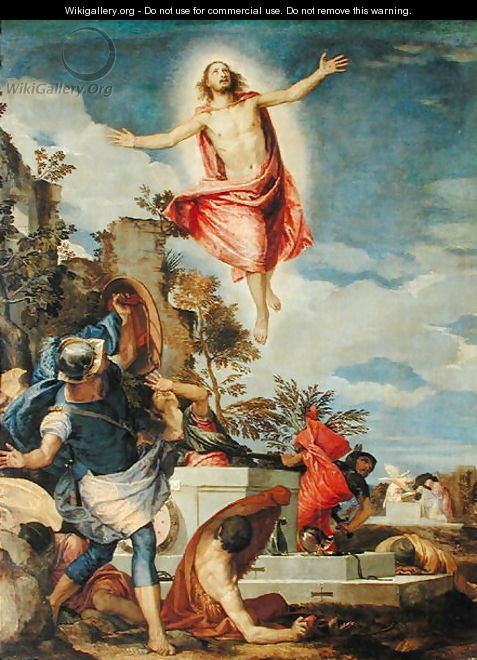
When Jesus came the first time, his healings and teachings began the ushering in of the Kingdom of God, a task He will complete when He returns to fully restore His Kingdom. When Jesus came the first time, He was resurrected, but when He comes a second time, there will be a new heaven and earth, and everyone will be resurrected. But what about now?

When Jesus ascended to heaven, he told the disciples to wait for the baptism of the Holy Spirit. It was then, through the power of the Holy Spirit, that the disciples of Jesus began the process of continuing the task of bringing Heaven to earth. In this in-between time, God is at work through the Holy Spirit, continuing to bring people to Himself, continuing to build His kingdom. The task that lies before us is to join Him in His work. The prayer He gave for us to say says, “your kingdom come, your will be done, on earth as it is in heaven.” This prayer asks that His kingdom be brought to earth, the Kingdom of justice and mercy.

Empowered by the indwelling of the Holy Spirit, it is our opportunity to do our part, with whatever ability He has given us, to work with Him in bringing His justice and mercy on earth: to look after the widows, orphans, the helpless, and the marginalized; to have compassion; to not lie about others; hate evil, love good; maintain justice in the courts; bringing the good news of Jesus to all. This is simply doing the task assigned to us from the beginning: to fill the earth and subdue it as his co-regents, to take care of the earth as farmer-priests representing Him on earth.

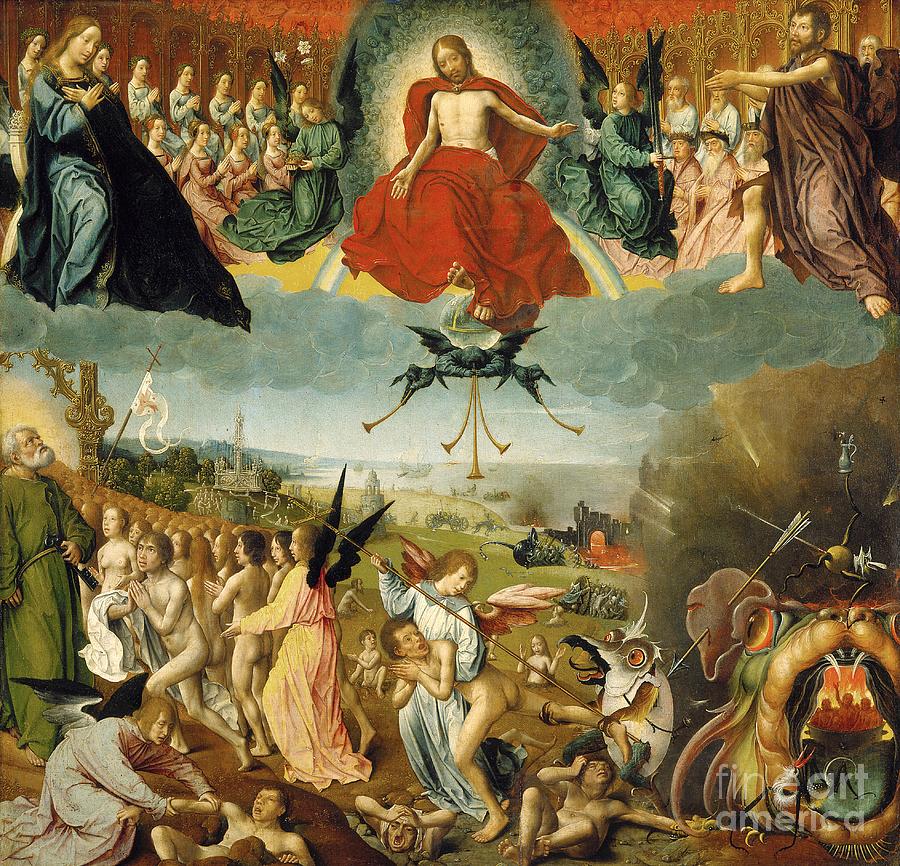
Our final destiny is not to a disembodied existence, but to a new, transformed body, transformed in the way that Jesus was when he was resurrected. Earth itself will also be transformed, with its corruption being removed, not back into a Garden of Eden, but into the earth as it was meant to become, filled, and civilized, with a new Jerusalem being brought from heaven to earth. We are not being sent to heaven; heaven will be coming to us.

Knowing that this end is coming upon us, in the present age we can be motivated to express our hope by living out our hope as in mentioned in The Lord’s Prayer, “thy kingdom come, thy will be done, on earth as it is in heaven.” This encourages us to do what we can to help usher in God’s kingdom now, if only in part. The full entry of the kingdom will not happen until the Lord returns and establishes a new heaven and earth, but we do not need to wait hopelessly as if there is nothing we can do. God has given everyone in his church gifts with which we can build each other up and take charge as His stewards of the earth.

But the task of transforming the earth needs to begin within us. We need to be transformed. In our sin, it is our tendency to always point to other things for the cause of the problems we see. But the cause of the corruption we see elsewhere begins with the corruption within ourselves.

“The line separating good and evil passes not through states, nor between classes, nor between political parties either – but right through every human heart…even within hearts overwhelmed by evil, one small bridgehead of good is retained. And even in the best of all hearts, there remains…an uprooted small corner of evil. [1]


[1] Solzhenitsyn, Aleksandr. “The Gulag Archipelago” Vintage Publishing 1974

Reflect

Reflect

In this time that we live in, the Kingdom of God has come but not yet completely. Our hearts reflect this time with our mixed desires – at once delighting in God’s law and at the same time waging war against that same law. The corruption in our hearts is reflected in the corruption we see in the world. How does that impact how we approach our task to join God in bringing His Kingdom into the world?

Observe

Read Revelation 21:22-24. Try to imagine what it means that “the kings of the earth will bring their splendor into the city.” What would that look like?

Everything Belongs

Dancing in the Kingdom- Table of Contents

Dancing In the Kingdom – Part 3 – Dancing in the Kingdom– Chapter 16 – Fixing our eyes

Everything Belongs

[Bible references: Leviticus 27:30; Psalm 22:27-28; 2 Corinthians 4:1-18; Hebrews 12:1-29]

The gift that true contemplatives offer to themselves and society is that they know themselves as part of a much larger story … Only when we live and see through God can “everything belongs.” …All religious teachers have recognized that we human beings do not naturally see; we have to be taught how to see.[1]

In our last chapter, we looked at the spiritual disciplines which God can use to conform us more to His image. We saw that although those disciplines had an internal focus – they were meant to conform us as individuals. We saw that the disciplines have an external purpose – to enable us to build up others in the body of Christ. That prepares us now to extend our outward focus on God’s work in restoring His kingdom and the many ways in which we can participate with God in restoring the breadth and depth of His kingdom.

All of creation belongs to the Lord. All of creation was designed to be His temple – a place where God would be with His image-bearers. The care of all creation was given to His image-bearers because they themselves are temples of God in whom the Holy Spirit dwells and therefore able to be His stewards. Despite our rebellion, the responsibility given to us was not removed; even though both it and we are corrupted and even though we are unable to remove that corruption. Also, despite our rebellion, our Creator has not ceased to love us. In His inexhaustible compassion, he has not left us to ourselves but means to restore us, along with all of creation. He means to continue the project He began at the beginning of creation, the project of transforming us to become more like Him.


[1] Rohr, Richard. “Everything Belongs: The Gift of Contemplative Prayer.” The Crossroad Publishing Company 2003

Observe

Read Leviticus 27:30; Psalm 22:27-28. Everything, including us, belongs to God. How does that affect how we treat everyone and everything around us?

The Discipline of Simplicity/Stewardship

Dancing in the Kingdom- Table of Contents

Dancing In the Kingdom – Part 3 – Dancing in the Kingdom– Chapter 15 – Reforming our Souls

Discipline of Simplicity/Stewardship

[Bible references: Genesis 1:28; Psalm 33:5; Micah 6:8; Hosea 6:6; Matthew 25:35-40; Luke 16:13; John 13:34; 1 Corinthians 3:9; 4:2; 9:24-27; 2 Corinthians 1:12; 9:6-8; Galatians 6:6; Philippians 4: 4,8-13; 1 Timothy 5:8; 6:6-10, 17-19; Hebrews 3:5; 12:1-3; James 1:17; 1 Peter 4:10; 1 John 3:17]

The central point for the Discipline of simplicity is to seek the kingdom of God and the righteousness of His kingdom first – and then everything necessary will come in its proper order.[1]

There’s no point in simplifying your life if you are steering toward an end point that doesn’t matter to begin with.[2]

My schedule is far less about what I want to get done and far more about who I want to become.[3]

“We do not mean . . . that simplicity betrays itself in no visible signs, has not its own habits, its distinguishing tastes and ways; but this outward show, which may now and then be counterfeited, must not be confounded with its essence and its deep and wholly inward source. Simplicity is a state of mind. It dwells in the main intention of our lives. A man is simple when his chief care is the wish to be what he ought to be . . . And this is neither so easy nor so impossible as one might think. At bottom, it consists in putting our acts and aspirations in accordance with the law of our being, and consequently with the Eternal Intention which willed that we should be at all.”[4]

“If you want to have a spiritual life you must unify your life. A life is either all spiritual or not spiritual at all. No man can serve two masters. Your life is shaped by the end you live for.”[5]

It is not enough to simply pare down one’s possessions or schedule, because they can become their own ends or become undone because we have not dealt with our habit of filling our time or possessions with something else. To successfully practice simplicity, we must have a clear center, a clear purpose. It is from that purpose that we can decide how to spend our time and resources so that our decisions can be based on how they fit our priorities. An indicator of whether you achieved your purpose can be if you feel fragmented and restless. Without a clear purpose, short-term distractions and pleasures can hijack our progress towards our long-term goals. Therefore, the goal of simplicity is to gain integrity of spirit, reduce temptations, distractions, and the need/desire for things so that we can better serve God.

Setting our priorities

To reach these goals, we must do less of some things but more of others. True simplicity is doing less of what matters least, and more of what matters most. You don’t just empty your life of the bad, you fill it with the good. Having a purpose allows you to discern whether a particular area of life should be constricted or expanded; purpose produces priorities. Once our priorities are set then we can make meaningful decisions about our activities. We may need to declutter our lives: we may have too many things in our home, or too many activities in our lives. What detracts our attention from our priorities? What things should we say “no” to? What habits do we have that move us from our goals?

The discipline of simplicity includes determining who we want to be and setting goals to achieve that, then setting our priorities, and then arranging our use of time, money, our spiritual gifts, and our relationships to meet those priorities. Simplicity is the essence of stewardship.

Stewarding our resources

Once we have centered ourselves and established our priorities then we can focus on how to manage the limited resources that we must accomplish the responsibilities God has given us. It is easy to get overwhelmed by all the needs we see around us in the world, it seems that there are not enough resources to meet the needs of the world. That is why we need to figure out what responsibilities God has to us individually. Then we need to trust God to provide what we need to for those responsibilities (Philippians 4:19 And my God will supply every need of yours according to his riches in glory in Christ Jesus.)

If we have set our priorities properly, then our priorities should be aligned with God’s priorities and desires. In Gen 1:28, we can see that stewardship is the first assignment God gave humans, so part of what we need to consider is what individual things that we, as individuals, have been given stewardship responsibilities over. We also need to consider God’s desires for how we carry out those responsibilities. We know that His desires are for us to love God and neighbor, act with justice and mercy, have a generous and overflowing love towards others (including our families, our fellow believers, and those in need) and to take care of the world he has provided for us.

As His stewards, we need to consider how to use the blessings God had given us, to serve in the way he would have us do so that we bring glory to Him in all that we do. We are not just a person with a vocation, or just a member of a family, or just a church member, etc. We are a who not a what. We are people created by God to be in relation with him and with others, and with multiple obligations.


[1] Foster, Richard J. Celebration of Discipline Harper & Row Publishers ©1978 (p. 75)

[2] Hybels, Bill. Simplify: Ten Practices to Unclutter Your Soul.  Tyndale Momentum 2015

[3] Hybels, Bill. Simplify: Ten Practices to Unclutter Your Soul. Tyndale Momentum 2015

[4] Wagner, Charles. The Simple Life. McClure, Phillips & Co. 1901

[5] Merton, Thomas. Thoughts in Solitude.  Farrar, Straus, and Giroux 1999

Reflect

What habits in your life move you away from pursuing God?

Observe

Read 1 Corinthians 9:24-27. How would following the advice in this passage help us to be better stewards?

Our Mandate

Dancing in the Kingdom- Table of Contents

Dancing In the Kingdom – Part 3 – Dancing in the Kingdom– Chapter 14 – Remembering our creation

Our Mandate

[Bible references: Genesis 1:26-28; 2:18-25; 3:6; 39:22-23; Matthew 17:10-13; Acts 3:19-42; 1 Peter 5:10]

We have seen how our journey, the journey of God’s people, creatures made in God’s own image, began with our ordination in the Garden of Eden and we have seen what God has intended for our future. We have seen how that intention has not changed despite our rebellion which continues to this day, and how God has not ceased to work with us, His people, despite our persistent rebellion. We have seen God’s patience and tenderness in not totally abandoning us despite our rebellion and how He has called us generation after generation – from the patriarchs and prophets to the apostles and all who are called Christian – to join Him in His ongoing restoration of His Kingdom on earth.

As image-bearers, we still are charged with the work of stewarding His creation, However, we must be restored ourselves before we can fully join Him in His work. That work of restoration begins when the Holy Spirit comes within us to unite us to God and His community. That is the work God must do within us.

In the previous chapters, we have followed how God called his image-bearers to join in the work that he began and then how, through the years, his image-bearers have joined that work, sometimes successfully and sometimes not. In this chapter, as we prepare to consider how to move forward, we will revisit that multi-faceted call to rule over the earth, to be fruitful and multiply, to fill the earth and subdue it” and to cultivate[1] and keep it, to create beauty. This call to act as God’s stewards of His creation is a call to use our gifts of intelligence and creativity, to cultivate the resources of the earth to establish a godly culture and civilization. This call is sometimes called the “cultural mandate,” where our culture includes all the things we discover and make and pass on from one generation to the next: our food, language, sports, arts, businesses and their products, civic organizations, and governments, etc.

The charge to “have dominion over” and “subdue” the earth and all its creatures includes physical, cultural, and intellectual activities such as farming, mining, manufacturing, government, arts, civic organizations, education, sciences, technology, and many other activities. But the primary place of God’s kingdom is to restore the souls of men. All would be well if all souls were in right relation to God, everything else would fall into place. Evangelization of the souls of all men is the ultimate goal. But if we think of the ways in which God, out of his overflowing abundance, finally managed to touch our hearts, there were many steps and many different ways in which we were individually touched by the hand of God.

As God’s image-bearers we are uniquely equipped to imagine and discover what kind of possibilities can be made of the overflowing abundance of  God, the physical resources He has provided for us: turning grain to bread, grapes to wine, oil to energy and plastics, iron ore to steel, limestone and shale and clay to cement, and many other things we have made from many types of resources. We are uniquely equipped to imagine and discover out of God’s overflowing abundance what kinds of ways we can organize ourselves to fulfill our responsibility to subdue and cultivate the earth by creating organizations such as businesses, civic and social organizations, political parties and non-profit organizations, governments and educational and religious institutions.[2] In all of these activities we can reflect God’s knowledge and wisdom by engaging in intellectual pursuits such as reading, writing, mathematics, sciences, philosophies, language arts, history, engineering, forensics, medicine, law, etc.  


[1] Huber, Dave. “Avodah Word Study” EFCA Today Summer 2012 www.efcatoday.org/story/avodah-word-study

[2] Manahan, Ronald E. “A Re-Examination of the Cultural Mandate: An Analysis and Evaluation of the Dominion Materials” Docsbay Grace Theological Seminary dissertation May 1982 docsbay.net/A-Re-Examination-Of-The-Cultural-Mandate

Reflect

We were assigned priestly duties in the Garden of Eden. As believers, we are to be kingdom of priests. As God’s care for His Creation continues, so does our mandate. What things can you do (and are equipped to do), with God, to fulfill His mandate?

Observe

Read Genesis 1:26-28; 2:15; 39:22-23. How would the world be different if we fulfilled our duties towards creation in the same way the Joseph fulfilled his duties?

Mystery of the kingdom and eschatology

Dancing in the Kingdom- Table of Contents

Dancing In the Kingdom – Part 2 – The Kingdom Revealed – Chapter 13 – Distinctives within the body of Christ

Mystery of the kingdom and eschatology

[Bible references: Isaiah 2; 60; Joel 2; Micah 4; Daniel 7; Matthew 24; Luke 17; Revelations 20]

What is the kingdom of God/Heaven?

The kingdom of Heaven refers to where Jesus reigns. Heaven has always been under his rule and when he returns and our current earth is transformed into the new earth, Jesus’ kingdom will include that as well. In the meanwhile, His kingdom includes all those who have accepted Jesus as their king. Some only apply the Kingdom of God to only the reign of God in heaven or the reign of God after earthly governments are done away with.

How and when will Jesus return?

Discussion about the end times[1] has always been problematic because of the nature of prophetic language. This has led to much contention in the church about how events will occur or have occurred. Even though Jesus has cautioned us that only the Father knows when that will happen, people have not stopped trying to “read the signs.”

The clues about the Messiah in the Old Testament were confusing to interpret. Even after the incarnation of Jesus, we know that the disciples were confused about how the events of the end times such that Jesus’ death was incomprehensible. Even after Jesus’ resurrection and ascension there was still confusion, and it took some time to sink in that Jesus’ return was not going to happen for a while.

There are a wide variety of thoughts about the Biblical prophecies concerning the end times. The questions deal with such things as: is the book of Revelation about events now past us (e.g., the destruction of Jerusalem in AD 70) or about future events or both, does the 1000 years talked about in Revelation 20:1-15 occur now or in the future and is the 1000 years literal or metaphorical, will there be a “rapture” of believers before a coming time of great tribulation, since there was no nation of Jews after the destruction of Jerusalem do the promises that applied to Israel now apply to the church – and other questions.

There are various historical factors and hermeneutical questions that led to some of the variations in the way that these questions were answered: whether the prophecies should be interpreted literally or metaphorically, whether the Old Testament laws should be kept in effect by the church, the importance of the destruction of Jerusalem in AD 70 and the consequent re-creation of the nation of Israel in AD 1948. Regardless of the way those questions are answered, the more important issue is our behavior in the present.

The role of the prophecies in the past had been to either warn people of behaviors they needed to change or to provide encouragement and hope in the times of difficulty. Wherever we stand on these prophecies, those intentions should be our focus; our behaviors in the present life and our hope to sustain us.


[1] Herrick, Greg. “9. Eschatology: End Times” Bible.org bible.org/seriespage/9-eschatology-end-times

Future of the faith

Dancing in the Kingdom- Table of Contents

Dancing In the Kingdom – Part 2 – The Kingdom Revealed – Chapter 12 – Launching the church

Future of the faith

[Bible references: Isaiah 65:17-25; 66:22-24; Luke 20:34-362 Corinthians 5:1-10; 2 Peter 3:10-15; Revelation 21:1-8]

As mentioned in the previous section, the war against evil has been won. Christ has won the battle over sin and death. We need to keep our minds fixed on that when the battles rage around us. We need to remember that we are the side of the victor and not get defensive – our God is not small! We need to remember that the forces of evil have reigned since the fall and so, when Jesus came in the flesh, it was the forces of good that have intruded on the forces of evil, not the other way around.

With the life, death and resurrection of Jesus, the Kingdom of God has entered onto the earth and Jesus continues to bring the Kingdom of God on earth through his church. Unfortunately, we need to wait until Jesus returns before he completely restores the Kingdom of God. But He will restore it!

One of the in-between time confusions centers around what happens in the day that Christ returns. In this time, when Christians die, we are not automatically resurrected, instead we leave earth to go to heaven to be with the Lord. But that is not our last destination! When Christ returns, He will unite heaven with earth, and it is then that we will then receive our resurrected bodies so that we can live on that new earth.

One of the other confusions around what happens what is the relation between the old earth and the new earth. The language in 2 Peter 3:10 can make it seem that the old earth will simply be annihilated and replaced with the new earth. However, that would seem to conflict with Acts 3:21 where God is said to “restore all things.”

“The times of the restitution of all things – The noun rendered restitution … does not elsewhere occur in the New Testament. The verb from which it is derived occurs eight times. It means properly “to restore a thing to its former situation,” as restoring a “strained” or “dislocated” limb to its former soundness. Hence, it is used to restore, or to heal, in the New Testament …”[1]

It so happens that “all but one of the oldest and most reliable Greek manuscripts do not have the final words “will be burned up” but instead have “will be found, …”[2] and that would be more in line with Acts 3:21.[3] What has been the more common rendering of “burning up the earth” has caused some to not care about our current earth, but if the earth is to be transformed rather than destroyed then we might, as the stewards of the earth, pay more attention to taking care of the earth.


[1] Biblehub “Acts 3:21” Biblehub biblehub.com/acts/3-21.htm

[2] Wolters, Albert M. “Creation Regained: Biblical Bases for a Reformational Worldview” William B. Eerdmans Publishing 1985, 2005. (Location 568 of 1582)

[3] Bible.org “A Brief Note on a Textual Problem in 2 Peter 3:10” the meaning of the term is virtually the equivalent of “will be disclosed,” “will be manifested.” Thus, the force of the clause would be that “the earth and the works [done by men] in it will be stripped bare [before God].” BAGD suggests a slight modification of this: be found as a “result of judicial investigation” (s.v. εὑρίσκω, p. 325. 2), citing Acts 13:28; 23:9; John 18:38; 19:4, 6; and Barnabas 21:6 as approximate parallels. Danker2 suggested a parallel between 2 Pet 3:10 and Ps Sol 17:10 (“Faithful is the Lord in all his judgments which he executes on the earth”; the link here is conceptual, though in v. 8 εὑρίσκω is used of the exposure of men’s sins before God). We might add that the unusualness of the expression is certainly in keeping with Peter’s style throughout this little book. Hence, what looks to be suspect because of its abnormalities, upon closer inspection is actually in keeping with the author’s stylistic idiosyncrasies. The meaning of the text then, is apparently that all but the earth and men’s works will be destroyed. Everything will be removed so that humanity will stand naked before God.

Observe

Read 1 Peter 3:10-15. What should our attitude be because we know that the new heavens and earth will be happening?

Guarding the faith

Dancing in the Kingdom- Table of Contents

Dancing In the Kingdom – Part 2 – The Kingdom Revealed – Chapter 12 – Launching the church

Guarding the faith

[Bible references: Matthew 5:11-12; Romans 5:3-4; 1 Corinthians 11:29-31; 13:7; Ephesians 6:10-18; Philippians 1:10; 1 Timothy 4:16; 2 Timothy 2:10-12; 4:5; Hebrews 10: 36; James 1:2-12; 3:2-12; Revelation 2:3]

The church was launched in a world that was opposed to it. Jesus made it very clear that following him was in invitation to suffer. There would be enemies both within and outside the church, enemies that were sometimes not so apparent and therefore requiring discernment by the faithful. The opposition takes many forms but behind all the opposition are the spiritual forces in heavenly realms.

The real enemy is not so much the individual people we see but the spiritual forces of darkness acting around us manifesting as deceivers, scoffers, false apostles, divisions in the church, idolatry, or immorality – all either around us or within us. The challenge of fighting against those forces requires us to put on the full armor of God: truth, righteousness, the gospel, faith, salvation, the Spirit, and the Word. We are called to be alert, to always pray, to learn discernment, to endure and persevere.

By both his life and his death, Jesus offered reconciliation to all cultures. By his teaching Christ called Jew and Gentile together; both were offered a place in God’s kingdom, with the ethnicity of the Jews giving them no advantage whatsoever. While Jesus modeled this reconciliation in his own life and ministry, it took his followers some time to put this aspect of his message into effect. When they did, however, the results were revolutionary. The Jewish disciples of Jesus were taught to reach out with love and acceptance to the Gentiles, whom they had come to think of as beasts. The Gentiles were invited into fellowship with the Jewish disciples without having to become Jewish. … multiculturalism means fostering a genuine respect for diverse cultural expressions such as music, art, literature, and dance, and diverse cultural traditions in such matters as education, the family, and work. Such respect does not mean ignoring moral or spiritual failings reflected in these cultural expressions and traditions (since these can be found in any culture, including European). It does mean recognizing that certain constants of human life — love, growth, need, aspiration, suffering, hope — find expression in all cultures. [1]

As we engage with other cultures, we can celebrate God’s imprint on his image-bearers which has produced many creative, diverse, and multicultural ways to display God’s goodness. As we do, we should take care to recognize that all the world’s cultures are also subject to corruption. In our role as God’s ambassadors, we can recognize the good displayed in each culture and also reach out to offer God desire to reconcile all people to himself.

Since you died with Christ to the elemental spiritual forces of this world, why, as though you still belonged to the world, do you submit to its rules:  Do not handle! Do not taste! Do not touch!”? These rules, which have to do with things that are all destined to perish with use, are based on merely human commands and teachings. Such regulations indeed have an appearance of wisdom, with their self-imposed worship, their false humility, and their harsh treatment of the body, but they lack any value in restraining sensual indulgence. (Colossians 2:20-23, NIV)

In our discerning of the good and the bad in the cultures around us, we should be discerning of our own cultures and behaviors, not just the good and the bad, but the universal and cultural expressions of the gospel.


[1] Bible.org “Christ and Cultures: Multiculturalism and the Gospel of Christ” Bible.org bible.org/seriespage/12-christ-and-cultures-multiculturalism-and-gospel-christ.

Read Ephesians 6:10-18; James 3:2-12. What does it take to survive as a fruitful Christian?

Kingdom of God

Dancing in the Kingdom- Table of Contents

Dancing In the Kingdom – Part 2 – The Kingdom Revealed – Chapter 12 – Launching the church

Kingdom of God

[Bible references: Matthew 4:12-23; 5:43-48; 6:31-34; 13:1-9; Mark 1:15; 4:1-33; Luke 4:17-22; 17:20-21; 18:16-18; 1 John 5:3-5; Romans 14:17]

“The primary idea of the Kingdom of God in Scripture is that of the rule of God established and acknowledged in the hearts of sinners by the powerful regenerating influence of the Holy Spirit, insuring them of the inestimable blessings of salvation, — a rule that is realized in principle on earth, but will not reach its culmination until the visible and glorious return of Jesus Christ.”[1]

The Kingdom of God (Kingdom of Heaven) is broadly wherever the rule of God is in the universe[2] or spiritually in the hearts of those who do His will. Although the Kingdom of God has arrived already, it has not yet arrived in its fulness. That won’t happen until Christ returns. There are some who make the Kingdom of God synonymous with the institutional church, however, the church itself belongs to the Kingdom. When Christians do anything under the authority of God, then they are making manifest the Kingdom of God[3]. Believers belong to the Kingdom when they receive God as their ruler, and they belong to the church in the separateness from the world in devotion to God and in their union with one another. As a church they are called to be God’s instrument in bringing in the Kingdom.

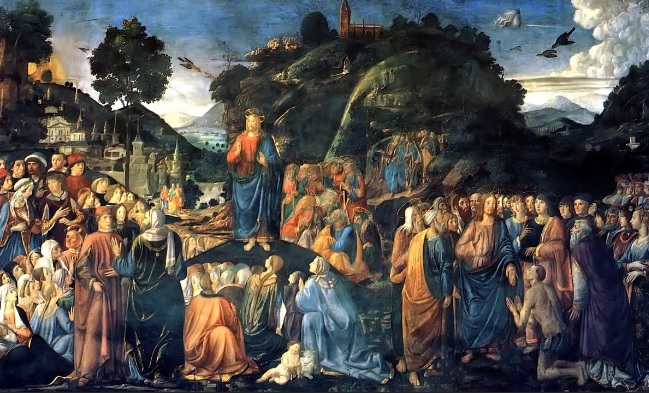
The Kingdom then is not defined by any physical location, nor does it have physical boundaries, rather it exists wherever God’s rule is in heaven or in earth. At the beginning of his ministry Jesus declared that the Kingdom has come near and then he described it in terms of healing the sick, loving enemies as well as neighbors, righteousness, freedom for prisoners, giving sight to the blind, and setting the oppressed free, that it must be received as a child, that it requires repentance to receive it, that it’s like a seed on the ground that falls on various kinds of soil.


[1] Louis Berkoff. Systematic Theology William B. Eerdmans 1974 (Kindle Locations 14321-14324)

[2] Bible Study Tools “Kingdom of God” Biblestudytools www.biblestudytools.com/bible-study/explore-the-bible/what-is-meant-by-the-kingdom-of-god-10-things-to-know.html

[3] Christianity.com “What is the Kingdom of God? Understanding its Meaning” Christianity.com www.christianity.com/wiki/god/what-is-the-kingdom-of-god-understanding-it-s-meaning.html

Observe

Read Luke 17:20-21. Where do you see the Kingdom of God?

No detailed strategic plan, but promises and presence

Dancing in the Kingdom- Table of Contents

Dancing In the Kingdom – Part 2 – The Kingdom Revealed – Chapter 12 – Launching the church

No detailed strategic plan, but promises and presence

[Bible references: Genesis 12:1-4; Matthew 13:15; 26:56; 26:69-74; 28:16-20; Mark 16:1-3; John 20:19; 12:31-36; Acts 1:4-9]

When Jesus had ascended to heaven, he had left a group of bewildered disciples who had no idea about the kind of enterprise they were going to launch. They were all missing pieces of the puzzle. Although Jesus had been explicit about his suffering and dying and resurrecting, the disciples did not fully grasp what had happened until they witnessed his appearance after the resurrection. A few days before his crucifixion, when he told about the death he would die, i.e., “when I am lifted up” which people knew meant crucifixion, the people protested saying they knew that the Law said the Christ remains forever, so how could that be?

Even the chosen apostles were unprepared. Upon Jesus being arrested, they fled and hid and, in the case of Peter, even denied knowing Jesus. They fearfully gathered behind locked doors, not knowing their next steps. Even those women who were close to Jesus thought they needed to anoint his deceased body. The words of the prophet Isaiah, “He has blinded their eyes and hardened their heart, lest they see with their eyes and understand with their heart,” seemed to apply just as fully to Jesus’ closest disciples.

What the evidence displays is that the program and order of Christian communities originate in direct continuity with the synagogue communities of Israel … These communities had assemblies, elders, presiding elders, deacons and a full program of worship, common policy-making, social welfare and interurban alliances. They lacked the authorization to govern themselves on behalf of the empire. But in other respects they developed patterns of community organization that were traditional to their Jewish origins and members.[1]

Even after his resurrection, when Jesus appeared again, he apparently did not give any instructions about how to organize the church, particularly for the next 2000+ years. The evidence we do have shows that early church organizational structure was based on the organizational structure of the synagogue. In fact, the first explicitly Christian assemblies were split offs from the Jewish assemblies. What they did have, and what they and their successors did build on, was the liturgical and governmental structure of the synagogue.

Jesus instigated no characteristic new organization or anarchy among those who shared faith in him. They proceeded from where they found themselves. And they found themselves in the synagogue. The synagogue became the church, not by dint of a new social format, but in virtue of new convictions within its members. It developed and adapted and consolidated and searched for its own authenticity. We claim here only that to study the energetic development we must know that it proceeded form the organization of the synagogue. [2]

In fact, there seemed to be some hints that the final consummation of the kingdom would occur in their earthly lifetimes. The main preparation of his disciples seems to have been spending time with Jesus, listening to Jesus’ descriptions of the kingdom of God and seeing (and sometimes participating with) Jesus in the inbreaking of the Kingdom through teaching, healing, compassion, and casting out demons.

After the resurrection Jesus spent times with various groups of his disciples during the next forty days. Then just before he was to “ascend to heaven,” he gave his apostles one last charge. “But you will receive power when the Holy Spirit has come upon you, and you will be my witnesses in Jerusalem and in all Judea and Samaria and to the end of the earth. Make disciples of all nations, baptizing them in the name of the Father, Son, and Holy Spirit, teaching them to observe all that I have commanded you. And behold, I am with you always, to the end of the age.”

Before he was to visibly leave the earth, he had given the promise to be with them … always. The living God was not going to be present in a physical body nor would the living God leave any instructions in a written document, instead the living God would be present by means of the Holy Spirit.


[1] Burtchaell, James Tunstead. “From Synagogue to Church: Public Services and Offices in the Earliest Christian Communities” Cambridge University Press 1992 (pp. 334-336)

[2] Burtchaell, James Tunstead. “From Synagogue to Church: Public Services and Offices in the Earliest Christian Communities” Cambridge University Press 1992 (pp.349-352)

The Kingdom expands

Dancing in the Kingdom- Table of Contents

Dancing In the Kingdom – Part 2 – The Kingdom Revealed – Chapter 11 – The Kingdom Enters

The Kingdom expands

[Bible references: Matthew 8:5-13; 15:21-28]

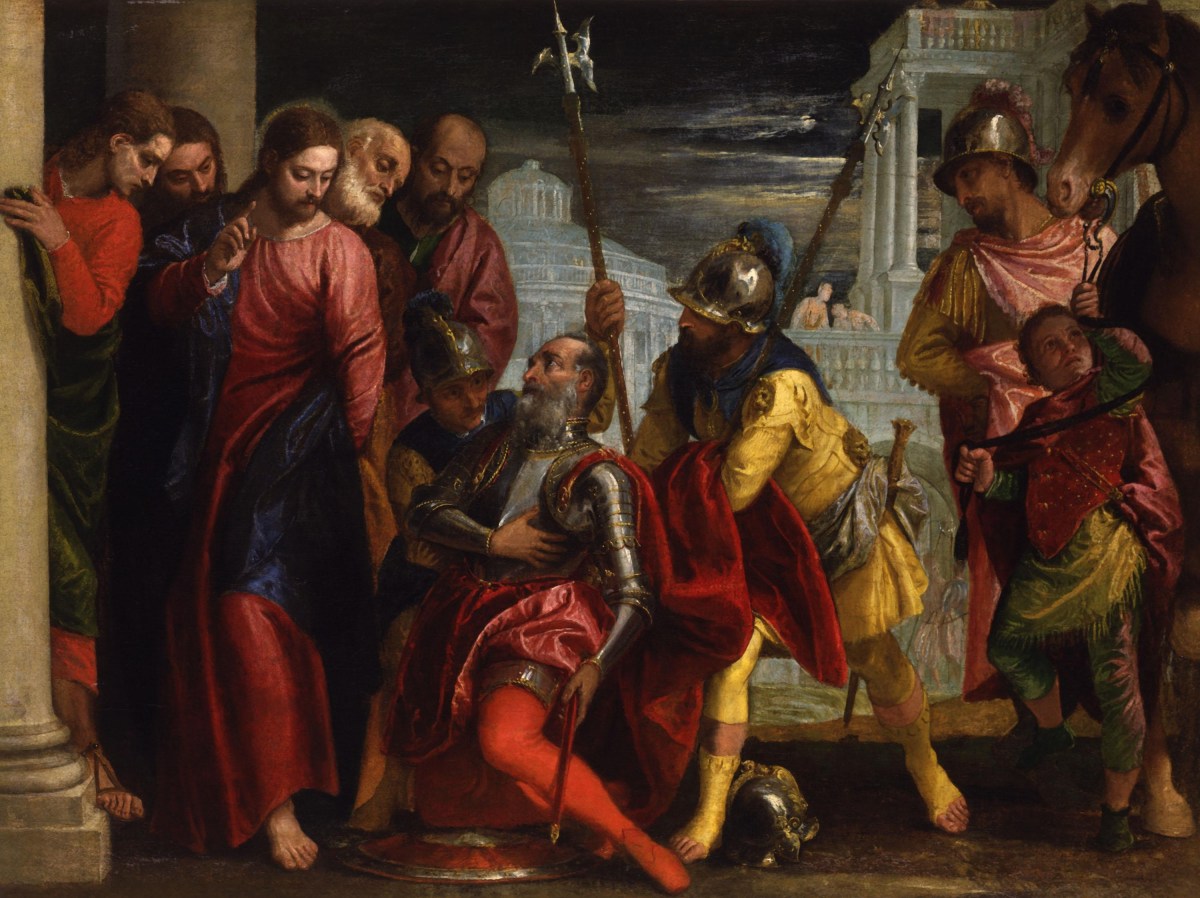
Jesus did not travel far. He spent most of the time in the area around Jerusalem and around Galilee. His focus was on teaching and serving the Jews. However, there were a few occasions when Jesus did interact with the Gentiles, and those occasions showed that the Gentiles were capable of great faith. There was a case of a centurion who recognized the authority that Jesus had. The centurion did not ask Jesus to come to his household to heal his child, but rather asked Jesus to heal his daughter from wherever Jesus was. In another case, Jesus had gone to Tyre, and there a Syrophoenician woman who, knowing Jesus ministered mainly to the Jews, still asked for Jesus to cure her daughter with the humble attitude that “even dogs eat the children’s crumbs.”

Observe

Read Matthew 8:5-13; 15:21-28. How do these vignettes challenge our faith?

Kingdom questions and parables

Dancing in the Kingdom- Table of Contents

Dancing In the Kingdom – Part 2 – The Kingdom Revealed – Chapter 11 – The Kingdom Enters

Kingdom questions and parables

[Bible references: Matthew 13:11-17; 21:18-46; Romans 1:18-21]

One time, some people challenged Jesus about the source of his authority. Jesus challenged them back with a question about where they thought the baptism of John was from, “Was it from heaven or earth?” That was only one of many times when Jesus would answer questions with questions.[1] Jesus’ questions were not to gather information for himself but for other reasons: sometimes to force the questioners to deal with their own hearts and motivations.[2] Jesus even sometimes asked if people really wanted to be healed; we know that sometimes people don’t like to change or to take up new responsibilities.

Jesus taught the crowds about the values of the kingdom and the attitude of those in the kingdom by using parables. Many things about the kingdom were quite different from conventional values – they sometimes seemed to be upside-down.[3] Parables used everyday metaphors and examples that could be understood by those whose hearts are open.[4] However, those whose hearts are not open cannot understand the parables. This is like the testimony of those who look at creation: those whose hearts are open can look at creation and see the handiwork of God, but others, whose hearts are not open will not see the handiwork of God – yet no one will have excuse.


[1] Pope, Charles. “100 Questions Jesus Asked and You Should Answer” Community In Mission, Archdiocese of Washington 18 April 2021 blog.adw.org/2021/04/100-questions-jesus-asked-and-you-should-answer.

[2] Arch, David “Ask Questions Like the Master Teacher” Christianity Today www.christianitytoday.com/biblestudies/articles/churchhomeleadership/040602.htm

[3] Thompson, Mark. “Upside Down Kingdom Parables: The Lavish Love of God” Remedy Church 29 Oct 2017 remedylodi.com/upside-down-kingdom-parables-the-lavish-love-of-god

[4] Blue Letter Bible “Our Lord’s Parables” Blue Letter Bible www.dailywordofgodgroup.com/why-jesus-taught-in-parables.htm; Edersheim, Alfred. “Why did Jesus teach in Parables?” Christianity.com www.christianity.com/jesus/life-of-jesus/parables/why-did-jesus-teach-in-parables.html

Observe

Read Matthew 21:23=27. Jesus’ questions are often used to pierce to our hearts. How do you answer Jesus’ question in this passage?

The kingdom arrives

Dancing in the Kingdom- Table of Contents

Dancing In the Kingdom – Part 2 – The Kingdom Revealed – Chapter 11 – The Kingdom Enters

The Kingdom Arrives

[Bible references: Isaiah 61:1-2; Matthew 8:16, 28-34; 9:6; 10:1; 28:18; Luke 4:14, 18-19, 32; 5:21; 6:6-7; 7:1-10, 29-30; 9:1-6; John 5:14; 10:11-18; 14:9; Acts 10:38; 1 Corinthians 15:24]

When Jesus broke into history, we no longer saw the kingdom of God overlapping the earth in a place as in the Garden of Eden or a place in the Holy of Holies. This time the kingdom of God had entered by a person, Jesus, who was anointed with the power of the Spirit. His next goal then was to invade the earth with his kingdom by that same Spirit entering our lives, by the overlapping of Heaven and Earth within each of us as Heaven and Earth overlapped within Jesus.

“God’s kingdom” in the preaching of Jesus refers not to postmortem destiny, not to our escape from this world into another one, but to God’s sovereign rule coming “on earth as it is in heaven.” [1]

When Jesus began his ministry, he quoted from the book of Isaiah to declare how he had come to fulfill that prophecy. Then there were many times throughout his ministry when he declared the reason he had come.

Left to our own resources, we cannot, on our own, correct our relationship to Yahweh; we cannot find our way back to a good relationship with him. We are lost to sin and unable to find our way back to Yahweh, the good shepherd.

Even though His power was evident in the teachings alone, His power was testified to by healing all sorts of diseases[2] including physical or spiritual blindness, casting out spirits (all these things that not only Jesus did but his disciples as well), proclaiming freedom for those in prisons, and setting the oppressed free. But even above providing hope and healing, Jesus offered forgiveness for sin and admonitions to turn away from sin. Jesus came to make us whole in body, mind, and spirit, to experience shalom. Sadly, even though some Gentiles recognized Jesus’ power and authority, some of the chief priests and elders did not want to recognize it themselves, remaining trapped and oppressed in their sin.


[1] Wright, N.T. Surprised by Hope: Rethinking Heaven, the Resurrection, and the Mission of the Church Harper Collins 2008. Kindle Edition (p 19.).

[2] Walk with the WiseEvery instance of Jesus Healing in the Bible: What they all had in common” Walk with the Wise walkwiththewise.org/every-instance-of-jesus-healing-in-the-bible-what-they-had-in-common

Reflect

How do we participate with Jesus in bringing His Kingdom to the earth?

Observe

Read Matthew 10:1; 28:18-20; Luke 9:1-6. How do we participate with Jesus in bringing His Kingdom to the earth?

The Kingdom is near again

Dancing in the Kingdom- Table of Contents

Dancing In the Kingdom – Part 2 – The Kingdom Revealed – Chapter 11 – The Kingdom Enters

The Kingdom is near again

[Bible references: Matthew 3:1-2; 4:12-17; 26:61]

There was a common message that John preached – and that Jesus preached after John was arrested, – “Repent, for the kingdom of heaven is near.” The kingdom of heaven once overlapped the earth within the Garden of Eden and then again on the mercy seat within the Holy of Holies in the tabernacle at which time we had limited access because of our sin. Before the temple was built to replace the tabernacle, there was a period during David’s reign when the ark was not kept in Moses’ tabernacle but in Jerusalem where everyone had access (See Chapter 9, The strange story of the ark and the tabernacle). When the temple was built, the ark was placed inside the Holy of Holies once again, and again, only the high priest had could have access. But now the kingdom of heaven was present within Jesus,[1] and as with David’s tabernacle, everyone would have access again.


[1] The Bible Project “Heaven and Earth” Bible Project www.pursuegod.org/biblical-themes-an-animated-explanation-of-heaven-earth

Read Matthew 26:61. Jesus refers to his body as the temple, the place where God dwells. Jesus was, of course, accessible to everyone around him. Jesus was Immanuel, God with us. Jesus’ very presence was an invasion of the Kingdom of God on earth, and whose power was shown in the healings Jesus performed. Is that presence of the kingdom available now?