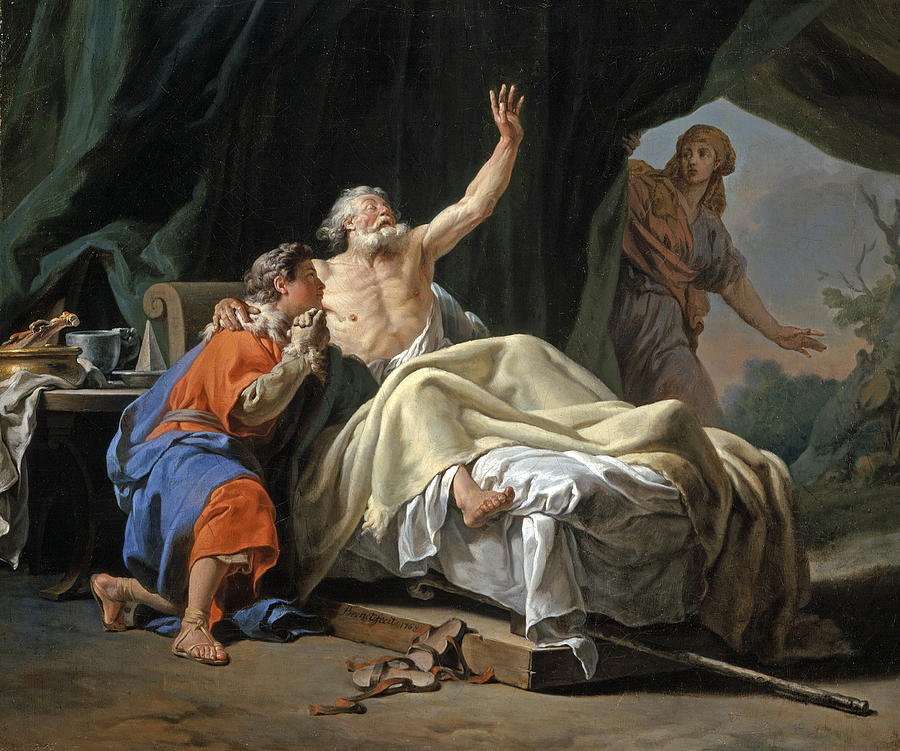
Expectant Magi and the non-expectant king

Dancing in the Kingdom- Table of Contents

Dancing In the Kingdom – Part 2 – The Kingdom Revealed – Chapter 11 – The Kingdom Enters

Expectant Magi and the non-expectant king

[Bible references: Matthew 2:1-23; Hosea 11:1; Jeremiah 31:15; Micah 5:1-4]

Some people in a foreign country east of Jerusalem were also waiting for the Messiah. Perhaps because they were aware of the writings of Daniel, the Magi had hearts that were open to God and invested time and money to travel to Jerusalem looking for this newborn “king of the Jews.” However, when they arrived in Jerusalem, no one there was ready for this news. While the chief priests and teachers of the law could belatedly figure out that the birth was supposed to happen in Bethlehem, they obviously had not been looking for the Messiah.

Herod’s claim to the throne was sketchy, but he was a politician who had proven his ability to “keep the peace” by means of violent suppression and so Rome had installed him as king. So, upon learning from the Magi about the “King of the Jews” being born, Herod was threatened by what he thought was a rival king and tried to use the Magi to find out who this rival was.

However, the Magi had been warned in a dream about Herod’s ruse and after visiting Jesus they returned home another way. Joseph also had a dream in which he was warned that Herod was going to search for Jesus in order to kill him and so Joseph and Mary took Jesus to Egypt. Sure enough, when Herod realized that the Magi were not going to return, he put out an order kill all babies less than two years old in Bethlehem to eliminate His potential rival.

Joseph and his family stayed in Egypt until he learned in a dream that Herod died. However, when Joseph returned to Bethlehem, he learned that Herod’s brother was now king, he took the family to Nazareth in the region of Galilee. All these moves made it possible to make now sense out of three seemingly contradictory prophecies: that Jesus would be born in Bethlehem and come out of Egypt and that he would be called a Nazarene.

Observe

Read Matthew 2:1-23 Micah 5:1-4; Hosea 11:1; Jeremiah 31:15. Some Biblical prophecies were hard to make sense out of until they were fulfilled. What does that mean in regards to how we handle seemingly contradictory scripture passages?
Zealots

Dancing in the Kingdom- Table of Contents

Dancing In the Kingdom – Part 2 – The Kingdom Revealed– Chapter 10 – The Class of Apparitions

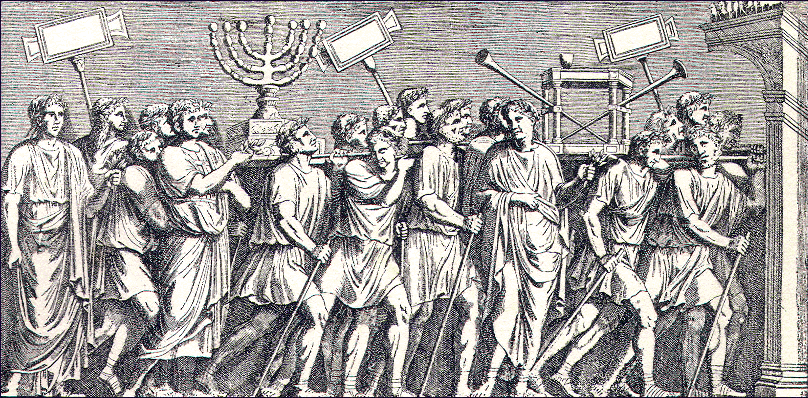
Zealots

[Bible references: Luke 6:15]

The Zealots were also known as Galileans because of the region in which they were concentrated and, also the founder of the group was Judas the Galilean. The Zealots were a messianic group and would only identify God as king. They would not accept any foreign rulers, in this particular case, the Romans.[1] Ideologically, the Zealots agreed on many points with the Pharisees, except for their refusal to accept foreign rulers. The more militant faction of the Zealots was known as the Sicarii (daggers) because of their use of assassination.[2]

One of Jesus’ twelve disciples was identified as Simon the Zealot. As a Zealot, Simon would have been looking for a ruler who would come from God that would displace the Romans. Since Jesus’ message was about the Kingdom of God (or Kingdom of Heaven), that would have been attractive to Simon.


[1] Marcos, Juan, and Gutierrez, Bejarano. “The Judaisms of Jesus’ Followers: An Introduction to Early Christianity in its Jewish Context”. Yaron Publishing, 2017 (Location 863-913)

[2] Mingren, Wu. “The Sicarii: The Jewish Daggermen with a thirst for Roman Blood” Ancient Origins 4 June 2017 www.ancient-origins.net/history-important-events/sicarii-jewish-daggermen-thirst-roman-blood-008179

Observe

Zealots

Read: Luke 9:51-55. Many of the Jews were waiting for a Messiah to free them from the Roman government, because that’s where they thought their problems were. The Zealots had the same hope but were also willing to violently act on that hope. We should probably also note that Jesus’ own followers were willing to call down fire on towns that rejected their message. In a world that is so violent, particularly against Jesus’ followers, why is violence not appropriate?

Herodians

Dancing in the Kingdom- Table of Contents

Dancing In the Kingdom – Part 2 – The Kingdom Revealed– Chapter 10 – The Class of Apparitions

Herodians

[Bible references: Matthew 22:16; Mark 3:6; 8:15; 12:13]

The Herodians were a political party who were openly supportive of King Herod and therefore opposed to all who were considered enemies of Herod, including Jesus. To that end they associated with the Sadducees in their support of King Herod. However, they were known to have joined forces with the Pharisees in trying to entrap Jesus.

Observe

Read Mark 8:1-27. What was Jesus referring to when He warned His disciples to avoid the leaven of Herod?

Challenging Unfaithfulness

Dancing in the Kingdom- Table of Contents

Dancing In the Kingdom – Part 1 – Shadows of the Kingdom – Chapter 9 – The Prophets and writings

Challenging Unfaithfulness

[Bible references: Deuteronomy 16:18-20; 2 Chronicles 29:6; Isaiah 1; 56:1; Jeremiah 5:31; 28; Hosea 1:2; Amos 9:1-15; Zechariah 7]

Sometimes the prophet’s warnings would be not just for the kings but for everyone in the kingdom. The messages from the prophets often mixed the foretelling of the consequences for rejecting God with the hope that God will someday make things right. The most common offense cited by the prophets was the people’s lack of justice and the uselessness of their ritual sacrifices when they ignored justice. There were also diatribes against false prophets and against making idols. The most common metaphor used to describe Israel’s unfaithfulness to God and his commands was prostitution, even to the point where one prophet, Hosea, was told to marry an adulterous woman to be a visible reminder for Israel.

Observe

Read Zechariah 7. What words of warning are given to the people who were not faithful to God?

The War King

Dancing in the Kingdom- Table of Contents

Dancing In the Kingdom – Part 1 – Shadows of the Kingdom – Chapter 8– Kings and kingdoms

The War King

[Bible references: 1 Samuel 15-16; 2 Samuel 1-24]

In time, Saul did die, and David became king, although it would be in phases. Initially there was a civil war as people that were loyal to Saul did not pledge loyalty to David but to another king. As in many conflicts, in addition to overt conflict, there was much subterfuge and political intrigue as well which would have consequences later. Then, even after uniting the kingdom, David had to lead Israel through constant warfare as he expanded the kingdom. So even though David was called and anointed to be king, that did not mean that there was a clear path to becoming king and it did not mean that there would be no conflicts once he became king. It also did not mean that David would be perfect.

Reflect

Being called to a ministry or task does not mean that there is no waiting for God’s timing or that there will be no conflict involved. How does one then determine when you are being called to a ministry or a task?

Observe

Read 2 Samuel 24. Similar to Exodus, this chapter is out of order, possibly happening before 2 Samuel 13 when David’s family problems start to become highlighted. What does the placement at the end of 2 Samuel tell us about David?

Testing and waiting

Dancing in the Kingdom- Table of Contents

Dancing In the Kingdom – Part 1 – Shadows of the Kingdom – Chapter 8– Kings and kingdoms

Testing and Waiting

[Bible references: 1 Samuel 13:14; 26:11; 1 Samuel 24:1-7; 26:1-12; Acts 13:22]

Meanwhile, God had selected David, someone who was described as “a man after God’s own heart,” to be the next king. However, David’s reign did not begin until many years later. This meant there was going to be a long and difficult in-between time of testing:

  • Saul’s heart continued to be tested as he was rejected by God, but it would be a long time before the end of his reign. In the meanwhile, he had his duties to perform.
  • David had been anointed to be the next king, but it would be many years before it happened. In the meanwhile, there would be much conflict in which David had to trust God and do what he thought he needed to do. David didn’t test God by unnecessarily putting himself in harm’s way, rather he looked to God for wisdom and acted accordingly. When David had opportunities to kill King Saul, he refused to do so and instead waited for God to act.

This is an area where we typically fail: Adam and Eve could not wait for God to give them knowledge so they grabbed for it; Abraham and Sarah could not wait for God to give them a son through Sarah and so they used Hagar; Jacob could not wait for his inheritance so he and Rebekah had to trick Isaac; Moses could not wait for God to provide water by just speaking to the rock and so he had to strike it. In contrast, to be obedient, David was willing to wait for God to replace Saul and did not take advantage of the opportunities he had to kill him.

Reflect

How can we gain a sense of when we should act vs. when we should wait for God?

Observe

Read 1 Samuel 26:11; Acts 13:22. What did God say that David was “a man after my own heart?”

Saul

Dancing in the Kingdom- Table of Contents

Dancing In the Kingdom – Part 1 – Shadows of the Kingdom – Chapter 8– Kings and kingdoms

Saul

[Bible references: 1 Samuel 9:2; 13:1-14; 15:1-35; 1 Kings 13:6]

God gave Israel a king in the mold of other kings. In physical appearance, King Saul was a tall, handsome son of a powerful man, but spiritually, Saul would continue the national habit of “doing what was right in his own sight.” In fact, there were times when Saul was talking to Samuel that Saul made references to “Yahweh your God” instead of “Yahweh our God.” (That phrase had also been used by Jacob before his wresting match with God and would be used again by King Jeroboam at a later time.) Saul had ceased to trust in God. There would also be other times when, instead of leaning on God for victory, Saul would also resort to making foolish, rash vows.

Saul barely began his 40-year ministry as king before Samuel had to inform him that God had rejected him as king. Although that rejection happened early in his career, God did not replace Saul until much later. Saul would have to endure the knowledge that God had rejected him for the rest of his career, which was most of his career, as king. That may have been a factor in him becoming more unstable as time went on. Yet despite his rejection by God, he did have some success in conducting war against Israel’s enemies, but Saul’s standing with God did not change.

Reflect

When Israel got what they thought they wanted, “a king like everyone else,” they – and Saul – had to endure the consequences of that decision. How do we avoid that mistake?

Observe

Read 1 Samuel 15. How did Saul indicate that Yahweh was not his God?

Rejecting God as King

Dancing in the Kingdom- Table of Contents

Dancing In the Kingdom – Part 1 – Shadows of the Kingdom – Chapter 8– Kings and kingdoms

Rejecting God as King

[Bible references: Judges 2:10-23; 21:25; 1 Samuel 8:1-22; Psalm 81:8-16]

Ever since the time of Adam and Eve, we have had a problem of thinking that we know better than God. After Israel started to settle into the Promised Land, that same problem appeared again with the diagnoses, “everyone did what was right in his own eyes.” That problem caused the cycle of 1) God disciplining Israel by allowing them to be dominated by one of the nations, which then caused 2) the people to cry for help, after which 3) God raised up a leader who overcame the dominating nation, 4) then once Israel is freed up, they turned from Yahweh and … the cycle repeated.

Eventually, Israel figured that they thought they knew what the problem was … that they needed a king … like everyone else. When the prophet, Samuel, was old and people became uncomfortable with Samuel’s sons leading the nation (Note: It seemed that Samuel had the same kind of problem with his sons as Eli had with his sons), the people rebelled against God and asked the prophet Samuel to ask God to give them a king. Samuel was troubled because he knew that their diagnosis was wrong. Yahweh confirmed that when he told Samuel that the real problem was not that they rejected Samuel, but rather they’ve rejected Yahweh as king. Unexpectedly, Yahweh said that he would grant their wish anyway. They will get a king (!!!) … like everyone else!!!. One of the lessons from this event is that we need to be careful; in our rebellion, God may condemn us to what we want.

Observe

Read 1 Samuel 8. Knowing that God may discipline us by giving us what we want instead of what we need, how should we then pray?

Ordinary believers

Dancing in the Kingdom- Table of Contents

Dancing In the Kingdom – Part 1 – Shadows of the Kingdom – Chapter 5– Patriarchs

Ordinary believers

[Bible references: Genesis 17:17; 21:5; 21:1-7; 24; 25; 26:1-11; 27:1-29]

Meanwhile, the Biblical record for life of Isaac is unremarkable. God had blessed Isaac with wealth, however, the most notable events in his life were 1) failing just as his father Abraham had failed, Isaac also fearing that a local king kill him to get his wife, so Isaac, like Abraham, claimed that his wife was his sister and 2) when Isaac was preparing to die, he got fooled by Jacob into giving Jacob the primary blessing instead of his older twin brother, Esau. This incident just highlighted the favoritism Isaac showed to Esau and the favoritism his wife Rebekah showed to Jacob. Blessed, fallible, unremarkable, yet still used by Yahweh to accomplish Yahweh’s will.

Reflect

What is our prayer when we know that our time in this life is limited and most of us will not accomplish anything spectacular, and yet, God may use our life to achieve a greater impact than we realize?

Observe

Read Genesis 25:21-23; 27:1-29. What seems ordinary about how Rebekah interacted with Isaac in the way that would fulfill Yahweh’s prophecy?

Earthly kings and the rejection of God as king

Dancing in the Kingdom- Table of Contents

Dancing In the Kingdom – Part 1 – Shadows of the Kingdom – Chapter 1 – Prelude

Earthly kings and the rejection of God as king

[Bible references:1 and 2 Samuel, 1 and 2 Kings; 1 and 2 Chronicles]               

The last of judges was Samuel, who also functioned as a priest. By this point in time, Israel was convinced that their continuing problems were, of course, not themselves. They thought that their problem was that they didn’t have a king like everyone else. Actually, God was their king and Samuel was His representative. But the Israelites were not satisfied with God choosing prophets who would speak for Him. So, God gave them a king, like everyone else, Saul. While it did not take Saul a long time to turn from God so completely that God rejected him, Saul was able to reign for 40 years. David, who was described as someone after God’s own heart, replaced Saul. David expanded the kingdom from the Orontes River in the north to the Sinai peninsula in the south.[1] Solomon, building off of David’s legacy, did not focus on expanding the kingdom as much as building its wealth. Solomon’s wealth increased not only in riches of gold and silver, but also in wives and concubines. His love towards his wives and concubines overrode his love for God, so at Solomon’s death, the kingdom split in two parts.

Ten tribes who rebelled against Solomon’s son, aligned with the northern kingdom, which became named Israel.  Of the other 2 tribes, the tribe of Judah was most prominent. Both kingdoms were eventually conquered by neighboring empires: the northern kingdom by Assyria and the southern kingdom by Babylon.


[1] Archaeologists have had difficulty locating evidence of the kingdoms of David and Solomon. That is due, in part, to the Israelites tendency to adopt the customs of the Palestinian nations, making their artifacts indistinguishable from the nations they displaced.

Reflect

From what we see in the world around us, how often do people take responsibility for their own problems?

Observe

Read 1 Samuel 15:15. What’s the clue that Saul was no longer following God?