The Spirit and the scattering

Dancing in the Kingdom- Table of Contents

Dancing In the Kingdom – Part 2 – The Kingdom Revealed – Chapter 12 – Launching the church

The Spirit and the Scattering

[Bible references: Acts 5:12-16; 6:1-15; 7:1-60; 8:1-3, 14-24; 10; 9:1-19; 13:16-47; 17:16-31]

Since Jesus focused his effort almost exclusively on the Jewish population, it was natural that in the early years of the church, nearly all the believers were Jewish. It also happened that the apostles started off by focusing on the area around Jerusalem. So, while the believers were Jewish, the opposition to the believers was primarily Jewish as well; particularly, the Sanhedrin which was heavily controlled by the non-resurrection-believing Sadducees. It was difficult for the Sanhedrin to control the apostles because their miraculous healings made them exceedingly popular among the people. Even the deacon, Stephen, who was performing signs and wonders was creating a problem for the Sadducees. So some men created a conspiracy against Stephen, creating lies that resulted in Stephen becoming the first recorded martyr for the faith. Stephen was quite eloquent in defending the faith before the Sanhedrin, laying out the history of Israel and then accusing the Sanhedrin of continuing the persecution of God’s prophets. This enraged the Sanhedrin so much, that even after Stephen was put to death, the persecution of the church began in earnest, causing the first scattering of the church, although the apostles remained in Jerusalem.

With the scattering came new opportunities and challenges. When it was discovered that the Samaritans had received the gospel, the apostles gladly received the news. But when some of the Samaritans received the Holy Spirit, there were some kinds of signs (we aren’t told what they were) that excited a magician, who was one of the ones who received Christ. The magician then offered money to the apostles so that he could get the power to lay his hands on people and give them the Holy Spirit. The apostles had to strongly rebuke him. He repented – but this was a sign of how things could go astray.

After sending the gospel to the Samaritans, the next step was to reach out to the Gentiles. This step was initiated by God who first worked with the apostle Peter and a devout Gentile man named Cornelius. God had given visions to both Cornelius and Peter to create a reason for them to meet. When Cornelius visibly received the gift of the Holy Spirit, Peter was convinced that the gospel was meant for the Gentiles as well.

To further spread the gospel among the Gentiles, God called Saul, a well-educated man who was familiar not only with the Jews but also with the Gentiles. Saul was a zealous Pharisee, whose zeal originally caused him to participate in the persecution of the church, but God used that same zeal to make Saul (also called Paul) not only one of the primary missionaries to the Gentiles but also a writer of half of the documents that comprise the New Testament. Even though Saul became converted after the ascension of Jesus, it was Jesus himself who encountered Saul who was on his way to persecute the Christians, making Saul a direct witness to the ministry of Jesus.

Whether the gospel was shared with the Jews or with the Gentiles there was a story to tell. The Jews needed to understand how the story of Jesus fit into their history – their story – and the Gentiles needed to know how it fit into their story. We all have a worldview – a story of the world that we use to interpret the world around us – and the gospel is most effectively shared when there’s a way to reach inside the others’ worldview.

Observe

Read Acts 13:1647; 17:16-31. What was the difference between how Paul told the gospel to people in the synagogue vs. the people in the Athens marketplace?
The Kingdom expands

Dancing in the Kingdom- Table of Contents

Dancing In the Kingdom – Part 2 – The Kingdom Revealed – Chapter 11 – The Kingdom Enters

The Kingdom expands

[Bible references: Matthew 8:5-13; 15:21-28]

Jesus did not travel far. He spent most of the time in the area around Jerusalem and around Galilee. His focus was on teaching and serving the Jews. However, there were a few occasions when Jesus did interact with the Gentiles, and those occasions showed that the Gentiles were capable of great faith. There was a case of a centurion who recognized the authority that Jesus had. The centurion did not ask Jesus to come to his household to heal his child, but rather asked Jesus to heal his daughter from wherever Jesus was. In another case, Jesus had gone to Tyre, and there a Syrophoenician woman who, knowing Jesus ministered mainly to the Jews, still asked for Jesus to cure her daughter with the humble attitude that “even dogs eat the children’s crumbs.”

Observe

Read Matthew 8:5-13; 15:21-28. How do these vignettes challenge our faith?

Expectant Magi and the non-expectant king

Dancing in the Kingdom- Table of Contents

Dancing In the Kingdom – Part 2 – The Kingdom Revealed – Chapter 11 – The Kingdom Enters

Expectant Magi and the non-expectant king

[Bible references: Matthew 2:1-23; Hosea 11:1; Jeremiah 31:15; Micah 5:1-4]

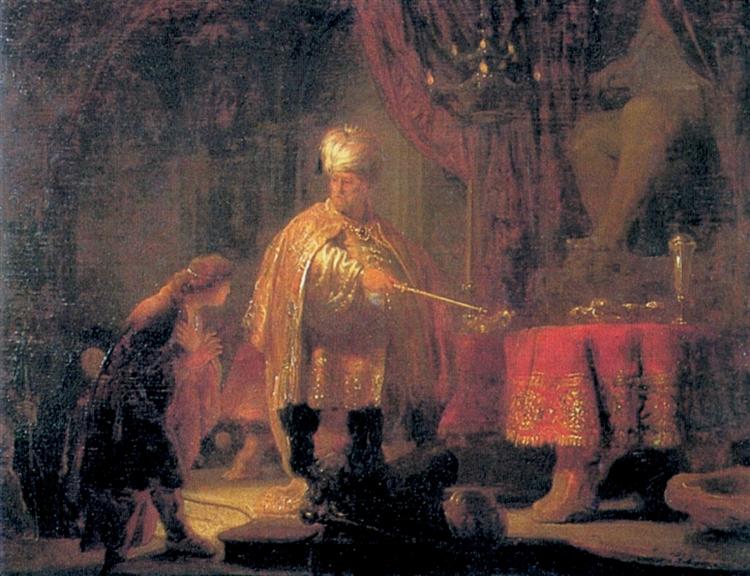
Some people in a foreign country east of Jerusalem were also waiting for the Messiah. Perhaps because they were aware of the writings of Daniel, the Magi had hearts that were open to God and invested time and money to travel to Jerusalem looking for this newborn “king of the Jews.” However, when they arrived in Jerusalem, no one there was ready for this news. While the chief priests and teachers of the law could belatedly figure out that the birth was supposed to happen in Bethlehem, they obviously had not been looking for the Messiah.

Herod’s claim to the throne was sketchy, but he was a politician who had proven his ability to “keep the peace” by means of violent suppression and so Rome had installed him as king. So, upon learning from the Magi about the “King of the Jews” being born, Herod was threatened by what he thought was a rival king and tried to use the Magi to find out who this rival was.

However, the Magi had been warned in a dream about Herod’s ruse and after visiting Jesus they returned home another way. Joseph also had a dream in which he was warned that Herod was going to search for Jesus in order to kill him and so Joseph and Mary took Jesus to Egypt. Sure enough, when Herod realized that the Magi were not going to return, he put out an order kill all babies less than two years old in Bethlehem to eliminate His potential rival.

Joseph and his family stayed in Egypt until he learned in a dream that Herod died. However, when Joseph returned to Bethlehem, he learned that Herod’s brother was now king, he took the family to Nazareth in the region of Galilee. All these moves made it possible to make now sense out of three seemingly contradictory prophecies: that Jesus would be born in Bethlehem and come out of Egypt and that he would be called a Nazarene.

Observe

Read Matthew 2:1-23 Micah 5:1-4; Hosea 11:1; Jeremiah 31:15. Some Biblical prophecies were hard to make sense out of until they were fulfilled. What does that mean in regards to how we handle seemingly contradictory scripture passages?

Clash of sects

Dancing in the Kingdom- Table of Contents

Dancing In the Kingdom – Part 2 – The Kingdom Revealed– Chapter 10 – The Class of Apparitions

Clash of sects

[Bible references: John 2:18]

By the time Jesus entered history, several different types of groups had emerged among the Jews. When groups clash, the victors of those conflicts are the ones that write and preserve their own version of history and may also destroy any records of their enemies, there tends not to be much material about non-victor groups that survives for us to look at. Even so, there is some amount of evidence available for us to examine their views. Many of the views held by the Jewish sects will be seen again within Christian sects and even within groups today.

Observe

Read John 11:8-36. What kinds of things can we do to make people notice how much you love?

Proxy wars

Dancing in the Kingdom- Table of Contents

Dancing In the Kingdom – Part 2 – The Kingdom Revealed– Chapter 10 – The Class of Apparitions

Proxy wars

[Bible references: 2 Kings 17:1-6; 25:1-21; Jeremiah 1:14-16; Daniel 1:1-6; Ezra 1:1-4; 6:12; Ephesians 6:10-20]

Since the time of Adam and Eve a war has been underway. God’s Kingdom has found itself in a war with Kingdom of darkness, battling over the souls of God’s image-bearers. We cannot directly see the clash of spiritual kingdoms, but we see it indirectly, sometimes in clashes between image-bearers and sometimes within ourselves. The apostle Paul reminds us, though, that our struggle is not against “flesh and blood” but rather the “spiritual forces of evil.”

Even so, the spiritual war is played out in the human realm where we brokenly pursue love apart from God, hoping to find love somewhere else, whether in power, traditions, possessions, other people, etc. We then find that when we look for love other places than God, we are then confronted by fears which inevitably result in clashes, especially in times of change.

A great time of change was about to occur as the time approached for Jesus’ incarnation. There were clashes between empires that overran the Promised Land, clashes between groups of people in that land, and clashes of values between and within those groups.

As the time of Jesus’ incarnation approached, the residents of the Promised Land, begin to speak Aramaic instead of the Bible’s language of Hebrew. When the Greek empire moved in it tried to supplant all the local languages and cultures, resulting in an effort to the translate all the Hebrew writings into Greek, producing among many things, the Greek version of the Hebrew scripture called the Septuagint. The Septuagint became a major reference not only for the non-Hebrew speaking Jews but also for the church, particularly as the church became more Gentile. This change accelerated the loss of the Hebrew understandings of Scripture.

When the Roman empire overtook the Greek Empire, it initially allowed the use of Greek as the international language but would set up a clash later when the empire would replace Greek with Latin as its preferred language. The changes in languages and cultures became part of the clash over which writings should be considered as part of what will be called the Old Testament scriptures.

The Greek Church maintained the use of the Septuagint as it’s Old Testament, while the Latin speaking Roman-Catholic Church used only parts of the Septuagint. Later on, the Protestants rejected the Septuagint and only used the Hebrew writings that were approved by Jews in the early centuries A.D.[1]

The books used by the Roman Catholic and Orthodox Churches but not used by the Protestants are sometimes referred to as the Apocrypha (hidden) or the Deuterocanonical (second canon) books. Although the Protestants may disagree about whether those books are inspired, there is useful information in those books that help explain the culture of the world that Jesus was born into.


[1] Nelson, Ryan. “What is the Masoretic Text? The Beginner’s Guide” The Beginner’s Guide to the Bible overviewbible.com/Masoretic-text

Observe

Read Ephesians 6:10-20. What difference does it make if you are aware that the conflicts present in the world around us are manifestations of spiritual warfare?

Worship in exile

Dancing in the Kingdom- Table of Contents

Dancing In the Kingdom – Part 1 – Shadows of the Kingdom – Chapter 9 – The Prophets and writings

Worship in exile

[Bible references: Jeremiah 29:1-23; Daniel; Esther; Ezekiel]

During this exile, the Jews, as they would now be called, had to become more deliberate if they were going to preserve their culture. It was during this time that the Jews would begin to collect all their writings in order to begin to determine what would be their scripture. They had the writings of Moses, but they had to determine what else should be included.[1]

During this time, they focused more seriously on worshipping Yahweh. Before this time, the biblical and archeological records indicate that Israel had a habit of adopting the worship of any idols of the culture they were in contact with.[2] But now they had to preserve their culture while living amid a dominant foreign culture.

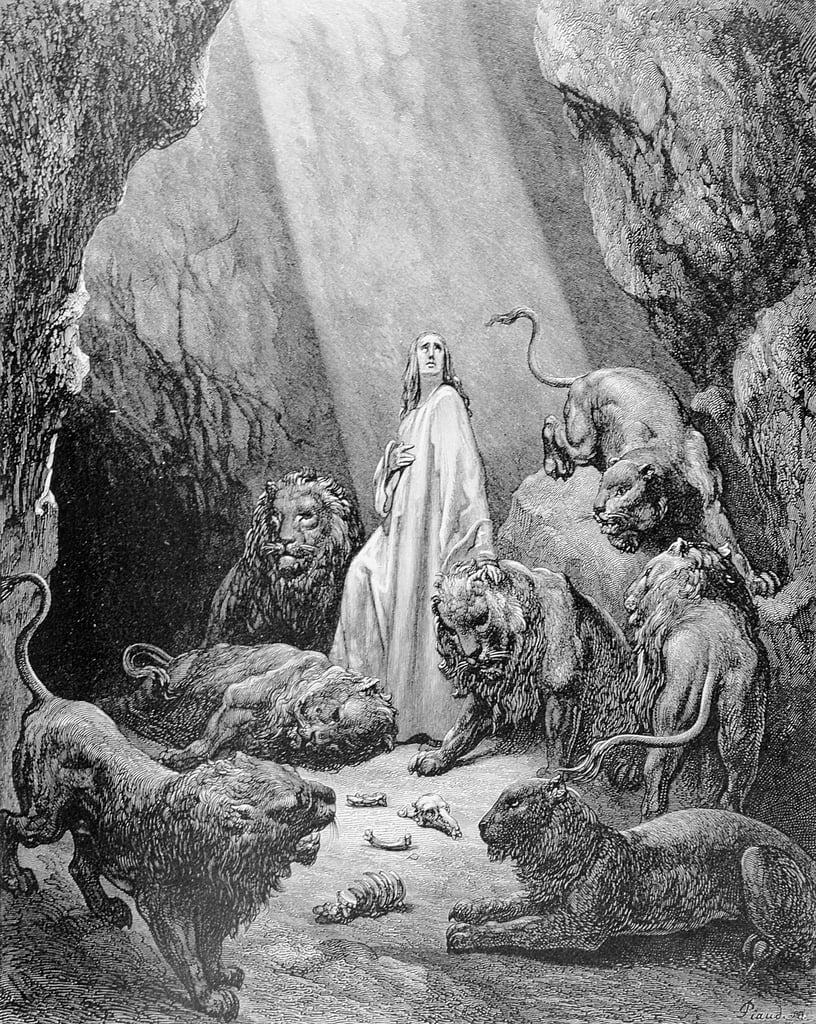
The books of Daniel, Esther and Ezekiel give examples of how the Jews were able to thrive, even while experiencing opposition while the nation was in exile: Daniel as an exceptional administrator, Esther as queen to the emperor and Ezekiel as a prophet.

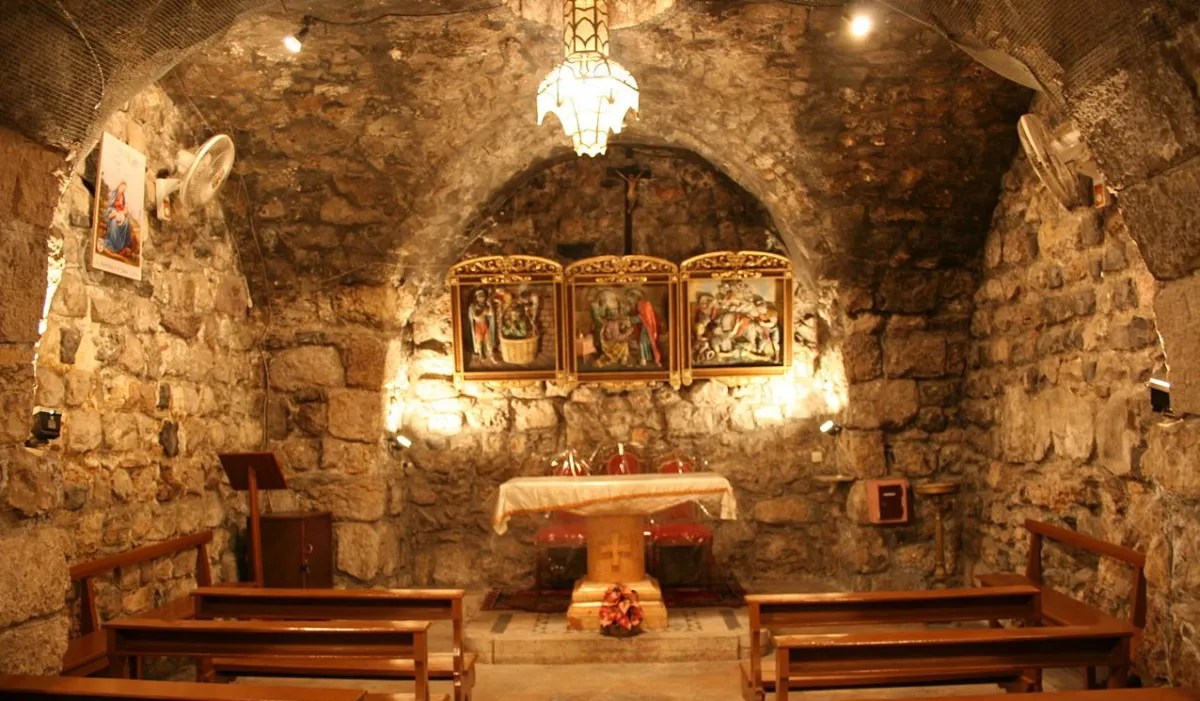
From this time forward, most Jews have remained outside their homeland with no access to the one temple in Jerusalem. It was during this time that local synagogues were created, with worship now being focused either in the home or at the synagogue.[3]


[1] Waltke, Bruce. “How We Got Our Old Testament” Christianity Today, Christian History www.christianitytoday.com/history/issues/issue-43/how-we-got-our-old-testament.html; Hirsch, Emil G. Blau L, Kohler, Kaufmann. Schmidt, Nathaniel “Bible Canon” My Jewish Encyclopedia, www.jewishencyclopedia.com/articles/3259-bible-canon

[2] Gayle, Damien. “How idolatry continued in the Kingdom of Judah: Israeli dig uncovers temple and icons dating back to Old Testament era” Dailymail.com 27 Dec 2012 www.dailymail.co.uk/sciencetech/article-2253695/How-idolatry-continued-Kingdom-Judah-Israeli-dig-uncovers-temple-icons-dating-Old-Testament-era.html

[3] Bacher, Wilhelm and Dembitz, Lewis N. “Synagogue” Jewish Encyclopedia www.jewishencyclopedia.com/articles/14160-synagogue

Observe

Read Jeremiah 29:1-23. What did Jeremiah say that the exiles were to do while they were in exile?

Judgement Unfolds

Dancing in the Kingdom- Table of Contents

Dancing In the Kingdom – Part 1 – Shadows of the Kingdom – Chapter 9 – The Prophets and writings

Judgement Unfolds

[Bible references: I Kings 6:12; 2 Kings 17, 25; 2 Chronicles 36:15-16; Jeremiah 25:11-12]

The covenant God made with Israel had the proviso “if you follow my commands.” Israel continually demonstrated its inability to do that[1] and God’s judgment followed. The nation of Israel would suffer the consequences. The first sign of the consequences manifested itself in the splitting of Israel into two kingdoms.

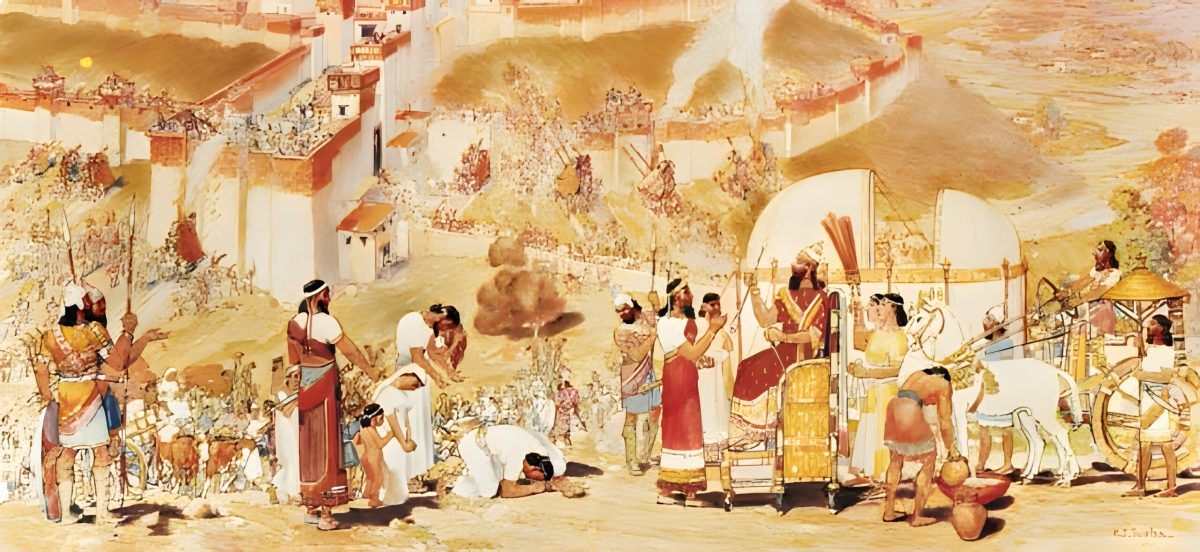
After that, the northern kingdom of Israel was the first to collapse in 722 BC with the invasion of the Assyrians whose policy was to scatter the captured inhabitants throughout their empire and replace them with Assyrians. These northern tribes seem to have been totally assimilated into the Assyrian empire and would not be heard from again in history.

In 586 BC, the Babylonians conquered the southern kingdom of Judah. The best and the brightest of Judah were taken as captives to the capital of Babylonia for “retraining” so that they could contribute to the Babylonian society. It was at this point that the nation of Israel would now be referred to Jews. It was from this point on that, despite the return of some of the Jews to their homeland, most Jews would now be living outside their homeland.


[1] Margalit, Ruth. “In Search of David’s Lost Empire” The New Yorker 22 June 2020 www.newyorker.com/magazine/2020/06/29/in-search-of-king-davids-lost-empire; Syace, A.H. “Polytheism in Primitive Israel” The Jewish Quarterly Review Oct 1889, Vol 2. No. 1 pp.25-26 University of Pennsylvania Press www.jstor.org/stable/1450128; Zevit, Ziony. Review of “The Religions of Ancient Israel: A Parallactic Approach” by Hess, Richard. Vol 5. Denver Journal 2002 denverseminary.edu/the-denver-journal-article/the-religions-of-ancient-israel-a-parallactic-approach/ Israel’s susceptibility to idol worship was so extensive, that archeological evidence indicates continuous polytheism. 

Observe

Read Jeremiah 25:11-12. It seemed hopeless. The unfaithful nation of Israel was no more. But promises were made by a faithful God who would eventually restore them. What are God’s promises to us?

Diaspora

Dancing in the Kingdom- Table of Contents

Dancing In the Kingdom – Part 1 – Shadows of the Kingdom – Chapter 9 – The Prophets and writings

Diaspora

[Bible references: John 13:35]

The term “diaspora” is usually reserved to refer to a group of people that has been scattered from a single location. In this case, the term is used to refer to the scattering of Jews from the Promised land. But this particular diaspora is only a part of God’s larger plans for His people.

Our God is a God of overflowing love. His love caused Him to create us so that His love could overflow from Himself to us. He wanted His image-bearers to carry out His mission of overflowing love and overflow from Eden to fill the entire earth. When we rebelled against His overflowing desire so that we could make a name for ourselves instead, He confused our language at Babel so that we would continue to flow out over the earth. When God wanted to prepare His Holy Nation for His mission, He scattered them to Egypt. When Israel rebelled against His mission of overflowing love, He scattered them from the Promised Land. The Son of God came in overflowing love to offer Himself in sacrifice in order to restore us to Himself. When the scattered Jews from many nations gathered for Pentecost, God reversed the action of Babel, and His message of overflowing love was shared in many languages so that the message of overflowing love would be carried to the Jews in many nations. To continue the overflow, God worked with Peter and Paul so that His love could flow out to the Gentiles as well. God further ensured the flowing out by using the Romans to scatter both Jews and Christians from Jerusalem. To this day, when our focus is more on building our Christian institutions, becoming too ingrown, God continues to scatter His people so that His message of overflowing love will reach more people in more places across the earth.

This program of overflowing creates a Dynamic Tension between our scattering and our unity. It would be well if our scattering was motivated by love so that we would continue to stay unified as we scatter. It would be well if our scattering was to reflect and uplift the different cultural groups within the church. Sadly though, our scattering is often due to divisiveness rather than love, contrary to the intent that the world will recognize that we are disciples of Jesus because of our love.

Observe

Read John 13:35. How is our love strengthened by our learning to love people different from ourselves?

New Testament Church

Dancing in the Kingdom- Table of Contents

Dancing In the Kingdom – Part 1 – Shadows of the Kingdom – Chapter 1 – Prelude

New Testament Church

[Bible references: Acts 1-7]                             

Jesus’ ministry was primarily to the Jews. After Jesus resurrection and return to heaven, the disciples, following Jesus’ instructions, waited for the Holy Spirit to come upon them. That did not happen until ten days after Jesus’ ascension to heaven during the feast of Pentecost.

With the power of the Holy Spirit, the church expanded. For nearly 14 years the focus was on expanding the church through the Jewish community, so the church primarily consisted of Jews who became followers of Christ. The church then was filled with practicing Jews who were also Christians.

 But then God intervened twice to refocus the church expansion to include the Gentiles. In the first case, through visions, God arranged a meeting between the apostle Peter and a centurion named Cornelius. In the second case, God called someone who was a persecutor of the church, Saul, to be an apostle to the Gentiles.

As Gentiles came into a church filled with practicing Jews, some people in the church thought that the Gentiles should also become Jewish in order to then become Christians. But in a church council, the church confirmed that Gentiles did not have to become Jews in order to follow Christ. James, acting as the leader of the council, quoted Amos 9:11-14, to confirm the ministry to the Gentiles.

Observe

Read Acts 2:42-47; 6:1-7. What would you be willing to do in order to be in a church like the one described here?

Clash of empires

Dancing in the Kingdom- Table of Contents

Dancing In the Kingdom – Part 1 – Shadows of the Kingdom – Chapter 1 – Prelude

Clash of empires

[Bible references:1, 2 and 3 Maccabees; Lamentations 3; Matthew 3:1-12]                                      

As the era of the Old Testament ends

  • the Assyrian Empire took the tribes of Northern Kingdom into exile where they were never to be heard from again in history,
  • the Babylonian Empire conquered the Assyrian empire and then took the best and brightest of the Southern Kingdom to Babylon,
  • the Persian empire overtook the Babylonian empire and allowed those Jews to not only return to their homeland but gave them the resources to begin the rebuilding of the city of Jerusalem and the temple.
  • the Greek Empire overtook much of the world, including the Persian Empire, then imposed its culture and language on all its territories. After the death of Alexander the Great, the Greek Empire split up.
  • Israel is first controlled by the Egyptian remnant of the Greek empire where some Jews were deported to Egypt where the Greek Septuagint version of scripture was written.
  • Then Israel came under control of the Syrian remnant of the Greek Empire whose general desecrated the temple, which invoked a successful rebellion led by the Hasmonean family and Israel become independent for a few years. The Maccabee books were written in this time.
  • the Roman Empire overtook the Greek Empire but kept Greek as the common language of the Empire, which in later years would become the language the church would use to write the New Testament texts as well as many of the texts that were written by the early church Fathers.

At the time the New Testament begins, the “king of Israel” installed by the Roman Empire was King Herod the Great. All the tumult of the times created an atmosphere where there was much speculation about the end of times and the coming of the Messiah. In fact, around the time of Jesus, there were many who claimed to be the Messiah.[1]

There are up to 400 prophecies concerning Jesus that were written in the Old Testament.[2] All the way back in the third chapter of Genesis, when Adam and Eve rejected God’s authority, God started to lay out His plan to have his image-bearing creatures restored to fellowship with Him. The New Testament introduces us to John the Baptist who could be said to be last of the Old Testament style prophets. He is the one who, as foretold by the Old Testament, was sent to prepare the way for Jesus’ ministry.

The New Testament Gospels, which are biographies of Jesus, emphasize the years of Jesus’ ministry leading up to his death and resurrection.


[1] Tabor, James. “Messiahs in the Time of Jesus” This page lists 12 Messiah-claimants between 47 BC to AD 66. Taborblog, jamestabor.com/messiahs-in-the-time-of-jesus/

[2] Appendix D – Prophecies about Jesus

Observe

Read Lamentations 3. In times of silence and grief, what is a cause for hope?

Exile and return

Dancing in the Kingdom- Table of Contents

Dancing In the Kingdom – Part 1 – Shadows of the Kingdom – Chapter 1 – Prelude

Exile and return

[Bible references: Jeremiah, Lamentations, Ezekiel, Daniel, Esther, Ezra, Nehemiah]                                     

When Assyria captured the Northern kingdom, they took most of the inhabitants and scattered them throughout the empire and replaced them with people from elsewhere in the empire. The result was that the 10 northern tribes were integrated into the Assyrian empire and were never heard from again as a people group.

Babylon overran the Assyrians and also captured the Southern kingdom. The practice of the Babylonians was to take the best and brightest, bring them to their capital and train them to work for the Babylonian empire. A couple of the prominent people taken were Daniel and Ezekiel. 

Since it was primarily the people of Judah that were captured and the other kingdoms had essentially disappeared, the people of Israel now became known as Jews. It was while in captivity, that the Jews got serious about preserving their culture. It was while in captivity that they worked on 1) identifying which writings they had would be considered as scripture and 2) developing cultural patterns that would allow them to preserve their identity. It was in captivity that synagogues developed as a way of continuing to worship without the availability of the temple. Interestingly, it also showed how they knew that they could function under the Law of Moses without a temple and therefore without the system of animal sacrifices.

The Babylonian kingdom was then overrun by the Persian empire. The policy of the Persian empire was to allow the captured peoples that were exiled to Babylonia, to return to their homeland. The first returnees rebuilt the temple that was destroyed by the Babylonians, although the new temple was not as grand as it had been before. Later, Ezra would return to re-establish the Law and then Nehemiah would return to rebuild the wall around Jerusalem.

Observe

Read Jeremiah 18:1-10. How does God interact with our decisions?