Immanuel

Dancing in the Kingdom- Table of Contents

Dancing In the Kingdom – Part 2 – The Kingdom Revealed – Chapter 11 – The Kingdom Enters

Immanuel

[Bible references: Psalm 140-141; Matthew 9:10-13; 21:18; Luke 2:51-52; John 4:4-7]

When we look past the angelic announcements of Jesus’ birth and the visit by the Magi, there is a human ordinariness of Jesus humble birth experience in an overcrowded home and then his life on earth growing up. That ordinariness belied the incomprehensible idea that the one who created the universe could inhabit a human embryo then go through normal biological growth processes to become a human boy and then mature into an adult. Once we accept those things by faith, we can begin to see how the Creator of the universe could identify closely with us as he could have real human experiences of hunger, thirst, tiredness, etc.

Reflect

In this life it can seem that God is not present. How do you handle those moments?

Observe

Read Matthew 9:10-13; 21:18; Luke 2:51-52; John 4:4-7. How do you imagine a relationship with Jesus?

Personal not political

Dancing in the Kingdom- Table of Contents

Dancing In the Kingdom – Part 2 – The Kingdom Revealed – Chapter 11 – The Kingdom Enters

Personal, Not Political

[Bible references: Luke 1:26-38; 2:25-38]

When Jesus was born, Israel was a client province of the Roman Empire. This situation was far removed from their condition as an independent kingdom of David or Solomon. The current ruler, King Herod the Great, was installed by the Romans as the secular ruler of Israel while the Sanhedrin oversaw religious laws. That was the political situation. Most people thought that the Messiah would come and resolve their political problem and make the Romans go away. The real problem though, is that our main problem is not political, it’s personal, deeply personal. Jesus’ main solution then is personal and the way he arrived in the world was designed to address our personal problem.

Reflect

As you think about the types of problems you have, where do you think the problems come from?

Observe

Read Luke 1:26-38. What is ordinary and not so ordinary about Mary?

Recognizing the unity of Yahweh and Jesus

Dancing in the Kingdom- Table of Contents

Dancing In the Kingdom – Part 2 – The Kingdom Revealed – Chapter 11 – The Kingdom Enters

Recognizing the unity of Yahweh and Jesus

[Bible references: Genesis 3:14-15, 21; 4:13; 5:5-6; 6:5-6; 12:1-3, 16-33; Exodus 32:1-14; Judges 6:24; Psalms 29:11; 78:40; Job 42:10; Isaiah:4; 54:7-10; Jeremiah 42:10; Matthew 8:5-13; Luke 7:50; 8:48; 10:5-6; 12:49-53; John 2:13-17; 8:58; 10:30; 14:27; 16:33; 20:28; Romans 12:18-19; 2 Corinthians 5:18-19; Titus 2:13; 2 Peter 1:1; Revelation 6-10]

We need to remember that Jesus, as God, was present in whatever God was doing during the times of the Old Testament. There are various Hebrew designations for God in the Old Testament, such as Elohim or Yahweh. It remains a mystery as to whether those Hebrew names refer to all the persons together (Father, Son, and Holy Spirit) or whether they might refer to God the Father in particular. Either way, Jesus was included. On one side, anything that Yahweh did, was Jesus’ doing as well. On the other side, whatever Jesus did was the work of Yahweh as well. If Jesus was working at reconciling the world to himself from the beginning, that was the work of Yahweh as well.

While we usually have no problem seeing Jesus as a one bringing peace, Yahweh also desired peace. When Yahweh needed to discipline his people, he desired to show mercy, as well. While human sin drew the wrath of Yahweh, it also brought Yahweh sorrow. We also see that Yahweh did not correct His people when they petitioned Him to show mercy to others.

On the other side, while we usually have no problem seeing the violence of Yahweh, Jesus himself never promised not to use violence. In fact, he promised to bring division. Jesus did not admonish Roman soldiers about their jobs when he encountered them, even complementing them on their faith. At one point, Jesus even violently attacked property in the temple.

In the present time, we are instructed, if it is possible, to live peaceably with all people and that vengeance is reserved for God. But we also know, that at the end of the end times, violence will be unleashed in the final judgment.

Observe

Read Genesis 6:5-6; Matthew 8:5-13. Compare these two passages. How is God portrayed the same way in both passages?

Reflections on Violence

Dancing in the Kingdom- Table of Contents

Dancing In the Kingdom – Part 2 – The Kingdom Revealed – Chapter 11 – The Kingdom Enters

Reflections on Violence

Many people have trouble reconciling the portrait they see of God in the Old Testament versus the portrait they see in Jesus in the New Testament. The Old Testament portrait seems so violent while the New Testament portrait seems to show Jesus as non-violent even to the point of submitting to being executed. There have been various awkward responses to these seemingly disparate portraits that even include suggesting that the God of the Old Testament is a different God than the one shown in the New Testament.

Reflect

How do you perceive the different ways that God is presented in the Old and New Testaments?

Taxation and Representation

Dancing in the Kingdom- Table of Contents

Dancing In the Kingdom – Part 2 – The Kingdom Revealed– Chapter 10 – The Class of Apparitions

Taxation and Representation

[Bible references: Matthew 22:15-22; 17:24-27; Romans 13:1-7]

One of the issues at the beginning of the United States was a dispute over taxation without representation. The government in Rome set up a taxation system like all other governments in those days, the burden imposed by the taxes on the people was not a consideration. Furthermore, the tax collection that was done on behalf of the Roman government was handled by people that were often unscrupulous. When challenged about whether to pay those taxes, Jesus did not directly challenge the right of the government to collect taxes, but he used the image on the Roman coin to make a more significant point about idolatry.[1] The coin bears Caesar’s image (eikon) and belongs to that realm but God created us as his eikon and we belong to him.

The temple tax was established by Moses as a way of paying for the upkeep of the Tabernacle and was continued to support the upkeep of the Temple.[2] When challenged to pay the taxes by representatives of the temple, Jesus had a conversation with Peter which implied, that kings require taxes from strangers but not family, so as children of God, they did not need to pay the temple tax. Yet, so as not to cause offense, Jesus arranged to pay the taxes for Peter and himself anyway.


[1] By highlighting the physical features of the denarius used to pay the tax, Jesus gives us a number of things to think about. In the first place, the image of the emperor stamped into the coin’s surface, along with the blasphemous inscription with its claim to divinity2, call to mind the prohibition against images in the Decalogue (Exodus 20:4). By pointing out that his opponents possess and display such an object within the Temple grounds (21:23), Jesus seems to raise, not lower, the stakes of the conversation about money and human loyalty. The issue at stake here is nothing less than idolatry. (And this is not a problem that we can solve simply by printing different words on our currency — even words that confess our trust in God.) Furthermore, when we think about Jesus highlighting the physicality of that denarius — the coin stamped out by human hands for human purposes, and the image of Caesar imprinted on it — it’s hard to ignore the connection to those words from the beginning of Genesis about what God said the first time God stamped out a human being: “Let us make humankind in our image, according to our likeness” (Genesis 1:26). (Pape, Lance. “Commentary on Matthew 22:15-22”) Working Preacher www.workingpreacher.org/commentaries/revised-common-lectionary/ordinary; Donavan, Richard Niell. “Biblical Commentary (Bible Study) Matthew 22:15-22” Sermon Writer  sermonwriter.com/biblical-commentary/new-testament-matthew-2215-22/

[2] Smith, Dean “Why Did Jesus Pay the Temple tax?”; Keener, Craig S. “The IVP Bible Background Commentary New Testament Open the Word Sept 16, 2016, opentheword.org/2016/09/16/why-did-jesus-pay-the-temple-tax/ p. 92-93

Reflect

In our system of representative government, we don’t have a direct say in how our tax money gets used. Some people feel that some of our tax money is used for immoral purposes. What do you think our response should be?

Observe

Read Matthew 22:15-22; 17:24-27; Romans 13:1-7. What is the link between paying taxes and loving our neighbor?

Sanhedrin

Dancing in the Kingdom- Table of Contents

Dancing In the Kingdom – Part 2 – The Kingdom Revealed– Chapter 10 – The Class of Apparitions

Sanhedrin

[Bible references: Matthew 26:59; John 11:46-57; 18:28-40]

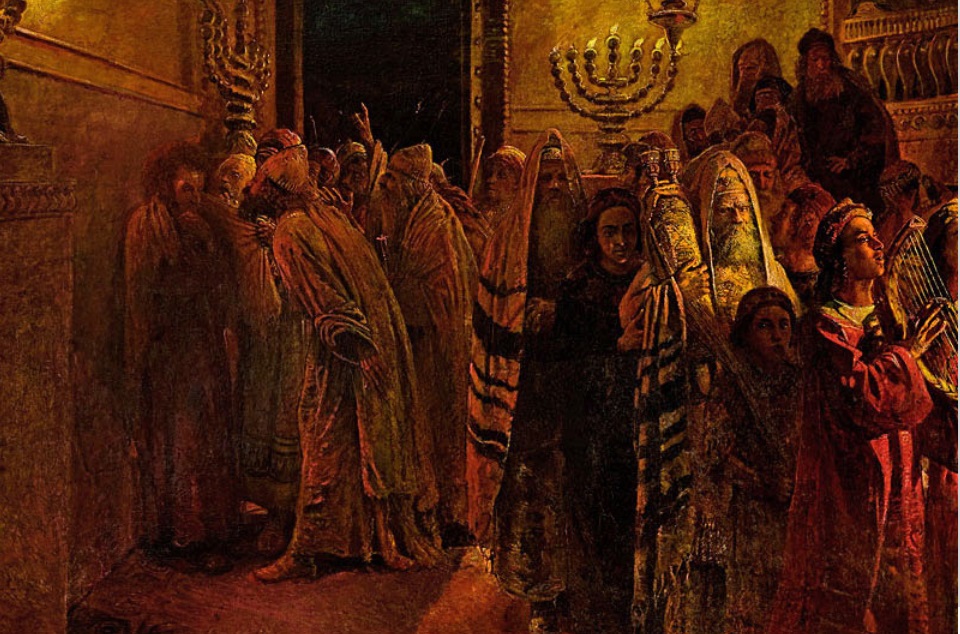
The Sanhedrin served as a religious court for the Jewish nation. The beginnings can be traced to the seventy leaders that Moses selected to help him lead the Israelites. This council eventually developed into Great Sanhedrin who ruled over all the Jews with the Lesser Sanhedrin, councils of twenty-three judges, who ruled over the individual towns. The last Sanhedrin met in AD 358 when it was dissolved by the Byzantine emperor. There have been various attempts to restart it since the 1530’s but they have not been successful.

In Jesus’ time, the Sanhedrin served as a religious court while the Romans established civil laws. When Jesus was teaching in the temple courts, the Sanhedrin met to determine what to do with Jesus and made plans to arrest Jesus. It was also the Sanhedrin guards who initially arrested Jesus in the Garden of Gethsemane and brought him before the Sanhedrin for what turned out to be a mock trial. The Sanhedrin wished to put Jesus to death, but they had no authority to do that, so they sent Jesus to Pilate, the governor installed by the Romans, who was the one who ultimately authorized Jesus’ crucifixion.

Observe

Read John 18:28-40. Jesus constantly taught that his kingdom was not of this world, but he was seen as a threat by secular and religious authorities: first by King Herod and then by the Sanhedrin. Why do you think that is?

Sadducees

Dancing in the Kingdom- Table of Contents

Dancing In the Kingdom – Part 2 – The Kingdom Revealed– Chapter 10 – The Class of Apparitions

Sadducees

[Bible references: 2 Samuel 8:15-18; Ezra 7; Matthew 3:7; 16:1-11; 22:23-34; Mark 12:18; Luke 20:27; Acts 4:1; 5:17; 23:6-8]

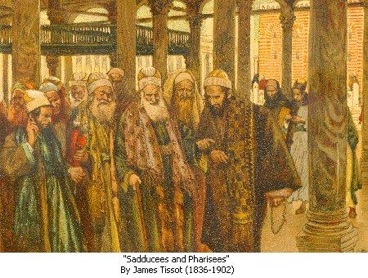
The Sadducees were priests who based their legitimacy on their descendance from Zadok, a priest who lived at the time of King David. It was the Zadokite line of priests that emigrated back to Jerusalem when Persians allowed the Israelites to return from captivity. They were intent on holding onto their power which came through the ministry of the temple. Like the Samaritans, the Sadducees regard only the writings of Moses to be scripture and they interpreted them very literally.

The corrupting influence of power caused them to cooperate with the Greeks when Israel became a client kingdom of the Greek empire. Although Pharisees were also in the Sanhedrin, the Sadducees became the prominent group controlling the Sanhedrin notably during the Greek and Roman occupation.

Because the Sadducees only included the books of Moses in the scripture, they did not develop any beliefs in the resurrection, which caused conflicts with both with Jesus and the Pharisees. The interactions that are recorded are all confrontational. There is an obvious tension between Jesus and the Sadducees. Jesus came to undergo death and resurrection and to eliminate the need for continual temple sacrifices, but the Sadducees did not believe in resurrection and their status was dependent on the continuation of the temple sacrifices. In contrast to the poor and needy ‘lost sheep of Israel,’ the Sadducees were the rich upper class. The Sadducees disappeared from history upon the destruction of the temple by the Romans in AD 70.

Observe

Read Matthew 16:5-11. What is the yeast of the Sadducees?

Pharisees

Dancing in the Kingdom- Table of Contents

Dancing In the Kingdom – Part 2 – The Kingdom Revealed– Chapter 10 – The Class of Apparitions

Pharisees

[Bible references: Matthew 5:20; Luke 13:31’ John 3:1-15]

The Pharisees developed out of the scribes who were copying the writings of Moses and, in doing so, were concerned with knowledge of the law, as well the writing of the prophets who came after Moses and the traditions of elders (rabbis). They were also concerned with how to interpret the law to make applicable to everyday life and there were many teachers of the law who wrote commentaries on the law, and the Pharisees also studied these commentaries. The people identified as rabbis came from this group.

The Pharisees became more identified with the everyday people, as opposed to the Sadducees who were identified with the wealthy ruling class. It is not known exactly when the Pharisees were identified as a group but may have happened as their opposition to the teachings of the Sadducees developed.

Jesus had a lot of interactions with the Pharisees. Most of what is recorded in scripture is confrontational, but the dynamics were more nuanced and could be misunderstood. By the times of Jesus, there were two main schools of rabbinic thought: the rigorist school of thought, led by Shammai the Elder, insisted on getting every detail right, particularly in the area of cleanliness, and was beyond the possibility of normal Jews to live out; the humanist school of thought, led by Hillel, was more intent on getting the spirit of the law right and was therefore within the realm of normal Jews.[1]

Another nuance had to do with the normal culture of conflict within Judaism (after all, ‘Israel’ means ‘wrestles with God’). It would have been normal for the scribes and Pharisees to question this new teacher, Jesus, and test his knowledge to see if he knew what he was talking about, although there may be a question about their motives – was the testing done to gain understanding or was the testing done to try to discredit Jesus. We shouldn’t forget the time that some Pharisees warned Jesus about Herod’s plot to kill him.


[1] Johnson, Paul. “A History of the Jews” Harper Perennial 1987 (p 127)

Observe

Read John 3:1-15. A closer reading of scripture shows that Jesus did not just have a confrontational relationship with the Pharisees but had a more nuanced relationship. This can be particularly seen with Jesus’ interaction with Nicodemus. Describe the type of interaction between Nicodemus and Jesus.

Lost Sheep of Israel

Dancing in the Kingdom- Table of Contents

Dancing In the Kingdom – Part 2 – The Kingdom Revealed– Chapter 10 – The Class of Apparitions

Lost Sheep of Israel

[Bible references: Matthew 9:10-13; 10:5-6; 15:21-28; Mark 2:15-17]

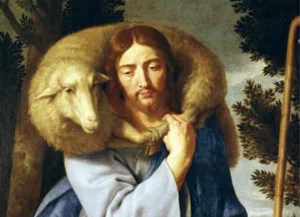
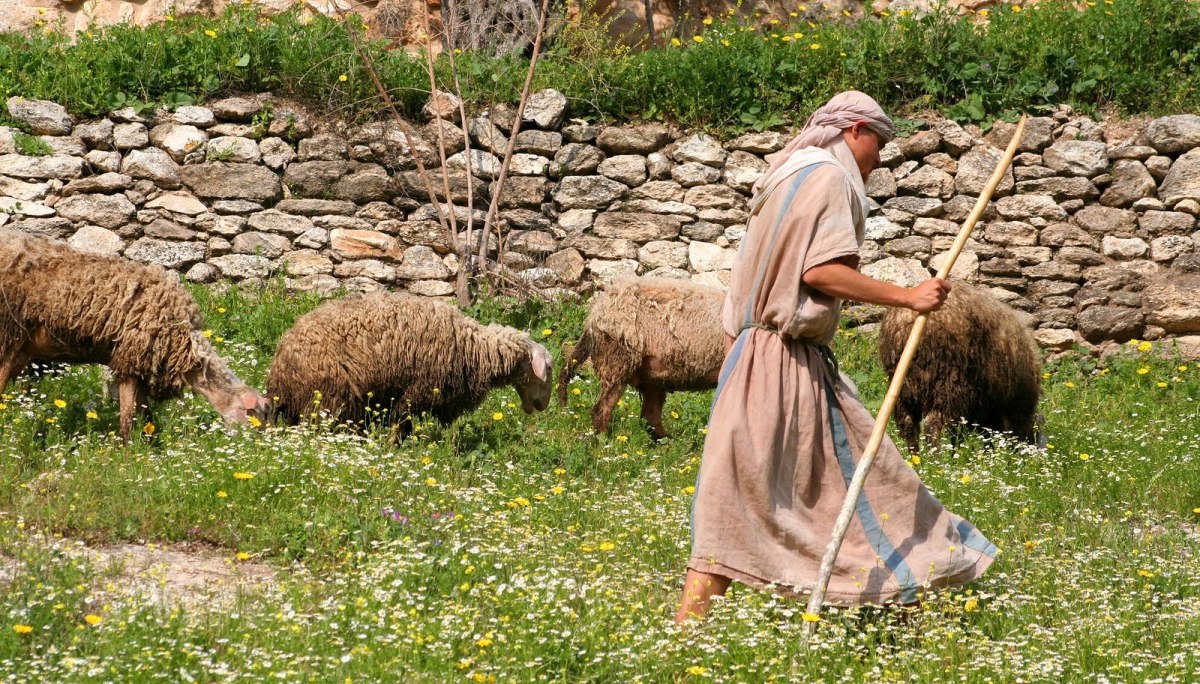
In the Old Testament, the term ‘lost sheep’ initially referred to all of Israel. After the division of the kingdom, the term ‘lost sheep’ referred to the northern tribes of Israel. In the New Testament, Jesus uses the term, ‘lost sheep of Israel,’ to distinguish the people to whom his ministry would focus on. When Jesus used the term ‘lost sheep of Israel’ it is to specify that Jesus only intended, at that time, to serve the Jews in Israel, not to the Gentiles, not to the Samaritans and not to Jews that are in other countries.

Jesus’ ministry focused his efforts on the ‘lost sheep of Israel.’ The ‘lost sheep’ were people who knew they needed help, needed to be rescued from their situation and were aware of their need for healing, wholeness, and love. They were the sinners, tax-collectors, harlots, and backslidden. They found in Jesus one who loved them and did not reject them when they acknowledged their needs.

Reflect

The “lost sheep” in this case does not mean their location was unknown but that they didn’t where they were going, they did not have shepherds who knew where to lead them. Where is your life headed?

Observe

Read Matthew 9:10-13; 10:5-6. How are the “lost sheep” described?

Gentiles

Dancing in the Kingdom- Table of Contents

Dancing In the Kingdom – Part 2 – The Kingdom Revealed– Chapter 10 – The Class of Apparitions

Gentiles

[Bible references: Matthew 4:15; 8:5-13; 15:21-28; Luke 6:17-19]

The term, Gentile. refers to anyone who is not Jewish. When we think of Jesus’ interactions with the Gentiles, we primarily think of their role during Jesus’ trial and execution, but there were a couple of instances of Gentiles displaying great faith. Jesus had high praise for the faith of a Roman centurion when the centurion trusted the Jesus to heal his servant while Jesus was still a distance away from the servant. In another case, a Canaanite woman persisted in seeking Jesus’ healing for her demon oppressed daughter. Even though Jesus’ reminded her of his mission to ‘the lost sheep of Israel’ she still pressed the issue by insisting that even dogs eat the crumbs from the master’s table. Additionally, many Gentiles came with all the Jews to listen to Jesus and to be healed.

Observe

Read Matthew 15:24. Jesus proclaimed that he was only sent to the “lost sheep of Israel”. How does Jesus’ interaction with the Gentiles fit with that?

Clash of sects

Dancing in the Kingdom- Table of Contents

Dancing In the Kingdom – Part 2 – The Kingdom Revealed– Chapter 10 – The Class of Apparitions

Clash of sects

[Bible references: John 2:18]

By the time Jesus entered history, several different types of groups had emerged among the Jews. When groups clash, the victors of those conflicts are the ones that write and preserve their own version of history and may also destroy any records of their enemies, there tends not to be much material about non-victor groups that survives for us to look at. Even so, there is some amount of evidence available for us to examine their views. Many of the views held by the Jewish sects will be seen again within Christian sects and even within groups today.

Observe

Read John 11:8-36. What kinds of things can we do to make people notice how much you love?

Spurning love

Dancing in the Kingdom- Table of Contents

Dancing In the Kingdom – Part 1 – Shadows of the Kingdom – Chapter 4– Retreating to chaos

Spurning love

[Bible references: Genesis 3:1-7]

God created His image-bearing creatures so that they could receive love and respond in love. He provided those creatures with an ideal environment in which to thrive. These creatures knew the One who created and loved them and yet they chose to reject that love. As the descendants of the original image-bearers, we know that impulse all too well, the compelling urge to distrust others and to rely on our own resources, the desire to clutch power to ourselves and reject any claim to another’s authority over us. These urges and desires seem to overwhelm the opportunity to receive the love offered to us and thus removing our ability to respond by offering love.

We are marked by our continued failure to resist the temptation to grab what we want instead of waiting to receive what we want from God. In spurning God’s love, in rebelling against His authority, we break the bonds that hold us to each other and to God, and in doing so breaking what bound the Kingdom of Heaven to Creation.

In all of human history, Jesus was the only one able to successfully resist the temptation to grab for himself instead of waiting for the Father to provide. His success began the restoration of the Kingdom of Heaven on earth, a restoration that will not be complete until He comes again to fully reunite Heaven and Earth. Until heaven and earth are fully reunited, we will not fully experience the overflowing shalom that God has intended for us. Until that time, the broken earth will be separated from heaven and allowed to sink into disorder and chaos. Until that time, the overflowing goodness and shalom that God had provided will be masked by the brokenness of not just Creation but also by the brokenness of the co-creators. Look at what we have done!

We were meant to be in communion with each other and with God. We were meant to be “gardening” with God to make our place, a place of thriving and abundance in concord with the type of thriving and abundance with which God originally made the universe. God intended for us to be connected to Him and to be filled with His Spirit so that we would be fully enabled to be co-creators with Him of good works. But until then, we are in a state of rebellion, separated from the one who is the source of goodness. In that sense, we are less human than we should be.

Reflect

It seems to be part of human nature, to be suspicious of those things or those people who are different than us. The question is, when does doubting someone else’s motives become an act of sin?

Observe

Read Genesis 3:1-7. What hidden desires may cause us to distrust someone?

Self-sacrificing and forgiving

Dancing in the Kingdom- Table of Contents

Dancing In the Kingdom – Part 1 – Shadows of the Kingdom – Chapter 3 – The image-bearers

Self-sacrificing and forgiving

[Bible references: Romans 6:4-5; 12:1-21; James 2:12-14; 1 Peter 2:10-12]

Our life in God does not begin with anything we have done but rather with the sacrifice made by Christ Jesus, the perfect sacrifice that was made on our behalf to reconcile us to God. When by baptism we join him in his death, we can also be united with him in his resurrection. It is that resurrection power that enables us to present ourselves as living sacrifices, to worship him by continually dying to our sins[1] and offering ourselves to the service of God and to others. And just as the mercies of God flow into our lives, so those mercies should flow over into the mercy we extend to others on God’s behalf.


[1] Piper, John, “Present your bodies as a living sacrifice” Desiring God, 13 June 2004, www.desiringgod.org/messages/present-your-bodies-as-a-living-sacrifice-to-god; Wayne, Luke. “What does it mean to be a living sacrifice” Carm carm.org/about-bible-verses/what-does-it-mean-to-be-a-living-sacrifice/; Gidley, James S. “A Living Sacrifice,” Orthodox Presbyterian Church opc.org/cce/livingsacrifice.html

Reflect

God did not need to rescue us, but He did, even though it required great sacrifice. As you ponder that, think of how you can show love to those around you?

Observe

Read James 2:12-14. Can a person who exhibits no mercy truly have faith in Jesus?

Playful and orderly

Dancing in the Kingdom- Table of Contents

Dancing In the Kingdom – Part 1 – Shadows of the Kingdom – Chapter 3 – The image-bearers

Playful and orderly

[Bible references: Deuteronomy 12; Exodus 35:30-38; 2 Kings 17:1-41; Nehemiah 8:1-9:38; Psalm 100; John 4:23-24; Acts 6:1-7; 15:1-35; Romans 12:1-2; 1 Corinthians 14:1-40]

There is much that is wrong in the world. People endure pain and suffering sometimes from natural happenings and sometimes from the actions of others. Evil seems persistent and never-ending. When we are called to serve God in this world, we can become overwhelmed by all the work that is to be done. Playfulness can seem out of place. Particularly, any playfulness that emerges from self-centeredness or obsessiveness.

Actually, that is the point we need to assert. Playfulness can be out of place in a world of sin and evil. But playfulness can also be a reminder that the reality in front of us is not the total reality. Our playfulness arises out of the relationship we have with God, the one who has overcome the evil in the world, who will end the suffering and who will restore us and world to be what he intended from the beginning. Playfulness arises out of the hope and joy we have in knowing that the reality in front of us is not the whole reality.

Our imagination can be helpful in this play. As children, we can pretend there is another world and do something like taking a cardboard box and imagining it to be a spaceship and accepting the rules of living in that spaceship. Family traditions (or even community or national traditions) are a form of play, they do not serve a utilitarian purpose, but stem from the creative ways we wish to remember our unique heritage.

This same imaginative playfulness can be useful in reminding us of the reality that lies behind our current reality. Our traditions of worship are a form of play, albeit a more serious play. Our worship traditions represent ways for us to remember our spiritual heritage or to provide imaginative ways to perform biblical sacraments about which we have sparse details on how to perform them. These traditions and liturgies help us point to that other reality, a new Kingdom that began breaking into this world with the incarnation of Jesus.

Christian worship was in fact and from the beginning a festival:  the festival of Christ’s resurrection from the dead … Easter begins with a feast, for Easter is a feast and makes the life of those who celebrate it a festal life … Jesus himself compared the presence of God, which he proclaimed and lived, with the rejoicing over a marriage. His earthly life was a festal life, even if it ended in suffering and death … the early Christians have understood his raising from the dead and the presence of the now-exalted Christ as the beginning of an unending joy and a happiness without end … the risen Christ as ‘the first among those who had fallen asleep’ and as the leader of life; as the leader in the mystic dance and himself as the bride who dances with the others, as the church father Hippolytus put it.  Long before the somber dances of death were painted in medieval times of plague, the figure of the resurrection dance can be seen in the old churches. The modern Shaker song ‘The Lord of the Dance’ brings out very well the dancing Christ:

I am the life that’ll never, never die;
I’ll live in you if you’ll live in me,
I am the Lord of the Dance, said he.[1]

We hope to participate in the inbreaking of the new Kingdom by living according to its rules. When we pray or worship, we are participating in the rules of that new Kingdom. When we come to others and share with them the hope that we have, we ask them to use their imagination to look beyond the current reality and envision the new Kingdom that is already here and is yet to come. When we accept contentment in all situations, when we trust in God, when we comfort others with the hope we have, we are living according to the rules of the new Kingdom.[2]

It is also true, that In this present life there are endless encounters with grief. Although we acknowledge the pain and suffering of that grief, whether that grief is ours or others, we can encompass that grief with hope. Even amid grief we can choose to cling to God and to the hope He brings us. If we can live under the rules of the new Kingdom, we can have assurance that the current grief will pass and will be replaced by future joy and laughter and that every tear that we have cried and will cry and even now cry will be wiped away.

Our hope of the new Kingdom allows us to endure the current pain and suffering knowing that the hard experiences can be redeemed and to be used for good. God can take the pain and suffering we endure to transform us to be more like Christ, who himself suffered for us, transforming the very evil intended for him into the final victory that shall ultimately also make us victorious. This hopeful living then is also a form of play, accepting the rules of a reality we cannot see and choosing to live according to the rules of a Kingdom that we can only realize in part.

That playfulness also emerges in our creativity, which erupts early on in our lives as our desire as children to play and also in the desire we have as parents to play with our children.[3] There is no doubt about how uniquely creative we are in the way we express ourselves, not only in all the various art forms we use but in the ways we can solve all sorts of problems[4] – even to the creative ways we try to cover up our sins.[5] No other creature can come close to expressing creativity the way we can.

Our ability to create and even detect order is also unmatched.[6] Our ability to detect order is evident in the way we can detect patterns in sight or sound. The sense of order is evident in our ability to recognize faces, our ability to recognize the voices of our mothers or fathers as infants and even before we are born.[7] Our sense of order is seen as we grow in our ability to recognize the patterns of letters and sounds and to recognize and respond to language – even languages.

Our sense of order becomes more evident in our ability to create order out of many abstract concepts such as math, science, philosophy, and many other areas.[8] It is our sense of order that allows us to create businesses, governments, and civic organizations to make society productive. When we bring order to farmland, we increase the productivity of the farm.

The visible order within Creation inspired Christians in the past to study Creation. Order within Scripture helps the Bible to be meaningfully used as meditative literature. In the same way, order during worship also helps us to avoid confusion and to focus on God.


[1] Moltmann, Jürgen. “The Living God and the Fullness of Life” trans. Margaret Kohl Westminster John Knox Press, 2015, p.192; Carter, Sydney. Lyrics “Lord of the Dance” (1963) Genius genius.com/Sydney-carter-lord-of-the-dance-lyrics; Tune “Simple Gifts” Brackett Jr., Joseph. (1848) Praise gathering www.praisegathering.com/media-files/pdf/a08380_lyrics.pdf

[2] Edgar, Brian. “The God Who Plays: A Playful Approach to Theology and Spirituality” Cascade Books 2017 (e-book)

[3] Gowman, Vince. “Playful quotes for the child in your heart” Vince Gowman www.vincegowmon.com/playful-quotes-for-the-child-in-your-heart/

[4] Baumgartner, Jeffrey. “The Basics of Creative Problem Solving – CPS” Innovation Management, innovationmanagement.se/imtool-articles/the-basics-of-creative-problem-solving-cps/

[5] Brister, Tim. “6 Destructive Ways We Minimize Our Own Sin” Bible Study Tools www.biblestudytools.com/bible-study/topical-studies/6-destructive-ways-we-minimize-our-own-sin.html

[6] Basulto, Dominic. “Humans Are the World’s Best Pattern-Recognition Machines, But for How Long?” Big Think 24 July 2013 bigthink.com/endless-innovation/humans-are-the-worlds-best-pattern-recognition-machines-but-for-how-long

[7] Pfaff, Leslie Garisto. “6 things you may not know your baby can do” Parents www.parents.com/baby/development/intellectual/6-things-you-may-not-know-your-baby-can-do/

[8] Armstrong, David. “Christianity Absolutely Critical to Origin of Science” Patheos, 18 Oct 2015, www.patheos.com/blogs/davearmstrong/2015/10/christianity-crucial-to-the-origin-of-science.html

Observe

Read Deuteronomy 12; 1 Corinthians 14. These chapters contain explicit instructions about how and how not to worship.  Since we do not yet experience the fullness of the new Kingdom, how can our imagination help us more actively engage in worship?

Co-sovereigns and servants

Dancing in the Kingdom- Table of Contents

Dancing In the Kingdom – Part 1 – Shadows of the Kingdom – Chapter 3 – The image-bearers

Co-sovereigns and servants

[Bible references: Genesis 1:26-28; 2:15; Exodus 19:6; Ezekiel 34:1-10; Matthew 23:11; Mark 10:35-45; Luke 22:26-27; Acts 2; 1 Corinthians 12:12-13; 1 Peter 2:9]

We are created in the image of the Creator, endowed with His attributes. With the attributes of God overflowing in our lives, He blessed us 1) with the pleasure of sex so that we would “be fruitful and multiply and fill the earth,” and 2) with the pleasure of acting on His behalf so that we would subdue it and rule over its creatures as His co-sovereigns. As creatures in His image, we have been given great abilities, and it is out of that mastery of those abilities that we have managed to use the resources of the earth to create all the technological advances that we have. Unfortunately, in many cases we have abused our abilities; abusing not just the resources of the earth but often abusing each other.

In our sinfulness, we typically appeal to our call to sovereignty while forgetting our call to service. This very issue Jesus took care to remind us of on many occasions. If we mistreat the earth that we are placed in or if we mistreat others, then we dishonor not only the one in whose image we are made but we also dishonor the other image-bearers of God. In fact, it is out of our call to sovereignty and service that we are called to love, to willingly give of ourselves to the service of God just as God gave of himself to us.

It is under the constraint of God’s love that he tells us to “subdue” and “have dominion” over his creation. As God’s stewards, our sovereignty means we have the responsibility to maintain the good in God’s creation, to bring order to it and to help his creatures flourish and fill the earth.

There are two dimensions to our responsibility to subdue and have dominion.

When Genesis 1 was written, it was hard work to cultivate the rocky soil and people had little control of the elements; people were more powerless than powerful. In that context we see the forceful aspect of radah (ruling the earth) that is evident in other instances in the Bible when that word is used. That is one dimension of our responsibility.

But another dimension of our responsibility to have “dominion” is tempered by gentleness, such as when God spoke through Ezekiel’s to the “shepherds of Israel” and reprimanded them for using cruelty and violence and caring more about themselves than the people they were responsible for, serving themselves instead of the people.

In our service, we are dependent on one another. We were not made to be self-sufficient; we not only need to have a relationship with God but also with each other. God allowed the first man to see that he needed another human before God presented the man with a woman to be his ‘ezer kegnedo. In Hebrew, ‘ezer is usually translated as “helper” or “deliverer” and is most often used to describe God delivering his people; kegnedo is usually translated as “in front of” or “opposite” or “parallel to.”[1]

Later on, in scripture we see that we are called to be a nation of priests and a body where all the different parts have a purpose as they work together. We are called not just to a restored relationship with the one who made us but are called together as a people to serve each other and to serve the world around us.


[1] Blue Letter Bible “ezer” Strong’s concordance, Blue Letter Bible   www.blueletterbible.org/lang/lexicon/lexicon.cfm?t=kjv&strongs=h5828; Bible Hub “Neged” Strong’s concordance, Blue Letter Bible www.blueletterbible.org/lexicon/h5048/kjv/wlc/0-1/

Reflect

God provides the model of servant-leadership (see Chapter 2). What are some ways in which that should affect the way we take care of the earth and each other?

Observe

Read Gen 1:26-28; 2:15. Gen 2:15 shows God putting people in the garden to (depending on your translation) dress/guard/work/till/cultivate/serve it and to keep/take care/guard/look after it. So these verses together talk about our authority over Creation and our obligation to serve it. How do we do both?

The Temple Maker

Dancing in the Kingdom- Table of Contents

Dancing In the Kingdom – Part 1 – Shadows of the Kingdom – Chapter 2 – The God who created

The Temple Maker

[Bible references: Genesis 1-2; Exodus 26; 1 Kings 6; Job; Psalm 8; 95; 100; 104 and others; Proverbs 8:22-31; Isaiah 44:21-28; 45:5-12; 51:4-12; 55:6-13; Matthew 26:61; I Corinthians 6:19-20; Revelation 21-22]

There has been much debate about how to interpret the creation account. There have been various attempts to understand creation as physical processes that had occurred (over shorter or longer periods, depending on your analysis) because in our current cultural context we default to thinking of creation in physical, scientific terms. But what if (surprise! surprise!) we consider the biblical text to be a theological text instead of a scientific one, about functional origins and not about material origins.[1]

The cosmos can only function as sacred space once God has inhabited it and people in his image are there. God is declaring purpose for the cosmos as an ordered space for people and as sacred space where he will dwell. This is what defines the divine activity …Adopting and promoting a vision and mission statement will not change how the institution operates. But it articulates a purpose and identity that may not have been realized or present before and proclaims that as its purpose. Genesis 1 is doing something similar. It is articulating a purpose through a mission statement (people living out their designated role as the image of God) and a vision statement (seeing the world around us as sacred space where God is living among his people and being in relationship with them). .[2]

In the last few decades, research has uncovered much more about the culture in the Ancient Near East than ever before. It has been discovered that in Ancient Near East cultures, the Genesis account would not have interpreted the creation account in terms of physical processes but rather in terms of assigning meaning and purpose. So, as we read the Creation account in Genesis 1, on the first three days the spaces of light and dark, waters above and below, and the land are being assigned a purpose. The next three days the populations of those spaces are assigned a purpose: the sun and the moon and stars, the birds and fish, the land animals.

In this perspective, the story of creation is seen more as a story about the dedication of a temple, where the universe and the world were dedicated as a sacred space, a space where God would dwell with his people. Therefore, the seventh day is when God rested from the act of dedicating the earth, which would now be the place where He would now live with his image-bearers. If you read Genesis 1-2, you will see that, unlike the other days, there is no “there was evening and there was morning.” That is because we are living in the seventh day.

The completion of God’s temple would be later remembered by the seventh day celebration of the Sabbath. Although God’s temple was completed by the seventh day, it was not a time where God ceased to do everything. The still continuing seventh day is the time when the “temple” which is our “home” is completed so that God and we, as his co-regents, can settle in and do the things that our home was designed for. Jesus in John 5:1-7 clarified this idea where he explained, “My Father is always at his work to this very day, and I too am working.” Living into this sacred space would entail us taking part with God in his continual acts of creating and sustaining the universe. That is the perspective of Eve, when she gave birth to Cain, she recognized that “I’ve created a man with Yahweh.”[3]

In Genesis 2, the focus moves to the humans God created and how they were to function in that sacred space where the Garden of Eden is the center. Genesis 2 is also where God’s name, “Yahweh,” begins to be used. Genesis 1 introduces the God as the Creator of the universe whereas Genesis 2 introduces the God who in establishing a personal relationship with the people he created uses a personal name.[4]

The cosmos that God created was intended to be a temple, the place where He would meet with his people. The temple/creation imagery permeates and unites all of scripture from the first book, Genesis, to the last book, Revelation. The temple/creation theme shows up in places like in the stories of Noah, Moses, and Abraham, in the construction of the Tabernacle and the Temple, in Job’s dialog with Yahweh, in the poetry of Psalms[5], in prophecies of Isaiah, in the body Jesus and in us as his Body and finally in the depiction of reuniting of heaven and earth. Each instance shows its own unique aspect of the temple, so that when combined with each other, they show a more complete picture of how God meets with us and provides for us and what he has intended for us. We see a complex picture of the temple as a physical place in Creation and at the same time the temple is within us, inside the bodies of all of those who call on his name. In both those cases we can see the provision of God who 1) abundantly fills all of Creation in ways that exceed our imagination and exceed the capacity of any book to tell and, 2) abundantly fills us with His strength and His Spirit so that we can fulfill the desire He has for us to “cultivate and keep” the abundant place He has provided for us.

One of the benefits of considering only the theological aspects of the Creation accounts, or the why of creation, is that we don’t have to be as highly concerned about the how of creation, or the scientific/physical accounts of creation. When scientific creation accounts are proposed and are not perceived to be correct because they don’t seem to theologically fit, we don’t need to despair. It may be that the various proposed scientific explanations simply don’t theologically fit because they just don’t or because we just don’t understand just how they could theologically fit. We know that the sciences are limited and that theories will change as more discoveries are made. Sometimes those theories may seem to move closer or further from our limited theological understandings, but our theology is not constrained by whatever the current science may indicate. In the meanwhile, we are free to explore the science and wonder in awe and marvel at just how God managed to do it all while humbly admitting that we don’t have the mind of God and how much higher his ways are than our ways.


[1] Walton, John. “The Lost World of Adam and Eve,” Proposition 3, InterVarsity Press. 2015 Kindle Edition. pp. 35-45; Driver, Cory. “Commentary on Genesis 1:1-5” Working Preacher 10 Jan 2021 www.workingpreacher.org/commentaries/revised-common-lectionary/baptism-of-our-lord-2/commentary-on-genesis-11-5-5; Carlson, Reed. “Commentary on Genesis 1:1-2:4a 12” Working Preacher Sept 2011 www.workingpreacher.org/commentaries/narrative-lectionary/creation-by-the-word/commentary-on-genesis-11-24a-5; Throntveit, Mark. “Commentary on Genesis 1:1-2:4a; or 1:1-5,26-2:4a 1 Working Preacher 1 Sept 2011 www.workingpreacher.org/commentaries/narrative-lectionary/creation/commentary-on-genesis-11-31-21-4

[2] Walton, John. “Material or Function in Genesis 1? John Walton Responds” Biologos 3 Apr 2015 biologos.org/series/reflections-on-the-lost-world-of-genesis-1-by-john-walton/articles/material-or-function-in-genesis-1-john-walton-responds

[3] Friedman, Richard Elliot, Commentary on the Torah, Harper Collins, 2003 Location 6942 of 37412

[4] There will be more discussion on that name in “Hope in the Brokenness,” Chapter 4

[5] Muran, Alexej. “The Creation Theme in Selected Psalms” Geoscience Research Institute 1 May 2015 www.grisda.org/the-creation-theme-in-selected-psalms

Reflect

Does viewing the universe as a temple affect the way we look at it?

Observe

Read Proverbs 8. This proverb personifies God’s wisdom. Read how God is describing how His wisdom is built into the very framework and fabric of this temple we call Creation. How can we sense God’s presence with us because of how His wisdom should be speaking to us?

Mystery of God’s name

Dancing in the Kingdom- Table of Contents

Dancing In the Kingdom – Part 1 – Shadows of the Kingdom – Chapter 2 – The God who created

Mystery of God’s name

[Bible references: Exodus 2-3]

 Many English-speaking Christians would say that, of course we know God’s name – it’s “Jesus,” or if you want to pronounce it in Hebrew it would be “Yeshua.” That would be true for the name of the Son of God. But what about God? The mystery of the name of God in the Old Testament has to do with the original Hebrew.

When God introduced himself to Moses, His name using modern Hebrew letters[1] would look like the next to the last line in the picture above. In older Hebrew it would have looked like the lines above it – the original characters are the top line . The original Hebrew language had no written down vowels, so these letters all represent consonants. In modern reading practices we mostly read silently to ourselves, but for most of history, it was more common to read out loud, so having written words with no vowel marks would not be a problem, because everyone would always be hearing the vowel sounds.

The difficulty in this case, is that in Old Testament times when Israel was in exile in Babylon, it came to be considered that the name of God was too holy to be pronounced. So, whenever someone would read that name, they would substitute the word “LORD,” which in Hebrew would be “Adonai.” In less formal settings, the Hebrew word, “Hashem,” which means “the name” would be used.

 That means that over time, the actual pronunciation of the word became forgotten. By the time English translations were produced, the translators adopted the Hebrew practice of using the word “LORD,” however, to distinguish the special name, the practice was to use a special way of spelling, “LORD.” What you will see in the English Old Testament, is the word “LORD,” using a capital “L” followed by “ORD” in smaller capitals.

As the centuries went on, Hebrew in general started to become less used and there was a concern about the pronunciation of all the Hebrew words. So back between the 7th and 10th centuries AD, a group of Jews called the Masoretes, added vowel markings to the Hebrew letters, except for the name of God.

During “Enlightenment,” many Christians started to feel less constrained by the holiness of God. So back in the 1800s, when Germany was center of the academic world, and the Christian academics made an attempt to try to pronounce the long unpronounced יהוה. In Hebrew, the letters are written right-to-left and corresponded to the English letters YHVH. The next step was to figure out the vowels, so they used the vowels for the Hebrew word for God, Eloah. And then, because the German language didn’t handle words beginning in “Y,” the “Y” became “J” with the resulting pronunciation being “Jehovah.” So that became the standard pronunciation in English for more than a century.

In recent decades there has been accelerating research in archeology of the Ancient Near East and researchers started to question the standard pronunciation. Currently, most scholars are in agreement to use ‘Y’ instead of ‘J’ as the first consonant and now understand that in Old Hebrew the third consonant should have a “W” pronunciation instead of “V.” Then they determined that they should use the vowels from the word “Hashem” which led to the pronunciation of “Yahweh” for the Hebrew name of God.

A new level of understanding can be obtained if we take another type of look at the letters in the name, יהוה or  . Particularly, if we look at the older letters of the Hebrew language, we can see that the letters are pictorial, that is they represent objects or actions.  The first letter represents either a hand or an activity of doing something. The second and fourth letters represent windows or revealing something. The third character represents a nail or fastening something. That means that the name God revealed to Moses means, according to the letters, “Hand revealed, Nail revealed.”


[1] Shurpin, Yehuda. “What is the Authentic Ancient Hebrew Alphabet?” Chabad.org www.chabad.org/library/article_cdo/aid/3582435/jewish/What-Is-the-Authentic-Ancient-Hebrew-Alphabet.htm

Observe

Read Exodus 3. What difference would it make to the Israelites that their God has a name?

Reprise with variations

Dancing in the Kingdom- Table of Contents

Dancing In the Kingdom – Part 1 – Shadows of the Kingdom – Chapter 1 – Prelude

Reprise with variations

[Bible references:  Genesis 1; Psalm 8; 111; Exodus 8:16-19; John 21:1-14; Romans 8:19-22; 1 Corinthians 15; 1 Thessalonians 4; 5; 2 Peter 3; Revelation 21-22]

“The creation of the world seems to have been especially for this end, that the eternal Son of God might obtain a spouse towards whom he might fully exercise the infinite benevolence of his nature, and to whom he might, as it were, open and pour forth all that immense fountain of condescension, love, and grace that was in his heart, and that in this way God might be glorified. [1]

God created the universe for his glory, and within that, humans were created to experience the true joy of living, to bear the fruit of His nature, to reflect His presence. We are designed to be image-bearers of God himself, stewards of the creation He inserted us into as we reflect the very character of God. The exercise of stewardship is seen in the process of “subduing” and “having dominion” over the earth (its creatures and it resources), and in being “fruitful” and filling the earth. God’s initial reaction to creating us was, “It was very good.” His intent was that we would fill and take care of the earth, all the while reflecting His character to each other and to His creation.

In the beginning, heaven and earth were joined at the Garden of Eden. It was a place where the Creator could have communion with his image-bearers and walk in the garden with them. The garden was the perfect place for the image-bearers to develop and begin working out the intended future of filling the earth and ruling over it as co-regents with God.

He gave us unimaginable delight and freedom, but that very freedom He gave us was joined to a responsibility, a responsibility that was wrongly used and caused immense far-reaching damage – damage we could not possibly undo – the whole universe is groaning, waiting for to be restored. Our pride-laden rebellion damaged the relationships between each other, between us and God, between us and the world and even between heaven and earth; but God had a plan from the beginning, a plan which is now underway, to ultimately restore what was lost and undo that damage[2] and bring us to our intended destination – an earth filled with and ruled by image-bearers and where heaven and earth are rejoined so that the image-bearers can walk with God once again.

“Jesus’ own teaching during his brief public career simply reinforced the Jewish picture. He redefined a lot of ideas that were current at the time – notably, of course, kingdom of God itself, explained in many coded parables and symbolic actions that God’s sovereign, saving rule was now breaking in, even though it didn’t look like what his contemporaries had imagined and wanted.”[3]

Ultimately, we will be freed from the bondages of sin and death and all the relationships that are now damaged will be restored. In fact, in a timeline that we cannot fully grasp, God waited from the beginnings of mankind until 2000 years ago to defeat the power of sin and death and begin the process of restoring His kingdom on earth. Then He told us that someday, he will complete that process and he will return in the fullness of his glory to fully restore all things at that time. We just don’t know when that will be.

Our hope looks at the resurrection of Jesus as a harbinger of the resurrection that awaits all those of us who will be united with Him in our own transformed bodies in the new heavens and the new earth.

‘… what is the ultimate Christian hope? …what hope is there for change, rescue , transformation, new possibilities within the world in the present … if the Christian hope is for God’s new creation, for “new heavens and new earth,” and if that hope has already come to life in Jesus of Nazareth, then there is every reason to join the two questions together … “God’s kingdom” in the preaching of Jesus refers not to postmortem destiny, not to our escape from this world into another one, but to God’s sovereign rule coming “on earth as it is in heaven.” [4]

Furthermore, our hope doesn’t ask for us to simply wait for that time when the Kingdom of God is fully restored, but that we can be part of God’s plan to bring the Kingdom of God into our broken world.


[1] Edwards, Jonathan, “Works of Jonathan Edwards, Volume Two,” SERMON II. THE CHURCH’S MARRIAGE TO HER SONS, AND TO HER GOD. Ed. John E. Smith, Yale University Press, 2009(p. 62)

[2] Bible Project “Pursuing God, Heaven and Earth,” Bible Project www.pursuegod.org/biblical-themes-an-animated-explanation-of-heaven-earth

[3] Wright, N.T. “Surprised by Hope: Rethinking Heaven, The Resurrection, and the Mission of the Church” Harper Collins 2008. Kindle Edition(p. 18).

[4] Wright, N.T. “Surprised by Hope” Harper Collins 2008. Kindle Edition (pp. 4-5, 18)

Reflect

Speaking strictly from what we know from science, we seem to be random life forms on a random planet in a random spot in the universe. In that perspective, having an anthropocentric view of the universe seems absurd. But knowing what the Creator of heaven and earth has revealed to us, the universe was designed to be inhabited … by us! How does that change your view of the universe?

Observe

Read John 21:1-14. What does this passage suggest about our resurrection bodies?

New Testament Church

Dancing in the Kingdom- Table of Contents

Dancing In the Kingdom – Part 1 – Shadows of the Kingdom – Chapter 1 – Prelude

New Testament Church

[Bible references: Acts 1-7]                             

Jesus’ ministry was primarily to the Jews. After Jesus resurrection and return to heaven, the disciples, following Jesus’ instructions, waited for the Holy Spirit to come upon them. That did not happen until ten days after Jesus’ ascension to heaven during the feast of Pentecost.

With the power of the Holy Spirit, the church expanded. For nearly 14 years the focus was on expanding the church through the Jewish community, so the church primarily consisted of Jews who became followers of Christ. The church then was filled with practicing Jews who were also Christians.

 But then God intervened twice to refocus the church expansion to include the Gentiles. In the first case, through visions, God arranged a meeting between the apostle Peter and a centurion named Cornelius. In the second case, God called someone who was a persecutor of the church, Saul, to be an apostle to the Gentiles.

As Gentiles came into a church filled with practicing Jews, some people in the church thought that the Gentiles should also become Jewish in order to then become Christians. But in a church council, the church confirmed that Gentiles did not have to become Jews in order to follow Christ. James, acting as the leader of the council, quoted Amos 9:11-14, to confirm the ministry to the Gentiles.

Observe

Read Acts 2:42-47; 6:1-7. What would you be willing to do in order to be in a church like the one described here?