Principles

Dancing in the Kingdom- Table of Contents

Dancing In the Kingdom – Part 3 – Dancing in the Kingdom– Chapter 18 – Entering the Dance

Principles

[Bible references: Genesis 1; Psalm 19:1-4; Isaiah 28:23-29; Romans 1:18-20; 2:14-15; 13:1-2; 1 Peter 2:13]

We cannot establish the kingdom of God nor overcome the powers of evil in our own power. While Jesus has overcome the powers of the world, we do not know when he will return to finish the deed to fully establish his kingdom and fully rid the world of the presence of evil. But we can continue to work on the mandates he gave us at the beginning and rephrased at the Great Commission to make disciples of all nations, teaching them to obey all that I have commanded you, which extends from our original directives to be fruitful and multiply and fill the earth, and to subdue it and rule over all the creatures.

From the beginning of the church, we can see that while some people were sent out with the express purpose of spreading the gospel, most people stayed within whatever vocation they had, living in their own communities, sharing their resources, and supporting one another. Those that stayed in their vocations, did not change their vocations although they may have changed the way they pursued their vocations.

Albert Wolters suggests several principles that can help guide the way in which we pursue our vocations:[1]

  • The universe that God created was good.
  • The structures/institutions created by people should reflect God’s character and his wisdom as revealed through creation and his word.
  • The structures/institutions created by people are vested with God’s authority.
  • The universe reveals God’s glory.
  • Wisdom is “ethical conformity to God’s creation.”
  • The will of God for our life can be known through his creation, our conscience, His word, spiritual discernment.
  • Since God’s initial creative activity in forming the universe, God has been creatively developing the universe either directly through his own work or indirectly through his people. Part of that development includes the development of societal and cultural institutions.
  • Even without the fall, people would still be expected to develop the garden and other aspects of civilization as part of our role in stewarding what God has given us
  • When Christ returns, He will restore the earth.[2]

Whether we are directly communicating the gospel in our vocation or not, we may hold the narrative of the gospel as public truth to be shared.[3] The first communicators of the gospel were eyewitnesses who could say, “That which we have seen and heard … we declare to you.” As the church, we are entrusted with the responsibility of sharing that same truth, not in a forceful way but in the way of Jesus and his apostles who affirmed what they knew and invited others to respond in dialog.


[1] Wolters, Albert M. Creation Regained: Biblical Basics for a Reformational Worldview, William B. Eerdmans Publishing 1985, 2005. eBook Chapter 2

[2] Wolters, Albert M. “Worldview and Textual Criticism in 2 Peter 3:10” Westminster Theological Journal 49 (1987) 405-413 allofliferedeemed.co.uk/Wolters/AMW2Peter3.pdf

[3] Newbigin, Leslie. . “An Introduction to the Theology of Religions: Biblical, Historical & Contemporary Perspectives” Gospel As Public Truth, Intervarsity Press 2003

Observe

Read Psalm 19:1-4. How can our work reflect the glory of God?

Reclaiming the institutional church

Dancing in the Kingdom- Table of Contents

Dancing In the Kingdom – Part 3 – Dancing in the Kingdom– Chapter 18 – Entering the Dance

Reclaiming the institutional church

[Bible references: Matthew 5:1-16, 38-48; Luke 6:1-49; John 13:1-17, 34-35]

There are many people who claim to love Jesus but not His church (which is his body). But we need to keep in mind that every accusation we may choose to hold against the church is against us personally. The church is comprised of sinful people, and that includes us. The church has done inappropriate things in the past and so have we. As part of our, and the church’s, sinful behavior is the ease with which we focus on the things that have gone wrong while forgetting to examine the “log” in our own eye. A quote from an old cartoon strip is appropriate here, “We have met the enemy and he is us.”[1]

The second thing we need to hold onto is that as Jesus loved the world enough to die for – and redeem – the very people who rejected him. That includes the church – which includes us. If we are commanded to love our enemies, what should our attitudes be towards the group that we are part of? It is normal for us to have higher expectations towards our own family than those who are outside the family. Because of that, it is normal for us to be disappointed by or hurt more easily by people within our family than by anyone else.

Those hurts and disappointments can lead to us overlooking all the ways in which the church has, in its broken way, still managed to fulfill at least some of the intentions God has had for the church. Within the very messiness of church history, the church had not totally neglected its ability to show love to one another and to reach in love to those outside the church. It is through the church that we have the Bible and faithful Christians through the years that created hospitals and orphanages, taken care of the widows and others who need care. It is the church that made it possible for us to hear about the gospel and respond to Christ’s invitation to follow him.

The church is the body of Christ. We serve as the hands and feet, etc. of Christ, doing together what is not possible to do by ourselves. In the apostle Paul’s articulation of the Body of Christ, he notes how we all serve as different parts of the body, helping each other grow by serving in the unique ways God has prepared for us. Furthermore, Christ has told us that we will be recognized as his disciples by how we serve one another in love. This is one of the grand themes of the Bible, God has reached out to us in love, and we can respond by loving him in return; also loving one another. It is through our reflection of his love that others will respond to God in love as well.

On this side of the second coming of Christ, we all remain broken and so our institutions will remain broken. But that does not mean that Christ is unable to use us (as individuals or as part of an institutional church) for his purposes and that does not mean that the goodness of Christ is unable to be reflected through us as individuals or groups or through the institutions we create as his co-heirs to bring mercy and justice to his image-bearers and the world he has prepared for us.

In formal or informal ways, we create the institutional church to help us more effectively serve one another within the Body of Christ and to serve others outside the Body of Christ. As we take an historical look at the expected mixed record of the Body of Christ’s broken church (and, we must remember, our personal records as well), we need to cling to Christ, His love, His sustenance, and forgiveness us for all the ways we have failed to love each other within the church and outside the church.


[1] Kelly, Walt, From a Pogo strip, 22 Apr 1970 www.thisdayinquotes.com/2011/04/we-have-met-enemy-and-he-is-us.html

Reflect

Sometimes our church organizations can be hard to love. Nevertheless, we cannot truly love Christ without loving his church. How could you better express love for your local congregation this year?

Observe

Read John 13:1-17. How can we love and serve the church as Jesus showed us?

Occupy Till I Come

Dancing in the Kingdom- Table of Contents

Dancing In the Kingdom – Part 3 – Dancing in the Kingdom– Chapter 18 – Entering the Dance

Occupy Till I Come

[Bible references: Jeremiah 29; Luke 19:11-27]

On His way to Jerusalem the last time before His triumphal entry, Jesus knew the kind of expectations the people had about how the Kingdom of God would appear. To prepare them for the long wait between His resurrection and His return to fully restore the Kingdom of God, He told them a parable about a nobleman who would, before going into a far country, give his servants some money with instructions to engage in business while he was gone. The parable ended with rewards given to those who made profits and penalties for those who did not.

This then is our instruction, to make use of what God has given each of us to ‘engage in business,’ (KJV “Occupy Till I Come”) that is, we are called to help advance the kingdom until He returns.

When Jesus came two thousand years ago, he announced the beginning of a new age, “The Kingdom is here … The Kingdom of heaven is near … The Kingdom of God has come.” As disciples of Jesus we can say, “The Kingdom of God is within us.” Then, with our hearts changed by Jesus, we are charged to go and make disciples, to do justly, love mercy and to walk humbly with our God.

As we then join Jesus in bringing His kingdom into the world, we need to remember our humble estate …We cannot even change our own hearts, never mind the hearts of others. Certainly, we cannot change our culture. It is up to our Savior to change our hearts, and even more so to change the culture around us.

Jesus and his disciples lived more as servants or slaves within the Roman Empire. They had no political influence. But as the disciples lived transformed lives, living as well as preaching the Gospel, and showed the power of sacrificial love, their Spirit empowered lives opened the way for the Spirit of God to change the hearts of many throughout the Roman Empire, eventually moving the heart of a Roman Emperor, Constantine.

History has shown the mixed results of combining the power of state and church, but the teachings of Jesus have penetrated even our secular postmodern culture in ways that are not widely recognized as such. Despite the church’s own history of abusing and misusing power, Jesus’ concepts of using power to serve others, even one’s enemies still managed to occasionally penetrate the halls of power – in imperfect form to be sure, just as the ideas expressed in the Enlightenment imperfectly expressed ideas from Christianity.

“Reparations let’s say for slavery or in New Zealand reparations to the Māori or in Australia reparations to the Aboriginal even for native indigenous American Indians. And this language is actually not a historic language. This is a language since Jesus. See, because Genghis Khan never worried about reparations. He never felt he had any moral responsibility to somehow make it right for all the women he raped and all the men he killed and all the families destroyed and all the villages he burned down. We have Caesar or Alexander, they never really had remorse for anything they conquered or anything they destroyed or any people whose lives they overthrew. This concept of justice of using power well is a concept that only emerges because Jesus lived 2,000 years ago. He revolutionized the entire understanding of power. The idea that a government should actually care about its citizens is really, it’s not a historic human concept. This concept is infused by the ethics that Jesus brought to the understanding of power that it says when Jesus had all power and all authority, he ties a towel around his waist and he washes his disciples’ feet. This is a reinvention of power. … if you go back to World War II … when you look at the American response to conquering Germany and conquering Japan, and how within a decade or two, both of them became two of the greatest economies in the world … You get to see what happens when you’re conquered from a Christian mindset world with West Germany. You realize that Japan becomes one of our greatest allies. That doesn’t happen historically. You do not conquer a nation and then rebuild it to feel a moral obligation to re-establish that country better than it was before. Even what we’ve done historically has been informed by a Christian worldview. I’m not saying that England or United States or any Western nation is a Christian nation. What I’m saying is the conversations we’re having are informed by Jesus’s revolutionary, brilliant genius thoughts about power.” [1]

There are debates on the ideas expressed above, often fraught with ideas of self-interest[2] and ideology, about how to provide for populations that have experienced oppression or how to manage the after-effects of war. But these ideas and other expressions of compassion and justice – like hospitals, orphanages, the concept of “war crimes,” or the many ways to carry out “social justice” (that is, God’s expression of compassion and justice) – are ideas not found in history until God introduced them first to his chosen people, Israel, and then through the person of Jesus to His Body. As God’s image-bearers

Unfortunately. the church often abused its privilege, often succumbing to the worldly temptations of power and ignoring its mandate to steward God’s world with compassion and justice. But even though the church has stumbled, it has still managed to live out, admittedly imperfectly, its mandate of compassion and justice. And the world has noticed. Bu interestingly, many have adopted those same values even though they choose to ignore the source of our mandate.


[1] Mcmanus, Erwin. Interview with Carey Nieuwhof, CNLP 452: Erwin McManus on the Future of the Church, How to do Evangelism More Effectively, Authenticity and Reflections on Being Labeled a Heretic Carey Nieuwhof careynieuwhof.com/episode452

[2] Niebuhr, Reinhold.  “Editorial Notes” republished as Christianity and Crisis Magazine providencemag.com/2022/06/christian-realism-enlightened-self-interest-marshall-plan-emerges-reinhold-niebuhr/ 17 Jun 2022

Reflect

In what ways have you lived out a sacrificial love?

Observe

Read Jeremiah 29; Luke 19:11-27. What do we need to do to live transformed lives, living and preaching the Gospel, and show the power of sacrificial love with Spirit empowered lives?

Created as parts of a body

Dancing in the Kingdom- Table of Contents

Dancing In the Kingdom – Part 3 – Dancing in the Kingdom– Chapter 17 – Finding our place

Created as parts of a body

[Bible references: Romans 12:3-8; 1 Corinthians 12; Ephesians 4:1-16]

We were created to be connected. We have individual identities and desires, but we were created for love by the God of love. As God’s image-bearers, we are intended to love one another just as love is shared between Father, Son, and Holy Spirit. The greatest commandments are to love God and to love our neighbor. We are told that the world will know us by our love.

Through a process we cannot understand, the Son of God, Jesus, the Christ, appeared in the flesh two thousand years ago. After His resurrection and He “returned to heaven,” He then sent the Holy Spirit who entered into His disciples. His disciples then, as Christ’s ambassadors, became His body, creatures filled with His very Spirit who were then His feet and hands, even His voice, on the earth. And it is through His body that we and others may come to know about Christ. Sometimes we come to know Christ directly through a member of His body or indirectly by what someone recorded for us. And when we respond to His call through the body of Christ, we also become part of that same great body.

We come to Christ in response to His Spirit connecting with our spirit. But the means of that connection is through the Body of Christ. As we understand how even the set of writings, we call the Bible, was written and compiled by that great body, we can grasp the dependence that we have on His body to even to come to Him. That dependence does not end after we respond to Him but enters us into an interdependence with each other: We are dependent on each other to more fully learn how to love God and love neighbor, we are dependent on each other to build each other up.

Reflect

How can you foster the need that the church has for us to be interdependent with each other?

Observe

Read 1 Corinthians 12. If someone tries to be a “part time” church member, how does that affect everyone else?

The Kingdom is Come and Not Yet

Dancing in the Kingdom- Table of Contents

Dancing In the Kingdom – Part 3 – Dancing in the Kingdom– Chapter 16 – Fixing our eyes

The Kingdom is Come and Not Yet

[Bible references: Matthew 6:9-13; 28:36-49; Romans 12:2; James 1:27; Revelation 21-22]

When Jesus came the first time, his healings and teachings began the ushering in of the Kingdom of God, a task He will complete when He returns to fully restore His Kingdom. When Jesus came the first time, He was resurrected, but when He comes a second time, there will be a new heaven and earth, and everyone will be resurrected. But what about now?

When Jesus ascended to heaven, he told the disciples to wait for the baptism of the Holy Spirit. It was then, through the power of the Holy Spirit, that the disciples of Jesus began the process of continuing the task of bringing Heaven to earth. In this in-between time, God is at work through the Holy Spirit, continuing to bring people to Himself, continuing to build His kingdom. The task that lies before us is to join Him in His work. The prayer He gave for us to say says, “your kingdom come, your will be done, on earth as it is in heaven.” This prayer asks that His kingdom be brought to earth, the Kingdom of justice and mercy.

Empowered by the indwelling of the Holy Spirit, it is our opportunity to do our part, with whatever ability He has given us, to work with Him in bringing His justice and mercy on earth: to look after the widows, orphans, the helpless, and the marginalized; to have compassion; to not lie about others; hate evil, love good; maintain justice in the courts; bringing the good news of Jesus to all. This is simply doing the task assigned to us from the beginning: to fill the earth and subdue it as his co-regents, to take care of the earth as farmer-priests representing Him on earth.

Our final destiny is not to a disembodied existence, but to a new, transformed body, transformed in the way that Jesus was when he was resurrected. Earth itself will also be transformed, with its corruption being removed, not back into a Garden of Eden, but into the earth as it was meant to become, filled, and civilized, with a new Jerusalem being brought from heaven to earth. We are not being sent to heaven; heaven will be coming to us.

Knowing that this end is coming upon us, in the present age we can be motivated to express our hope by living out our hope as in mentioned in The Lord’s Prayer, “thy kingdom come, thy will be done, on earth as it is in heaven.” This encourages us to do what we can to help usher in God’s kingdom now, if only in part. The full entry of the kingdom will not happen until the Lord returns and establishes a new heaven and earth, but we do not need to wait hopelessly as if there is nothing we can do. God has given everyone in his church gifts with which we can build each other up and take charge as His stewards of the earth.

But the task of transforming the earth needs to begin within us. We need to be transformed. In our sin, it is our tendency to always point to other things for the cause of the problems we see. But the cause of the corruption we see elsewhere begins with the corruption within ourselves.

“The line separating good and evil passes not through states, nor between classes, nor between political parties either – but right through every human heart…even within hearts overwhelmed by evil, one small bridgehead of good is retained. And even in the best of all hearts, there remains…an uprooted small corner of evil. [1]


[1] Solzhenitsyn, Aleksandr. “The Gulag Archipelago” Vintage Publishing 1974

Reflect

Reflect

In this time that we live in, the Kingdom of God has come but not yet completely. Our hearts reflect this time with our mixed desires – at once delighting in God’s law and at the same time waging war against that same law. The corruption in our hearts is reflected in the corruption we see in the world. How does that impact how we approach our task to join God in bringing His Kingdom into the world?

Observe

Read Revelation 21:22-24. Try to imagine what it means that “the kings of the earth will bring their splendor into the city.” What would that look like?

Mystery of worship

Dancing in the Kingdom- Table of Contents

Dancing In the Kingdom – Part 2 – The Kingdom Revealed – Chapter 13 – Distinctives within the body of Christ

Mystery of worship

[Bible references: Deuteronomy 4:15-24; 12:1-32; Romans 12:1-21; 1 Corinthians 14:1-40; 1 Timothy 2:1-15; Hebrews 12:1-39]

What are proper ways of worship?

In Hebrew, the word for worship means “to bow down, to prostrate oneself” or to “lay flat on the ground.”  In Greek, the words for worship mean to “kiss the hand, to fall on the knees,” or to “prostrate oneself” “to pay homage” or “to render religious honor.”  These things can be done in the context of a “worship service” on a Sunday or in any activities throughout the week. Activities in work or play can be done in an attitude of worship.

There are some differences in belief about the role of arts in worship: Is music or artwork or dancing permissible, or what kind of music or artwork or dancing is permissible? Part of the differences are due to whether activities are permissive unless specified otherwise in the Bible or activities are not allowed unless specified in the Bible.[1] Some of those differences emerged in the way some of the Protestants perceived abuses of the arts in the Roman Catholic denomination. Despite these disagreements, there are some hymns that have been widely accepted across many denominations. In a similar fashion, many congregations/denominations have adopted the contemporary style music, although in some congregations that style of music has created divisions. Music can be important as an alternate means of expressing theology.

Icons are a specialized type of artwork that represent sacred objects or honored saints in the church. The icons were used as a visual method of teaching and were particularly important when literacy rates were low. Icons are meant to take the place of the physical presence of admired saints, and because of this, Roman Catholic and Orthodox congregants will bow to or kiss the icons as if they were bowing to or kissing the actual revered saints. This is not meant to worship the icons but to show respect.[2]

Prayer can be done formally, informally, individually, or corporately. There are different viewpoints about whether praying to the saints – asking them to pray for us – is acceptable. There are also differences about whether mystical experiences in prayer are proper.

What about Mary?

The mother of Jesus is in the middle of one of the great mysteries: How is it possible for the infinite God to become a human even from the point of conception? Related to that question are other questions: Why was Mary selected? How was it possible for her to conceive Jesus? Were there any special qualities for Mary to have in order to become the mother of Jesus, the Son of God? Did she actually become the Mother of God?[3]

The Roman Catholics consider that Mary was conceived without original sin.[4] Both the Roman Catholic and the Orthodox denomination’s view that Mary did not die but fell asleep,[5] and then was physically assumed into heaven.[6] The Protestants mainly reject these views and because of their reaction to the corruption of the Roman Catholic denomination have generally not held Mary in as high esteem.

What are liturgies?

Liturgy is derived from the Greek “public work” or “public ministry.” Within the church it has been usually applied to the worship service (for most congregations) on Sundays. For some congregations it specifies the service where Communion[7]  is performed. In some instances, the term has been used to specify worship services that have a formal structure. Sometimes, in order to delineate services that are more formal from services that are less formal, the terms “high church” and “low church” are used. In the “high church” setting the liturgy will be specified particularly as the Liturgy of the Word and Liturgy of the Eucharist. Used more loosely, the term can be used to specify any type of public service, whether it is in gathered worship or scattered worship,[8] whether it’s in front of other people or simply front of God (who is always there). In some evangelical denominations, liturgy is seen as something we do for God, but in other cases, liturgy is seen as a setting where God meets us, and we respond.

What about the Sabbath?

From the Creation account, we see that the point of creation was to create a temple, a place for God to be with His image-bearing creatures. The “seventh day” was meant to indicate that the temple was now complete, and that God’s image-bearing creatures could fulfill the role of being God’s representatives on earth, to take care of the earth as his priests.

Unfortunately, our human rebellion separated us from God, and our role as his stewards of his creation became corrupted. The Sabbath liturgy was introduced to Israel as a weekly reminder to them of their priority to have a relationship with God; that they, as God’s chosen nation, could rest from their weekly labor because God would provide for them. This weekly setting aside of labor was a gift from God, still enjoyed by Jews to this day.

The early church consisted of mostly Jews who still celebrated the seventh-day Sabbath, but quickly also adopted the first day, the Lord’s Day, as a celebration of the resurrection of Jesus. The Bible never required Gentiles to celebrate the Sabbath. Even if we regard the laws that applied to Noah to be also applicable to Gentiles, none of those laws prescribe Sabbath observances. As the church developed, different congregations developed different practices regarding the Sabbath. While the trend was towards Sunday gatherings to worship, some groups, who could be called Sabbatarians, applied Sabbath restrictions to Sunday. Others allowed for more freedom with a focus on the celebration of the joy of Christ’s resurrection, with the thought that all people who have the Spirit of God are Christ’s temple and we do his work each day of the week.


[1] Got Questions. “Regulative vs. normative principle of worship – which viewpoint is correct?” Got Questions www.gotquestions.org/regulative-normative-worship.html

[2] OrthodoxWiki “Veneration” OrthodoxWiki orthodoxwiki.org/Veneration

[3] OrthodoxWiki “Theotokos” OrthodoxWiki orthodoxwiki.org/theotokos

[4] Catholic Encyclopedia “Immaculate Conception” New Advent www.newadvent.org/cathen/07674d.htm

[5] OrthodoxWiki “Dormition” OrthodoxWiki orthodoxwiki.org/Dormition

[6] Sri, Edward. “The Assumption of Mary” Franciscan Spirit Blog www.franciscanmedia.org/franciscan-spirit-blog/the-assumption-of-mary

[7] Also known as the Eucharist or Thanksgiving

[8] Warren, Tish Harrison. Liturgy of the Ordinary: Sacred Practices in Everyday Life. InterVarsity Press 2016. eBook Chapter 7

Mystery of the kingdom and eschatology

Dancing in the Kingdom- Table of Contents

Dancing In the Kingdom – Part 2 – The Kingdom Revealed – Chapter 13 – Distinctives within the body of Christ

Mystery of the kingdom and eschatology

[Bible references: Isaiah 2; 60; Joel 2; Micah 4; Daniel 7; Matthew 24; Luke 17; Revelations 20]

What is the kingdom of God/Heaven?

The kingdom of Heaven refers to where Jesus reigns. Heaven has always been under his rule and when he returns and our current earth is transformed into the new earth, Jesus’ kingdom will include that as well. In the meanwhile, His kingdom includes all those who have accepted Jesus as their king. Some only apply the Kingdom of God to only the reign of God in heaven or the reign of God after earthly governments are done away with.

How and when will Jesus return?

Discussion about the end times[1] has always been problematic because of the nature of prophetic language. This has led to much contention in the church about how events will occur or have occurred. Even though Jesus has cautioned us that only the Father knows when that will happen, people have not stopped trying to “read the signs.”

The clues about the Messiah in the Old Testament were confusing to interpret. Even after the incarnation of Jesus, we know that the disciples were confused about how the events of the end times such that Jesus’ death was incomprehensible. Even after Jesus’ resurrection and ascension there was still confusion, and it took some time to sink in that Jesus’ return was not going to happen for a while.

There are a wide variety of thoughts about the Biblical prophecies concerning the end times. The questions deal with such things as: is the book of Revelation about events now past us (e.g., the destruction of Jerusalem in AD 70) or about future events or both, does the 1000 years talked about in Revelation 20:1-15 occur now or in the future and is the 1000 years literal or metaphorical, will there be a “rapture” of believers before a coming time of great tribulation, since there was no nation of Jews after the destruction of Jerusalem do the promises that applied to Israel now apply to the church – and other questions.

There are various historical factors and hermeneutical questions that led to some of the variations in the way that these questions were answered: whether the prophecies should be interpreted literally or metaphorically, whether the Old Testament laws should be kept in effect by the church, the importance of the destruction of Jerusalem in AD 70 and the consequent re-creation of the nation of Israel in AD 1948. Regardless of the way those questions are answered, the more important issue is our behavior in the present.

The role of the prophecies in the past had been to either warn people of behaviors they needed to change or to provide encouragement and hope in the times of difficulty. Wherever we stand on these prophecies, those intentions should be our focus; our behaviors in the present life and our hope to sustain us.


[1] Herrick, Greg. “9. Eschatology: End Times” Bible.org bible.org/seriespage/9-eschatology-end-times

The context of theology

Dancing in the Kingdom- Table of Contents

Dancing In the Kingdom – Part 2 – The Kingdom Revealed – Chapter 13 – Distinctives within the body of Christ

The Context of Theology

[Bible references: Matthew 22:37-39; John 13:34-35; 15:1-17; Romans 12:3-8; 1 Corinthians 12; 13; Ephesians 4:11-16]

More than doctrine

Everybody has an opinion of some sort when it comes to ideas about God. That is, everybody practices theology. According to one classical definition, theology is “faith seeking understanding.”[1] The only question is. whether our theology is good or bad. That said, there are some who may question whether or not to make a big deal of theology because it seems to create such divisiveness and others think that we should just keep everything as simple as possible.

We were created by God with mind, body, and soul – and it is through all those means that we can come to know God. The formal field of study that we call “theology” has often been restricted to academia, focusing on the intellectual – the mind; but as beings created in the image of God it would be a mistake to restrict our theology to just our mind. It is through our whole being that we can come to know and be transformed by God. Jesus once said that this transformed people would be recognized not by their knowledge, but by their love. Although it is beneficial if our love is informed by our knowledge, love is expressed in its action. In fact, Jesus identified the greatest commandments as loving God and loving our neighbors. Therefore, the practice of following Jesus (aka discipleship) is something we practice in community.

Once we understand all this, that our understanding of God requires the effort of our whole being, then we can see that while theology may have an academic component, it is more than an intellectual exercise. In fact, our soul, or spirit, is the first place in our being to examine our theology. Our theology is lacking if our God’s love is not overflowing through us into the rest of our lives.

To evaluate what our overflowing love might look like, we can consider the descriptions we find for the “fruit of the spirit” as shown in Galatians 5 and in 1 Corinthians 13: love, joy, peace, patience, kindness, goodness, faithfulness, gentleness, and self-control, does not envy or boast, is not proud, rude or self-seeking, is not easily angered, takes no account of wrongs, takes no pleasure in evil, rejoices in truth, bears all things, believes all things, hopes all things, endures all things. We can also consider how we express our love through the various gifts of God that He provides each one of us for the purpose of building each other up in the faith: wisdom, knowledge, faith, healing, miracles, prophets, discernments, tongues and their interpretation, leadership, serving, exhortation, giving, mercy, helps apostle, prophet, pastor, teacher.

It is interesting that many non-Christians, even those with limited knowledge of the Bible or of the church, are able to critique Christians by contrasting Christians with Christ. They may possibly misunderstand Christ, but because they have been designed as image-bearers of God, even they have some basis to compare the behavior of others to Christ.

The whole of faith

Meanwhile, in this in-between time, even disciples of Jesus are affected by sin and our theology is subject to corruption. We misuse theology in various ways: sometimes using it as a tool to achieve something else such as gaining power or justifying bad attitudes (e.g., arrogance or hatred), sometimes by focusing on just the academic side while neglecting the spiritual or practical aspects; or sometimes neglecting the academic side and try to avoid the truth or complexities of theology and simply stop asking questions, preferring instead to yield to fideism, which can be described as the “exclusive or basic reliance of faith alone” [2]

A robust faith is not a blind faith, but rather a thinking faith, a faith with eyes wide open to the realities of life’s circumstances and the reality of God’s providence,[3] a faith that seeks God with our whole self: body, mind, and spirit. So, we should not ignore the academic side of our faith or our theology. The process of taking all the knowledge we have gathered about God and then using that to “build up into an organic and consistent whole all our knowledge of God and of the relations between God and the universe” is called systematic theology.[4]

The all-encompassing nature of systematic theology requires care. Scientific models are helpful in understanding natural phenomena but are limited in predicting future behavior because the models are only approximations of the phenomena they describe. Similarly, our systematic theologies are helpful in understanding the infinite God and his works, but we need to be aware of its limitations. One of those limitations is how our perceptions are influenced by our particular personality, our particular environment/culture, our particular language, and our particular historical context.[5]

The problem of the other

Ever since the creation of humanity, we have continually chosen to idolize ourselves and to not love God, which also meant we have chosen to not love others. This mindset then causes us to blame whatever problems we have on others or even to blame God. It is this sort of mindset that would cause the New Testament church to disconnect itself from its Judaic heritage, setting the church up for continued divisiveness in the future. So it is worth exploring what led to the church to the severing its Judaic roots.

We know that Jesus spoke of how scriptures – and he could only be referring to what we call the Old Testament scriptures – pointed to him and his ministry, and how he was the fulfillment of those scriptures. That would mean that Jesus’ ministry was a continuation of God’s love and grace as set out in the Old Testament. Later on, as the ministry of the church strongly expanded to Gentiles, the apostle Paul spelled out that the Gentiles in the church were like the branch of a wild olive tree being grafted into nurtured tree; the tree being the Jews that were in the church and whose roots went back to the Old Testament people of faith. Paul then warned the Gentiles not to become arrogant about any of the other branches that were broken off because God is capable of grafting the original branches back onto the tree.

As the ministry to the Gentiles proceeded and expanded, Christian Jews still met in the temple and the synagogues with the non-Christian Jews, increasing their ministry there even as many of the non-Christian Jews strongly resisted. But there were two events that would change the trajectory of the church.

In AD 66 the zealots started to revolt against the Roman government. The Christians in Jerusalem want to avoid getting caught up in the rebellions and moved to Pella, causing tension between the zealots and the Christians. After the rebellion was defeated by the Romans in AD 70, the temple was destroyed and the Jews were scattered, but now there was increased tension between the Christian and non-Christian Jews.

Later on, in AD 132, a zealot nicknamed Bar Kokhba (meaning “son of the star”) arose to start another rebellion. He, with the support of a prominent rabbi, declared himself a messiah. Now, the Christian Jews not only did not want to participate in a rebellion, but they had to refuse to acknowledge a messiah other than Jesus. And the zealots, who supported Bar Kokhba, declared Bar Kokhba as messiah, thus rejecting Jesus as messiah, which quickly led to a hardening of those non-Christian Jews against the church, making them more resistant than before to the gospel. When the Romans defeated the zealots, Jews were now banned on penalty of death, from entering Jerusalem.

After this point, when leaders in the church tried to reach the Jews with the gospel, they encountered hardened hearts. However, instead of the recognizing that it had been foretold that Jews hearts would be hardened until the time of the Gentiles was over, the leaders in the church now arrogantly hardened their own hearts and became increasingly anti-Semitic. This resulted in the church increasingly turning away from their own roots and thus becoming susceptible to increasing influence of Greek philosophy. This would create dramatic effects in the development of theology in such areas as the rejection of the human body and sexuality as evil and sinful, and the conversion of asceticism from a form of spiritual discipline to a rejection of the pleasures God created as good things.[6]

The limits of language

Early on, in church history, there was an attempt to overcome the problem of the language barrier in the church. It was thought that the church could be united if theologians across the church world could use a common theological language. This attempt in the 5th century, when the languages included Aramaic, Greek, and Latin as well as all the local languages, did make it easier to find solutions to theological problems, but the negative consequence was that differences in theological views became heightened, leading to what may be the inevitable schisms in the church.

Theologians believed that one faith has to be expressed in one language … Distortion of language, they believed, inevitably leads to distortion of the common faith … ‘Byzantine scholasticism’ emerged in the post-Cyrillian era. This shift had both positive and negative consequences. The positive ones were that theologians started speaking one language. This helped them to easier find solutions to theological problems … The negative consequences of language-centrism were that when theologians disagreed on terms or categories, the regarded their disagreements about theological formulas as essential theological difference. This became one of the most important reasons of the church schism in the post-Cyrillian era.[7]

We cannot approach any field of study as a blank slate. All of our particular factors contribute to which particular theological method people may choose to use. Charles Hodge identified three general classes of methods used within the field of systematic theology: Speculative, Mystical, and Inductive.[8] Given all of that, we can see that there can be many approaches to even framing the questions we might ask about God, never mind the types of answers towards which we may lean. Engaging in the quest of trying to understand the current multi-faceted state of the current church can be overwhelming and most people don’t have the time to study a typical church history book of 800-1000 pages. To make this task more bearable, the approach here will not be to present a comprehensive study but to develop an overview of the church by focusing on 1) the internal and external issues that affected the development of the church, and 2) the main questions that the church has asked and briefly sharing the different answers formulated by different congregations.


[1] Migliore, Daniel L. “Faith Seeking Understanding”  William B. Eerdmans Publishing, third edition. 1991

[2] Amesbury, Richard. “Fideism” Stanford Encyclopedia of Philosophy ©2016 plato.stanford.edu/entries/fideism

[3] Migliore, Daniel L. “Faith Seeking Understanding” William B. Eerdmans Publishing, third edition. 1991 (pp. 3-5)

[4] Bible Study Tools “Chapter III – Method of Theology” Bible Study Tools www.biblestudytools.com/classics/strong-systematic-theology/part-i-prolegomena/chapter-iii-method-of-theology.html

[5] Migliore, Daniel L. “Faith Seeking Understanding” William B. Eerdmans Publishing, third edition. 1991 (p.205) Confession of Jesus Christ takes place in particular historical and cultural contexts … our response to questions of who we say Jesus Christ is and how he helps us will be s shaped in important ways by the particular contexts in which these questions arise … all theology is contextual

[6] Dualism rejects the physical world as evil or not desirable. “Mystery of Wisdom.” (p. 166)

[7] Hovorun, Cyril. Studia Patristica Vol. LVIII, Volume 6: Neoplatonism and Patristics, Peters 2013.  Importance of Neoplatonism on Formation of Theological Language” (p. 17-28)

[8] Hodge, Charles, “Systematic Theology” (Chapter I: On Method) Eerdmans Publishing Company, (Chapter I: On Method) 1940

Reflect

How can love affect your ability to know someone?

Observe

Read John 15:1-17; Ephesians 4:11-16. How do these passages relate to each other?

Future of the faith

Dancing in the Kingdom- Table of Contents

Dancing In the Kingdom – Part 2 – The Kingdom Revealed – Chapter 12 – Launching the church

Future of the faith

[Bible references: Isaiah 65:17-25; 66:22-24; Luke 20:34-362 Corinthians 5:1-10; 2 Peter 3:10-15; Revelation 21:1-8]

As mentioned in the previous section, the war against evil has been won. Christ has won the battle over sin and death. We need to keep our minds fixed on that when the battles rage around us. We need to remember that we are the side of the victor and not get defensive – our God is not small! We need to remember that the forces of evil have reigned since the fall and so, when Jesus came in the flesh, it was the forces of good that have intruded on the forces of evil, not the other way around.

With the life, death and resurrection of Jesus, the Kingdom of God has entered onto the earth and Jesus continues to bring the Kingdom of God on earth through his church. Unfortunately, we need to wait until Jesus returns before he completely restores the Kingdom of God. But He will restore it!

One of the in-between time confusions centers around what happens in the day that Christ returns. In this time, when Christians die, we are not automatically resurrected, instead we leave earth to go to heaven to be with the Lord. But that is not our last destination! When Christ returns, He will unite heaven with earth, and it is then that we will then receive our resurrected bodies so that we can live on that new earth.

One of the other confusions around what happens what is the relation between the old earth and the new earth. The language in 2 Peter 3:10 can make it seem that the old earth will simply be annihilated and replaced with the new earth. However, that would seem to conflict with Acts 3:21 where God is said to “restore all things.”

“The times of the restitution of all things – The noun rendered restitution … does not elsewhere occur in the New Testament. The verb from which it is derived occurs eight times. It means properly “to restore a thing to its former situation,” as restoring a “strained” or “dislocated” limb to its former soundness. Hence, it is used to restore, or to heal, in the New Testament …”[1]

It so happens that “all but one of the oldest and most reliable Greek manuscripts do not have the final words “will be burned up” but instead have “will be found, …”[2] and that would be more in line with Acts 3:21.[3] What has been the more common rendering of “burning up the earth” has caused some to not care about our current earth, but if the earth is to be transformed rather than destroyed then we might, as the stewards of the earth, pay more attention to taking care of the earth.


[1] Biblehub “Acts 3:21” Biblehub biblehub.com/acts/3-21.htm

[2] Wolters, Albert M. “Creation Regained: Biblical Bases for a Reformational Worldview” William B. Eerdmans Publishing 1985, 2005. (Location 568 of 1582)

[3] Bible.org “A Brief Note on a Textual Problem in 2 Peter 3:10” the meaning of the term is virtually the equivalent of “will be disclosed,” “will be manifested.” Thus, the force of the clause would be that “the earth and the works [done by men] in it will be stripped bare [before God].” BAGD suggests a slight modification of this: be found as a “result of judicial investigation” (s.v. εὑρίσκω, p. 325. 2), citing Acts 13:28; 23:9; John 18:38; 19:4, 6; and Barnabas 21:6 as approximate parallels. Danker2 suggested a parallel between 2 Pet 3:10 and Ps Sol 17:10 (“Faithful is the Lord in all his judgments which he executes on the earth”; the link here is conceptual, though in v. 8 εὑρίσκω is used of the exposure of men’s sins before God). We might add that the unusualness of the expression is certainly in keeping with Peter’s style throughout this little book. Hence, what looks to be suspect because of its abnormalities, upon closer inspection is actually in keeping with the author’s stylistic idiosyncrasies. The meaning of the text then, is apparently that all but the earth and men’s works will be destroyed. Everything will be removed so that humanity will stand naked before God.

Observe

Read 1 Peter 3:10-15. What should our attitude be because we know that the new heavens and earth will be happening?

Guarding the faith

Dancing in the Kingdom- Table of Contents

Dancing In the Kingdom – Part 2 – The Kingdom Revealed – Chapter 12 – Launching the church

Guarding the faith

[Bible references: Matthew 5:11-12; Romans 5:3-4; 1 Corinthians 11:29-31; 13:7; Ephesians 6:10-18; Philippians 1:10; 1 Timothy 4:16; 2 Timothy 2:10-12; 4:5; Hebrews 10: 36; James 1:2-12; 3:2-12; Revelation 2:3]

The church was launched in a world that was opposed to it. Jesus made it very clear that following him was in invitation to suffer. There would be enemies both within and outside the church, enemies that were sometimes not so apparent and therefore requiring discernment by the faithful. The opposition takes many forms but behind all the opposition are the spiritual forces in heavenly realms.

The real enemy is not so much the individual people we see but the spiritual forces of darkness acting around us manifesting as deceivers, scoffers, false apostles, divisions in the church, idolatry, or immorality – all either around us or within us. The challenge of fighting against those forces requires us to put on the full armor of God: truth, righteousness, the gospel, faith, salvation, the Spirit, and the Word. We are called to be alert, to always pray, to learn discernment, to endure and persevere.

By both his life and his death, Jesus offered reconciliation to all cultures. By his teaching Christ called Jew and Gentile together; both were offered a place in God’s kingdom, with the ethnicity of the Jews giving them no advantage whatsoever. While Jesus modeled this reconciliation in his own life and ministry, it took his followers some time to put this aspect of his message into effect. When they did, however, the results were revolutionary. The Jewish disciples of Jesus were taught to reach out with love and acceptance to the Gentiles, whom they had come to think of as beasts. The Gentiles were invited into fellowship with the Jewish disciples without having to become Jewish. … multiculturalism means fostering a genuine respect for diverse cultural expressions such as music, art, literature, and dance, and diverse cultural traditions in such matters as education, the family, and work. Such respect does not mean ignoring moral or spiritual failings reflected in these cultural expressions and traditions (since these can be found in any culture, including European). It does mean recognizing that certain constants of human life — love, growth, need, aspiration, suffering, hope — find expression in all cultures. [1]

As we engage with other cultures, we can celebrate God’s imprint on his image-bearers which has produced many creative, diverse, and multicultural ways to display God’s goodness. As we do, we should take care to recognize that all the world’s cultures are also subject to corruption. In our role as God’s ambassadors, we can recognize the good displayed in each culture and also reach out to offer God desire to reconcile all people to himself.

Since you died with Christ to the elemental spiritual forces of this world, why, as though you still belonged to the world, do you submit to its rules:  Do not handle! Do not taste! Do not touch!”? These rules, which have to do with things that are all destined to perish with use, are based on merely human commands and teachings. Such regulations indeed have an appearance of wisdom, with their self-imposed worship, their false humility, and their harsh treatment of the body, but they lack any value in restraining sensual indulgence. (Colossians 2:20-23, NIV)

In our discerning of the good and the bad in the cultures around us, we should be discerning of our own cultures and behaviors, not just the good and the bad, but the universal and cultural expressions of the gospel.


[1] Bible.org “Christ and Cultures: Multiculturalism and the Gospel of Christ” Bible.org bible.org/seriespage/12-christ-and-cultures-multiculturalism-and-gospel-christ.

Read Ephesians 6:10-18; James 3:2-12. What does it take to survive as a fruitful Christian?

Desires and truths of the faith

Dancing in the Kingdom- Table of Contents

Dancing In the Kingdom – Part 2 – The Kingdom Revealed – Chapter 12 – Launching the church

Desires and Fruits of Faith

[Bible references: Psalm 1:1-3; John 15:1-5; 1 Corinthians 13; Galatians 5:22-23; Ephesians 4:11-16; Colossians 1:10; James 2:14-26]

A part of faith is the mental assent to the truth of who Jesus is who we are, but that is just the beginning. If the assent is real, then faith should include a submission of the will which will then lead to a lifestyle that demonstrates trusting in Jesus and submitting to His Lordship. This faith should affect who we are and should show up in our behavior as Jesus starts the process of transforming our character. The fruits of the Spirit ought to be increasingly visible in our lives. Becoming a mature Christian ought to seen in the maturity of the fruits of the Spirit in our lives.

For us to grow and mature, and produce spiritual fruits, we need to think like a farmer; growing fruit requires feeding and nurturing. To this end, Jesus cautions us to remember that we are like branches on a vine, we need to stay connected to him to grow. Staying connected to God however is not an easy thing for us as we tend to be like sheep mindlessly wandering around. Thankfully, we have a God who has never stopped pursuing us.[1]

Our dance with God is a dance where He works on the process of transforming our lives to look more like Him. Our personalities will not all be the same, but there are certain characteristics that should become more evident in our lives. One concise list of those characteristics can be found in a short sentence within the letter to the Galatians, “But the fruit of the Spirit is love, joy, peace, forbearance, kindness, goodness, faithfulness, gentleness, and self-control. Against such things there is no law.” (Galatians 5:22-23). The first and most primary characteristic is that of love, a fuller expression of which can be found in 1 Corinthians 13. The epitome of love is described in John 15:13, “Greater love has no one than this, that someone lay down his life for his friends.” God created us out of the outpouring of His love, and He has created us to be in His image. Love is the characteristic that permeates all of God’s other characteristics and it should be the driving force in all we do.


[1] Compelling Truth “Does God Pursue Us?” Compelling Truth www.compellingtruth.org/does-God-pursue-us.html

Reflect

Our lives should be increasingly marked by a love that has responded to the love of God. We should not be driven by fear or hatred or legalism. In what ways do we seem to be motivated by something other than love?

Observe

Read Psalm 1; John 15:1-5; 1 Corinthians 13. What should mark a life of faith?

Basics of the faith

Dancing in the Kingdom- Table of Contents

Dancing In the Kingdom – Part 2 – The Kingdom Revealed – Chapter 12 – Launching the church

Basics of the faith

[Bible references: Acts 1:12-26; 2:42-47; 4:32-37; 6:1-6; 8:14-17; 9:26-31; 11:1-18; 13:1-3; 15;1-29, 36-41; 1 Corinthians 1:10-17; 5:1-13; 6:1-11; 10:1-22; Galatians 2:1-14; 3:10-14. James 2:1-13; 3:1-12; 4:1-16; 2 Peter 2:1-22]

There are many aspects of the gospel, but it is nothing if it is not grounded in truth, about God and about us. But the truth is not the only thing, in fact, the whole truth of the gospel must be grounded in God’s character. The gospel is not just a set of facts that need an intellectual assent but good news that calls us to make an honest assessment of ourselves and to make a change of trust and allegiance.

The gospel is good news.

  • The gospel is the good news that God created us to pour his love into us.
  • The gospel is the good news that even though we are born in rebellion against God and are unable to keep doing things that separate us from him, that he has taken upon himself the punishment we deserve so that we don’t have to.
  • The gospel is the good news that when Jesus was resurrected and ascended into heaven, He went prepare a place for us there.
  • The gospel is the good news that if confess our sins then He is faithful and just and will forgive us our sins and cleanse us from all unrighteousness.
  • The gospel is the good news that once we begin our journey of trusting Jesus, then we begin the process of becoming more like Jesus.
  • The gospel is the good news that all of that and more is true.

There are various reasons that we sometimes don’t want to accept the good news. One of the biggest reasons is that we don’t want to acknowledge how bad we are and how deeply sin affects us. When we feel that way, we can start to imagine that we can balance out the good things we do with the bad things we do, and we’ll end up all right and God will be happy with that. But the gospel message is that,

  • the bad news is that our very nature is in rebellion against God and no amount of good works can make us unrebellious.
  • the bad news is that we can’t earn our way to a right relationship with God.
  • the bad news is that if we are not made right before God then we will suffer God’s judgement and wrath.
  • the good news is that Jesus paid the penalty for all our sins, past, present, and future.
  • the good news is that we can be made righteous through faith.
  • the good news is that it is by God’s grace that we are saved through faith. It is a gift – in fact, it can’t be something we earn.
  • the good news is that we only need to repent and confess our sins and receive His forgiveness.
  • the good news is that we can allow God to transform our lives and enable us to live lives that are pleasing to him.
  • the good news is that once God imparts his righteousness to us, we become his heirs.

Once we put our trust in Him, he does not automatically make us sinless. That won’t happen until he returns; and we all are resurrected with new, transformed bodies. It is through our untransformed bodies that we inherit the sin nature.

  • The good news is that the day of resurrection will happen.
  • The good news is that, between now and then, we can offer ourselves to God and He will, over time, begin the transformation process here in this life.
  • The bad news is that until then we will continue to rebel against God.
  • The good news is that in this in-between life that God can use our current struggles to strengthen us.
  • The bad news is that unbelievers will regard us as foolish.
  • The good news is that our apparent foolishness in committing our lives to Jesus is actually wisdom.

There is a lot of good news for us, and it’s based upon the truth of Jesus. Truth is important for Jesus, and in fact, he claims that He himself is the truth. The gospel is based on the truth, so it matters that we get the facts straight. That is why, one of the concerns expressed in the New Testament is the need to hold onto sound doctrine.

Read Galatians 3:1-12. What part of the gospel were the Galatians struggling with?

Kingdom of God

Dancing in the Kingdom- Table of Contents

Dancing In the Kingdom – Part 2 – The Kingdom Revealed – Chapter 12 – Launching the church

Kingdom of God

[Bible references: Matthew 4:12-23; 5:43-48; 6:31-34; 13:1-9; Mark 1:15; 4:1-33; Luke 4:17-22; 17:20-21; 18:16-18; 1 John 5:3-5; Romans 14:17]

“The primary idea of the Kingdom of God in Scripture is that of the rule of God established and acknowledged in the hearts of sinners by the powerful regenerating influence of the Holy Spirit, insuring them of the inestimable blessings of salvation, — a rule that is realized in principle on earth, but will not reach its culmination until the visible and glorious return of Jesus Christ.”[1]

The Kingdom of God (Kingdom of Heaven) is broadly wherever the rule of God is in the universe[2] or spiritually in the hearts of those who do His will. Although the Kingdom of God has arrived already, it has not yet arrived in its fulness. That won’t happen until Christ returns. There are some who make the Kingdom of God synonymous with the institutional church, however, the church itself belongs to the Kingdom. When Christians do anything under the authority of God, then they are making manifest the Kingdom of God[3]. Believers belong to the Kingdom when they receive God as their ruler, and they belong to the church in the separateness from the world in devotion to God and in their union with one another. As a church they are called to be God’s instrument in bringing in the Kingdom.

The Kingdom then is not defined by any physical location, nor does it have physical boundaries, rather it exists wherever God’s rule is in heaven or in earth. At the beginning of his ministry Jesus declared that the Kingdom has come near and then he described it in terms of healing the sick, loving enemies as well as neighbors, righteousness, freedom for prisoners, giving sight to the blind, and setting the oppressed free, that it must be received as a child, that it requires repentance to receive it, that it’s like a seed on the ground that falls on various kinds of soil.


[1] Louis Berkoff. Systematic Theology William B. Eerdmans 1974 (Kindle Locations 14321-14324)

[2] Bible Study Tools “Kingdom of God” Biblestudytools www.biblestudytools.com/bible-study/explore-the-bible/what-is-meant-by-the-kingdom-of-god-10-things-to-know.html

[3] Christianity.com “What is the Kingdom of God? Understanding its Meaning” Christianity.com www.christianity.com/wiki/god/what-is-the-kingdom-of-god-understanding-it-s-meaning.html

Observe

Read Luke 17:20-21. Where do you see the Kingdom of God?

The Spirit and the scattering

Dancing in the Kingdom- Table of Contents

Dancing In the Kingdom – Part 2 – The Kingdom Revealed – Chapter 12 – Launching the church

The Spirit and the Scattering

[Bible references: Acts 5:12-16; 6:1-15; 7:1-60; 8:1-3, 14-24; 10; 9:1-19; 13:16-47; 17:16-31]

Since Jesus focused his effort almost exclusively on the Jewish population, it was natural that in the early years of the church, nearly all the believers were Jewish. It also happened that the apostles started off by focusing on the area around Jerusalem. So, while the believers were Jewish, the opposition to the believers was primarily Jewish as well; particularly, the Sanhedrin which was heavily controlled by the non-resurrection-believing Sadducees. It was difficult for the Sanhedrin to control the apostles because their miraculous healings made them exceedingly popular among the people. Even the deacon, Stephen, who was performing signs and wonders was creating a problem for the Sadducees. So some men created a conspiracy against Stephen, creating lies that resulted in Stephen becoming the first recorded martyr for the faith. Stephen was quite eloquent in defending the faith before the Sanhedrin, laying out the history of Israel and then accusing the Sanhedrin of continuing the persecution of God’s prophets. This enraged the Sanhedrin so much, that even after Stephen was put to death, the persecution of the church began in earnest, causing the first scattering of the church, although the apostles remained in Jerusalem.

With the scattering came new opportunities and challenges. When it was discovered that the Samaritans had received the gospel, the apostles gladly received the news. But when some of the Samaritans received the Holy Spirit, there were some kinds of signs (we aren’t told what they were) that excited a magician, who was one of the ones who received Christ. The magician then offered money to the apostles so that he could get the power to lay his hands on people and give them the Holy Spirit. The apostles had to strongly rebuke him. He repented – but this was a sign of how things could go astray.

After sending the gospel to the Samaritans, the next step was to reach out to the Gentiles. This step was initiated by God who first worked with the apostle Peter and a devout Gentile man named Cornelius. God had given visions to both Cornelius and Peter to create a reason for them to meet. When Cornelius visibly received the gift of the Holy Spirit, Peter was convinced that the gospel was meant for the Gentiles as well.

To further spread the gospel among the Gentiles, God called Saul, a well-educated man who was familiar not only with the Jews but also with the Gentiles. Saul was a zealous Pharisee, whose zeal originally caused him to participate in the persecution of the church, but God used that same zeal to make Saul (also called Paul) not only one of the primary missionaries to the Gentiles but also a writer of half of the documents that comprise the New Testament. Even though Saul became converted after the ascension of Jesus, it was Jesus himself who encountered Saul who was on his way to persecute the Christians, making Saul a direct witness to the ministry of Jesus.

Whether the gospel was shared with the Jews or with the Gentiles there was a story to tell. The Jews needed to understand how the story of Jesus fit into their history – their story – and the Gentiles needed to know how it fit into their story. We all have a worldview – a story of the world that we use to interpret the world around us – and the gospel is most effectively shared when there’s a way to reach inside the others’ worldview.

Observe

Read Acts 13:1647; 17:16-31. What was the difference between how Paul told the gospel to people in the synagogue vs. the people in the Athens marketplace?

The Spirit and the story

Dancing in the Kingdom- Table of Contents

Dancing In the Kingdom – Part 2 – The Kingdom Revealed – Chapter 12 – Launching the church

The Spirit and the Story

[Bible references: Exodus 18:13-26; Joel 2:28-32; Psalm 16; Luke 16:19-31; John 16:13; Acts 2:1-4; 6:1-7]

During Jesus’ three years of ministry, His teaching about the Kingdom of God coming to earth was accompanied by signs: miracles of healing, cleansing, and raising the dead, and by forgiveness of sins. The miracles affirmed the message. With the introduction of the church as the vehicle by which the gospel would be spread, more signs and miracles were called for.

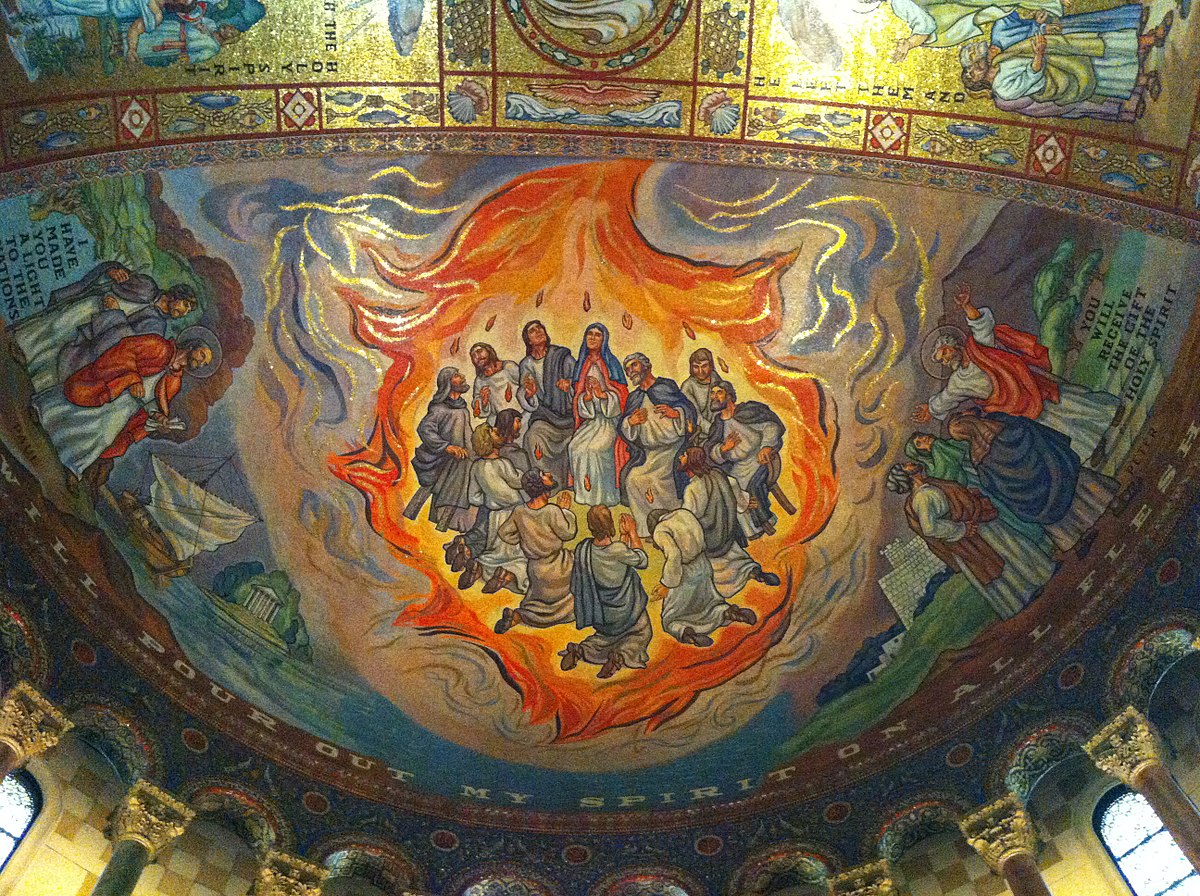
On Pentecost, Jews from all over the Roman Empire gathered in Jerusalem. Many were in the upper room with the apostles, when the Holy Spirit visibly empowered the apostles with tongues of fire, a violent wind, and the reversal of the tower of Babel as people of many different language groups were able to hear the apostles speak in their native tongues. These signs caused much excitement and wonder as the people responded to the work of God. As was true during the time of Jesus’ ministry, there were some who were ready to hear the gospel and others who were not. Those who were ready to hear the apostles’ message were able to understand the apostles’ message while those who were not ready did not understand the signs and resorted to mocking the apostles as if they were drunkards. This was no different than the time of Jesus’ ministry, the signs of the kingdom caused some to respond with increased faith while others responded with unbelief and hardened hearts.

As Jesus had promised, the Holy Spirit gave the apostles the words to explain what was happening. Peter quoted from the book of Joel about how the Spirit would be poured out causing all kinds of people to prophecy: sons and daughters, old men, and young men. Then Peter also quoted from David’s Psalms as he wove together the story of how all these things fit into the story of Jesus’ life, death, and resurrection. Those who were ready to hear the gospel asked what their response should be. Peter told them to repent, be baptized and then they too could receive the gift of the Holy Spirit. Since many of these people were from the Jewish diaspora, they, now filled with the Holy Spirit, would have been able to return to their homes to continue to spread the gospel, although it seems that some people from the diaspora stayed in Jerusalem.

We have sparse details of the life of the church, but there are a few things we know which are described quite succinctly in Acts 2:42-47:

And they devoted themselves to the apostles’ teaching and the fellowship, to the breaking of bread and the prayers. And awe came upon every soul, and many wonders and signs were being done through the apostles. And all who believed were together and had all things in common. And they were selling their possessions and belongings and distributing the proceeds to all, as any had need. And day by day, attending the temple together and breaking bread in their homes, they received their food with glad and generous hearts, praising God and having favor with all the people. And the Lord added to their number day by day those who were being saved.

With the rapid increase in disciples came some logistical problems as well. The miracles of the Spirit did not end the day-to-day problems of communicating between different cultural groups within the church. In the normal practice of sharing goods within the church and within that the need to take care of widows and orphans, there came a point where the Greek-speaking widows from outside Israel were not getting the same care as the Hebrew speaking widows. Because the apostles wanted to focus on teaching and prayer, they gathered the church to address the issue. The church resolved the issue by selecting seven men to oversee the distribution of goods. However, this would not be the last time that language and culture barriers would affect life of the church.

Observe

Read Exodus 18:13-26; Acts 6:1-7. What do these passages say about effective leadership?

No detailed strategic plan, but promises and presence

Dancing in the Kingdom- Table of Contents

Dancing In the Kingdom – Part 2 – The Kingdom Revealed – Chapter 12 – Launching the church

No detailed strategic plan, but promises and presence

[Bible references: Genesis 12:1-4; Matthew 13:15; 26:56; 26:69-74; 28:16-20; Mark 16:1-3; John 20:19; 12:31-36; Acts 1:4-9]

When Jesus had ascended to heaven, he had left a group of bewildered disciples who had no idea about the kind of enterprise they were going to launch. They were all missing pieces of the puzzle. Although Jesus had been explicit about his suffering and dying and resurrecting, the disciples did not fully grasp what had happened until they witnessed his appearance after the resurrection. A few days before his crucifixion, when he told about the death he would die, i.e., “when I am lifted up” which people knew meant crucifixion, the people protested saying they knew that the Law said the Christ remains forever, so how could that be?

Even the chosen apostles were unprepared. Upon Jesus being arrested, they fled and hid and, in the case of Peter, even denied knowing Jesus. They fearfully gathered behind locked doors, not knowing their next steps. Even those women who were close to Jesus thought they needed to anoint his deceased body. The words of the prophet Isaiah, “He has blinded their eyes and hardened their heart, lest they see with their eyes and understand with their heart,” seemed to apply just as fully to Jesus’ closest disciples.

What the evidence displays is that the program and order of Christian communities originate in direct continuity with the synagogue communities of Israel … These communities had assemblies, elders, presiding elders, deacons and a full program of worship, common policy-making, social welfare and interurban alliances. They lacked the authorization to govern themselves on behalf of the empire. But in other respects they developed patterns of community organization that were traditional to their Jewish origins and members.[1]

Even after his resurrection, when Jesus appeared again, he apparently did not give any instructions about how to organize the church, particularly for the next 2000+ years. The evidence we do have shows that early church organizational structure was based on the organizational structure of the synagogue. In fact, the first explicitly Christian assemblies were split offs from the Jewish assemblies. What they did have, and what they and their successors did build on, was the liturgical and governmental structure of the synagogue.

Jesus instigated no characteristic new organization or anarchy among those who shared faith in him. They proceeded from where they found themselves. And they found themselves in the synagogue. The synagogue became the church, not by dint of a new social format, but in virtue of new convictions within its members. It developed and adapted and consolidated and searched for its own authenticity. We claim here only that to study the energetic development we must know that it proceeded form the organization of the synagogue. [2]

In fact, there seemed to be some hints that the final consummation of the kingdom would occur in their earthly lifetimes. The main preparation of his disciples seems to have been spending time with Jesus, listening to Jesus’ descriptions of the kingdom of God and seeing (and sometimes participating with) Jesus in the inbreaking of the Kingdom through teaching, healing, compassion, and casting out demons.

After the resurrection Jesus spent times with various groups of his disciples during the next forty days. Then just before he was to “ascend to heaven,” he gave his apostles one last charge. “But you will receive power when the Holy Spirit has come upon you, and you will be my witnesses in Jerusalem and in all Judea and Samaria and to the end of the earth. Make disciples of all nations, baptizing them in the name of the Father, Son, and Holy Spirit, teaching them to observe all that I have commanded you. And behold, I am with you always, to the end of the age.”

Before he was to visibly leave the earth, he had given the promise to be with them … always. The living God was not going to be present in a physical body nor would the living God leave any instructions in a written document, instead the living God would be present by means of the Holy Spirit.


[1] Burtchaell, James Tunstead. “From Synagogue to Church: Public Services and Offices in the Earliest Christian Communities” Cambridge University Press 1992 (pp. 334-336)

[2] Burtchaell, James Tunstead. “From Synagogue to Church: Public Services and Offices in the Earliest Christian Communities” Cambridge University Press 1992 (pp.349-352)

The darkness

Dancing in the Kingdom- Table of Contents

Dancing In the Kingdom – Part 2 – The Kingdom Revealed – Chapter 11 – The Kingdom Enters

The Darkness

[Bible references: Matthew 17:11; 27:45-46; Luke 23:43; John 16; 19:25-27; 23:44-46; Romans 1-3]

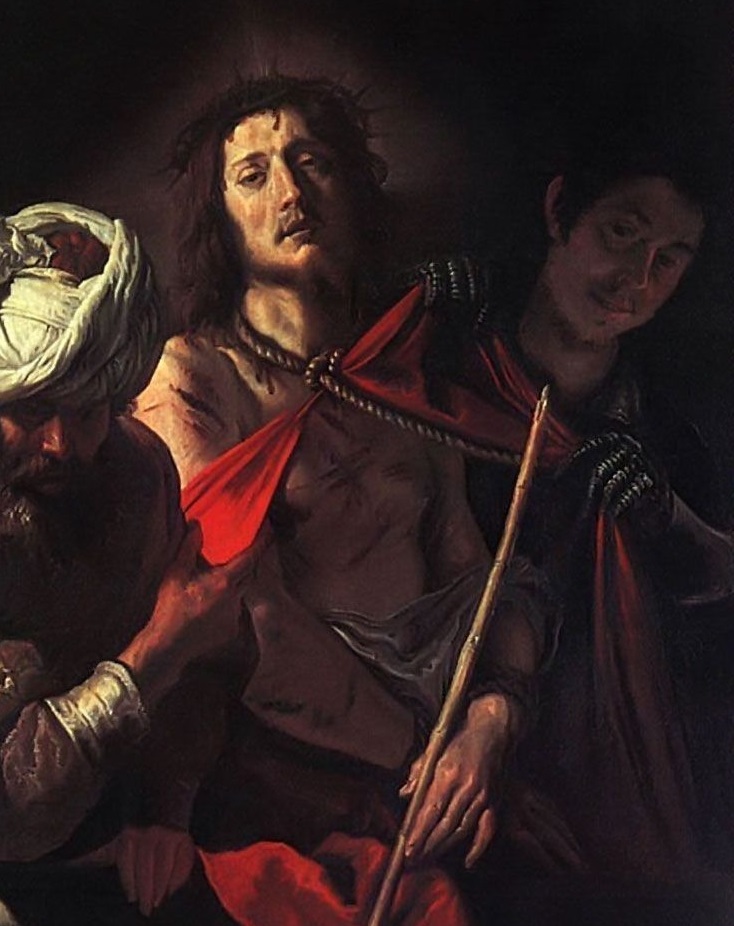
Jesus’ trials were performed in the dark of night, physically and spiritually. He was condemned by the Jewish rulers who were spiritually blind and then allowed to be crucified by the equally blind Roman rulers and even deserted by the disciples he spent three years training. He was condemned by a world who did not deserve him; the whole world was guilty of turning away from him. The world he loved, and for which he would suffer and die, was not deserving of his mercy and grace. The world itself and all the creatures who bore the image of God were corrupted by sin and truly separated from the one who never stopped loving them all. The Creator literally put his life on the line to break the hold of sin in the world so that the world and image-bearing creatures could be restored to what he had intended from the beginning.

The darkness that hung over the world at that moment was a darkness that Jesus had come to defeat. The darkness would only last for a while more. So, with that in mind, even as he was hanging on the cross, Jesus was fixed on the future. He assigned one of his disciples to take care of his mother, Mary. When one of the criminals who were crucified with him, recognized Jesus as God and confessed his guilt, Jesus assured that man, “Today you shall be with me in paradise.” Jesus had chosen to be born the same way as his image-bearing creatures so that he might come to this moment of suffering and dying on our behalf; for this was the way to defeat the hold of sin and death, not only over our lives but over all of creation as well.

Observe

Read John 16. As John is writing about these events, he is careful to detail how the events correspond to the prophecies in Scripture. What is important about making that kind of connection?

The Kingdom expands

Dancing in the Kingdom- Table of Contents

Dancing In the Kingdom – Part 2 – The Kingdom Revealed – Chapter 11 – The Kingdom Enters

The Kingdom expands

[Bible references: Matthew 8:5-13; 15:21-28]

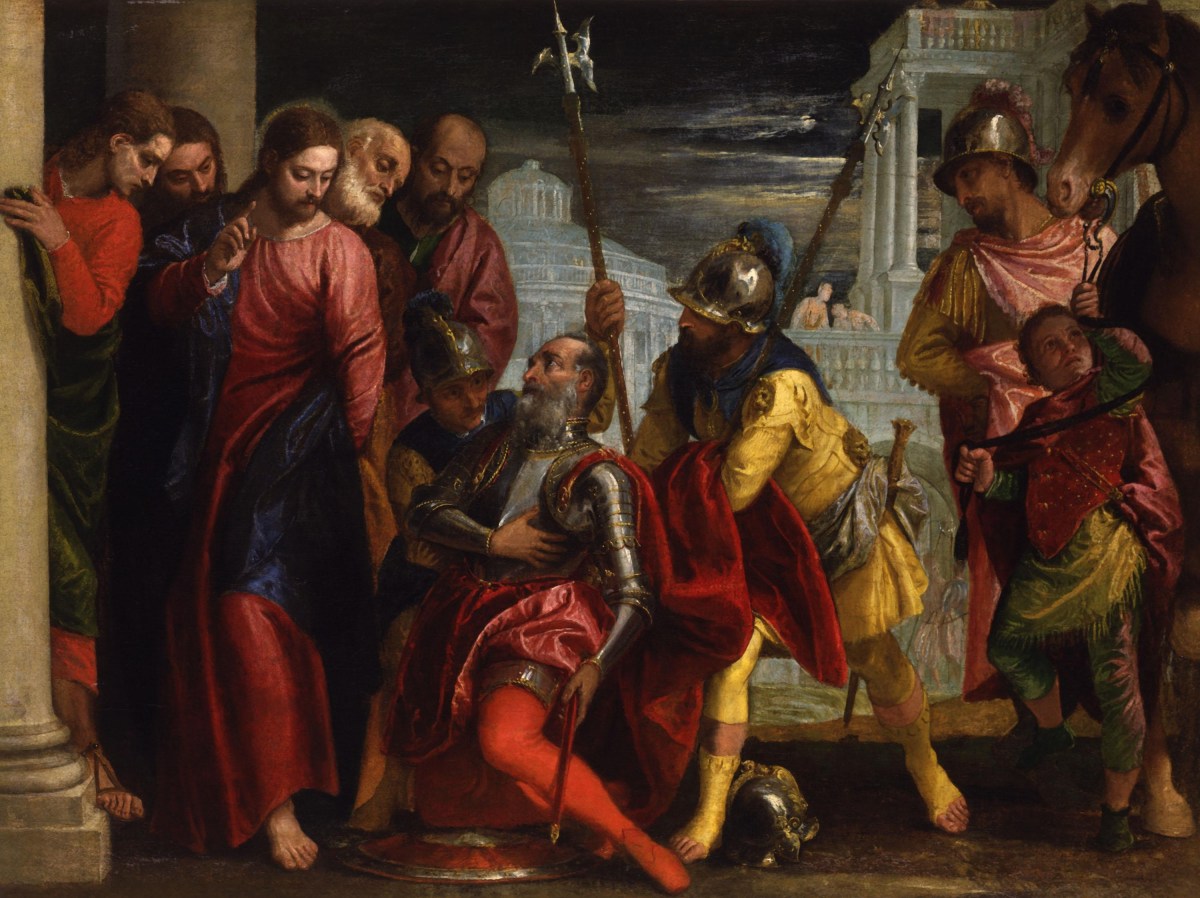
Jesus did not travel far. He spent most of the time in the area around Jerusalem and around Galilee. His focus was on teaching and serving the Jews. However, there were a few occasions when Jesus did interact with the Gentiles, and those occasions showed that the Gentiles were capable of great faith. There was a case of a centurion who recognized the authority that Jesus had. The centurion did not ask Jesus to come to his household to heal his child, but rather asked Jesus to heal his daughter from wherever Jesus was. In another case, Jesus had gone to Tyre, and there a Syrophoenician woman who, knowing Jesus ministered mainly to the Jews, still asked for Jesus to cure her daughter with the humble attitude that “even dogs eat the children’s crumbs.”

Observe

Read Matthew 8:5-13; 15:21-28. How do these vignettes challenge our faith?

Kingdom questions and parables

Dancing in the Kingdom- Table of Contents

Dancing In the Kingdom – Part 2 – The Kingdom Revealed – Chapter 11 – The Kingdom Enters

Kingdom questions and parables

[Bible references: Matthew 13:11-17; 21:18-46; Romans 1:18-21]

One time, some people challenged Jesus about the source of his authority. Jesus challenged them back with a question about where they thought the baptism of John was from, “Was it from heaven or earth?” That was only one of many times when Jesus would answer questions with questions.[1] Jesus’ questions were not to gather information for himself but for other reasons: sometimes to force the questioners to deal with their own hearts and motivations.[2] Jesus even sometimes asked if people really wanted to be healed; we know that sometimes people don’t like to change or to take up new responsibilities.

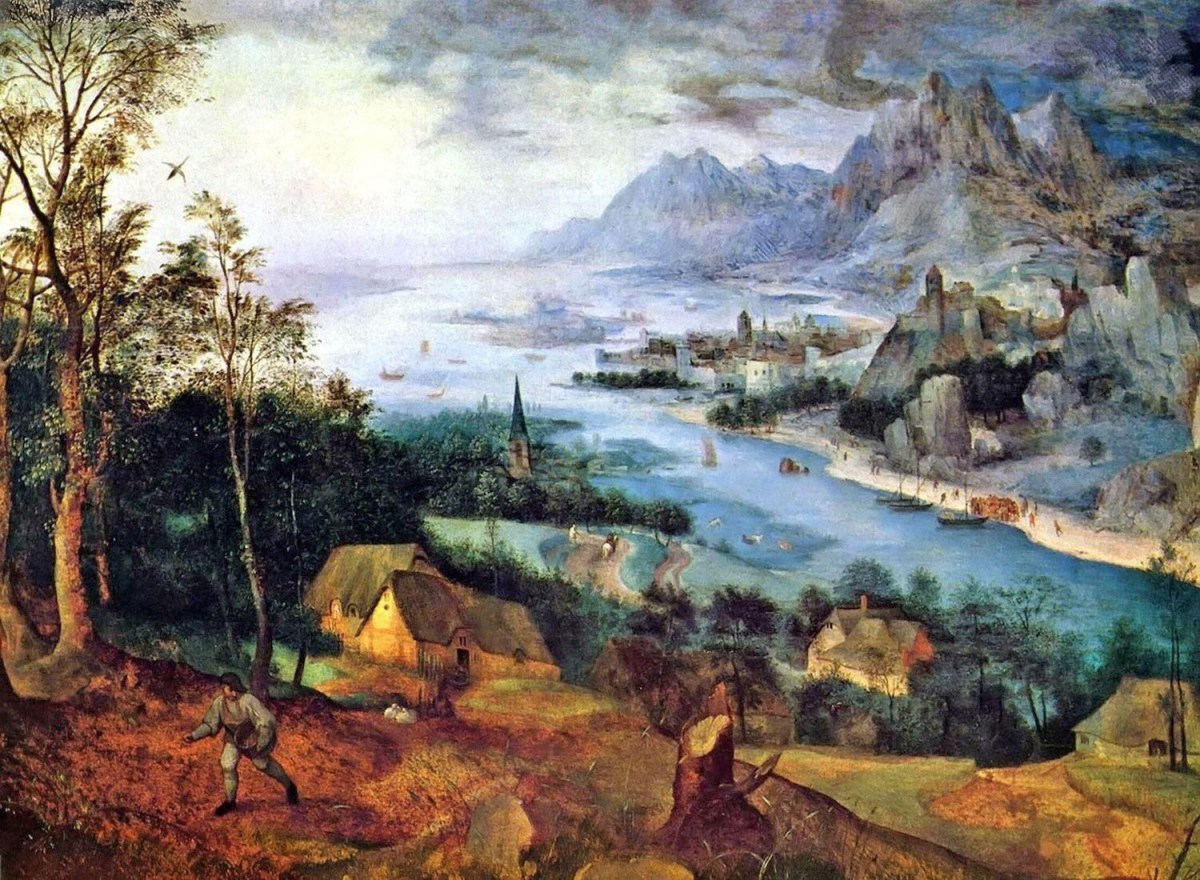
Jesus taught the crowds about the values of the kingdom and the attitude of those in the kingdom by using parables. Many things about the kingdom were quite different from conventional values – they sometimes seemed to be upside-down.[3] Parables used everyday metaphors and examples that could be understood by those whose hearts are open.[4] However, those whose hearts are not open cannot understand the parables. This is like the testimony of those who look at creation: those whose hearts are open can look at creation and see the handiwork of God, but others, whose hearts are not open will not see the handiwork of God – yet no one will have excuse.


[1] Pope, Charles. “100 Questions Jesus Asked and You Should Answer” Community In Mission, Archdiocese of Washington 18 April 2021 blog.adw.org/2021/04/100-questions-jesus-asked-and-you-should-answer.

[2] Arch, David “Ask Questions Like the Master Teacher” Christianity Today www.christianitytoday.com/biblestudies/articles/churchhomeleadership/040602.htm

[3] Thompson, Mark. “Upside Down Kingdom Parables: The Lavish Love of God” Remedy Church 29 Oct 2017 remedylodi.com/upside-down-kingdom-parables-the-lavish-love-of-god

[4] Blue Letter Bible “Our Lord’s Parables” Blue Letter Bible www.dailywordofgodgroup.com/why-jesus-taught-in-parables.htm; Edersheim, Alfred. “Why did Jesus teach in Parables?” Christianity.com www.christianity.com/jesus/life-of-jesus/parables/why-did-jesus-teach-in-parables.html

Observe

Read Matthew 21:23=27. Jesus’ questions are often used to pierce to our hearts. How do you answer Jesus’ question in this passage?

The kingdom arrives

Dancing in the Kingdom- Table of Contents

Dancing In the Kingdom – Part 2 – The Kingdom Revealed – Chapter 11 – The Kingdom Enters

The Kingdom Arrives

[Bible references: Isaiah 61:1-2; Matthew 8:16, 28-34; 9:6; 10:1; 28:18; Luke 4:14, 18-19, 32; 5:21; 6:6-7; 7:1-10, 29-30; 9:1-6; John 5:14; 10:11-18; 14:9; Acts 10:38; 1 Corinthians 15:24]

When Jesus broke into history, we no longer saw the kingdom of God overlapping the earth in a place as in the Garden of Eden or a place in the Holy of Holies. This time the kingdom of God had entered by a person, Jesus, who was anointed with the power of the Spirit. His next goal then was to invade the earth with his kingdom by that same Spirit entering our lives, by the overlapping of Heaven and Earth within each of us as Heaven and Earth overlapped within Jesus.

“God’s kingdom” in the preaching of Jesus refers not to postmortem destiny, not to our escape from this world into another one, but to God’s sovereign rule coming “on earth as it is in heaven.” [1]

When Jesus began his ministry, he quoted from the book of Isaiah to declare how he had come to fulfill that prophecy. Then there were many times throughout his ministry when he declared the reason he had come.

Left to our own resources, we cannot, on our own, correct our relationship to Yahweh; we cannot find our way back to a good relationship with him. We are lost to sin and unable to find our way back to Yahweh, the good shepherd.

Even though His power was evident in the teachings alone, His power was testified to by healing all sorts of diseases[2] including physical or spiritual blindness, casting out spirits (all these things that not only Jesus did but his disciples as well), proclaiming freedom for those in prisons, and setting the oppressed free. But even above providing hope and healing, Jesus offered forgiveness for sin and admonitions to turn away from sin. Jesus came to make us whole in body, mind, and spirit, to experience shalom. Sadly, even though some Gentiles recognized Jesus’ power and authority, some of the chief priests and elders did not want to recognize it themselves, remaining trapped and oppressed in their sin.


[1] Wright, N.T. Surprised by Hope: Rethinking Heaven, the Resurrection, and the Mission of the Church Harper Collins 2008. Kindle Edition (p 19.).

[2] Walk with the WiseEvery instance of Jesus Healing in the Bible: What they all had in common” Walk with the Wise walkwiththewise.org/every-instance-of-jesus-healing-in-the-bible-what-they-had-in-common

Reflect

How do we participate with Jesus in bringing His Kingdom to the earth?

Observe

Read Matthew 10:1; 28:18-20; Luke 9:1-6. How do we participate with Jesus in bringing His Kingdom to the earth?