Testing and waiting

Dancing in the Kingdom- Table of Contents

Dancing In the Kingdom – Part 1 – Shadows of the Kingdom – Chapter 8– Kings and kingdoms

Testing and Waiting

[Bible references: 1 Samuel 13:14; 26:11; 1 Samuel 24:1-7; 26:1-12; Acts 13:22]

Meanwhile, God had selected David, someone who was described as “a man after God’s own heart,” to be the next king. However, David’s reign did not begin until many years later. This meant there was going to be a long and difficult in-between time of testing:

  • Saul’s heart continued to be tested as he was rejected by God, but it would be a long time before the end of his reign. In the meanwhile, he had his duties to perform.
  • David had been anointed to be the next king, but it would be many years before it happened. In the meanwhile, there would be much conflict in which David had to trust God and do what he thought he needed to do. David didn’t test God by unnecessarily putting himself in harm’s way, rather he looked to God for wisdom and acted accordingly. When David had opportunities to kill King Saul, he refused to do so and instead waited for God to act.

This is an area where we typically fail: Adam and Eve could not wait for God to give them knowledge so they grabbed for it; Abraham and Sarah could not wait for God to give them a son through Sarah and so they used Hagar; Jacob could not wait for his inheritance so he and Rebekah had to trick Isaac; Moses could not wait for God to provide water by just speaking to the rock and so he had to strike it. In contrast, to be obedient, David was willing to wait for God to replace Saul and did not take advantage of the opportunities he had to kill him.

Reflect

How can we gain a sense of when we should act vs. when we should wait for God?

Observe

Read 1 Samuel 26:11; Acts 13:22. What did God say that David was “a man after my own heart?”

Fullness of time

Dancing in the Kingdom- Table of Contents

Dancing In the Kingdom – Part 1 – Shadows of the Kingdom – Chapter 6– A nation emerges

Fullness of time

[Bible references: Genesis 15:16; Exodus 2-4; 7-11; Galatians 4:1-7; Ephesians 1:1-14]

The emerging story of the chosen people of God becoming a nation started slowly: Abraham and one child of the promise, Isaac, who had two children, only one through which the promise would come, Jacob, who then had had thirteen children. But it would take time for that family to grow into a size that could be called a nation – and that took a couple hundred more years – in which time the “sin of the Amorites would reach their full measure.”

Although the Bible does not specifically mention it, there may have been other things that God was waiting to happen such as the development of the Israelite community and the consequent interaction of the Israelite community with the Egyptian community during the Israelite captivity. God allowed events to gradually unfold until “the fullness of time” came for God to orchestrate a dramatic release of the Israelite community. This event would serve as a foreshadowing of another event, the spiritual release of all peoples from slavery to sin.

So it was, that in the fullness of time, when the sin of the Amorites reached its full measure,[1] Yahweh called Moses to release the enslaved Israelites from Egypt to bring Israel back to the Promised Land.


[1] White, James Emery. “Is God a Moral Monster? The Slaughter of the Canaanites” Church&Culture 22 Oct 2020 www.churchandculture.org/blog/2020/10/22/is-god-a-moral-monster

Reflect

Often, when we are younger, we think we know everything. But most of the time, we discover over time that we need maturing – to grow in wisdom – a process that takes time and experience. What things have you learned through time and experience?

Observe

Read Genesis 15:16; Galatians 4:1-7. What do these verses tell us about God’s sense of timing?

Nation of wrestlers

Dancing in the Kingdom- Table of Contents

Dancing In the Kingdom – Part 1 – Shadows of the Kingdom – Chapter 5– Patriarchs

Nation of wrestlers

[Bible references: Genesis 31:25-45; 28:3-4; 27:42-45; 28:10-22; 32:22-32; 35:22-26; 30:21; 32:1-5]

After the deception of Isaac, Jacob’s would continue his pattern of deception. Yet, despite that character flaw, God would continue to bless Jacob with success just as he had blessed Abraham and Isaac. Jacob’s deceit with Isaac and Esau forced him to leave home and visit his uncle Laban, in Haran for many years. On the journey to Laban, Yahweh shared with Jacob the promise he made with Abraham and with Isaac, that “all the people on earth would be blessed through you.”

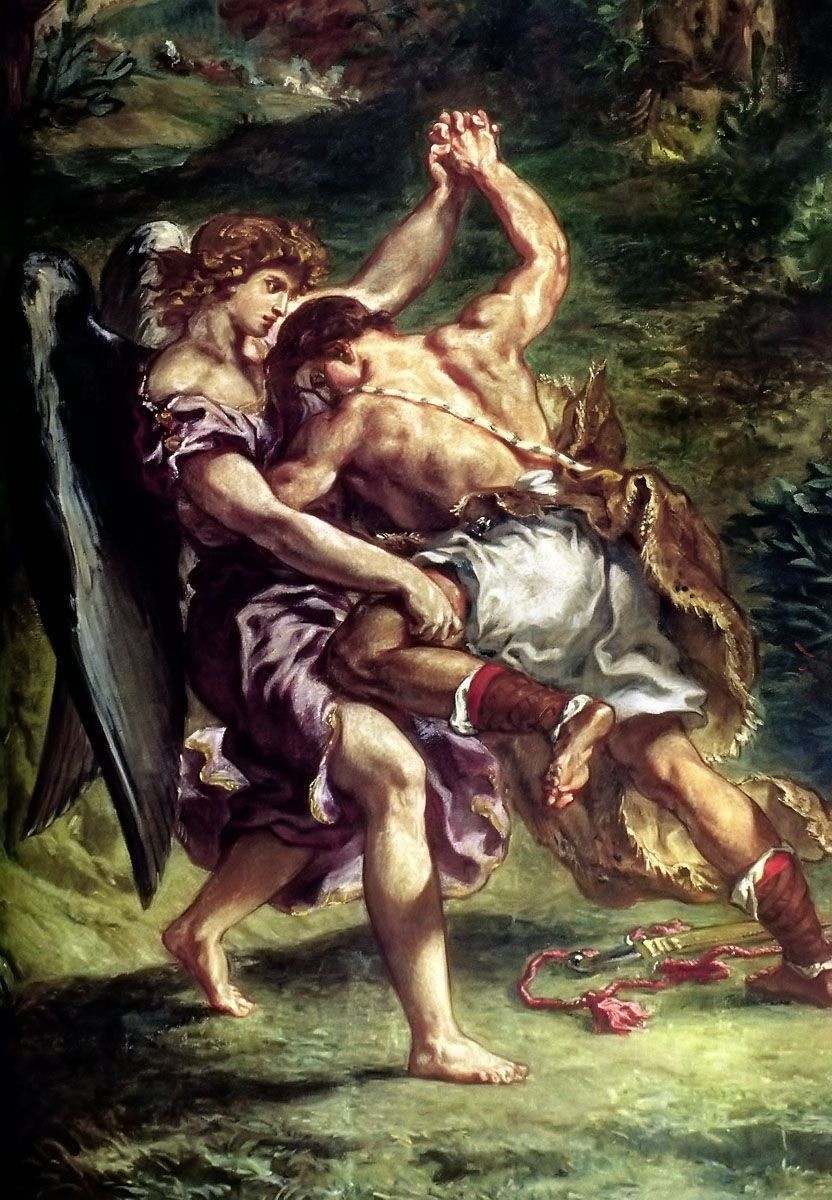
While staying with Laban, Jacob would continue his deceit to take advantage of Laban, although Laban would try return the favor. Jacob left Laban to return to the Promised Land, Jacob found himself in a wrestling match with a man that Jacob learns was God.[1] During that struggle, Jacob was forced to confess his character by admitting that his name means “deceiver,” after which the “deceiver” was given a new name, Israel (which means “wrestles with God”). Wrestling with God became a hallmark of Israel’s descendants.[2]


[1] Sproul, RC “A Wrestling People” Ligonier Ministries ligonier.org/learn/devotionals/wrestling-people

[2] Although there are many examples of people questioning God, the Psalms contain many examples.

Reflect

God is able to fulfill his purposes as we wrestle with him. Do you feel compelled to wrestle with God about anything?

Observe

Read Genesis 32:22-28. A rabbi once said that “In Judaism, not having questions is not a sign of faith but of lack of depth.” How does wrestling with God strengthen instead of weaken our faith?

Deceit instead of faith

Dancing in the Kingdom- Table of Contents

Dancing In the Kingdom – Part 1 – Shadows of the Kingdom – Chapter 5– Patriarchs

Deceit instead of faith

[Bible references: Genesis 25:29-34; 25:23; 27:1-40]

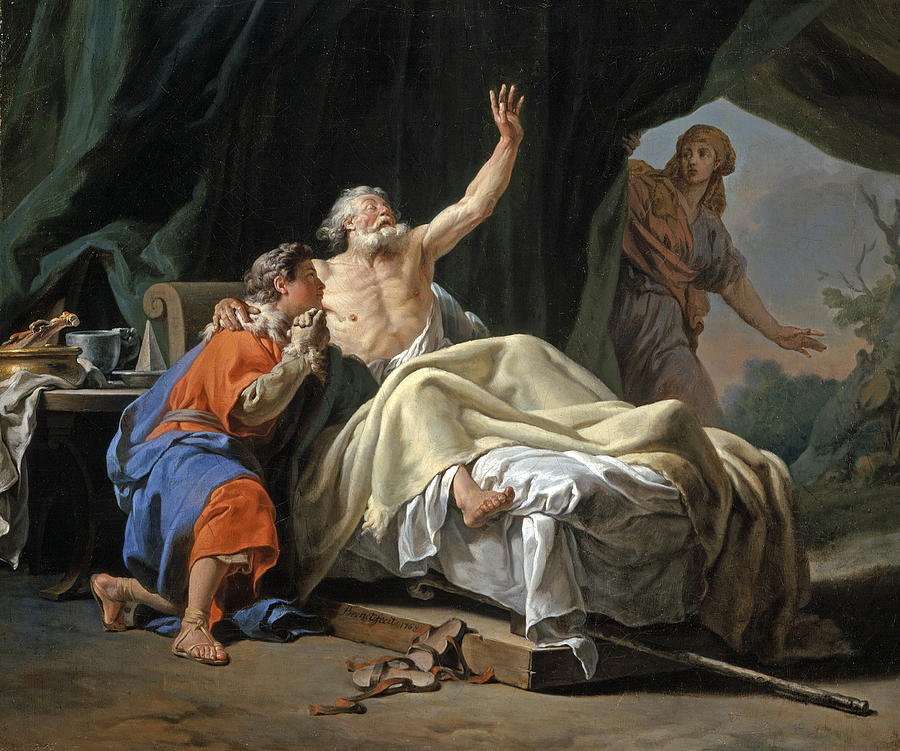
The biblical descriptions of Jacob and his twin brother Esau are not flattering. Esau is the older twin brother, but for a pot of porridge Esau was willing to give up his birthright. Later on, Jacob conspired with his mother, Rebekah, to deceive Isaac so that Jacob would receive the primary blessing from Isaac, instead of Esau.  Later on, Jacob would act deceitfully with his uncle, Laban. Then, like his father, Jacob would play favorites with his wives and his children.

Observe

Read Genesis 25:21-34; 27:1-40. The family dynamics in Isaac’s family were typically messy and complicated as many real families are and yet God will carry out his purposes. How can we use the example of Isaac and his family to give us confidence that God is able to carry out his purpose for us?

Ordinary believers

Dancing in the Kingdom- Table of Contents

Dancing In the Kingdom – Part 1 – Shadows of the Kingdom – Chapter 5– Patriarchs

Ordinary believers

[Bible references: Genesis 17:17; 21:5; 21:1-7; 24; 25; 26:1-11; 27:1-29]

Meanwhile, the Biblical record for life of Isaac is unremarkable. God had blessed Isaac with wealth, however, the most notable events in his life were 1) failing just as his father Abraham had failed, Isaac also fearing that a local king kill him to get his wife, so Isaac, like Abraham, claimed that his wife was his sister and 2) when Isaac was preparing to die, he got fooled by Jacob into giving Jacob the primary blessing instead of his older twin brother, Esau. This incident just highlighted the favoritism Isaac showed to Esau and the favoritism his wife Rebekah showed to Jacob. Blessed, fallible, unremarkable, yet still used by Yahweh to accomplish Yahweh’s will.

Reflect

What is our prayer when we know that our time in this life is limited and most of us will not accomplish anything spectacular, and yet, God may use our life to achieve a greater impact than we realize?

Observe

Read Genesis 25:21-23; 27:1-29. What seems ordinary about how Rebekah interacted with Isaac in the way that would fulfill Yahweh’s prophecy?

Slow and steady

Dancing in the Kingdom- Table of Contents

Dancing In the Kingdom – Part 1 – Shadows of the Kingdom – Chapter 5– Patriarchs

Slow and steady

[Bible references: Genesis 17:5; 21:4-5; 26:34; Psalm 6; 2 Peter 3:8]

Yahweh said that Abraham would be the “father of many nations, ” but there was only one child born to Abraham and Sarah – and that child, Isaac, was born to him and very late in his life. Isaac would have only twins. And Isaac’s only children, Esau and Jacob were born late in Isaac’s life, so the “father of many nations” would die only seeing two grandchildren.

Reflect

God answers prayers on his timeline, not ours. He will fulfill his purpose for us – also on his timeline. Does that make you frustrated or assured?

Observe

Read Psalm 6. Sometimes we suffer long. What keeps us going in such times?

Faith and obedience

Dancing in the Kingdom- Table of Contents

Dancing In the Kingdom – Part 1 – Shadows of the Kingdom – Chapter 5– Patriarchs

Faith and obedience

[Bible references: Genesis 22:1-19; 1 Corinthians 10:13 ]

In one of the most controversial events, God called Abraham to take Isaac and go to a mountain, build an altar, and then offer Isaac as a sacrificial offering. Abraham must have severely tested, but Abraham did as he was told and went through the whole process to the point where he was about slay Isaac when God provided a substitute, a ram. Isaac would indeed be the next link in the genealogical chain connecting Abraham ultimately to the birth of the Messiah 2000 years later.

Observe

Read Genesis 22:1-19; 1 Corinthians 10:13. Theologians have wrestled with this passage in Genesis as we cannot fathom how God could command a human sacrifice, even if He knew how He would intervene before it would happen. How confident are you that God will provide for you in the midst of difficult decisions?

Walk of faith

Dancing in the Kingdom- Table of Contents

Dancing In the Kingdom – Part 1 – Shadows of the Kingdom – Chapter 5– Patriarchs

Walk of faith

[Bible references: Genesis 12:1-20; 15:1-6; 16:1-5; 17:1-14; 20:1-13; 22:1-18; 24:7; 28:16; 50:24; Romans 4:9; Hebrews 11:17]

Sometime after the scattering of nations, from the line of Shem and Noah, Yahweh called a man named Abram to leave his country in the Euphrates River Valley and go to a land “I will show you.” As Abram left his home country, at the age of seventy-five, God promised not only to bless Abram and his descendants but to bless the entire world though Abram. Despite his occasional failures, Abram (later named Abraham) is noted for his faith because he believed God and showed this by being obedient in following God’s instructions even when they didn’t make sense.

When Yahweh called Abram to journey to another land, we don’t know what particular experience Abram and brother and father had with Yahweh, but Genesis 24 and 31 indicates that they all knew of knew of Yahweh, even if they thought of Yahweh as one of many gods.[1] Even so, Abram must have had great faith when he took that journey to the Promised Land?[2] Then after Abram arrived in the Promised Land, what further questions may Abram have had when he experienced a deep drought in that same land, such that he needed to take a brief trip to Egypt?

After Yahweh told Abram, that he would make a great nation from him, Abram initially expressed his faith by his obedience when he took that journey to the Promised land. Again, when Yahweh showed him the stars and told him that his descendants would be as numerous as those stars, Abram believed, and Yahweh credited that to him as righteousness. Then Yahweh reiterated the promise again when Abram was 99 years old and changed Abram’s name (which meant exalted father) to Abraham (father of many nations).

God told Abraham that a great nation would come out of him and Sarah. Yet, this did not look promising when the only son born to Abraham and Sarah was Isaac who was not even born until Abraham was one hundred years old and Sarah was ninety. No wonder that Isaac was given a name that means “laughter.”


[1] Garris, Zachary. “Did Abraham Worship Yahweh Before His Call in Genesis 12?” Knowing Scripture knowingscripture.com/articles/did-abraham-worship-yahweh-before-his-call-in-genesis-12

[2] Although the term “Promised Land” is not used directly as the place of where Abram and his descendants were called to settle down in, there are several references to the “land that is promised you.”

Observe

Read Genesis 12:1-20. This renowned Patriarch of faith, Abram, believed Yahweh, and left his homeland to some destination that Yahweh would show to him. When Abram arrived at the place Yahweh led him to, he built an altar and set up his tent. Good start at a life of faith. Sometime afterwards, Abraham winds up in Egypt where he is now afraid for his life and asks his beautiful wife Sarah to say that she’s his sister instead of his wife, so that they people won’t kill him to get her. This does lead to complications we won’t discuss here but just to point out that we, never mind Abram, are subject to a wavering faith. Do you have incidents in your life where your faith wavered?

The genealogies

Dancing in the Kingdom- Table of Contents

Dancing In the Kingdom – Part 1 – Shadows of the Kingdom – Chapter 1 – Prelude

The genealogies

[Bible references: Matthew 1; Luke 3]                              

There are not many passages in the New Testament that the average person tends to gloss over, but there are two places where that happens the most. Two of the Gospels have genealogies that look very different from one another, telling the story of Jesus from different perspectives. Neither genealogy is comprehensive, they are there to establish who Jesus is through particular relationships and to give different messages. It is typical for the average reader to skip over the genealogies when they read the Bible, but sometimes the stories attached to each name make a significant point, and sometimes the names themselves give a particular message. The genealogies are designed to give particular stories.

Matthew[1]

Matthew’s genealogy tells a three-part story that begins with Abraham, uses both Jews and Gentiles, includes women, and ends with Christ.

The list

  • Waiting for the Kingdom – Abraham, Isaac, Jacob, Judah and Tamar, Perez, Hezron, Ram, Amminadab, Nahshon, Salmon and Rahab, Boaz and Ruth, Obed, Jesse, David and Bathsheba
  • The Kingdom – Solomon, Rehoboam, Abijah, Asa, Jehoshaphat, Jehoram, Uzziah, Jotham, Ahaz, Hezekiah, Manasseh, Amon, Josiah, Jeconiah
  • Waiting for the re-established kingdom – Jeconiah, Shealtiel, Zerubbabel, Abiud, Eliakim, Azor, Zadok, Achim, Eliud, Eleazar, Matthan, Jacob, Joseph, Jesus

Items of note:

  • Matthew’s genealogy, starting from Abraham, traces a line to Judah to establish royal bloodline. Matthew shows Christ as the Messiah, by tracing the legal line from Judah and then to Joseph. This genealogy established Jesus’ legal rights to the throne through Judah.
  • The genealogy includes women with interesting stories:
    • Tamar was raped by Judah.
    • Salmon had children by Rahab a Gentile who was a prostitute in Jericho.
    • Boaz’s wife was Ruth who was a Gentile.
    • David had an affair with Bathsheba, who was married to Uriah.
  • Includes all the kings of Judah. Jeconiah appears twice (was last king before exile, then was part of exile) Zerubbabel (governor of Jerusalem after the return).
Luke[2]

Luke’s genealogy tells a story that starts with Adam, the son of God and ends with Jesus, the Son of God. Luke establishes Jesus as the Son of Man and goes back through Mary’s line to Noah and then to Adam. Ancient Greek genealogies traced the father’s lineage not the mother’s—but what do you do with the unique virgin-born Jesus? Certainly, Joseph was not his father, so the only logical male name available was that of Jesus’ maternal grandfather, Heli, for he was the last man involved in the genealogical process which led to Jesus. So Heli was the father of Mary, who was the mother of Jesus.

The list

  • God, Adam, Seth, Enosh, Kenan, Mahalalel, Jared, Enoch, Methuselah, Lamech, Noah, Shem, Arphaxad, Cainan, Shela, Eber, Peleg, Reu, Serug, Nahor, Terah
  • Abraham, Isaac, Jacob, Judah, Perez, Hezron, Aminadab, Nahshon, Salmon, Boaz, Obed, Jesse, David
  • Nathan, Mattatha, Menna, Melea, Eliakim, Jonam, Joseph , Judah, Simeon, Levi, Matthat, Jorim, Eliezer, Joshua, Er, Elmadam, Cosam, Addi, Melchi, Neri, Shealtiel
  • Zerubbabel, Rhesa, Joannan, Juda, Joseph, Semein, Mattathias, Maath, Naggai, Esli, Nahum, Amos, Mattathias, Joseph,  Jannai, Melchi, Levi, Matthat, Heli, Joseph, Jesus

Items of Note:

[Bible references: Genesis 5:25; 11:12-26; Jeremiah 22:30; Matthew 1; Luke 3]                             

  • Starts from Adam instead of Abraham, traces Mary’s line to establish Son of God, includes 4 generations born in captivity,
  • Methuselah (oldest recorded age), Shem (the Semitic race),
  • If we translate, instead of transliterating the first 10 generations from Adam to Noah we can read: Man (is), Appointed, Mortal, Sorrow (but), The Blessed God, Shall come down, Teaching, His death shall bring, The despairing, Comfort and rest
  • There is an interesting prophecy in Jeremiah, where it appears to refer to termination of David’s legal line to the throne from Jeconiah onwards. Jeremiah 22:30 implies a BLOOD LINE curse on Solomon’s line. This separation of the genealogies from David resolves the prophecy. With Mary being of David’s blood line through Nathan, the Messiah is from the House of David yet avoids the curse, whilst still claiming the legal claim through Solomon’s line, through Joseph his adopted and legal father
  • The values of the letters in David’s name (dalet=4, vav=6, dalet=4) add up to 14. Matthew’s genealogy is set up in groups of 14.
  • Jeconiah was the last operative King and the first waiting King, he ends the second group, and starts the third.
  • The name Zerah: Meaning: Rising, Dawn; Etymology From the verb זרח (zarah), to rise or break out.
  • The name Perez: Meaning: A Breach: Etymology: From the verb פרץ (paras), to break through.
Mark

[Bible references: Mark 9:35]                                        

Mark is portraying Christ as a servant and so does not use a genealogy.

John

[Bible references: John 1:1-2]                                         

John shows Jesus directly to be the Son of God.


[1] In Hebrew, the Hebrew word translated as genealogies, ‘toledoth’ always denotes father/son relationships, always works forward.

[2] In Hebrew, the word ‘yaghash,’ is used to establish legal rights or obligations; in contrast, it always works backwards tracing an individual’s legal right or duty back to its source.

Observe

Read John 21:15-25.  Which disciple do you identify more with and why, Peter or John.?

Settling into the Promised Land

Dancing in the Kingdom- Table of Contents

Dancing In the Kingdom – Part 1 – Shadows of the Kingdom – Chapter 1 – Prelude

Settling into the Promised Land

[Bible references: Joshua, Judges]                                     

Moses died on the east of the Jordan River. Joshua, one of the 12 spies, led Israel into the Promised Land. After the conquest was complete, the land was divided among the 12 tribes and the tabernacle was moved to Shechem, the place where God promised his descendants would dwell, where Abraham, Sarah, Isaac, Jacob and Joseph were buried.

After Joshua’s death, no one was appointed to be the leader of the people. The people did have the Books of the Law as written by Moses to guide them. God was supposed to be their king. But particularly when things were going well, Israel was inclined to forget about God and not be obedient to the Law. To encourage Israel to return to Him, God would allow some of the neighboring tribes harass them. When things got too bad, the people would complain to God, who would raise up leaders (called judges) to help them overcome their enemies, after which Israel would remember to their old ways. The process would repeat several times.

Observe

Read Judges 2:10-19. What habits did the Israelites find hard to break? What habits are hard for you to break?

The Patriarchs

Dancing in the Kingdom- Table of Contents

Dancing In the Kingdom – Part 1 – Shadows of the Kingdom – Chapter 1 – Prelude

The Patriarchs

[Bible references: Genesis 12-50]                                    

Approximately 2000 B.C., a man named Abram[1] lived in the city of Ur (at that time a coastal city on what is now the Persian Gulf). Abram’s father took his family up the Euphrates River to the city that would be named after Abram’s brother, Haran and settled there. When Abram was 75, God called him to go to another country. When he arrived in Shechem, God told him that this would be the land given to his offspring. Abram did go down to Egypt briefly, but then returned to Shechem. By that point in time, the herds were so large that it was necessary for Abram and his nephew Lot to split up. Abram’s nephew Lot chose to move down to the valley of Sodom and Gomorrah.

When Abram was 90 years old, God told Abram that he would be the father of many nations, renaming him Abraham. But Abram would be 100 years old before his son, Isaac, was born. Abram did have a son, Ishmael, through his wife’s servant, but Ishmael would be sent away, becoming the father of the Arabs.

Isaac didn’t get married until he was 40. He was 60 by the time his only sons, the twins, Esau and Jacob were born.

Jacob had 12 sons and a daughter by 2 wives and 2 concubines. At one point, Jacob wrestled with an angel, who gave him the name, Israel (“struggles with God”).

Jacob’s son, Joseph, was sold as a slave by his brothers to a trader passing through to Egypt, where, through interesting circumstances he became 2nd in charge to the Pharaoh. Years of droughts led to Israel and his other sons moving to Egypt.


[1] To see how Biblical events fit into the history of the Middle East empires see Appendix B, “Timeline for Middle East Empires.”

Observe

Read Genesis 17. Abram was 99 years old and still had no son with his wife Sarah when God renamed him Abraham (“father of many nations.”) and then repeated his promise to Abram 24 years earlier. What does this tell you about patience and faith?