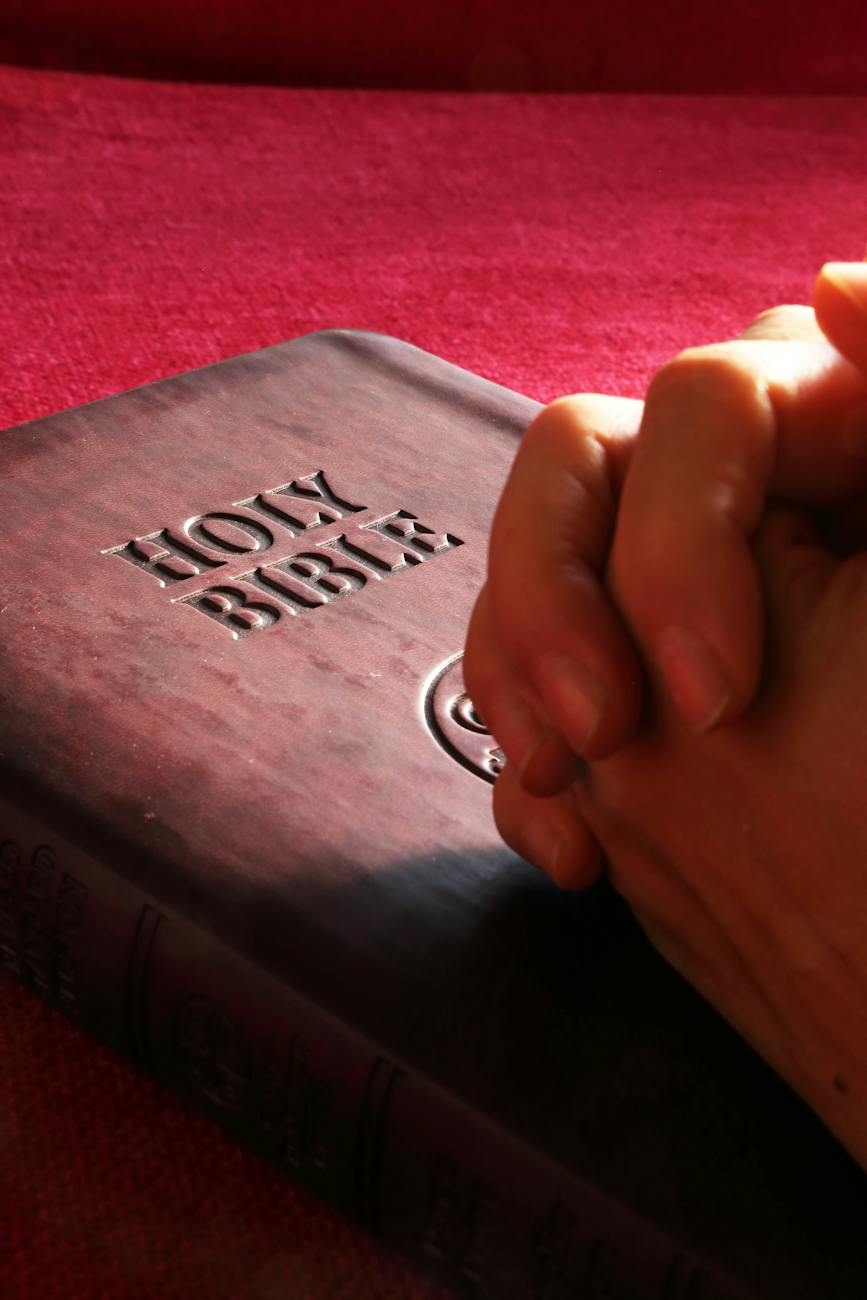
Bible-centric disciplines

Dancing in the Kingdom- Table of Contents

Dancing In the Kingdom – Part 3 – Dancing in the Kingdom– Chapter 15 – Reforming our Souls

Bible-centric disciplines

[Bible references: Genesis 24:63; Joshua 1:8; Psalm 1:1-2; 19:14; 119:11, 127; Isaiah 66:2; Matthew 7:24-27; Luke 10:27; John 14:15, 21; 17:3; Acts 5:29; 17:11; Romans 10:17; 1 Timothy 4:15-16; 2 Timothy 2:15; 3:16-17; Philippians 4:8; Titus 3:1; James 1:22; Revelations 1:3]

“If we are ignorant of God’s Word, we will always be ignorant of God’s will.” [1]

“Delighting in God’s Word leads us to delight in God, and delight in God drives away fear.”[2]

“The Scriptures teach us the best way of living, the noblest way of suffering, and the most comfortable way of dying.” [3]

“We discover the will of God by a sensitive application of Scripture to our own lives.”[4]

The Bible is not God, it is His word to us. The end point of Bible disciplines is not to know the Bible, it is to know the God who gave us the Bible. There are various techniques available to us to let the Word of God to lead us to the one who is The Word.

Discipline of Hearing the Word

The Bible was written before the time of the printing press, therefore before the time when widely printed copies of the Bible were available. So, reading the Word of God was not possible for most people, only the hearing of it. Yet, even today, although we can read, study, memorize and meditate on the Word, the goal is to hear the voice of our Lover, the one who gave us the Word. Our relationship is not with the Bible, our relationship is with the Living God. We long to hear the voice of His Spirit speaking to us.

Whether we are reading, studying, or meditating on the Bible, we can pause to listen. What is God trying to say … to you … at that moment … in your situation. We need to develop skills of listening. We should develop the same skills in listening to God as we do listening to the people around us. We should distinguish between “hearing” and “listening.” In passive “hearing,” we find ourselves wanting to respond, to assert ourselves, trusting in ourselves instead fully listening to the work of God in another’s life before we hear a whole message. Listening to others requires discipline coupled with faith and grace. Listening to God’s voice requires patience, restraining our ready-made answers and waiting for His voice.

Discipline of Reading the Word

The discipline of reading the Bible vs. studying the Bible is that reading is for breadth and studying is for depth. It is through Bible reading that we may do short devotionals during the day or do reading programs that allow us to read the Bible (either the entire Bible or in parts) in a specified length of time. It is reading that allows to become familiar with larger parts of the Bible and to see whole context of different books of the Bible. But even as we are reading for breadth, it is the opportunity for us to listen to His voice speaking to us. Reading is done without an agenda, not looking for a particular thing, but prepared to hear God’s voice as we read.

  • Read for breadth –read long passages in the Bible.
  • Read consistently – Make a habit of continual reading.
  • Read without agenda – come with questions, not answers you want to justify.
  • Read prepared to listen – give time to reflect and listen to God’s voice.

Discipline of Studying the Word

All the examples listed below should give you the idea that there are many approaches to studying the Bible – use whatever approach or combination of approaches is suitable for what you want to accomplish.

  • Bible study by books. Use either the inductive[5] or synthetic[6] methods.
  • Bible Study by chapter. Read the entire book to understand context (kind of book, author, etc.), outline the chapter (look for details: comparisons, contrasts, etc.), Begin the task of interpreting: (Define unusual or significant words, understand geographical settings, read in various translations, use cross-references).
  • Bible study by paragraphs. Determine main thought, Rewrite the text, Make an outline, Use a concordance.
  • Bible study by verses. Identify the verbs, Identify the people, Identify ideas, Verse mapping.
  • Bible Study by words. Trace use of word in chapter or book, Use a concordance, Word study in Hebrew or Greek
  • Bible Study by topics. Use a topical study guide or a concordance to examine how a topic is addressed throughout scripture.
  • Bible Study through biography. Use a biographical study guide or a concordance to study the life of a Biblical character.
  • Bible study through journaling. Create a journal that records your thoughts as you study scripture.
  • Bible study through scripture writing. Scripture Writing is a wonderful way to solidify God’s word into your heart. For some, reading isn’t enough. There’s something about taking that God breathed scripture, writing it down and reinforcing it in your heart in a way that will help you memorize and digest it.

Discipline of Memorizing the word[7]

“Bible memorization is absolutely fundamental to spiritual formation. If I had to choose between all the disciplines of the spiritual life, I would choose Bible memorization, because it is a fundamental way of filling our minds with what it needs. This book of the law shall not depart out of your mouth. That’s where you need it! How does it get in your mouth? Memorization.”[8]

 “I know of no other single practice in the Christian life more rewarding, practically speaking, than memorizing Scripture … No other single exercise pays greater spiritual dividends! Your prayer life will be strengthened. Your witnessing will be sharper and much more effective. Your attitudes and outlook will begin to change. Your mind will become alert and observant. Your confidence and assurance will be enhanced. Your faith will be solidified.”[9]

Memorizing the Word allows us to meditate on it so that it can get more deeply into our hearts. We don’t all memorize equally well, but the goal is to get the Word in our heart whether it’s word for word out of a translation or not. Whether or not we memorize word for word, meditate on it so that it sinks into your heart so that it’s available in the moment of need. Here are some techniques for memorizing verses.

  • You can even turn verse into a prayer.
  • Memorize Verses in a Theme
  • Get a Partner to memorize with you
  • Write the Verses down and carry them with
  • Writing the verse in your own words.
  • Listen to the Verses through an audio Bible
  • Say Verses Out Loud
  • Use Music. Find verses that are set to music or create your own music
  • Break down the verse in shorter chunks and memorize a chunk at a time
  • Use physical motions to go with the verse.

Discipline of Meditating on the word

Christian meditation is the act of filling one’s mind with Scripture and dwelling on God and all that He offers to humanity. In the Bible, the words translated as “meditation” have a variety of definitions: mutter, speak quietly, and ponder, imagine, mourn, complain, study, talk, or utter. [10] You can see that meditation can take a variety of ways for us to interact with what we are reading or memorizing. It is this type of engagement with not just Scripture, but the God who gave us the Scripture that opens us up to transformation.

In Psalm 1, it is written that the ideal Bible reader is one who meditates on the Scripture day and night. In ancient Jewish culture, the followers of God would meditate on His word by speaking it to themselves over and over. They would dwell on the Scripture. As time went on, the definition of meditation changed slightly. During the times of the New Testament, both Jews and Gentiles were all coming to God. This is when meditation changed slightly because the word now had a Greek connotation and culture, rather than a Hebrew connotation and culture.

Apply your imagination and senses

Envision yourself personally engaged in the relationship or encounter or experience of which the text speaks. Hear the words as they are spoken. Feel the touch of Jesus on a diseased body. Taste and smell the fish and bread as they are served to the multitudes. See the truths that God has revealed by mentally recreating the scene with yourself present. There is nothing magical or mysterious in this. The purpose of the imagination is not, as some have argued, to create our own reality. Our imagination is a function of our minds whereby we experience more intimately and powerfully the reality God has created. As you are doing so, reflect on the truth of the Word; brood over the truth of the text; absorb it, soak in it, as you turn it over and over in your mind.

Forming our character

It is difficult to know when meditation moves into prayer. It isn’t really that important. But at some point, take the truth as the Holy Spirit has illumined it and pray it back to God, whether in petition, thanksgiving, or intercession. In other words, take Scripture and turn it into dialogue with God.

Where possible, and according to sound principles of biblical interpretation, replace proper names and personal pronouns with your own name. God never intended for his Word to float aimlessly in impersonal abstractions. He designed it for you and for me.

Then worship the Lord for who he is and what he has done and how it has been revealed in Scripture. Meditation ought always to lead us into adoration and celebration of God.

Finally, practice. Commit yourself to doing what the Word commands. The aim of meditation is moral transformation. The aim of contemplation is obedience. And in obedience is joy inexpressible and full of glory.

Discipline of Obeying the Word

“There will be no peace in any soul until it is willing to obey the voice of God.”[11]

“Faith never knows where it is being led, but it loves and knows the One who is leading.”[12]

“God has no more precious gift to a church or an age than a man who lives as an embodiment of his will, and inspires those around him with the faith of what grace can do.”[13]

When we truly love someone, we desire the best for them and are willing to inconvenience ourselves for their sake. There is a sense in which their desires become our desires. In such a situation, we do not find ourselves doing just the minimum for them, but to do all we can. When the object of our love is God, we respond to the overflowing love He has for us by returning His love. We do not “obey commands” just because He has authority, but because we care about what He cares about, and that care includes us and our best interests. The goal of obeying the Word is not obedience, but to respond in love to God’s desires.

It would be a mistake to learn a lot of Bible but fail to apply it to our lives. If we learn about the God who loves us and the kingdom He is establishing even right now, our response should include our desire to participate in bringing the kingdom of God on earth. Here are some responses we can think about towards that end:

  • Pray about how God can make us more like Him.
  • Think about what we learn about God and what kind of difference that should make in our life.
  • Think about what doctrines, warnings, promises did we learned and what our response should be.
  • THE 4-P APPLICATION – Problem: Identify something in our life that needs to change. Passage: Identify what verse or verses point out the problem in our life. Plan: Create a plan to work on that change in our life. Progress: Create a routine to check on the effectiveness or carry-through of our plan..

[1] Graham, Billy. “How do I know God’s will for my life” billygraham.org 27 May 2019 billygraham.org/answer/how-do-i-know-gods-will-for-my-life

[2] Jeremiah, David. What Are You Afraid Of? Facing Down Your Fears with Faith.” Lifeway Christian Resources 2014

[3] Flavel, John.

[4] Ferguson, Sinclair B. Banner of Truth Magazine Issue 219 December 1981

[5] Got Questions “What is inductive Bible Study?” Got Questions gotquestions.org/inducitive-Bible-study.html

[6] Guthrie, George H. “How to Do a Synthetic Bible Study” Inglewood Baptist Church http://storage.cloversites.com/inglewoodbaptistchurch/documents/Synthetic_Study.pdf

[7] Mathis, David. “5 Tips for Bible Memorization.” Crossway 23 June 2018 www.crossway.org/articles/5-tips-for-bible-memorization

[8] Willard, Dallas. “Spiritual Formation in Christ for the Whole Life and Whole Person” Vocatio, Vol. 12, no. 2, Spring, 2001, p. 7.

[9] Swindoll, Chuck. “Growing Strong in the Seasons of Life” Zondervan, 1994, p.61

[10] Peña, Madeline. “Christian Meditation: Definition, Biblical Examples, & More” Just Disciple justdisciple.com/christian-meditation

[11] Moody, D.L. “Steps in the Downfall of Israel” Northfield Echoes 1897 (p. 317)

[12] Chambers, Oswald. “My Utmost for His Highest”  1924 eBook p. 64

[13] Murray, Andrew. Leadership Vol. 7 No. 4. Fall 1986

Observe

Read Psalm 1:1-3; 2 Timothy 3 :16-17; Revelation 1:3. What should be our attitude about the Bible?
Playful and orderly

Dancing in the Kingdom- Table of Contents

Dancing In the Kingdom – Part 1 – Shadows of the Kingdom – Chapter 3 – The image-bearers

Playful and orderly

[Bible references: Deuteronomy 12; Exodus 35:30-38; 2 Kings 17:1-41; Nehemiah 8:1-9:38; Psalm 100; John 4:23-24; Acts 6:1-7; 15:1-35; Romans 12:1-2; 1 Corinthians 14:1-40]

There is much that is wrong in the world. People endure pain and suffering sometimes from natural happenings and sometimes from the actions of others. Evil seems persistent and never-ending. When we are called to serve God in this world, we can become overwhelmed by all the work that is to be done. Playfulness can seem out of place. Particularly, any playfulness that emerges from self-centeredness or obsessiveness.

Actually, that is the point we need to assert. Playfulness can be out of place in a world of sin and evil. But playfulness can also be a reminder that the reality in front of us is not the total reality. Our playfulness arises out of the relationship we have with God, the one who has overcome the evil in the world, who will end the suffering and who will restore us and world to be what he intended from the beginning. Playfulness arises out of the hope and joy we have in knowing that the reality in front of us is not the whole reality.

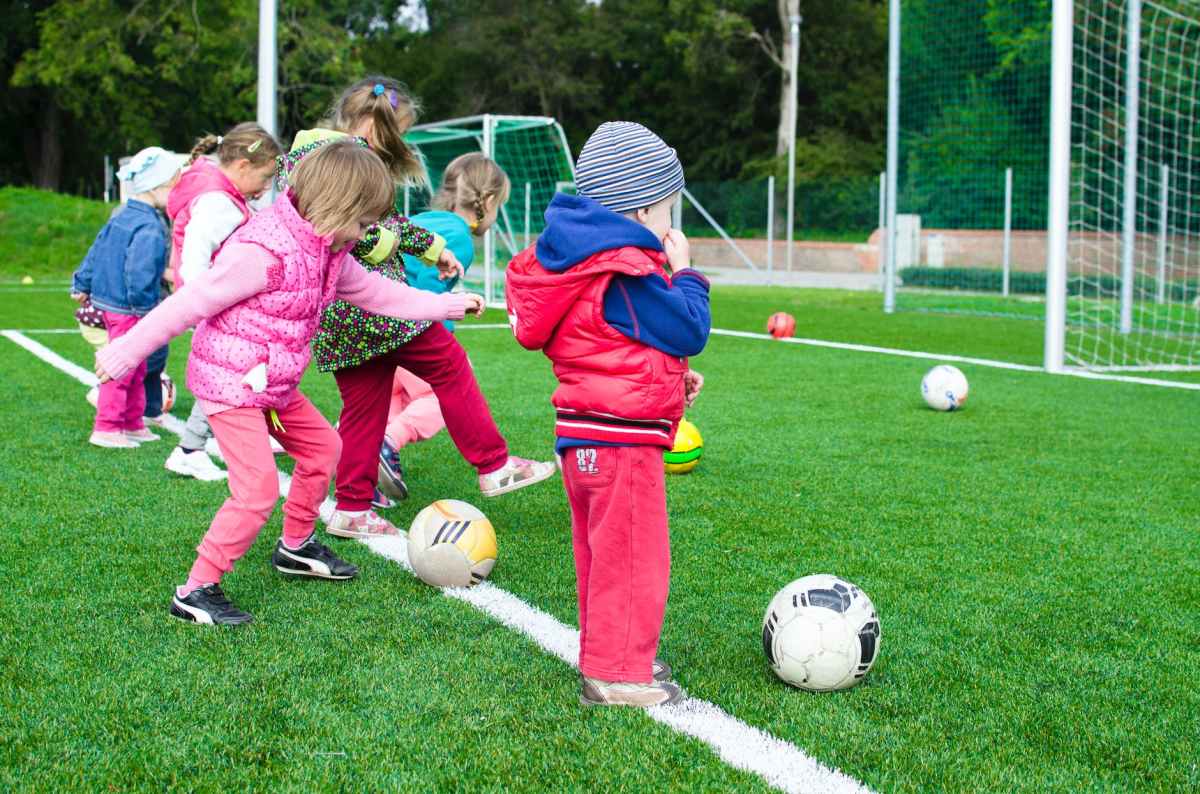
Our imagination can be helpful in this play. As children, we can pretend there is another world and do something like taking a cardboard box and imagining it to be a spaceship and accepting the rules of living in that spaceship. Family traditions (or even community or national traditions) are a form of play, they do not serve a utilitarian purpose, but stem from the creative ways we wish to remember our unique heritage.

This same imaginative playfulness can be useful in reminding us of the reality that lies behind our current reality. Our traditions of worship are a form of play, albeit a more serious play. Our worship traditions represent ways for us to remember our spiritual heritage or to provide imaginative ways to perform biblical sacraments about which we have sparse details on how to perform them. These traditions and liturgies help us point to that other reality, a new Kingdom that began breaking into this world with the incarnation of Jesus.

Christian worship was in fact and from the beginning a festival:  the festival of Christ’s resurrection from the dead … Easter begins with a feast, for Easter is a feast and makes the life of those who celebrate it a festal life … Jesus himself compared the presence of God, which he proclaimed and lived, with the rejoicing over a marriage. His earthly life was a festal life, even if it ended in suffering and death … the early Christians have understood his raising from the dead and the presence of the now-exalted Christ as the beginning of an unending joy and a happiness without end … the risen Christ as ‘the first among those who had fallen asleep’ and as the leader of life; as the leader in the mystic dance and himself as the bride who dances with the others, as the church father Hippolytus put it.  Long before the somber dances of death were painted in medieval times of plague, the figure of the resurrection dance can be seen in the old churches. The modern Shaker song ‘The Lord of the Dance’ brings out very well the dancing Christ:

I am the life that’ll never, never die;
I’ll live in you if you’ll live in me,
I am the Lord of the Dance, said he.[1]

We hope to participate in the inbreaking of the new Kingdom by living according to its rules. When we pray or worship, we are participating in the rules of that new Kingdom. When we come to others and share with them the hope that we have, we ask them to use their imagination to look beyond the current reality and envision the new Kingdom that is already here and is yet to come. When we accept contentment in all situations, when we trust in God, when we comfort others with the hope we have, we are living according to the rules of the new Kingdom.[2]

It is also true, that In this present life there are endless encounters with grief. Although we acknowledge the pain and suffering of that grief, whether that grief is ours or others, we can encompass that grief with hope. Even amid grief we can choose to cling to God and to the hope He brings us. If we can live under the rules of the new Kingdom, we can have assurance that the current grief will pass and will be replaced by future joy and laughter and that every tear that we have cried and will cry and even now cry will be wiped away.

Our hope of the new Kingdom allows us to endure the current pain and suffering knowing that the hard experiences can be redeemed and to be used for good. God can take the pain and suffering we endure to transform us to be more like Christ, who himself suffered for us, transforming the very evil intended for him into the final victory that shall ultimately also make us victorious. This hopeful living then is also a form of play, accepting the rules of a reality we cannot see and choosing to live according to the rules of a Kingdom that we can only realize in part.

That playfulness also emerges in our creativity, which erupts early on in our lives as our desire as children to play and also in the desire we have as parents to play with our children.[3] There is no doubt about how uniquely creative we are in the way we express ourselves, not only in all the various art forms we use but in the ways we can solve all sorts of problems[4] – even to the creative ways we try to cover up our sins.[5] No other creature can come close to expressing creativity the way we can.

Our ability to create and even detect order is also unmatched.[6] Our ability to detect order is evident in the way we can detect patterns in sight or sound. The sense of order is evident in our ability to recognize faces, our ability to recognize the voices of our mothers or fathers as infants and even before we are born.[7] Our sense of order is seen as we grow in our ability to recognize the patterns of letters and sounds and to recognize and respond to language – even languages.

Our sense of order becomes more evident in our ability to create order out of many abstract concepts such as math, science, philosophy, and many other areas.[8] It is our sense of order that allows us to create businesses, governments, and civic organizations to make society productive. When we bring order to farmland, we increase the productivity of the farm.

The visible order within Creation inspired Christians in the past to study Creation. Order within Scripture helps the Bible to be meaningfully used as meditative literature. In the same way, order during worship also helps us to avoid confusion and to focus on God.


[1] Moltmann, Jürgen. “The Living God and the Fullness of Life” trans. Margaret Kohl Westminster John Knox Press, 2015, p.192; Carter, Sydney. Lyrics “Lord of the Dance” (1963) Genius genius.com/Sydney-carter-lord-of-the-dance-lyrics; Tune “Simple Gifts” Brackett Jr., Joseph. (1848) Praise gathering www.praisegathering.com/media-files/pdf/a08380_lyrics.pdf

[2] Edgar, Brian. “The God Who Plays: A Playful Approach to Theology and Spirituality” Cascade Books 2017 (e-book)

[3] Gowman, Vince. “Playful quotes for the child in your heart” Vince Gowman www.vincegowmon.com/playful-quotes-for-the-child-in-your-heart/

[4] Baumgartner, Jeffrey. “The Basics of Creative Problem Solving – CPS” Innovation Management, innovationmanagement.se/imtool-articles/the-basics-of-creative-problem-solving-cps/

[5] Brister, Tim. “6 Destructive Ways We Minimize Our Own Sin” Bible Study Tools www.biblestudytools.com/bible-study/topical-studies/6-destructive-ways-we-minimize-our-own-sin.html

[6] Basulto, Dominic. “Humans Are the World’s Best Pattern-Recognition Machines, But for How Long?” Big Think 24 July 2013 bigthink.com/endless-innovation/humans-are-the-worlds-best-pattern-recognition-machines-but-for-how-long

[7] Pfaff, Leslie Garisto. “6 things you may not know your baby can do” Parents www.parents.com/baby/development/intellectual/6-things-you-may-not-know-your-baby-can-do/

[8] Armstrong, David. “Christianity Absolutely Critical to Origin of Science” Patheos, 18 Oct 2015, www.patheos.com/blogs/davearmstrong/2015/10/christianity-crucial-to-the-origin-of-science.html

Observe

Read Deuteronomy 12; 1 Corinthians 14. These chapters contain explicit instructions about how and how not to worship.  Since we do not yet experience the fullness of the new Kingdom, how can our imagination help us more actively engage in worship?

The Temple Maker

Dancing in the Kingdom- Table of Contents

Dancing In the Kingdom – Part 1 – Shadows of the Kingdom – Chapter 2 – The God who created

The Temple Maker

[Bible references: Genesis 1-2; Exodus 26; 1 Kings 6; Job; Psalm 8; 95; 100; 104 and others; Proverbs 8:22-31; Isaiah 44:21-28; 45:5-12; 51:4-12; 55:6-13; Matthew 26:61; I Corinthians 6:19-20; Revelation 21-22]

There has been much debate about how to interpret the creation account. There have been various attempts to understand creation as physical processes that had occurred (over shorter or longer periods, depending on your analysis) because in our current cultural context we default to thinking of creation in physical, scientific terms. But what if (surprise! surprise!) we consider the biblical text to be a theological text instead of a scientific one, about functional origins and not about material origins.[1]

The cosmos can only function as sacred space once God has inhabited it and people in his image are there. God is declaring purpose for the cosmos as an ordered space for people and as sacred space where he will dwell. This is what defines the divine activity …Adopting and promoting a vision and mission statement will not change how the institution operates. But it articulates a purpose and identity that may not have been realized or present before and proclaims that as its purpose. Genesis 1 is doing something similar. It is articulating a purpose through a mission statement (people living out their designated role as the image of God) and a vision statement (seeing the world around us as sacred space where God is living among his people and being in relationship with them). .[2]

In the last few decades, research has uncovered much more about the culture in the Ancient Near East than ever before. It has been discovered that in Ancient Near East cultures, the Genesis account would not have interpreted the creation account in terms of physical processes but rather in terms of assigning meaning and purpose. So, as we read the Creation account in Genesis 1, on the first three days the spaces of light and dark, waters above and below, and the land are being assigned a purpose. The next three days the populations of those spaces are assigned a purpose: the sun and the moon and stars, the birds and fish, the land animals.

In this perspective, the story of creation is seen more as a story about the dedication of a temple, where the universe and the world were dedicated as a sacred space, a space where God would dwell with his people. Therefore, the seventh day is when God rested from the act of dedicating the earth, which would now be the place where He would now live with his image-bearers. If you read Genesis 1-2, you will see that, unlike the other days, there is no “there was evening and there was morning.” That is because we are living in the seventh day.

The completion of God’s temple would be later remembered by the seventh day celebration of the Sabbath. Although God’s temple was completed by the seventh day, it was not a time where God ceased to do everything. The still continuing seventh day is the time when the “temple” which is our “home” is completed so that God and we, as his co-regents, can settle in and do the things that our home was designed for. Jesus in John 5:1-7 clarified this idea where he explained, “My Father is always at his work to this very day, and I too am working.” Living into this sacred space would entail us taking part with God in his continual acts of creating and sustaining the universe. That is the perspective of Eve, when she gave birth to Cain, she recognized that “I’ve created a man with Yahweh.”[3]

In Genesis 2, the focus moves to the humans God created and how they were to function in that sacred space where the Garden of Eden is the center. Genesis 2 is also where God’s name, “Yahweh,” begins to be used. Genesis 1 introduces the God as the Creator of the universe whereas Genesis 2 introduces the God who in establishing a personal relationship with the people he created uses a personal name.[4]

The cosmos that God created was intended to be a temple, the place where He would meet with his people. The temple/creation imagery permeates and unites all of scripture from the first book, Genesis, to the last book, Revelation. The temple/creation theme shows up in places like in the stories of Noah, Moses, and Abraham, in the construction of the Tabernacle and the Temple, in Job’s dialog with Yahweh, in the poetry of Psalms[5], in prophecies of Isaiah, in the body Jesus and in us as his Body and finally in the depiction of reuniting of heaven and earth. Each instance shows its own unique aspect of the temple, so that when combined with each other, they show a more complete picture of how God meets with us and provides for us and what he has intended for us. We see a complex picture of the temple as a physical place in Creation and at the same time the temple is within us, inside the bodies of all of those who call on his name. In both those cases we can see the provision of God who 1) abundantly fills all of Creation in ways that exceed our imagination and exceed the capacity of any book to tell and, 2) abundantly fills us with His strength and His Spirit so that we can fulfill the desire He has for us to “cultivate and keep” the abundant place He has provided for us.

One of the benefits of considering only the theological aspects of the Creation accounts, or the why of creation, is that we don’t have to be as highly concerned about the how of creation, or the scientific/physical accounts of creation. When scientific creation accounts are proposed and are not perceived to be correct because they don’t seem to theologically fit, we don’t need to despair. It may be that the various proposed scientific explanations simply don’t theologically fit because they just don’t or because we just don’t understand just how they could theologically fit. We know that the sciences are limited and that theories will change as more discoveries are made. Sometimes those theories may seem to move closer or further from our limited theological understandings, but our theology is not constrained by whatever the current science may indicate. In the meanwhile, we are free to explore the science and wonder in awe and marvel at just how God managed to do it all while humbly admitting that we don’t have the mind of God and how much higher his ways are than our ways.


[1] Walton, John. “The Lost World of Adam and Eve,” Proposition 3, InterVarsity Press. 2015 Kindle Edition. pp. 35-45; Driver, Cory. “Commentary on Genesis 1:1-5” Working Preacher 10 Jan 2021 www.workingpreacher.org/commentaries/revised-common-lectionary/baptism-of-our-lord-2/commentary-on-genesis-11-5-5; Carlson, Reed. “Commentary on Genesis 1:1-2:4a 12” Working Preacher Sept 2011 www.workingpreacher.org/commentaries/narrative-lectionary/creation-by-the-word/commentary-on-genesis-11-24a-5; Throntveit, Mark. “Commentary on Genesis 1:1-2:4a; or 1:1-5,26-2:4a 1 Working Preacher 1 Sept 2011 www.workingpreacher.org/commentaries/narrative-lectionary/creation/commentary-on-genesis-11-31-21-4

[2] Walton, John. “Material or Function in Genesis 1? John Walton Responds” Biologos 3 Apr 2015 biologos.org/series/reflections-on-the-lost-world-of-genesis-1-by-john-walton/articles/material-or-function-in-genesis-1-john-walton-responds

[3] Friedman, Richard Elliot, Commentary on the Torah, Harper Collins, 2003 Location 6942 of 37412

[4] There will be more discussion on that name in “Hope in the Brokenness,” Chapter 4

[5] Muran, Alexej. “The Creation Theme in Selected Psalms” Geoscience Research Institute 1 May 2015 www.grisda.org/the-creation-theme-in-selected-psalms

Reflect

Does viewing the universe as a temple affect the way we look at it?

Observe

Read Proverbs 8. This proverb personifies God’s wisdom. Read how God is describing how His wisdom is built into the very framework and fabric of this temple we call Creation. How can we sense God’s presence with us because of how His wisdom should be speaking to us?

Playful and Orderly

Dancing in the Kingdom – Table of Contents

Part 1 – Shadows of the Kingdom, Chapter 3 – The Image-bearers

[Bible references: Deuteronomy 12:1-33:18; Exodus 35:30-38; 2 Kings 17:1-41; Nehemiah 8:1-9:38; Psalm 100; John 4:23-24; Acts 6:1-7; 15:1-35; Romans 12:1-2; 1 Corinthians 14:1-40]

There is much that is wrong in the world. People endure pain and suffering sometimes from natural happenings and sometimes from the actions of others. Evil seems persistent and never-ending. When we are called to serve God in this world, we can become overwhelmed by all the work that is to be done. Playfulness can seem out of place. Particularly, any playfulness that emerges from self-centeredness or obsessiveness.

Actually, that is the point we need to assert. Playfulness can be out of place in a world of sin and evil. But playfulness can also be a reminder that the reality in front of us is not the total reality. Our playfulness arises out of the relationship we have with God, the one who has overcome the evil in the world, who will end the suffering and who will restore us and world to be what he intended from the beginning. Playfulness arises out of the hope and joy we have in knowing that reality in front of us is not the whole reality.

Our imagination can be helpful in this play. As children, we can pretend there is another world and do something like taking a cardboard box and imagining it to be a spaceship and accepting the rules of living in that spaceship. Family traditions (or even community or national traditions) are a form of play, they do not serve a utilitarian purpose, but stem from the creative ways we wish to remember our unique heritage.

This same imaginative playfulness can be useful reminding us of the reality that lies behind our current reality. Our traditions of worship are a form of play, albeit a more serious play. Our worship traditions represent ways for us to remember our spiritual heritage or to provide imaginative ways to perform biblical sacraments about which we have sparse details on how to perform them. These traditions and liturgies help us point to that other reality, a new Kingdom that began breaking into this world with the incarnation of Jesus.

Christian worship was in fact and from the beginning a festival:  the festival of Christ’s resurrection from the dead … Easter begins with a feast, for Easter is a feast and makes the life of those who celebrate it a festal life … Jesus himself compared the presence of God, which he proclaimed and lived, with the rejoicing over a marriage.  His earthly life was a festal life, even if it ended in suffering and death … the early Christians have understood his raising from the dead and the presence of the now-exalted Christ as the beginning of an unending joy and a happiness without end … the risen Christ as ‘the first among those who had fallen asleep’ and as the leader of life; as the leader in the mystic dance and himself as the bride who dances with the others, as the church father Hippolytus put it.  Long before the somber dances of death were painted in medieval times of plague, the figure of the resurrection dance can be seen in the old churches.  The modern Shaker song ‘The Lord of the Dance’ brings out very well the dancing Christ:

I am the life that’ll never, never die;

I’ll live in you if you’ll live in me,

I am the Lord of the Dance, said he.[1]

We hope to participate in the inbreaking of the new Kingdom by living according to its rules. When we pray or worship, we are participating in the rules of that new Kingdom. When we come to others and share with them the hope that we have, we are asking them to use their imagination to look beyond the current reality and envision the new Kingdom that is already here and is yet to come. When we accept contentment in all situations, when we trust in God, when we comfort others with the hope we have, we are living according to the rules of the new Kingdom.[2]

It is also true, that In this present life there are endless encounters with grief. Although we acknowledge the pain and suffering of that grief, whether that grief is ours or others, we can encompass that grief with hope. Even amid grief we can choose to cling to God and to the hope He brings us. If we can live into the rules of the new Kingdom, we can have assurance that the current grief will pass and will be replaced by future joy and laughter and that every tear that we have cried and will cry and even now cry will be wiped away.

Our hope of the new Kingdom allows us to endure the current pain and suffering knowing that the hard experiences can be redeemed and to be used for good. God can take the pain and suffering we endure to transform us to be more like Christ, who himself suffered for us, transforming the very evil intended for him into the final victory that shall ultimately also make us victorious. This hopeful living then is also a form of play, accepting the rules of a reality we cannot see and choosing to live according to the rules of a Kingdom that we can only realize in part.

That playfulness also emerges in our creativity, which erupts early on in our lives as our desire as children to play and also in the desire we have as parents to play with our children.[3] There is no doubt about how uniquely creative we are in the way we express ourselves, not only in all the various art forms we use but in the ways we can solve all sorts of problems[4] – even to the creative ways we try to cover up our sins.[5] No other creature can come close to expressing creativity the way we can.

Our ability to create and even detect order is also unmatched.[6] Our ability to detect order is evident in the way we can detect patterns in sight or sound. The sense of order is evident in our ability to recognize faces, our ability to recognize the voices of our mothers or fathers as infants and even before we are born.[7] Our sense of order is seen as we grow in our ability to recognize the patterns of letters and sounds and to recognize and respond to language – even languages.

Our sense of order becomes more evident in our ability to create order out of many abstract concepts such as math, science, philosophy and many other areas.[8] It is our sense of order that allows us to create businesses, governments and civic organizations to make society productive. When we bring order to farmland, we increase the productivity of the farm.

The visible order within Creation inspired Christians in the past to study Creation. Order within Scripture helps the Bible to be meaningfully used as meditative literature. In the same way, order during worship also helps us to avoid confusion and to focus on God.


[1] Moltmann, Jürgen. “The Living God and the Fullness of Life” ,” trans. Margaret Kohl Westminster John Knox Press, 2015, p.192; Carter, Sydney. Lyrics “Lord of the Dance” (1963),

Tune “Simple Gifts” Brackett Jr., Joseph. (1848)

[2] Edgar, Brian. “The God Who Plays: A Playful Approach to Theology and Spirituality” Cascade Books 2017 (e-book)

[3] Gowman, Vince. “Playful quotes for the child in your heart” Vince Gowman http://www.vincegowmon.com/playful-quotes-for-the-child-in-your-heart/

[4] Baumgartner, Jeffrey. “The Basics of Creative Problem Solving – CPS”  ” Innovation Management, innovationmanagement.se/imtool-articles/the-basics-of-creative-problem-solving-cps/

[5] Brister, Tim. “6 Destructive Ways We Minimize Our Own Sin” Bible Study Tools http://www.biblestudytools.com/bible-study/topical-studies/6-destructive-ways-we-minimize-our-own-sin.html.

[6] Basulto, Dominic. “Humans Are the World’s Best Pattern-Recognition Machines, But for How Long?” Big Think 24 July 2013 bigthink.com/endless-innovation/humans-are-the-worlds-best-pattern-recognition-machines-but-for-how-long.

[7] Pfaff, Leslie Garisto. “6 things you may not know your baby can do” Parents http://www.parents.com/baby/development/intellectual/6-things-you-may-not-know-your-baby-can-do/

[8] Armstrong, David. “Christianity Absolutely Critical to Origin of Science” Patheos, 18 Oct 2015, http://www.patheos.com/blogs/davearmstrong/2015/10/christianity-crucial-to-the-origin-of-science.html

Reflect

Our ability to play arises out of how we bear the image of God. How does our playfulness persist even in the midst of all the problems in the world?

Observe

Read Deuteronomy 12; 1 Corinthians 14. These chapters contain explicit instructions about how and how not to worship.  Since we do not yet experience the fullness of the new Kingdom, how can our imagination help us more actively engage in worship?