Ministry of Reconciliation

Dancing in the Kingdom- Table of Contents

Dancing In the Kingdom – Part 3 – Dancing in the Kingdom– Chapter 16 – Fixing our eyes

Ministry of Reconciliation

[Bible references: Matthew 10; Mark 1:40-45; 5:1-20; Acts 2:42-47; 3:20-26; 17:16-34; Romans 8:18-39; 12; 2 Corinthians 5:18-20; Ephesians 4:1-16; 6:18-20; Philippians 3:25-21; 1 Thessalonians 5:11-28; John 13:34-35; Revelation 21:1-2]

When Jesus came the first time, people were looking for a Messiah to overthrow the Roman government, but Jesus’ message was to repent and be baptized for the forgiveness of sin. That is the message we need to respond to and the message we need to bring to others. The gospel is the good news of forgiveness that we can receive if we respond by repentance. The gospel is the good news of God’s Kingdom come to earth to transform us as well as all of creation so that heaven and earth can be fully joined as God had intended from the beginning.

Once we have become transformed, we are able to invite others to repent and accept the grace of God in transforming their lives as well and then join us in the work of discipleship and restoring the world beginning with the call to reconciliation, that is to engage in the work of evangelism. Some people are better equipped to do evangelism than others, but that does not leave the rest of us with no part in the work.

Evangelism, like other aspects in the life of the church, is a work of the body of the church. It is also a work of the Spirit. Evangelism involves persuading, proclaiming, and teaching the gospel and is a call for others to come to Christ, His Body, and to discipleship. We do not convert people to Christ, which is the work of the Spirit; but we are called to join Spirit in His work in the world. The church is called to be the church and display the gospel at work; the gospel which calls us to be transformed, calls us unity with others in the body of Christ and calls us to join Christ’s work of reconciliation and restoration.

That means that we all have a part to play in the body of Christ, to help build one another up so that we may all become mature members of the body of Christ, displaying the love of the transcendent God towards each other. If we are each transformed by Christ, then we should be able to “give a reason for the hope” we have. A hope that we can hold onto even as we live amid a church that is transformed and yet broken by sin.

The call to discipleship is a call to reconcile all the parts of our lives to the Lordship of Christ. This includes not only all our relationships, particularly with those in the body of Christ, but all of our stewardship responsibilities for all of creation. The evangel, the good news, is not just that our personal relationship with God can be restored, but that all of creation will be restored.

It is for the sake of love that God suffered for us that he might redeem us. The greatest commandments that He gave to his image-bearers, were about love: loving God and loving our neighbor. The good news is about that love – a love that reaches out to us and through us amidst all our brokenness. a love expressed in word and deed.

The remaining parts of this book are about the breadth of expressing that love. Certainly, if we love someone who does has not heard the gospel, it would be loving to share that news with them. And if we are truly loving that other, the words of that news should be happening amid all we do to show that love in our deeds as well as in our words. It may be that the deeds of love will help open-up hearts to hear about that love; a love that reflects God’s prodigal love for each of us, a love that desires to take care of all that God has given us – God’s creation and God’s creatures, God’s image-bearers, and the gifts he has given each one of us. God’s extravagant love should be reflected in the way we love God with all our heart, mind, soul and strength and the way we love our neighbor as ourselves.

God’s image-bearers, the ones who call him Lord and Father, are God’s chosen vehicles to proclaim and demonstrate his love as his ambassadors. God’s proclamation and demonstration of love is not constrained by our different personalities and circumstances, for our limitations are not his limitations but rather our weaknesses are His strength, and our little demonstrations of love are the reflections of His powerful love to us and to the world.

Within ourselves, we may be small and insignificant, but we are not just isolated individuals. We are part of Christ’s body, physical manifestations of Christ

  • Past, present, and future
  • Around the world
  • In all our different ways with whatever resources Christ has given us
  • In whatever place and time he chose for us, with whatever strengths and weaknesses we have

We are the creatures whom God has empowered to rule the earth as his gardener-priests. That empowerment has not changed even though we are broken people living in a broken world. The charge he had given us still remains. Therefore, within our brokenness we need to take whatever Christ has given us and proclaim and demonstrate God’s unsurpassed, overwhelming love to the world, a love that not only wants to reconcile all people but literally all the world to Himself … to reunite heaven and earth.

 The challenge we have as God’s ambassadors, is for us to be proclaiming and living the gospel amid the cultures that are sometimes indifferent and sometimes hostile. Therefore, in our tasks, if we are to be effective ambassadors then we must be, “wise as serpents and innocent as doves,” as we try to discern how to effectively persuade others to follow Jesus. Of course, keeping in mind that it is not we who ultimately persuade others to follow Christ, rather that is the work of the Holy Spirit. But how can we participate with the Holy Spirit?

Different people are persuaded by different means. Sometimes, people are persuaded by logic as we could see in the life of the apostle Paul. Sometimes people are persuaded by personal relationships and are drawn by a personality that looks attractive as we could see in the lives of people who were drawn to Jesus. Sometimes people are persuaded by seeing something different in the life another.

With that in mind, then how do we put ourselves in the place where we are most effective? The answer is: the church. The church is the body of Christ whose members are called to build up one another and to demonstrate a love for one another such that others will recognize us as belonging to Christ. When the church gathers to worship and express it’s love to God, that same desire should lead to expressions of love to one another which pour out into love of neighbor as the church scatters during the week. That desire to love should then draw us to desire to learn how to love in the best way possible. Love leads to love. The love of God leads us to love, love of one another and a love of the world that God loves.

Exactly how that love will flow depends on the particulars of each individual in their particular circumstances. We are all born with different personalities and different bodies, and are equipped differently according to the Holy Spirit, and find ourselves in different cultures within the church and within our communities. Some individuals will find themselves in a very individual ministry and some will be called to a broader ministry to the world. Also, different church communities will even find different approaches in how they interact with the cultures around them.[1]


[1] Finn, Nathan A, Whitfield, Keith S. “Spirituality for the Sent” Chapter 5 Missional Spirituality and Cultural Engagement IVP Academic 2017

Reflect

Discipleship is a process of “being transformed” (2 Corinthians 3:18). Ultimately it is something that happens to us – but it is something we can co-operate with by engaging is spiritual disciplines. What kinds of changes need to happen in our lives that would make it natural to invite someone else into discipleship?

Observe

Read Romans 12. How do we help those around us to be reconciled to each other and to God?

Mystery of the kingdom and eschatology

Dancing in the Kingdom- Table of Contents

Dancing In the Kingdom – Part 2 – The Kingdom Revealed – Chapter 13 – Distinctives within the body of Christ

Mystery of the kingdom and eschatology

[Bible references: Isaiah 2; 60; Joel 2; Micah 4; Daniel 7; Matthew 24; Luke 17; Revelations 20]

What is the kingdom of God/Heaven?

The kingdom of Heaven refers to where Jesus reigns. Heaven has always been under his rule and when he returns and our current earth is transformed into the new earth, Jesus’ kingdom will include that as well. In the meanwhile, His kingdom includes all those who have accepted Jesus as their king. Some only apply the Kingdom of God to only the reign of God in heaven or the reign of God after earthly governments are done away with.

How and when will Jesus return?

Discussion about the end times[1] has always been problematic because of the nature of prophetic language. This has led to much contention in the church about how events will occur or have occurred. Even though Jesus has cautioned us that only the Father knows when that will happen, people have not stopped trying to “read the signs.”

The clues about the Messiah in the Old Testament were confusing to interpret. Even after the incarnation of Jesus, we know that the disciples were confused about how the events of the end times such that Jesus’ death was incomprehensible. Even after Jesus’ resurrection and ascension there was still confusion, and it took some time to sink in that Jesus’ return was not going to happen for a while.

There are a wide variety of thoughts about the Biblical prophecies concerning the end times. The questions deal with such things as: is the book of Revelation about events now past us (e.g., the destruction of Jerusalem in AD 70) or about future events or both, does the 1000 years talked about in Revelation 20:1-15 occur now or in the future and is the 1000 years literal or metaphorical, will there be a “rapture” of believers before a coming time of great tribulation, since there was no nation of Jews after the destruction of Jerusalem do the promises that applied to Israel now apply to the church – and other questions.

There are various historical factors and hermeneutical questions that led to some of the variations in the way that these questions were answered: whether the prophecies should be interpreted literally or metaphorically, whether the Old Testament laws should be kept in effect by the church, the importance of the destruction of Jerusalem in AD 70 and the consequent re-creation of the nation of Israel in AD 1948. Regardless of the way those questions are answered, the more important issue is our behavior in the present.

The role of the prophecies in the past had been to either warn people of behaviors they needed to change or to provide encouragement and hope in the times of difficulty. Wherever we stand on these prophecies, those intentions should be our focus; our behaviors in the present life and our hope to sustain us.


[1] Herrick, Greg. “9. Eschatology: End Times” Bible.org bible.org/seriespage/9-eschatology-end-times

Mystery of sin, salvation, and sanctification

Dancing in the Kingdom- Table of Contents

Dancing In the Kingdom – Part 2 – The Kingdom Revealed – Chapter 13 – Distinctives within the body of Christ

Mystery of Sin, Salvation, and Sanctification

[Bible references: Ps 38:39; Is 12:2; 25:9; Zephaniah 3:17; Matthew 26:28; Luke 24:47; John 3:16; 10:9; Acts 2:38; 4:12; Romans 5; 6:23; 1 Corinthians 1:21; 15:2; Ephesians 2:8; 2 Tim 3:15]

How do we inherit sin?

There are two main views of how we inherit sin:

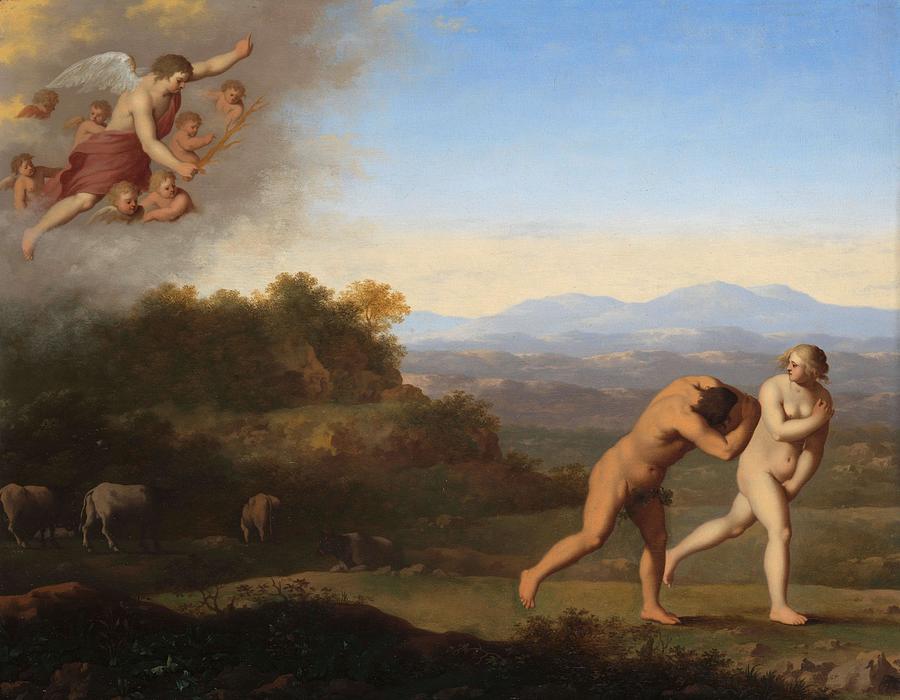
  • According to ancestral sin, Adam and Eve alone bear the full responsibility and guilt for the sin in the Garden, but we inherit mortality, the tendency to sin, and alienation from God and other people. Expulsion from the Garden was to prevent the humans from being eternally separated from God.
  • According to original sin, as Adam’s ancestors we inherit not only Adams’ sinful nature but his guilt as well. Expulsion from the garden was a punishment.

What did Jesus do to allow our relationship with him to be restored?[1]

By taking on human flesh the way that Jesus did and becoming fully human, he experienced all the temptations to sin that we face, but without succumbing to them. When he died on the cross as a perfect God-Man, he was able to overcome death and offer to restore our relationship with him. Different congregations have different ideas on how this transaction was able to actually work.

  • God paid a ransom to free us. Once the ransom was paid, justice was satisfied, and God was able to free us. There is a dispute about whether the ransom was paid to God or to the Devil.[2]
  • Christ is seen as the second Adam who is victorious where Adam failed and undoes what Adam did. The atonement of Christ has reversed the course of mankind from disobedience to obedience. Christ’s life recapitulated all the stages of human life and in doing so reversed the course of disobedience initiated by Adam.[3]
  • Just as Adam’s sins were imputed to us (original sin), when Jesus died on the cross, his righteousness was imputed to us.[4]
  • Christ suffered for everyone so that the Father could forgive the ones who repent and believe. Pardon and forgiveness cannot be brought to pass unless God’s righteous obligations as Moral Governor can be satisfied. Nor can it happen unless man is willing to repent and embrace the conditions of mercy. Man must identify himself in a committal of faith to the sufferings of Christ for his sins, as the only hope of his forgiveness and spiritual restoration from a state of ruin.[5]

What is the effect of sin on our bodies and on our world?

Despite the effects of sin, that we are image-bearers of God. This view creates a positive view of our bodies and is supportive of taking healthy care of our bodies and also the environment. However, there is a viewpoint originally developed by Greek philosophy that has continued to affect the church in many ways from the beginning is the idea that only spiritual things are good and physical things are bad.[6]

In regard to the body, this dualism leads to the view that sex is sinful and a general discomfort in talking about the body, preventing the church from counteracting the influence of the culture both within and outside the congregation. This dualism has led to many other errors as well, such as focusing on heaven as our final destination instead of a new creation, the need to deny oneself physical pleasure[7] in order to pursue the spiritual, and the neglect of our roles as stewards of our physical environment.

How are we saved from the consequences of our sins?

When the first people rebelled against God, they brought the penalty of death and eternal separation from God upon themselves. As descendants of those people, we inherited the corrupt nature that causes us to sin and therefore also brings the penalty of death and separation from God upon ourselves. Our salvation is only possible because of the death and resurrection of Jesus. The gift of salvation can be received when we confess our sins, acknowledge Jesus’ death on our behalf and accept God’s forgiveness for our own sins.

That said, there are two explanations about how we are saved that depend on how we think we inherited sin.

  • According to the doctrine of ancestral sin, salvation is a process of avoiding sin and becoming more like God,[8] a process which, for those who are baptized into Christ, will continue after our death and resurrection. God did not expel Adam and Eve out of the Garden of Eden and away from the Tree of Life as a punishment, but out of compassion, so that we would not be like the fallen angels and become immortal in sin.
  • According to the doctrine of original sin, Jesus’ death is considered to have paid the penalty for our sins. By receiving his forgiveness, we are legally justified before God, and he gives us his spirit so that we can begin the process of becoming more like him.

What is the role of grace in salvation?

In Reformed theology, God gives irresistible grace to those he chose before time began and gave them the will to respond to his call to repent so that they can be forgiven, and once forgiven, God will ensure that they will persevere in the faith.

In provisional theology all men are given a grace[9] that allows them free will to respond to God’s call to repent and be saved and also have God’s assurance that he will not let us go.[10]

In Arminian and Orthodox theology, it is by our free will that we accept God’s forgiveness and then also have the free will to abandon that faith later.

What does it mean to be saved by grace and yet have expectations to live righteously?

Some Christians think that once they are converted, that is they have received Christ’s gift of salvation, then they have done all they need to do. After that, some will either forget or neglect the entire process of being a disciple of Christ leaving the question of whether they were actually converted.

Some congregations believe that more than faith is required in order to receive salvation[11] and insist that salvation has not happened unless some specific things are done. The Orthodox tradition states that salvation is a process that begins with conversion but then continues with the process of becoming more like God. The Roman Catholic and Protestant traditions state that once we have been justified, then God can set us apart to be the type of people that he has intended us to be from the beginning.[12] In this condition, we can begin the process of growing in Christ, that is, becoming more like God.

We are living in the time between the first coming of Christ, where he conquered death and sin, and His second coming, when he will transform creation with a new heaven and earth, and we will have new resurrection bodies. In this in-between time, we still are living in corrupt bodies and in an earth corrupted by sin although we may have begun the process of being transformed more into the image of Christ. This does create some confusion.

Until the final resurrection we still sin and need to regularly be in an attitude of repentance, confessing our sin and turning back to God and acknowledging our need for God’s grace so that we can also be ready to give grace to others.

The Roman Catholics emphasize our need to not only confess our sins, but to do something tangible to express our repentance[13] and need to be purified more completely before we can appear before God. This requires a temporary stay in purgatory before we are allowed into heaven.

Viewing things in a more positive light, some congregations emphasize that while we may not actually free from sinning, that our hearts have been cleansed from sin by the grace of God.[14]

Since we are under grace, do the commandments still apply to us?

We are told that those who are born “of the Spirit” are not “under the law” because Jesus fulfilled the law. However, that does not mean that the law can be ignored. In fact, not only does the law provide guidance for us, but the expectations for our behavior are even more comprehensive. The New Testament explicitly tells us that:

  • hating our brother is equivalent to murdering our brother. 
  • we should not hate our enemy but love them.
  • looking at someone with lust is like committing adultery.
  • if we are forced to go one mile, then we should go two miles.

Our motivation should not come from trying to obey the external law “written in stone” but rather from the internal desires “written in our hearts” to love – love God and to love one another. To give a few examples: we should be.

  • Not driven to obey the Commandment to keep the Sabbath, but rather encouraged to live every day to God.
  • Not driven to obey the command to tithe, but rather encouraged to be generous.
  • Not driven to obey the command to not covet, but rather encouraged to promote the welfare of others.
  • Not driven to obey commandments, but rather encouraged to express the fruits of the Spirit.
  • Not driven to obey externally given commands, but rather encouraged to grow in our internal desire to love,
  • Not driven to avoid doing wrong, but rather encouraged to delight in finding the best way to do what is right

However, the relationship of the church to the law has been a point of contention in many congregations causing many congregations to adopt a legalistic framework. There is a tendency to consider the laws we call the Ten Commandments to be unlike the other laws in the Old Testament – to be “moral laws” that still apply. The New Testament, however, has not separated out the “moral law” from the rest of the laws (sometimes called civil and ceremonial laws) in the Old Testament. Some consider the Law to be good as it guides us away from idolatry, but others view the law to be bad as we should rather be relying on grace instead of the law which is considered to be oppressive.

The Ten Commandments, as we call them, are not numbered in the original texts (Exodus 20, Deuteronomy 5) but in the Biblical text are referred to as the Decalogue, which means “ten words.”[15] This has resulted in a couple of different numbering schemes for the “ten words.” One of the variations is influenced by iconoclasm, which makes “You shall not make any graven images …” the second commandment.


[1] Soteriology is the study of how we are saved

[2] Theopedia “Ransom”  Theopedia theopedia.com/ransom

[3] Theopedia “Recapitulation theory of atonement”  Theopedia theopedia.com/recapitulation-theory-of-atonement

[4] Theopedia “Penal substitutionary atonement”  Theopedia theopedia.com/penal-substitutionary-atonement

[5] Theopedia “Governmental theory of atonement” Theopedia theopedia.com/governmental-theory-of-atonement

[6] In Persia during the third century, Mani tried to synthesize all the known religions, including Gnosticism and Christianity into a religion known as Manichaeism. Gnostics think that there is a good spiritual world, and a bad physical world (aka Dualism).

[7] New Advent “Asceticism” New Advent newadvent.org/cathen/01767c.htm

[8] Theopedia “Theosis” Theopedia www.theopedia.com/theosis

[9] Prevenient grace means the grace of God that surrounds all, and is at work in all, even before we know or care about it.

[10] Spurgeon, C.H. “The Security of Believers – or, sheep who shall never perish”  Spurgeon Gems spurgeongems.org given 5 Sept 1889 www.spurgeongems.org/sermon/chs2120.pdf

[11] Theopedia “Legalism” Theopedia theopedia.com/legalism

[12] Sanctification is the process of being set apart for God’s use.

[13] Catholic Encyclopedia “Penance” Catholic Encyclopedia catholic.com/encyclopedia/Penance

[14] Theopedia. “Wesleyan perfectionism”  Theopedia www.theopedia.com/wesleyan-perfectionism. Wesleyan perfectionism, sometimes called entire sanctification, is a view held by John Wesley that taught that Christians could to some degree attain perfection in this life.

[15] Hale, Philip. “Numbering the Decalogue, Images, and Iconoclasm: A Historical and Theological Survey”  Nebraska Lutherans for Confessional Study, July 25, 2013

Observe

Read John 3:16; 10:9; Acts 2:38. How can we be reconciled to God?

Basics of the faith

Dancing in the Kingdom- Table of Contents

Dancing In the Kingdom – Part 2 – The Kingdom Revealed – Chapter 12 – Launching the church

Basics of the faith

[Bible references: Acts 1:12-26; 2:42-47; 4:32-37; 6:1-6; 8:14-17; 9:26-31; 11:1-18; 13:1-3; 15;1-29, 36-41; 1 Corinthians 1:10-17; 5:1-13; 6:1-11; 10:1-22; Galatians 2:1-14; 3:10-14. James 2:1-13; 3:1-12; 4:1-16; 2 Peter 2:1-22]

There are many aspects of the gospel, but it is nothing if it is not grounded in truth, about God and about us. But the truth is not the only thing, in fact, the whole truth of the gospel must be grounded in God’s character. The gospel is not just a set of facts that need an intellectual assent but good news that calls us to make an honest assessment of ourselves and to make a change of trust and allegiance.

The gospel is good news.

  • The gospel is the good news that God created us to pour his love into us.
  • The gospel is the good news that even though we are born in rebellion against God and are unable to keep doing things that separate us from him, that he has taken upon himself the punishment we deserve so that we don’t have to.
  • The gospel is the good news that when Jesus was resurrected and ascended into heaven, He went prepare a place for us there.
  • The gospel is the good news that if confess our sins then He is faithful and just and will forgive us our sins and cleanse us from all unrighteousness.
  • The gospel is the good news that once we begin our journey of trusting Jesus, then we begin the process of becoming more like Jesus.
  • The gospel is the good news that all of that and more is true.

There are various reasons that we sometimes don’t want to accept the good news. One of the biggest reasons is that we don’t want to acknowledge how bad we are and how deeply sin affects us. When we feel that way, we can start to imagine that we can balance out the good things we do with the bad things we do, and we’ll end up all right and God will be happy with that. But the gospel message is that,

  • the bad news is that our very nature is in rebellion against God and no amount of good works can make us unrebellious.
  • the bad news is that we can’t earn our way to a right relationship with God.
  • the bad news is that if we are not made right before God then we will suffer God’s judgement and wrath.
  • the good news is that Jesus paid the penalty for all our sins, past, present, and future.
  • the good news is that we can be made righteous through faith.
  • the good news is that it is by God’s grace that we are saved through faith. It is a gift – in fact, it can’t be something we earn.
  • the good news is that we only need to repent and confess our sins and receive His forgiveness.
  • the good news is that we can allow God to transform our lives and enable us to live lives that are pleasing to him.
  • the good news is that once God imparts his righteousness to us, we become his heirs.

Once we put our trust in Him, he does not automatically make us sinless. That won’t happen until he returns; and we all are resurrected with new, transformed bodies. It is through our untransformed bodies that we inherit the sin nature.

  • The good news is that the day of resurrection will happen.
  • The good news is that, between now and then, we can offer ourselves to God and He will, over time, begin the transformation process here in this life.
  • The bad news is that until then we will continue to rebel against God.
  • The good news is that in this in-between life that God can use our current struggles to strengthen us.
  • The bad news is that unbelievers will regard us as foolish.
  • The good news is that our apparent foolishness in committing our lives to Jesus is actually wisdom.

There is a lot of good news for us, and it’s based upon the truth of Jesus. Truth is important for Jesus, and in fact, he claims that He himself is the truth. The gospel is based on the truth, so it matters that we get the facts straight. That is why, one of the concerns expressed in the New Testament is the need to hold onto sound doctrine.

Read Galatians 3:1-12. What part of the gospel were the Galatians struggling with?

Kingdom of God

Dancing in the Kingdom- Table of Contents

Dancing In the Kingdom – Part 2 – The Kingdom Revealed – Chapter 12 – Launching the church

Kingdom of God

[Bible references: Matthew 4:12-23; 5:43-48; 6:31-34; 13:1-9; Mark 1:15; 4:1-33; Luke 4:17-22; 17:20-21; 18:16-18; 1 John 5:3-5; Romans 14:17]

“The primary idea of the Kingdom of God in Scripture is that of the rule of God established and acknowledged in the hearts of sinners by the powerful regenerating influence of the Holy Spirit, insuring them of the inestimable blessings of salvation, — a rule that is realized in principle on earth, but will not reach its culmination until the visible and glorious return of Jesus Christ.”[1]

The Kingdom of God (Kingdom of Heaven) is broadly wherever the rule of God is in the universe[2] or spiritually in the hearts of those who do His will. Although the Kingdom of God has arrived already, it has not yet arrived in its fulness. That won’t happen until Christ returns. There are some who make the Kingdom of God synonymous with the institutional church, however, the church itself belongs to the Kingdom. When Christians do anything under the authority of God, then they are making manifest the Kingdom of God[3]. Believers belong to the Kingdom when they receive God as their ruler, and they belong to the church in the separateness from the world in devotion to God and in their union with one another. As a church they are called to be God’s instrument in bringing in the Kingdom.

The Kingdom then is not defined by any physical location, nor does it have physical boundaries, rather it exists wherever God’s rule is in heaven or in earth. At the beginning of his ministry Jesus declared that the Kingdom has come near and then he described it in terms of healing the sick, loving enemies as well as neighbors, righteousness, freedom for prisoners, giving sight to the blind, and setting the oppressed free, that it must be received as a child, that it requires repentance to receive it, that it’s like a seed on the ground that falls on various kinds of soil.


[1] Louis Berkoff. Systematic Theology William B. Eerdmans 1974 (Kindle Locations 14321-14324)

[2] Bible Study Tools “Kingdom of God” Biblestudytools www.biblestudytools.com/bible-study/explore-the-bible/what-is-meant-by-the-kingdom-of-god-10-things-to-know.html

[3] Christianity.com “What is the Kingdom of God? Understanding its Meaning” Christianity.com www.christianity.com/wiki/god/what-is-the-kingdom-of-god-understanding-it-s-meaning.html

Observe

Read Luke 17:20-21. Where do you see the Kingdom of God?

The Spirit and the power

Dancing in the Kingdom- Table of Contents

Dancing In the Kingdom – Part 2 – The Kingdom Revealed – Chapter 12 – Launching the church

The Spirit and the power

[Bible references: Genesis 25-19-21; 1 Samuel 1;1-20; 2 Samuel 7; Proverbs 2:1-5; Matthew 7:7-8; Mark 11:12-26; Luke 11:113; 12-26; John 20:21-23; 3:14-16; Acts 1:1-14; 2:1-41; 1 Peter 5:6-7]

There are remarkable parallels between Genesis 2:7 and John 20:22. We see from Chapter 2 that in Genesis 2, God breathed life into Adam who was then commissioned to take care of the sacred space that God had created. That sacred space was initially identified as the Garden of Eden, but we know from Genesis 1 that God had dedicated the entire universe as his temple. We also know that since God’s image-bearers were given the commission to “be fruitful and fill the earth” that the sacred space allotted to the care of the image-bearers was intended to be the entire earth.

After the resurrection, when Jesus met with the apostles in a locked room, He breathed on (or into) them.[1] This is the same word used in the Septuagint version of the Old Testament describing God breathing life into Adam and thereby giving him life. Immediately after this gesture, Jesus instructed the apostles to “Receive the Holy Spirit” who were then commissioned to continue the task that Jesus had begun.[2]

“The very same Greek verb (here only in N.T.) is used by the LXX. in Genesis 2:7 (Wis 15:11) of breathing life into Adam. This Gospel of the new Creation looks back at its close, as at its beginning (John 1:1), to the first Creation. We are probably to regard the breath here not merely as the emblem of the Spirit (John 3:8), but as the means by which the Spirit was imparted to them. ‘Receive ye,’ combined with the action of breathing, implies this. This is all the more clear in the Greek, because pneuma means both ‘breath’ and ‘spirit,’ a point which cannot be preserved in English; but at least ‘Spirit’ is better than ‘Ghost’ We have here, therefore, an anticipation and earnest of Pentecost; just as Christ’s bodily return from the grave and temporary manifestation to them was an anticipation of His spiritual return and abiding Presence with them ‘even unto the end of the world.’” [3]

Previously, in John’s gospel, we saw that “the Son of Man must be lifted up, that everyone who believes may have eternal life in him.” Now that Jesus was crucified and was soon ascend to heaven, the apostles were given the task of sharing the gospel so that people may believe unto eternal life. It is at this moment, in the locked room, that the apostles were given the commission to share the news of forgiveness.

Ten days after Jesus ascended, fifty days after Passover, the disciples were gathered in Jerusalem, waiting for “what the Father had promised.” It was the time of Shavuot, which was known in Greek as the Pentecost. Shavuot is one of three pilgrimage festivals where Jews are supposed to travel to Jerusalem so Jews from all over the Roman Empire were in Jerusalem.

It was at this gathering that Spirit came upon the disciples in great power, revealing the fulfillment of Shavuot. While the disciples were gathered in a room, the Holy Spirit manifested himself with a great wind and tongues of fire that touched the apostles. The apostles then proceeded to prophecy and the people who were there from around the world were able to hear them speaking in their own languages. On that day 3000 people accepted Jesus as their Lord.

The full meaning of Passover and Shavuot was now revealed.

  • Jesus was executed on Passover, a holiday commemorating the celebration of freedom from slavery in Egypt which was observed by the slaying of the Passover lamb whose blood protected all the Israelites from the angel of death who had killed all the firstborn children in Egypt.
  • The miraculous outpouring of the Holy Spirit on the apostles which enabled them to speak in many different languages occurred on Shavuot, which had many different meanings for the Jews. Shavuot was associate with:

  • the giving of the commandments 50 days after the liberation from Egypt. Now the commandments were written on hearts instead of stone.
    • the first harvest of crops in the year, with those first portions being given to God, the provider of harvest. There were now 3000 souls harvested for God.
    • marriage, where Passover was considered the betrothal and Shavuot the marriage where the bride and groom commit themselves to each other. The period in-between the betrothal and marriage can be considered as a time of testing and waiting as the bride and groom prepare for life together. With His sacrifice, Jesus, the Bridegroom committed himself to the Church, His Bride.

Waiting. The virtue we want to bypass. Yet even though God has set seasons and times before us and insists on letting his ordained processes complete, from the beginning, we have wanted things immediately and we have been paying the price ever since. But there was a process God wanted to complete. After His resurrection, Jesus waited for the apostles to gather before He came to them, Jesus waited for many days to go by while He interacted with various groups of his disciples, then after His ascension, Jesus waited for his disciples to stay in Jerusalem, while they waited for the “gift His Father promised … to be baptized with the Holy Spirit.” And so, the apostles waited and prayed.


[1] Biblehub ἐνεφύσησεν Bible Hub biblehub.com/greek/enephyse_sen_1720.htm

[2] Scrivener, Glen. “What does John 20:21-23 mean” Christ the Truth christthetruth.net/2013/03/26/what-does-john-2021-23-mean; Skinner, Matt. “Commentary on John 20:19-23” Working Preacher www.workingpreacher.org/preaching.aspx?commentary_id=887; Lewis, Karoline. “Commentary on John 20:19-23” Working Preacher www.workingpreacher.org/preaching.aspx?commentary_id=76; Flattery, George. “John 20:19-23 Receive the Holy Spirit” Global Christian globalchristiancenter.com/sermons/dr-g-flattery-sermons-on-gospel-of-john/26192-john-2019-23-receive-the-holy-spirit

[3] Biblehub “John 20:22”Cambridge Bible for Schools and Colleges biblehub.com/commentaries/john/20-22.htm

Reflect

There are times when we need to take action and times when we need to wait for maturity or for “the fullness of time.” How can we discern the difference?

Observe

Read Mark 11:12-26; Luke 11:1-13. What should we expect when we pray?

Paradise and resurrection

Dancing in the Kingdom- Table of Contents

Dancing In the Kingdom – Part 2 – The Kingdom Revealed – Chapter 11 – The Kingdom Enters

Paradise and Resurrection

[Bible references: Matthew 27:45-53; Luke 23:42-44; John 20; 1 Corinthians 15; 2 Corinthians 12:3-5; Revelation 2:6-8; 21:1-27; 22:1-5]

His final words were, “It is finished.” Later that day, the other criminals also died, and the confessed criminal joined Jesus in paradise (heaven), the place where God resided.[1] But that is not the end of the journey.

We have to confess that we don’t understand how this happens, but in heaven, God’s creatures, the angels, etc. do not have physical bodies. This however is the place where God’s image-bearing creatures initially go when they die.

There is much we can’t understand about heaven, which is probably less a place “up there” but more like an alternate dimension where God dwells. It seems to overlap with the physical universe such as it did at the Garden Eden or the Tabernacle or the Temple or the body of Jesus or in all who are “in Christ.”  It seems also to the place where those who are “in Christ” initially go after death, to be separated from the physical world until the final resurrection when the earth is transformed into a new earth and when we receive transformed bodies. It is in heaven where God’s creatures can be in unbroken communion with God. For those who have chosen to stay in rebellion against God, there desire will be their destiny, permanently separated from the source of goodness. [2]

The final step will occur sometime later, when not only will Jesus return to earth but heaven itself will be rejoined to earth. At that time, the resurrection of the dead will occur and then, in their new resurrected bodies, all the elect of God will dwell with God in the new earth while the rest will suffer eternal separation from the God who created them. We will discuss what that will look like in the last chapter.


[1] Got Questions “Where was Jesus for the three days between His death and resurrection” Got Questions www.gotquestions.org/where-was-Jesus.html; Compelling Truth “Is Paradise the same thing as heaven? What is paradise” Compelling Truth www.compellingtruth.org/paradise.html; Welllman, Jack. “Is Paradise and Heaven the same thing?” What Christians want to know www.whatchristianswanttoknow.com/is-paradise-and-heaven-the-same-thing/

[2] Migliore, Daniel Le. “Faith Seeking Understanding” William B. Eerdmans Publishing, third edition. 1991 (p. 8)

Observe

Read Matthew 27:45-53; John 20; 1 Corinthians 15; Revelation 21-22. What will our resurrected bodies be like?

Passion unto death

Dancing in the Kingdom- Table of Contents

Dancing In the Kingdom – Part 2 – The Kingdom Revealed – Chapter 11 – The Kingdom Enters

Passion unto death

[Bible references: Genesis 3:12; Matthew 16:21-23; 21:4-5; 26-27; Mark 9:30-37; Luke 22:54-62; John 1:14; 12:12-19; Romans 1:18-32; 5:20; 6:23; Ephesians 2:1-10]

There is a sense in which each moment of history is equally important to the next. Each moment is a moment which God pursues us as he guides us to our ultimate flourishing. There is no reason to suppose that our continuing flourishing will cease once heaven and earth are reunited, but we should expect that our flourishing will continue as a manifestation of his glory.

However, in our current state of affairs in which earth is broken from heaven, there are moments, epiphanies, in which heaven more noticeably breaks through. There are moments in which angels are more visible or in which Yahweh reveals himself through his prophets. Even more remarkable is the moment in which Yahweh submitted himself to taking on human form, even to the point of being conceived as an embryo inside the body of a human woman and then enduring the normal process of physically growing to become a human adult. Yet even that was not sufficient. Yahweh may have taken the form of a human, but it wasn’t a glorified human,[1] not yet the human as he intends for us to be.

To do that would require him to suffer the shame and justice that we ourselves have earned. The sin that brought us death would have to overcome by a sacrifice that would bring us life. In becoming human, Jesus identified himself with us, but in order for us to become like him he would have to make us ready to receive his spirit. We were helpless to make ourselves acceptable to God, to make ourselves free from sin and its consequences. Bonhoeffer once related his prison experience to Advent. He could not free himself – he needed someone to come from the outside to rescue him.[2] And that is our dilemma, we need someone to come from the outside to rescue us. The covenant revealed to Moses was given to increase our sin, to make it more evident than before about our inability to rescue ourselves. We were condemned by our sin to remain separated from God.

We saw in the previous chapter, that the world was very much like it is now, full of factions and frictions, the powerful and the poor, and everyone waiting and wanting the world to be a better place. The world into which Jesus was born was as broken as it is now. Jesus came into this world with a message of love and hope and with acts of healing and casting out of demons, but that would not be enough. Sin and death had a power over the world that needed to be broken. To rescue the world, to restore it to what it was intended to be, sin and death would need to be defeated. And there was no one who could carry out the rescue except God.

It was as true then as it is now, ever since Adam and Eve, people look at the problems around them and think that the problem lies somewhere else besides inside them. In particular, the more factions and frictions there are, the easier it is to find someone else to point to. So, when Jesus came, teaching, healing, and identifying with the common people more than the elite, it seemed that the more Jesus revealed himself the more the people seemed to think that Jesus would be the one – to rescue them from the Roman government.

Even Jesus’ chosen twelve disciples, the ones who would spend three years with him day and night … even they couldn’t understand the type of rescue they would need. Jesus would explain many times about what he needed to do, but the disciples couldn’t understand. The truth is, though, that even as we look back and see what Jesus had to do, we also have a hard time fully understanding just how desperately that we need rescuing. We don’t understand the depths of our own depravity.

When Jesus approached Jerusalem with his disciples for the last time, some of the disciples argued about which of them was the greatest, or who would sit next to Jesus on his throne. When Jesus showed his power with his resurrection of Lazarus, the crowds got more excited about the possibility of Jesus throwing out the Roman government and then they gave him a grand entry into Jerusalem. However, Jesus refused to act as they wanted, and the crowds eventually turned against Jesus. Even one of the disciples, Judas Iscariot, gave up on Jesus and agreed to betray him to the Sanhedrin. Then, when Jesus was arrested, the rest of the disciples went into hiding. Even Peter, who tried to follow the lynching party at a distance, refused to be identified with Jesus.


[1] Got Questions “How does the Bible describe glorified bodies we will possess in heaven?” Got Questions www.gotquestions.org/glorified-bodies.html

[2] Kincaid, Elisabeth Rain, “Bonhoeffer: Advent is Like a Prison Cell” Christianity Today www.christianitytoday.com/women/2018/december/bonhoeffer-advent-is-like-prison-cell.html

Observe

Read John 12:12-19. In this scene, the crowd is expecting a rescue from the Romans,  the Pharisees are worried about their competition becoming too popular, and the disciples are not comprehending what is happening. How did the disciples eventually understand what was happening?

Kingdom questions and parables

Dancing in the Kingdom- Table of Contents

Dancing In the Kingdom – Part 2 – The Kingdom Revealed – Chapter 11 – The Kingdom Enters

Kingdom questions and parables

[Bible references: Matthew 13:11-17; 21:18-46; Romans 1:18-21]

One time, some people challenged Jesus about the source of his authority. Jesus challenged them back with a question about where they thought the baptism of John was from, “Was it from heaven or earth?” That was only one of many times when Jesus would answer questions with questions.[1] Jesus’ questions were not to gather information for himself but for other reasons: sometimes to force the questioners to deal with their own hearts and motivations.[2] Jesus even sometimes asked if people really wanted to be healed; we know that sometimes people don’t like to change or to take up new responsibilities.

Jesus taught the crowds about the values of the kingdom and the attitude of those in the kingdom by using parables. Many things about the kingdom were quite different from conventional values – they sometimes seemed to be upside-down.[3] Parables used everyday metaphors and examples that could be understood by those whose hearts are open.[4] However, those whose hearts are not open cannot understand the parables. This is like the testimony of those who look at creation: those whose hearts are open can look at creation and see the handiwork of God, but others, whose hearts are not open will not see the handiwork of God – yet no one will have excuse.


[1] Pope, Charles. “100 Questions Jesus Asked and You Should Answer” Community In Mission, Archdiocese of Washington 18 April 2021 blog.adw.org/2021/04/100-questions-jesus-asked-and-you-should-answer.

[2] Arch, David “Ask Questions Like the Master Teacher” Christianity Today www.christianitytoday.com/biblestudies/articles/churchhomeleadership/040602.htm

[3] Thompson, Mark. “Upside Down Kingdom Parables: The Lavish Love of God” Remedy Church 29 Oct 2017 remedylodi.com/upside-down-kingdom-parables-the-lavish-love-of-god

[4] Blue Letter Bible “Our Lord’s Parables” Blue Letter Bible www.dailywordofgodgroup.com/why-jesus-taught-in-parables.htm; Edersheim, Alfred. “Why did Jesus teach in Parables?” Christianity.com www.christianity.com/jesus/life-of-jesus/parables/why-did-jesus-teach-in-parables.html

Observe

Read Matthew 21:23=27. Jesus’ questions are often used to pierce to our hearts. How do you answer Jesus’ question in this passage?

The kingdom arrives

Dancing in the Kingdom- Table of Contents

Dancing In the Kingdom – Part 2 – The Kingdom Revealed – Chapter 11 – The Kingdom Enters

The Kingdom Arrives

[Bible references: Isaiah 61:1-2; Matthew 8:16, 28-34; 9:6; 10:1; 28:18; Luke 4:14, 18-19, 32; 5:21; 6:6-7; 7:1-10, 29-30; 9:1-6; John 5:14; 10:11-18; 14:9; Acts 10:38; 1 Corinthians 15:24]

When Jesus broke into history, we no longer saw the kingdom of God overlapping the earth in a place as in the Garden of Eden or a place in the Holy of Holies. This time the kingdom of God had entered by a person, Jesus, who was anointed with the power of the Spirit. His next goal then was to invade the earth with his kingdom by that same Spirit entering our lives, by the overlapping of Heaven and Earth within each of us as Heaven and Earth overlapped within Jesus.

“God’s kingdom” in the preaching of Jesus refers not to postmortem destiny, not to our escape from this world into another one, but to God’s sovereign rule coming “on earth as it is in heaven.” [1]

When Jesus began his ministry, he quoted from the book of Isaiah to declare how he had come to fulfill that prophecy. Then there were many times throughout his ministry when he declared the reason he had come.

Left to our own resources, we cannot, on our own, correct our relationship to Yahweh; we cannot find our way back to a good relationship with him. We are lost to sin and unable to find our way back to Yahweh, the good shepherd.

Even though His power was evident in the teachings alone, His power was testified to by healing all sorts of diseases[2] including physical or spiritual blindness, casting out spirits (all these things that not only Jesus did but his disciples as well), proclaiming freedom for those in prisons, and setting the oppressed free. But even above providing hope and healing, Jesus offered forgiveness for sin and admonitions to turn away from sin. Jesus came to make us whole in body, mind, and spirit, to experience shalom. Sadly, even though some Gentiles recognized Jesus’ power and authority, some of the chief priests and elders did not want to recognize it themselves, remaining trapped and oppressed in their sin.


[1] Wright, N.T. Surprised by Hope: Rethinking Heaven, the Resurrection, and the Mission of the Church Harper Collins 2008. Kindle Edition (p 19.).

[2] Walk with the WiseEvery instance of Jesus Healing in the Bible: What they all had in common” Walk with the Wise walkwiththewise.org/every-instance-of-jesus-healing-in-the-bible-what-they-had-in-common

Reflect

How do we participate with Jesus in bringing His Kingdom to the earth?

Observe

Read Matthew 10:1; 28:18-20; Luke 9:1-6. How do we participate with Jesus in bringing His Kingdom to the earth?

The Kingdom is near again

Dancing in the Kingdom- Table of Contents

Dancing In the Kingdom – Part 2 – The Kingdom Revealed – Chapter 11 – The Kingdom Enters

The Kingdom is near again

[Bible references: Matthew 3:1-2; 4:12-17; 26:61]

There was a common message that John preached – and that Jesus preached after John was arrested, – “Repent, for the kingdom of heaven is near.” The kingdom of heaven once overlapped the earth within the Garden of Eden and then again on the mercy seat within the Holy of Holies in the tabernacle at which time we had limited access because of our sin. Before the temple was built to replace the tabernacle, there was a period during David’s reign when the ark was not kept in Moses’ tabernacle but in Jerusalem where everyone had access (See Chapter 9, The strange story of the ark and the tabernacle). When the temple was built, the ark was placed inside the Holy of Holies once again, and again, only the high priest had could have access. But now the kingdom of heaven was present within Jesus,[1] and as with David’s tabernacle, everyone would have access again.


[1] The Bible Project “Heaven and Earth” Bible Project www.pursuegod.org/biblical-themes-an-animated-explanation-of-heaven-earth

Read Matthew 26:61. Jesus refers to his body as the temple, the place where God dwells. Jesus was, of course, accessible to everyone around him. Jesus was Immanuel, God with us. Jesus’ very presence was an invasion of the Kingdom of God on earth, and whose power was shown in the healings Jesus performed. Is that presence of the kingdom available now?

Looking back – Signs and shadows of the kingdom

Dancing in the Kingdom- Table of Contents

Dancing In the Kingdom – Part 2 – The Kingdom Revealed – Chapter 11 – The Kingdom Enters

Looking back – Signs and shadows of the kingdom

[Bible references: Genesis 6:5-7; Exodus 25:17-22; Leviticus 16; Joshua 24:19; 2 Kings 17:6; 2 Chronicles 36:17-24; Ezra 1-2; Psalm 14:2; 53:6; Isaiah 43; Jeremiah 29:10; 31:31-39; Matthew 4:12-17; Romans 7:7-24; 8:20-22; Colossians 2:16-17; Hebrews 8:5; 10:1, 5-10; Revelation 21-22]

In the beginning, God created a good earth. Within that good earth, Yahweh created a special place, the Garden of Eden, where he could meet and live with the creatures who bore his image. The Garden was a place where the heaven and earth overlapped, a place where the goodness of Yahweh overflowed, a place of shalom, a place where his image-bearers were intended to thrive and develop as co-creators with Yahweh and ultimately create a civilization that would cover all the earth to the glory of God.

“Perhaps the most fitting symbol of the development of creation from the primordial past to the eschatological future is the fact that the Bible begins with a garden and ends with a city – a city filled with “the glory and the honor of the nations.”[1]

However, the image-bearers put Yahweh’s authority to the side and rebelled against him. The rebellion disrupted the union of the Yahweh’s kingdom with his creatures and all of creation was put into disorder. Human space and Yahweh’s space were separated and all of creation was damaged, including not only the relations between Yahweh and his image-bearers but between the image-bearers themselves.

In the Bible, the themes of heaven and earth can be thought of as heaven being God’s space and the earth being the human space. It may be helpful to think of these spaces as different dimensions. In the Garden of Eden these spaces overlapped, allowing God and man could dwell together. In the garden the humans were to be partners with God taking care of this garden, however they decided to do things their own way rather than God’s. This resulted in the humans being ejected from the space where heaven and earth overlapped, and the remaining story of the Bible is about how God is once again going to bring heaven and earth back together.[2]

The image-bearers found themselves in an increasingly vicious cycle of violence and corruption causing God to restart his project by creating a great flood. Fortunately, out of his deep love for his rebellious image-bearers, Yahweh was resolved to overcome the violence and oppression and had a plan to reunite heaven and earth, extending his kingdom over all the earth.

Yahweh set processes in place that would begin with Abraham and Sarah, continue through to the other patriarchs, and then continue with the nation of Israel. Under Moses’ leadership and with the guidance of the Holy Spirit, the tabernacle was constructed to be the place where heaven and earth would overlap within the Holy of Holies. The temple was decorated and designed to make people feel like they were going back to the garden.

The difficulty was that God’s space is perfect, pure, just, and holy but the human space is full of sin and corruption. This problem was somewhat resolved through the sacrifice of animals, where the animal absorbed the sin of the people and died in their place, creating a limited clean space. Within the Holy of Holies, the mercy seat on the ark was where God’s presence would be but could only be accessed once a year by the high priest.

However, the tabernacle with all its rituals were designed to only be a shadow of things in heaven and a shadow of the things that were coming, a shadow of how Yahweh’s relationship with his image-bearers would be restored and all of earth would be joined with Yahweh’s kingdom in heaven as was intended from the beginning.

In the meanwhile, in those shadows of the coming kingdom, Yahweh worked within the nation of Israel, his chosen people, to gradually reveal signs of his intended restoration. Within those shadows, the people of Israel could see the futility of their own efforts to reconcile with Yahweh despite their denial of the reality of Joshua’s words, “You are not able to serve Yahweh.” Within those shadows, the nation of Israel would rebel against the kingship of Yahweh, rejecting his reign and insisting on creating their own kingdom, like “all the other nations.”

The nation was reminded time after time that the law was good, but they were not, that their continual animal sacrifices were never a permanent solution to reconciling with Yahweh, that they needed a redeemer, they needed a change of heart. Prophets were raised up to warn the people of the consequences of their continual rebellion, but they also delivered messages of hope that, despite their rebellion, God would restore his people to himself.

Then the promised judgment for their rebellion came: Most of the nation was lost to history as ten tribes of Israel were scattered through the Assyrian empire, which would be followed by the temple being destroyed and with a remnant of the remaining tribes being sent into exile in Babylon. If there was any hope that the ritual sacrifices at the temple could reconcile the people with Yahweh, now even that possibility was taken away. The restoration of their own kingdom seemed to be in doubt, never mind the kingdom of Yahweh.

However, the exile was promised to be temporary. After 70 years, the exiled nation had the opportunity to return to the Promised Land and rebuild the temple. Once the temple was rebuilt it was now possible for the temple worship to continue and even for their government to be restarted, although it would be under the auspices of a foreign nation. Yet in all that happened, one thing had not changed; the hearts of the image-bearers had not changed. There was still a need for a redeemer.


167 Wolters, Albert M. Creation Regained: Biblical Basics for a Reformational Worldview William B. Eerdmans Publishing 1985, 2005. eBook (Kindle Locations 581-583)

[2] Bible Project “Heaven and Earth” Bible Project thebibleproject.com/explore/heaven-earth

Spurning love

Dancing in the Kingdom- Table of Contents

Dancing In the Kingdom – Part 1 – Shadows of the Kingdom – Chapter 4– Retreating to chaos

Spurning love

[Bible references: Genesis 3:1-7]

God created His image-bearing creatures so that they could receive love and respond in love. He provided those creatures with an ideal environment in which to thrive. These creatures knew the One who created and loved them and yet they chose to reject that love. As the descendants of the original image-bearers, we know that impulse all too well, the compelling urge to distrust others and to rely on our own resources, the desire to clutch power to ourselves and reject any claim to another’s authority over us. These urges and desires seem to overwhelm the opportunity to receive the love offered to us and thus removing our ability to respond by offering love.

We are marked by our continued failure to resist the temptation to grab what we want instead of waiting to receive what we want from God. In spurning God’s love, in rebelling against His authority, we break the bonds that hold us to each other and to God, and in doing so breaking what bound the Kingdom of Heaven to Creation.

In all of human history, Jesus was the only one able to successfully resist the temptation to grab for himself instead of waiting for the Father to provide. His success began the restoration of the Kingdom of Heaven on earth, a restoration that will not be complete until He comes again to fully reunite Heaven and Earth. Until heaven and earth are fully reunited, we will not fully experience the overflowing shalom that God has intended for us. Until that time, the broken earth will be separated from heaven and allowed to sink into disorder and chaos. Until that time, the overflowing goodness and shalom that God had provided will be masked by the brokenness of not just Creation but also by the brokenness of the co-creators. Look at what we have done!

We were meant to be in communion with each other and with God. We were meant to be “gardening” with God to make our place, a place of thriving and abundance in concord with the type of thriving and abundance with which God originally made the universe. God intended for us to be connected to Him and to be filled with His Spirit so that we would be fully enabled to be co-creators with Him of good works. But until then, we are in a state of rebellion, separated from the one who is the source of goodness. In that sense, we are less human than we should be.

Reflect

It seems to be part of human nature, to be suspicious of those things or those people who are different than us. The question is, when does doubting someone else’s motives become an act of sin?

Observe

Read Genesis 3:1-7. What hidden desires may cause us to distrust someone?

Living temples

Dancing in the Kingdom- Table of Contents

Dancing In the Kingdom – Part 1 – Shadows of the Kingdom – Chapter 3 – The image-bearers

Living temples

[Bible references: Genesis 1; 3:6; Isaiah 35; 54:10; 60; Jeremiah 29:1-23; John 2:19-21; 1 Corinthians 3:16; 6:19-20; 2 Corinthians 6:16; Ephesians 2:21; Revelations 15:8; 21:22]

Although God’s first image-bearers had close, unhindered, intimate contact with their Creator, there was enough space given them to think freely, as if they were not being watched all the time. It was in this space that they – and we – were given several blessings: the freedom to procreate (be fruitful and multiply), to oversee God’s creation (subdue the earth and have dominion over its creatures), and to nurture God’s creation (work it and take care of it).[1] We were given the assignment to be fruitful, to fill all the earth, discover its possibilities and care for the world in the same way that God would care for the world.[2] Just as God continues to create more living things and sustain all that he has created, we as his co-regents[3], can join him in sustaining and creating those things entrusted to our care.

  “There are two ways in which God imposes his law on the cosmos, two ways in which his will is done on earth as in heaven. He does it either directly, without mediation, or indirectly, through the involvement of human responsibility. Just as a human sovereign does certain things himself, but gives orders to his subordinates for other things, so with God himself. He put the planets in their orbits, makes the seasons come and go at the proper time, makes seeds grow and animals reproduce, but entrusts to mankind the tasks of making tools, doing justice, producing art, and pursuing scholarship. In other words, God’s rule of law is immediate in the nonhuman realm but mediate in culture and society. In the human realm men and women become coworkers with God; as creatures made in God’s image, they too have a kind of lordship over the earth, are God’s viceroys in creation.” [4]

We were also given the responsibility to subdue the earth and have dominion over its creatures. When there is resistance, we still have the responsibility to bring the rule of God to the world. Then we are given the responsibility to work and take care of the earth, starting in the Garden of Eden and then expanding to all of God’s creation. Implied in all these things is that we should do everything in context of God’s love, to care for each other and to care for the earth and its creatures with the mind of the God who created us for love.

The work that we were designed to do was more than just tending the garden. In Genesis 2:15, we were given a mandate to “work” and “take care of” the garden God had created. These tasks in light of Ancient Near East culture, were more of a priestly nature, taking care of this temple where we reside with God.

“The verbs ʿbd and šmr (NIV: “work” and “take care of”) are terms most frequently encountered in discussions of human service to God rather than descriptions of agricultural tasks… ‘bd can refer to … work connected with one’s vocation, to religious service deemed worship … šmr is used in the contexts of the priestly responsibility of guarding sacred space, as well as in the sense of observing religious commands and responsibilities … it is likely that the tasks given to Adam are of a priestly nature: caring for sacred space. In ancient thinking, caring for sacred space was a way of upholding creation.”[5]

We were to take care of this place which was designed to be a “very good” place for us to flourish in, creating whatever structures we needed to “increase in number, fill the earth and subdue it.” This task, this mandate, meant that we would eventually go beyond the capacity of gardening and create not just a bigger garden but cities, a flourishing civilization as pictured in Revelation 21 and 22.[6]

When examined closely, we can see the breadth of what was committed to Adam and Eve. Subduing the earth would entail many physical, social, and intellectual activities. In the gardening we can see cultivation and farming; in taking care of the animals, we can see shepherding and domestication; in the naming of the animals, we can see a cultural and scientific activity which required understanding the nature and attributes of the animals and establishing authority over them. We can see that God had created things to be beautiful and as his image-bearers we would be expected to also create beautiful things.

As we look forward to the new earth which will manifest when Jesus comes again, nature’s comeliness will reach its pinnacle; the wilderness itself will burst into blossom, and streams will gush in the desert. To complement all this natural beauty, human culture will flourish. All the great creativity of humankind-artistry in music, dance, painting, woodcrafts, sculpture, architecture and more-will be brought into the New Jerusalem.[7]

There is a sense in which we, as members of the Kingdom of God, now seem to be living in a foreign land. This puts us in a position similar to the Israelites when they were taken in exile into Babylonia. During their stay in Babylonia, God’s instructions were to settle down, build houses, get married, have children and to seek the prosperity of the city they were sent to, for “if it prospers, you too will prosper.”

But above all these things we can do, we should not lose focus on who we are. We are creatures designed by God to be like God to be in relationship with Him, the God who is a community in Himself: Father, Son, and Holy Spirit. Everything we do should be done in context of who we are. We should remember that we were designed to be human “beings,” not human “doings.” This viewpoint become clear when we compare the Biblical view of creation to the view of other Ancient Near East cultures. For the surrounding cultures humans beings were created to feed the gods and serve the gods who created them, whereas the Biblical viewpoint sees God being the provider for the people.[8]

Originally, we see Creation designed as a temple, a place for us to “be” with God. Later on, Jesus refers to himself as the temple, a human in whom God resides. Later on, Paul declares that our own bodies are a temple of the Holy Spirit. So here again, we see the mystery of perichoresis, where we are distinct from the Holy Spirit, yet the Holy Spirit becomes a part of who we are. In this we see the mystery of perichoresis unifying the persons within God, unifying the body, soul and spirit within humans, and unifying God and humans.


[1] Jacobsen, Eric O. The Space Between: A Christian Engagement with the Built Environment, Baker Academic, 2012, (Page 20 )

[2] Crouch, Andy. “What is the Cultural Mandate” The Village Church, 6 Jan 2017 www.tvcresources.net/resource-library/talks/what-is-the-cultural-mandate

[3] Walton, John H. “The Lost World of Adam and Eve: Genesis 2-3 and the Human Origins Debate (Proposition 4) InterVarsity Press. 2015 Kindle Edition

[4] Albert M. Wolters. Creation Regained: Biblical Basics for a Reformational Worldview William B. Eerdmans Publishing 1985, 2005. eBook(Locations 203-208)

[5] Walton, John H. The Lost World of Adam and Eve: Genesis 2-3 and the Human Origins Debate Edition(p. 105-106).

122 Buzenitz, Nathan. “The New Jerusalem”

[7] Sherman, Amy L. Kingdom Calling: Vocational Stewardship for the Common Good. Intervarsity Press, 2011 eBook location 291

[8] Walton, John. “The Lost World of Adam and Eve,” I “Proposition 12: Adam is Assigned as Priest in Sacred Space, with Eve to Help” (p.104)

Observe

Read Genesis 1; 1 Corinthians 3:16; 6:19-20; 2 Corinthians 6:16. What difference does it make if the universe is God’s temple or that our bodies are God’s temple?

Reprise with variations

Dancing in the Kingdom- Table of Contents

Dancing In the Kingdom – Part 1 – Shadows of the Kingdom – Chapter 1 – Prelude

Reprise with variations

[Bible references:  Genesis 1; Psalm 8; 111; Exodus 8:16-19; John 21:1-14; Romans 8:19-22; 1 Corinthians 15; 1 Thessalonians 4; 5; 2 Peter 3; Revelation 21-22]

“The creation of the world seems to have been especially for this end, that the eternal Son of God might obtain a spouse towards whom he might fully exercise the infinite benevolence of his nature, and to whom he might, as it were, open and pour forth all that immense fountain of condescension, love, and grace that was in his heart, and that in this way God might be glorified. [1]

God created the universe for his glory, and within that, humans were created to experience the true joy of living, to bear the fruit of His nature, to reflect His presence. We are designed to be image-bearers of God himself, stewards of the creation He inserted us into as we reflect the very character of God. The exercise of stewardship is seen in the process of “subduing” and “having dominion” over the earth (its creatures and it resources), and in being “fruitful” and filling the earth. God’s initial reaction to creating us was, “It was very good.” His intent was that we would fill and take care of the earth, all the while reflecting His character to each other and to His creation.

In the beginning, heaven and earth were joined at the Garden of Eden. It was a place where the Creator could have communion with his image-bearers and walk in the garden with them. The garden was the perfect place for the image-bearers to develop and begin working out the intended future of filling the earth and ruling over it as co-regents with God.

He gave us unimaginable delight and freedom, but that very freedom He gave us was joined to a responsibility, a responsibility that was wrongly used and caused immense far-reaching damage – damage we could not possibly undo – the whole universe is groaning, waiting for to be restored. Our pride-laden rebellion damaged the relationships between each other, between us and God, between us and the world and even between heaven and earth; but God had a plan from the beginning, a plan which is now underway, to ultimately restore what was lost and undo that damage[2] and bring us to our intended destination – an earth filled with and ruled by image-bearers and where heaven and earth are rejoined so that the image-bearers can walk with God once again.

“Jesus’ own teaching during his brief public career simply reinforced the Jewish picture. He redefined a lot of ideas that were current at the time – notably, of course, kingdom of God itself, explained in many coded parables and symbolic actions that God’s sovereign, saving rule was now breaking in, even though it didn’t look like what his contemporaries had imagined and wanted.”[3]

Ultimately, we will be freed from the bondages of sin and death and all the relationships that are now damaged will be restored. In fact, in a timeline that we cannot fully grasp, God waited from the beginnings of mankind until 2000 years ago to defeat the power of sin and death and begin the process of restoring His kingdom on earth. Then He told us that someday, he will complete that process and he will return in the fullness of his glory to fully restore all things at that time. We just don’t know when that will be.

Our hope looks at the resurrection of Jesus as a harbinger of the resurrection that awaits all those of us who will be united with Him in our own transformed bodies in the new heavens and the new earth.

‘… what is the ultimate Christian hope? …what hope is there for change, rescue , transformation, new possibilities within the world in the present … if the Christian hope is for God’s new creation, for “new heavens and new earth,” and if that hope has already come to life in Jesus of Nazareth, then there is every reason to join the two questions together … “God’s kingdom” in the preaching of Jesus refers not to postmortem destiny, not to our escape from this world into another one, but to God’s sovereign rule coming “on earth as it is in heaven.” [4]

Furthermore, our hope doesn’t ask for us to simply wait for that time when the Kingdom of God is fully restored, but that we can be part of God’s plan to bring the Kingdom of God into our broken world.


[1] Edwards, Jonathan, “Works of Jonathan Edwards, Volume Two,” SERMON II. THE CHURCH’S MARRIAGE TO HER SONS, AND TO HER GOD. Ed. John E. Smith, Yale University Press, 2009(p. 62)

[2] Bible Project “Pursuing God, Heaven and Earth,” Bible Project www.pursuegod.org/biblical-themes-an-animated-explanation-of-heaven-earth

[3] Wright, N.T. “Surprised by Hope: Rethinking Heaven, The Resurrection, and the Mission of the Church” Harper Collins 2008. Kindle Edition(p. 18).

[4] Wright, N.T. “Surprised by Hope” Harper Collins 2008. Kindle Edition (pp. 4-5, 18)

Reflect

Speaking strictly from what we know from science, we seem to be random life forms on a random planet in a random spot in the universe. In that perspective, having an anthropocentric view of the universe seems absurd. But knowing what the Creator of heaven and earth has revealed to us, the universe was designed to be inhabited … by us! How does that change your view of the universe?

Observe

Read John 21:1-14. What does this passage suggest about our resurrection bodies?

A brief account

Dancing in the Kingdom- Table of Contents

Dancing In the Kingdom – Part 1 – Shadows of the Kingdom – Chapter 1 – Prelude

A brief account

[Bible references: Acts 17:22-31]

The following is an Extremely Brief Account of the Very Long Story.

There was, and is, and will be, a complex person we call God, who exists as three people that we have come to know as the Father, Son, and Holy Spirit. God decided that he wanted to expand the love that was shared between the Father, Son, and Holy Spirit. To that end, he created an entire universe so that on one of its planets he could create an abundance of living creatures.

On that planet, he created special creatures, humans, who were made in his image such that they could love him in the way that he loved them. This universe then, would be a form of temple, a place where God can meet with his people. The garden he placed them in was where the dimensions of heaven and earth overlapped. The garden was a place where God’s good and beautiful kingdom of heaven was fully present.

Of course, these humans were not duplicate spiritual beings who were gods themselves, but physical creatures who had enough of God’s characteristics so that they could love in the way God loved. But love is a voluntary thing that we must choose to do, we cannot love unless we have the option to not love.

God placed his first people in a garden and gave them an assignment. They were to be his representatives, priests if you will, in this garden. They were to take care of it as His representatives, His stewards in the garden. Their long-term task was to multiply and fill the earth so that the whole earth would become the place where God could meet with all his people. The entire earth was intended to be filled with God’s abundant provision for his people who would then take care of what God provided, and all the while giving and receiving and sharing the love which God would freely bestow. In this way, the kingdom of heaven would overlap with the entire kingdom of earth and God would freely mingle with his people.

The option to love or not love was provided by a test of trust. There was in the garden a tree whose fruit not only looked appealing but promised to provide the gift of all knowledge if one ate it. The humans were told to trust God and not eat the fruit of that tree. Eating that fruit would not only provide certain knowledge but would also provide death.

The results of that test are now apparent all around us. Death comes to us not only in the form of physical death, the separation of our souls from physical life, but also in the form of spiritual death, the lack of love which separates us from each other and from God. Fortunately, our current situation is not our destiny – and that is what the rest of the story is about.

God intended that death would not merely be a penalty for not trusting (or loving) but would also be the very mechanism by which he would restore us to himself. From the descendants of the first people, God separated out a family through which he would bring blessing to the entire world. Through that family that a nation would be raised and through that nation the eternal God would choose a family to accomplish the inconceivable. In that chosen family, the eternal God would cause himself to be conceived within the womb of a woman who would then give birth to a being who was both fully God and fully human. He would then be raised as a human and eventually would suffer death by execution as a human and then be resurrected as a human.

In that resurrected human body, the eternal God would return to heaven, but before doing so, he invited us, in essence, to represent Him on earth by becoming part of his body on earth. By trusting him and accepting his Spirit, we could join with him in His death and resurrection by dying to our own self-interests and uniting with his loving interests.

He then promised to return to us again in bodily form, at which time the kingdoms of heaven and earth will again overlap. Heaven will be rejoined to earth to fulfill the intention God had from the beginning. But meanwhile, in this time between His incarnation and His eventual return, we are still called to be stewards of our currently broken world, bringing slivers of the light and hope of heaven into a world now very dark with evil and suffering and pain.

Observe

Read Acts 17:22-31. How could we use Paul’s gospel message to people we speak to today?

Looking back – signs and shadows of the kingdom

Dancing in the Kingdom – Table of contents

Part 2 – The kingdom revealed, Chapter 10 – The kingdom enters – hope revealed, unleashing shalom

[Bible references: Genesis 6:5-7; Exodus 25:17-22; Leviticus 16; Joshua 24:19; 2 Kings 17:6; 2 Chronicles 36:17-24; Ezra 1-2; Psalm 14:2; 53:6; Isaiah 43; Jeremiah 29:10; 31:31-39; Matthew 4:12-17; Romans 7:7-24; 8:20-22; Colossians 2:16-17; Hebrews 8:5; 10:1, 5-10; Revelation 21-22]

In the beginning, God created a good earth. Within that good earth, Yahweh created a special place, the Garden of Eden, where he could meet and live with the creatures that bore his image. The Garden was a place where the heaven and earth overlapped, a place where the goodness of Yahweh overflowed, a place of shalom, a place where his image-bearers were intended to thrive and develop as co-creators with Yahweh and ultimately create a civilization that would cover all the earth to the glory of God.

Perhaps the most fitting symbol of the development of creation from the primordial past to the eschatological future is the fact that the Bible begins with a garden and ends with a city – a city filled with “the glory and the honor of the nations.[1]

However, the image-bearers put Yahweh’s authority to the side and rebelled against him. The rebellion disrupted the union of the Yahweh’s kingdom with his creatures and all of creation was put into disorder. Human space and Yahweh’s space were separated and all of creation was damaged, including not only the relations between Yahweh and his image-bearers but between the image-bearers themselves.

In the Bible, the themes of heaven and earth can be thought of as heaven being God’s space and the earth being the human space. It may be helpful to think of them as different dimensions that overlap. In this case, the Garden of Eden was where the two spaces overlapped, and God and man could dwell together. In the garden the humans were to be partners with God taking care of this garden, however they decided to do things their own way rather than God’s. This resulted in the humans being ejected from the space where heaven and earth overlapped, and the remaining story of the Bible is about how God is once again going to bring heaven and earth back together.[2]

The image-bearers found themselves in an increasingly vicious cycle of violence and corruption which was so thorough that God needed to restart his project and caused a great flood. Fortunately, out of his deep love for his rebellious image-bearers, Yahweh had a solution in mind, a plan to reunite heaven and earth, extending his kingdom over all the earth.

Yahweh set processes in place that led to Abraham and Sarah, continued through to the other patriarchs, and then continued with the nation of Israel. Under Moses’ leadership and with the guidance of the Holy Spirit, the tabernacle was constructed to be the place where heaven and earth would overlap within the Holy of Holies. The temple was decorated and designed to make people feel like they were going back to the garden.

The difficulty was that God’s space is perfect, pure, just, and holy but the human space is full of sin and corruption. This problem was somewhat resolved through the sacrifice of animals, where the animal absorbed the sin of the people and died in their place, creating a clean space, but that clean space was limited. Within the Holy of Holies, the mercy seat on the ark was where God’s presence would be but could only be accessed once a year by the high priest.

However, the tabernacle with all its rituals were designed to only be a shadow of things in heaven and a shadow of the things that were coming. Yahweh’s relationship with his image-bearers were to be ultimately restored and all of earth would be joined with Yahweh’s kingdom in heaven as was intended from the beginning.

In the meanwhile, in those shadows of the coming kingdom, Yahweh worked within the nation of Israel, his chosen people, to gradually reveal signs of his intended restoration. Within those shadows, the people of Israel could see the futility of their own efforts to reconcile with Yahweh despite their denial of the reality of Joshua’s words, “You are not able to serve Yahweh.” Within those shadows, the nation of Israel would rebel against the kingship of Yahweh, rejecting his reign and insisting on creating their own kingdom, like “all the other nations.”

The nation was reminded time after time that the law was good, but they were not, that their continual animal sacrifices were never a permanent solution to reconciling with Yahweh, that they needed a redeemer, they needed a change of heart. Prophets were raised up to warn the people of the consequences of their continual rebellion, but they also delivered messages of hope that, despite their rebellion, God would restore his people to himself.

Then the promised judgement for their rebellion came: Most of the nation was lost to history as ten tribes of Israel were scattered through the Assyrian empire, and then the temple was destroyed, and a remnant of the remaining tribes were sent into exile in Babylon. If there was any hope that the ritual sacrifices at the temple could reconcile the people with Yahweh, now even that possibility was taken away. The restoration of their own kingdom seemed to be in doubt, never mind the kingdom of Yahweh.

However, the exile was promised to be temporary. After 70 years, the exiled nation had the opportunity to return to the Promised Land and rebuild the temple. Once the temple was rebuilt it was now possible for the temple worship to continue and even for their government to be restarted, although it would be under the auspices of a foreign nation. Yet in all that happened, one thing had not changed; the hearts of the image-bearers had not changed. There was still a need for a redeemer. Yahweh left clues through the prophets and the writings of his people about what to look for in the redeemer – but after Malachi, the last prophet that Yahweh would speak through, there would be a wait of four hundred years.


109 Wolters, Albert M. Creation Regained: Biblical Basics for a Reformational Worldview (Kindle Locations 581-583)

[2] Bible Project “Heaven and Earth”

Reflect

God works his plans out in his own time but the processes that he uses take place in our time: Animals and plants grow from seed to mature adult according to biological processes. We grow from child to adult according to normal biological, psychological, and sociological processes. Civilizations mature according to normal technological, psychological, and sociological processes. God was going to send the long-awaited Messiah after certain events occurred. What do you have a hard time waiting for?

Observe

Read Matthew 4:12-17; Colossians 2:16-17. The Old Testament laws, sacrifices and rituals were shadows of what?

A Brief Account

Dancing in the Kingdom – Table of Contents

Dancing In the Kingdom – Part 1 – Shadows of the Kingdom Chapter 1 – Prelude

A Brief Account

The following is an Extremely Brief Account of the Very Long Story, a summary of the Bible’s story.

There was, and is, and will be, a complex person we call God, who exists as three people that we have come to know as the Father, Son and Holy Spirit. God decided that he wanted to expand the love that was shared between the Father, Son and Holy Spirit. To that end, he created an entire universe so that on one of its planets he could create an abundance of living creatures.

On that planet, he created special creatures, humans, who were made in his image such that they could love him in the way that he loved them. This universe then, would be a form of temple, a place where God can meet with his people. The garden he placed them in was where the dimensions of heaven and earth overlapped. The garden was a place where God’s good and beautiful kingdom of heaven was fully present.

Of course, these humans were not duplicate spiritual beings who were gods themselves, but physical creatures who had enough of God’s characteristics so that they could love in the way God loved. But because love is a voluntary thing that we must choose to do, we cannot love unless we have the option to not love.

God placed his first people in a garden and gave them an assignment. They were to be his representatives, priests if you will, in this garden. They were to take care of it as His representatives, His stewards in the garden. Their long-term task was to multiply and fill the earth so that the whole earth would become the place where God could meet with all his people. The entire earth was intended to be filled with God’s abundant provision for his people who would then take care of what God provided, and all the while giving and receiving and sharing the love which God would freely bestow. In this way, the kingdom of heaven would overlap with the entire kingdom of earth and God would freely mingle with his people.

The option to love or not love was provided by a test of trust. There was in the garden a tree whose fruit not only looked appealing but promised to provide the gift of all knowledge if one ate it. The humans were told to trust God and not eat the fruit of that tree. Eating that fruit would not only provide certain knowledge but would also provide death.

The results of that test are now apparent all around us. Death comes to us not only in the form of physical death, the separation of our souls from physical life, but also in the form of spiritual death, the lack of love which separates us from each other and from God. Fortunately, our current situation is not our destiny – and that is what the rest of the story is about.

God intended that death would not merely be a penalty for not trusting (or loving) but would also be the very mechanism by which he would restore us to himself. From the descendants of the first people, God separated out a family through which he would bring blessing to the entire world. Through that family that a nation would be raised and through that nation the eternal God would choose a family to accomplish the inconceivable. In that chosen family, the eternal God would cause himself to be conceived within the womb of a woman who would then give birth to a being who was both fully God and fully human. He would then be raised as a human and eventually would suffer death by execution as a human and then be resurrected as a human.

In that resurrected human body, the eternal God would return to heaven, but before doing so, he invited us to, in essence, to represent Him on earth by becoming part of his body on earth. By trusting him and accepting his Spirit, we could join with him in His death and resurrection by dying to our own self-interests and uniting with his loving interests.

He then promised to return to us again in bodily form, at which time the kingdoms of heaven and earth will again overlap. Heaven will be rejoined to earth to fulfill the intention God had from the beginning. But meanwhile, in this time between His incarnation and His eventual return, we are still called to be stewards of our currently broken world, bringing slivers of the light and hope of heaven into a world now very dark with evil and suffering and pain.

Reflections

How do you feel in comparison to the immense size of the universe? What does it mean to you, that the universe was designed with you in mind?

Observe

Read Acts 2:22-36; 7:2-50; 10:34-43; 13:16-39; 17:22-31. These passages show the various ways the gospel was presented to various audiences. As you read through the different accounts of the gospel, what stands out to you?