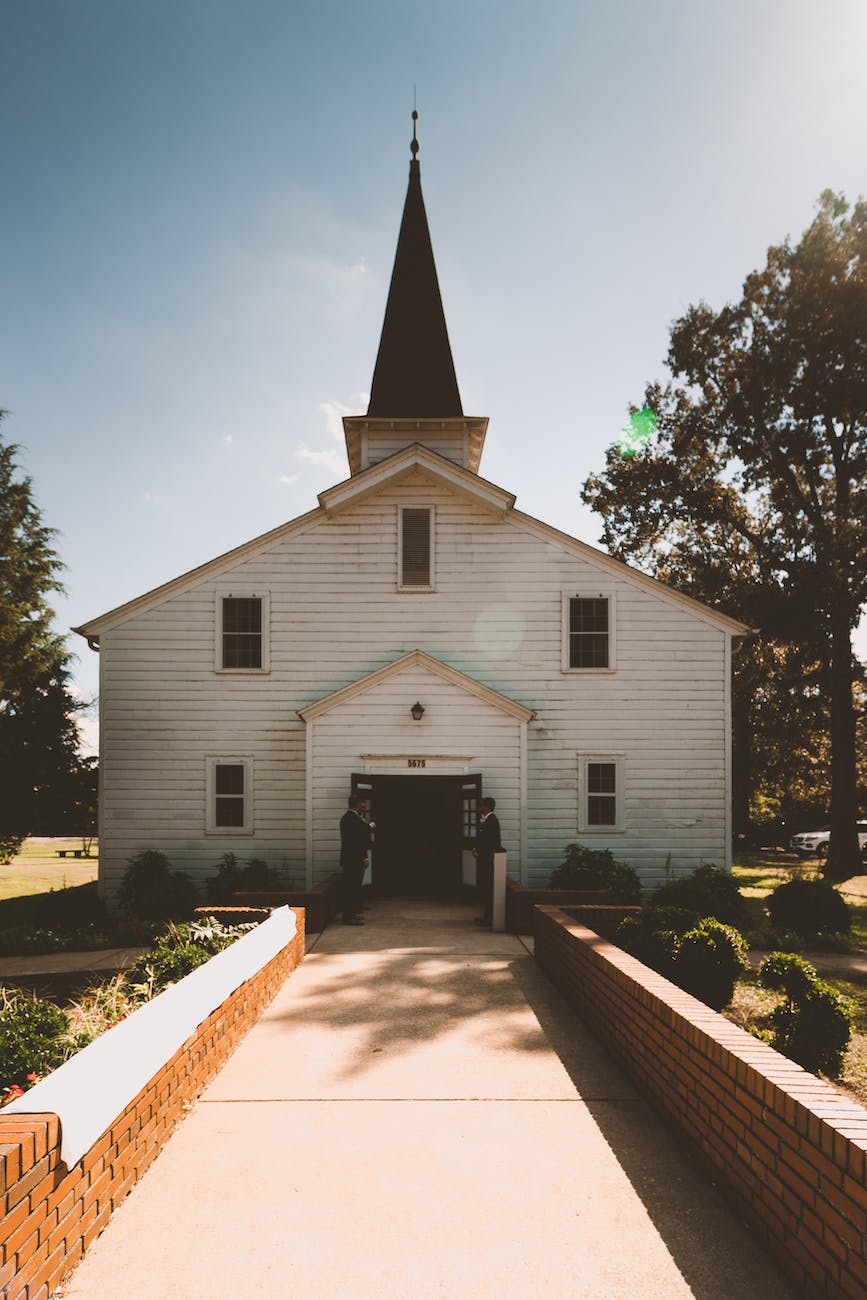
Reclaiming the institutional church

Dancing in the Kingdom- Table of Contents

Dancing In the Kingdom – Part 3 – Dancing in the Kingdom– Chapter 18 – Entering the Dance

Reclaiming the institutional church

[Bible references: Matthew 5:1-16, 38-48; Luke 6:1-49; John 13:1-17, 34-35]

There are many people who claim to love Jesus but not His church (which is his body). But we need to keep in mind that every accusation we may choose to hold against the church is against us personally. The church is comprised of sinful people, and that includes us. The church has done inappropriate things in the past and so have we. As part of our, and the church’s, sinful behavior is the ease with which we focus on the things that have gone wrong while forgetting to examine the “log” in our own eye. A quote from an old cartoon strip is appropriate here, “We have met the enemy and he is us.”[1]

The second thing we need to hold onto is that as Jesus loved the world enough to die for – and redeem – the very people who rejected him. That includes the church – which includes us. If we are commanded to love our enemies, what should our attitudes be towards the group that we are part of? It is normal for us to have higher expectations towards our own family than those who are outside the family. Because of that, it is normal for us to be disappointed by or hurt more easily by people within our family than by anyone else.

Those hurts and disappointments can lead to us overlooking all the ways in which the church has, in its broken way, still managed to fulfill at least some of the intentions God has had for the church. Within the very messiness of church history, the church had not totally neglected its ability to show love to one another and to reach in love to those outside the church. It is through the church that we have the Bible and faithful Christians through the years that created hospitals and orphanages, taken care of the widows and others who need care. It is the church that made it possible for us to hear about the gospel and respond to Christ’s invitation to follow him.

The church is the body of Christ. We serve as the hands and feet, etc. of Christ, doing together what is not possible to do by ourselves. In the apostle Paul’s articulation of the Body of Christ, he notes how we all serve as different parts of the body, helping each other grow by serving in the unique ways God has prepared for us. Furthermore, Christ has told us that we will be recognized as his disciples by how we serve one another in love. This is one of the grand themes of the Bible, God has reached out to us in love, and we can respond by loving him in return; also loving one another. It is through our reflection of his love that others will respond to God in love as well.

On this side of the second coming of Christ, we all remain broken and so our institutions will remain broken. But that does not mean that Christ is unable to use us (as individuals or as part of an institutional church) for his purposes and that does not mean that the goodness of Christ is unable to be reflected through us as individuals or groups or through the institutions we create as his co-heirs to bring mercy and justice to his image-bearers and the world he has prepared for us.

In formal or informal ways, we create the institutional church to help us more effectively serve one another within the Body of Christ and to serve others outside the Body of Christ. As we take an historical look at the expected mixed record of the Body of Christ’s broken church (and, we must remember, our personal records as well), we need to cling to Christ, His love, His sustenance, and forgiveness us for all the ways we have failed to love each other within the church and outside the church.


[1] Kelly, Walt, From a Pogo strip, 22 Apr 1970 www.thisdayinquotes.com/2011/04/we-have-met-enemy-and-he-is-us.html

Reflect

Sometimes our church organizations can be hard to love. Nevertheless, we cannot truly love Christ without loving his church. How could you better express love for your local congregation this year?

Observe

Read John 13:1-17. How can we love and serve the church as Jesus showed us?

Reorienting our institutions

Dancing in the Kingdom- Table of Contents

Dancing In the Kingdom – Part 3 – Dancing in the Kingdom– Chapter 18 – Entering the Dance

Reorienting our institutions

[Bible references: Jeremiah 29:1-14]

It is normal to organize ourselves to do as a group what we cannot do, or at least do as well, as individuals. Families can undertake the task of running a farm or a ranch better than any one individual. Communities can better protect themselves or do things like barn-raisings to replace a barn that had been destroyed. Communities also allow for the possibility for people with specialized abilities to earn income from the specialty while allowing others to focus on their own businesses more successfully. Businesses are organized to create products or services that could not otherwise be produced. Civic organizations are organized to handle various problems within our society and cultural organizations help our society to flourish. Governments allow communities to pool resources, create infrastructure to support our society and to provide law enforcement to keep the peace within communities.

It is to God’s glory that his image-bearing creatures can create organizations that exemplify our reflections of God’s creativity and transcendence and allow us to do all the sorts of things that help fulfill his intention for us to fill the earth and steward its resources. However, in our fallen world, the very large and pervasive problem with any institution we create is that communities and organizations are made up of people and – we must remember – all people, including ourselves, are sinful.

It then becomes our sinful tendency to dislike organizations, institutions, in general. One of the unfortunate organizations many of us tend to dislike – is the organized church. So, before we address other organizations, we need to address our attitudes towards the institution we call the church.

Emily Rose Gum suggests that it is from the creation narrative that we can see that God wants us to thrive in a way that allows our personal good and the common good to reinforce one another. But we and the institutions we create are fallen and need to be re-oriented toward the common good. Sometimes we need to create new institutions but sometimes we need to reinvigorate and restore fractured ones, such as our public education schools which provide education to our poorest neighbors. [1]

In the larger picture of reclaiming our institutions, Vincent Bacote reminds us of our dependence on the Spirit. It was the Spirit “hovering over the face of the waters” bringing life into creation and it is the Spirit who enables us to carry out the mandates of God, including the building of institutions to carry out those mandates.[2]

“The mandate of creation is central to who Christians are before God. This mandate calls for obedience, yes, but this should not be viewed as a heavy burden. Indeed, in fulfilling this mandate Christian believers become more of who God intends them to be. Importantly, this is not a mandate for a few but for all—all are participants, all are enjoined to participate in ways framed by the revelation of God’s word in the creative and renewing work of world-making and remaking. And it is in the divine nature of this work that vocation is imbued with great dignity. It is, in part, the appeal to every person, regardless of stature, giftedness, achievement, wealth, power, or personality that makes the Gospel so radical. Every person is made in God’s image and every person is offered his grace and, in turn, the opportunity to labor together with God in the creation and recreation of the world.” [3]

As we look beyond the church itself, we see that God has designated other organizations for service as well. Even those of God’s image-bearers who are not of the church may respond to God’s call to all of us to tend to His creation, however they may understand it. And just as God’s own church has a mixed record of accomplishment, these other organizations/institutions will certainly have a mixed record as well. We cannot assume, that despite not completely understanding God’s creation mandate, that within these organizations outside the church there is no good intended by them, and that God is not able to use them.

These “outside” organizations may include government, civic, cultural, and social organizations and are part of the ways in which God’s image-bearers are fulfilling his purpose for his creation. Humans cannot create institutions without some basis in faith, even if they try to ignore it. What we can do as Christians is bring to those institutions the sensibilities that are based on our faith.[4] While we cannot make these institutions perfect (after all, even we are not yet perfect) we can help instill grace, mercy, and justice in whatever capacity we can.

Institutions sometimes try to re-organize their structure to make themselves better in some fashion, but structure cannot override the character of the people within the organization. In whatever capacity we have, if we are present in an organization, we can be the “salt” that preserves and adds spiritual taste to the organization.


[1] Gum, Emily Rose. “Recovering an Institutional Imagination” Comment Magazine comment.org/recovering-an-institutional-imagination p.28

[2] Bacote, Vincent. “The Spirit and Institution Building” Comment Magazine, Sept 2005, comment.org/the-spirit-and-institution-building

[3] Hunter, James Davison. To Change the World: The Irony, Tragedy and Possibility of Christianity in the Late Modern World  Oxford University Press 2010

[4] Chaplin, Jonathan. “Loving Faithful Institutions: Building Blocks of a Just Global Society” The Other Journal 15 Mar 2010 theotherjournal.com/2010/04/15/loving-faithful-institutions-building-blocks-of-a-just-global-society/Chechowich

Observe

Read Jeremiah 29:1-14. How should we try to influence the organizations in which we work?