Pleading to God

Dancing in the Kingdom- Table of Contents

Dancing In the Kingdom – Part 1 – Shadows of the Kingdom – Chapter 5– Patriarchs

Pleading to God

[Bible references: Genesis 18:16-33; 1 Samuel 7:1-9; 2 Chronicles 30:1-20; Nehemiah 1:1-2:10; Philippians 1:3-10]

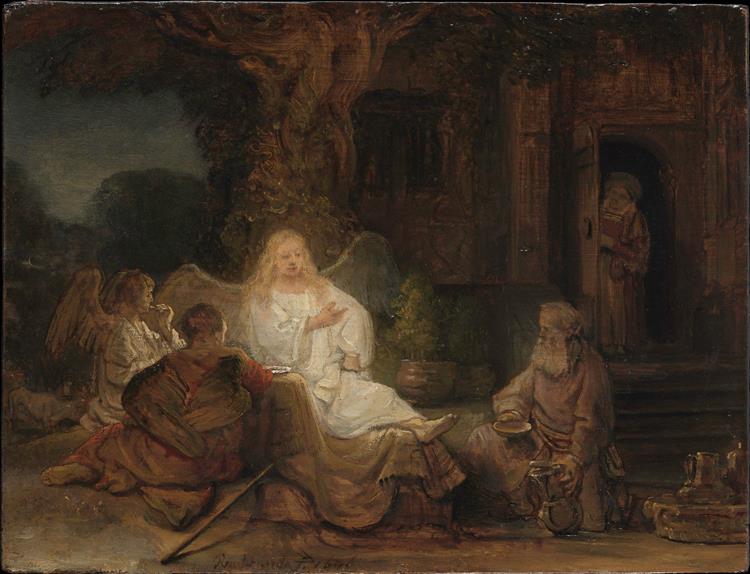
We don’t know the moment that Abraham recognized that one of the visitors was Yahweh, but it apparently happened by the time the visitors talked about Sodom and Gomorrah, which they were going to destroy. Concerned about his nephew Lot, who was living down there, Abraham made a plea to save the city if there were righteous people living in the city. At first, Abraham asked what if there were fifty righteous people living there, would they still destroy everyone there. When Yahweh said no, then Abraham asked, what about if there were 45 or 30 or 20 righteous people there.[1] Each time, Yahweh said that he would not wipe out everybody if there were only that many righteous people there. As it turned out, both Sodom and Gomorrah were destroyed after Lot and his daughters were given the chance to escape.


[1] De Young, Kevin. “Passionately Pleading with God is a Good Thing” The Gospel Coalition.org www.thegospelcoalition.org/blogs/kevin-deyoung/passionately-pleading-with-god-is-a-good-thing/

Observe

Read Genesis 18:16-33; 1 Samuel 7:1-9; 2 Chronicles 30:1-20; Nehemiah 1:1-2:10; Philippians 1:3-10. How are we encouraged to plead to God?
The Patriarchs

Dancing in the Kingdom- Table of Contents

Dancing In the Kingdom – Part 1 – Shadows of the Kingdom – Chapter 1 – Prelude

The Patriarchs

[Bible references: Genesis 12-50]                                    

Approximately 2000 B.C., a man named Abram[1] lived in the city of Ur (at that time a coastal city on what is now the Persian Gulf). Abram’s father took his family up the Euphrates River to the city that would be named after Abram’s brother, Haran and settled there. When Abram was 75, God called him to go to another country. When he arrived in Shechem, God told him that this would be the land given to his offspring. Abram did go down to Egypt briefly, but then returned to Shechem. By that point in time, the herds were so large that it was necessary for Abram and his nephew Lot to split up. Abram’s nephew Lot chose to move down to the valley of Sodom and Gomorrah.

When Abram was 90 years old, God told Abram that he would be the father of many nations, renaming him Abraham. But Abram would be 100 years old before his son, Isaac, was born. Abram did have a son, Ishmael, through his wife’s servant, but Ishmael would be sent away, becoming the father of the Arabs.

Isaac didn’t get married until he was 40. He was 60 by the time his only sons, the twins, Esau and Jacob were born.

Jacob had 12 sons and a daughter by 2 wives and 2 concubines. At one point, Jacob wrestled with an angel, who gave him the name, Israel (“struggles with God”).

Jacob’s son, Joseph, was sold as a slave by his brothers to a trader passing through to Egypt, where, through interesting circumstances he became 2nd in charge to the Pharaoh. Years of droughts led to Israel and his other sons moving to Egypt.


[1] To see how Biblical events fit into the history of the Middle East empires see Appendix B, “Timeline for Middle East Empires.”

Observe

Read Genesis 17. Abram was 99 years old and still had no son with his wife Sarah when God renamed him Abraham (“father of many nations.”) and then repeated his promise to Abram 24 years earlier. What does this tell you about patience and faith?