Recognizing the unity of Yahweh and Jesus

Dancing in the Kingdom- Table of Contents

Dancing In the Kingdom – Part 2 – The Kingdom Revealed – Chapter 11 – The Kingdom Enters

Recognizing the unity of Yahweh and Jesus

[Bible references: Genesis 3:14-15, 21; 4:13; 5:5-6; 6:5-6; 12:1-3, 16-33; Exodus 32:1-14; Judges 6:24; Psalms 29:11; 78:40; Job 42:10; Isaiah:4; 54:7-10; Jeremiah 42:10; Matthew 8:5-13; Luke 7:50; 8:48; 10:5-6; 12:49-53; John 2:13-17; 8:58; 10:30; 14:27; 16:33; 20:28; Romans 12:18-19; 2 Corinthians 5:18-19; Titus 2:13; 2 Peter 1:1; Revelation 6-10]

We need to remember that Jesus, as God, was present in whatever God was doing during the times of the Old Testament. There are various Hebrew designations for God in the Old Testament, such as Elohim or Yahweh. It remains a mystery as to whether those Hebrew names refer to all the persons together (Father, Son, and Holy Spirit) or whether they might refer to God the Father in particular. Either way, Jesus was included. On one side, anything that Yahweh did, was Jesus’ doing as well. On the other side, whatever Jesus did was the work of Yahweh as well. If Jesus was working at reconciling the world to himself from the beginning, that was the work of Yahweh as well.

While we usually have no problem seeing Jesus as a one bringing peace, Yahweh also desired peace. When Yahweh needed to discipline his people, he desired to show mercy, as well. While human sin drew the wrath of Yahweh, it also brought Yahweh sorrow. We also see that Yahweh did not correct His people when they petitioned Him to show mercy to others.

On the other side, while we usually have no problem seeing the violence of Yahweh, Jesus himself never promised not to use violence. In fact, he promised to bring division. Jesus did not admonish Roman soldiers about their jobs when he encountered them, even complementing them on their faith. At one point, Jesus even violently attacked property in the temple.

In the present time, we are instructed, if it is possible, to live peaceably with all people and that vengeance is reserved for God. But we also know, that at the end of the end times, violence will be unleashed in the final judgment.

Observe

Read Genesis 6:5-6; Matthew 8:5-13. Compare these two passages. How is God portrayed the same way in both passages?

Reflections on Violence

Dancing in the Kingdom- Table of Contents

Dancing In the Kingdom – Part 2 – The Kingdom Revealed – Chapter 11 – The Kingdom Enters

Reflections on Violence

Many people have trouble reconciling the portrait they see of God in the Old Testament versus the portrait they see in Jesus in the New Testament. The Old Testament portrait seems so violent while the New Testament portrait seems to show Jesus as non-violent even to the point of submitting to being executed. There have been various awkward responses to these seemingly disparate portraits that even include suggesting that the God of the Old Testament is a different God than the one shown in the New Testament.

Reflect

How do you perceive the different ways that God is presented in the Old and New Testaments?

Looking back – Signs and shadows of the kingdom

Dancing in the Kingdom- Table of Contents

Dancing In the Kingdom – Part 2 – The Kingdom Revealed – Chapter 11 – The Kingdom Enters

Looking back – Signs and shadows of the kingdom

[Bible references: Genesis 6:5-7; Exodus 25:17-22; Leviticus 16; Joshua 24:19; 2 Kings 17:6; 2 Chronicles 36:17-24; Ezra 1-2; Psalm 14:2; 53:6; Isaiah 43; Jeremiah 29:10; 31:31-39; Matthew 4:12-17; Romans 7:7-24; 8:20-22; Colossians 2:16-17; Hebrews 8:5; 10:1, 5-10; Revelation 21-22]

In the beginning, God created a good earth. Within that good earth, Yahweh created a special place, the Garden of Eden, where he could meet and live with the creatures who bore his image. The Garden was a place where the heaven and earth overlapped, a place where the goodness of Yahweh overflowed, a place of shalom, a place where his image-bearers were intended to thrive and develop as co-creators with Yahweh and ultimately create a civilization that would cover all the earth to the glory of God.

“Perhaps the most fitting symbol of the development of creation from the primordial past to the eschatological future is the fact that the Bible begins with a garden and ends with a city – a city filled with “the glory and the honor of the nations.”[1]

However, the image-bearers put Yahweh’s authority to the side and rebelled against him. The rebellion disrupted the union of the Yahweh’s kingdom with his creatures and all of creation was put into disorder. Human space and Yahweh’s space were separated and all of creation was damaged, including not only the relations between Yahweh and his image-bearers but between the image-bearers themselves.

In the Bible, the themes of heaven and earth can be thought of as heaven being God’s space and the earth being the human space. It may be helpful to think of these spaces as different dimensions. In the Garden of Eden these spaces overlapped, allowing God and man could dwell together. In the garden the humans were to be partners with God taking care of this garden, however they decided to do things their own way rather than God’s. This resulted in the humans being ejected from the space where heaven and earth overlapped, and the remaining story of the Bible is about how God is once again going to bring heaven and earth back together.[2]

The image-bearers found themselves in an increasingly vicious cycle of violence and corruption causing God to restart his project by creating a great flood. Fortunately, out of his deep love for his rebellious image-bearers, Yahweh was resolved to overcome the violence and oppression and had a plan to reunite heaven and earth, extending his kingdom over all the earth.

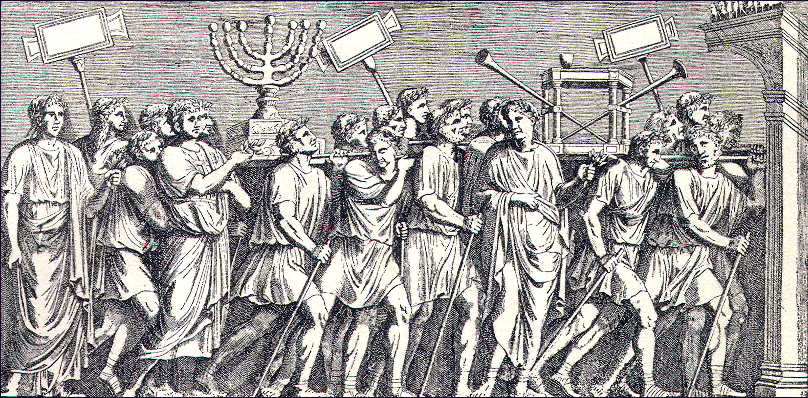
Yahweh set processes in place that would begin with Abraham and Sarah, continue through to the other patriarchs, and then continue with the nation of Israel. Under Moses’ leadership and with the guidance of the Holy Spirit, the tabernacle was constructed to be the place where heaven and earth would overlap within the Holy of Holies. The temple was decorated and designed to make people feel like they were going back to the garden.

The difficulty was that God’s space is perfect, pure, just, and holy but the human space is full of sin and corruption. This problem was somewhat resolved through the sacrifice of animals, where the animal absorbed the sin of the people and died in their place, creating a limited clean space. Within the Holy of Holies, the mercy seat on the ark was where God’s presence would be but could only be accessed once a year by the high priest.

However, the tabernacle with all its rituals were designed to only be a shadow of things in heaven and a shadow of the things that were coming, a shadow of how Yahweh’s relationship with his image-bearers would be restored and all of earth would be joined with Yahweh’s kingdom in heaven as was intended from the beginning.

In the meanwhile, in those shadows of the coming kingdom, Yahweh worked within the nation of Israel, his chosen people, to gradually reveal signs of his intended restoration. Within those shadows, the people of Israel could see the futility of their own efforts to reconcile with Yahweh despite their denial of the reality of Joshua’s words, “You are not able to serve Yahweh.” Within those shadows, the nation of Israel would rebel against the kingship of Yahweh, rejecting his reign and insisting on creating their own kingdom, like “all the other nations.”

The nation was reminded time after time that the law was good, but they were not, that their continual animal sacrifices were never a permanent solution to reconciling with Yahweh, that they needed a redeemer, they needed a change of heart. Prophets were raised up to warn the people of the consequences of their continual rebellion, but they also delivered messages of hope that, despite their rebellion, God would restore his people to himself.

Then the promised judgment for their rebellion came: Most of the nation was lost to history as ten tribes of Israel were scattered through the Assyrian empire, which would be followed by the temple being destroyed and with a remnant of the remaining tribes being sent into exile in Babylon. If there was any hope that the ritual sacrifices at the temple could reconcile the people with Yahweh, now even that possibility was taken away. The restoration of their own kingdom seemed to be in doubt, never mind the kingdom of Yahweh.

However, the exile was promised to be temporary. After 70 years, the exiled nation had the opportunity to return to the Promised Land and rebuild the temple. Once the temple was rebuilt it was now possible for the temple worship to continue and even for their government to be restarted, although it would be under the auspices of a foreign nation. Yet in all that happened, one thing had not changed; the hearts of the image-bearers had not changed. There was still a need for a redeemer.


167 Wolters, Albert M. Creation Regained: Biblical Basics for a Reformational Worldview William B. Eerdmans Publishing 1985, 2005. eBook (Kindle Locations 581-583)

[2] Bible Project “Heaven and Earth” Bible Project thebibleproject.com/explore/heaven-earth

Taxation and Representation

Dancing in the Kingdom- Table of Contents

Dancing In the Kingdom – Part 2 – The Kingdom Revealed– Chapter 10 – The Class of Apparitions

Taxation and Representation

[Bible references: Matthew 22:15-22; 17:24-27; Romans 13:1-7]

One of the issues at the beginning of the United States was a dispute over taxation without representation. The government in Rome set up a taxation system like all other governments in those days, the burden imposed by the taxes on the people was not a consideration. Furthermore, the tax collection that was done on behalf of the Roman government was handled by people that were often unscrupulous. When challenged about whether to pay those taxes, Jesus did not directly challenge the right of the government to collect taxes, but he used the image on the Roman coin to make a more significant point about idolatry.[1] The coin bears Caesar’s image (eikon) and belongs to that realm but God created us as his eikon and we belong to him.

The temple tax was established by Moses as a way of paying for the upkeep of the Tabernacle and was continued to support the upkeep of the Temple.[2] When challenged to pay the taxes by representatives of the temple, Jesus had a conversation with Peter which implied, that kings require taxes from strangers but not family, so as children of God, they did not need to pay the temple tax. Yet, so as not to cause offense, Jesus arranged to pay the taxes for Peter and himself anyway.


[1] By highlighting the physical features of the denarius used to pay the tax, Jesus gives us a number of things to think about. In the first place, the image of the emperor stamped into the coin’s surface, along with the blasphemous inscription with its claim to divinity2, call to mind the prohibition against images in the Decalogue (Exodus 20:4). By pointing out that his opponents possess and display such an object within the Temple grounds (21:23), Jesus seems to raise, not lower, the stakes of the conversation about money and human loyalty. The issue at stake here is nothing less than idolatry. (And this is not a problem that we can solve simply by printing different words on our currency — even words that confess our trust in God.) Furthermore, when we think about Jesus highlighting the physicality of that denarius — the coin stamped out by human hands for human purposes, and the image of Caesar imprinted on it — it’s hard to ignore the connection to those words from the beginning of Genesis about what God said the first time God stamped out a human being: “Let us make humankind in our image, according to our likeness” (Genesis 1:26). (Pape, Lance. “Commentary on Matthew 22:15-22”) Working Preacher www.workingpreacher.org/commentaries/revised-common-lectionary/ordinary; Donavan, Richard Niell. “Biblical Commentary (Bible Study) Matthew 22:15-22” Sermon Writer  sermonwriter.com/biblical-commentary/new-testament-matthew-2215-22/

[2] Smith, Dean “Why Did Jesus Pay the Temple tax?”; Keener, Craig S. “The IVP Bible Background Commentary New Testament Open the Word Sept 16, 2016, opentheword.org/2016/09/16/why-did-jesus-pay-the-temple-tax/ p. 92-93

Reflect

In our system of representative government, we don’t have a direct say in how our tax money gets used. Some people feel that some of our tax money is used for immoral purposes. What do you think our response should be?

Observe

Read Matthew 22:15-22; 17:24-27; Romans 13:1-7. What is the link between paying taxes and loving our neighbor?

Zealots

Dancing in the Kingdom- Table of Contents

Dancing In the Kingdom – Part 2 – The Kingdom Revealed– Chapter 10 – The Class of Apparitions

Zealots

[Bible references: Luke 6:15]

The Zealots were also known as Galileans because of the region in which they were concentrated and, also the founder of the group was Judas the Galilean. The Zealots were a messianic group and would only identify God as king. They would not accept any foreign rulers, in this particular case, the Romans.[1] Ideologically, the Zealots agreed on many points with the Pharisees, except for their refusal to accept foreign rulers. The more militant faction of the Zealots was known as the Sicarii (daggers) because of their use of assassination.[2]

One of Jesus’ twelve disciples was identified as Simon the Zealot. As a Zealot, Simon would have been looking for a ruler who would come from God that would displace the Romans. Since Jesus’ message was about the Kingdom of God (or Kingdom of Heaven), that would have been attractive to Simon.


[1] Marcos, Juan, and Gutierrez, Bejarano. “The Judaisms of Jesus’ Followers: An Introduction to Early Christianity in its Jewish Context”. Yaron Publishing, 2017 (Location 863-913)

[2] Mingren, Wu. “The Sicarii: The Jewish Daggermen with a thirst for Roman Blood” Ancient Origins 4 June 2017 www.ancient-origins.net/history-important-events/sicarii-jewish-daggermen-thirst-roman-blood-008179

Observe

Zealots

Read: Luke 9:51-55. Many of the Jews were waiting for a Messiah to free them from the Roman government, because that’s where they thought their problems were. The Zealots had the same hope but were also willing to violently act on that hope. We should probably also note that Jesus’ own followers were willing to call down fire on towns that rejected their message. In a world that is so violent, particularly against Jesus’ followers, why is violence not appropriate?

Proxy wars

Dancing in the Kingdom- Table of Contents

Dancing In the Kingdom – Part 2 – The Kingdom Revealed– Chapter 10 – The Class of Apparitions

Proxy wars

[Bible references: 2 Kings 17:1-6; 25:1-21; Jeremiah 1:14-16; Daniel 1:1-6; Ezra 1:1-4; 6:12; Ephesians 6:10-20]

Since the time of Adam and Eve a war has been underway. God’s Kingdom has found itself in a war with Kingdom of darkness, battling over the souls of God’s image-bearers. We cannot directly see the clash of spiritual kingdoms, but we see it indirectly, sometimes in clashes between image-bearers and sometimes within ourselves. The apostle Paul reminds us, though, that our struggle is not against “flesh and blood” but rather the “spiritual forces of evil.”

Even so, the spiritual war is played out in the human realm where we brokenly pursue love apart from God, hoping to find love somewhere else, whether in power, traditions, possessions, other people, etc. We then find that when we look for love other places than God, we are then confronted by fears which inevitably result in clashes, especially in times of change.

A great time of change was about to occur as the time approached for Jesus’ incarnation. There were clashes between empires that overran the Promised Land, clashes between groups of people in that land, and clashes of values between and within those groups.

As the time of Jesus’ incarnation approached, the residents of the Promised Land, begin to speak Aramaic instead of the Bible’s language of Hebrew. When the Greek empire moved in it tried to supplant all the local languages and cultures, resulting in an effort to the translate all the Hebrew writings into Greek, producing among many things, the Greek version of the Hebrew scripture called the Septuagint. The Septuagint became a major reference not only for the non-Hebrew speaking Jews but also for the church, particularly as the church became more Gentile. This change accelerated the loss of the Hebrew understandings of Scripture.

When the Roman empire overtook the Greek Empire, it initially allowed the use of Greek as the international language but would set up a clash later when the empire would replace Greek with Latin as its preferred language. The changes in languages and cultures became part of the clash over which writings should be considered as part of what will be called the Old Testament scriptures.

The Greek Church maintained the use of the Septuagint as it’s Old Testament, while the Latin speaking Roman-Catholic Church used only parts of the Septuagint. Later on, the Protestants rejected the Septuagint and only used the Hebrew writings that were approved by Jews in the early centuries A.D.[1]

The books used by the Roman Catholic and Orthodox Churches but not used by the Protestants are sometimes referred to as the Apocrypha (hidden) or the Deuterocanonical (second canon) books. Although the Protestants may disagree about whether those books are inspired, there is useful information in those books that help explain the culture of the world that Jesus was born into.


[1] Nelson, Ryan. “What is the Masoretic Text? The Beginner’s Guide” The Beginner’s Guide to the Bible overviewbible.com/Masoretic-text

Observe

Read Ephesians 6:10-20. What difference does it make if you are aware that the conflicts present in the world around us are manifestations of spiritual warfare?

Songs and reflections of the heart

Dancing in the Kingdom- Table of Contents

Dancing In the Kingdom – Part 1 – Shadows of the Kingdom – Chapter 9 – The Prophets and writings

Songs and reflections of the heart 

[Bible references: Psalm 1, 2, 3, 8, 11, 32;l Song of Songs]

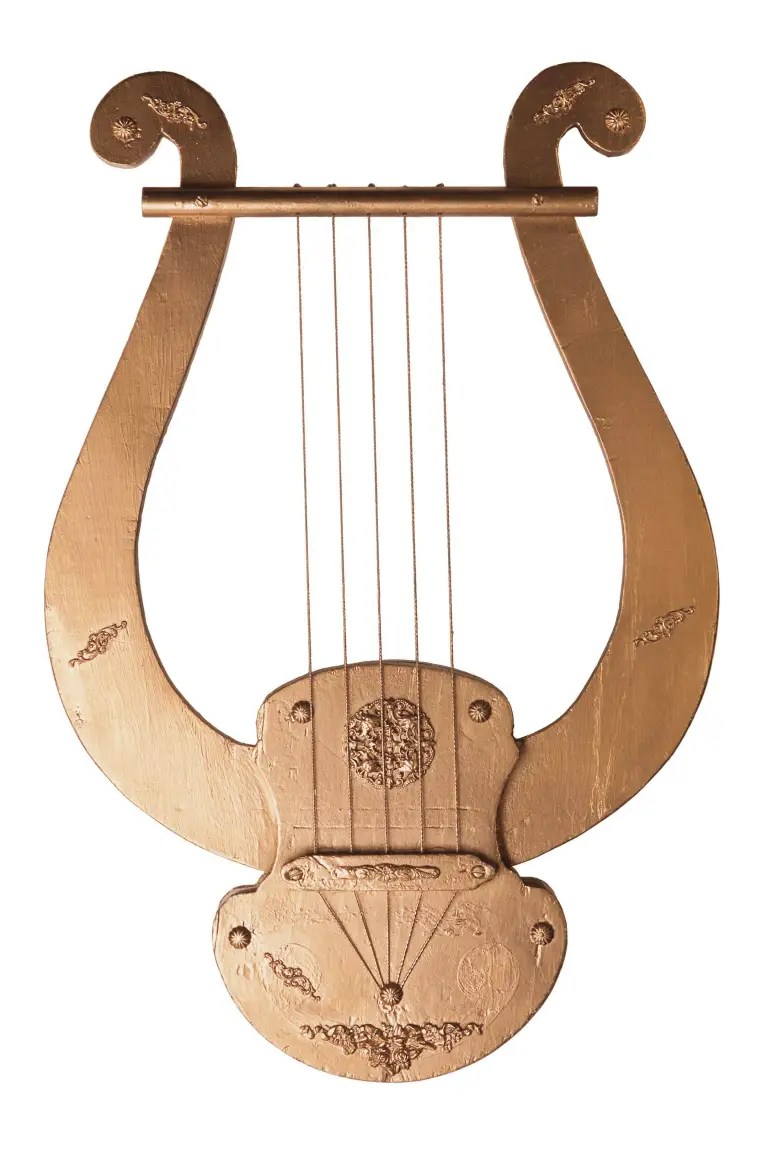
As creatures made in the image of the Creator, it is self-evident that we cannot avoid creating. We are also creatures that are born to worship, as evidenced by our popular culture. When we put those together, we get a work like the Psalms,[1] a book of poetry which was set to music. The psalms are a collection of praise songs written by various people, songs that reflect the thoughts of those people experiencing life with all its emotions in a broken world.

In addition to musical notations, several psalms have notations indicating the events which inspired the writing of those psalms or the kind of occasion that the psalms are used for. As poetry, the psalms use various poetic devices such as parallelism, acrostics, and figures of speech.[2]

The Psalms express various themes such as the character of God, the experience of people, the worship of God, lament, petitions for help, confession of sin, praise and thanksgiving, expressions of wisdom.[3] The emotions expressed in the Psalms are sometimes very raw with feelings of abandonment, questions of God’s provision, hatred, and vengeance. The inclusion of the full range of human expression is an acknowledgement of the reality of the human experience and an affirmation of being honest with God about our feelings while placing all of that in the context of a just and merciful God who is worthy of praise.

The Psalms are not the only place where poetry can be found in the Old Testament. There is poetry that can also be found in various portions of other books of the Bible. There is even one book of the Bible that is entirely a poem/song, The Song of Solomon (aka Song of Songs) which is a positive and passionate expression of marital love.

In addition to the expressions of wisdom that are found in the Psalms, there are other places where expressions of wisdom are found. The pair of books, Proverbs and Ecclesiastes, show the benefits of and limits of wisdom. Solomon was the author of Ecclesiastes and was the primary author of Proverbs. In 1 Kings 3-4, Solomon requests and is granted much wisdom to rule the nation of Israel. That wisdom is reflected in Proverbs as a collection of rules to live a good life. On the other hand, Ecclesiastes reflects the limits of wisdom in finding the meaning of life.


[1] The Hebrew name of the book is Tehillim, which means praise songs.

[2] Cole, Steven J. “Psalms An Overview: God’s Inspired Hymnbook;” Nally, Joseph R. “Overview of the Book of Psalms” Bible.org bible.org/seriespage/psalms-overview-god%E2%80%99s-inspired-hymnbook 

[3] Postoff, Matt. “Categorizing the Psalms” Fellowship Bible Church of Ann Arbor 21 Nov 2014 fbcaa.org/MAPBlog/PsalmsCategories.pdf

Reflect

In this day, we create songs and books of wisdom. We may not be writing scripture itself, but we are expressing ourselves in worship in the way that God has designed us. How do you express yourself to God?

Observe

Read Song of Songs. This passage is not discussed much in the church while our culture defines sexuality on its own terms. How can the church use this book?

Judgement Unfolds

Dancing in the Kingdom- Table of Contents

Dancing In the Kingdom – Part 1 – Shadows of the Kingdom – Chapter 9 – The Prophets and writings

Judgement Unfolds

[Bible references: I Kings 6:12; 2 Kings 17, 25; 2 Chronicles 36:15-16; Jeremiah 25:11-12]

The covenant God made with Israel had the proviso “if you follow my commands.” Israel continually demonstrated its inability to do that[1] and God’s judgment followed. The nation of Israel would suffer the consequences. The first sign of the consequences manifested itself in the splitting of Israel into two kingdoms.

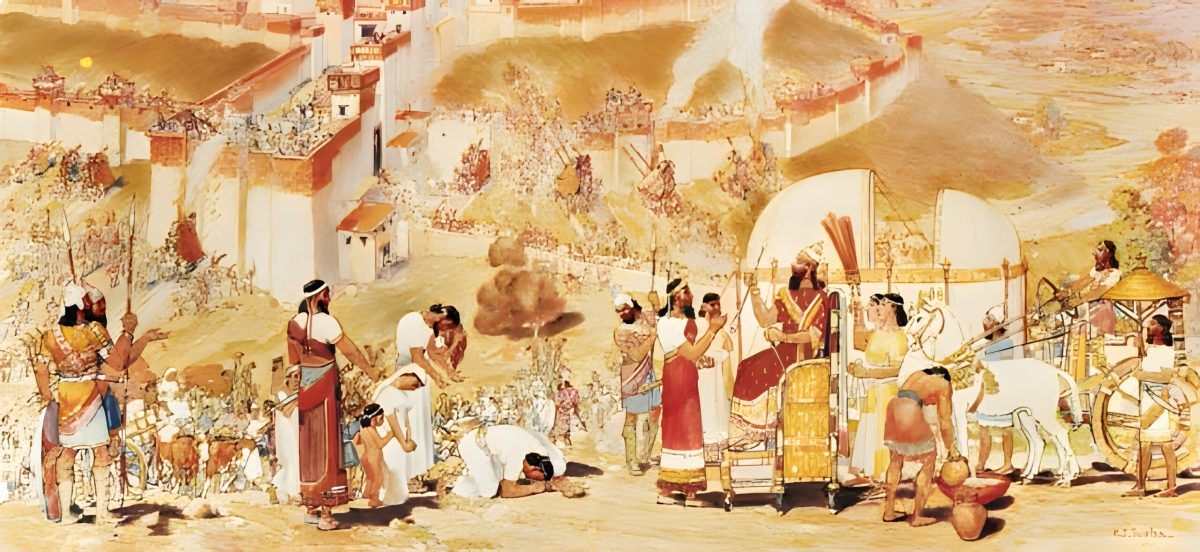
After that, the northern kingdom of Israel was the first to collapse in 722 BC with the invasion of the Assyrians whose policy was to scatter the captured inhabitants throughout their empire and replace them with Assyrians. These northern tribes seem to have been totally assimilated into the Assyrian empire and would not be heard from again in history.

In 586 BC, the Babylonians conquered the southern kingdom of Judah. The best and the brightest of Judah were taken as captives to the capital of Babylonia for “retraining” so that they could contribute to the Babylonian society. It was at this point that the nation of Israel would now be referred to Jews. It was from this point on that, despite the return of some of the Jews to their homeland, most Jews would now be living outside their homeland.


[1] Margalit, Ruth. “In Search of David’s Lost Empire” The New Yorker 22 June 2020 www.newyorker.com/magazine/2020/06/29/in-search-of-king-davids-lost-empire; Syace, A.H. “Polytheism in Primitive Israel” The Jewish Quarterly Review Oct 1889, Vol 2. No. 1 pp.25-26 University of Pennsylvania Press www.jstor.org/stable/1450128; Zevit, Ziony. Review of “The Religions of Ancient Israel: A Parallactic Approach” by Hess, Richard. Vol 5. Denver Journal 2002 denverseminary.edu/the-denver-journal-article/the-religions-of-ancient-israel-a-parallactic-approach/ Israel’s susceptibility to idol worship was so extensive, that archeological evidence indicates continuous polytheism. 

Observe

Read Jeremiah 25:11-12. It seemed hopeless. The unfaithful nation of Israel was no more. But promises were made by a faithful God who would eventually restore them. What are God’s promises to us?

Diaspora

Dancing in the Kingdom- Table of Contents

Dancing In the Kingdom – Part 1 – Shadows of the Kingdom – Chapter 9 – The Prophets and writings

Diaspora

[Bible references: John 13:35]

The term “diaspora” is usually reserved to refer to a group of people that has been scattered from a single location. In this case, the term is used to refer to the scattering of Jews from the Promised land. But this particular diaspora is only a part of God’s larger plans for His people.

Our God is a God of overflowing love. His love caused Him to create us so that His love could overflow from Himself to us. He wanted His image-bearers to carry out His mission of overflowing love and overflow from Eden to fill the entire earth. When we rebelled against His overflowing desire so that we could make a name for ourselves instead, He confused our language at Babel so that we would continue to flow out over the earth. When God wanted to prepare His Holy Nation for His mission, He scattered them to Egypt. When Israel rebelled against His mission of overflowing love, He scattered them from the Promised Land. The Son of God came in overflowing love to offer Himself in sacrifice in order to restore us to Himself. When the scattered Jews from many nations gathered for Pentecost, God reversed the action of Babel, and His message of overflowing love was shared in many languages so that the message of overflowing love would be carried to the Jews in many nations. To continue the overflow, God worked with Peter and Paul so that His love could flow out to the Gentiles as well. God further ensured the flowing out by using the Romans to scatter both Jews and Christians from Jerusalem. To this day, when our focus is more on building our Christian institutions, becoming too ingrown, God continues to scatter His people so that His message of overflowing love will reach more people in more places across the earth.

This program of overflowing creates a Dynamic Tension between our scattering and our unity. It would be well if our scattering was motivated by love so that we would continue to stay unified as we scatter. It would be well if our scattering was to reflect and uplift the different cultural groups within the church. Sadly though, our scattering is often due to divisiveness rather than love, contrary to the intent that the world will recognize that we are disciples of Jesus because of our love.

Observe

Read John 13:35. How is our love strengthened by our learning to love people different from ourselves?

The Ark in the Promised Land

Dancing in the Kingdom- Table of Contents

Dancing In the Kingdom – Part 1 – Shadows of the Kingdom – Chapter 9 – The Prophets and writings

The Ark in the Promised Land

[Bible references: Joshua 4-5; Joshua 18:1; 1 Samuel 4-6; 5:1-2; 6:19; 21-22; 2 Samuel 6:5-7; 12-13; 1 Kings 8:27; 1 Chronicles 21:29; 2 Chronicles 1:13;]

After Israel entered the Promised Land, the tabernacle and all its furnishings were originally placed in Gilgal.[1] After the land was settled the tabernacle was then set up in Shiloh where it stayed for two hundred years. During the time of Samuel, Samuel’s sons, without consulting God, removed the ark from the tabernacle to take it into battle with the Philistines who not only won the battle but took the ark with them. The Philistines found that although Yahweh did not see fit to help Israel win the battle, Yahweh did create issues with the Philistines. The Philistines responded by moving the ark a couple of times, but the problems did not disappear and so the ark was sent back to Israel.

The ark initially ended up in Beth Shemesh, but after 70 people died when they tried to look in the ark, the people of Beth Shemesh sent the ark to Kiriath Jearim where it stayed for 92 years. The Bible is not explicit about when it happened, but sometime during the reign of King Saul, the tabernacle, sans the ark, was moved to Nob and then to Gibeon.

After David established the capital in Jerusalem, King David set up his own tabernacle and then moved the ark there. In moving the ark, David had to learn a lesson. He first tried to have the ark carried in a cart, but when the ark started to slip out of the cart, the people died who touched the ark to prevent it from slipping out. So, the ark ended up in Obed-Edom’s house for a while. Hophni and Phineas learned the hard way that you don’t necessarily take the presence of God when you take the ark, but David learned the hard way that you can’t ignore the presence of God when you take the ark. David was successful in moving the ark to Jerusalem after he had the ark moved according to the instructions that God had given Moses.


[1] Joshua 4-5 – Although the tabernacle is not specifically mentioned, Gilgal seems to be the place where Israel settled until the land was divided and is where Passover was celebrated. In Joshua 9, Gilgal is where the Gibeonites come to make a treaty with Israel.

Reflect

Some people use objects or rituals as “good luck charms.” How does the story of the ark relate to that? Have you used a “charm” instead seeking the will of God?

Observe

Read 1 Samuel 4:1-11; 5:1-12. Contrast how God acts differently between these two passages.

Future Hope

Dancing in the Kingdom- Table of Contents

Dancing In the Kingdom – Part 1 – Shadows of the Kingdom – Chapter 9 – The Prophets and writings

Future Hope

[Bible references: Jeremiah 29:10-15; Jonah]

But in the end was God’s promise to restore his kingdom and bless all those who repent. One prophet was even sent to a Gentile nation to call them to repent or be destroyed. When they did repent, God held back his punishment – although history tells us that they would go back to their old ways, and eventually be destroyed. But a greater hope lay beyond that.

Reflect

Despite Israel’s constant failure, God’s plan was to discipline, not destroy, them. Their discipline would eventually be followed by God’s plan to provide the Messiah, the Savior of the world. What might that mean about God’s plan for you?

Observe

Read Jeremiah 29:10-15. The hope presented here seems to be a temporary one, but does it point to a hope beyond that?

Lament and Anger

Dancing in the Kingdom- Table of Contents

Dancing In the Kingdom – Part 1 – Shadows of the Kingdom – Chapter 9 – The Prophets and writings

Lament and Anger

[Bible references: Isaiah 1:2-20; 10:5-11; 13:1-22; 15:1-16:22; Isaiah 10:5-11; 66:24; Micah 5:10-15; Hosea 11:1-9; Luke 19:41-44]

God’s response to Israel’s unfaithfulness through the prophets was to lament. His lamenting included calls for Israel to repent and turn back to Him and was usually followed by anger and a promise to root out, pull down and destroy Israel or any other nation around Israel that was involved in sin.[1] Sometimes God used other nations to discipline Israel but that was usually followed with threats to those same nations for their own behavior.[2]


[1] Ex: Prophecy against Assyria (Isaiah 10:5-11), Babylon (Isaiah 13,), Moab (Isaiah 15-16) and others

[2] Enter the Bible, “Isaiah 1:29 – God’s Lament” Enter the Bible enterthebible.org/passage/isaiah-12-9-gods-lament; Banbury, Rosalind. “God Laments” Presbyterian Outlook pres-outlook.org/2021/03/horizons-8-god-laments/

Reflect

How does knowing God’s attitude towards sin affect our attitudes?

Observe

Read Hosea 11:1-9. What hope is expressed in the lament?

Messengers of a Greater Power

Dancing in the Kingdom- Table of Contents

Dancing In the Kingdom – Part 1 – Shadows of the Kingdom – Chapter 9 – The Prophets and writings

Messengers of a Greater Power

[Bible references: 1 Samuel 9-10; 13:8-14; 2 Samuel 12; Jeremiah 2:28; Matthew 5:17; 13:54-57; Acts 13:1; 1 Corinthians 14:29-33;  2 Corinthians 4:1-22]

During the entire time when Israel had kings, it also had prophets. Some prophets like and Elijah and Elisha did not leave any writings, although sixteen prophets did.[1] The prophets focused more on “forth-telling” (telling about changes that the kings and/or the people needed to make immediately) than “fore-telling” (telling about some future events) and were a constant reminder that God was acting in ways that transcended the earthly kingdom. Sometimes the prophets were there to encourage and sometimes to challenge the kings: The prophet Samuel was used to anoint Saul as king, then later had to let Saul know that God had rejected him. Samuel was also used to anoint David as king. Later, the prophet Nathan was used to let David know that God was aware of David’s sin with Bathsheba.

When we look at Jesus’ life and ministry, we see that he is uncompromisingly prophetic in a whole host of ways:

  • He is the revelation of the Father: he perfectly shows us what God is like.
  • He is the Word of God in flesh.
  • He is the mediator of the New Covenant between God and people.
  • He confronts evil and breaks the power of sin.
  • He calls people to return to God and live righteously.
  • He speaks truth to power (both religious and secular).
  • He only does what he sees the Father doing.
  • He is led by the Spirit and ministers in the power of the Spirit.
  • He prioritizes prayer and worship.
  • He speaks prophetically of the future.
  • He discerns the hearts and minds of people.
  • He challenges injustice and unrighteousness.

Jesus is the perfect expression of the prophet and so gives us the blueprint for a mature, holistic, multi-faceted way of being the prophetic church. We need to be prophetic in the way that Jesus was prophetic. Not just as individuals but as a Body with a collective prophetic consciousness.[2]

The Prophets of the Old Testament were precursors of the prophetic ministry of Jesus. And now the church, as the Body of Christ, has the privilege of carrying on that ministry.


[1] Isaiah, Jeremiah, Ezekiel, Daniel, Hosea, Joel, Amos, Obadiah, Jonah, Micah, Nahum, Habakkuk, Zephaniah, Haggai, Zechariah, Malachi

[2] Accessible Prophecy, “Understanding the Prophetic Function” Accessible Prophecy accessibleprophecy.com/2019/02/13/understanding-the-prophetic-function/

Reflect

Based on what we know about the role of prophets, how should today’s churches carry out the prophetic function within our church or within our surrounding culture?

Observe

Read 2 Samuel 12. How did God use Nathan to bring David to repentance?

Testing and waiting

Dancing in the Kingdom- Table of Contents

Dancing In the Kingdom – Part 1 – Shadows of the Kingdom – Chapter 8– Kings and kingdoms

Testing and Waiting

[Bible references: 1 Samuel 13:14; 26:11; 1 Samuel 24:1-7; 26:1-12; Acts 13:22]

Meanwhile, God had selected David, someone who was described as “a man after God’s own heart,” to be the next king. However, David’s reign did not begin until many years later. This meant there was going to be a long and difficult in-between time of testing:

  • Saul’s heart continued to be tested as he was rejected by God, but it would be a long time before the end of his reign. In the meanwhile, he had his duties to perform.
  • David had been anointed to be the next king, but it would be many years before it happened. In the meanwhile, there would be much conflict in which David had to trust God and do what he thought he needed to do. David didn’t test God by unnecessarily putting himself in harm’s way, rather he looked to God for wisdom and acted accordingly. When David had opportunities to kill King Saul, he refused to do so and instead waited for God to act.

This is an area where we typically fail: Adam and Eve could not wait for God to give them knowledge so they grabbed for it; Abraham and Sarah could not wait for God to give them a son through Sarah and so they used Hagar; Jacob could not wait for his inheritance so he and Rebekah had to trick Isaac; Moses could not wait for God to provide water by just speaking to the rock and so he had to strike it. In contrast, to be obedient, David was willing to wait for God to replace Saul and did not take advantage of the opportunities he had to kill him.

Reflect

How can we gain a sense of when we should act vs. when we should wait for God?

Observe

Read 1 Samuel 26:11; Acts 13:22. What did God say that David was “a man after my own heart?”

Rejecting God as King

Dancing in the Kingdom- Table of Contents

Dancing In the Kingdom – Part 1 – Shadows of the Kingdom – Chapter 8– Kings and kingdoms

Rejecting God as King

[Bible references: Judges 2:10-23; 21:25; 1 Samuel 8:1-22; Psalm 81:8-16]

Ever since the time of Adam and Eve, we have had a problem of thinking that we know better than God. After Israel started to settle into the Promised Land, that same problem appeared again with the diagnoses, “everyone did what was right in his own eyes.” That problem caused the cycle of 1) God disciplining Israel by allowing them to be dominated by one of the nations, which then caused 2) the people to cry for help, after which 3) God raised up a leader who overcame the dominating nation, 4) then once Israel is freed up, they turned from Yahweh and … the cycle repeated.

Eventually, Israel figured that they thought they knew what the problem was … that they needed a king … like everyone else. When the prophet, Samuel, was old and people became uncomfortable with Samuel’s sons leading the nation (Note: It seemed that Samuel had the same kind of problem with his sons as Eli had with his sons), the people rebelled against God and asked the prophet Samuel to ask God to give them a king. Samuel was troubled because he knew that their diagnosis was wrong. Yahweh confirmed that when he told Samuel that the real problem was not that they rejected Samuel, but rather they’ve rejected Yahweh as king. Unexpectedly, Yahweh said that he would grant their wish anyway. They will get a king (!!!) … like everyone else!!!. One of the lessons from this event is that we need to be careful; in our rebellion, God may condemn us to what we want.

Observe

Read 1 Samuel 8. Knowing that God may discipline us by giving us what we want instead of what we need, how should we then pray?

God raising his people

Dancing in the Kingdom- Table of Contents

Dancing In the Kingdom – Part 1 – Shadows of the Kingdom – Chapter 7– Settlement

God raising his people

[Bible references: 1 Samuel 1-2; Ruth 1-4; Matthew 1:1-16; Luke 3:21-38; 1 Corinthians 25; (See also, Sarah (Genesis 16-18) Rebekah (Genesis 25:19-26) Elizabeth (Luke 1:5-25))]

During the time of the judges, while the nation of Israel struggled and failed to follow God, we find that God was raising judges in response to Israel’s cry for help in their ongoing cycle of sin, God was also quietly working in the background through individuals to carry out His larger plan.

During the period of the Judges, God used drought to cause Elimelech and his wife Naomi and their two sons to move to Moab. Both of her sons got married in Moab and one of them married a woman named Ruth. When Naomi’s husband and sons were tragically killed, Naomi moved back home to Israel. While Ruth could have stayed in Moab, Ruth desired to follow Naomi and particularly to follow Naomi’s God. God used that act of faith to arrange for Ruth to meet and married Boaz, thus inserting a Moabite woman into the lineage of people who would become the ancestors of Jesus.

There is a recurring story that began in Genesis with Abraham and Sarah, where God works through women who have difficulties in pregnancy. In the time of Judges, the woman was Hannah. In her struggle to become pregnant, Hannah leaned on God. One day, while she was praying at the tabernacle, the priest, Eli, saw her and asked God to grant Hannah her wish. Shortly thereafter, Hannah became pregnant and gave birth to a son, Samuel. In an act of gratefulness, after giving birth to Samuel, Hannah committed Samuel to serve at the tabernacle with Eli. Little did Eli know at the time that God would raise up Samuel to be a priest in place of his sons. When Eli’s sons had become corrupt and unfit to serve as priests, God worked within Hannah’s fervent worship to raise up Samuel and eventually called Samuel to replace Eli as priest. Samuel ended up being a prophet for Israel and served as the last of the judges.

Reflect

We can get distracted by events around us and lose sight of the fact that God is always working around us, even when things seem to be in turmoil. How can that help us in our daily lives?

Observe

Read 1 Samuel 1-2. Consider how God worked through Hannah’s life to prepare Samuel to be the next priest. How can God use the trials in your life to bring glory to Himself?

Judges and the Cycle of sin

Dancing in the Kingdom- Table of Contents

Dancing In the Kingdom – Part 1 – Shadows of the Kingdom – Chapter 7– Settlement

Judges and the Cycle of sin

[Bible references: Deuteronomy 32:28; Judges 2:11-13; 8; 17-18; 21:15, 25; 1 Samuel 4]

Because Israel had not been faithful to “totally destroy” the people whose land they conquered, the foretold consequence became true, Israel became ensnared in the horrid idol worship practices of those people. Everyone did what was right in their own eyes.

To discipline his people, God allowed Israel to be plundered by the surrounding peoples until Israel cried for mercy. God then raised up leaders called judges to successfully fight off the oppressors and Israel would respond by turning from idol worship, but only for a while. Eventually Israel would fall away from Yahweh once again and the cycle of oppression, rescue, and falling away would repeat.

Observe

Read Judges 2. The book of Judges is a record of our penchant to turn from God and of his patient faithfulness, continuing to rescue us despite our persistent failure. How does this cycle make you feel?

The God of War

Dancing in the Kingdom- Table of Contents

Dancing In the Kingdom – Part 1 – Shadows of the Kingdom – Chapter 7– Settlement

The God of War

[Bible references: Exodus 22:21-22; Leviticus 19:33–34; Deuteronomy 10:17–19; 24:19; Joshua 6:17-21; 1 Samuel 15:1-3; Psalm 10:14–18; 68:5; 146:9; 2 Thessalonians 1:5-10; Hebrews 10:30; Revelations 19:17-21]

One of the troublesome tensions of the Christian faith is how to reconcile our picture of Jesus who’s come to bring us peace with the picture of the “pre-Jesus” God who seems so violent. In particular, the God who commanded Israel to “totally destroy,” to leave no one alive in the cities of the “Promised Land” they were to inhabit.

It has been so hard to reconcile the two images of the God, one of the Old Testament that engaged in violence and the second of one of the New Testament who came to “bring peace,” that from the earliest days of the church some Christians felt compelled to abandon the Old Testament altogether. There are several issues that affect how we deal with this problem.

There are less differences between how God is revealed in the Old vs. New Testaments than many think. (See Chapter 2; Paradoxes and Mysteries; Gracious, Merciful and Just). If we have a problem with God in the Old Testament, then we have a problem in the New Testament as well. Both Testaments together provide the full story of the Gospel and a full picture of God.

We need to see all suffering and death in context of Jesus’ suffering and death by execution. Jesus is God the Son, present from before Creation, the God of Creation, the God of Abraham, Moses and Israel, and the God who commanded Israel to cherem the people in Canaan. Jesus cannot be separated from all the activity ascribed to God’s activity in the Old Testament. The Wonderful Counselor, Mighty God, Everlasting Father, Prince of Peace that we are more comfortable dealing with, is only available because of all that He had done beginning with Creation, extending through history of the patriarchs and Israel and eventually his own incarnation, suffering and death.

We need to accept that there is much that we do not know. This comes to us in a couple of different ways. We must deal with our cultural separation from the unfamiliar ancient near east culture and a knowledge of God that is far beyond our comprehension. We also need to take Yahweh’s criticism of Job seriously, and Yahweh’s admonition to Isaiah that  “my ways are higher than your ways.” Then we also must be careful to not accuse Yahweh of injustice when there is so much that do not understand.

The totality of destruction implied by cherem catches our attention, but this is only a specific, though perhaps extreme, case of the question, “Why does God allow bad things to happen to good people?” The answer to the everyday issue of why “innocent” people suffer, is the same answer that underlies the killing of people that we assume are innocent.

Our sanitized culture makes it difficult for us in the modern day who live in a time where we do not witness the slaughter of animals we eat. We have a hard time associating with those who lived in the time when there was the ritual slaughter of animals, not for the sake of food but for the sake of sins. We have not had to watch the slaughter of animals and contemplate the awfulness of our sin and of God’s hatred of sin because of its awful effect on us. We are then even further separated from the concept of a God so jealous for us that he would even offer himself to be slaughtered on our behalf.

Our perception is further sanitized because we live in a world that has been cleansed by the effect of the grace of Christian values (OK, we have to admit that the church has not always lived up to its professed values) and the ameliorative effects of technology and medicine. It has been the Christian value of life that confronted the once common practice of abandoning babies on the street to die and made it rare. It has been Christian values that have elevated the status of women and children. It has been Christian values that led to the development of modern science. So many of what are now commonly accepted values in Western civilization, were adopted from Christian values, but it’s easy to forget where those values came from.

Yet another level of sanitization occurs when we don’t consider the extent of our own sin and depravity in context of the extent of the holiness of God. A contrast that caused the prophet Isaiah to proclaim, “Woe is me. I am a man of unclean lips from a people of unclean lips.”

We also are forgetful of the mercies of God. 1) Jonah was perturbed when Yahweh responded to the repentance shown by the Ninevites by not bringing about the threatened destruction. 2) The mercies shown to many of the idolatrous kings of Israel when they repented.[1] 3) In the case of Israel entering the Promised Land, we don’t know what kind of warnings the Canaanites may have received prior to the “total destruction” of their cities. We do know that Yahweh patiently waited until he “sin of the Amorites would reach their full measure.” The Canaanites may have had sufficient warning to change their ways (and they had, among other abhorrent practices, that of sacrificing their children to the flames) and yet they didn’t. While we, in our time, may think of the “total destruction” as genocide, it may be instead an act of mercy – reducing the pain and suffering that would otherwise go on.

Sparing the lives of the “innocent” within the borders of the Israel did lead to the Israelites to continue the reprehensible practices of the Canaanite religions, prolonging the suffering that Yahweh wanted to put an end to. Israel was susceptibility to fall into the sin of the nations around them and was warned that allowing the original inhabitants to live alongside of them, would cause the Israelites to adopt the same abhorrent practices – which is what happened.

God had already used the forces of nature to directly carry out his cherem version of justice (ex: The Great Flood which killed all people except Noah and his family, the crossing of the Red Sea in which innumerable Egyptian soldiers died). With the formation of the nation of Israel, God now had human agents to act on His behalf. When God commanded Israel to invoke cherem, they were acting as his agent to execute a type of justice that God had already been practicing.

How innocent were the Canaanites: men, women, and children? We can’t argue from silence that the Canaanites did not have a chance to respond to God’s warnings. We do know that God waited several hundred years before executing his judgement.

It is not just in the Old Testament that we witness immense suffering. All around us today and through the years before, there has been great suffering among God’s image-bearers caused by our own violence or the violence of natural events or the violence of birth defects. All these can cause us to question, “Why, God?”

These issues and many others cause us to grapple with how God is implicated in the violent activity and the suffering endured by those we consider to be innocent. We are not left with comfortable answers. But we also need to remember, that if we have a “God” we think we totally understand, then it is not God that we are really understanding. Also, if we have a “God” that we are fully comfortable with, then we are not fully dealing with the holiness of God and the totality of our sin.

Jesus dealt with the totality of our sin by his suffering and excruciating death. It is only by the violence endured by Jesus that He has become our Prince of Peace. This is the lens through which we must see the violence around us. But even with that lens, we are not likely to have a ‘satisfactory’ answer. Even with that lens we will still struggle.

Time and time again, we see ordinary people approaching God with raw honesty about human suffering. And God responds to them, because they reflect his own lionheart that’s hell-bent against evil and death. God wants our protest against the evil and pain in this world. … To be a Christian is never to be apathetic toward evil and suffering, nor to avoid protesting God. Instead, we are told to work out our faith in “fear and trembling,” which includes unflinching lament at all the evil and death in this world. We are meant to hold our hands open in foolish faith, to watch and wait with hopeful expectation for God to show up in surprising ways—to remind us that he is good and powerful and that he will grant us his own steadfast courage. We are called to the daring and bold love of God in Jesus Christ, who stopped at nothing—not even death on a cross—to fight and win back the glory and goodness of God’s original creation.[2]

Perhaps we are meant to struggle, to lament about all that’s wrong, evil, awful, terrible, sad, and more that our hearts can bear. But in our lament, not to give up the hope that is also in our hearts, the hope that God our Father is alive, that our Father cares so deeply that He gave His Son, that miracles still do happen and that we can expect God to show up in our midst.


[1] Rishawy, Derek. “God’s mercies aren’t so new”  Christianity Today 17 Mar 2020 www.christianitytoday.com/ct/2020/april/gods-mercies-arent-so-new-rishmawy.html

[2] Hill, Preston. “Have Christians Forgotten How to Fight with God?” Christianity Today 21 Dec 2021 www.christianitytoday.com/ct/2021/december-web-only/problem-of-evil-christianity-faith-wrestling-with-god.html

Reflect

What have been your conflicting ideas between the Old and New Testaments?

Observe

Read 2 Thessalonians 1:5-10; Revelations 19:17-21. Why does God’s justice need to be meted out with violence?

God’s fullness, his followers’ emptiness

Dancing in the Kingdom- Table of Contents

Dancing In the Kingdom – Part 1 – Shadows of the Kingdom – Chapter 7– Settlement

God’s fullness, his followers’ emptiness

[Bible references: Numbers 33:55-56; Deuteronomy 7:1-5; 12:2-3, 29-32; 6:17; Joshua 3:3; 4; 6; 10:1-15; 23-24; Isaiah 65:6-7]

God’s provision though was going to require their involvement. It would start with the way they crossed the Jordan River where the people carrying the ark needed to get their feet wet in the river before it would stop flowing. And since this time, the river would now be the boundary of their new land, the people were instructed to set up a monument of twelve stones to be a reminder God’s provision. The next miracle which came soon after was the crumbling of the walls of Jericho which occurred after seven days of marching around the city. That miracle would be followed by others as the people of Israel continued to capture the cities.

According to the message that Yahweh shared with Abraham, the entry of Israel into the Promised Land meant that the sin of the Amorites had now reached its full measure. As with the time of Noah, that full measure would now end in the destruction of the inhabitants of the land, this time by the people of Israel. The danger to Israel would be, that if the current inhabitants of the land with their idolatries and atrocities, which included sacrificing their children to be burned alive, were allowed to live among the people of Israel, the people of Israel would be tempted to also turn from God.

So, beginning at Jericho, the people of Israel to instructed to “totally destroy” (Hebrew cherem)[1] the inhabitants of the city. This instruction would be repeated other times as well. The problem that would appear is that Israel did not always follow these instructions with the consequent result that Israel would continuously get drawn into the idolatries of the current inhabitants.

Before Joshua died, he challenged the people to serve Yahweh and the people responded that they would choose to serve Yahweh. Joshua replied that they could not serve Yahweh, the God who is so holy. Nevertheless, the people responded that they would serve Yahweh. Joshua then said that they were “witnesses against themselves.” They would be. In the end, they did not follow God’s commands to defeat the tribes in the Promised Land. They did not “completely destroy” the cities as they were told. Israel therefore allowed themselves to be subject to continual temptation to sin by turning from worshipping God and towards worshipping idols, participating in the same atrocities that God found so reprehensible.


[1] Lyon, William L. “Between History and Theology: The Problem of H9 Erem in Modern Evangelical Biblical Scholarship” Florida State University, dissertation Spring 2003

Reflect

Our culture has traditions like New Years’ Resolutions where we promise to make changes in our lives, yet 85% of resolutions fail.[1] What make us unsuccessful so often?


[1] Tabaka, Marla. “Most People Fail to Achieve Their New Year’s Resolution. For Success, Choose a Word of the Year Instead” Inc.com  www.inc.com/marla-tabaka/why-set-yourself-up-for-failure-ditch-new-years-resolution-do-this-instead.html

Observe

Read Deuteronomy 7:1-5.  Why do you think that the Israelites did not follow God’s instructions about destroying their enemies?

Courage and memory

Dancing in the Kingdom- Table of Contents

Dancing In the Kingdom – Part 1 – Shadows of the Kingdom – Chapter 7– Settlement

Courage and memory

[Bible references: Numbers 1; Deuteronomy 31:1-8; Joshua 1:1-9; Joshua 3-4; Joshua 5:13-14; Deuteronomy 6:10-12]

When the people of Israel first approached the Promised Land, twelve spies were sent out to scout out the land. Joshua and Caleb were the only two spies that did not bring back a report of discouragement. The discouragement brought by the other ten spies caused all the people of Israel to rebel against God as they forgot all the miracles of God’s provision in their flight from Egypt. This resulted in God subjecting the people of Israel to encamping in the wilderness for forty years. All the adults except for Joshua and Caleb, were subject to die in the wilderness before the people of Israel would enter the Promised Land.

It was therefore Joshua who was chosen to lead the people into the Promised Land at the end of the forty years. As before, the nation of Israel would encounter other people already living in the land, so Israel would need to fight for the land; it would not be easy. Before Joshua led his people into the land, God repeatedly said to Joshua, “Be strong and of good courage … do not be terrified or discouraged.” Then as a refresher, God also performed miracles as the people entered the land, causing the Jordan River to cease flowing to allow the people to cross on dry land – repeating the miracle of the parting of the sea as they fled Egypt.

Before Israel even left Egypt, the people were given gold and other wealth that was not theirs, the water from miraculously made springs and the manna that fell from the sky was not theirs. Now the homes and fields that God gave them to capture were the provision of God as well.

Reflect

Joshua was certainly encouraged when the nation crossed the Jordan River on dry land just as the nation crossed the Red Sea on dry land 40 years earlier. When trying to follow God, what encourages you?

Observe

Read Joshua 1:1-9. How might the instructions to Joshua help to give him courage?