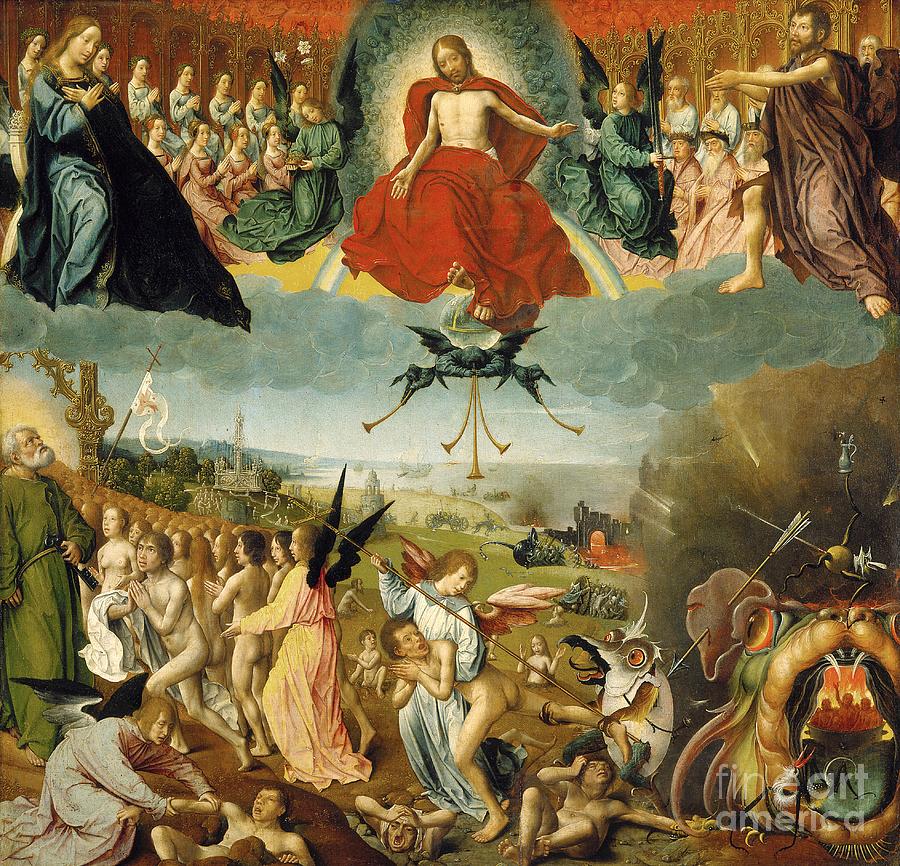
Reconciliation

Dancing in the Kingdom- Table of Contents

Dancing In the Kingdom – Part 3 – Dancing in the Kingdom– Chapter 18 – Entering the Dance

Reconciliation

[Bible references: Luke 19:11-27; John 13:34-35; 14:15-31; 16:7-15, 33; Romans 5:1-11]

Keeping in mind that we serve as Christ’s ambassadors to the world with the message of reconciliation, Emmanuel Katongole and Chris Rice have summarized ten aspects of that reconciliation:[1]

  • Reconciliation is God’s gift to the world. Healing of the world’s deep brokenness does not begin with us and our action, but with God and God’s gift of new creation.
  • Reconciliation is not a theory, achievement, technique, or event, It is a continuous process, a dance if you will, with our fellow image-bearers.
  • The end toward which the journey of reconciliation leads is the shalom of God’s new creation — a future not yet fully realized, but holistic in its transformation of the personal, social, and structural dimensions of life.
  • The journey of reconciliation requires the discipline of lament.
  • In a broken world God is always planting seeds of hope, though often not in the places we expect or even desire.
  • There is no reconciliation without memory, because there is no hope for a peaceful tomorrow that does not seriously engage both the pain of the past and the call to forgive.
  • Reconciliation needs the church, but not as just another social agency or NGO,
  • The ministry of reconciliation requires and calls forth a specific type of leadership that is able to unite a deep vision with the concrete skills, virtues, and habits necessary for the long and often lonesome journey of reconciliation.
  • There is no reconciliation without conversion, the constant journey with God into a future of new people and new loyalties.
  • Imagination and conversion are the very heart and soul of reconciliation.

The heart of reconciliation is love. When we love and reconcile one another with others in the body of Christ, that is, if we can love the people we don’t like and become reconciled, that becomes the visible grace of God that can even be recognized by those outside the church and draws them to that same love and grace of God. Our task from the beginning was to serve the earth. Jesus lived that out, not by growing crops but by healing the sick and loving the outcasts. We continue that task by “Dancing in the Kingdom,” expanding God’s flourishing glory as we respond to Jesus’ call to us to “occupy till I come.”


[1] Katongole, Emmanuel & Rice, Chris. Reconciling All Things: A Christian Vision for Justice, Peace, and Healing Intervarsity Press, 2009

Observe

Read Romans 5:1-11. How do we prepare ourselves for the work of reconciliation?

Discipline of Distress

Dancing in the Kingdom- Table of Contents

Dancing In the Kingdom – Part 3 – Dancing in the Kingdom– Chapter 15 – Reforming our Souls

Discipline of Distress[1]

[Bible references: Psalm 11:1-7; 24:1-10; Acts 4:23-31]

“Whenever you are in a time of stress, you should go to the Psalms. They have a medicine for everything, they depict every situation that a human being can be in, and they’ve addressed every emotion you could ever have. They also tell you how to process that emotion or about that situation before God.” [2]

Often in times of difficulty we are prone to turn our focus on whatever it is that is bothering us. This spiritual discipline, sometimes known as “don’t waste an illness,” helps us to confront what has caused us distress, and then to use our distress as an opportunity to lean more fully on God. Instead of being preoccupied by a difficulty we can learn to become occupied with the presence of God.

There are three ways distress can affect us.

  • Distress tends to cause us to focus on the problem in front of us. Like Peter, when He saw Jesus walk on the water, tried to also walk on the water but he became distracted by the winds and waves and lost his focus on Jesus.
  • At other times, distress can make us lean into whatever means of control we have, but again, we focus on the means of control that are right in front of us, forgetting that we are not the ones really in control.
  • Also, as part of needing to control our circumstances, we may avoid acknowledging our suffering or our fears instead of being honest about them to God, which will allow those things to control us later.

When we are confronted by things that cause us distress, we can train ourselves to focus more on God than the situation immediately in front of us, to remember that the Lord is on the throne, that He knows our situation, that He is in control, and that He knows our fears and concerns, that He has a plan. In the future, we may be able to look back like Peter and Joseph and see God’s hand at work in times of distress.[3]

In difficult times, worrying may indicate that we are thinking that we know more than God about how things should be working, and we are worrying that He is not going to get it right. In fact, God may also be testing us, to help us come to grips with what is in our heart, to better understand ourselves, to grow in the faith and to examine our priorities.


[1] Keller, Tim. “Disciplines of Distress” Redeemer City to City 26 Mar 2020 redeemercitytocity.com/articles-stories/tim-keller-disciplines-of-distress

[2] Keller, Tim. “Disciplines of Distress” Redeemer City to City 26 Mar 2020 redeemercitytocity.com/articles-stories/tim-keller-disciplines-of-distress

[3] Peter is remembering that Herod, Pontius Pilate, the Gentiles, and Israelites were anointed to do what God had already predestined them to do. Gen 5:20, Joseph is telling his brothers that the very things that they had intended to do evil, God was going to use it for the good.

Observe

Read Psalm 11:1-7; 24:1-10; Acts 4:23-31. In these passages, what did the people concentrate on in their distress?

Our Mandate

Dancing in the Kingdom- Table of Contents

Dancing In the Kingdom – Part 3 – Dancing in the Kingdom– Chapter 14 – Remembering our creation

Our Mandate

[Bible references: Genesis 1:26-28; 2:18-25; 3:6; 39:22-23; Matthew 17:10-13; Acts 3:19-42; 1 Peter 5:10]

We have seen how our journey, the journey of God’s people, creatures made in God’s own image, began with our ordination in the Garden of Eden and we have seen what God has intended for our future. We have seen how that intention has not changed despite our rebellion which continues to this day, and how God has not ceased to work with us, His people, despite our persistent rebellion. We have seen God’s patience and tenderness in not totally abandoning us despite our rebellion and how He has called us generation after generation – from the patriarchs and prophets to the apostles and all who are called Christian – to join Him in His ongoing restoration of His Kingdom on earth.

As image-bearers, we still are charged with the work of stewarding His creation, However, we must be restored ourselves before we can fully join Him in His work. That work of restoration begins when the Holy Spirit comes within us to unite us to God and His community. That is the work God must do within us.

In the previous chapters, we have followed how God called his image-bearers to join in the work that he began and then how, through the years, his image-bearers have joined that work, sometimes successfully and sometimes not. In this chapter, as we prepare to consider how to move forward, we will revisit that multi-faceted call to rule over the earth, to be fruitful and multiply, to fill the earth and subdue it” and to cultivate[1] and keep it, to create beauty. This call to act as God’s stewards of His creation is a call to use our gifts of intelligence and creativity, to cultivate the resources of the earth to establish a godly culture and civilization. This call is sometimes called the “cultural mandate,” where our culture includes all the things we discover and make and pass on from one generation to the next: our food, language, sports, arts, businesses and their products, civic organizations, and governments, etc.

The charge to “have dominion over” and “subdue” the earth and all its creatures includes physical, cultural, and intellectual activities such as farming, mining, manufacturing, government, arts, civic organizations, education, sciences, technology, and many other activities. But the primary place of God’s kingdom is to restore the souls of men. All would be well if all souls were in right relation to God, everything else would fall into place. Evangelization of the souls of all men is the ultimate goal. But if we think of the ways in which God, out of his overflowing abundance, finally managed to touch our hearts, there were many steps and many different ways in which we were individually touched by the hand of God.

As God’s image-bearers we are uniquely equipped to imagine and discover what kind of possibilities can be made of the overflowing abundance of  God, the physical resources He has provided for us: turning grain to bread, grapes to wine, oil to energy and plastics, iron ore to steel, limestone and shale and clay to cement, and many other things we have made from many types of resources. We are uniquely equipped to imagine and discover out of God’s overflowing abundance what kinds of ways we can organize ourselves to fulfill our responsibility to subdue and cultivate the earth by creating organizations such as businesses, civic and social organizations, political parties and non-profit organizations, governments and educational and religious institutions.[2] In all of these activities we can reflect God’s knowledge and wisdom by engaging in intellectual pursuits such as reading, writing, mathematics, sciences, philosophies, language arts, history, engineering, forensics, medicine, law, etc.  


[1] Huber, Dave. “Avodah Word Study” EFCA Today Summer 2012 www.efcatoday.org/story/avodah-word-study

[2] Manahan, Ronald E. “A Re-Examination of the Cultural Mandate: An Analysis and Evaluation of the Dominion Materials” Docsbay Grace Theological Seminary dissertation May 1982 docsbay.net/A-Re-Examination-Of-The-Cultural-Mandate

Reflect

We were assigned priestly duties in the Garden of Eden. As believers, we are to be kingdom of priests. As God’s care for His Creation continues, so does our mandate. What things can you do (and are equipped to do), with God, to fulfill His mandate?

Observe

Read Genesis 1:26-28; 2:15; 39:22-23. How would the world be different if we fulfilled our duties towards creation in the same way the Joseph fulfilled his duties?

Mystery of the church

Dancing in the Kingdom- Table of Contents

Dancing In the Kingdom – Part 2 – The Kingdom Revealed – Chapter 13 – Distinctives within the body of Christ

Mystery of the church

[Bible references: Acts 2:42-47; 1 Corinthians 12:17, 27; 2 Corinthians 5:20; 1 Peter 2:9]

What is the church?

As commonly used in current times, the “church” is a building to go to. In biblical terms it referred to an assembly of believers (called out ones).[1] How we understand this idea can influence our behavior. There are a few biblical metaphors that describe the church.

  • The body of Christ – This metaphor brings the ideas: that Christ is the head of the church, and we are His presence in the world, that each of us has a unique role in bringing Christ’s presence in the world. Our unique roles are distinguished by the spiritual gifts imparted to each of us to enable us to build each other in our faith.
  • A holy priesthood – This metaphor brings the idea that we have a relationship with God and can act as intermediaries.
  • A temple – This metaphor describes each individual as a stone in the temple and that it is all of us together who make up the temple, that is, the place where God resides on earth.
  • Ambassadors – This metaphor highlights our role in representing God’s to those not reconciled to God.

In the beginning, the organization of the church was not given in detail but seemed to be a cohesive group that “devoted themselves to the apostles’ teaching and to fellowship, to the breaking of bread and to prayer … had everything in common … broke bread in their homes and ate together with glad and sincere hearts.”

Is the church more than a Jewish sect?

[Bible references: Romans 11:17; Ephesians 3:6]

At first the church was mainly a Jewish sect. Jesus focused his ministry within the borders of Israel and his disciples were mainly Jewish. After Jesus died, that situation did not change much until Jesus took definitive steps with Peter and Paul to reach the non-Jews (Gentiles). Until that happened, the church mainly consisted of Jews who happened to also be believers, and as Jews, kept up many Jewish practices. But when Gentiles started to be included, there was the question of whether they needed to become Jewish to belong. It took a council of the church to determine that Gentiles were not bound by the Jewish practices. But even after that council, the debate persisted.[2]

In the Old Testament, we are told that Israel will be a blessing to the rest of the world, but it was not revealed just how that would happen. In Ephesians 3, the apostle Paul explains that “through the gospel the Gentiles are heirs together with Israel, members together of one body, and sharers together in the promise in Christ Jesus.” And then in Romans 11, Paul explains that the Gentiles were “grafted” into the family of believing Jews, of whom Abraham is the root, so that the Gentiles may receive all the same blessings.

What is the visible and invisible church?

The invisible church consists of all those, past, present, and future, who have put their trust in Christ. Only God knows who they all are. The visible church is the groups of people gathered together as communities. Both believers and unbelievers may be in the visible church.

Some congregations/ denominations are very strict about how to interpret scripture and/or have a limited view of forgiveness, and so would put limits on who they would consider to be in the church.[3] Other congregations/denominations have an extreme view that all of society should be under Christian rule[4] and then misused Luke 14:23, “Go out into the highways and hedges and compel them to come in,” that they would even resort to torture in order to persuade a people to make a “confession of faith.” Then there are those who think that everyone will ultimately be saved.[5]

Who has authority in the church?

As the church grew and spread throughout the Roman Empire, the natural development was to “institutionalize” the church, trying to make the church more effective with more formal organization. While the apostles were still alive, it was possible to unify the church around the apostles, but of course that was temporary.

Over time, different governance models emerged within the church as there was no model within the church except for the synagogue. In the episcopal model, there is a single leader, or bishop, who oversees a group of congregations and selects the pastors for each congregation. In the presbyterian model, there is a “plurality” of elders, who oversee a congregation or a group of congregations – the congregation may elect their pastor, but the Presbytery has to approve whoever is selected. In the congregational model, the congregation itself is its ultimate overseer and selects its pastor.

Some congregations are independent from one another, and some are affiliated with other congregations. The affiliation may be a denomination where there is strong oversight by the denomination over the individual congregations, but some affiliations are mainly an association for the purpose of sharing resources, but the association has no oversight function.

Some congregations emphasize the importance of maintaining apostolic authority by maintaining the transfer of authority of the apostles and trace the leadership of the church from one generation to the next beginning with the apostles.[6] The Roman Catholic denomination further emphasizes their authority is transferred from the apostle Peter, whom they think was given the most authority from Jesus. Other denominations will maintain that they are apostolic because of their faithfulness to scripture and therefore to the apostolic teachings.

One issue related to authority within the church is related to gender roles. Due to apparent conflicts in some Bible passages, two main views have emerged regarding the role of women in the church On one side, there is no restriction of ministry roles because of gender, but on the other side, women are restricted from any role in which they have spiritual authority over men.

What is the role of elder, bishop, deacon, priest?

The New Testament doesn’t clearly specify how to organize a congregation and that has resulted in congregations organizing themselves in a variety of ways. The New Testament does show examples of elders (aka bishops) serving as spiritual leaders of a congregation and deacons serving the physical needs of the congregation. Priests, in the Old Testament performed duties for God on behalf of the other people. The New Testament talks about Christ being the high priest for all of us but then talks about all Christians as being priests since we all have direct access to God and our role as Christians is to present ourselves as a living sacrifice to God.

The first denominations that emerged did keep the title of a priest, no longer offering the Old Testament sacrifices but rather now sharing the sacrament of the Last Supper. The Orthodox and Catholic traditions consider the bishops who oversee the priests to be the elders of the denomination. The priests are chosen to serve the sacraments, although they also serve in other ways with deacons helping the priests in carrying out the liturgy in the worship service or serving in other ways as well. In this context, the spiritual leadership of bishops or priests is recognized by the use of honorific titles such as Reverend or Father.

Protestant traditions vary. Anglican and Episcopal congregations retain the title of priest, while in other Protestant traditions congregations are led by pastors or elders.[7]

In some congregations, the pastor is considered to be the elder and the lay leaders are considered to be deacons. In other congregations the pastor is considered to be a teaching elder (if that title is used) while the lay leaders are considered to be ruling elders, or just elders. Some congregations are governed primarily by the pastor, some by a group (plurality) of elders, and some by the congregation itself.

What is the function of a creed?

As explained at the beginning of this chapter, there is much of God that is beyond comprehension. So, when God revealed himself through the prophets, the revelations were more in the form of stories and the interactions of God with the world than a spelled-out theology. That type of revelation requires us to do some of amount of interpretation as we try to better understand God, and that process of interpretation has been the function of the church at large. However, some individuals in the church came up with teachings that seemed to be more than minor differences and actually opposed the more accepted teachings of the church. Those ideas were considered to be heretical. Over time, to combat the heresies that arose, the church developed abbreviated teachings of the church called creeds.

As conflicts within the church developed, different sets of creeds started to emerge. The Protestant section of the church caused even more divergence with the creation of more detailed creedal statements called “confessions of faith,” while other congregations claimed to be non-creedal, stating that the Bible as a whole was their creed because creedal statements are limited and could never present a comprehensive theology of the church.

How can broken people within broken congregations can be instruments of God?

[Bible references: Romans 7:7-25; 1 Timothy 5:10; 2 Timothy 2:21; 3:17; Ephesians 2:10; Colossians 1:10; Hebrews 13:21]

In this time between the Kingdom has come and is yet to come in full, even those of us who trust in Christ have wills that are internally divided between the desire to do good and the desire to do evil. Despite our brokenness, God still desires to use us to accomplish His will on earth. He did not remove the mandates given to us back in Genesis. We may be broken instruments, but God knows how to use broken instruments.

Is the church an Organism or an Organization?

[Bible references: Matthew 28:16-20; 1 Timothy 3:1-6; Titus 1:6-9; 1 Peter 5:1-3]

When Jesus gave the command to “go into all the world” he didn’t specify how to do it, particularly how they should organize themselves to do it. They were to be his body, that is, his hands, feet, legs, eyes, ears, etc. on the earth to continue to do what he had begun. He left no instructions that we know of on how to organize themselves to complete the mission.

The apostles did have the model of synagogue that they could refer to.[8] The first people they reached out to were already in synagogues. But the Bible makes no specific mention of them using that model to organize themselves. In the apostles’ letters to churches and individuals that we have preserved in the Bible, there are some details from which various organizational models have been proposed, ranging from congregation choosing their own leaders to leaders over the congregations choosing leaders for each congregation.

What the Bible is clear on, is the qualifications for those who would lead the church. Some of those qualifications are to be blameless, even tempered, hospitable, to love what is good, to be disciplined, and to encourage others with sound doctrine. The biblical focus seems not to be on how leaders organize their congregations but on the qualifications that those leaders should have.


[1] Biblehub. “1577. Ekklesia” Bible Hub biblehub.com/Greek/1577.htm

[2] Marcos, Juan. Gutierrez, Bejarano. “The Judaisms of Jesus’ Followers” (Chapter 10, The Church Fathers and Jesus Oriented Judaisms) Yaron Publishing, 2017. Nazarenes held orthodox beliefs except in their adherence to Jewish law. Not deemed heretical until the fourth century. Ebionites, possibly a splinter group from the Nazarenes held that circumcision is necessary for salvation.

[3] This “rigorist” viewpoint was held by various people such as the “Novationists” (third century) and “Donatists” (fourth century).

[4] This idea is known as Christendom. Mere Orthodoxy mereorthodoxy.com/christendom-1200-words-give-take/

[5] Encyclopedia Britannica, “Universalism” Encyclopedia Britannia www.britannica.com/place/Universalism

[6] Encyclopedia Britannia “Apostolic succession” Encyclopedia Britannia www.britannica.com/topic/apostolic-succession

[7] Whitaker, Alexander. “The Protestant Problem with Priesthood” The North American Anglican 8 June 2020 northamanglican.com/the-protestant-problem-with-priesthood; Patheos “Leadership”

[8] Burtchaell, James Tunstead. “From Synagogue to Church: Public Services and Offices in the Earliest Christian Communities” Cambridge University Press 1992 (pp.349-352)

Reflect

The quality of church governance is more dependent on the quality of the leaders than the type of governance structure. What qualities do you think church leaders should have?

Observe

Read 1 Corinthians 12:17, 27; 2 Corinthians 5:20; 1 Peter 2:9. How does the different metaphors for the church help you to understand the church?

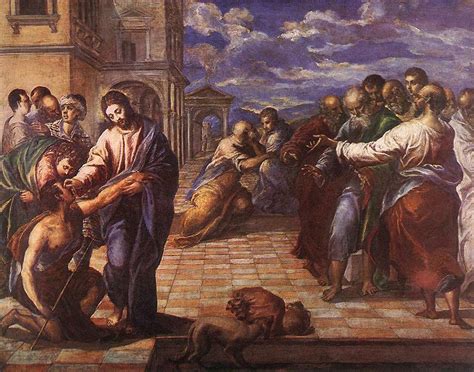
Future of the faith

Dancing in the Kingdom- Table of Contents

Dancing In the Kingdom – Part 2 – The Kingdom Revealed – Chapter 12 – Launching the church

Future of the faith

[Bible references: Isaiah 65:17-25; 66:22-24; Luke 20:34-362 Corinthians 5:1-10; 2 Peter 3:10-15; Revelation 21:1-8]

As mentioned in the previous section, the war against evil has been won. Christ has won the battle over sin and death. We need to keep our minds fixed on that when the battles rage around us. We need to remember that we are the side of the victor and not get defensive – our God is not small! We need to remember that the forces of evil have reigned since the fall and so, when Jesus came in the flesh, it was the forces of good that have intruded on the forces of evil, not the other way around.

With the life, death and resurrection of Jesus, the Kingdom of God has entered onto the earth and Jesus continues to bring the Kingdom of God on earth through his church. Unfortunately, we need to wait until Jesus returns before he completely restores the Kingdom of God. But He will restore it!

One of the in-between time confusions centers around what happens in the day that Christ returns. In this time, when Christians die, we are not automatically resurrected, instead we leave earth to go to heaven to be with the Lord. But that is not our last destination! When Christ returns, He will unite heaven with earth, and it is then that we will then receive our resurrected bodies so that we can live on that new earth.

One of the other confusions around what happens what is the relation between the old earth and the new earth. The language in 2 Peter 3:10 can make it seem that the old earth will simply be annihilated and replaced with the new earth. However, that would seem to conflict with Acts 3:21 where God is said to “restore all things.”

“The times of the restitution of all things – The noun rendered restitution … does not elsewhere occur in the New Testament. The verb from which it is derived occurs eight times. It means properly “to restore a thing to its former situation,” as restoring a “strained” or “dislocated” limb to its former soundness. Hence, it is used to restore, or to heal, in the New Testament …”[1]

It so happens that “all but one of the oldest and most reliable Greek manuscripts do not have the final words “will be burned up” but instead have “will be found, …”[2] and that would be more in line with Acts 3:21.[3] What has been the more common rendering of “burning up the earth” has caused some to not care about our current earth, but if the earth is to be transformed rather than destroyed then we might, as the stewards of the earth, pay more attention to taking care of the earth.


[1] Biblehub “Acts 3:21” Biblehub biblehub.com/acts/3-21.htm

[2] Wolters, Albert M. “Creation Regained: Biblical Bases for a Reformational Worldview” William B. Eerdmans Publishing 1985, 2005. (Location 568 of 1582)

[3] Bible.org “A Brief Note on a Textual Problem in 2 Peter 3:10” the meaning of the term is virtually the equivalent of “will be disclosed,” “will be manifested.” Thus, the force of the clause would be that “the earth and the works [done by men] in it will be stripped bare [before God].” BAGD suggests a slight modification of this: be found as a “result of judicial investigation” (s.v. εὑρίσκω, p. 325. 2), citing Acts 13:28; 23:9; John 18:38; 19:4, 6; and Barnabas 21:6 as approximate parallels. Danker2 suggested a parallel between 2 Pet 3:10 and Ps Sol 17:10 (“Faithful is the Lord in all his judgments which he executes on the earth”; the link here is conceptual, though in v. 8 εὑρίσκω is used of the exposure of men’s sins before God). We might add that the unusualness of the expression is certainly in keeping with Peter’s style throughout this little book. Hence, what looks to be suspect because of its abnormalities, upon closer inspection is actually in keeping with the author’s stylistic idiosyncrasies. The meaning of the text then, is apparently that all but the earth and men’s works will be destroyed. Everything will be removed so that humanity will stand naked before God.

Observe

Read 1 Peter 3:10-15. What should our attitude be because we know that the new heavens and earth will be happening?

Future Hope

Dancing in the Kingdom- Table of Contents

Dancing In the Kingdom – Part 1 – Shadows of the Kingdom – Chapter 9 – The Prophets and writings

Future Hope

[Bible references: Jeremiah 29:10-15; Jonah]

But in the end was God’s promise to restore his kingdom and bless all those who repent. One prophet was even sent to a Gentile nation to call them to repent or be destroyed. When they did repent, God held back his punishment – although history tells us that they would go back to their old ways, and eventually be destroyed. But a greater hope lay beyond that.

Reflect

Despite Israel’s constant failure, God’s plan was to discipline, not destroy, them. Their discipline would eventually be followed by God’s plan to provide the Messiah, the Savior of the world. What might that mean about God’s plan for you?

Observe

Read Jeremiah 29:10-15. The hope presented here seems to be a temporary one, but does it point to a hope beyond that?

In time and In an eternal future

Dancing in the Kingdom- Table of Contents

Dancing In the Kingdom – Part 1 – Shadows of the Kingdom – Chapter 3 – The image-bearers

In time and in an eternal future

[Bible references: Genesis 2:9; Exodus 25-28; 1 Kings 5-6; Psalms 19; Ecclesiastes 3:1-22; Matthew 6:28]

Although we have not existed from all eternity, God created us with more than a mortal body. We are also endowed with a soul and a spirit that can be joined to God’s Spirit. In the present moment, our mortal bodies are created from the stuff of the earth, and we are born into particular times and places so that we may serve and enjoy God in those particular times and places.

God made us as creatures. And the good part about being a creature is we were made to be dependent upon God and, by our very design, also dependent on other people and the earth … Often what we’re missing is the good of dependence. We need to cultivate an awareness of how our dependence and our needs open avenues of love … What if we stopped thinking of life as to-dos and started thinking of it as relationships? When we’re so task-driven, it’s very hard to appreciate love, because love is incredibly inefficient … when we were younger, God didn’t expect us to be what we are now. He’s still taking his time, by his Spirit, to bring about order through developmental growth … Part of recognizing our limits is getting comfortable in God’s space and growing in dependance on him … Sometimes, I think we’re actually scared to death to pray, because if we actually take the time to get quiet, we might begin to fear that God’s not there or wonder whether he’s apathetic or just really angry. Only in prayer will we discover how compassionately God views us … cultivating the gift of encouraging and celebrating others. It’s a spiritual discipline, a healthy way of dying to yourself and encouraging others. We are all dying for someone to pay attention and notice our presence and being. When someone articulates that, it’s life-changing. [1]

Our creatureliness which sets us in a particular place and time with a particular body is an opportunity to appreciate our finiteness and God’s infiniteness, to cultivate a sense of dependence on God’s provision and our dependence on each other and within the context of those relationships to truly learn how to love.

Our creatureliness also forces us to deal with God’s ordering Creation through process. Everything, whether physical, social, emotional, intellectual, or spiritual, is controlled by processes. Sometimes we desire to bypass those processes: we want to be instantly knowledgeable and wise and experts at what we do … and not dependent on anyone else. But it was precisely that kind of desire that led to our rebellion at the beginning of humanity.

As God’s image-bearing creatures, we not only have relationships with each other but also with our Creator. In our relationships with God’s other image-bearing creatures, our love can be expressed in our opportunities to support, uplift, and encourage one other. God has no need of such support from us, but He offers us such support. When we recognize our dependence on Him, He gives us the ability to pray, to acknowledge our needs and to recognize His provision for us when He supplies our needs.

We think of prayer as mostly self-expressive—as a way to put words to our inner life … if we pray the prayers we’ve been given, regardless of how we feel about them or God at the time, we sometimes find, to our surprise, that they teach us how to believe … We sleep each night in our ordinary beds in our ordinary homes in our ordinary lives. And we do so in a universe filled to the brim with mystery and wonder. We always sleep in a crowded room in our crowded cosmos, so we ask for crazy things—that God send unimaginable supernatural beings to watch over us as we drool on our pillows … Sleep reminds us of how helpless we are, even merely to stay alive. In the Christian tradition, sleep has always been seen as a way we practice death. Both Jesus and Paul talk about death as a kind of sleep. Our nightly descent into unconsciousness is a daily memento mori, a reminder of our creatureliness, our limitations, and our weakness. [2]

As we pray in our mortal bodies, we remember that although our mortal bodies will return to the dust from which we are made, our bodies will be resurrected when heaven and earth are reunited so that we, with soul and spirit and new body, will be able to enjoy God forever into the future.

What is that phenomenon we call ‘beauty’ and why does it lie at the core of both collective civilization and individual desire, even as we value it precisely for existing outside of practicality? In his essay The Weight of Glory [A sermon given in Oxford in 1942], C.S. Lewis explains it as an echo of eternity, imprinted upon humanity as an indication of our origin and destiny.[3]

Indeed, our God is a God of beauty, and he has created us to enjoy his beauty. Art and our appreciation of it are among the great gifts God has given to us. Sure, like anything, it can be turned into an idol. But art, beauty, and appreciation for the finer things of culture are all good gifts from a good God. [4]

In the meantime, while we await for our resurrection and to “gaze on the beauty of the Lord” (Psalm 27:4), we have reminders of our connection with our transcendent God in the beauty of His Creation and in our capacity to make things of beauty. Whether the beautiful things are of our creation or the Lord’s, they reflect God’s own beauty.

The books or the music in which we thought the beauty was located will betray us if we trust to them; it was not in them, it only came through them, and what came through them was longing … they are not the thing itself; they are only the scent of a flower we have not found, the echo of a tune we have not heard, news from a country we have never yet visited … We do not want merely to see beauty … We want something else which can hardly be put into words—to be united with the beauty we see, to pass into it, to receive it into ourselves, to bathe in it, to become part of it.[5]


[1] Straza, Erin. “Learning to Love Your Limits” Christianity Today 13 Dec 2021 www.christianitytoday.com/ct/2022/january-february/youre-only-human-kelly-kapic-limits-god-design.html Interview with Covenant College theologian Kelly M. Kapic’s about his latest book, “You’re Only Human: How Your Limits Reflect God’s Design and Why That’s Good News.”

[2] Warren, Tish Harrison. “The Cosmos is More Crowded Than You Think” Christianity Today 14 Dec 2021 www.christianitytoday.com/ct/2022/january-february/prayer-night-tish-harrison-warren-angels-crowded-cosmos.html

[3] Wang, Irina “Beauty betrays eternity” Salt salt.london/articles/beauty-betrays-eternity

[4] Meuhlenberg, Bill. “Art and the Christian” Culture Watch 28 July 2011 billmuehlenberg.com/2011/07/28/art-and-the-christian/

[5] Lewis, C.S. “The Weight of Glory” Theology Nov 1941

Observe

Read Ecclesiastes 3:1-22.  In the midst of meditating on the limitations of life on earth, verse 11 slides in a reference to beauty and eternity. How does that verse impact the rest of the chapter?

Timeless and in time

Dancing in the Kingdom- Table of Contents

Dancing In the Kingdom – Part 1 – Shadows of the Kingdom – Chapter 2 – The God who created

Timeless and in time

[Bible references: Psalm 102:25-29]

Closely related to the paradox of how God is both transcendent and immanent is how God is both timeless and in time. Many scholars in philosophy and science have trouble trying to resolve questions such as: How can God even have both attributes? Did God create time or is God himself confined by time? Is time static such that the past, present and future all exist simultaneously, and God sees them all at once, or is time dynamic such that the future does not yet exist – and therefore God does not yet know it?[1]  

It is not practical to try to summarize all the arguments with all their nuances here. For our purposes, we will not try to resolve the many difficult theological/philosophical issues[2] but, as Psalm 102 does, accept the finite mortality of our life on earth and the fact that God is both with us in the midst of our distress yet also exists outside of that.


[1] Closer to Truth “Is God Temporal or Timeless” This is a series of interviews showing different views on the subject of God’s timelessness. Closter to Truth www.closertotruth.com/series/god-temporal-or-timeless

[2] McKnight, Scott. “Is God Timeless” Patheos, Jesus Creed, 23 Feb 2013,  www.patheos.com/blogs/jesuscreed/2015/02/23/is-god-timeless/; Craig, William Lane. “God, Time and Eternity” Reasonable Faith, www.reasonablefaith.org/writings/scholarly-writings/divine-eternity/god-time-and-eternity/; Ganssle, Gregory E. Review of “The End of the Timeless God by RT Mullins The Gospel Coalition,  themelios.thegospelcoalition.org/review/the-end-of-the-timeless-god; All About God “God is Infinite Bible Verses” All About God www.allaboutgod.com/god-is-infinite-bible-verses-faq.htm

Observe

Read Psalm 102.  Reflect on how both anguish and hope are expressed. What speaks to you from that Psalm? How does God’s unchangeability provide hope in the midst of difficult circumstances?