Interlude

Dancing in the Kingdom- Table of Contents

Dancing In the Kingdom – Part 2 – The Kingdom Revealed – Chapter 13 – Distinctives within the body of Christ

Interlude

Many years ago, I was in a committee meeting with a group of people in a congregation, when the pastor started to walk by. He turned when he saw us, walked in with a warm effusive smile, and said, “Don’t you just love the church?” Then he turned around and went on his way.

I had been involved in the church for several years at that point, had served on the Elder board of a previous congregation, but had moved and now was involved in a different congregation. I had been in church leadership for long enough to be aware of the many difficulties to be found within congregations. Leading church congregations is difficult, particularly for the pastor.

And so it was, that at that moment in time, that question pierced my heart. I was certainly devoted to the church, but love the church in the way that the question was asked? And I knew that the long-serving pastor had been facing even more difficulties than I had – but I didn’t love the church – not like that. And at that moment, I did not know how to get to that kind of love.

Many years passed after that, and that moment became long forgotten.

The church had grown in size and staff. Then one day I was one of many people who experienced a betrayal of trust that hurt very deeply, causing many people to leave the congregation. Though I didn’t leave, I was still in a deep pain that lasted for years. But in those following years, I found myself in a position where I had the opportunity to help guide the congregation through a renewal process that made it healthier – and also made me healthier.

It was after all that process, that I remembered the incident of the question, “Don’t you just love the church?” But this time, by a path I had not chosen, I could say, “Yes.” I have learned to love the church. It was within the suffering and within the acceptance that although the church had problems, I too had problems.

Whether we are inside the church or outside the church looking in, we need to be careful where we point our fingers at the problems we identify. Like many in Israel in the time of the Judges, or many Jews in the time of Jesus, we like to point to somewhere else besides ourselves, like at the government, and say we need a new government, we need a new king. But the problem is actually within each of us. We all need a new heart.

We need the courage and humility of the prophet Isaiah, who when confronted with the presence of the Almighty God, said, “Woe to me! … I am a man of unclean lips and I live among a people of unclean lips.” Isaiah stood with his people in humility.

Maybe all the pain I suffered was due to the hardness of my heart which needed softening. But it took suffering for me to learn to truly love myself which then allowed me to truly love the church. That love gives me the freedom to look at all the issues of the church in all its brokenness and accept that I stand among the brokenness. And we are all fully loved and the One who made us, loves us, and guides us (though we don’t always follow).

Sometimes I cry when reading about the cruelty committed by the church I love, because we, the church, were so swayed by idols that we forgot our first love and our desire to bear the fruits of the Spirit. I also sometimes wonder if, in the same way that people like Simeon and Anna carried the hope of the Messiah amidst an unbelieving nation, that other mostly unnamed people walk among us, carrying the hope of the gospel amidst an unbelieving church.

Yet, we have the assurance that the One who has guided us, guides us still. So, as we begin to consider the myriad ways that different congregations within the church address the questions and practices of the church and have disagreements with each other about the way to address those questions and practices, we can be confident that the one who loves us all has not abandoned us and patiently, faithfully, persistently still calls us to follow Him. We have the assurance that all of us are created in His image and are bound together with common needs, that different languages are His idea despite the apparent confusions we have in understanding one another, that He is the provider of our intellect and is able to meet us in the midst our limited understandings, and that He provides His Spirit to guide us even in the midst of our confusions.

All the obstacles we have and the messes we see are continual reminders that the hope we have is not in the seemingly desperately confused church but rather in Him who provides for and guides us.
The kingdom arrives

Dancing in the Kingdom- Table of Contents

Dancing In the Kingdom – Part 2 – The Kingdom Revealed – Chapter 11 – The Kingdom Enters

The Kingdom Arrives

[Bible references: Isaiah 61:1-2; Matthew 8:16, 28-34; 9:6; 10:1; 28:18; Luke 4:14, 18-19, 32; 5:21; 6:6-7; 7:1-10, 29-30; 9:1-6; John 5:14; 10:11-18; 14:9; Acts 10:38; 1 Corinthians 15:24]

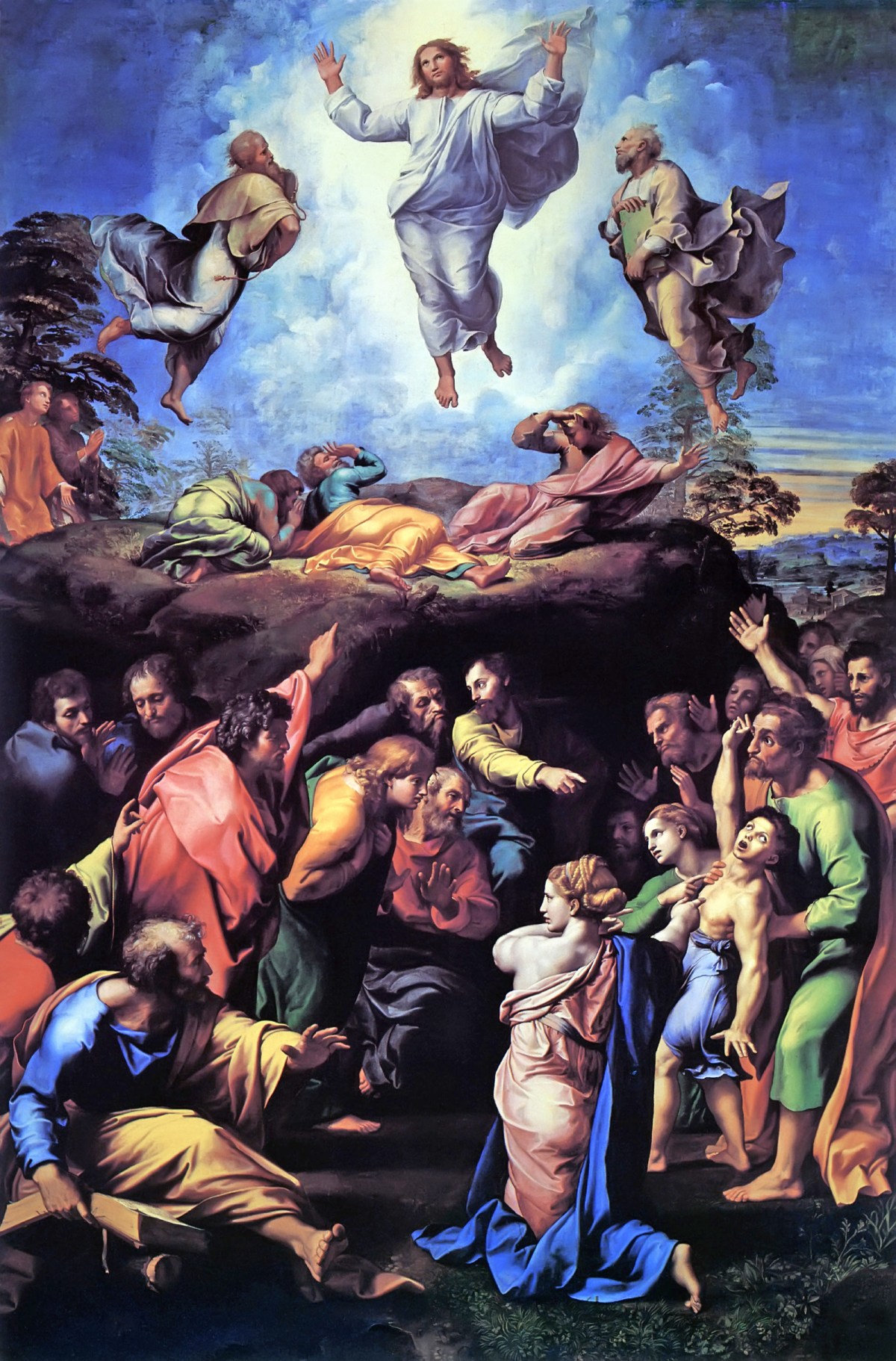
When Jesus broke into history, we no longer saw the kingdom of God overlapping the earth in a place as in the Garden of Eden or a place in the Holy of Holies. This time the kingdom of God had entered by a person, Jesus, who was anointed with the power of the Spirit. His next goal then was to invade the earth with his kingdom by that same Spirit entering our lives, by the overlapping of Heaven and Earth within each of us as Heaven and Earth overlapped within Jesus.

“God’s kingdom” in the preaching of Jesus refers not to postmortem destiny, not to our escape from this world into another one, but to God’s sovereign rule coming “on earth as it is in heaven.” [1]

When Jesus began his ministry, he quoted from the book of Isaiah to declare how he had come to fulfill that prophecy. Then there were many times throughout his ministry when he declared the reason he had come.

Left to our own resources, we cannot, on our own, correct our relationship to Yahweh; we cannot find our way back to a good relationship with him. We are lost to sin and unable to find our way back to Yahweh, the good shepherd.

Even though His power was evident in the teachings alone, His power was testified to by healing all sorts of diseases[2] including physical or spiritual blindness, casting out spirits (all these things that not only Jesus did but his disciples as well), proclaiming freedom for those in prisons, and setting the oppressed free. But even above providing hope and healing, Jesus offered forgiveness for sin and admonitions to turn away from sin. Jesus came to make us whole in body, mind, and spirit, to experience shalom. Sadly, even though some Gentiles recognized Jesus’ power and authority, some of the chief priests and elders did not want to recognize it themselves, remaining trapped and oppressed in their sin.


[1] Wright, N.T. Surprised by Hope: Rethinking Heaven, the Resurrection, and the Mission of the Church Harper Collins 2008. Kindle Edition (p 19.).

[2] Walk with the WiseEvery instance of Jesus Healing in the Bible: What they all had in common” Walk with the Wise walkwiththewise.org/every-instance-of-jesus-healing-in-the-bible-what-they-had-in-common

Reflect

How do we participate with Jesus in bringing His Kingdom to the earth?

Observe

Read Matthew 10:1; 28:18-20; Luke 9:1-6. How do we participate with Jesus in bringing His Kingdom to the earth?

Playful and orderly

Dancing in the Kingdom- Table of Contents

Dancing In the Kingdom – Part 1 – Shadows of the Kingdom – Chapter 2 – The God who created

[Bible references: Genesis 1; 3:6; Job 26:7-14; Psalm 102:25-28; 104:26; Proverbs 8:30-31; Jeremiah 9:24; Zechariah 8:4; Romans 1:18-32; 5:12-20]

It would be more conventional to title this section, “Creative and Orderly,” but creativity is just a part of broader category of play. Although many experts disagree on how to define play[1], we may think of play as activity which is typically not productive and is done only because one wants to do it and is usually a fun activity involving other people and will typically help people bond together.

When it comes to the Creation, God did not have to create anything. God did not need the universe or anything in it – not the planets, nor the stars, nor the creatures. God created the heavens and the earth for the delight of it, and He did it because He wanted to share heaven and earth with his image-bearers. This spirit of playfulness is reflected in many of God’s creatures[2] including Leviathan and humans. God’s playfulness also shows up in other interesting places in the Bible.

When Job complains about the difficulties he is going through, God seems to admonish him by “putting Job in his place” and citing all the ways in which God’s ways are higher than Job’s ways. But God does not follow through with any discipline of Job but rather begins the process of restoring Job’s fortunes. In response, Job confesses, “I spoke of things I did not understand … I retract my words and I repent in dust and ashes.” … And yet, Job changes an interesting behavior – he no longer rose early in the morning to offer burnt offerings for all of his children, worrying that “perhaps they have sinned.” Job seems to have understood what Shams-ud-din Muhammed wrote later on:

the difference between our life and a saint’s is that the saint knows that the spiritual path is like a chess game with God and that God has made such a fantastic move that the saint trips over joy in surrender whereas we think we have a thousand serious moves.[3]

Another instance of playing occurs in Mark 6, when Jesus takes a late-night walk on a very windy lake, walking as if to go by his disciples. Of course, they were initially terrified, thinking they were seeing a ghost. But he got in the boat and the waters calmed down. He could have calmed the waters down before the disciples started to go on the lake. He could have chosen another way to make his point … but he decided to do it that way.

God’s creativity can be seen within the created world in the extremely diverse types of plants and animals: differences in colors and shapes; different ways of digesting food; different ways of moving and observing the environment to name a few. The creativity we see is awesome. From out of nothingness, from no previous model, God created a whole system of particles and energy fields that interact with each other to form the building blocks of subatomic particles which are used to form atoms, which are used to form molecules of all sorts of complexity, which are then used to form planets and stars (actually, the fusion reaction in stars is used to create larger molecules from smaller ones). And at least one planet was used to create living things like plants and animals in all their complexity and then those living things were used to create communities (ecosystems) that allowed living things to thrive and flourish.

Yet, within the overwhelming creativity displayed within all the diversity of living things there is an order that is imposed by natural processes, sometimes called scientific laws. Christians, like Francis Bacon, pursued these laws as an extension of God’s moral laws in the universe, which then led to the development of modern science.[4] It is within science that we examine orderly processes at work that we call the natural laws which describe how all physical things behave: like the forces of gravity, electrical forces, etc.

There is no disobeying these natural laws. If you think that you can try to violate them, you’d be wrong. For instance, if you are on earth and stand on the top of a table and then jump off with the assumption that you will not be subject to gravity but rather float around without falling to the floor, you’d be wrong. You can’t violate gravity. You can try to set up circumstances that will cause other forces to come into play – such as airplanes do when they use aerodynamic forces that counteract gravity – but you simply can’t violate gravity, and there will be consequences if you try.

By observing the laws of the created order, we can ascertain some aspects of the character of God. The natural laws that govern how things are supposed to behave reveals a God who expects things to behave, and that violations are not tolerated. But when image-bearers were brought into the world there was a new level of complexity added to this physical model constrained by natural, physical laws. Because image-bearers were created to reflect God’s transcendence, those image bearers were given moral freedom, the ability to accept or reject God’s rule, the ability to choose to be good or not good. And just like attempts to violate physical laws have consequences, so do attempts to violate moral laws. However, the framework that provides order is also the scaffolding for creativity and play. The order that allows us to study God’s ordered creation also allows us to observe the activity of the living God when He does the unexpected.


[1] Edgar, Brian. “The God Who Plays: A Playful Approach to Theology and Spirituality” Chapter 5: Theology: Ludic(rous) Thinking, Theories of Play Cascade Books 2017 (e-book)

[2] Yu, Alan. “Which animals play, and why?” WHYY 15 Aug 2019 whyy.org/segments/which-animals-play-and-why/

[3] Hafiz (or Shams-ud-din Muhammad Tripping over Joy (translated by Daniel Ladinsky) (c. 1320-1389) wrote about God as his Friend, the Beloved, the Beautiful One. from reference by Edgar, Brian “The God Who Plays: A Playful Approach to Theology and Spirituality” Chapter 4: Spirituality: Playing with friends, Competing with God

[4] Harrison, Peter, “Christianity and the rise of western science” ABC Religion and Ethics, 8 May 2012, www.abc.net.au/religion/articles/2012/05/08/3498202.htm; Armstrong, David, “Christianity Crucial to the origin of science,” Patheos, 18 Oct 2015, www.patheos.com/blogs/davearmstrong/2015/10/christianity-crucial-to-the-origin-of-science.html; Hannam, James. “How Christianity Led to the Rise of Modern Science” Christian Research Institute www.equip.org/articles/christianity-led-rise-modern-science/

Observe

Read Romans 1:18-32.  Reflect on how natural laws reflect the character of God. Based just on natural laws, what kind of character does that reveal about God?

Dancing through the pain

Dancing in the Kingdom- Table of Contents

Dancing In the Kingdom – Part 1 – Shadows of the Kingdom – Chapter 1 – Prelude

Dancing through the pain

[Bible references: Luke 17:20-21; Hebrews 12; Revelation 21:1-3; 22:1-5]

Right now, it might seem hard to see images of the Dance of God’s Kingdom. We look at the news and wonder where things are headed to. Sometimes we look at our own lives and wonder … If there is a God where is God? What’s His plan for the world – for the church – for us? Then we pick up a book called the Holy Bible and read the stories and wonder how they all fit together. Then we look at the church – well, churches, there are so many of them – and wonder why it’s so complicated and messy and wonder if anybody’s got it right. And, what about me, my story, my mess? How do I fit into it all that?

But hints of God’s activity with His people are there to be found. God has been working through and intervening in the lives of many people that have been dancing the Kingdom Dance through the years, bringing hope and healing to the world. Their stories can be found in the Bible and in the rest of history[1] and sometimes even inserted into the news of the day, in the middle of all the stories of our brokenness.

I dance because it makes me happy! My experience is that when I dance, I can express something from my heart to God that cannot be expressed in words. Dancing is a point of contact with God for me. It gives me an experience of God as the origin of creativity and beauty … “I dance because I want to spread a message of love, joy, hope and faith to the world … Among the dimensions added by the dance expression itself is the meta-message that there is room for the whole human being and life in its fullness in a Christian religious setting. Dance can teach children and adults a body-embracing way of living, believing and being in God’s world. One participant says that through dance in general, “we want to communicate heaven to people down here, the message of salvation, our freedom in God, the joy in God, and the joy of dancing with fellow Christians.” … Through dance these Christian dancers experience and practice their religion in a bodily way. This means that their spirituality takes an embodied form and that dance for them is not only a bodily practice, but also a spiritual one.[2]

Dancing seems to be a human attribute, not necessarily linked to just Christianity[3], it is a gift from God that can be used in the manner expressed here; to be a human means of expressing our God-given joy through our bodies. While dancing can be done alone, when done in community it can help to bind participants together. Joy and community are part of God’s purpose for us. We are tasked as God’s image-bearers to be his representatives and stewards. But our tasks are not to be burdensome but rather they are meant to be joyful. If you will, our tasks are meant to be a joyful dance we do with each other and with our Creator.

For us to dance the Kingdom Dance we don’t have everything figured out, He does. We don’t even have to worry about the results of the dance because the results are not dependent on us but on Him, who is working through us. As much as we have messed things up and will continue to do so, He will ultimately restore us and the rest of creation, making us all into what He had intended from the beginning.

Among all the creatures that God created, we are uniquely made, even if we are not the physical center of the universe as some people may have thought at one time. Through the pursuit of science, we now have instruments that make it very clear that we are not physically at the center of everything, not that we can prove anyway. We are only specks on a small planet spinning around a star in an apparently random solar system in an apparently random galaxy in a universe we cannot even see the edges of. Although we don’t know where the center is, the universe seems to have been created with us in mind. The properties of the universe, the physical constants, the atomic structures, were all created such that it would support our existence.[4] Interestingly, although we are creatures made of the stuff of the universe, not only can we study and reflect on the properties of that stuff, but we can also study and reflect on and even reflect the one who created us.

In the meantime, we do not know when He will return, and we find ourselves in the middle, in-between those two times, between the beginning of the restoration of God’s kingdom on earth and the time when it will be fully accomplished. In this in-between time, sometimes we see some signs of God’s restoration – and sometimes we can’t – and it’s hard to figure out what God is doing, especially when there are times that He seems to be absent. In those times, we need to call upon our faith to hold onto the hope that God is still working out His plans. We need to recall all the times that we did see Him at work, and then we also need to remember that getting to the end of the plans that He intends for us may require some pain on our part just as it required pain on His part. And like Him, our pain will be ultimately overwhelmed with the glory that will be revealed.

Our ultimate destination is not a mere returning to the way we started out, but to the full flourishing of our potential, where God will establish a kingdom of image-bearers released to display God’s character and reflect His glory.

“And salvation only does what it’s meant to do when those who have been saved, are being saved, and will one day fully be saved realize that they are saved not as souls but as wholes and not for themselves alone but for what God now longs to do through them. The point is this. When God saves people in this life, by working through his Spirit to bring them to faith and by leading them to follow Jesus in discipleship, prayer, holiness, hope, and love, such people are designed—it isn’t too strong a word—to be a sign and foretaste of what God wants to do for the entire cosmos. What’s more, such people are not just to be a sign and foretaste of that ultimate salvation; they are to be part of the means by which God makes this happen in both the present and the future. That is what Paul insists on when he says that the whole creation is waiting with eager longing not just for its own redemption, its liberation from corruption and decay, but for God’s children to be revealed.” [5]

With that in mind, we can not only wait and hope. We can participate with God in bringing His kingdom to earth and bringing a taste of healing and hope into a broken world that desperately needs it.

“Within the biblical story, the Christian discovers a constant call for justice on behalf of the weak and forgotten. In the biblical tradition, justice is an aspect of God’s shalom, a notion that carries with it the idea of completeness, soundness, well-being, and prosperity, and includes every aspect of life – personal, relational, and national.”[6]

The suffering and pain in the world can be overwhelming, challenging our ability to maintain hope and persist in our effort as we try to bring shalom. That challenge forces us to focus on the taste of shalom that God has given to us knowing that it is just a foretaste of the fullness of the shalom that awaits us in the fully restored earth.


[1] See Appendix G – The contributions of the Church for some examples

[2] Schurr, Hildegunn Marie T. “Dancing Towards Personal and Spiritual Growth” Nordic Journal of Dance – volume 3, 2012 (pp. 31-40)

[3] La Mothe, Kimerer. “The dancing species: how moving together in time helps make us human” Aeon aeon.co/ideas/the-dancing-species-how-moving-together-in-time-helps-make-us-human

[4] Slezak, Michael. “The human universe: Was the cosmos made for us?” New Scientist, 29 April 2015. www.newscientist.com/article/mg22630190-400-the-human-universe-was-the-cosmos-made-for-us

[5] Wright, N.T. Surprised by Hope, Rethinking Heaven, The Resurrection and the Mission of the Church. Harper Collins 2008. Kindle Edition

[6] Katongole, Emmanuel. Rice, Chris. “Reconciling All Things: A Christian Vision for Justice, Peace and Healing,” Intervarsity Press, 2009 (p. 72)

Reflect

Think about how the universe seems designed for us, our capacity to think about and explore it and then think about our capacity to reflect on the One who created it all. What does that suggest to you about what God has intended for us?

Observe

Read Hebrews 12. What does this passage say about how we should be living now?

Reprise with variations

Dancing in the Kingdom- Table of Contents

Dancing In the Kingdom – Part 1 – Shadows of the Kingdom – Chapter 1 – Prelude

Reprise with variations

[Bible references:  Genesis 1; Psalm 8; 111; Exodus 8:16-19; John 21:1-14; Romans 8:19-22; 1 Corinthians 15; 1 Thessalonians 4; 5; 2 Peter 3; Revelation 21-22]

“The creation of the world seems to have been especially for this end, that the eternal Son of God might obtain a spouse towards whom he might fully exercise the infinite benevolence of his nature, and to whom he might, as it were, open and pour forth all that immense fountain of condescension, love, and grace that was in his heart, and that in this way God might be glorified. [1]

God created the universe for his glory, and within that, humans were created to experience the true joy of living, to bear the fruit of His nature, to reflect His presence. We are designed to be image-bearers of God himself, stewards of the creation He inserted us into as we reflect the very character of God. The exercise of stewardship is seen in the process of “subduing” and “having dominion” over the earth (its creatures and it resources), and in being “fruitful” and filling the earth. God’s initial reaction to creating us was, “It was very good.” His intent was that we would fill and take care of the earth, all the while reflecting His character to each other and to His creation.

In the beginning, heaven and earth were joined at the Garden of Eden. It was a place where the Creator could have communion with his image-bearers and walk in the garden with them. The garden was the perfect place for the image-bearers to develop and begin working out the intended future of filling the earth and ruling over it as co-regents with God.

He gave us unimaginable delight and freedom, but that very freedom He gave us was joined to a responsibility, a responsibility that was wrongly used and caused immense far-reaching damage – damage we could not possibly undo – the whole universe is groaning, waiting for to be restored. Our pride-laden rebellion damaged the relationships between each other, between us and God, between us and the world and even between heaven and earth; but God had a plan from the beginning, a plan which is now underway, to ultimately restore what was lost and undo that damage[2] and bring us to our intended destination – an earth filled with and ruled by image-bearers and where heaven and earth are rejoined so that the image-bearers can walk with God once again.

“Jesus’ own teaching during his brief public career simply reinforced the Jewish picture. He redefined a lot of ideas that were current at the time – notably, of course, kingdom of God itself, explained in many coded parables and symbolic actions that God’s sovereign, saving rule was now breaking in, even though it didn’t look like what his contemporaries had imagined and wanted.”[3]

Ultimately, we will be freed from the bondages of sin and death and all the relationships that are now damaged will be restored. In fact, in a timeline that we cannot fully grasp, God waited from the beginnings of mankind until 2000 years ago to defeat the power of sin and death and begin the process of restoring His kingdom on earth. Then He told us that someday, he will complete that process and he will return in the fullness of his glory to fully restore all things at that time. We just don’t know when that will be.

Our hope looks at the resurrection of Jesus as a harbinger of the resurrection that awaits all those of us who will be united with Him in our own transformed bodies in the new heavens and the new earth.

‘… what is the ultimate Christian hope? …what hope is there for change, rescue , transformation, new possibilities within the world in the present … if the Christian hope is for God’s new creation, for “new heavens and new earth,” and if that hope has already come to life in Jesus of Nazareth, then there is every reason to join the two questions together … “God’s kingdom” in the preaching of Jesus refers not to postmortem destiny, not to our escape from this world into another one, but to God’s sovereign rule coming “on earth as it is in heaven.” [4]

Furthermore, our hope doesn’t ask for us to simply wait for that time when the Kingdom of God is fully restored, but that we can be part of God’s plan to bring the Kingdom of God into our broken world.


[1] Edwards, Jonathan, “Works of Jonathan Edwards, Volume Two,” SERMON II. THE CHURCH’S MARRIAGE TO HER SONS, AND TO HER GOD. Ed. John E. Smith, Yale University Press, 2009(p. 62)

[2] Bible Project “Pursuing God, Heaven and Earth,” Bible Project www.pursuegod.org/biblical-themes-an-animated-explanation-of-heaven-earth

[3] Wright, N.T. “Surprised by Hope: Rethinking Heaven, The Resurrection, and the Mission of the Church” Harper Collins 2008. Kindle Edition(p. 18).

[4] Wright, N.T. “Surprised by Hope” Harper Collins 2008. Kindle Edition (pp. 4-5, 18)

Reflect

Speaking strictly from what we know from science, we seem to be random life forms on a random planet in a random spot in the universe. In that perspective, having an anthropocentric view of the universe seems absurd. But knowing what the Creator of heaven and earth has revealed to us, the universe was designed to be inhabited … by us! How does that change your view of the universe?

Observe

Read John 21:1-14. What does this passage suggest about our resurrection bodies?

Confronting our freedom

Dancing in the Kingdom – Table of Contents

Part 1 – Shadows of the Kingdom, Chapter 4 – Deforming the intended direction for creation

[Bible references: Gen 3:1-7]

To be creatures designed in the image of the transcendent creative, loving God, we needed the kind of independence that could allow us to choose who or what to love – or not love – and to be free to imagine and create wildly new and different things as proper for God’s image-bearing creatures. We were free to do this in a place where everything was very good and designed so that we could flourish. However, that very freedom which gave image bearers the possibilities of independent thoughts, also gave those image-bearers the opportunity to also confront temptation.

While the image-bearers were given the opportunity to meet with God and to walk with him in a specially designed garden, they were also allowed the opportunity for questions. They could even question the motives of the God who made them: 

  • Was something good being withheld from them?
  • Were they being deprived of some power?
  • What would be available to them if they violated the restriction?
  • Would they actually die?
  • What special knowledge were they being deprived of – particularly this knowledge of good and evil?
  • Everything they had encountered had been good, why would their thinking about violating this one restriction not be good?
  • Was the Creator so good anyway?”

Reflect

It seems to be part of human nature, to be suspicious of those things or those people who are different than us. The question is, when does doubting someone else’s motives become an act of sin?

Observe

Read Genesis 3:1-7.

What did the woman choose to trust when she chose to eat the forbidden fruit?