Listening to our culture

Dancing in the Kingdom- Table of Contents

Dancing In the Kingdom – Part 3 – Dancing in the Kingdom– Chapter 17 – Finding our place

Listening to our culture

[Bible references: Proverbs 12:15; Isaiah 5:20; Luke 10:25-37; Acts 17:16-34; Galatians 5:16-23; James 1:29; 1 John 4:1]

Outside of providing a healthy, flourishing place within the church community, how can we be more deliberate in engaging with those outside the church. Like the Apostle Paul engaging with the citizens of Athens, we must know what it is we believe then take the time to understand what the others believe and what their needs are so that we can begin the conversation. We can speak better after we have listened.

Listening to voices from outside the church can be challenging because their value systems and world views are so different. We saw in Chapter 13 how different experiences and viewpoints within the church have affected how they answer the various questions asked by the church. We do need to be aware of the different values and world views because, on the one hand, they may add useful understanding to our faith, then on the other hand, they can also distort the values and world views we have within the church.

“A newly released survey reveals that the ideologies of postmodernism and secular humanism have a noticeable influence on how Americans make decisions. The Cultural Research Center at Arizona Christian University released the eighth report of its 2021 American Worldview Inventory Tuesday. The report was based on responses collected from 2,000 American adults in February as part of a more extensive survey with a margin of error of +/- 2 percentage points. The survey found that although 2% of Americans have adopted secular humanism as their dominant worldview, a significantly higher share of the population (16%) actively embrace principles associated with the worldview. Similarly, while just 1% of Americans have adopted postmodernism as their dominant worldview, 16% frequently make decisions indicating that the philosophy plays an important role in shaping their day-to-day actions.” [1]

What is apparent from the study done by the Cultural Research Center at Arizona Christian University, is that there is a small percentage of Americans who are aligned with one particular ideology, but many of us, including many within the church, have adapted only various pieces of various ideologies. Before we figure on how to bring the gospel to or culture, we may first need to understand how our culture has affects our understanding of the gospel[2] so we can communicate clearly about what the gospel is.

According to Timothy Sheriden and Michael Goheen, there are four theological considerations:

“The first is an understanding of the gospel as the good news of the kingdom …God is restoring his gracious and loving rule over the whole of creation and every aspect of human life. … The second is an understanding of the comprehensive and restorative nature of salvation … the whole of human life … the restoration of this creation … The third is the lordship of Jesus Christ … He is more than a personal savior; he is Lord of all. Fourth, the church is the new humanity that shares in the future life of the kingdom now, as sign, foretaste, and instrument.” [3]

Once we are clear on what the gospel message is, then we are prepared to first express love by listening to our “neighbor,”[4] so that we then address our neighbor’s needs as we share the gospel. The very short following list highlights just a very few of the predominant cultural ideologies that have influenced our neighbors.

  • The church should not influence the government.
  • Religious ideas are to be kept as private ideas not to be discussed in public
  • Rejection of any knowledge other than what is available by science.
  • Humanity is always getting better.
  • All knowledge, hence, all truth, is relative.

When we talk with fellow image-bearers of God, we need to remember our common humanity,[5] that despite our differences there are many things that we share together. We were all intended to create good, and we are all broken in our attempts to do that good. Our society tends to put labels on ideas, such as those listed above, but those labels tend to be unhelpful because we then create divisiveness by using them to label people.

Whatever ideologies we may encounter in our conversations, we should remember that people are usually not as responsive to attacks on their ideas when they feel they are being listened to. When we are listened to, we may find each other more receptive as we each express our convictions sincerely in context of a polite conversation.

One way of loving our neighbor is suggested by Richard Mouw. Convicted Civility,[6] is a civility that begins with kindness, grace, patience, generosity, and caring for the other paired with a conviction that is not being relativistic, but truthful about what you don’t approve. Jesus showed most of his criticism to people within the religious establishment but was gracious to the “sinners.”


[1] Foley, Ryan. “Postmodernism, secularism have increasing influence over Americans’ decision-making: report” Christian Post, 10/22/2021 www.christianpost.com/news/peoples-choices-influenced-by-postmodernism-secularism-report.html

[2] Mattera, Joseph. “Why Your Faith is More Influenced by Culture than the Bible” JosephMattera.org 31 Aug 2017 josephmattera.org/faith-influenced-culture-bible

[3] Finn, Nathan A, Whitfield, Keith S. “Chapter 5 Missional Spirituality and Cultural Engagement” IVP Academic 2017IVP Academic 2017

[4] This parable helps us to understand that our “neighbor” includes anyone we encounter.

[5] Warren, Tish Harrison. “We Need to Talk How Americans Can Learn to Live Together Again” New York Times, 10/24/2021

[6] Mouw, Richard J. Uncommon Decency: Christian Civility in an Uncivil World. IVP Books 2010

Observe

Read Luke 10:25-37. Jesus told the story with characters his audience could identify with. What characters would you choose to tell the same kind of story today?

Flourishing community

Dancing in the Kingdom- Table of Contents

Dancing In the Kingdom – Part 3 – Dancing in the Kingdom– Chapter 17 – Finding our place

Flourishing community

[Bible references: Proverbs 17:17; 27:10; Ecclesiastes 4:9-10; Romans 12; Philippian 4:4-9; Hebrews 10:19-25; 13:2;1 Peter 1:12 22; 4:9; 2 Peter 1:3-11]

One mark of the Kingdom of God is the presence of communities that flourish. In this in-between time, these communities will not be any more perfect than the individuals within the community. But there are practices that we can engage in that will help our communities flourish. How we share our lives as individuals, congregations, or families will either draw people in or push them away. Within the culture that surrounds us, there are many practices that serve to isolate individuals, creating loneliness and emotional fragility. However, within the context of healthy congregations, there are various practices that serve not only to build us up within the church community but can also impact the communities around us. Christine Pohl has identified four characteristics that will sustain flourishing communities:[1]

  1. Gratefulness: As much as we are aware of how God has provided for us and we are secure in that knowledge, our gratitude can flourish. When we have gratitude, our lives will be enhanced by being more likely to notice what is good and beautiful around us. When our hearts are grateful, we are enabled to increase our ability to love and to offer grace to one another.

“Be thankful for the smallest blessing, and you will deserve to receive greater. Value the least gifts no less than the greatest, and simple graces as especial favors. If you remember the dignity of the Giver, no gift will seem small or mean, for nothing can be valueless that is given by the most high God.” [2]

2. Making and keeping promises: We arrange much of our lives according to our expectations of others’ behavior and the promises they make. Broken promises lead to a sense of betrayal and disappointment to the loss of integrity of the promise maker. On the other hand, promises that are kept strengthen our commitment and love with one another and provides stability for the community.[3]

“The history of the human race, as well as the story of any one life, might be told in terms of commitments. . .  At the heart of this history . . . lies a sometimes hidden narrative of promises, pledges, oaths, compacts, committed beliefs, and projected visions.” [4]

3. Truth-filled lives:[5] Without expectations of truth, there can be no trust. One need only to look at the broken social and political environment that we have today and see the consequences of a society in which trust is broken.

4. Hospitality:[6] To be truly hospitable is to recognize each other’s common humanity, to set aside the priorities of efficiency and instead, to care for and nurture one another, to prioritize our needs for rest and renewal. According to a tradition in Africa, no one individual is a host but the rather it is the community that offers hospitality.

“Welcome is one of the signs that a community is alive. To invite others to live with us is a sign that we aren’t afraid, that we have a treasure of truth and of peace to share.;” Ogletree, Thomas. Hospitality to the Stranger (Fortress Press, 1985) “to be moral is to be hospitable to the stranger.” [7]

All the characteristics mentioned above should ideally be present in the Christian community. When we notice their absence from the communities around us, we can see the destruction created by their absence. A healthy church then has the opportunity to bring a healing influence into the communities around us. As Leslie Newbigin has stated, “the presence of a new reality will be made known by the acts that originate from it.”[8]

One of the challenges/opportunities for the church is to maintain those healthy characteristics across all the boundaries of the different groups within the church so that there is healthy interaction between married and single adults, between adults and children, between different ethnic groups. Paying attention to those interactions within the church will help to navigate those interactions with those outside the church.

Linked to the gift of hospitality is the gift of friendship. Because this gift is costly in the amount of time and energy that we devote to someone else, exercising this gift outside the bounds of the church will usually require significant intentionality,


[1] Pohl, Living into Community, Cultivating Practices that Sustain us William B. Eerdmans Publishing Company 2012. eBook

[2] Kempis, Thomas à. The Imitation of Christ early 15th century (Chapter 35)

[3] Arendt, Hannah. The Human Condition University of Chicago Press, 1958, p.244

[4] Farley, Margaret A. Personal Commitments: Beginning, Keeping, Changing Harper & Row, 1986,pp. 12-13, 34, 38

[5] Aquinas, Thomas, Summa Theologica, Vol 2, Question109: “Of Truth”

[6] Vanier, Jean, Community and Growth 1979

[7] Turyomumazima, Bonaventure, “Africa Files – Christ in Africa: Stranger, Guest, Host” www.africafiles.org/printableversion.asp?id=14009 (no longer available); De Vries, Roland. Becoming a Guest: Christology and Ecclesiological Identity Erudit Volume 25, Numero 2, 2017 p. 165-184 www.erudit.org/fr/revues/theologi/2017-v25-n2-theologi04371/1056942ar (p. 165-184)

[8] Chilcote, Paul and Warner, Laceye” The Study of Evangelism: Exploring a Missional Practice of the Church. Wm B Eerdmans Publishing Co. 2008 Chapter Four, Leslie Newbigin. Evangelism in the context of secularization.

Reflect

Of the characteristics mentioned by Pohl, which are evident in your local church community? 

Observe

Read 2 Peter 1:3-11. What would a community look like if everyone was living out this passage?

Passion unto death

Dancing in the Kingdom- Table of Contents

Dancing In the Kingdom – Part 2 – The Kingdom Revealed – Chapter 11 – The Kingdom Enters

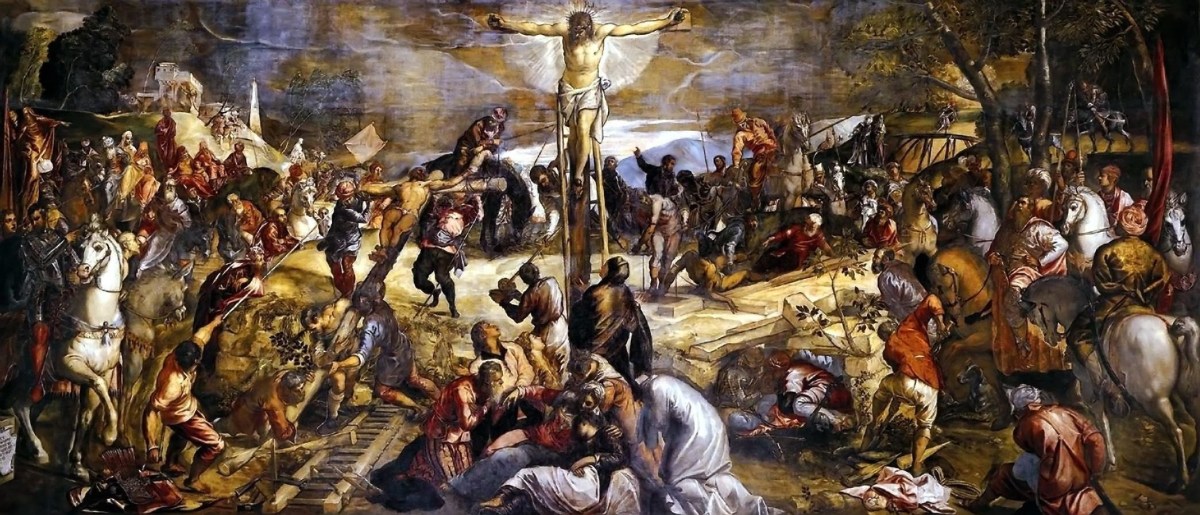
Passion unto death

[Bible references: Genesis 3:12; Matthew 16:21-23; 21:4-5; 26-27; Mark 9:30-37; Luke 22:54-62; John 1:14; 12:12-19; Romans 1:18-32; 5:20; 6:23; Ephesians 2:1-10]

There is a sense in which each moment of history is equally important to the next. Each moment is a moment which God pursues us as he guides us to our ultimate flourishing. There is no reason to suppose that our continuing flourishing will cease once heaven and earth are reunited, but we should expect that our flourishing will continue as a manifestation of his glory.

However, in our current state of affairs in which earth is broken from heaven, there are moments, epiphanies, in which heaven more noticeably breaks through. There are moments in which angels are more visible or in which Yahweh reveals himself through his prophets. Even more remarkable is the moment in which Yahweh submitted himself to taking on human form, even to the point of being conceived as an embryo inside the body of a human woman and then enduring the normal process of physically growing to become a human adult. Yet even that was not sufficient. Yahweh may have taken the form of a human, but it wasn’t a glorified human,[1] not yet the human as he intends for us to be.

To do that would require him to suffer the shame and justice that we ourselves have earned. The sin that brought us death would have to overcome by a sacrifice that would bring us life. In becoming human, Jesus identified himself with us, but in order for us to become like him he would have to make us ready to receive his spirit. We were helpless to make ourselves acceptable to God, to make ourselves free from sin and its consequences. Bonhoeffer once related his prison experience to Advent. He could not free himself – he needed someone to come from the outside to rescue him.[2] And that is our dilemma, we need someone to come from the outside to rescue us. The covenant revealed to Moses was given to increase our sin, to make it more evident than before about our inability to rescue ourselves. We were condemned by our sin to remain separated from God.

We saw in the previous chapter, that the world was very much like it is now, full of factions and frictions, the powerful and the poor, and everyone waiting and wanting the world to be a better place. The world into which Jesus was born was as broken as it is now. Jesus came into this world with a message of love and hope and with acts of healing and casting out of demons, but that would not be enough. Sin and death had a power over the world that needed to be broken. To rescue the world, to restore it to what it was intended to be, sin and death would need to be defeated. And there was no one who could carry out the rescue except God.

It was as true then as it is now, ever since Adam and Eve, people look at the problems around them and think that the problem lies somewhere else besides inside them. In particular, the more factions and frictions there are, the easier it is to find someone else to point to. So, when Jesus came, teaching, healing, and identifying with the common people more than the elite, it seemed that the more Jesus revealed himself the more the people seemed to think that Jesus would be the one – to rescue them from the Roman government.

Even Jesus’ chosen twelve disciples, the ones who would spend three years with him day and night … even they couldn’t understand the type of rescue they would need. Jesus would explain many times about what he needed to do, but the disciples couldn’t understand. The truth is, though, that even as we look back and see what Jesus had to do, we also have a hard time fully understanding just how desperately that we need rescuing. We don’t understand the depths of our own depravity.

When Jesus approached Jerusalem with his disciples for the last time, some of the disciples argued about which of them was the greatest, or who would sit next to Jesus on his throne. When Jesus showed his power with his resurrection of Lazarus, the crowds got more excited about the possibility of Jesus throwing out the Roman government and then they gave him a grand entry into Jerusalem. However, Jesus refused to act as they wanted, and the crowds eventually turned against Jesus. Even one of the disciples, Judas Iscariot, gave up on Jesus and agreed to betray him to the Sanhedrin. Then, when Jesus was arrested, the rest of the disciples went into hiding. Even Peter, who tried to follow the lynching party at a distance, refused to be identified with Jesus.


[1] Got Questions “How does the Bible describe glorified bodies we will possess in heaven?” Got Questions www.gotquestions.org/glorified-bodies.html

[2] Kincaid, Elisabeth Rain, “Bonhoeffer: Advent is Like a Prison Cell” Christianity Today www.christianitytoday.com/women/2018/december/bonhoeffer-advent-is-like-prison-cell.html

Observe

Read John 12:12-19. In this scene, the crowd is expecting a rescue from the Romans,  the Pharisees are worried about their competition becoming too popular, and the disciples are not comprehending what is happening. How did the disciples eventually understand what was happening?

Generous and overflowing shalom

Dancing in the Kingdom- Table of Contents

Dancing In the Kingdom – Part 1 – Shadows of the Kingdom – Chapter 3 – The image-bearers

Generous and overflowing shalom

[Bible references: Deuteronomy 30:9; Psalm 37; 65; 72; 92; Isaiah 9:6; John 10:10; 14:25-31; 20:19-23; Philippians 4:4-9]

The church has a stake in human flourishing. The challenge for the church is to define and promote human flourishing (which we might otherwise describe as human well-being, human happiness) in accordance with biblical teaching, to present and commend its alternative approach to human flourishing in the face of competing cultural visions, and to embody human flourishing in the presence of God amid a culture of death and destruction. Christian theology has a role to play in assisting the church to meet this challenge.[1]

“God made us: invented us as a man invents an engine. A car is made to run on petrol, and it would not run properly on anything else. Now God designed the human machine to run on Himself. He Himself is the fuel our spirits were designed to burn, or the food our spirits were designed to feed on. There is no other. That is why it is just no good asking God to make us happy in our own way without bothering about religion. God cannot give us a happiness and peace apart from Himself because it is not there.”[2]

Goodness, generosity and shalom all fit together. We begin with the premise that we are representatives of the Prince of Peace. Scripture is full of encouragement for us to live in peace because it is through shalom that much else flows, including goodness and generosity. Goodness flows out of the shalom which is concerned with the overall well-being of others and is necessarily linked to justice, mercy, and humility – and we are not to be content with helping God to usher in only the minimal amounts of justice, mercy into the world but the fullness of justice and mercy that stems from the overflowing goodness of God.

Our Creator and Temple-maker intended for us to enjoy his overflowing love and goodness. He provided us with a place of abundance where all our needs could be met, where He had a purpose for us as His stewards and His co-creators and where we could enjoy him and enjoy each other. This overflowing can actually be overwhelming when we consider the breadth, the beauty, the abundance, and the complexity of this temple he has provided. And we can marvel at the breadth, the beauty, the abundance and the complexity of the skills and abilities He has provided for us as his stewards and co-creators. Just look at what He has done and what we have done with what He has given us!


[1] Swain, Scott. “Psalm 19 and human flourishing” Reformation21 www.reformation21.org/blogs/psalm-19-and-human-flourishing.php

[2] Lewis, C.S. “Mere Christianity” Samizdat 2014 (p. 31)

Reflect

In what ways can the shalom of God flow over from our lives to the lives of others?

Observe

Read Psalm 37. How do we experience shalom when we see injustice?

Generous and overflowing shalom

Dancing in the Kingdom- Table of Contents

Dancing In the Kingdom – Part 1 – Shadows of the Kingdom – Chapter 2 – The God who created

[Bible references: Genesis 1; Psalm 69:16; Zechariah 8; Luke 15:11-32; Romans 1:20; 8:18-23; 2 Corinthians 3:18; 9:8; Revelation 21-22] 

When God created the universe, he was creating order out of disorder, assigning purposes for everything in the universe. When he assigned purposes to the places and things in the universe, when things functioned according to how he created them … they were “good.”[1]  And when in the midst of all those good things he placed image-bearing creatures that also reflected his character, everything was “very good.”

God is good because he delights in the existence of something other than himself.[2]

However, when in the midst of that very good universe, those image-bearers rebelled, they and the world they inhabited suffered the consequences. Yet, in spite of that rebellion, God relentlessly pursued those image-bearers with the intent of restoring not only them but restoring all of creation to the good condition that He originally intended. The Bible is the story of how God’s original purposes will be carried out despite the constant rebellion of his image-bearing creatures – and how the good and very good, creation will endure the brokenness of the rebellion to be finally restored to the good and very good purpose that God had intended.

Within that story of creation and the relentless pursuit which followed, God’s character is revealed as he poured himself out even to the point of taking on the form of a man and the giving of himself to the humility and suffering of being tortured to death on a cross. Even though all of creation is now marred by the rebellion, it is possible to examine the character of God as it is revealed in this outpouring of himself into his creation and into his image-bearers.

Revisiting Genesis 1:1, we see God creating … everything in the heavens and the earth. The rest of that passage shows the orderliness in how the creation happened. We see that as God creates each set of creatures or things that God declares them to be good. Then after God creates humans, he declares “it was very good.” We will see later in Genesis those things got messed up, but at this point the core of everything in the universe, everything was good and beautiful and working as it should. Certainly, as we look around us now, it would be hard to say that everything is working as it should, but at the beginning, everything was good.

That goodness was further amplified when, despite the rebellion of his image-bearers, God tirelessly invited them over-and-over again to come back to him even though they would continue rebelling over-and-over again. The generous invitation and re-invitation would be highlighted by Jesus’ parable which has been commonly called the “Prodigal Son” (Luke 15:11-32) in reference to the wastefully spending son. But the parable could equally be called the “Prodigal God”[3] in reference to the father who represents extravagant giving of God.

These continuous and generous offers from God are meant to draw us to himself so that he could restore to us the good and generous life that God has intended from the beginning, life free from suffering and pain, life full of joy and peace, wholeness and health, contentment and completeness,[4] which is all captured by the Hebrew word, shalom.

“The webbing together of God, humans, and all creation in justice, fulfillment, and delight is what the Hebrew prophets call shalom. We call it peace, but it means far more than mere peace of mind or a cease-fire between enemies. In the Bible, shalom means universal flourishing, wholeness, and delight — a rich state of affairs in which natural needs are satisfied and natural gifts fruitfully employed, a state of affairs that inspires joyful wonder as its Creator and Savior opens doors and welcomes the creatures in whom he delights.” [5]


[1] Walton, John, H. “The Lost World of Adam and Eve: Genesis 2-3 and the Human Origins Debate. (Proposition 5) InterVarsity Press. 2015 Kindle Edition. “good” refers to a condition in which something is functioning optimally as it was designed to do in an ordered system – it is working the way God intended”

[2] Weil, Simone.

[3] Keller, Timothy. “The Prodigal God” Riverhead Books 2008, www.timothykeller.com/books/the-prodigal-god

[4] Refiners Fire ‘Meaning of the word “Shalom;”’ Blue Letter Bible “Word search: Shalom” Refiners Fire www.therefinersfire.org/meaning_of_shalom.htm

[5] Plantinga Jr., Cornelius. “Not the Way It’s Supposed to Be: A Breviary of Sin,” Eerdmans Publishing Co – A. Kindle Edition. (p. 10)

Observe

Read 2 Corinthians 3:18. Discipleship is a process of “being transformed”. Ultimately it is something that happens to us – but it is something we can co-operate with by engaging is spiritual disciplines. What kinds of changes need to happen in our lives that would make it natural to invite someone else into discipleship?

Pattern finding creatures

Dancing in the Kingdom- Table of Contents

Dancing In the Kingdom – Preface

[Bible references: Genesis 1:26-28; 2:15; Psalm 33:1-22]

Pattern finding creatures

Humans are particularly good at finding patterns[1], even to the point of finding what appear to be patterns when there are none.[2] The pattern finding ability gives us the ability to learn various languages even while we are young children. We have the capability of visualizing someone’s prominent features, drawing those features in simple but exaggerated ways as a caricature, and then other people are able recognize who the caricatures represent.[3] This pattern finding (and conversely, pattern creating) ability extends into all sorts of areas and at many levels of abstraction.

Our exceptional pattern-finding, pattern-creating ability comes from our role as creatures who are privileged to bear within our own being, patterns of the image of the very One who designed and created the cosmos, who gave us the ability to love even as He loves. We are also given the ability to be stewards for the Creator, assisting Him in work of creating a flourishing, ordered and amazingly complex world.[4]


[1] Barkman, Robert C. “Why the Human Brain Is So Good at Detecting Patterns” ” Psychology Today 19 May 2021 www.psychologytoday.com/us/blog/singular-perspective/202105/why-the-human-brain-is-so-good-detecting-patterns

[2] Peterson, Ashley L. “What is … Aophenia (Finding Patterns Where None Exist) Mental Health @ Home 10 Dec 2021 mentalhealthathome.org/2021/12/10/what-is-apophenia

[3] Lorussa, Lorenzo., Lorch, Marjorie., Wade, Nick. “Seeing Caricatures” Neuroscience by Caricature in Europe throughout the ages neuro-caricatures.anaath.at/seeing-caricatures

[4] Ritenbaugh, Richard T. “What the Bible says about Stewardship” Bible Tools www.bibletools.org/index.cfm/fuseaction/Topical.show/RTD/cgg/ID/2166/Stewardship.htm

Generous and overflowing Shalom

Dancing in the Kingdom – Table of Contents

Part 1 – Shadows of the Kingdom, Chapter 3 – The Image-bearers

[Bible references: Deuteronomy 30:9; Psalm 37; 65; 72; 92; Isaiah 9:6; John 10:10; 14:25-31; 20:19-23; Philippians 4:4-9]

The church has a stake in human flourishing. The challenge for the church is to define and promote human flourishing (which we might otherwise describe as human well-being, human happiness) in accordance with biblical teaching, to present and commend its alternative approach to human flourishing in the face of competing cultural visions, and to embody human flourishing in the presence of God amid a culture of death and destruction. Christian theology has a role to play in assisting the church to meet this challenge.[1]

“God made us: invented us as a man invents an engine. A car is made to run on petrol, and it would not run properly on anything else. Now God designed the human machine to run on Himself. He Himself is the fuel our spirits were designed to burn, or the food our spirits were designed to feed on. There is no other. That is why it is just no good asking God to make us happy in our own way without bothering about religion. God cannot give us a happiness and peace apart from Himself because it is not there.”[2]

Goodness, generosity and shalom all fit together. We begin with the premise that we are representatives of the Prince of Peace. Scripture is full of encouragement for us to live in peace because it is through shalom that much else flows, including goodness and generosity. Goodness flows out of the shalom which is concerned with the overall well-being of others and is necessarily linked to justice, mercy, and humility – and we are not to be content with helping God to usher in only the minimal amounts of justice, mercy into the world but the fullness that stems from the overflowing goodness of God.

Our Creator and Temple-maker intended for us to enjoy his overflowing love and goodness. He provided us a place of abundance where all our needs could be met, where He had a purpose for us as His stewards and His co-creators and where we could enjoy him and enjoy each other. This overflowing can actually be overwhelming when we consider the breadth, the beauty, the abundance, and the complexity of this temple he has provided. And we can marvel at the breadth, the beauty, the abundance and the complexity of the skills and abilities He has provided for us as his stewards and co-creators. Just look at what He has done and what we have done with what He has given us!


[1] Swain, Scott. “Psalm 19 and human flourishing” Reformation21 http://www.reformation21.org/blogs/psalm-19-and-human-flourishing.php

[2] Lewis, C.S. “Mere Christianity” Samizdat 2014 p. 31

Reflect

In what ways can the shalom of God flow over from our lives to the lives of others?

Observe

Read John 14:25-31; 20:19-23. What are the conditions of the disciples when Jesus offers them His peace?