
Problematic acts of violence in the Old Testament

Dancing in the Kingdom- Table of Contents

Dancing In the Kingdom – Part 2 – The Kingdom Revealed – Chapter 11 – The Kingdom Enters

Problematic acts of violence in the Old Testament

[Bible references: Genesis 4:26; 6:5-22; 9:1-1; Exodus 15:1-21; 17:16; 20:5:34:6-7; 14:18-19; Deuteronomy 5:9-10; 33:27; Joshua 6:15-19; 8:1-2; 10:20, 40-43; 11:16-23; 13:1; 15:63; 16:10; 17:16; 21:43-45; Judges 3:1-7; 1 Samuel 17:45-47; 25:28; 1 Chronicles 21; Isaiah 28:21; Jeremiah 6:23; 42:11-12; Ezekiel 8:17; 23:19; Habakkuk 1:6-7]

The Flood

Human violence made God grieved[1] that he had made humans and He was filled with pain. God sent a flood as a judgment on the violence and evil of humanity, but in His mercy, God spared Noah and his family. In addition to that, after the flood God imposed a penalty for murder and gave the rainbow as a sign of his covenant to never flood the earth again.

The conquering of Canaan

God’s instructions to Joshua for conquering the land of Canaan along with and the language that summarized some of results can make is seem genocidal, like all the Canaanites were wiped out. However, reading more carefully, we can see that the language is being used hyperbolically. For example, at the end of Joshua and the beginning of Judges we still see all the Canaanite tribes still exist, that there was still Canaanite land waiting to be possessed and that there were still many Canaanites around that God intended to remain in order to bother the Israelites. Also, as we look at the language God used for driving out the Canaanites in Deuteronomy 33:17, it indicates that Yahweh had a prior relationship with the Canaanites just like He had in primeval times with Adam’s son, Seth, and Seth’s descendants.[2] What is not often linked to the demise of the Canaanites is the curse that Noah placed on Canaan (Genesis 9:18-25).[3]

Intergenerational violence

Many people are disturbed by the statement made in a few locations in the Old Testament, about punishing the children for sins of the fathers to the 3rd and 4th generation. Some clarifications need to be addressed in this statement.

  1. Some translations use the term “punish” but other versions use the better translation “visit,” That is to say that God will witness the effects of the sins of one generation on the following generations. Since family structures in Old Testament times included up to four generations living in one location, it would be natural to see the effect of the oldest generation affecting the others.
  2. Setting the effect of sin to just 3rd and 4th generations also needs to be seen in contrast to the mercy shown to thousands of generations. Yahweh’s mercy is greater than sin.
  3. This statement also needs to be set in contrast to Ezekiel’s statement that the penalty for sin would only be applied directly to the sinner.

Yahweh’s abandonment of Israel

Just as Yahweh had disciplined Assyria, Babylon, and other nations for their excessive violence towards Israel, Israel’s continued practice of violence and evil warranted the same violent discipline. Yahweh allowed the capture and exile of Israel and Judah by Assyrians and Babylonians. This violence by Yahweh towards Israel was in contrast to the continued mercy shown by God to Israel in the past. For that reason, this abandoning Israel to the violence of Assyria and Babylon would be referred to as his “strange” work (Isaiah 28).

During that abandonment, much of the suffering Israel and Judah experienced, including extreme starvation that led to cannibalism, was due to their failure to surrender during the siege of the cities. Of course, if Israel and Judah had been obedient from the beginning, Yahweh would not have brought in the Assyrians and the Babylonians.

When Israel successfully evaded the Egyptians during their exodus, a song was created in which Yahweh received the title, “the Warrior God.” After that, Yahweh was described as a warrior fighting for Israel. But that sentiment disappeared after Israel went into exile because Yahweh turned the tables and fought against Israel.


[1] From Genesis 6:6. Some Bible translations use “regret” or “repent” to translate the Hebrew nacham which also encompasses grief or sorrow.

[2] Mariottini, Claude. Divine Violence and the Character of God, Wipf & Stock, 2022 (p.329-330)

[3] Fischer, Bryan. “What did Ham do when he ‘saw the nakedness of his father”’” American Family Radio www.afa.net/the-stand/family/2014/08/what-did-ham-do-when-he-saw-the-nakedness-of-his-father/ This curse has been misused by Europeans and Americans who wanted to justify enslaving the Africans by insisting that the curse was put on Ham from whom the Africans were descended.

Observe

Read 1 Chronicles 21. Would you prefer to be disciplined directly by God or by image-bearers commissioned by God to discipline you?
Worship in exile

Dancing in the Kingdom- Table of Contents

Dancing In the Kingdom – Part 1 – Shadows of the Kingdom – Chapter 9 – The Prophets and writings

Worship in exile

[Bible references: Jeremiah 29:1-23; Daniel; Esther; Ezekiel]

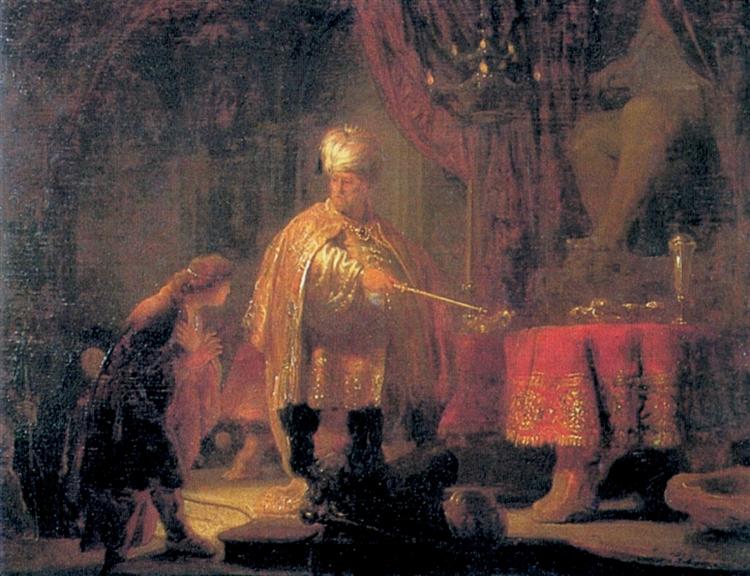
During this exile, the Jews, as they would now be called, had to become more deliberate if they were going to preserve their culture. It was during this time that the Jews would begin to collect all their writings in order to begin to determine what would be their scripture. They had the writings of Moses, but they had to determine what else should be included.[1]

During this time, they focused more seriously on worshipping Yahweh. Before this time, the biblical and archeological records indicate that Israel had a habit of adopting the worship of any idols of the culture they were in contact with.[2] But now they had to preserve their culture while living amid a dominant foreign culture.

The books of Daniel, Esther and Ezekiel give examples of how the Jews were able to thrive, even while experiencing opposition while the nation was in exile: Daniel as an exceptional administrator, Esther as queen to the emperor and Ezekiel as a prophet.

From this time forward, most Jews have remained outside their homeland with no access to the one temple in Jerusalem. It was during this time that local synagogues were created, with worship now being focused either in the home or at the synagogue.[3]


[1] Waltke, Bruce. “How We Got Our Old Testament” Christianity Today, Christian History www.christianitytoday.com/history/issues/issue-43/how-we-got-our-old-testament.html; Hirsch, Emil G. Blau L, Kohler, Kaufmann. Schmidt, Nathaniel “Bible Canon” My Jewish Encyclopedia, www.jewishencyclopedia.com/articles/3259-bible-canon

[2] Gayle, Damien. “How idolatry continued in the Kingdom of Judah: Israeli dig uncovers temple and icons dating back to Old Testament era” Dailymail.com 27 Dec 2012 www.dailymail.co.uk/sciencetech/article-2253695/How-idolatry-continued-Kingdom-Judah-Israeli-dig-uncovers-temple-icons-dating-Old-Testament-era.html

[3] Bacher, Wilhelm and Dembitz, Lewis N. “Synagogue” Jewish Encyclopedia www.jewishencyclopedia.com/articles/14160-synagogue

Observe

Read Jeremiah 29:1-23. What did Jeremiah say that the exiles were to do while they were in exile?

Messengers of a Greater Power

Dancing in the Kingdom- Table of Contents

Dancing In the Kingdom – Part 1 – Shadows of the Kingdom – Chapter 9 – The Prophets and writings

Messengers of a Greater Power

[Bible references: 1 Samuel 9-10; 13:8-14; 2 Samuel 12; Jeremiah 2:28; Matthew 5:17; 13:54-57; Acts 13:1; 1 Corinthians 14:29-33;  2 Corinthians 4:1-22]

During the entire time when Israel had kings, it also had prophets. Some prophets like and Elijah and Elisha did not leave any writings, although sixteen prophets did.[1] The prophets focused more on “forth-telling” (telling about changes that the kings and/or the people needed to make immediately) than “fore-telling” (telling about some future events) and were a constant reminder that God was acting in ways that transcended the earthly kingdom. Sometimes the prophets were there to encourage and sometimes to challenge the kings: The prophet Samuel was used to anoint Saul as king, then later had to let Saul know that God had rejected him. Samuel was also used to anoint David as king. Later, the prophet Nathan was used to let David know that God was aware of David’s sin with Bathsheba.

When we look at Jesus’ life and ministry, we see that he is uncompromisingly prophetic in a whole host of ways:

  • He is the revelation of the Father: he perfectly shows us what God is like.
  • He is the Word of God in flesh.
  • He is the mediator of the New Covenant between God and people.
  • He confronts evil and breaks the power of sin.
  • He calls people to return to God and live righteously.
  • He speaks truth to power (both religious and secular).
  • He only does what he sees the Father doing.
  • He is led by the Spirit and ministers in the power of the Spirit.
  • He prioritizes prayer and worship.
  • He speaks prophetically of the future.
  • He discerns the hearts and minds of people.
  • He challenges injustice and unrighteousness.

Jesus is the perfect expression of the prophet and so gives us the blueprint for a mature, holistic, multi-faceted way of being the prophetic church. We need to be prophetic in the way that Jesus was prophetic. Not just as individuals but as a Body with a collective prophetic consciousness.[2]

The Prophets of the Old Testament were precursors of the prophetic ministry of Jesus. And now the church, as the Body of Christ, has the privilege of carrying on that ministry.


[1] Isaiah, Jeremiah, Ezekiel, Daniel, Hosea, Joel, Amos, Obadiah, Jonah, Micah, Nahum, Habakkuk, Zephaniah, Haggai, Zechariah, Malachi

[2] Accessible Prophecy, “Understanding the Prophetic Function” Accessible Prophecy accessibleprophecy.com/2019/02/13/understanding-the-prophetic-function/

Reflect

Based on what we know about the role of prophets, how should today’s churches carry out the prophetic function within our church or within our surrounding culture?

Observe

Read 2 Samuel 12. How did God use Nathan to bring David to repentance?

Exile and return

Dancing in the Kingdom- Table of Contents

Dancing In the Kingdom – Part 1 – Shadows of the Kingdom – Chapter 1 – Prelude

Exile and return

[Bible references: Jeremiah, Lamentations, Ezekiel, Daniel, Esther, Ezra, Nehemiah]                                     

When Assyria captured the Northern kingdom, they took most of the inhabitants and scattered them throughout the empire and replaced them with people from elsewhere in the empire. The result was that the 10 northern tribes were integrated into the Assyrian empire and were never heard from again as a people group.

Babylon overran the Assyrians and also captured the Southern kingdom. The practice of the Babylonians was to take the best and brightest, bring them to their capital and train them to work for the Babylonian empire. A couple of the prominent people taken were Daniel and Ezekiel. 

Since it was primarily the people of Judah that were captured and the other kingdoms had essentially disappeared, the people of Israel now became known as Jews. It was while in captivity, that the Jews got serious about preserving their culture. It was while in captivity that they worked on 1) identifying which writings they had would be considered as scripture and 2) developing cultural patterns that would allow them to preserve their identity. It was in captivity that synagogues developed as a way of continuing to worship without the availability of the temple. Interestingly, it also showed how they knew that they could function under the Law of Moses without a temple and therefore without the system of animal sacrifices.

The Babylonian kingdom was then overrun by the Persian empire. The policy of the Persian empire was to allow the captured peoples that were exiled to Babylonia, to return to their homeland. The first returnees rebuilt the temple that was destroyed by the Babylonians, although the new temple was not as grand as it had been before. Later, Ezra would return to re-establish the Law and then Nehemiah would return to rebuild the wall around Jerusalem.

Observe

Read Jeremiah 18:1-10. How does God interact with our decisions?