Mystery of faith

Dancing in the Kingdom- Table of Contents

Dancing In the Kingdom – Part 2 – The Kingdom Revealed – Chapter 13 – Distinctives within the body of Christ

Mystery of faith

[Bible references: Exodus 31:1-11; Isaiah 1:18; Romans 1; 3:24; 4:16; 5:2-21; 6:15; 11:5-6; 2 Corinthians 6:1; Galatians 5; Ephesians 1; 2 Hebrews 12:1-39]

Faith and grace

If we try to systemize grace and faith, we find some saying that God will only give some people a special grace that allows them (and only them) to have faith to receive God’s forgiveness and some will say everyone is given that grace. Fortunately, receiving God’s grace is not dependent on our understanding. We only need to acknowledge it is only by God’s grace that we can be forgiven, and it is by God’s grace that we can be saved through faith.

After we “make a decision” to receive grace through faith, some will have the attitude that, “I’m saved, there is nothing more to do.” This attitude is sometime characterized as getting “fire insurance” or a “get out of hell free” card or as “easy believism.” This puts emphasis on “making a decision to accept Christ as our Savior” as if that was the main point.

While acknowledging Jesus as our Savior is a good thing, we should not put to the side that our decision should also acknowledge that Jesus is also our Lord and therefore our decision includes following Him as a disciple.

Faith and reason

Scripture is full of exhortations for us to use our reasoning. In Isaiah 1:18, Yahweh invites us to reason together with Him. In Romans 1, Paul tells us that we can even discern the truth of God’s invisible qualities, that they are clearly seen in the world around us. The scriptures are full of examples of God pleading with us, appealing with us to do the right things.

Scripture also encourages us to walk and live by faith, to trust God by faith, to obey God by faith, that we need to come to him by faith, that our righteousness comes by faith – and that faith is having confidence in what we hope for and assurance about what we do not see.

To hold these in tension, we cannot go to either extreme of abandoning our intellect or abandoning faith, rather we must go trust God to act in the future based on what we have seen him do in the past or present.

Faith and Creeds

It would seem nice if we could make a simple statement like, “The Bible says it and I believe it,” and not be misunderstood. But it’s not so simple. That’s because the Bible is not a straightforward text of moralizing or instructions. It’s a collection of stories, poetry, bits of wisdom, letters written from one person to another or to a group, prophecy, etc.  So biblical interpretation is not a task to be done lightly. Instead, it requires that we look at every verse in the context of the passage that it’s in, who wrote it and to whom and in the context of the entirety of scripture.[1] 

To address that problem, many congregations have found it expedient to clarify what they believe by using certain creeds or statements of faith. But then we run into the problem of the creeds or statement are not saying enough about the entirety of the faith of the congregation. So other congregations avoid creedal statements altogether and simply say that the Bible as a whole describes their faith.[2]

Faith and expressions of the Gospel

Living out the Gospel can encompass all parts of our lives, but for various reasons, different parts of the church at different times have chosen to focus on different aspects of the Gospel, often creating an imbalance in how the Gospel is lived out. Overfocusing on the intellectual aspects of faith led to a movement to focus instead on internalizing one’s faith and personal walk with God. Overfocusing on one’s personal walk with God led to a movement to put more of a focus on the public aspect of faith and the need for social justice. A desire to “return” to the faith of the New Testament church led to a desire to live out the “whole Gospel,” emphasizing the power of the Spirit as expressed by miracles, healings and speaking in tongues. Of course, the “whole gospel” actually encompasses all aspects and loving God with all our hearts, minds, soul and spirit.

Faith and Art

[Bible references: Exodus 28:3; 31:1-11; 35:10-33; 1 Kings 7:13-14; Proverbs 8:30; 22:29; Isaiah 54:16; Zechariah 1:20]

Expressing our faith through art had been common since God instructed people gifted in arts and crafts to build the Tabernacle. During New Testament times, poverty and persecution limited the amount of artwork, and that artwork was largely symbolic. But after the legalization of Christianity, expressions of the faith blossomed in both art and architecture. The eastern church started to express its faith through special artwork called icons which were highly revered. However, when a volcano erupted in AD 726, superstitions within the empire created a movement to rejected artwork[3] which did not finally end until AD 834[4]. To this day, different segments of the church either accept or reject the use of artwork.

Faith and perceptions of God in the Old and New Testament

At first glance, it could seem like God in the Old Testament is different than God in the New Testament. In the Old Testament the stress seems to be on the holiness of God and his distance from us while in the New Testament the stress seems to be on the love of God and his closeness to us. God in the Old Testament seems to act violently while in the New Testament He seems to act humbly and peaceably. This apparent dichotomy has created much consternation, causing some people to reject or ignore the Old Testament and only focus on the New Testament. But God is the same today, yesterday, and tomorrow. God never changes. More careful reading will show that the Old and New Testaments are not so different, and the characteristics we see of God in one testament can be found in the other testament.


[1] The discipline of “hermeneutics” or “bible interpretation” gives guidance on how to properly interpret the scriptures.

[2] These congregations are called noncreedal congregations.

[3] iconoclasm

[4] Art in Context, “Early Christian Art – Christian Artwork and Biblical Paintings” Artincontext artincontext.org/christian-art/ ; Joy of Museums “Christian Art and Biblical Paintings” Joy of Museums joyofmuseums.com/most-popular/popular-christian-art/
Dancing through the pain

Dancing in the Kingdom- Table of Contents

Dancing In the Kingdom – Part 1 – Shadows of the Kingdom – Chapter 1 – Prelude

Dancing through the pain

[Bible references: Luke 17:20-21; Hebrews 12; Revelation 21:1-3; 22:1-5]

Right now, it might seem hard to see images of the Dance of God’s Kingdom. We look at the news and wonder where things are headed to. Sometimes we look at our own lives and wonder … If there is a God where is God? What’s His plan for the world – for the church – for us? Then we pick up a book called the Holy Bible and read the stories and wonder how they all fit together. Then we look at the church – well, churches, there are so many of them – and wonder why it’s so complicated and messy and wonder if anybody’s got it right. And, what about me, my story, my mess? How do I fit into it all that?

But hints of God’s activity with His people are there to be found. God has been working through and intervening in the lives of many people that have been dancing the Kingdom Dance through the years, bringing hope and healing to the world. Their stories can be found in the Bible and in the rest of history[1] and sometimes even inserted into the news of the day, in the middle of all the stories of our brokenness.

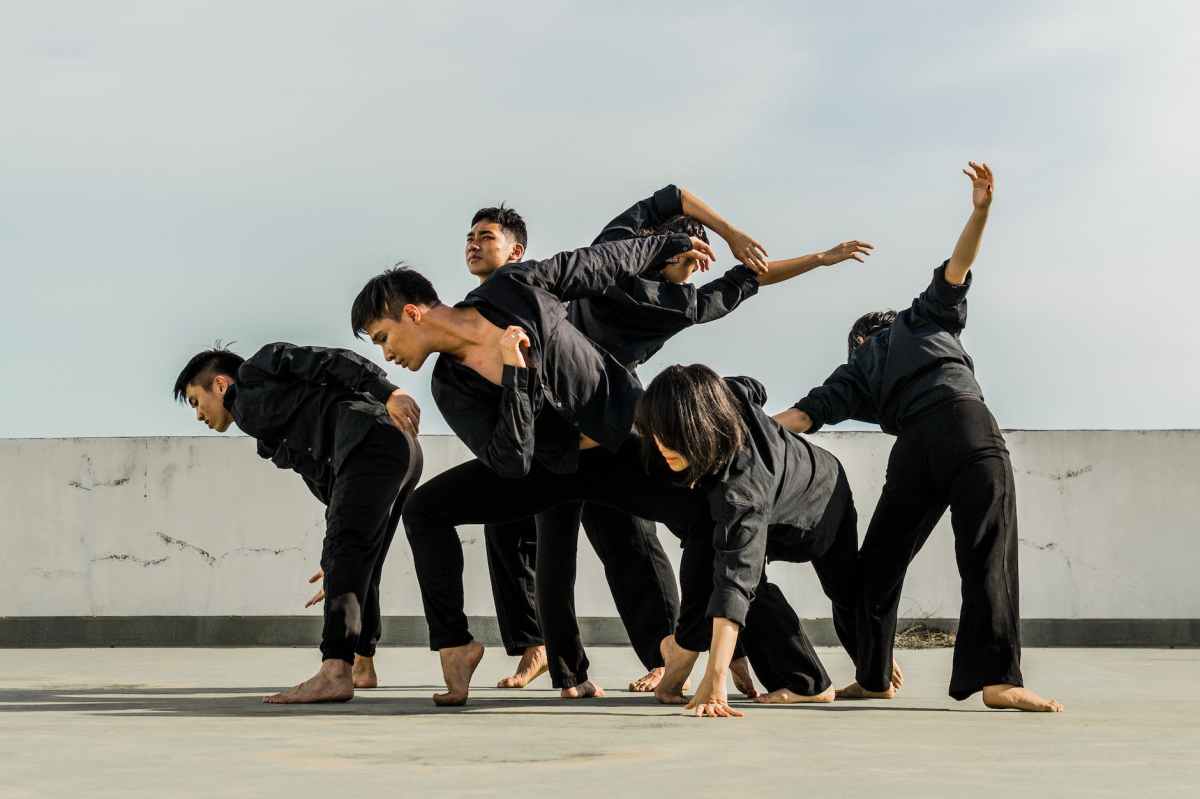
I dance because it makes me happy! My experience is that when I dance, I can express something from my heart to God that cannot be expressed in words. Dancing is a point of contact with God for me. It gives me an experience of God as the origin of creativity and beauty … “I dance because I want to spread a message of love, joy, hope and faith to the world … Among the dimensions added by the dance expression itself is the meta-message that there is room for the whole human being and life in its fullness in a Christian religious setting. Dance can teach children and adults a body-embracing way of living, believing and being in God’s world. One participant says that through dance in general, “we want to communicate heaven to people down here, the message of salvation, our freedom in God, the joy in God, and the joy of dancing with fellow Christians.” … Through dance these Christian dancers experience and practice their religion in a bodily way. This means that their spirituality takes an embodied form and that dance for them is not only a bodily practice, but also a spiritual one.[2]

Dancing seems to be a human attribute, not necessarily linked to just Christianity[3], it is a gift from God that can be used in the manner expressed here; to be a human means of expressing our God-given joy through our bodies. While dancing can be done alone, when done in community it can help to bind participants together. Joy and community are part of God’s purpose for us. We are tasked as God’s image-bearers to be his representatives and stewards. But our tasks are not to be burdensome but rather they are meant to be joyful. If you will, our tasks are meant to be a joyful dance we do with each other and with our Creator.

For us to dance the Kingdom Dance we don’t have everything figured out, He does. We don’t even have to worry about the results of the dance because the results are not dependent on us but on Him, who is working through us. As much as we have messed things up and will continue to do so, He will ultimately restore us and the rest of creation, making us all into what He had intended from the beginning.

Among all the creatures that God created, we are uniquely made, even if we are not the physical center of the universe as some people may have thought at one time. Through the pursuit of science, we now have instruments that make it very clear that we are not physically at the center of everything, not that we can prove anyway. We are only specks on a small planet spinning around a star in an apparently random solar system in an apparently random galaxy in a universe we cannot even see the edges of. Although we don’t know where the center is, the universe seems to have been created with us in mind. The properties of the universe, the physical constants, the atomic structures, were all created such that it would support our existence.[4] Interestingly, although we are creatures made of the stuff of the universe, not only can we study and reflect on the properties of that stuff, but we can also study and reflect on and even reflect the one who created us.

In the meantime, we do not know when He will return, and we find ourselves in the middle, in-between those two times, between the beginning of the restoration of God’s kingdom on earth and the time when it will be fully accomplished. In this in-between time, sometimes we see some signs of God’s restoration – and sometimes we can’t – and it’s hard to figure out what God is doing, especially when there are times that He seems to be absent. In those times, we need to call upon our faith to hold onto the hope that God is still working out His plans. We need to recall all the times that we did see Him at work, and then we also need to remember that getting to the end of the plans that He intends for us may require some pain on our part just as it required pain on His part. And like Him, our pain will be ultimately overwhelmed with the glory that will be revealed.

Our ultimate destination is not a mere returning to the way we started out, but to the full flourishing of our potential, where God will establish a kingdom of image-bearers released to display God’s character and reflect His glory.

“And salvation only does what it’s meant to do when those who have been saved, are being saved, and will one day fully be saved realize that they are saved not as souls but as wholes and not for themselves alone but for what God now longs to do through them. The point is this. When God saves people in this life, by working through his Spirit to bring them to faith and by leading them to follow Jesus in discipleship, prayer, holiness, hope, and love, such people are designed—it isn’t too strong a word—to be a sign and foretaste of what God wants to do for the entire cosmos. What’s more, such people are not just to be a sign and foretaste of that ultimate salvation; they are to be part of the means by which God makes this happen in both the present and the future. That is what Paul insists on when he says that the whole creation is waiting with eager longing not just for its own redemption, its liberation from corruption and decay, but for God’s children to be revealed.” [5]

With that in mind, we can not only wait and hope. We can participate with God in bringing His kingdom to earth and bringing a taste of healing and hope into a broken world that desperately needs it.

“Within the biblical story, the Christian discovers a constant call for justice on behalf of the weak and forgotten. In the biblical tradition, justice is an aspect of God’s shalom, a notion that carries with it the idea of completeness, soundness, well-being, and prosperity, and includes every aspect of life – personal, relational, and national.”[6]

The suffering and pain in the world can be overwhelming, challenging our ability to maintain hope and persist in our effort as we try to bring shalom. That challenge forces us to focus on the taste of shalom that God has given to us knowing that it is just a foretaste of the fullness of the shalom that awaits us in the fully restored earth.


[1] See Appendix G – The contributions of the Church for some examples

[2] Schurr, Hildegunn Marie T. “Dancing Towards Personal and Spiritual Growth” Nordic Journal of Dance – volume 3, 2012 (pp. 31-40)

[3] La Mothe, Kimerer. “The dancing species: how moving together in time helps make us human” Aeon aeon.co/ideas/the-dancing-species-how-moving-together-in-time-helps-make-us-human

[4] Slezak, Michael. “The human universe: Was the cosmos made for us?” New Scientist, 29 April 2015. www.newscientist.com/article/mg22630190-400-the-human-universe-was-the-cosmos-made-for-us

[5] Wright, N.T. Surprised by Hope, Rethinking Heaven, The Resurrection and the Mission of the Church. Harper Collins 2008. Kindle Edition

[6] Katongole, Emmanuel. Rice, Chris. “Reconciling All Things: A Christian Vision for Justice, Peace and Healing,” Intervarsity Press, 2009 (p. 72)

Reflect

Think about how the universe seems designed for us, our capacity to think about and explore it and then think about our capacity to reflect on the One who created it all. What does that suggest to you about what God has intended for us?

Observe

Read Hebrews 12. What does this passage say about how we should be living now?

Return, Songs, Silence

Dancing in the Kingdom – Table of contents

Part 1 – Shadows of the Kingdom, Chapter 9 – The Prophets and Writings

Return

[Bible references: 2 Chronicles 36:23; Ezra 1, 2; 6; 7; 9-10; Nehemiah 1-2; Haggai; Zechariah 8; Malachi 1:6-14; 2:10-16; 3:6-9; 4:6]

Assyria scattered the Northern Kingdom then the Babylonians overran Assyria, captured Jerusalem, and took the prominent citizens into exile. After the 70 years in captivity prescribed by God had passed, the Persians overran Babylonia and allowed the Jews to return to their homeland. The first batch of returnees went back with Zerubbabel to Jerusalem to rebuild the temple. A second batch would go back to Jerusalem with Ezra who confronted the Jews about their failure to keep separate from the nations around them. A while later, Nehemiah would go back to Jerusalem to rebuild the walls. And yet, with all the returnees, the majority of the Jews chose to remain in Babylonia – and even today, most Jews live outside the Promised Land.[1]

In another reminder of God’s provision, in all the returns to Jerusalem, the rulers of the Persian empire strongly supported the returns of the Jews who were given what they needed. God even provided prophets to encourage the Jews.

In a reminder of the times when contributions were needed to build the tabernacle, those who did choose to return to the Promised Land with Zerubbabel willingly contributed from the provisions given to them by the Persians to the rebuilding of the temple.

In a reminder of their own abilities to follow Yahweh, when the Jews first returned to the Promised Land they ended up once more intermarrying with the non-Jews and practicing their idol worship. So, when Ezra came to Jerusalem, he had to lead the Jews to repentance and to put away their foreign wives.

Then, in the end, God would send one last prophet, Malachi, who had words of condemnation of Israel for all the sins committed and of the promise to restore everything because that is what he promised. After the prophet Malachi, God did not raise up another prophet for Israel until Jesus came. That prophetic silence would last four hundred years.

Songs and reflections of the heart 

[Bible references: Psalm 1, 2, 3, 8, 11, 32]

As creatures made in the image of the Creator, it is self-evident that we cannot avoid creating. We are also creatures that are born to worship, as even our popular culture makes very evident. When we put those together, we get a work like the Psalms,[2] a book of poetry which was set to music. The psalms are a collection of praise songs written by various people. They are songs that reflect the thoughts of those people experiencing life with all its emotions in a broken world.

In addition to musical notations, several psalms have notations indicating the events which inspired the writing of those psalms. Some of the psalms have notations indicating the kind of occasion that the psalms are used for. As poetry, the psalms use various poetic devices such as parallelism, acrostics, and figures of speech.[3]

The Psalms express various themes such as the character of God, the experience of people, the worship of God, lament, petitions for help, confession of sin, praise and thanksgiving, expressions of wisdom.[4] The emotions expressed in the Psalms are sometimes very raw with feelings of abandonment, questions of God’s provision, hatred, and vengeance. Yet all these expressions are included in that book of praise songs. The inclusion of the full range of human expression is an acknowledgement of the reality of the human experience and an affirmation of being honest with God about our feelings while placing all of that in the context of a just and merciful God who is worthy of praise.

The Psalms are not the only place where poetry can be found in the Old Testament. There is poetry that can also be found in various portions of other books of the Bible. There is even one book of the Bible that is entirely a poem/song, The Song of Solomon (aka Song of Songs) which is a positive and passionate expression of marital love.

In addition to the expressions of wisdom that are found in the Psalms, there are other places where expressions of wisdom are found. The pair of books, Proverbs and Ecclesiastes, show the benefits of and limits of wisdom. Solomon was the author of Ecclesiastes and was the primary author of Proverbs. In 1 Kings 3-4, Solomon requests and is granted much wisdom to rule the nation of Israel. That wisdom is reflected in Proverbs as a collection of rules to live a good life. On the other hand, Ecclesiastes reflects the limits of wisdom in finding the meaning of life.

Silence and waiting

[Bible references: Genesis 45:7; 2 Kings 19:30; Psalm 62:1]

After the time of Nehemiah and Malachi, there were no more explicit words of prophecy from Yahweh until the coming of Jesus. And in this time of silence from God, there was much turmoil.

  • The Greek Empire would overtake the Persian Empire and therefore Israel.
  • When the Greeks desecrated the temple, there was a revolt led by a Jewish family, the Hasmoneans, who successfully overthrew the Greeks. Hanukah is a celebration of the miracle that took place in the temple.[5]
  • The Roman Empire would overtake the Greek Empire and the Hasmonean kingdom in Israel. Despite the Romans taking over, the Greek language and culture became part of the infrastructure of the Roman Empire.
  • The exact origins are unknown, but some of the Jews would adopt the Greek culture, becoming Hellenized. The aristocratic leaders of these Hellenized Jews would become the Sadducees. In opposition to the corruption of Judaism brought in by the Sadducees, a group known as the Pharisees arose. These two groups were still active when Jesus broke into history.[6]

In the midst of God’s apparent silence, all this activity indicates that God is still working. Several times in the Old Testament, God pointed out that, despite everything else going on, there was still a remnant of people with which he was still working. No matter what the situation is, no matter how good or how bad things seem to be, God is always working on his plans, and he is always preparing, however quietly and behind the scenes, for the next step.


[1] Jewish Virtual Library “Vital Statistics: Jewish Population of the World (1882 – Present)” d

[2] The Hebrew name of the book is Tehillim, which means praise songs.

[3] Cole, Steven J. “Psalms An Overview: God’s Inspired Hymnbook;” Nally, Joseph R. “Overview of the Book of Psalms”

[4] Postoff, Matt. “Categorizing the Psalms” f

[5] Ross, Lesli Koppelman, “The Hasmonean Dynasty”

[6] Dixon, Austin. “History of Scribes, Pharisees, and Sadducees”

Return

Reflect

Despite the discipline of God, after the nation of Israel was allowed to return to the homeland, it still would have problems with unfaithfulness and God would stop speaking to them for 400 years. How does God speak to us today?

Observe

Read Malachi 4:1-6. This is the last passage written by the last prophet before Jesus would come. Even now at Passover celebrations, a place is set at the table for “Elijah.” In the Christian understanding, who is the “Elijah” that was prophesied to come?

Songs and reflections of the heart 

Reflect

In this day, we create songs and books of wisdom. We may not be writing scripture itself, but we are expressing ourselves in worship in the way that God has designed us. How do you express yourself to God?

Observe

Read Psalms 1, 2, 3, 8, 11, 32. These Psalms represent the some of the major types of Psalms. How would you categorize them?

Silence and waiting

Reflect

Do you see signs of God at work today?

Observe

Read 2 Kings 19:29-31; Genesis 45:4-7; Ezra 9:7-9; Isaiah 10:20-22; 11:1-10; 53. The Assyrians had already conquered the Northern Kingdom and were now surrounding the capital of the southern kingdom, Jerusalem, threatening to overwhelm it. Looking back, we now know that two hundred years later the Babylonians would succeed where the Assyrians would not. What is Yahweh’s hint of his plan?