Samaritans

Dancing in the Kingdom- Table of Contents

Dancing In the Kingdom – Part 2 – The Kingdom Revealed– Chapter 10 – The Class of Apparitions

Samaritans

[Bible references: Matthew 10:5; Luke 9:51-55; 10:25-37; 17:11-19; 10:25-37; John 4:1-43]

King Omri made the city of Samaria the capital of the Northern Kingdom in the 9th century BC. The Assyrians conquered most of the Northern Kingdom in 722 BC and forced most people of the Northern into exile, never to be heard from again in history – and at the same time, Assyria repopulated the area with its own people who then intermarried with the remaining Israelites. Considered to be impure because of their intermarriage with the Assyrians, the Samaritans[1] were rejected as foreigners by the Jews returning from captivity in Babylon. This isolated the Samaritans who wanted to cling to the teachings of Moses but then consequently rejecting the further developments in the writings of the Jews and then developing their own customs, even claiming that their priests were the true descendants of the Levitical priesthood.

In response to being rejected by the main body of the Jews, around 400 BC the Samaritans built their own temple on Mount Gerizim near Shechem, the place where the tabernacle was placed after Israel entered the Promised Land. The Samaritans consider only the Torah, the five books of Moses, to be scripture, rejecting the writings or the prophets and others that the Pharisees incorporated into their scripture. Because of their close-knit community and their isolation, there is still a small community of Samaritans in existence today worshipping on Mt Gerizim.[2]

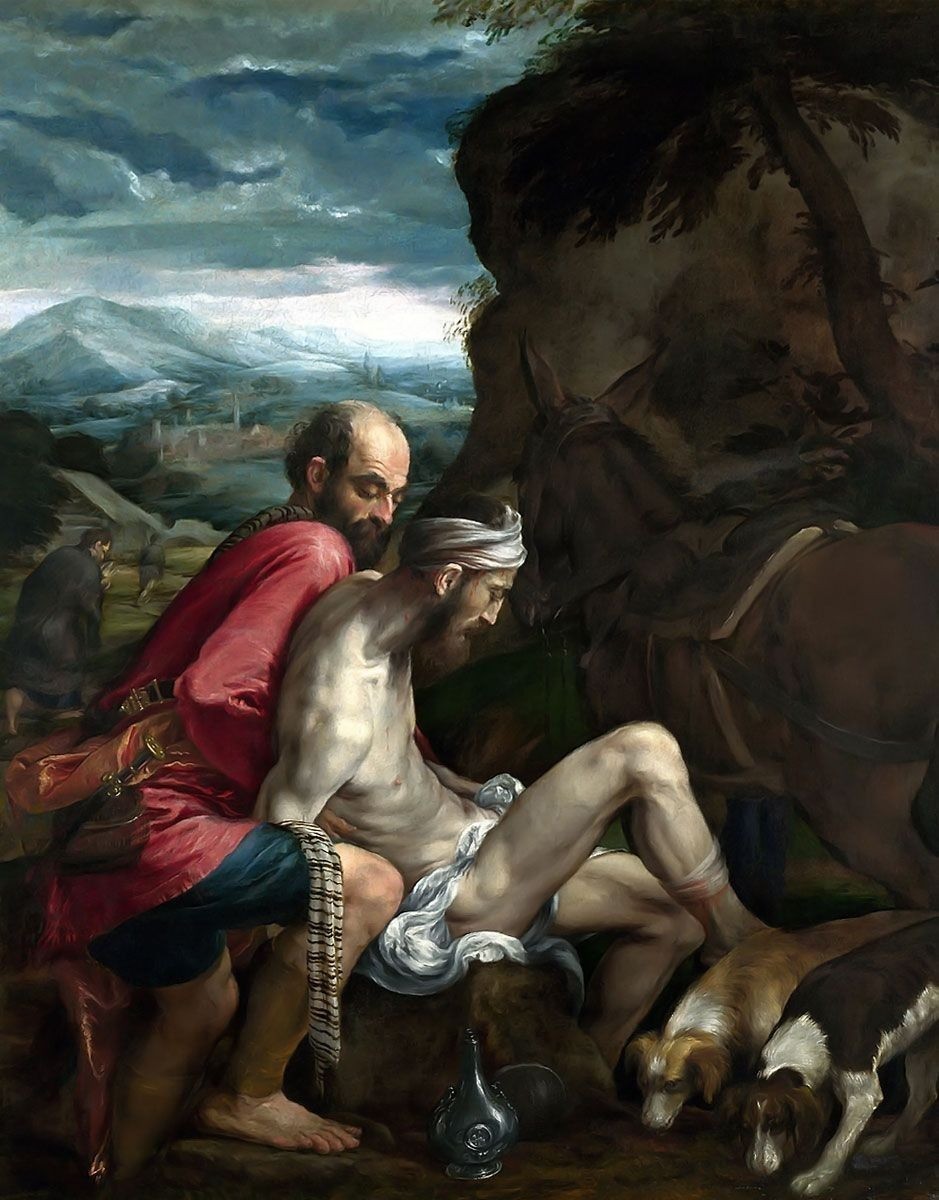
Although Jesus specified that he was sent ‘only to the lost sheep of Israel,’ he did interact a few times with others, Samaritans, and Gentiles. Samaritans and Jews normally avoided each other as they looked down on each other. When Jesus sent out the twelve apostles on an outreach mission, he specifically told them to avoid the Jews and Gentiles. Near the end of his earthly ministry as headed from Galilee, through Samaria to Jerusalem, Samaritans rebuffed his messengers. And yet on one trip from Jerusalem to Galilee he had an encounter with a Samaritan woman who was trying to draw water in the middle of the day and ended up spending two days in town. Another time the barrier also seemed to disappear when Jesus healed ten lepers and only the Samaritan leper came back to thank Jesus. When speaking to a Jewish lawyer who was trying to justify himself, Jesus shared a parable about loving neighbors and chose to show that it was a Samaritan who demonstrated love of neighbor.


[1] Riches, John. “The Word of Jesus: First -century Judaism in crisis” Chapter 1. The Political, Economic, Social, and Cultural Context of First-Century Palestinian Judaism Cambridge University Press, 1990 (p.17-18); NIV Cultural Backgrounds Study Bible eBook “Samaria and Samaritans” Zondervan 2016 (loc. 239865)

[2] UNESCO World Heritage Convention. “Mount Gerizim and the Samaritans” whc.unesco.org/en/tentativelists/5706

Reflect

How do you express love toward your neighbor?

Observe

Read John 4:1-43. What are the surprising things in this story?

Return and Remembrances

Dancing in the Kingdom- Table of Contents

Dancing In the Kingdom – Part 1 – Shadows of the Kingdom – Chapter 9 – The Prophets and writings

Return and Remembrances

[Bible references: Deuteronomy 34:10; 2 Chronicles 36:23; Ezra 1, 2; 6; 7; 9-10; Nehemiah 1-2; Haggai; Zechariah 8; Malachi 1:6-14; 2:10-16; 3:6-9; 4:1-6]

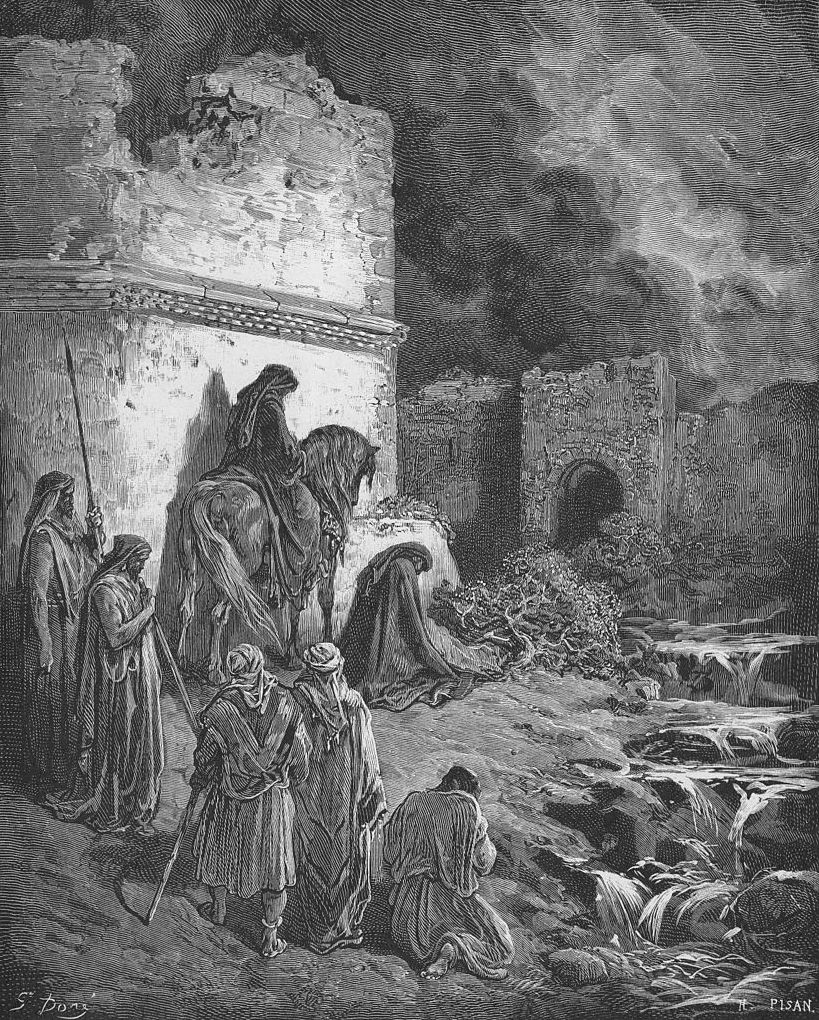
Assyria scattered the Northern Kingdom throughout their empire. Then the Babylonians overran Assyria but also captured Jerusalem and took the prominent citizens into exile. After the 70 years in captivity prescribed by God had passed, the Persians overran Babylonia, and they allowed the Jews to return to their homeland. The first batch of returnees went back with Zerubbabel to Jerusalem to rebuild the temple. A second batch would go back to Jerusalem with Ezra who confronted the Jews about their failure to keep separate from the nations around them. A while later, Nehemiah would go back to Jerusalem to rebuild the walls. And yet, with all the returnees, the majority of the Jews chose to remain in Babylonia – and even today, most Jews live outside the Promised Land.[1]

Only a remnant of Israel returned to the Land of the Promise, but the land was ruled by foreigners.  The temple was rebuilt but was only a remnant of the temple built by Solomon – which caused the people old enough to remember the former temple to weep. On the face of it, the Promise did not look promising. There must be something more. God had promised to bless the world through Abraham, but this remnant of the Davidic kingdom did not look poised to bring that promise. Israel was still waiting for the prophet “like Moses” to arrive.

But God did not choose Israel because it was the strongest kingdom. And Israel’s history is full of examples of God choosing to guide His people with the one who was thought weaker or the one who was younger. And there always seemed to be reminders that God was working in spite of Israel’s failures:

  • In a reminder of God’s provision, in all the returns to Jerusalem, the rulers of the Persian empire strongly supported the returns of the Jews who were given what they needed. God even provided prophets to encourage the Jews.
  • In a reminder of the times when contributions were needed to build the tabernacle, those who did choose to return to the Promised Land with Zerubbabel willingly contributed from the provisions given to them by the Persians to the rebuilding of the temple.
  • In a reminder of their own abilities to follow Yahweh, when the Jews first returned to the Promised Land they ended up once more intermarrying with the non-Jews and practicing their idol worship. So, when Ezra came to Jerusalem, he had to lead the Jews to repentance and to put away their foreign wives.

In the time of exile, the people of Israel compiled the writings of the prophets to serve as their scripture and discovered how to follow God without a system of animal sacrifice. In the time of their return to the promised land the people of Israel listened to that scripture and repented of their ways. And as the people of Israel waited for a prophet like Moses, God was still moving, working to fulfill His plan and His promises.


[1] Jewish Virtual Library “Vital Statistics: Jewish Population of the World (1882 – Present)” )” Jewish Virtual Library www.jewishvirtuallibrary.org/jewish-population-of-the-world

Observe

Read Malachi 4:1-6. This is the last passage written by the last prophet before Jesus would come. Even now at Passover celebrations, a place is set at the table for “Elijah.” In the Christian understanding, who is the “Elijah” that was prophesied to come?

Biblical eras

Dancing in the Kingdom- Table of Contents

Dancing In the Kingdom – Part 1 – Shadows of the Kingdom – Chapter 1 – Prelude

Biblical eras

The following table provides a quick outline of the different periods of history covered in the Bible and can serve as a guide as you read different sections of the Bible. The table is followed by a brief outline just a bit to help see the larger story whose details are filled out in the rest of the book.[1]

Biblical eventSummary
CreationGod dedicates the universe as His temple, a place for him to be with his people.
SinGod created us in his image, which included the ability to freely love. But we freely to not love God with devastating consequences
NationsGod floods the world and restarts the human project. The beginning of nation forming.
PatriarchsOut of all the nations, God chooses one nation through whom his people can be redeemed. The new nation, which is promised a land of their own, starts with the family line of Abraham, Isaac, Jacob
ExodusGod’s new nation begins its formation in Egyptian slavery and then leads them out to the land he promised them.
JudgesOnce settled in the Promised Land, God raises up people to lead and administer justice
KingsThe people reject God’s kingship and demand human kings like the nations around them. Sin initially causes the kingdom to be split into two and further sin causes the two kingdoms to be sent into exile
ExileThe Northern kingdom is captured by and exiled into Assyria then disappears from history, leaders from the Southern kingdom are brought into Babylon. which is eventually overtaken by the Persians who allow the exiles to return home
Return from exileOnly some of the exilees return. Against opposition they attempt rebuild the temple and the wall around Jerusalem, but not to its previous splendor
IntertestamentThere is a gap between the last inspired text written in the Old Testament and first inspired texts written for the New Testament
GospelsGod takes on human form in Jesus, grows up in Galilee, begins his ministry and then is executed and resurrected
ChurchUpon receiving the Spirit, the apostles begin building the church
MissionsThe church is scattered and begins spreading around the Roman Empire
End timesJesus’ return and His restoration of the Kingdom

[1] For a more detailed timeline see Appendix E – Bible Timeline

Diaspora

Dancing in the Kingdom – Table of contents

Part 1 – Shadows of the Kingdom, Chapter 9 – The Prophets and Writings

Intro

The term “diaspora” is usually reserved to refer to a group of people that has been scattered from a single location. In this case, the term is used to refer to the scattering of Jews from the Promised land. But this particular diaspora is only a part of God’s larger plans for His people.

Our God is a God of overflowing love. His love caused Him to create us so that His love could overflow from Himself to us. He wanted His image-bearers to carry out His mission of overflowing love and overflow from Eden to fill the entire earth. When we rebelled against His overflowing desire so that we could make a name for ourselves instead, He confused our language at Babel so that we would continue to flow out over the earth. When God wanted to prepare His Holy Nation for His mission, He scattered them to Egypt. When Israel rebelled against His mission of overflowing love, He scattered them from the Promised Land. The Son of God came in overflowing love to offer Himself in sacrifice in order to restore us to Himself. When the scattered Jews from many nations gathered for Pentecost, God reversed the action of Babel, and His message of overflowing love was shared in many languages so that the message of overflowing love would be carried to the Jews in many nations. To continue the overflow, God worked with Peter and Paul so that His love could flow out to the Gentiles as well. God further ensured the flowing out by using the Romans to scatter both Jews and Christians from Jerusalem. To this day, when our focus is more on building our Christian institutions, becoming too ingrown, God continues to scatter His people so that His message of overflowing love will reach more people in more places across the earth.

This program of overflowing creates a Dynamic Tension between our scattering and our unity. It would be well if our scattering was motivated by love so that we would continue to stay unified as we scatter. Sadly though, our scattering is often due to divisiveness rather than love, countermanding the intent that the world will recognize that we are disciples of Jesus because of our love.

Judgement Unfolds

[Bible references: I Kings 6:12; 2 Kings 17, 25; 2 Chronicles 36:15-16]

The covenant God made with Israel had the proviso “if you follow my commands.” Israel continually demonstrated its inability to do that[1] and God’s judgement followed. The nation of Israel would suffer the consequences. The first sign of the consequences manifested itself in the splitting of Israel into two kingdoms.

After that, the northern kingdom of Israel was the first to collapse in 535BC with the invasion of the Assyrians whose policy was to scatter the captured inhabitants throughout their empire and replace them with Assyrians. These northern tribes seem to have been totally assimilated into the Assyrian empire and would not be heard from again in history.

In 722BC, the Babylonians conquered the southern kingdom of Judah. The best and the brightest of Judah were taken as captives to the capital of Babylonia for “retraining” so that they could contribute to the Babylonian society. It was at this point that the nation of Israel would now be referred to Jews. It was from this point on that, despite the return of some of the Jews to their homeland, most Jews would now be living outside their homeland.

Worship in exile

[Bible references: Jeremiah 29:1-23; Daniel; Esther; Ezekiel]

During this exile, the Jews as they would now be called, had to become more deliberate if they were going to preserve their culture. It was during this time that the Jews would begin to collect all their writings in order to begin to determine what would be their scripture. They had the writings of Moses, but they had to determine what else should be included.[2]

During this time, they focused more seriously on worshipping Yahweh. Before this time, the biblical and archeological records indicate that Israel had a habit of adopting the worship of any idols of the culture they were in contact with.[3] But now they had to preserve their culture while living amid a dominant foreign culture. Although the origins are a little obscure, as temple worship was no longer available, synagogues as a permanent institution developed during the exile.[4]

The books of Daniel, Esther and Ezekiel give examples of how the Jews were able to thrive, even while experiencing opposition, while the nation was in exile: Daniel as an exceptional administrator, Esther as queen to the emperor and Ezekiel as a prophet.

From this time forward, most Jews have remained outside their homeland with no access to the one temple in Jerusalem. It was during this time that local synagogues were created, with worship now being focused either in the home or at the synagogue.


[1] Margalit, Ruth. “In Search of David’s Lost Empire;”Syace, A.H. “Polytheism in Primitive Israel;” Zevit, Ziony. Review of “The Religions of Ancient Israel: A Parallactic Approach” by Hess. Richard Israel’s susceptibility to idol worship was so extensive, that archeological evidence indicates continuous polytheism  

[2] Waltke, Bruce. “How We Got Our Old Testament;” Hirsch, Emil G. Blau L, Kohler, Kaufmann. Schmidt, Nathaniel “Bible Canon:”

[3] Gayle, Damien. “How idolatry continued in the Kingdom of Judah: Israeli dig uncovers temple and icons dating back to Old Testament era”

[4] Bacher, Wilhelm and Dembitz, Lewis N. “Synagogue”

Intro

Reflect

Biological life flourishes because of its diversity. Different types of plants and animals allow life to exist and even thrive in extremely different types of environments. How do different types of personalities allow groups of people to thrive?

Observe

Read John 13:35. How is our love strengthened by our learning to love people different from ourselves?

Judgement unfolds

Reflect

From the beginning of humanity we have resisted other people having authority over us. What can help us trust other authority?

Observe

Read Jeremiah 25:11-12. It seemed hopeless. The unfaithful nation of Israel was no more. But promises were made by a faithful God who would eventually restore them. What are God’s promises to us?

Worship in exile

Reflect

Synagogues were an innovation not even hinted at by Moses. Later on, Jesus gave no suggestion that He had a problem with synagogues. What does that suggest about innovations in the worship style of different congregations?

Observe

Read Jeremiah 29:1-23. What did Jeremiah say that the exiles were to do while they were in exile?