Beyond winsomeness

Dancing in the Kingdom- Table of Contents

Dancing In the Kingdom – Part 3 – Dancing in the Kingdom– Chapter 17 – Finding our place

Beyond winsomeness

[Bible references: Deuteronomy 18:15-19; Proverbs 21:22; Acts 3:22; 4:1-22; 12:1-19; 16:16-40; Romans 13:1-7; Ephesians 6:11-13]

Oftentimes, our first impulse when confronting evil in the world is to resort to the world’s tactics. It can seem more expedient to respond to evil with physical force or displays of anger – and there are occasions when such responses are justified – but wisdom is called for. We need to remember that our real enemy is not our “flesh and blood” fellow image-bearer but the forces of darkness. We also need to discern between when it is time for God to act and for us to act.

After David was anointed to be the future king, he had to wait several years during which period King Saul pursued David intending to kill him. Even though there were a couple of occasions when David could have killed Saul, he did not think it was his to take – he waited for the kingship to be given to him. Ever since Moses, Israel had been waiting for “one like Moses”. But David’s refusal to “take” the kingship is likely part of the reason that David was called a “man after God’s own heart,” because unlike those who came before him, he did not (at least in this case) succumb to the impulse to “see, desire, take.”

God has established government to keep the peace. What is our role if the government carries out its duty, what action should we take in support of it? What is our role if the government abuses its duty, what action should we take in opposition to it? The apostles defied the authority of the Sanhedrin and the Roman government, with God even releasing Peter from prison on one occasion and Paul in another. But on another occasion, Paul submitted to the Roman government as a means to get to Rome to continue his work there. Is there ever cause for a Christian to participate in violence? There is a debate in the Christian community about these questions that calls us to seek wisdom in our different situations.

Observe

Read Ephesians 6:11-13. How might “putting on the armor of God” help us determine when to take action or to wait for God?

Discipline of Lament

Dancing in the Kingdom- Table of Contents

Dancing In the Kingdom – Part 3 – Dancing in the Kingdom– Chapter 15 – Reforming our Souls

Discipline of Lament

[Bible references: 2 Samuel 1:1-2:7; Psalm 10:1-4; 17:20; Jeremiah 4:8; Lamentations 2:5; Micah 2:4; Acts 8:2; John 11:31-33]

Lament is not despair. It is not whining. It is not a cry into a void. Lament is a cry directed to God. It is the cry of those who see the truth of the world’s deep wounds and the cost of seeking peace. It is the prayer of those who are deeply disturbed by the way things are… The journey of reconciliation is grounded in the practice of lament.[1]

“Lament and praise must go hand in hand. …  My tears showed me a God who was still worthy of my praise in troubled times. Lament cries out for shalom. Shalom is active and engaged, going far beyond the mere absence of conflict.… it embraces the suffering other as an instrumental aspect of well-being. Shalom requires lament.[2]

The Bible is filled with lament. When the God’s people are faced with evil, injustice, oppression and turmoil, the Biblical response is often lament. Sometimes the lament is focused on ourselves, sometimes it is focused on others. Sometimes our suffering can reveal the needs we really lack, not necessarily what we do not feel nor see. In all of this we should remember that our lament is not to inform God about our needs or wants, God already knows them, but he wants us to lament and plead so that we may kindle our hearts to stronger and greater desires.

Growing in lament helps us to see the sinful, broken world more fully as God see it, to be more fully aware of how our own sins participate in that brokenness, and to become more aware of our need for God’s justice and grace.

Rest and Remember[3]

The goal of the discipline of lament is to learn to slow down, become more aware of our own emotion and pain as well as others, so that we can learn to cry with God about the pains of suffering and injustice. Resting in God gives us the time to remember and reflect, to consider all the many we and others in the world have been hurt and treated unjustly. As we remember, we may find it helpful to turn to the Psalms. Many of the psalms are psalms of lament, sometimes ending in a declaration that God will respond. In Ps 71, suffering is not seen as a problem as God acts to restore him. As we find ourselves, crying out to God, we can find ourselves wrapped in His goodness knowing that he cares about our pain, It is then we can develop a fuller picture of God and learn to praise him with renewed joy and hope.

Repentance 

In that remembering, fused with the hope of God, we can become more fully aware of the part we ourselves have played in the world’s injustice. Repenting, confessing our role in creating pain opens the way to our own healing as well as the healing of others.

Recompense and Restitution

Our repentance turns us towards God, but we may need to consider practical steps act on our repentance and make amends with those we’ve hurt.


[1] Katongole, Emmanuel. Rice, Chris. “Reconciling All Things: A Christian Vision for Justice, Peace and Healing” Intervarsity Press, 2009

[2] Rah, Soong-Chan. “Prophetic Lament:  Call for Justice in Troubled Times” Intervarsity Press, 2015

[3] Price, Paula Francis. “Lament as a Spiritual Practice” ” Women in the Academy and Professions (intervarsity.org), February 09, 2017, thewell.intervarsity.org/spiritual-formation/lament-spiritual-practice The categories in this section are taken from this article

Observe

Read 2 Samuel 1:1-2:7. What did David do during his time of lament?

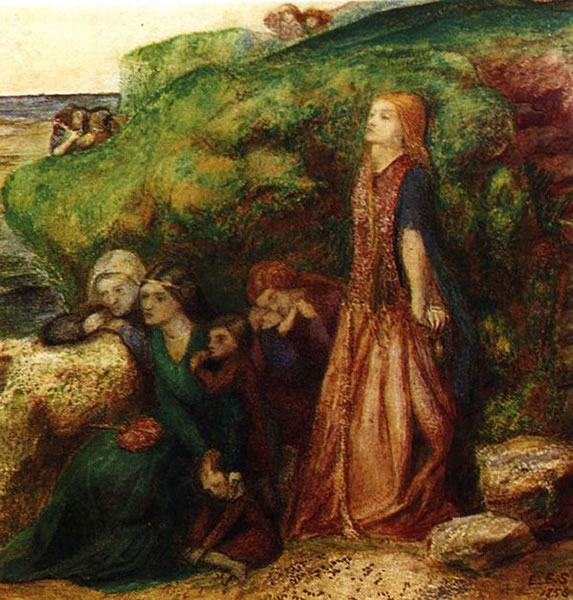
Lamenting our brokenness

Dancing in the Kingdom- Table of Contents

Dancing In the Kingdom – Part 3 – Dancing in the Kingdom– Chapter 14 – Remembering our creation

Lamenting our Brokenness[1]

[Bible references: Psalm 90; Lamentations 1-2; Matthew 26:36-46; 27:33-53; Luke 22:15; 1 Corinthians 14:12; Hebrews 12:2]

God made a good world, a world full of his glory. Sometimes, we can look at the beauty, the immenseness, the intricacy of what he has made all around us and be filled with awe and wonder. Unfortunately, what is also visible are the many ways in which things are not as they should be. As we consider all that we see and contemplate the kind of end that God intended, we find ourselves looking at a world that seems to be headed in the wrong direction. Instead of increasing shalom, there is violence, hatred, fear, disease, and brokenness. Pain. Shattered dreams. Loss of hope.

There are times when the brokenness around us and within us can overwhelm us. There may be times when God seems absent for long periods of times. This intense absence has brought some people to what they call the Dark Night of the Soul.[2]

The brokenness around us affects everyone, although some experience the brokenness more harshly than others. The Psalms are full of complaining about how the pain of sins’ consequences don’t seem to affect everyone equally. In Lamentations, that pain is captured in personification – the pain of an adulterous woman who is naked, unclean, scorned, and shamed, a victim of rape, a slave, helpless, isolated, unclean. Just as we all bear the guilt of sinful disobedience against God and neighbor. Not only do we bear the guilt of active rebellion against God, but we also bear the shame of being sinned against.

Throughout its history, the church has been concerned with the sin of people but has largely overlooked an important factor in human evil: the pain of the victims of sin. The victims of various types of wrongdoing express the ineffable experience of deep bitterness and helplessness. Such an experience of pain is called han in the Far East. Han can be defined as the critical wound of the heart generated by unjust psychosomatic repression, as well as by social, political, economic, and cultural oppression. It is entrenched in the hearts of the victims of sin and violence, and is expressed through such diverse reactions as sadness, helplessness, hopelessness, resentment, hatred, and the will to revenge.[3]

None of this is comfortable, our tendency is to use whatever devices we can to cover our feelings. We want to run and cling to the hope and joy of Christ, to rush past our uncomfortable guilt and shame. There is a part of us that would be happy to join Christ in His work in the world, as long as we can skip the confession of sin and guilt, but in doing so we would skip the richness of God’s mercy and the gift of shalom.

The depths of joy and hope are not just feelings for us to receive and enjoy. Rather, the depths of joy and hope are only found in acts of the will, in a persistent choosing to abandon our interests and instead to follow God.

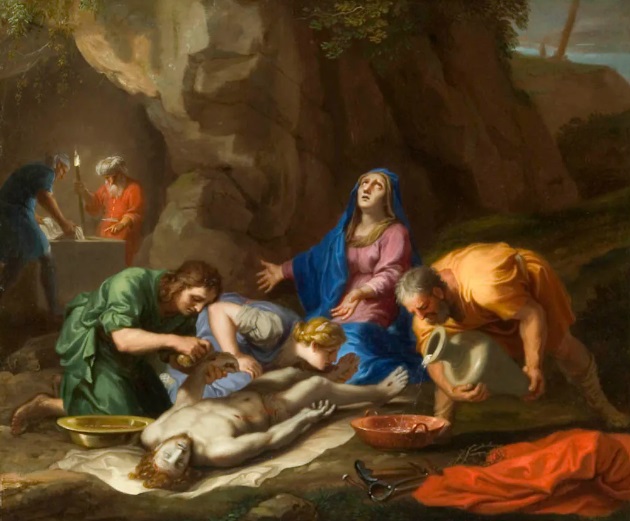
Knowing what was before Him, Jesus chose to push His glory to the side and to take on the form of a human with all its physical inconveniences, to endure the ridicule of people who were not fit to tie his sandals, to spend years training 12 disciples all of whom he knew would abandon him in the time of his greatest suffering as he endured the agony of the cross. But in all of this, as he shared the last meal with his disciples before his time of passion, he could say, “I have eagerly desired to eat this Passover with you before my suffering.” The great joy that awaited Jesus and His disciples would be preceded by deep sorrow and great suffering.

“Throughout 1946 and 1947, Mother Teresa experienced a profound union with Christ. But soon after she left the convent and began her work among the destitute and dying on the street, the visions and locutions ceased, and she experienced a spiritual darkness that would remain with her until her death. It is hard to know what is more to be marveled at: that this twentieth-century commander of a worldwide apostolate and army of charity should have been a visionary contemplative at heart; or that she should have persisted in radiating invincible faith and love while suffering inwardly from the loss of spiritual consolation” [4]

As we consider in which ways we are called to “Dance in the Kingdom” with God, we need to keep the proper perspective. God’s work is to reconcile people and all of Creation to Himself. Whatever task He gives us to engage in, it will only ever be a portion of God’s work. Whatever task He has called us to is sufficient for us and He will supply whatever we need to accomplish the tasks He has provided. While some are called to do “bigger” tasks than others, we need to humbly accept whatever tasks God has called us to do. We also need to humbly submit to our need for one another and our need to combine whatever spiritual gifts God has given to us with the gifts He has given others as we build up one another. In the task of building up one another, we need to address another humility.

Our sin and our woundedness are deeper than we imagine. As we confess and acknowledge the sins we have committed and the shame we experience when others have sinned against us, our proper response is lament. We can neither undo what we have done nor what has been done to us. But we can take the next step. The path to restoration and reconciliation leads through a lament that must confront our brokenness and acknowledge the pain. In our lament we can recognize how we are corrupted by sin and that we are accountable for all the suffering caused by our sin.

For us to experience healing of shalom, we need to acknowledge the suffering we have caused, encounter the truth about our sins, and challenge the privileges we may have had over others. Shalom requires lament, a reminder not likely needed for those whose lives are marked by the injustice thrust upon them but is likely needed for those whose lives are marked by privilege.

“Lament in the Bible is a liturgical response to the reality of suffering and engages God in the context of pain and trouble. The hope of lament is that God would respond to the human suffering that is communicated through lament.”[5]


[1] Plantinga, Cornelius. Not the Way It’s Supposed to Be Eerdmans Publishing Co – A. Kindle Edition; Wolters, Albert M. Creation Regained Biblical Basics for a Reformational Worldview  William B. Eerdmans Publishing 1985, 2005. eBook

[2] Rah, Soong-Chan, “Prophetic Lament: A Call for Justice in Troubled Times” Intervarsity Press, 2015; Zaleski, Carol. “Dark Night of Mother Theresa;” St. John of the Cross, Dark Night of the Soul First Things, www.firstthings.com/article/2003/05/the-dark-night-of-mother-teresa

[3] Park, Andrew S. “The Wounded Heart of God: The Asian Concept of Han and the Christian Doctrine of Sin” Abingdon February 1, 1993

[4] Zaleski, Carol. “The Dark Night of Mother Teresa’s Soul” First Things, www.firstthings.com/article/2003/05/the-dark-night-of-mother-teresa

[5] Rah, Soong Chan. “Prophetic Lament: A Call for Justice in Troubled Times” Intervarsity Press, 2015

Reflect

What kinds of brokenness in the world do you notice the most?  For what do you lament?

Observe

Read Psalm 90. Is there any lament that touches your heart?

Future of the faith

Dancing in the Kingdom- Table of Contents

Dancing In the Kingdom – Part 2 – The Kingdom Revealed – Chapter 12 – Launching the church

Future of the faith

[Bible references: Isaiah 65:17-25; 66:22-24; Luke 20:34-362 Corinthians 5:1-10; 2 Peter 3:10-15; Revelation 21:1-8]

As mentioned in the previous section, the war against evil has been won. Christ has won the battle over sin and death. We need to keep our minds fixed on that when the battles rage around us. We need to remember that we are the side of the victor and not get defensive – our God is not small! We need to remember that the forces of evil have reigned since the fall and so, when Jesus came in the flesh, it was the forces of good that have intruded on the forces of evil, not the other way around.

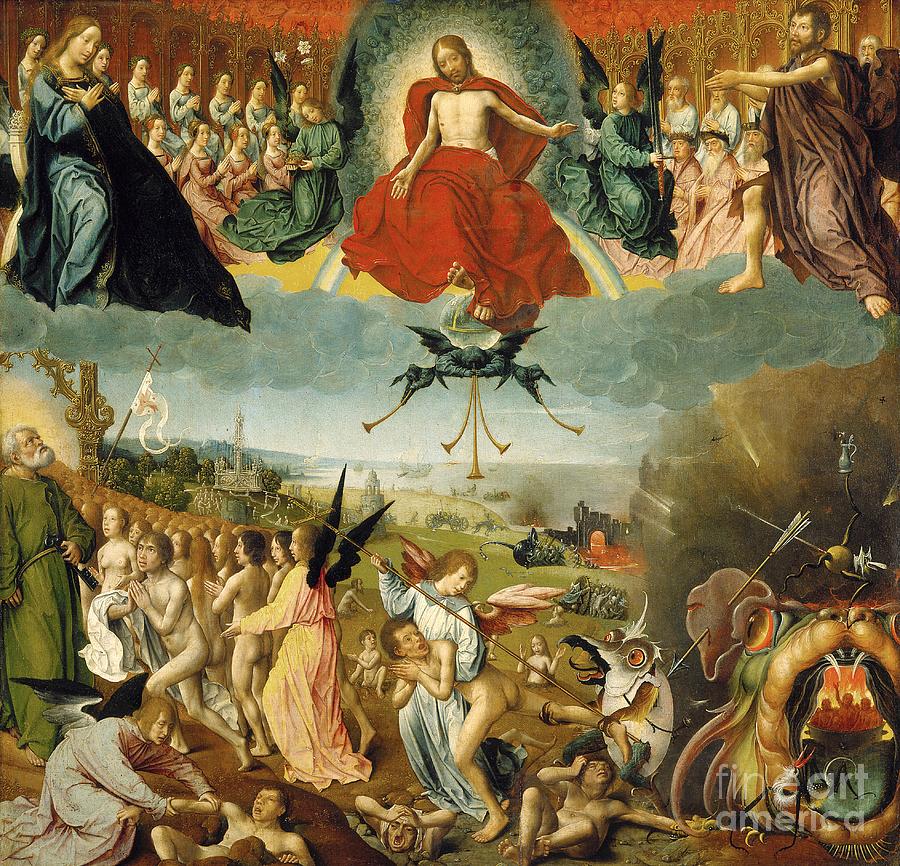
With the life, death and resurrection of Jesus, the Kingdom of God has entered onto the earth and Jesus continues to bring the Kingdom of God on earth through his church. Unfortunately, we need to wait until Jesus returns before he completely restores the Kingdom of God. But He will restore it!

One of the in-between time confusions centers around what happens in the day that Christ returns. In this time, when Christians die, we are not automatically resurrected, instead we leave earth to go to heaven to be with the Lord. But that is not our last destination! When Christ returns, He will unite heaven with earth, and it is then that we will then receive our resurrected bodies so that we can live on that new earth.

One of the other confusions around what happens what is the relation between the old earth and the new earth. The language in 2 Peter 3:10 can make it seem that the old earth will simply be annihilated and replaced with the new earth. However, that would seem to conflict with Acts 3:21 where God is said to “restore all things.”

“The times of the restitution of all things – The noun rendered restitution … does not elsewhere occur in the New Testament. The verb from which it is derived occurs eight times. It means properly “to restore a thing to its former situation,” as restoring a “strained” or “dislocated” limb to its former soundness. Hence, it is used to restore, or to heal, in the New Testament …”[1]

It so happens that “all but one of the oldest and most reliable Greek manuscripts do not have the final words “will be burned up” but instead have “will be found, …”[2] and that would be more in line with Acts 3:21.[3] What has been the more common rendering of “burning up the earth” has caused some to not care about our current earth, but if the earth is to be transformed rather than destroyed then we might, as the stewards of the earth, pay more attention to taking care of the earth.


[1] Biblehub “Acts 3:21” Biblehub biblehub.com/acts/3-21.htm

[2] Wolters, Albert M. “Creation Regained: Biblical Bases for a Reformational Worldview” William B. Eerdmans Publishing 1985, 2005. (Location 568 of 1582)

[3] Bible.org “A Brief Note on a Textual Problem in 2 Peter 3:10” the meaning of the term is virtually the equivalent of “will be disclosed,” “will be manifested.” Thus, the force of the clause would be that “the earth and the works [done by men] in it will be stripped bare [before God].” BAGD suggests a slight modification of this: be found as a “result of judicial investigation” (s.v. εὑρίσκω, p. 325. 2), citing Acts 13:28; 23:9; John 18:38; 19:4, 6; and Barnabas 21:6 as approximate parallels. Danker2 suggested a parallel between 2 Pet 3:10 and Ps Sol 17:10 (“Faithful is the Lord in all his judgments which he executes on the earth”; the link here is conceptual, though in v. 8 εὑρίσκω is used of the exposure of men’s sins before God). We might add that the unusualness of the expression is certainly in keeping with Peter’s style throughout this little book. Hence, what looks to be suspect because of its abnormalities, upon closer inspection is actually in keeping with the author’s stylistic idiosyncrasies. The meaning of the text then, is apparently that all but the earth and men’s works will be destroyed. Everything will be removed so that humanity will stand naked before God.

Observe

Read 1 Peter 3:10-15. What should our attitude be because we know that the new heavens and earth will be happening?

Rampant evil

Dancing in the Kingdom- Table of Contents

Dancing In the Kingdom – Part 1 – Shadows of the Kingdom – Chapter 4– Retreating to chaos

Rampant evil

[Bible references: Genesis 6, 9]

So that we can know what terrible direction we are headed without that intervening grace, God initially allowed his image-bearers to live long lifespans. It seems that long lifespans delayed the penalty of physical death such a long time that the image-bearers behaved as if there were no consequences for their God-defiant behavior. The result was rampant unrestrained evil that infected nearly everyone, causing God to send a flood to destroy all but one family. Sadly, even with that severe penalty, it would not be long before our God-defiant behavior would threaten to be our undoing again, but God would continue intervening with grace as He would gradually work out His plan to restore us to Himself beginning with the rainbow as a sign of hope.

Observe

Read Genesis 6 and 9. God sent a flood to deal with the rampant sin in the world but it wasnot long after the flood that signs of human rebellion sprung up again in Noah’s family. What kind of trajectory did this indicate for humanity?

Turning from shalom

Dancing in the Kingdom- Table of Contents

Dancing In the Kingdom – Part 1 – Shadows of the Kingdom – Chapter 4– Retreating to chaos

Turning from shalom

[Bible references: Genesis 3; Psalm 53:1-3]

Although we try to cling to the hope of God and our final restoration, we, in our sin, face a world that is broken by sin. While waiting for the restoration of creation, we find ourselves continually turning from God and to bringing further destruction into God’s good creation. We seem to be constantly bent on turning from shalom and substitutes that give us pain and despair. The history of the world is filled with the flourishing of evil and injustice. The consequence of choosing to go our own way has put us on a path where we continue to separate ourselves from the source of goodness and shalom. Indeed, we find ourselves on a path of destruction despite God’s continual provision for us as he continuously and unrelenting pursues us and pours out his limitless grace. And so it is, that we find ourselves in a world where both good and evil abound, where the good things God created are corrupted, and we continue to turn away from God.[1]


[1] Brister, Tim. “6 Destructive Ways We Minimize Our Own Sin” Bible Study Tools www.biblestudytools.com/bible-study/topical-studies/6-destructive-ways-we-minimize-our-own-sin.html

Reflect

Think about some things that should be inherently good but are used for evil purposes.

Observe

Read Psalm 53:1-3. What is the only way for us to seek what is good?

Hope in the brokenness

Dancing in the Kingdom- Table of Contents

Dancing In the Kingdom – Part 1 – Shadows of the Kingdom – Chapter 4– Retreating to chaos

Hope in the brokenness

[Bible references: Genesis 2:16-17; 3:14-15, 23; Psalm 4; 102; Isaiah 1:26; Jeremiah 29:11; Acts:318-26; Galatians 3:13-14; Ephesians 1:11-12; Romans 5:12; 8:18-3; Hebrews 1:1-4]

Grief is the normal response to loss or separation. We may grieve when we lose dreams, jobs, health, family members or friends and many other things. Death is separation. Physical death is the separation of the soul from the body. Spiritual death is the separation of the soul from God.

The first humans voluntarily separated themselves from God so that they could grab what they wanted. This was spiritual death. When the non-physical angels rebelled against God, they too suffered spiritual death. For the angels, the separation was permanent with no hope of reconciliation with their Creator. But the first humans were given the possibility of hope.

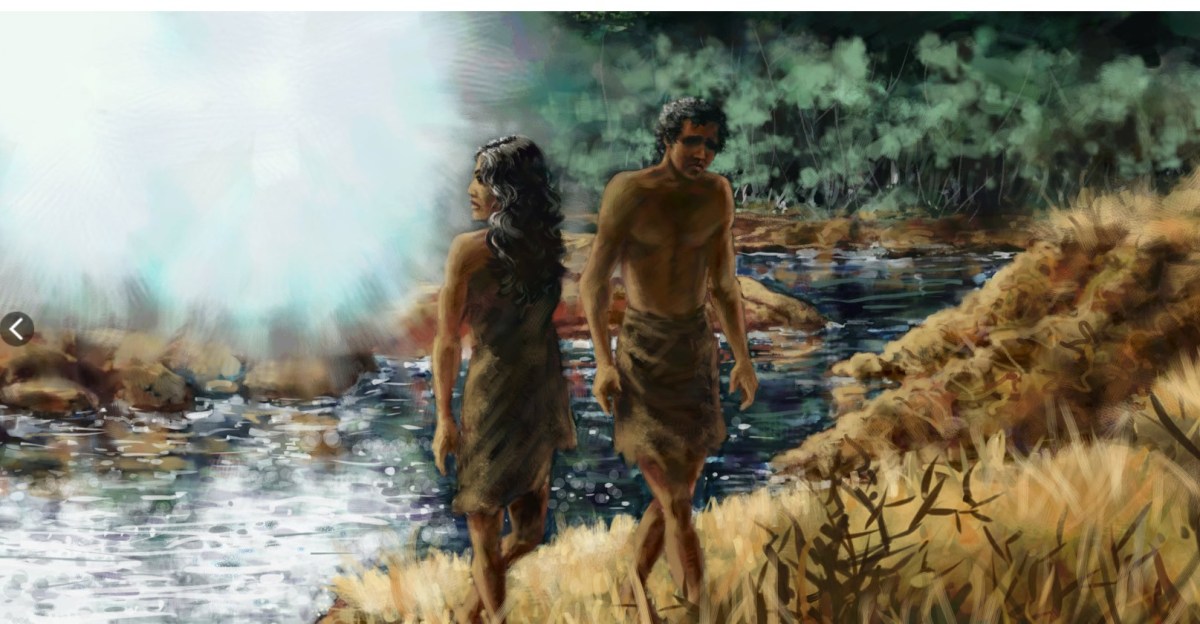
Humans were also physical creatures, with mortal bodies, physical bodies that could die. Indeed, the humans needed access to the Tree of Life in order to keep on living. When the humans rebelled, they immediately suffered spiritual death. When the humans were also denied access to the Tree of Life, then their physical death was ensured. Spiritual death followed by physical death. A double grief. But the double grief contained the possibility of hope.

The consequences of rebellions created a great tragedy that could not be undone, not by the image bearers. But even so, as we look around us, we can see that despite the tragedy around us, things aren’t totally bad. Even though evil is very evident around us, goodness is also evident. It is in that observation that we can glimpse the possibility of hope. Amidst the consequences of rebellion, there are hints of hope.

When God confronted the first humans with the consequences for their rebellion, He also gave them a hint of the undoing of death, a solution to the problem created by sin. This hint would only be the first of many other hints to come that we can see revealed in the Biblical text.

We can also see evidence for hope in the continued creation by God, as he continues to sustain the universe he created, continuing to create new living things, plants, and animals alike. There is also hope hidden in the mandate given to the image-bearers. Their mandate of stewardship of God’s creation was still in force, although there would now be suffering involved in the fulfillment of the mandate. There was hope hidden in the name of God’s Son.[1] There was also a strange hope in the banishment from the Tree of Life; the consequence of physical death would provide a way to free us from an eternity of being separated from God and open a way for our redemption.

The sacrifice of Jesus followed a life in which Jesus successfully waited to receive those things that His Father intended to give, resisting the temptation to grab those things for himself. In his life and death, Jesus successfully accomplished what Adam and all those who came after Adam had not.

In the beginning, we were eager to grasp for ourselves wisdom and the knowledge of good and evil on our own terms. What we didn’t plan on was the consequences that would follow. Sometimes God gives us what we think we want even though it would bring us the suffering that God was trying to steer us from. It’s a continuing pattern we see from the beginning until now, that it is not always a good thing when we get what we think we want.[2]

But Jesus life did not end with his crucifixion. Jesus’ resurrection was the proof of redemption and of the hope of restoration. Sin had corrupted all of creation and all of creation is groaning and awaiting its restoration.

The universe is not what it’s supposed to be. We are not what we are supposed to be. We are creatures created with the imprint of the image of God but broken in body, soul and spirit. Our brokenness shows up in our actions, words and thoughts. Our brokenness shows up in the way we are treated and the way we treat others. And our brokenness even shows up in the bodies we are born with. But in His death and resurrection, God is able to redeem and restore all of us, all of who we are, all of what we have done, all of what has been done to us, and even all of creation. God is able to use all of our suffering and use it for our good, making something beautiful out of what was broken.


[1] See Chapter 2, The Mystery of God’s Name

[2] See Chapter 8. Rejecting God as King

Reflect

It’s not hard to see signs of brokenness around us. Are there any signs of hope that can be seen?

Observe

Read Isaiah 1:26; Jeremiah 29:11; Matthew 17:11; Acts 3:18-26; Galatians 3:13-14; Ephesians 1:11-12;. Throughout the Bible, God has chosen to share his future plans in pieces at a time. What those plans are, have been the subject of much debate within the church. What is your understanding of God’s plans for the future?

Playful and orderly

Dancing in the Kingdom- Table of Contents

Dancing In the Kingdom – Part 1 – Shadows of the Kingdom – Chapter 3 – The image-bearers

Playful and orderly

[Bible references: Deuteronomy 12; Exodus 35:30-38; 2 Kings 17:1-41; Nehemiah 8:1-9:38; Psalm 100; John 4:23-24; Acts 6:1-7; 15:1-35; Romans 12:1-2; 1 Corinthians 14:1-40]

There is much that is wrong in the world. People endure pain and suffering sometimes from natural happenings and sometimes from the actions of others. Evil seems persistent and never-ending. When we are called to serve God in this world, we can become overwhelmed by all the work that is to be done. Playfulness can seem out of place. Particularly, any playfulness that emerges from self-centeredness or obsessiveness.

Actually, that is the point we need to assert. Playfulness can be out of place in a world of sin and evil. But playfulness can also be a reminder that the reality in front of us is not the total reality. Our playfulness arises out of the relationship we have with God, the one who has overcome the evil in the world, who will end the suffering and who will restore us and world to be what he intended from the beginning. Playfulness arises out of the hope and joy we have in knowing that the reality in front of us is not the whole reality.

Our imagination can be helpful in this play. As children, we can pretend there is another world and do something like taking a cardboard box and imagining it to be a spaceship and accepting the rules of living in that spaceship. Family traditions (or even community or national traditions) are a form of play, they do not serve a utilitarian purpose, but stem from the creative ways we wish to remember our unique heritage.

This same imaginative playfulness can be useful in reminding us of the reality that lies behind our current reality. Our traditions of worship are a form of play, albeit a more serious play. Our worship traditions represent ways for us to remember our spiritual heritage or to provide imaginative ways to perform biblical sacraments about which we have sparse details on how to perform them. These traditions and liturgies help us point to that other reality, a new Kingdom that began breaking into this world with the incarnation of Jesus.

Christian worship was in fact and from the beginning a festival:  the festival of Christ’s resurrection from the dead … Easter begins with a feast, for Easter is a feast and makes the life of those who celebrate it a festal life … Jesus himself compared the presence of God, which he proclaimed and lived, with the rejoicing over a marriage. His earthly life was a festal life, even if it ended in suffering and death … the early Christians have understood his raising from the dead and the presence of the now-exalted Christ as the beginning of an unending joy and a happiness without end … the risen Christ as ‘the first among those who had fallen asleep’ and as the leader of life; as the leader in the mystic dance and himself as the bride who dances with the others, as the church father Hippolytus put it.  Long before the somber dances of death were painted in medieval times of plague, the figure of the resurrection dance can be seen in the old churches. The modern Shaker song ‘The Lord of the Dance’ brings out very well the dancing Christ:

I am the life that’ll never, never die;
I’ll live in you if you’ll live in me,
I am the Lord of the Dance, said he.[1]

We hope to participate in the inbreaking of the new Kingdom by living according to its rules. When we pray or worship, we are participating in the rules of that new Kingdom. When we come to others and share with them the hope that we have, we ask them to use their imagination to look beyond the current reality and envision the new Kingdom that is already here and is yet to come. When we accept contentment in all situations, when we trust in God, when we comfort others with the hope we have, we are living according to the rules of the new Kingdom.[2]

It is also true, that In this present life there are endless encounters with grief. Although we acknowledge the pain and suffering of that grief, whether that grief is ours or others, we can encompass that grief with hope. Even amid grief we can choose to cling to God and to the hope He brings us. If we can live under the rules of the new Kingdom, we can have assurance that the current grief will pass and will be replaced by future joy and laughter and that every tear that we have cried and will cry and even now cry will be wiped away.

Our hope of the new Kingdom allows us to endure the current pain and suffering knowing that the hard experiences can be redeemed and to be used for good. God can take the pain and suffering we endure to transform us to be more like Christ, who himself suffered for us, transforming the very evil intended for him into the final victory that shall ultimately also make us victorious. This hopeful living then is also a form of play, accepting the rules of a reality we cannot see and choosing to live according to the rules of a Kingdom that we can only realize in part.

That playfulness also emerges in our creativity, which erupts early on in our lives as our desire as children to play and also in the desire we have as parents to play with our children.[3] There is no doubt about how uniquely creative we are in the way we express ourselves, not only in all the various art forms we use but in the ways we can solve all sorts of problems[4] – even to the creative ways we try to cover up our sins.[5] No other creature can come close to expressing creativity the way we can.

Our ability to create and even detect order is also unmatched.[6] Our ability to detect order is evident in the way we can detect patterns in sight or sound. The sense of order is evident in our ability to recognize faces, our ability to recognize the voices of our mothers or fathers as infants and even before we are born.[7] Our sense of order is seen as we grow in our ability to recognize the patterns of letters and sounds and to recognize and respond to language – even languages.

Our sense of order becomes more evident in our ability to create order out of many abstract concepts such as math, science, philosophy, and many other areas.[8] It is our sense of order that allows us to create businesses, governments, and civic organizations to make society productive. When we bring order to farmland, we increase the productivity of the farm.

The visible order within Creation inspired Christians in the past to study Creation. Order within Scripture helps the Bible to be meaningfully used as meditative literature. In the same way, order during worship also helps us to avoid confusion and to focus on God.


[1] Moltmann, Jürgen. “The Living God and the Fullness of Life” trans. Margaret Kohl Westminster John Knox Press, 2015, p.192; Carter, Sydney. Lyrics “Lord of the Dance” (1963) Genius genius.com/Sydney-carter-lord-of-the-dance-lyrics; Tune “Simple Gifts” Brackett Jr., Joseph. (1848) Praise gathering www.praisegathering.com/media-files/pdf/a08380_lyrics.pdf

[2] Edgar, Brian. “The God Who Plays: A Playful Approach to Theology and Spirituality” Cascade Books 2017 (e-book)

[3] Gowman, Vince. “Playful quotes for the child in your heart” Vince Gowman www.vincegowmon.com/playful-quotes-for-the-child-in-your-heart/

[4] Baumgartner, Jeffrey. “The Basics of Creative Problem Solving – CPS” Innovation Management, innovationmanagement.se/imtool-articles/the-basics-of-creative-problem-solving-cps/

[5] Brister, Tim. “6 Destructive Ways We Minimize Our Own Sin” Bible Study Tools www.biblestudytools.com/bible-study/topical-studies/6-destructive-ways-we-minimize-our-own-sin.html

[6] Basulto, Dominic. “Humans Are the World’s Best Pattern-Recognition Machines, But for How Long?” Big Think 24 July 2013 bigthink.com/endless-innovation/humans-are-the-worlds-best-pattern-recognition-machines-but-for-how-long

[7] Pfaff, Leslie Garisto. “6 things you may not know your baby can do” Parents www.parents.com/baby/development/intellectual/6-things-you-may-not-know-your-baby-can-do/

[8] Armstrong, David. “Christianity Absolutely Critical to Origin of Science” Patheos, 18 Oct 2015, www.patheos.com/blogs/davearmstrong/2015/10/christianity-crucial-to-the-origin-of-science.html

Observe

Read Deuteronomy 12; 1 Corinthians 14. These chapters contain explicit instructions about how and how not to worship.  Since we do not yet experience the fullness of the new Kingdom, how can our imagination help us more actively engage in worship?

Reflecting God’s paradoxes

Dancing in the Kingdom- Table of Contents

Dancing In the Kingdom – Part 1 – Shadows of the Kingdom – Chapter 3 – The image-bearers

Reflecting God’s paradoxes

[Bible references: Genesis 1:26-32; 2:4-7,15-25; Matthew 22:36-40; John 15:8-11; Romans 8:20-21; Galatians 5:22-23]

Understanding the character of God, can help us understand what he has intended for creatures that are made in his image. Image-bearing creatures are not gods or duplicates of God, but they are imbued with the character of the God that made them.

It was into this good universe that God prepared beforehand that God created creatures to bear his image. Good creatures, image-bearers, who were given the task of taking care of the good creation that God blessed them with – and God declared his creation to be very good. The image-bearing creatures were created in the complex image of God – the one God who was a community within Himself, the God who was immensely creative, the God who was generous and loving beyond imagination, the God who is sovereign over the universe, the God who is above all things.

There was a danger in God creating image-bearers. To make creatures that were lovers – just as He was a lover – meant giving these image-bearers the freedom to choose whom or what to love. Since we are created as lovers, we are compelled to love, so when we choose to not love one thing  or one person it is only because we have chosen to love someone or something else. Because God’s image-bearers were the capstone of creation, their option to love something more than God risked an awful catastrophe, a catastrophe that could affect the entirety of creation itself. The good creation, all of it, would become not so good.

And so it was, after creation was prepared for God’s image-bearers, those creatures who were created in the image of the loving God were given instructions to be stewards of the world God had made. Everything was good, and the first human couple had free access to the provisions in the garden prepared for them. Only one restriction was placed before them, a restriction not meant to deprive them of anything good but meant to provide the opportunity to test their love, by testing their obedience to the one who created them.

We all now know that those creatures failed their test, and we daily experience the consequences of that failure. We also daily experience our own incapacity to restore holiness on our own efforts, our own inability to love God with all our heart and soul and mind and our own inability to fully love God or to fully love our neighbors as ourselves.

The mystery of who we are has to worked out between all the goodness we are endowed with as creatures who bear the image of God and all the evil we are encumbered with as creatures who innately rebel against that same God. Traces of heaven and hell run through each of us and are manifested in our everyday lives. The tongues we praise God with also curse our neighbor. The selflessness we display to others is corrupted by the selfish desires that emerge from the same heart.

Observe

Read Genesis 1:28; 2:15. What tasks did God provide for the humans?

Confronting our freedom

Dancing in the Kingdom- Table of Contents

Dancing In the Kingdom – Part 1 – Shadows of the Kingdom – Chapter 1 – Prelude

Confronting our freedom

[Bible references: Genesis 3:1-24; Deuteronomy 7:6-14; 30:18-20; Joshua 24:14-16; John 7:17; 15:16]

To be creatures designed in the image of the transcendent creative, loving God, we needed a kind of independence so that we could choose to love – or not love – and to be free to imagine and create wildly new and different things as proper for God’s image-bearing creatures. We were free to do this in a place where everything was very good and designed so that we could flourish. However, that very freedom which gave image bearers the possibilities of independent thoughts, also gave those image-bearers the opportunity to also confront temptation.

While the image-bearers were given the opportunity to meet with God and to walk with him in a specially designed garden, they were also allowed the opportunity for questions. They could even question the motives of the God who made them: 

  • Was something good being withheld from them?
  • Were they being deprived of some power?
  • What would be available to them if they violated the restriction?
  • Would they actually die?
  • What special knowledge were they being deprived of – particularly this knowledge of good and evil?
  • Everything they had encountered had been good, why would their thinking about violating this one restriction not be good?
  • Was the Creator so good anyway?”

Observe

Read Deuteronomy 7:7; 30:18-20; Joshua 24:14-16. The ability to love is not possible without the ability to choose. What did the Israelites choose to love (or not love)?

Turning from shalom

Dancing in the Kingdom – Table of Contents

Part 1 – Shadows of the Kingdom, Chapter 4 – Deforming the intended direction for creation

[Bible references: Psalm 53:1-3]

Although we try to cling to the hope of God and our final restoration, we, in our sin, face a world that is broken by sin. While waiting for the restoration of creation, we find ourselves continually turning from God and rather towards bringing further destruction into God’s good creation. We seem to be constantly bent on turning from shalom and towards a substitute that gives us pain and despair. The history of the world is filled with the flourishing of evil and injustice. The consequence of choosing to go our own way has put us on a path where we continue to separate ourselves from the source of goodness and shalom. Indeed, we find ourselves on a path of destruction despite God’s continual provision for us as he continuously and unrelenting pursues us and pours out his limitless grace. And so it is, that we find ourselves in a world where both good and evil abound, where the good things God created are corrupted continuing to turn us away from God.[1]

Rampant evil

[Bible references: Genesis 6, 9]

So that we can know what terrible direction we are headed without that intervening grace, God initially allowed his image-bearers to live long lifespans. The long lifespans seemed to postpone the penalty for sin such a long time by delaying the penalty of physical death, that the image-bearers behaved as if there were no consequences for their God-defiant behavior. The result was rampant unrestrained evil that infected nearly everyone, causing God to destroy all but one family. Sadly, even with that severe penalty, it would not be long before our God-defiant behavior would threaten to be our undoing again, but God would continue intervening with grace as He would gradually work out His plan to restore us to Himself beginning with the rainbow as a sign of hope.

Tower of Babel

[Bible references: Genesis 11:1-8; Genesis 12:1-3]

Despite the catastrophic destruction that destroyed all people except Noah and his family, the image-bearers’ defiance would emerge again when, thinking themselves to be wiser than God, they refused to spread out over the earth as God had commanded and then proceeded to build a tower as a monument to themselves. God’s response was very measured. By causing them to speak different languages so that they could no longer communicate with each other, the image-bearers would no longer be able to come together to complete the tower, rather they were now forced to divide into seventy different groups and spread out across the earth as God had intended. This breakup would lead to the creation of different nations – and eventually lead to God’s working out His solution to our predicament by the calling out from one of the nations, one man through whom God would begin His work of restoration.


[1] Brister, Tim. “6 Destructive Ways We Minimize Our Own Sin”

Reflect

Think about some things that should be inherently good but are used for evil purposes.

Observe

Read Gen 3:1. We often know in our mind what God’s instruction is when we are tempted to do our own thing apart from God’s instruction. We somehow find a way to justify our actions by questioning God’s authority. Does this give us a strategy for dealing with temptation?

Reflect

If there were no consequences for bad behavior, what do you think the world would be like?

Observe

Read Genesis 6 and 9. God sent a flood to deal with the rampant sin in the world but it wasnot long after the flood that signs of human rebellion sprung up again in Noah’s family. What kind of trajectory did this indicate for humanity?

Reflect

Even within a family, different experiences cause people to think differently causing conflict. They all use the same words but have different thoughts about what is right. Larger problems occur when people grow up in entirely different environments. When people use different languages, those different languages amplify the differences in how people think. In your own situation, what different cultures do you interact with and how do you process conflicts with people in those cultures?

Observe

Read Genesis 11:4. The construction of the tower at Babel was not a positive development, but God’s plans won’t be thwarted. What confidence does that give us about the difficult situations we see around us today?