Legalism

Dancing in the Kingdom- Table of Contents

Dancing In the Kingdom – Part 2 – The Kingdom Revealed– Chapter 10 – The Class of Apparitions

Legalism 

[Bible references: Matthew 23:1-39]

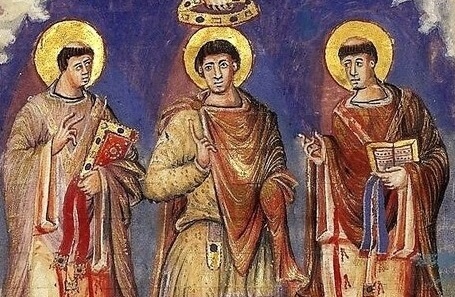
Some people make efforts to follow the “letter of the law” but ignore “the spirit of the law,” where appearances are important, but morality isn’t. The Torah was heart of all the Jewish traditions[1] and the Pharisees were most dogmatic about adhering to it, using the oral law to provide much of the detail on how go live out the law on a day-to-day basis. The desire was so strong that many Pharisees even kept apart even from other Jews in order to avoid contamination. The Essenes lived in isolated communities because they were even more concerned about getting contaminated. Jesus had much to say about how the Pharisees were trying hard to keep their external appearances looking “pure” by following all their regulations but at the same time their hearts were corrupt. Jesus sometimes called them “whitewashed tombs.” 


[1] Gutierrez, Juan Marcos Bejarano. The Judaisms of Jesus’ Followers: An introduction to Early Christianity in its Jewish Context Yaron Publishing, 2017 (Locations: 366)

For or against the secular culture

Dancing in the Kingdom- Table of Contents

Dancing In the Kingdom – Part 2 – The Kingdom Revealed– Chapter 10 – The Class of Apparitions

For or against the secular culture

[Bible references: Ezra 6:19-22; 2 Corinthians 6:14-18; Matthew 5:13-16; 28:18-20]

There are many ways people try to hold onto their subculture when they sense that the main culture around them has a corrupting influence.[1] The Sadducees were trying to blend in with the culture of the empire. The Essenes kept themselves as an isolated, communal society.[2] The Pharisees were trying to hold fast to the rules specified by Moses.[3]


[1] Elshtain, Jean Bethke. “With or Against Culture” Books and Culture www.booksandculture.com/articles/2006/sepoct/20.30.html; Niebuhr, Richard M. “Christ and Culture” Harper & Row 1951

[2] Gutierrez, Juan Marcos Bejarano, Forgotten Origins: The Lost Jewish History of Jesus and Early Christianity, Yaron Publishing, 2017 (Location 2343)

[3] Gutierrez, Juan Marcos Bejarano. The Judaisms of Jesus’ Followers: An introduction to Early Christianity in its Jewish Context, Yaron Publishing, 2017 (Locations: 738, 929)

Reflect

Do you try to blend in with the culture or do you try some method of keeping from being absorbed into the culture around you?

Observe

Read Matthew 5:13-16: How can one be “salt” and “light” within our world?

Apocalyptism

Dancing in the Kingdom- Table of Contents

Dancing In the Kingdom – Part 2 – The Kingdom Revealed– Chapter 10 – The Class of Apparitions

Apocalypticism

[Bible references: Matthew 24:1-51; John 14; 2 Peter 3]

In our current age, there have been many groups who have forecast the end of time, and that the end times will be quite dystopian. There are also many who have claimed to be the Messiah.[1] The Essenes[2] were waiting for the Messiah to come and wipe out secular governments. The Zealots, and some Pharisees, were trying to physically push out the Romans and put a new government in place. There were over a dozen apocalyptic texts produced in the Intertestament period[3] and texts continued to be produced in the early centuries. There is widespread disagreement about the various aspects of apocalyptic prophecies, but like all prophecy there are some widely accepted principles.

Predictive prophecies can serve a number of important functions. They can glorify God by testifying to His wisdom and sovereignty over the future. Then can also assure and comfort oppressed believers and motivate people to stronger faith and deeper holiness.[4]


[1] Wikipedia “List of Messiah claimants” Wikipedia en.wikipedia.org/wiki/List_of_messiah_claimants

[2] Johnson, Paul. “History of the Jews” Harper Perennial 1987 (p.123)

[3] NIV Cultural Background Study Bible “Apocalyptic Literature” Zondervan 2016

[4] Virkler, Henry A. “Hermeneutics: Principles and Process of Biblical Interpretation” Baker Books 1981 p. 191

Observe

Read Matthew 24. According to the end of the chapter, why are we to “keep watch” regarding the day our Lord will come?

Essenes

Dancing in the Kingdom- Table of Contents

Dancing In the Kingdom – Part 2 – The Kingdom Revealed– Chapter 10 – The Class of Apparitions

Essenes

[Bible references: Leviticus 11; 15:31; Ezra 10:11]

And when they prepare the table to dine or the new wine for drinking, the priest shall stretch out his hand as the first to bless the first fruits of the bread {or the new wine for drinking, the priest shall stretch out his hand as the first to bless the first fruits of the bread} and of the new wine. [1]

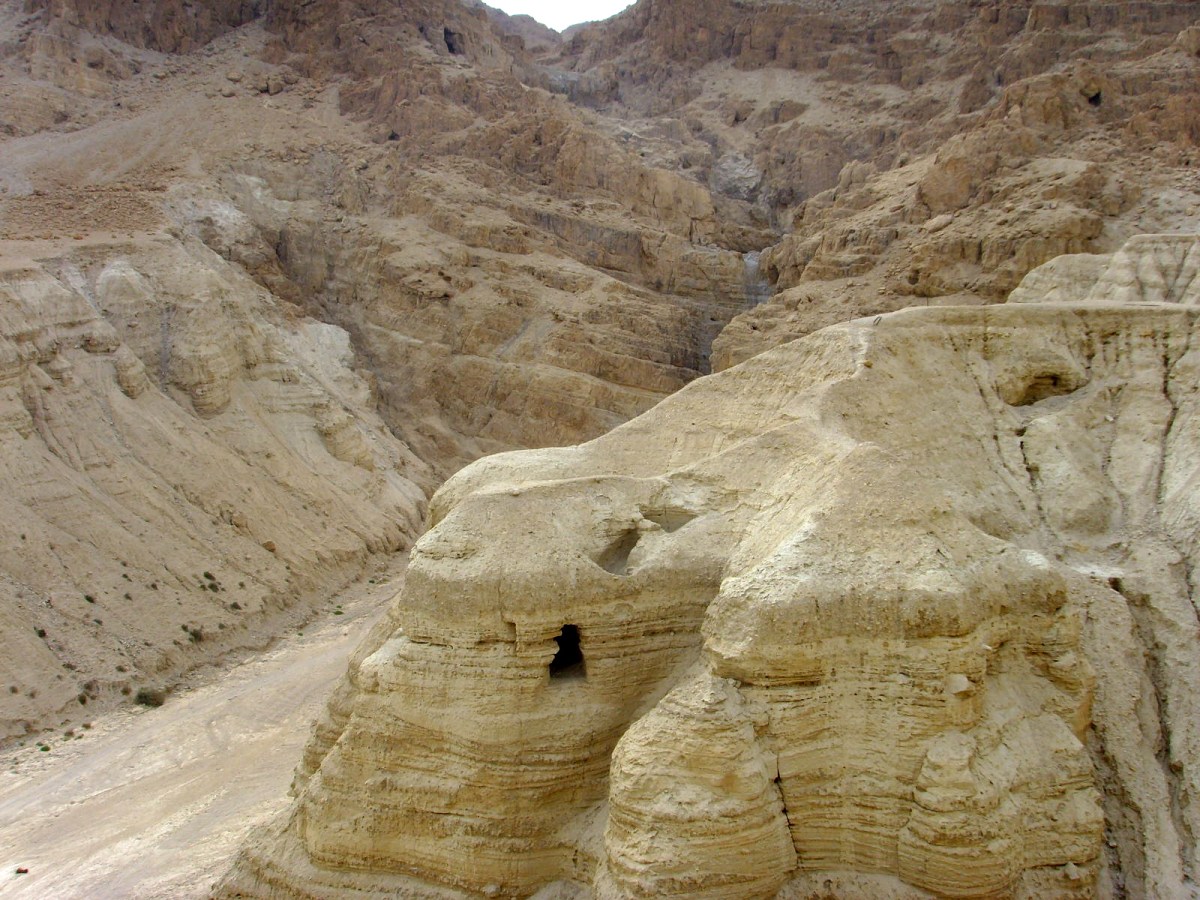
The origin of the Essenes[2] is somewhat mysterious and was largely unknown until the discovery of the Dead Sea Scrolls[3]. The Essenes were a sect that isolated themselves in the desert and maintained minimal contact with outsiders. They are possibly an offshoot of the “Hasideans” (aka “the pious ones”), mentioned in 1 Maccabees. They considered the temple and its practices to be corrupted and considered themselves to be the ‘chosen ones’ who would be saved at the end times. They lived communally and celibately and had a 3-year probationary process before accepting new members. There are unproven speculations that John the Baptist and Jesus were affiliated with the Essenes.

Although there is no direct evidence of Jesus interacting with the Essenes, the criticisms that Jesus raised against the Pharisees were similar to the criticisms that the Essenes had. Later on, as we examine the practices of the early church, we will also see parallels to the Essenes. Jesus’ followers and the Essenes anticipated an eschatological restoration of Israel, and both groups also believed in the necessity of national purification.


[1]  Martinez, Florentino Garcia. “The Dead Sea Scrolls Translated,” Community Rule 1QS Column 6:4-6 (p79)

[2] Riches, John. “The World of Jesus: First Century Judaism in Crisis,” Cambridge University Press, 1990; Gutierrez, Juan Marcos Bejarano. “The Judaisms of Jesus’ Followers” Yaron Publishing, 2017; Gutierrez, Juan Marcos Bejarano. “Forgotten Origins” Yaron Publishing, 2017; Crossan, John Dominic. “The Birth of Christianity” HarperSanFrancisco 1999; NIV Cultural Backgrounds Study Bible, Zondervan 2016 Kindle book (locations 214907, 22713); NIV First-Century Study Bible, Biblica 1973 Kindle book (Location: 91578)

[3][3] The Dead Sea Scrolls are considered by many to be the most significant archaeological find of the 20th century. From 1947 to 1956, thousands of scroll fragments were uncovered from the caves near Qumran, located on the northwestern shore of the Dead Sea. (Biblical Archaeology Society, “What are the Dead Sea Scrolls”  www.biblicalarchaeology.org/daily/biblical-artifacts/dead-sea-scrolls/what_are_the_dead_sea_scrolls.

Observe

Read Leviticus 11; 15:31; Ezra 10:11. The Israelites could not follow all the laws concerning cleanliness without keeping some degree of separation from cultures around them. But it seems that the Israelites kept getting drawn away from following Yahweh. What temptations draw Christians away from following Yahweh?