Nation of wrestlers

Dancing in the Kingdom- Table of Contents

Dancing In the Kingdom – Part 1 – Shadows of the Kingdom – Chapter 5– Patriarchs

Nation of wrestlers

[Bible references: Genesis 31:25-45; 28:3-4; 27:42-45; 28:10-22; 32:22-32; 35:22-26; 30:21; 32:1-5]

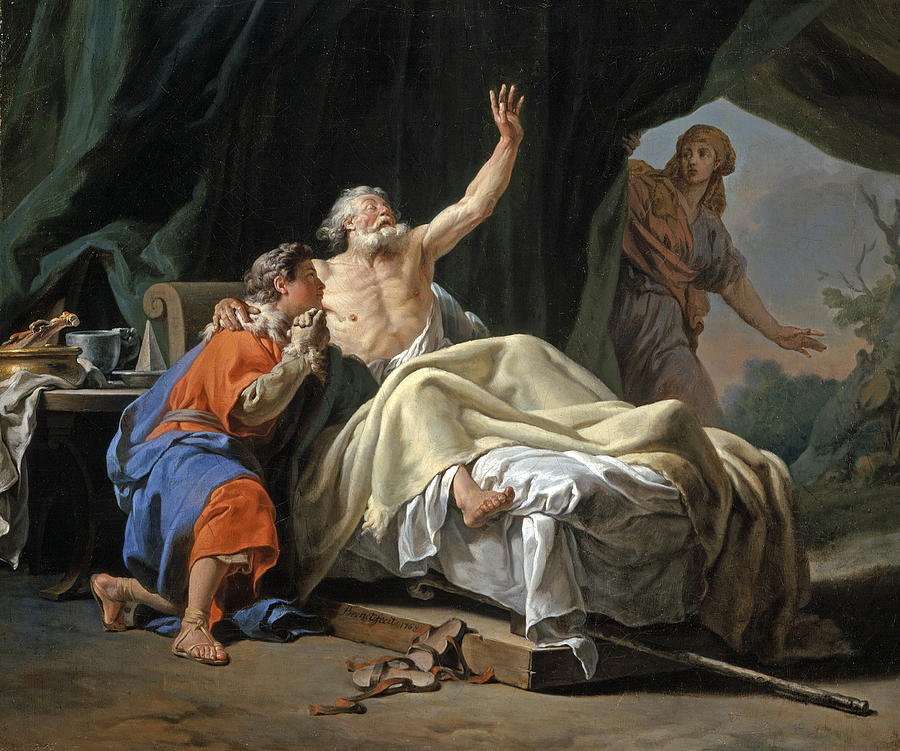
After the deception of Isaac, Jacob’s would continue his pattern of deception. Yet, despite that character flaw, God would continue to bless Jacob with success just as he had blessed Abraham and Isaac. Jacob’s deceit with Isaac and Esau forced him to leave home and visit his uncle Laban, in Haran for many years. On the journey to Laban, Yahweh shared with Jacob the promise he made with Abraham and with Isaac, that “all the people on earth would be blessed through you.”

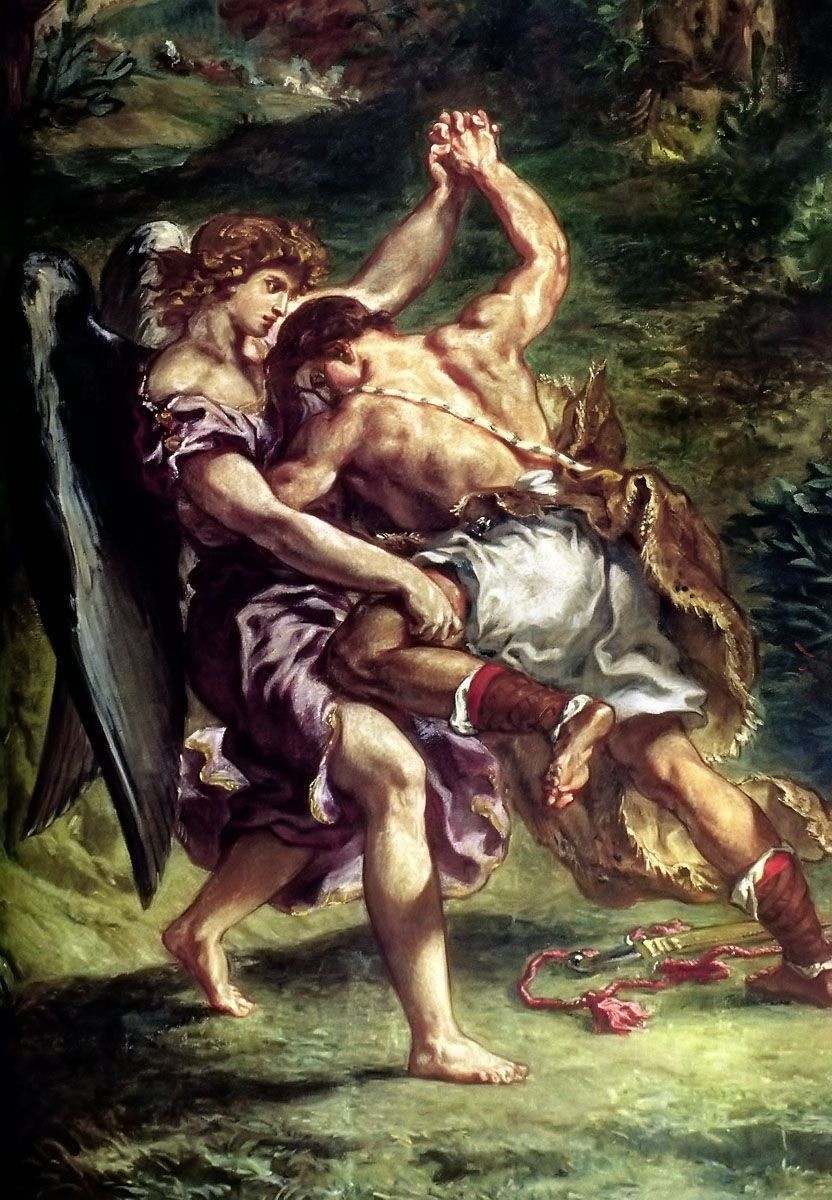
While staying with Laban, Jacob would continue his deceit to take advantage of Laban, although Laban would try return the favor. Jacob left Laban to return to the Promised Land, Jacob found himself in a wrestling match with a man that Jacob learns was God.[1] During that struggle, Jacob was forced to confess his character by admitting that his name means “deceiver,” after which the “deceiver” was given a new name, Israel (which means “wrestles with God”). Wrestling with God became a hallmark of Israel’s descendants.[2]


[1] Sproul, RC “A Wrestling People” Ligonier Ministries ligonier.org/learn/devotionals/wrestling-people

[2] Although there are many examples of people questioning God, the Psalms contain many examples.

Reflect

God is able to fulfill his purposes as we wrestle with him. Do you feel compelled to wrestle with God about anything?

Observe

Read Genesis 32:22-28. A rabbi once said that “In Judaism, not having questions is not a sign of faith but of lack of depth.” How does wrestling with God strengthen instead of weaken our faith?
A higher order

Dancing in the Kingdom- Table of Contents

Dancing In the Kingdom – Part 1 – Shadows of the Kingdom – Chapter 5– Patriarchs

A higher order

[Bible references: 1 Samuel 3-4, 15-16; Matthew 8:5-13]

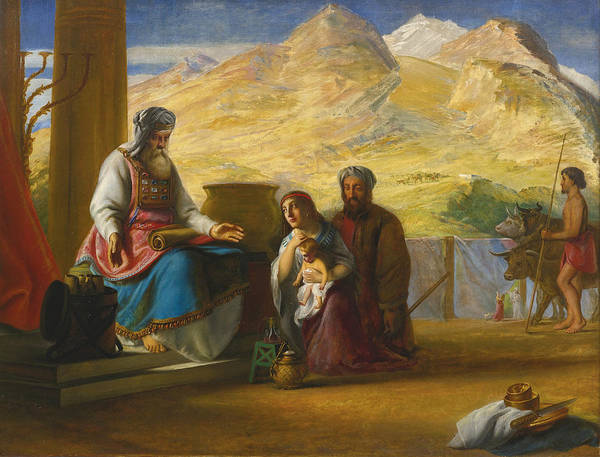
The case of Jacob and Esau is not the only example where Yahweh would choose to upset the common order of things. In this case, it was side-stepping the normal primogeniture and instead having the older sibling serving the other sibling. In other times it would be stronger serving the weaker, or sons being displaced by someone outside the family. This occurred when Samuel became high priest after Eli instead of Eli’s sons and when David became king after Saul instead of Saul’s son. In all these cases, we see God preparing someone new to lead while he arranged to end another’s leadership.

Reflect

Sometimes what looks like chaos to us is actually a pattern that we haven’t figured out. One example is encoded messages – we can’t read them without knowing the underlying order. What patterns from God confuse you?

Observe

Read 1 Samuel 3-4, 15-16; Matthew 8:5-13. The role of priest passed down from generation to generation, but God interrupted the process at least twice. How did that prepare the way for this story in Matthew?

Deceit instead of faith

Dancing in the Kingdom- Table of Contents

Dancing In the Kingdom – Part 1 – Shadows of the Kingdom – Chapter 5– Patriarchs

Deceit instead of faith

[Bible references: Genesis 25:29-34; 25:23; 27:1-40]

The biblical descriptions of Jacob and his twin brother Esau are not flattering. Esau is the older twin brother, but for a pot of porridge Esau was willing to give up his birthright. Later on, Jacob conspired with his mother, Rebekah, to deceive Isaac so that Jacob would receive the primary blessing from Isaac, instead of Esau.  Later on, Jacob would act deceitfully with his uncle, Laban. Then, like his father, Jacob would play favorites with his wives and his children.

Observe

Read Genesis 25:21-34; 27:1-40. The family dynamics in Isaac’s family were typically messy and complicated as many real families are and yet God will carry out his purposes. How can we use the example of Isaac and his family to give us confidence that God is able to carry out his purpose for us?

Ordinary believers

Dancing in the Kingdom- Table of Contents

Dancing In the Kingdom – Part 1 – Shadows of the Kingdom – Chapter 5– Patriarchs

Ordinary believers

[Bible references: Genesis 17:17; 21:5; 21:1-7; 24; 25; 26:1-11; 27:1-29]

Meanwhile, the Biblical record for life of Isaac is unremarkable. God had blessed Isaac with wealth, however, the most notable events in his life were 1) failing just as his father Abraham had failed, Isaac also fearing that a local king kill him to get his wife, so Isaac, like Abraham, claimed that his wife was his sister and 2) when Isaac was preparing to die, he got fooled by Jacob into giving Jacob the primary blessing instead of his older twin brother, Esau. This incident just highlighted the favoritism Isaac showed to Esau and the favoritism his wife Rebekah showed to Jacob. Blessed, fallible, unremarkable, yet still used by Yahweh to accomplish Yahweh’s will.

Reflect

What is our prayer when we know that our time in this life is limited and most of us will not accomplish anything spectacular, and yet, God may use our life to achieve a greater impact than we realize?

Observe

Read Genesis 25:21-23; 27:1-29. What seems ordinary about how Rebekah interacted with Isaac in the way that would fulfill Yahweh’s prophecy?

Slow and steady

Dancing in the Kingdom- Table of Contents

Dancing In the Kingdom – Part 1 – Shadows of the Kingdom – Chapter 5– Patriarchs

Slow and steady

[Bible references: Genesis 17:5; 21:4-5; 26:34; Psalm 6; 2 Peter 3:8]

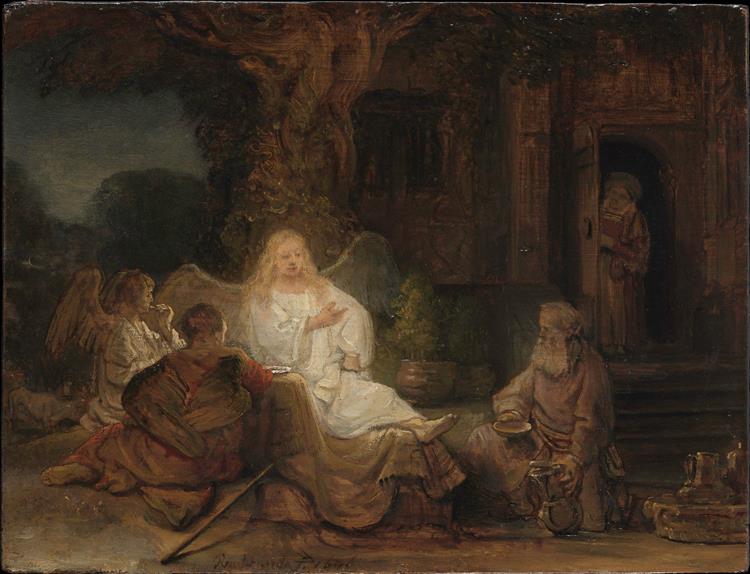
Yahweh said that Abraham would be the “father of many nations, ” but there was only one child born to Abraham and Sarah – and that child, Isaac, was born to him and very late in his life. Isaac would have only twins. And Isaac’s only children, Esau and Jacob were born late in Isaac’s life, so the “father of many nations” would die only seeing two grandchildren.

Reflect

God answers prayers on his timeline, not ours. He will fulfill his purpose for us – also on his timeline. Does that make you frustrated or assured?

Observe

Read Psalm 6. Sometimes we suffer long. What keeps us going in such times?

The Patriarchs

Dancing in the Kingdom- Table of Contents

Dancing In the Kingdom – Part 1 – Shadows of the Kingdom – Chapter 1 – Prelude

The Patriarchs

[Bible references: Genesis 12-50]                                    

Approximately 2000 B.C., a man named Abram[1] lived in the city of Ur (at that time a coastal city on what is now the Persian Gulf). Abram’s father took his family up the Euphrates River to the city that would be named after Abram’s brother, Haran and settled there. When Abram was 75, God called him to go to another country. When he arrived in Shechem, God told him that this would be the land given to his offspring. Abram did go down to Egypt briefly, but then returned to Shechem. By that point in time, the herds were so large that it was necessary for Abram and his nephew Lot to split up. Abram’s nephew Lot chose to move down to the valley of Sodom and Gomorrah.

When Abram was 90 years old, God told Abram that he would be the father of many nations, renaming him Abraham. But Abram would be 100 years old before his son, Isaac, was born. Abram did have a son, Ishmael, through his wife’s servant, but Ishmael would be sent away, becoming the father of the Arabs.

Isaac didn’t get married until he was 40. He was 60 by the time his only sons, the twins, Esau and Jacob were born.

Jacob had 12 sons and a daughter by 2 wives and 2 concubines. At one point, Jacob wrestled with an angel, who gave him the name, Israel (“struggles with God”).

Jacob’s son, Joseph, was sold as a slave by his brothers to a trader passing through to Egypt, where, through interesting circumstances he became 2nd in charge to the Pharaoh. Years of droughts led to Israel and his other sons moving to Egypt.


[1] To see how Biblical events fit into the history of the Middle East empires see Appendix B, “Timeline for Middle East Empires.”

Observe

Read Genesis 17. Abram was 99 years old and still had no son with his wife Sarah when God renamed him Abraham (“father of many nations.”) and then repeated his promise to Abram 24 years earlier. What does this tell you about patience and faith?