Expectant Magi and the non-expectant king

Dancing in the Kingdom- Table of Contents

Dancing In the Kingdom – Part 2 – The Kingdom Revealed – Chapter 11 – The Kingdom Enters

Expectant Magi and the non-expectant king

[Bible references: Matthew 2:1-23; Hosea 11:1; Jeremiah 31:15; Micah 5:1-4]

Some people in a foreign country east of Jerusalem were also waiting for the Messiah. Perhaps because they were aware of the writings of Daniel, the Magi had hearts that were open to God and invested time and money to travel to Jerusalem looking for this newborn “king of the Jews.” However, when they arrived in Jerusalem, no one there was ready for this news. While the chief priests and teachers of the law could belatedly figure out that the birth was supposed to happen in Bethlehem, they obviously had not been looking for the Messiah.

Herod’s claim to the throne was sketchy, but he was a politician who had proven his ability to “keep the peace” by means of violent suppression and so Rome had installed him as king. So, upon learning from the Magi about the “King of the Jews” being born, Herod was threatened by what he thought was a rival king and tried to use the Magi to find out who this rival was.

However, the Magi had been warned in a dream about Herod’s ruse and after visiting Jesus they returned home another way. Joseph also had a dream in which he was warned that Herod was going to search for Jesus in order to kill him and so Joseph and Mary took Jesus to Egypt. Sure enough, when Herod realized that the Magi were not going to return, he put out an order kill all babies less than two years old in Bethlehem to eliminate His potential rival.

Joseph and his family stayed in Egypt until he learned in a dream that Herod died. However, when Joseph returned to Bethlehem, he learned that Herod’s brother was now king, he took the family to Nazareth in the region of Galilee. All these moves made it possible to make now sense out of three seemingly contradictory prophecies: that Jesus would be born in Bethlehem and come out of Egypt and that he would be called a Nazarene.

Observe

Read Matthew 2:1-23 Micah 5:1-4; Hosea 11:1; Jeremiah 31:15. Some Biblical prophecies were hard to make sense out of until they were fulfilled. What does that mean in regards to how we handle seemingly contradictory scripture passages?


Joseph and Mary

Dancing in the Kingdom- Table of Contents

Dancing In the Kingdom – Part 2 – The Kingdom Revealed – Chapter 11 – The Kingdom Enters

Joseph and Mary

[Bible references: Matthew 1:18-25; 2:1-18; Luke 1:26-56; 2:1-20, 41-51]

Jesus was born to an apparently ordinary, non-descript couple, Joseph, and Mary. There was nothing outside the ordinary about Mary except that, unlike Zechariah, she believed and accepted the words of the angel, Gabriel, and the miracle was to come upon her. Joseph was only an ordinary tekton[1] (stone mason or carpenter), but he also accepted the words of the angel and received Mary as his wife. The responsibility that this humble couple accepted was full of unknowns for this was no ordinary boy that they were supposed to raise. The unknown hardships they would endure included 1) a trip from Galilee to Bethlehem while Mary was heavily pregnant, [2] 2) giving birth in first floor of a house overflowing with guests and needing to use a feeding trough as a crib[3] 3) and then a trip to Egypt where they stayed for an extended period while the life of Jesus was in danger from Herod, 4) then when Herod died, back to Bethlehem only to find Herod’s son, Archelaus, in charge so they fled past Jerusalem to Nazareth. Joseph and Mary also witnessed several supernatural events around the birth of Jesus: the appearance of shepherds who witnessed the angelic announcement, the prophetic announcements of Simeon and Anna when they brought Jesus to be circumcised[4], the appearance of Magi from the east. Outside those events, Mary and Joseph seemed to have ordinary lives as shown by the reaction they had when twelve-year-old Jesus was accidentally left behind during a family trip to Jerusalem.


[1] Galatty, Robby, “Was Jesus a Carpenter or a Stonemason?” The Christian Post 29 Apr 2017 www.christianpost.com/news/jesus-carpenter-or-stonemason-181531.

[2] Jesus Trail Tours, “Hiking the Nativity Trail from Nazareth to Bethlehem” Jesus Trail Tours jesustrail.com/blog/hiking-the-nativity-trail-from-nazareth-to-bethlehem

[3] Paul, Ian. “Jesus was not born in a stable, says theologian” 23 Dec 2014 The Guardian www.theguardian.com/world/2014/dec/23/jesus-christ-not-born-in-stable-theologian-new-testament

[4] Bible Project “The Jewish Exile – How it made the Bible” Bible Project 1 Feb 2018 bibleproject.com/podcast/jewish-exile-how-it-made-bible/

Observe

Read Luke 2:41-51. After Mary and Joseph left 12-year-old Jesus behind during a family trip to Jerusalem, what didn’t they understand about Jesus’ answer?

Courage and memory

Dancing in the Kingdom- Table of Contents

Dancing In the Kingdom – Part 1 – Shadows of the Kingdom – Chapter 7– Settlement

Courage and memory

[Bible references: Numbers 1; Deuteronomy 31:1-8; Joshua 1:1-9; Joshua 3-4; Joshua 5:13-14; Deuteronomy 6:10-12]

When the people of Israel first approached the Promised Land, twelve spies were sent out to scout out the land. Joshua and Caleb were the only two spies that did not bring back a report of discouragement. The discouragement brought by the other ten spies caused all the people of Israel to rebel against God as they forgot all the miracles of God’s provision in their flight from Egypt. This resulted in God subjecting the people of Israel to encamping in the wilderness for forty years. All the adults except for Joshua and Caleb, were subject to die in the wilderness before the people of Israel would enter the Promised Land.

It was therefore Joshua who was chosen to lead the people into the Promised Land at the end of the forty years. As before, the nation of Israel would encounter other people already living in the land, so Israel would need to fight for the land; it would not be easy. Before Joshua led his people into the land, God repeatedly said to Joshua, “Be strong and of good courage … do not be terrified or discouraged.” Then as a refresher, God also performed miracles as the people entered the land, causing the Jordan River to cease flowing to allow the people to cross on dry land – repeating the miracle of the parting of the sea as they fled Egypt.

Before Israel even left Egypt, the people were given gold and other wealth that was not theirs, the water from miraculously made springs and the manna that fell from the sky was not theirs. Now the homes and fields that God gave them to capture were the provision of God as well.

Reflect

Joshua was certainly encouraged when the nation crossed the Jordan River on dry land just as the nation crossed the Red Sea on dry land 40 years earlier. When trying to follow God, what encourages you?

Observe

Read Joshua 1:1-9. How might the instructions to Joshua help to give him courage?

Art and artists

Dancing in the Kingdom- Table of Contents

Dancing In the Kingdom – Part 1 – Shadows of the Kingdom – Chapter 6– A nation emerges

Art and artists

[Bible references: Exodus 20:4-6; 31:2-3; 35:4-9,32-35; 36:1-7]

The instructions are quite detailed. The materials used to build the tabernacle were gifts given to the Israelites as they left Egypt. Those materials were then freely shared to be used as materials used to construct the tabernacle. God dedicated the workmen for building the various parts of the tabernacle, filling them with his Spirit and then giving the skills and abilities they needed. God gave everything needed for the construction of the tabernacle. Between the detailed instructions, the materials provided by the Egyptians and the skills of the craftsmen, the tabernacle would be a beautiful work of art. Although the Israelites were told not to make graven images to worship as idols, that obviously did not mean that they couldn’t create works of art, in this case works that would be used to enable worship.

Observe

Read Exodus 20:4-6; 31:2-3; 35:4-9,32-35; 36:1-7. What kinds of arts and crafts went into the construction of the tabernacle?

Discipline, Miracles, and Death

Dancing in the Kingdom- Table of Contents

Dancing In the Kingdom – Part 1 – Shadows of the Kingdom – Chapter 6– A nation emerges

Discipline, Miracles, and Death

[Bible references: Genesis 15:13-14; Exodus 7-11; 12:31-36; 13:17-22; 16; 17:1-7; 20; 32; Numbers 13-14]

Miracles abounded.

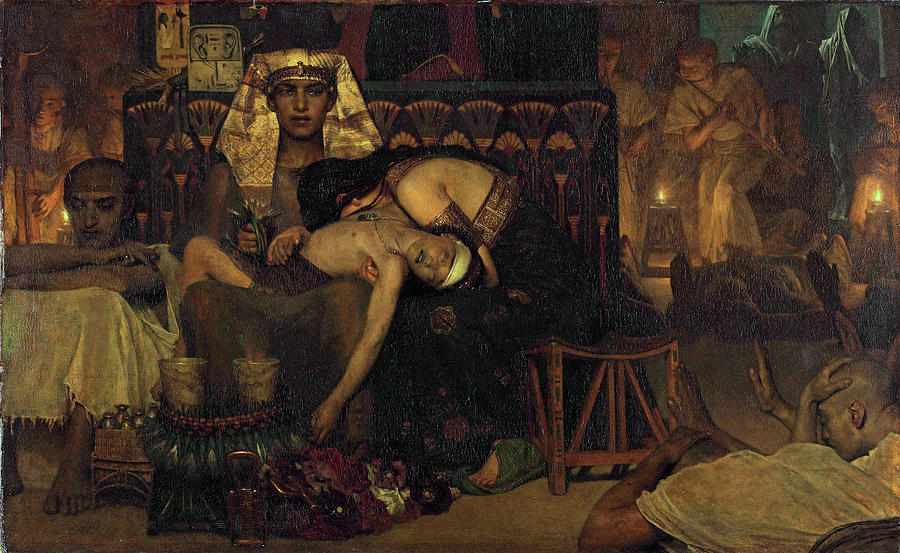
There were the ten plagues that God brought upon the Egyptian captors to show the Pharaoh that Yahweh was not just a local God in Canaan but that His power extended over all creation, even in the land of the Egyptian gods. In the process, the Pharaoh’s own heart continued to harden against Yahweh to the point where God would seal the Pharaoh’s fate and further harden the Pharaoh’s heart. In the end, it took the killing of the firstborn of Egyptian families, including the family of the Pharaoh to convince the Pharaoh to let people of Israel go. And even more, the people of Egypt also supplied the people of Israel with great wealth as they left. Some Egyptians even joined the people of Israel in their flight.

Then there was the miracles of the pillars of cloud and fire, which would continue until the nation entered the Promised Land, and the miracle which let Israel cross the Red Sea on dry land followed by the drowning of the Egyptian army. The pattern of punishing a nation that was used to discipline the people of Israel would be repeated throughout Biblical history.[1]

Once on their way, the Israelites experienced more miracles: a mountain enshrouded in a cloud where Yahweh talked with Moses and gave Moses the Commandments and other rules; manna and quail falling from the sky; springs of water in the desert. Despite seeing all those miracles, Israel wasn’t ready to have Yahweh lead them into the Promised Land to face the obstacles there, so God had them encamp in the wilderness for 40 years until all the adults who refused to trust Yahweh died. So many deaths must have happened, but scripture barely mentions them. Here we will see, not for the last time, that seeing miracles not only did not change hearts but that, even now, despite all the evidence that we see, that all our hearts seem predisposed to turn away from God.


[1] Ex: Egypt (Genesis 15:13-14), Babylon (Isaiah 13, 21,23),  and Assyria (Isaiah 10, 14; Zephaniah 2) were all used by God to discipline Israel

Observe

Read Exodus 8-10. In the narrative of the 10 plagues, several times we are told that Pharaoh hardened his heart, but then there came a time when Yahweh reinforced that trajectory and Yahweh hardened the Pharaoh’s heart. What kind of warning might that be?

Fullness of time

Dancing in the Kingdom- Table of Contents

Dancing In the Kingdom – Part 1 – Shadows of the Kingdom – Chapter 6– A nation emerges

Fullness of time

[Bible references: Genesis 15:16; Exodus 2-4; 7-11; Galatians 4:1-7; Ephesians 1:1-14]

The emerging story of the chosen people of God becoming a nation started slowly: Abraham and one child of the promise, Isaac, who had two children, only one through which the promise would come, Jacob, who then had had thirteen children. But it would take time for that family to grow into a size that could be called a nation – and that took a couple hundred more years – in which time the “sin of the Amorites would reach their full measure.”

Although the Bible does not specifically mention it, there may have been other things that God was waiting to happen such as the development of the Israelite community and the consequent interaction of the Israelite community with the Egyptian community during the Israelite captivity. God allowed events to gradually unfold until “the fullness of time” came for God to orchestrate a dramatic release of the Israelite community. This event would serve as a foreshadowing of another event, the spiritual release of all peoples from slavery to sin.

So it was, that in the fullness of time, when the sin of the Amorites reached its full measure,[1] Yahweh called Moses to release the enslaved Israelites from Egypt to bring Israel back to the Promised Land.


[1] White, James Emery. “Is God a Moral Monster? The Slaughter of the Canaanites” Church&Culture 22 Oct 2020 www.churchandculture.org/blog/2020/10/22/is-god-a-moral-monster

Reflect

Often, when we are younger, we think we know everything. But most of the time, we discover over time that we need maturing – to grow in wisdom – a process that takes time and experience. What things have you learned through time and experience?

Observe

Read Genesis 15:16; Galatians 4:1-7. What do these verses tell us about God’s sense of timing?

Process is important

Dancing in the Kingdom- Table of Contents

Dancing In the Kingdom – Part 1 – Shadows of the Kingdom – Chapter 6– A nation emerges

Process is important

[Bible references: Genesis 15:12-21; Exodus 1:1-22; 11:1-10; 12:31-37]

After Joseph and the Pharaoh who knew him died, the growing nation of Israel became enslaved in the land of Egypt just as it had been foretold to Abraham. There are various questions that surrounded the captivity of Israel in Egypt:

  • When there was a drought, why didn’t Yahweh provide for the Israelites in Canaan instead of having them go to Egypt?
  • If they needed to be in Egypt, why did they need to be enslaved instead of just living there as guests?

We know that Yahweh told Abraham that a great nation would come from him and that they would be given the land of Canaan to live in. But why the side-trip into Egypt and why the slavery? The only reason given to Abraham was that “the sin of the Amorites was not yet reached its full measure.” 

The reason given to Abraham for being in Egypt follows a general pattern. Although God occasionally supernaturally intervenes in the course of events, it seems that God most often allows natural, normal processes to take place, whether they be physical, psychological, sociological etc. We see that process in living things: plants, animals, and even ecosystems grow through specific physical processes[1]. Even the great flood in Noah’s time only occurred after evil gradually, through normal psychological and sociological processes, eventually reached a particular threshold.


[1] Natural, physical processes are so well fixed and so well understood that they have become known as scientific laws.

Reflect

Joseph’s discipline involved finding God in the midst of difficult circumstances and discovering how God could use him there. Are there any difficult circumstances you struggle with? Have you found God at work in your life in those circumstances?

Observe

Read Exodus 11:1-10; 12:31-37. How did Yahweh provide for Israel as they left Egypt?

Dreams come true

Dancing in the Kingdom- Table of Contents

Dancing In the Kingdom – Part 1 – Shadows of the Kingdom – Chapter 5– Patriarchs

Dreams come true

[Bible references: Genesis 15:12-21; 42-46; 50:15-21]

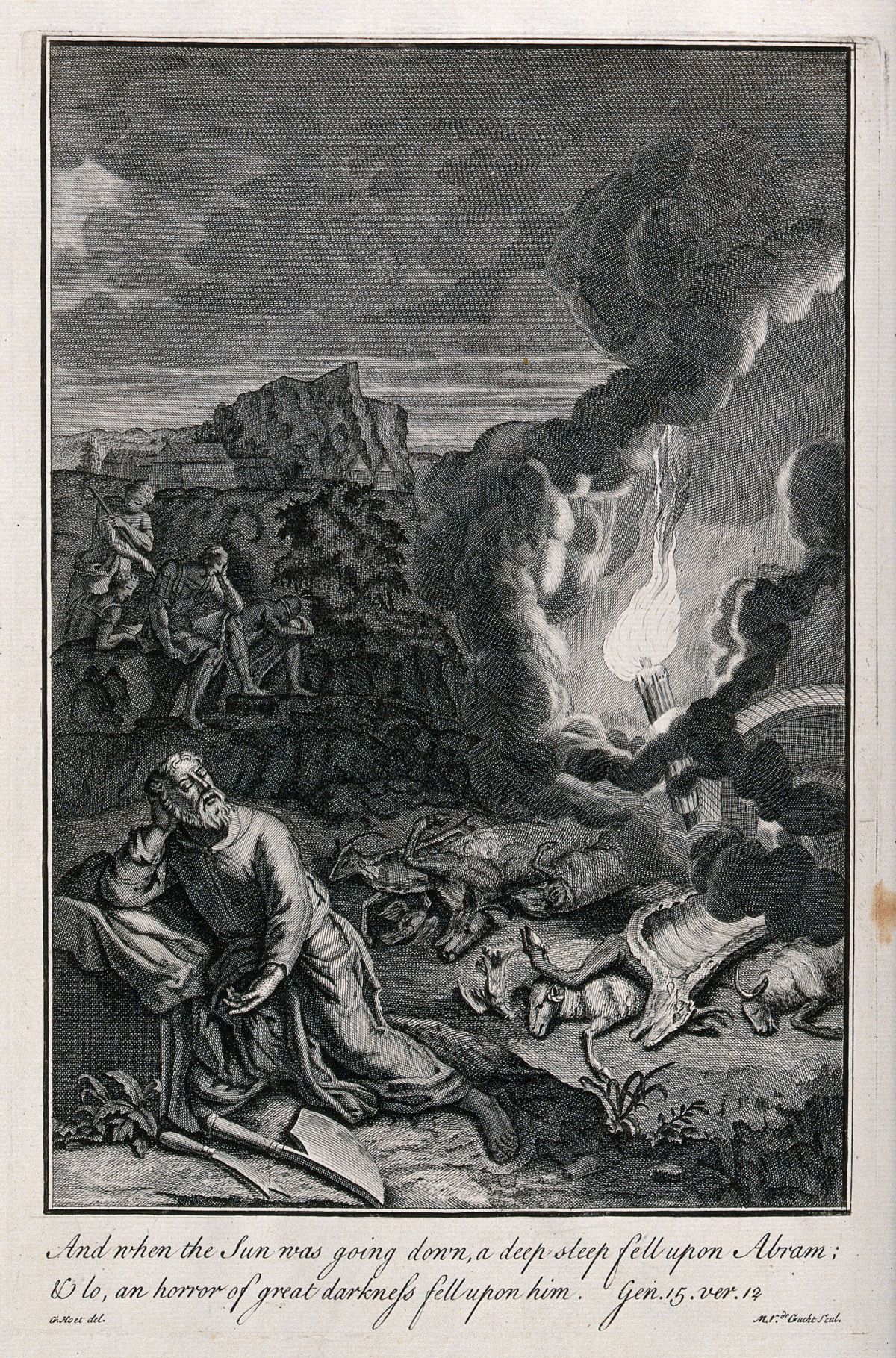
The drought extended up to the Promised Land where Israel was living. This gave the opportunity for Joseph to invite Israel and all the rest of the family to come to Egypt so that Joseph could support them. Joseph was able to see that while his brothers had intended to harm him, Yahweh was able to turn their evil intentions into a good thing. For a moment, Egypt seemed to be promising, but it wasn’t the final destination – it wasn’t the Promised Land. In fact, this provided the setting that Yahweh had revealed to Abraham in a troubling dream, that his descendants would be strangers in a land not their own and that dark times lay ahead before they would finally return to the Promised Land.

Observe

Read Genesis 50:15-21. Back in Canaan, Joseph used his dreams to put down his brothers, who responded by selling him into slavery. But when it came time for the dreams to be re-enacted in real life, he had a different attitude about those dreams. How does Joseph’s experience affect the way you view the events of life?

Moses and the Exodus

Dancing in the Kingdom- Table of Contents

Dancing In the Kingdom – Part 1 – Shadows of the Kingdom – Chapter 1 – Prelude

Moses and the Exodus

[Bible references: Exodus 8-11; 14-15; Numbers 13-14; Deuteronomy 1]                                      

430 years would pass after the promise was given to Abraham, that his people, now named after his grandson, Israel, would walk out of Egypt. God told Abraham that his descendants would be enslaved in Egypt for four generations[1] before they return to the Promised Land at which time the “sin of the Amorites would be complete.”

At the scheduled time, God called Moses to lead the Israelites out of Egypt, and it would take 10 plagues, including the death of the firstborn, to convince the Pharaoh to let Israel go. Moses led the people out of Egypt by way of the “Red Sea.” The Commandments were given, and the building of the Tabernacle occurred, at Mt Sinai, location uncertain, before Israel would leave for the “Promised Land.”  When 12 spies were sent into the land, 10 of them focused on the difficulty of taking the land, inspiring fear among the people and causing God to consign Israel to wander in the wilderness for 40 years where all the adults 20 and over would die before Israel would finally go into the Promised Land.


[1] LeBrun, Ken. “The 400-Year Prophecy and the Fourth Generation”” Thoughtlines www.thoughtlines.org/2013/09/the-400-year-prophecy-and-fourth.html; BibleAsk “Did the Israelites spend 400 years in Egypt?” BibleAsk bibleask.org/did-the-israelites-spend-400-years-in-egypt/; Glatt-Gilad, David. “How Many Years Were the Israelites in Egypt?” TheTorah.com www.thetorah.com/article/how-many-years-were-the-israelites-in-egypt; Got Questions. “How many Israelites left Egypt in the exodus?” Got Questions www.gotquestions.org/Israelites-exodus.html; It would be 430 years from the time Abraham’s son Isaac was born but the time spent in Egypt would only be for four generations. Linked to that is the apparent size of the Israelite people leaving Egypt. Allowing for only 4 generations in slavery and, starting with a population of 70 people, something less than 10,000 people would have left Egypt with Moses. This helps to make sense of the Biblical events in the Promised Land and also of the archaeological evidence now available.

Reflect

Think of situations where you had to overcome fears in order to spiritually grow.

Observe

Read Genesis 15. Abram was living in the land of Canaanites which the Lord had promised to give to Abram’s descendants, but in a dream the Lord about how Abram’s descendants would first be enslaved and then return to the Promised Land, but only after “the sin of the Amorites reached its full measure. What does that say about how God works in the present day?

The Patriarchs

Dancing in the Kingdom- Table of Contents

Dancing In the Kingdom – Part 1 – Shadows of the Kingdom – Chapter 1 – Prelude

The Patriarchs

[Bible references: Genesis 12-50]                                    

Approximately 2000 B.C., a man named Abram[1] lived in the city of Ur (at that time a coastal city on what is now the Persian Gulf). Abram’s father took his family up the Euphrates River to the city that would be named after Abram’s brother, Haran and settled there. When Abram was 75, God called him to go to another country. When he arrived in Shechem, God told him that this would be the land given to his offspring. Abram did go down to Egypt briefly, but then returned to Shechem. By that point in time, the herds were so large that it was necessary for Abram and his nephew Lot to split up. Abram’s nephew Lot chose to move down to the valley of Sodom and Gomorrah.

When Abram was 90 years old, God told Abram that he would be the father of many nations, renaming him Abraham. But Abram would be 100 years old before his son, Isaac, was born. Abram did have a son, Ishmael, through his wife’s servant, but Ishmael would be sent away, becoming the father of the Arabs.

Isaac didn’t get married until he was 40. He was 60 by the time his only sons, the twins, Esau and Jacob were born.

Jacob had 12 sons and a daughter by 2 wives and 2 concubines. At one point, Jacob wrestled with an angel, who gave him the name, Israel (“struggles with God”).

Jacob’s son, Joseph, was sold as a slave by his brothers to a trader passing through to Egypt, where, through interesting circumstances he became 2nd in charge to the Pharaoh. Years of droughts led to Israel and his other sons moving to Egypt.


[1] To see how Biblical events fit into the history of the Middle East empires see Appendix B, “Timeline for Middle East Empires.”

Observe

Read Genesis 17. Abram was 99 years old and still had no son with his wife Sarah when God renamed him Abraham (“father of many nations.”) and then repeated his promise to Abram 24 years earlier. What does this tell you about patience and faith?