Bloom where you are

Dancing in the Kingdom- Table of Contents

Dancing In the Kingdom – Part 1 – Shadows of the Kingdom – Chapter 5– Patriarchs

Bloom where you are

[Bible references: Genesis 39:21-23; 40; 41]

While Joseph was in prison, Yahweh continued to cause Joseph to prosper, inspiring the warden to entrust many things to Joseph. A couple of the prisoners had dreams to which Yahweh gave Joseph the interpretations. The predictions Joseph revealed to the prisoners did come true. Sometime later, when the Pharaoh had dreams that he wanted to have interpreted, he was informed about Joseph. Through the help of Yahweh, Joseph was able to interpret the Pharoah’s dreams as well. This led to Joseph being put in second-in-command to the Pharaoh through which he was able to oversee the harvesting and the storage of grain in preparation of a coming seven-year drought.

Observe

Read Genesis 37; 39-41. Because Joseph was the oldest son of Jacob’s favorite wife, Jacob made Joseph his favorite son – and spoiled him. It didn’t help when Joseph flaunted some dreams in front of his brothers who then found an opportunity to sell him as a slave. How did the hardship of slavery mold Joseph’s character?

Hope in the brokenness

Dancing in the Kingdom- Table of Contents

Dancing In the Kingdom – Part 1 – Shadows of the Kingdom – Chapter 4– Retreating to chaos

Hope in the brokenness

[Bible references: Genesis 2:16-17; 3:14-15, 23; Psalm 4; 102; Isaiah 1:26; Jeremiah 29:11; Acts:318-26; Galatians 3:13-14; Ephesians 1:11-12; Romans 5:12; 8:18-3; Hebrews 1:1-4]

Grief is the normal response to loss or separation. We may grieve when we lose dreams, jobs, health, family members or friends and many other things. Death is separation. Physical death is the separation of the soul from the body. Spiritual death is the separation of the soul from God.

The first humans voluntarily separated themselves from God so that they could grab what they wanted. This was spiritual death. When the non-physical angels rebelled against God, they too suffered spiritual death. For the angels, the separation was permanent with no hope of reconciliation with their Creator. But the first humans were given the possibility of hope.

Humans were also physical creatures, with mortal bodies, physical bodies that could die. Indeed, the humans needed access to the Tree of Life in order to keep on living. When the humans rebelled, they immediately suffered spiritual death. When the humans were also denied access to the Tree of Life, then their physical death was ensured. Spiritual death followed by physical death. A double grief. But the double grief contained the possibility of hope.

The consequences of rebellions created a great tragedy that could not be undone, not by the image bearers. But even so, as we look around us, we can see that despite the tragedy around us, things aren’t totally bad. Even though evil is very evident around us, goodness is also evident. It is in that observation that we can glimpse the possibility of hope. Amidst the consequences of rebellion, there are hints of hope.

When God confronted the first humans with the consequences for their rebellion, He also gave them a hint of the undoing of death, a solution to the problem created by sin. This hint would only be the first of many other hints to come that we can see revealed in the Biblical text.

We can also see evidence for hope in the continued creation by God, as he continues to sustain the universe he created, continuing to create new living things, plants, and animals alike. There is also hope hidden in the mandate given to the image-bearers. Their mandate of stewardship of God’s creation was still in force, although there would now be suffering involved in the fulfillment of the mandate. There was hope hidden in the name of God’s Son.[1] There was also a strange hope in the banishment from the Tree of Life; the consequence of physical death would provide a way to free us from an eternity of being separated from God and open a way for our redemption.

The sacrifice of Jesus followed a life in which Jesus successfully waited to receive those things that His Father intended to give, resisting the temptation to grab those things for himself. In his life and death, Jesus successfully accomplished what Adam and all those who came after Adam had not.

In the beginning, we were eager to grasp for ourselves wisdom and the knowledge of good and evil on our own terms. What we didn’t plan on was the consequences that would follow. Sometimes God gives us what we think we want even though it would bring us the suffering that God was trying to steer us from. It’s a continuing pattern we see from the beginning until now, that it is not always a good thing when we get what we think we want.[2]

But Jesus life did not end with his crucifixion. Jesus’ resurrection was the proof of redemption and of the hope of restoration. Sin had corrupted all of creation and all of creation is groaning and awaiting its restoration.

The universe is not what it’s supposed to be. We are not what we are supposed to be. We are creatures created with the imprint of the image of God but broken in body, soul and spirit. Our brokenness shows up in our actions, words and thoughts. Our brokenness shows up in the way we are treated and the way we treat others. And our brokenness even shows up in the bodies we are born with. But in His death and resurrection, God is able to redeem and restore all of us, all of who we are, all of what we have done, all of what has been done to us, and even all of creation. God is able to use all of our suffering and use it for our good, making something beautiful out of what was broken.


[1] See Chapter 2, The Mystery of God’s Name

[2] See Chapter 8. Rejecting God as King

Reflect

It’s not hard to see signs of brokenness around us. Are there any signs of hope that can be seen?

Observe

Read Isaiah 1:26; Jeremiah 29:11; Matthew 17:11; Acts 3:18-26; Galatians 3:13-14; Ephesians 1:11-12;. Throughout the Bible, God has chosen to share his future plans in pieces at a time. What those plans are, have been the subject of much debate within the church. What is your understanding of God’s plans for the future?

Joseph

Dancing in the Kingdom – Table of Contents

Part 1 – Shadows of the Kingdom, Chapter 5 – Patriarchs

Discipline and character development

[Bible references: Genesis 37:1-11, 28-36; 39:1-20: 50:20]

Of Jacob’s 12 sons, Joseph was the most notable. Between being treated as Israel’s favorite son and then having a sense of self-importance, he created a sense of jealousy among his brothers. So, on one occasion while out tending flocks on one opportune occasion his jealous brothers sold him off to merchants traveling to Egypt. In Egypt, he was sold to a captain of the Pharaoh’s guard as a slave. While he was a slave to the captain, Yahweh caused Joseph to prosper in whatever he took care of, inspiring the captain to trust everything to Joseph. However, an unjust charge by the captain’s wife caused Joseph to be imprisoned.

Bloom where you are

[Bible references: Genesis 39:21-23; 40; 41]

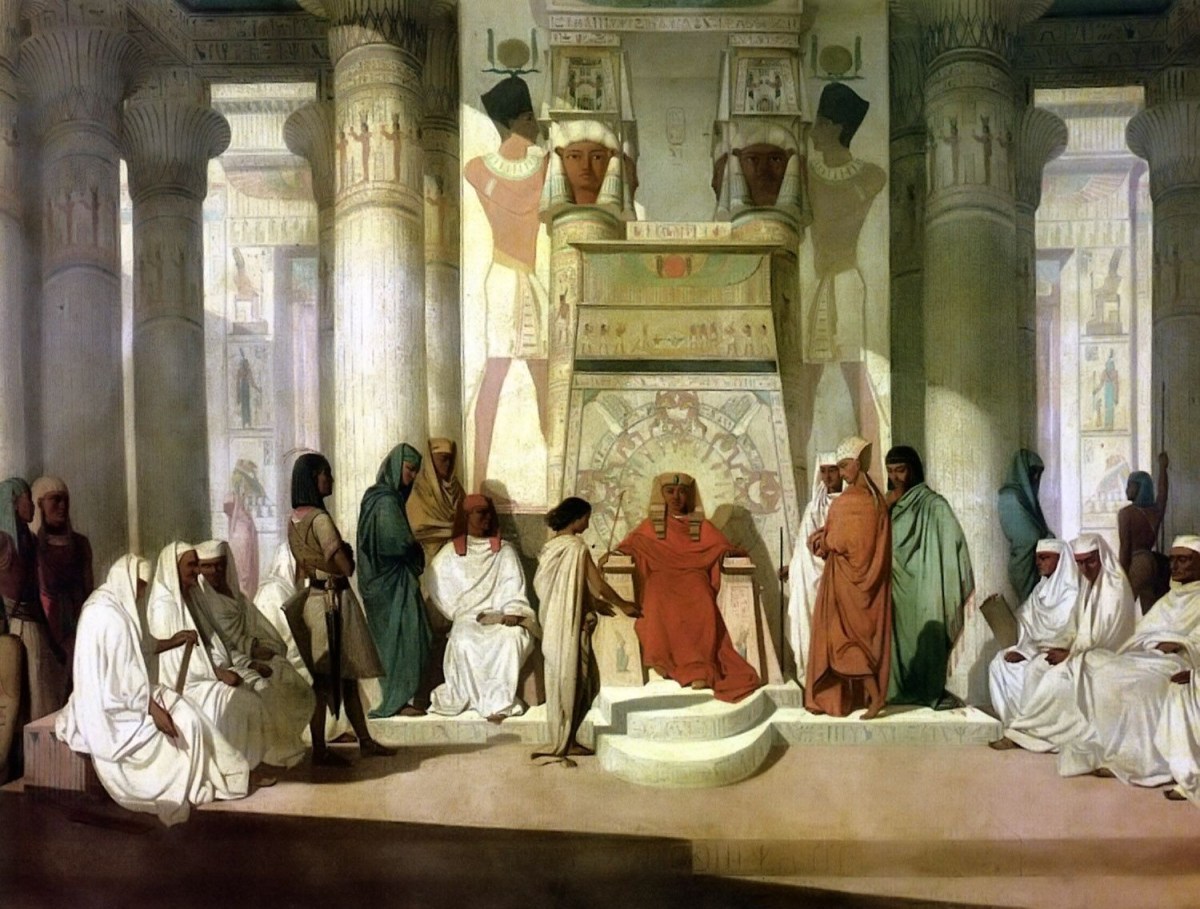
While Joseph was in prison, Yahweh continued to cause Joseph to prosper, inspiring the warden to entrust many things to Joseph. A couple of the prisoners had dreams to which Yahweh gave Joseph the interpretations. The predictions Joseph revealed to the prisoners did come true. Sometime later, when the Pharaoh had dreams that he wanted to have interpreted, he was informed about Joseph. Through the help of Yahweh, Joseph was able to interpret those dreams. This led to Joseph being put in second-in-command to the Pharaoh through which he was able to oversee the harvesting and storage of grain in preparation of a coming 7-year drought.

Dreams come true

[Bible references: Genesis 15:12-14; 15:12-21; 42-46; 50:15-21] The drought extended up to the Promised Land, Canaan, where Israel was living. This gave the opportunity for Joseph to invite Israel and all the rest of the family to come to Egypt where Joseph could see they were supported. Joseph was able to see that while his brothers had intended to harm him, Yahweh was able to use for the good. In fact, this provided the setting that Yahweh had revealed to Abraham in a troubling dream, that “your descendants will be strangers in a land not their own.” For a moment, Egypt seemed to be promising, but it wasn’t the final destination. It particularly wasn’t the promised land. More than that, God warned that dark times lay ahead before they would arrive there.

Reflect

In academic disciplines, we train our minds in order to become doctors, lawyers, engineers, etc. These disciplines are usually evaluated by written tests and practicums. What are some spiritual disciplines and how do we evaluate our progress?

Observe

Read Genesis 37, 41, 40. Joseph’s discipline involved finding God in the midst of difficult circumstances and discovering how God could use him there. Are there any difficult circumstances you struggle with? (NOTE: One goal in the Benedictine order is stability. The idea is that God is everywhere and if you can’t find him where you are then you won’t find him anywhere. deWaal, Esther. “Seeking God”)

Reflect

Complaint is the usual response to unjust treatment. But although Joseph was enslaved, he took his stewardship responsibilities and then when imprisoned he was open to God’s interpretation of dreams. What do you think Joseph learned?

Observe

Read Genesis 37; 39-41. Because Joseph was the oldest son of Jacob’s favorite wife, Jacob made Joseph his favorite son – and spoiled him. It didn’t help when Joseph flaunted some dreams in front of his brothers who then found an opportunity to sell him as a slave. How did the hardship of slavery mold Joseph’s character?

Reflect

What are your visions of what the future will look like?

Observe

Read Genesis 50:15-21. Back in Canaan, Joseph used his dreams to put down his brothers, who responded by selling him into slavery. But when it came time for the dreams to be re-enacted in real life, he had a different attitude about those dreams. How does Joseph’s experience affect the way you view the events of life?