Expectant Magi and the non-expectant king

Dancing in the Kingdom- Table of Contents

Dancing In the Kingdom – Part 2 – The Kingdom Revealed – Chapter 11 – The Kingdom Enters

Expectant Magi and the non-expectant king

[Bible references: Matthew 2:1-23; Hosea 11:1; Jeremiah 31:15; Micah 5:1-4]

Some people in a foreign country east of Jerusalem were also waiting for the Messiah. Perhaps because they were aware of the writings of Daniel, the Magi had hearts that were open to God and invested time and money to travel to Jerusalem looking for this newborn “king of the Jews.” However, when they arrived in Jerusalem, no one there was ready for this news. While the chief priests and teachers of the law could belatedly figure out that the birth was supposed to happen in Bethlehem, they obviously had not been looking for the Messiah.

Herod’s claim to the throne was sketchy, but he was a politician who had proven his ability to “keep the peace” by means of violent suppression and so Rome had installed him as king. So, upon learning from the Magi about the “King of the Jews” being born, Herod was threatened by what he thought was a rival king and tried to use the Magi to find out who this rival was.

However, the Magi had been warned in a dream about Herod’s ruse and after visiting Jesus they returned home another way. Joseph also had a dream in which he was warned that Herod was going to search for Jesus in order to kill him and so Joseph and Mary took Jesus to Egypt. Sure enough, when Herod realized that the Magi were not going to return, he put out an order kill all babies less than two years old in Bethlehem to eliminate His potential rival.

Joseph and his family stayed in Egypt until he learned in a dream that Herod died. However, when Joseph returned to Bethlehem, he learned that Herod’s brother was now king, he took the family to Nazareth in the region of Galilee. All these moves made it possible to make now sense out of three seemingly contradictory prophecies: that Jesus would be born in Bethlehem and come out of Egypt and that he would be called a Nazarene.

Observe

Read Matthew 2:1-23 Micah 5:1-4; Hosea 11:1; Jeremiah 31:15. Some Biblical prophecies were hard to make sense out of until they were fulfilled. What does that mean in regards to how we handle seemingly contradictory scripture passages?
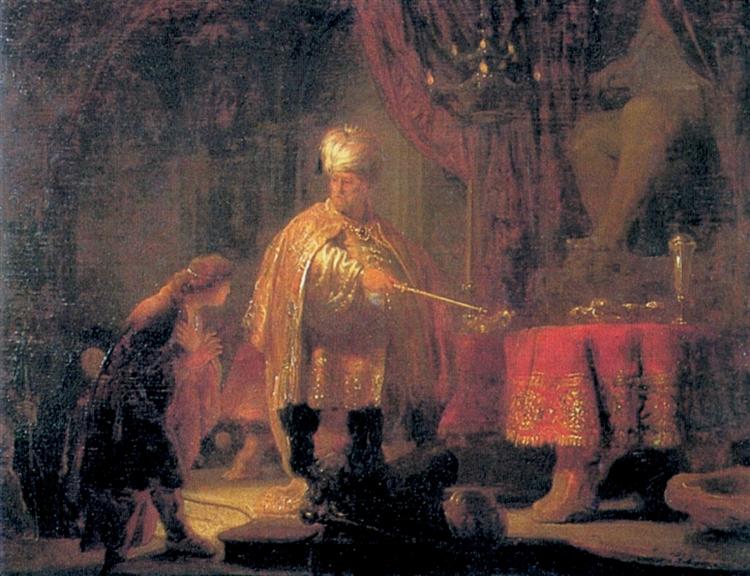
Worship in exile

Dancing in the Kingdom- Table of Contents

Dancing In the Kingdom – Part 1 – Shadows of the Kingdom – Chapter 9 – The Prophets and writings

Worship in exile

[Bible references: Jeremiah 29:1-23; Daniel; Esther; Ezekiel]

During this exile, the Jews, as they would now be called, had to become more deliberate if they were going to preserve their culture. It was during this time that the Jews would begin to collect all their writings in order to begin to determine what would be their scripture. They had the writings of Moses, but they had to determine what else should be included.[1]

During this time, they focused more seriously on worshipping Yahweh. Before this time, the biblical and archeological records indicate that Israel had a habit of adopting the worship of any idols of the culture they were in contact with.[2] But now they had to preserve their culture while living amid a dominant foreign culture.

The books of Daniel, Esther and Ezekiel give examples of how the Jews were able to thrive, even while experiencing opposition while the nation was in exile: Daniel as an exceptional administrator, Esther as queen to the emperor and Ezekiel as a prophet.

From this time forward, most Jews have remained outside their homeland with no access to the one temple in Jerusalem. It was during this time that local synagogues were created, with worship now being focused either in the home or at the synagogue.[3]


[1] Waltke, Bruce. “How We Got Our Old Testament” Christianity Today, Christian History www.christianitytoday.com/history/issues/issue-43/how-we-got-our-old-testament.html; Hirsch, Emil G. Blau L, Kohler, Kaufmann. Schmidt, Nathaniel “Bible Canon” My Jewish Encyclopedia, www.jewishencyclopedia.com/articles/3259-bible-canon

[2] Gayle, Damien. “How idolatry continued in the Kingdom of Judah: Israeli dig uncovers temple and icons dating back to Old Testament era” Dailymail.com 27 Dec 2012 www.dailymail.co.uk/sciencetech/article-2253695/How-idolatry-continued-Kingdom-Judah-Israeli-dig-uncovers-temple-icons-dating-Old-Testament-era.html

[3] Bacher, Wilhelm and Dembitz, Lewis N. “Synagogue” Jewish Encyclopedia www.jewishencyclopedia.com/articles/14160-synagogue

Observe

Read Jeremiah 29:1-23. What did Jeremiah say that the exiles were to do while they were in exile?

Exile and return

Dancing in the Kingdom- Table of Contents

Dancing In the Kingdom – Part 1 – Shadows of the Kingdom – Chapter 1 – Prelude

Exile and return

[Bible references: Jeremiah, Lamentations, Ezekiel, Daniel, Esther, Ezra, Nehemiah]                                     

When Assyria captured the Northern kingdom, they took most of the inhabitants and scattered them throughout the empire and replaced them with people from elsewhere in the empire. The result was that the 10 northern tribes were integrated into the Assyrian empire and were never heard from again as a people group.

Babylon overran the Assyrians and also captured the Southern kingdom. The practice of the Babylonians was to take the best and brightest, bring them to their capital and train them to work for the Babylonian empire. A couple of the prominent people taken were Daniel and Ezekiel. 

Since it was primarily the people of Judah that were captured and the other kingdoms had essentially disappeared, the people of Israel now became known as Jews. It was while in captivity, that the Jews got serious about preserving their culture. It was while in captivity that they worked on 1) identifying which writings they had would be considered as scripture and 2) developing cultural patterns that would allow them to preserve their identity. It was in captivity that synagogues developed as a way of continuing to worship without the availability of the temple. Interestingly, it also showed how they knew that they could function under the Law of Moses without a temple and therefore without the system of animal sacrifices.

The Babylonian kingdom was then overrun by the Persian empire. The policy of the Persian empire was to allow the captured peoples that were exiled to Babylonia, to return to their homeland. The first returnees rebuilt the temple that was destroyed by the Babylonians, although the new temple was not as grand as it had been before. Later, Ezra would return to re-establish the Law and then Nehemiah would return to rebuild the wall around Jerusalem.

Observe

Read Jeremiah 18:1-10. How does God interact with our decisions?