Re-envisioning our inhabited environment

Dancing in the Kingdom- Table of Contents

Dancing In the Kingdom – Part 3 – Dancing in the Kingdom– Chapter 18 – Entering the Dance

Re-envisioning our inhabited environment

[Bible references: Exodus 25:1-9; 31:1-11; 35:30-36:7; Isaiah 65:17-25; Revelation 21:24-26]

Within our given environment, we create communities, culture, and institutions to support all that. Our homes, neighborhoods, towns, and cities reflect our potential to create either beauty or corruption. The power we have as bearers of God’s image which provides our God-given ability to transcend our environment, is the source of great good or great sin.

“And decades of persuasive experiments have shown that built environments can be a factor in shaping us in ways that have significant long-term implications, in educational or workplace performance, or our physical and mental health and wellness. The point is that architecture, an integral part of essentially all cultures, is one of many interacting cultural factors—like entertainment and marketing, politics, belief systems, or charismatic individuals, for example—that together, in large and small ways, are involved in shaping behavior and who we are over a lifetime.” [1]

“On the night of May 10, 1941, with one of the last bombs of the last serious raid, our House of Commons was destroyed by the violence of the enemy, and we have now to consider whether we should build it up again, and how, and when. We shape our buildings, and afterwards our buildings shape us.”[2]

We possess the abilities to create works of art, some of which are designed simply to be enjoyed or give us cause to think and some of which have practical uses such as buildings we live, work, or play in, the outdoor areas between those buildings that can serve to connect us together, the vehicles which transport us. These practical works of art also require feats of all sorts of engineering, technical and organizational skills.

It is also clear that those same abilities are regularly misused, and our constructions look less like works of art and more like works of neglect and corruption. Instead of works which build us up and add to the flourishing of all, our works sometimes are simply not as helpful as they can be and sometimes even outrightly abuse our environment as well as our fellow humans.[3] Poor building design sped up Covid spread.[4]

 A Christian architect, Dave Greusel, suggests that we should construct our buildings with the attitude that they serve as “gifts to the community,” purposely constructed to advance God’s Kingdom, expressing grace, beauty, justice, creativity.[5] There are many different ways in which we enhance the quality of life not only within the buildings we create, but also the environment around those buildings, designing our spaces with consideration for how we live not only in, but around our buildings.

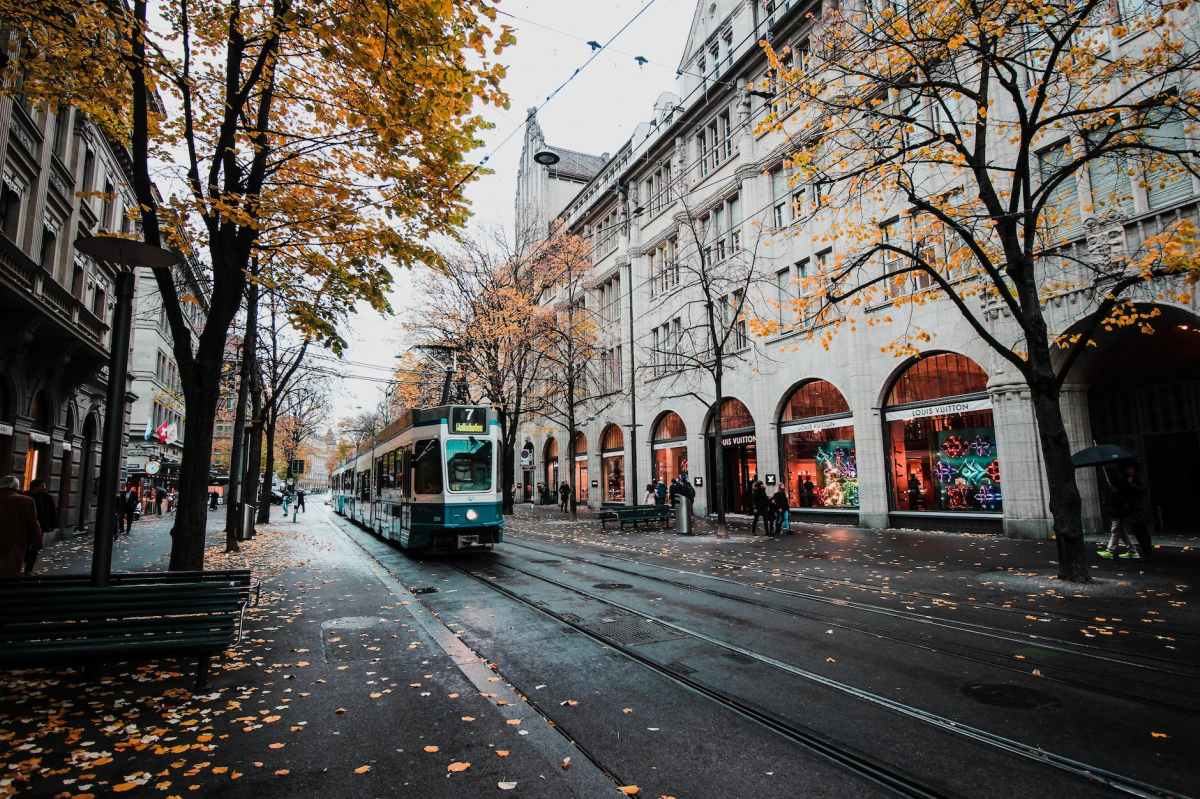
In the U.S., planning our cityscape around automobiles has seemed natural because of the way that our automotive technology has allowed us to flexibly expand in the large space afforded by our country. Sadly, that type of planning has caused us to sometimes neglect the way that life is normally lived with the communities of the city. Sometimes, it has been after the fact that cities have paid attention to how to better design the city spaces for people to navigate on foot or bicycle and to live in community.

Enacted space is “activated by the people using it.” that is, it is not enough to design particular spaces, but to make them attractive so that people use them. [6]

Additional features that can be considered for our spaces are how we situate housing for people and where they work, how we create enclosed spaces that give a sense of protection and safety, monuments that provide particular spaces with meaning and the thresholds (doorways or openings) between the building interiors and the spaces outside.[7]

“Connectivity is measured by the number of intersections per square mile. One hundred fifty connections per square-mile is considered to be the minimum for a vibrant community.” [8]


[1] Hart, Robert Lamb. “How Buildings Shape Us” Common Edge commonedge.org/how-buildings-shape-us

[2]Churchill, Winston. Made in a speech in the House of Commons on October 28,1943 about replacing the bombed-out House of Commons chamber. Quote given Automated Buildings automatedbuildings.com/news/aug20/articles/lynxspring/200721102909lynxspring.html

[3] Rethinking the Future. “Some Examples of Bad Architecture Ideas” Rethinking the Future www.re-thinkingthefuture.com/article/some-examples-of-bad-architecture-ideas; Staczek, David. “Is Bad Architecture Harmful to Our Health” Architizer architizer.com/blog/inspiration/stories/bad-architecture-harmful-to-health; Husock, Howard. “How Public Housing Harms Cities” City Journal Winter 2003 www.city-journal.org/html/how-public-housing-harms-cities-12410.html

[4] Ing, Will. Architects’ Journal 3 Oct 2021; www.architectsjournal.co.uk/news/poor-building-design-sped-up-covid-spread-says-academic 2021

[5] Greusel, Dave. “Architecture for Human Flourishing” Denver Institute for Faith and Work 15 Apr 2015 denverinstitute.org/david-greusel-architecture-for-human-flourishing-videos

[6] Jacobsen, Eric O. The Space Between  A Christian Engagement with the Built Environment” Baker Academic, 2012 (p. 17).

[7] Jacobsen, Eric O. The Space Between  A Christian Engagement with the Built Environment” Baker Academic, 2012 (Chapter 2)

[8] Jacobsen, Eric O. The Space Between  A Christian Engagement with the Built Environment” Baker Academic, 2012 (p. 43)

Reflect

As you consider the town or city you live in, what might be done better to make the places we live and work to be a gift to the entire community?

Observe

Read Isaiah 65:17-25. How can we build things that point to our future hope?
Reorienting our institutions

Dancing in the Kingdom- Table of Contents

Dancing In the Kingdom – Part 3 – Dancing in the Kingdom– Chapter 18 – Entering the Dance

Reorienting our institutions

[Bible references: Jeremiah 29:1-14]

It is normal to organize ourselves to do as a group what we cannot do, or at least do as well, as individuals. Families can undertake the task of running a farm or a ranch better than any one individual. Communities can better protect themselves or do things like barn-raisings to replace a barn that had been destroyed. Communities also allow for the possibility for people with specialized abilities to earn income from the specialty while allowing others to focus on their own businesses more successfully. Businesses are organized to create products or services that could not otherwise be produced. Civic organizations are organized to handle various problems within our society and cultural organizations help our society to flourish. Governments allow communities to pool resources, create infrastructure to support our society and to provide law enforcement to keep the peace within communities.

It is to God’s glory that his image-bearing creatures can create organizations that exemplify our reflections of God’s creativity and transcendence and allow us to do all the sorts of things that help fulfill his intention for us to fill the earth and steward its resources. However, in our fallen world, the very large and pervasive problem with any institution we create is that communities and organizations are made up of people and – we must remember – all people, including ourselves, are sinful.

It then becomes our sinful tendency to dislike organizations, institutions, in general. One of the unfortunate organizations many of us tend to dislike – is the organized church. So, before we address other organizations, we need to address our attitudes towards the institution we call the church.

Emily Rose Gum suggests that it is from the creation narrative that we can see that God wants us to thrive in a way that allows our personal good and the common good to reinforce one another. But we and the institutions we create are fallen and need to be re-oriented toward the common good. Sometimes we need to create new institutions but sometimes we need to reinvigorate and restore fractured ones, such as our public education schools which provide education to our poorest neighbors. [1]

In the larger picture of reclaiming our institutions, Vincent Bacote reminds us of our dependence on the Spirit. It was the Spirit “hovering over the face of the waters” bringing life into creation and it is the Spirit who enables us to carry out the mandates of God, including the building of institutions to carry out those mandates.[2]

“The mandate of creation is central to who Christians are before God. This mandate calls for obedience, yes, but this should not be viewed as a heavy burden. Indeed, in fulfilling this mandate Christian believers become more of who God intends them to be. Importantly, this is not a mandate for a few but for all—all are participants, all are enjoined to participate in ways framed by the revelation of God’s word in the creative and renewing work of world-making and remaking. And it is in the divine nature of this work that vocation is imbued with great dignity. It is, in part, the appeal to every person, regardless of stature, giftedness, achievement, wealth, power, or personality that makes the Gospel so radical. Every person is made in God’s image and every person is offered his grace and, in turn, the opportunity to labor together with God in the creation and recreation of the world.” [3]

As we look beyond the church itself, we see that God has designated other organizations for service as well. Even those of God’s image-bearers who are not of the church may respond to God’s call to all of us to tend to His creation, however they may understand it. And just as God’s own church has a mixed record of accomplishment, these other organizations/institutions will certainly have a mixed record as well. We cannot assume, that despite not completely understanding God’s creation mandate, that within these organizations outside the church there is no good intended by them, and that God is not able to use them.

These “outside” organizations may include government, civic, cultural, and social organizations and are part of the ways in which God’s image-bearers are fulfilling his purpose for his creation. Humans cannot create institutions without some basis in faith, even if they try to ignore it. What we can do as Christians is bring to those institutions the sensibilities that are based on our faith.[4] While we cannot make these institutions perfect (after all, even we are not yet perfect) we can help instill grace, mercy, and justice in whatever capacity we can.

Institutions sometimes try to re-organize their structure to make themselves better in some fashion, but structure cannot override the character of the people within the organization. In whatever capacity we have, if we are present in an organization, we can be the “salt” that preserves and adds spiritual taste to the organization.


[1] Gum, Emily Rose. “Recovering an Institutional Imagination” Comment Magazine comment.org/recovering-an-institutional-imagination p.28

[2] Bacote, Vincent. “The Spirit and Institution Building” Comment Magazine, Sept 2005, comment.org/the-spirit-and-institution-building

[3] Hunter, James Davison. To Change the World: The Irony, Tragedy and Possibility of Christianity in the Late Modern World  Oxford University Press 2010

[4] Chaplin, Jonathan. “Loving Faithful Institutions: Building Blocks of a Just Global Society” The Other Journal 15 Mar 2010 theotherjournal.com/2010/04/15/loving-faithful-institutions-building-blocks-of-a-just-global-society/Chechowich

Observe

Read Jeremiah 29:1-14. How should we try to influence the organizations in which we work?

vocational stewardship

Dancing in the Kingdom- Table of Contents

Dancing In the Kingdom – Part 3 – Dancing in the Kingdom– Chapter 18 – Entering the Dance

Vocational stewardship

[Bible references: Ephesians 6:5-9; Colossians 3:1-17]

In-between those basic strategies, the question we all need to discover is, within the context we find ourselves in, what are the practical ways for us to use the gifts and talents God has equipped us with. For some of us, we can find ways to use our gifts and talents directly within the church. But all work, whether done in the church or outside can be done as unto the Lord. For others, Amy Sherman has identified four different strategies outside the church itself for us to consider.[1]

  • Promote the kingdom in and through your daily work
  • Volunteer your skills to an agency outside your employer.
  • Launch your own social enterprise
  • Participate in your church’s targeted initiative.

Whatever strategy we use, the goal is to bring hope to the world around us by bringing in Kingdom values of justice, righteousness, and peace.[2]

We do have to consider the reality that many of us have jobs that consign workers to demeaning labor: either doing tasks that treat workers as if they were biological robots on an assembly line doing repetitive tasks, or just doing unskilled tasks that require no creativity and that fail to regard the humanity of those workers.[3] Then sometimes, we simply find ourselves in a job which could easily be more meaningful if we were appreciated. What should we do then? Dorothy Sayers’ position is that we should have the same attitude as given to us in Genesis 2, we should serve the work. We can hope that the work was designed to serve the community, so that in serving the work we serve the community.

“The only true way of serving the community is to be truly in sympathy with the community, to be oneself part of the community and then to serve the work without giving the community another thought. Then the work will endure, because it will be true to itself. It is the work that serves the community; the business of the worker is to serve the work.”[4]


[1] Sherman, Amy. Kingdom Calling: Vocational Stewardship for the Common Good. Intervarsity Press, 2011 eBook Chapters 9-13

[2] Sherman, Amy. Kingdom Calling: Vocational Stewardship for the Common Good. Intervarsity Press, 2011 eBook Chapter 1

[3] Smith, James K.A. “The Beauty of Work, the Injustice of Toil” Comment comment.org/the-beauty-of-work-the-injustice-of-toil/

[4] Sayers, Dorothy. “Why Work” in Letters to a Diminished Church: Passionate Arguments for the Relevance of Christian Doctrine Villanova University www1.villanova.edu/content/dam/villanova/mission/faith/Why%20Work%20by%20Dorothy%20Sayers.pdf

Reflect

How might you use your vocational stewardship?

Observe

Read Ephesians 6:5-9. How do we serve “as unto the Lord” at whatever our vocation is?

Dancing through the pain

Dancing in the Kingdom- Table of Contents

Dancing In the Kingdom – Part 1 – Shadows of the Kingdom – Chapter 1 – Prelude

Dancing through the pain

[Bible references: Luke 17:20-21; Hebrews 12; Revelation 21:1-3; 22:1-5]

Right now, it might seem hard to see images of the Dance of God’s Kingdom. We look at the news and wonder where things are headed to. Sometimes we look at our own lives and wonder … If there is a God where is God? What’s His plan for the world – for the church – for us? Then we pick up a book called the Holy Bible and read the stories and wonder how they all fit together. Then we look at the church – well, churches, there are so many of them – and wonder why it’s so complicated and messy and wonder if anybody’s got it right. And, what about me, my story, my mess? How do I fit into it all that?

But hints of God’s activity with His people are there to be found. God has been working through and intervening in the lives of many people that have been dancing the Kingdom Dance through the years, bringing hope and healing to the world. Their stories can be found in the Bible and in the rest of history[1] and sometimes even inserted into the news of the day, in the middle of all the stories of our brokenness.

I dance because it makes me happy! My experience is that when I dance, I can express something from my heart to God that cannot be expressed in words. Dancing is a point of contact with God for me. It gives me an experience of God as the origin of creativity and beauty … “I dance because I want to spread a message of love, joy, hope and faith to the world … Among the dimensions added by the dance expression itself is the meta-message that there is room for the whole human being and life in its fullness in a Christian religious setting. Dance can teach children and adults a body-embracing way of living, believing and being in God’s world. One participant says that through dance in general, “we want to communicate heaven to people down here, the message of salvation, our freedom in God, the joy in God, and the joy of dancing with fellow Christians.” … Through dance these Christian dancers experience and practice their religion in a bodily way. This means that their spirituality takes an embodied form and that dance for them is not only a bodily practice, but also a spiritual one.[2]

Dancing seems to be a human attribute, not necessarily linked to just Christianity[3], it is a gift from God that can be used in the manner expressed here; to be a human means of expressing our God-given joy through our bodies. While dancing can be done alone, when done in community it can help to bind participants together. Joy and community are part of God’s purpose for us. We are tasked as God’s image-bearers to be his representatives and stewards. But our tasks are not to be burdensome but rather they are meant to be joyful. If you will, our tasks are meant to be a joyful dance we do with each other and with our Creator.

For us to dance the Kingdom Dance we don’t have everything figured out, He does. We don’t even have to worry about the results of the dance because the results are not dependent on us but on Him, who is working through us. As much as we have messed things up and will continue to do so, He will ultimately restore us and the rest of creation, making us all into what He had intended from the beginning.

Among all the creatures that God created, we are uniquely made, even if we are not the physical center of the universe as some people may have thought at one time. Through the pursuit of science, we now have instruments that make it very clear that we are not physically at the center of everything, not that we can prove anyway. We are only specks on a small planet spinning around a star in an apparently random solar system in an apparently random galaxy in a universe we cannot even see the edges of. Although we don’t know where the center is, the universe seems to have been created with us in mind. The properties of the universe, the physical constants, the atomic structures, were all created such that it would support our existence.[4] Interestingly, although we are creatures made of the stuff of the universe, not only can we study and reflect on the properties of that stuff, but we can also study and reflect on and even reflect the one who created us.

In the meantime, we do not know when He will return, and we find ourselves in the middle, in-between those two times, between the beginning of the restoration of God’s kingdom on earth and the time when it will be fully accomplished. In this in-between time, sometimes we see some signs of God’s restoration – and sometimes we can’t – and it’s hard to figure out what God is doing, especially when there are times that He seems to be absent. In those times, we need to call upon our faith to hold onto the hope that God is still working out His plans. We need to recall all the times that we did see Him at work, and then we also need to remember that getting to the end of the plans that He intends for us may require some pain on our part just as it required pain on His part. And like Him, our pain will be ultimately overwhelmed with the glory that will be revealed.

Our ultimate destination is not a mere returning to the way we started out, but to the full flourishing of our potential, where God will establish a kingdom of image-bearers released to display God’s character and reflect His glory.

“And salvation only does what it’s meant to do when those who have been saved, are being saved, and will one day fully be saved realize that they are saved not as souls but as wholes and not for themselves alone but for what God now longs to do through them. The point is this. When God saves people in this life, by working through his Spirit to bring them to faith and by leading them to follow Jesus in discipleship, prayer, holiness, hope, and love, such people are designed—it isn’t too strong a word—to be a sign and foretaste of what God wants to do for the entire cosmos. What’s more, such people are not just to be a sign and foretaste of that ultimate salvation; they are to be part of the means by which God makes this happen in both the present and the future. That is what Paul insists on when he says that the whole creation is waiting with eager longing not just for its own redemption, its liberation from corruption and decay, but for God’s children to be revealed.” [5]

With that in mind, we can not only wait and hope. We can participate with God in bringing His kingdom to earth and bringing a taste of healing and hope into a broken world that desperately needs it.

“Within the biblical story, the Christian discovers a constant call for justice on behalf of the weak and forgotten. In the biblical tradition, justice is an aspect of God’s shalom, a notion that carries with it the idea of completeness, soundness, well-being, and prosperity, and includes every aspect of life – personal, relational, and national.”[6]

The suffering and pain in the world can be overwhelming, challenging our ability to maintain hope and persist in our effort as we try to bring shalom. That challenge forces us to focus on the taste of shalom that God has given to us knowing that it is just a foretaste of the fullness of the shalom that awaits us in the fully restored earth.


[1] See Appendix G – The contributions of the Church for some examples

[2] Schurr, Hildegunn Marie T. “Dancing Towards Personal and Spiritual Growth” Nordic Journal of Dance – volume 3, 2012 (pp. 31-40)

[3] La Mothe, Kimerer. “The dancing species: how moving together in time helps make us human” Aeon aeon.co/ideas/the-dancing-species-how-moving-together-in-time-helps-make-us-human

[4] Slezak, Michael. “The human universe: Was the cosmos made for us?” New Scientist, 29 April 2015. www.newscientist.com/article/mg22630190-400-the-human-universe-was-the-cosmos-made-for-us

[5] Wright, N.T. Surprised by Hope, Rethinking Heaven, The Resurrection and the Mission of the Church. Harper Collins 2008. Kindle Edition

[6] Katongole, Emmanuel. Rice, Chris. “Reconciling All Things: A Christian Vision for Justice, Peace and Healing,” Intervarsity Press, 2009 (p. 72)

Reflect

Think about how the universe seems designed for us, our capacity to think about and explore it and then think about our capacity to reflect on the One who created it all. What does that suggest to you about what God has intended for us?

Observe

Read Hebrews 12. What does this passage say about how we should be living now?

Playful and Orderly

Dancing in the Kingdom – Table of Contents

Part 1 – Shadows of the Kingdom, Chapter 2 – The God who created

[Bible references: Genesis 1; 3:6; 51:6; Job 26:7-14; Psalm 102:25-28; 104:26; Proverbs 8:30-31; Jeremiah 9:24; Zechariah 8:4; Romans 1:20; 5:12-20]

It would be more conventional to title this section, “Creative and Orderly,” but the creativity is just a part of broader category of play. Although many experts disagree on how to define play[1], we may think of play as activity which is typically not productive and is done only because one wants to do it and is usually a fun activity involving other people and will typically help people bond together.

When it comes to the Creation, God did not have to create anything. God did not need the universe or anything in it – not the planets, nor the stars, nor the creatures. God created the heavens and the earth for the delight of it, and He did it because He wanted to share heaven and earth with his image-bearers. This spirit of playfulness is reflected in many of God’s creatures[2] including Leviathan and humans. God’s playfulness also shows up in other interesting places in the Bible.

When Job complains about the difficulties he is going through, God seems to admonish him by “putting Job in his place” and citing all the ways in which God’s ways are higher than Job’s ways. But God does not follow through with any discipline of Job but rather begins the process of restoring Job’s fortunes. In response, Job confesses, “I spoke of things I did not understand … I retract my words and I repent in dust and ashes.” … And yet, Job changes an interesting behavior – he no longer rose early in the morning to offer burnt offerings for all of his children, worrying that “perhaps they have sinned.” Job seems to have understood what Shams-ud-din Muhammed wrote later on:

the difference between our life and a saint’s is that the saint knows that the spiritual path is like a chess game with God and that God has made such a fantastic move that the saint trips over joy in surrender whereas we think we have a thousand serious moves.[3]

Another instance of playing occurs in Mark 6, when Jesus takes a late-night walk on a very windy lake, walking as if to go by his disciples. Of course, they were initially terrified, thinking they were seeing a ghost. But he got in the boat and the waters calmed down. He could have calmed the waters down before the disciples started to go on the lake. He could have chosen another way to make his point … but he decided to do it that way.

God’s creativity can be seen within the created world in the extremely diverse types of plants and animals: differences in colors and shapes; different ways of digesting food; different ways of moving and observing the environment to name a few. The creativity we see is awesome. From out of nothingness, from no previous model, God created a whole system of particles and energy fields that interact with each other to form the building blocks of subatomic particles which are used to form atoms, which are used to form molecules of all sorts of complexity, which are then used to form planets and stars (actually, the fusion reaction in stars is used to create larger molecules from smaller ones). And at least one planet was used to create living things like plants and animals in all their complexity and then those living things were used to create communities (ecosystems) that allowed living things to thrive and flourish.

Yet, within the overwhelming creativity displayed within all the diversity of living things there is an order that is controlled by a set of ordered processes, some of which we call scientific (natural) laws. Christians, like Francis Bacon, pursued these laws as an extension of God’s moral laws in the universe, which then led to the development of modern science.[4] It is within science that we examine orderly processes at work that we call the natural laws which describe how all physical things behave: like the forces of gravity, electrical forces, etc.

There is no disobeying these natural laws. If you think that you can try to violate them, you’d be wrong. For instance, if you are on earth and stand on the top of a table and then jump off with the assumption that you will not be subject to gravity but rather float around without falling to the floor, you’d be wrong. You can’t violate gravity. You can try to set up circumstances that will cause other forces to come into play – such as airplanes do when they use aerodynamic forces that counteract gravity – but you simply can’t violate gravity, and there will be consequences if you try.

By observing the laws of the created order, we can ascertain some aspects of the character of God. The natural laws that govern how things are supposed to behave reveals a God who expects things to behave, and that violations are not tolerated. But when image-bearers were brought into the world there was a new level of complexity added to this physical model constrained by natural, physical laws.

On the one hand, we image-bearers are physical creatures and are therefore subject to the natural laws, but on the other hand we image-bearers were created to reflect God’s transcendence and were even given dominion over the creation into which God had placed us. Within that capacity, we image-bearers were given a moral freedom, the freedom to choose between good and evil. This freedom could not be given without some risk, because in order for image-bearers to be able to reflect God’s character of being good and choosing to do good there must be the possibility for the image-bearers to be able to choose to not be good.

And just as there are natural, physical laws that govern how physical things behave with consequences for trying to violate those laws, God has also imposed spiritual, moral laws to govern how the image-bearers ought to behave in the good universe He created with consequences for violating those moral laws. Sometimes the sin of one generation is passed down to the next. But regardless of whether a particular sin is passed to from one generation to another, the penalty for sin is physical and spiritual death.


[1] Edgar, Brian. “The God Who Plays: A Playful Approach to Theology and Spirituality” Chapter 5: Theology: Ludic(rous) Thinking, Theories of Play

[2] Yu, Alan. “Which animals play, and why?” WHYY 15 Aug 2019 whyy.org/segments/which-animals-play-and-why/

[3] Hafiz (or Shams-ud-din Muhammad Tripping over Joy from reference Edgar, Brian “The God Who Plays: A Playful Approach to Theology and Spirituality” Chapter 4: Spirituality: Playing with friends, Competing with God

[4] Harrison, Peter, “Christianity and the rise of western science” ABC Religion and Ethics, 8 May 2012, www.abc.net.au/religion/articles/2012/05/08/3498202.htm; Armstrong, David, “Christianity Crucial to the origin of science,” Patheos, 18 Oct 2015, www.patheos.com/blogs/davearmstrong/2015/10/christianity-crucial-to-the-origin-of-science.html; Hannam, James. “How Christianity Led to the Rise of Modern Science” Equip.Org, 17 Jan 2017, http://www.equip.org/article/christianity-led-rise-modern-science

Reflect

As you view the world, what seems more apparent to you, creativity or order?

Observe

Read Romans 1:18-32.  Reflect on how natural laws reflect the character of God. Based just on natural laws, what kind of character does that reveal about God?