Re-envisioning our inhabited environment

Dancing in the Kingdom- Table of Contents

Dancing In the Kingdom – Part 3 – Dancing in the Kingdom– Chapter 18 – Entering the Dance

Re-envisioning our inhabited environment

[Bible references: Exodus 25:1-9; 31:1-11; 35:30-36:7; Isaiah 65:17-25; Revelation 21:24-26]

Within our given environment, we create communities, culture, and institutions to support all that. Our homes, neighborhoods, towns, and cities reflect our potential to create either beauty or corruption. The power we have as bearers of God’s image which provides our God-given ability to transcend our environment, is the source of great good or great sin.

“And decades of persuasive experiments have shown that built environments can be a factor in shaping us in ways that have significant long-term implications, in educational or workplace performance, or our physical and mental health and wellness. The point is that architecture, an integral part of essentially all cultures, is one of many interacting cultural factors—like entertainment and marketing, politics, belief systems, or charismatic individuals, for example—that together, in large and small ways, are involved in shaping behavior and who we are over a lifetime.” [1]

“On the night of May 10, 1941, with one of the last bombs of the last serious raid, our House of Commons was destroyed by the violence of the enemy, and we have now to consider whether we should build it up again, and how, and when. We shape our buildings, and afterwards our buildings shape us.”[2]

We possess the abilities to create works of art, some of which are designed simply to be enjoyed or give us cause to think and some of which have practical uses such as buildings we live, work, or play in, the outdoor areas between those buildings that can serve to connect us together, the vehicles which transport us. These practical works of art also require feats of all sorts of engineering, technical and organizational skills.

It is also clear that those same abilities are regularly misused, and our constructions look less like works of art and more like works of neglect and corruption. Instead of works which build us up and add to the flourishing of all, our works sometimes are simply not as helpful as they can be and sometimes even outrightly abuse our environment as well as our fellow humans.[3] Poor building design sped up Covid spread.[4]

 A Christian architect, Dave Greusel, suggests that we should construct our buildings with the attitude that they serve as “gifts to the community,” purposely constructed to advance God’s Kingdom, expressing grace, beauty, justice, creativity.[5] There are many different ways in which we enhance the quality of life not only within the buildings we create, but also the environment around those buildings, designing our spaces with consideration for how we live not only in, but around our buildings.

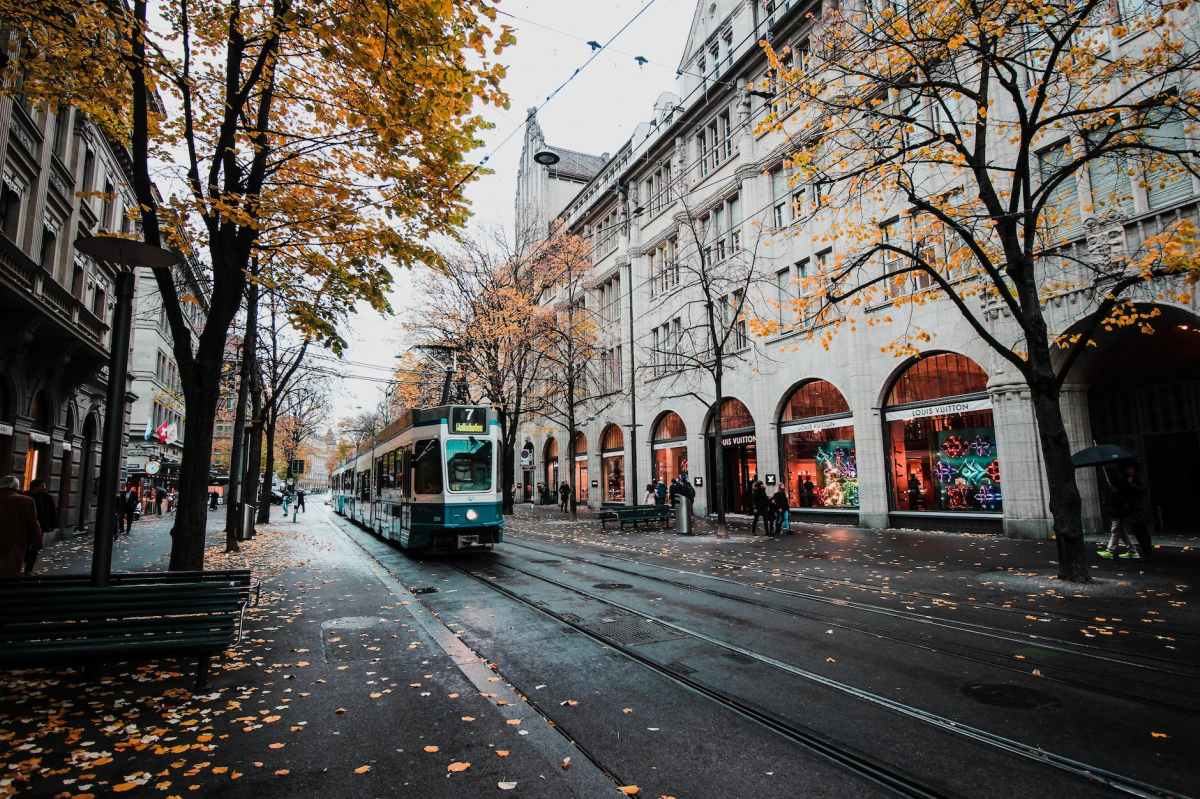
In the U.S., planning our cityscape around automobiles has seemed natural because of the way that our automotive technology has allowed us to flexibly expand in the large space afforded by our country. Sadly, that type of planning has caused us to sometimes neglect the way that life is normally lived with the communities of the city. Sometimes, it has been after the fact that cities have paid attention to how to better design the city spaces for people to navigate on foot or bicycle and to live in community.

Enacted space is “activated by the people using it.” that is, it is not enough to design particular spaces, but to make them attractive so that people use them. [6]

Additional features that can be considered for our spaces are how we situate housing for people and where they work, how we create enclosed spaces that give a sense of protection and safety, monuments that provide particular spaces with meaning and the thresholds (doorways or openings) between the building interiors and the spaces outside.[7]

“Connectivity is measured by the number of intersections per square mile. One hundred fifty connections per square-mile is considered to be the minimum for a vibrant community.” [8]


[1] Hart, Robert Lamb. “How Buildings Shape Us” Common Edge commonedge.org/how-buildings-shape-us

[2]Churchill, Winston. Made in a speech in the House of Commons on October 28,1943 about replacing the bombed-out House of Commons chamber. Quote given Automated Buildings automatedbuildings.com/news/aug20/articles/lynxspring/200721102909lynxspring.html

[3] Rethinking the Future. “Some Examples of Bad Architecture Ideas” Rethinking the Future www.re-thinkingthefuture.com/article/some-examples-of-bad-architecture-ideas; Staczek, David. “Is Bad Architecture Harmful to Our Health” Architizer architizer.com/blog/inspiration/stories/bad-architecture-harmful-to-health; Husock, Howard. “How Public Housing Harms Cities” City Journal Winter 2003 www.city-journal.org/html/how-public-housing-harms-cities-12410.html

[4] Ing, Will. Architects’ Journal 3 Oct 2021; www.architectsjournal.co.uk/news/poor-building-design-sped-up-covid-spread-says-academic 2021

[5] Greusel, Dave. “Architecture for Human Flourishing” Denver Institute for Faith and Work 15 Apr 2015 denverinstitute.org/david-greusel-architecture-for-human-flourishing-videos

[6] Jacobsen, Eric O. The Space Between  A Christian Engagement with the Built Environment” Baker Academic, 2012 (p. 17).

[7] Jacobsen, Eric O. The Space Between  A Christian Engagement with the Built Environment” Baker Academic, 2012 (Chapter 2)

[8] Jacobsen, Eric O. The Space Between  A Christian Engagement with the Built Environment” Baker Academic, 2012 (p. 43)

Reflect

As you consider the town or city you live in, what might be done better to make the places we live and work to be a gift to the entire community?

Observe

Read Isaiah 65:17-25. How can we build things that point to our future hope?
Reorienting our institutions

Dancing in the Kingdom- Table of Contents

Dancing In the Kingdom – Part 3 – Dancing in the Kingdom– Chapter 18 – Entering the Dance

Reorienting our institutions

[Bible references: Jeremiah 29:1-14]

It is normal to organize ourselves to do as a group what we cannot do, or at least do as well, as individuals. Families can undertake the task of running a farm or a ranch better than any one individual. Communities can better protect themselves or do things like barn-raisings to replace a barn that had been destroyed. Communities also allow for the possibility for people with specialized abilities to earn income from the specialty while allowing others to focus on their own businesses more successfully. Businesses are organized to create products or services that could not otherwise be produced. Civic organizations are organized to handle various problems within our society and cultural organizations help our society to flourish. Governments allow communities to pool resources, create infrastructure to support our society and to provide law enforcement to keep the peace within communities.

It is to God’s glory that his image-bearing creatures can create organizations that exemplify our reflections of God’s creativity and transcendence and allow us to do all the sorts of things that help fulfill his intention for us to fill the earth and steward its resources. However, in our fallen world, the very large and pervasive problem with any institution we create is that communities and organizations are made up of people and – we must remember – all people, including ourselves, are sinful.

It then becomes our sinful tendency to dislike organizations, institutions, in general. One of the unfortunate organizations many of us tend to dislike – is the organized church. So, before we address other organizations, we need to address our attitudes towards the institution we call the church.

Emily Rose Gum suggests that it is from the creation narrative that we can see that God wants us to thrive in a way that allows our personal good and the common good to reinforce one another. But we and the institutions we create are fallen and need to be re-oriented toward the common good. Sometimes we need to create new institutions but sometimes we need to reinvigorate and restore fractured ones, such as our public education schools which provide education to our poorest neighbors. [1]

In the larger picture of reclaiming our institutions, Vincent Bacote reminds us of our dependence on the Spirit. It was the Spirit “hovering over the face of the waters” bringing life into creation and it is the Spirit who enables us to carry out the mandates of God, including the building of institutions to carry out those mandates.[2]

“The mandate of creation is central to who Christians are before God. This mandate calls for obedience, yes, but this should not be viewed as a heavy burden. Indeed, in fulfilling this mandate Christian believers become more of who God intends them to be. Importantly, this is not a mandate for a few but for all—all are participants, all are enjoined to participate in ways framed by the revelation of God’s word in the creative and renewing work of world-making and remaking. And it is in the divine nature of this work that vocation is imbued with great dignity. It is, in part, the appeal to every person, regardless of stature, giftedness, achievement, wealth, power, or personality that makes the Gospel so radical. Every person is made in God’s image and every person is offered his grace and, in turn, the opportunity to labor together with God in the creation and recreation of the world.” [3]

As we look beyond the church itself, we see that God has designated other organizations for service as well. Even those of God’s image-bearers who are not of the church may respond to God’s call to all of us to tend to His creation, however they may understand it. And just as God’s own church has a mixed record of accomplishment, these other organizations/institutions will certainly have a mixed record as well. We cannot assume, that despite not completely understanding God’s creation mandate, that within these organizations outside the church there is no good intended by them, and that God is not able to use them.

These “outside” organizations may include government, civic, cultural, and social organizations and are part of the ways in which God’s image-bearers are fulfilling his purpose for his creation. Humans cannot create institutions without some basis in faith, even if they try to ignore it. What we can do as Christians is bring to those institutions the sensibilities that are based on our faith.[4] While we cannot make these institutions perfect (after all, even we are not yet perfect) we can help instill grace, mercy, and justice in whatever capacity we can.

Institutions sometimes try to re-organize their structure to make themselves better in some fashion, but structure cannot override the character of the people within the organization. In whatever capacity we have, if we are present in an organization, we can be the “salt” that preserves and adds spiritual taste to the organization.


[1] Gum, Emily Rose. “Recovering an Institutional Imagination” Comment Magazine comment.org/recovering-an-institutional-imagination p.28

[2] Bacote, Vincent. “The Spirit and Institution Building” Comment Magazine, Sept 2005, comment.org/the-spirit-and-institution-building

[3] Hunter, James Davison. To Change the World: The Irony, Tragedy and Possibility of Christianity in the Late Modern World  Oxford University Press 2010

[4] Chaplin, Jonathan. “Loving Faithful Institutions: Building Blocks of a Just Global Society” The Other Journal 15 Mar 2010 theotherjournal.com/2010/04/15/loving-faithful-institutions-building-blocks-of-a-just-global-society/Chechowich

Observe

Read Jeremiah 29:1-14. How should we try to influence the organizations in which we work?

New Jerusalem’s Urban Garden

Dancing in the Kingdom- Table of Contents

Dancing In the Kingdom – Part 3 – Dancing in the Kingdom– Chapter 16 – Fixing our eyes

New Jerusalem’s Urban Garden

[Bible references: Genesis 1-2; 1 Corinthians 12; 14;1 Peter 1, 4; Revelation 21-22]

In the now-broken earth, many people think of human civilization only as a corruption and pollution of the earth, that the earth was only meant to be pristine – as it supposedly was before humans started to mess it up. While we certainly have abused the earth in many ways, that does not mean all aspects of human civilization are inherently bad. When we use our God-given capabilities to join God in His kingdom building, that is good. Many of the things that we design, create and build are inherently good. The problem lies in our corruption and the world’s corruption that causes us to misuse every good thing.

When we were charged with filling and subduing the earth, it did not mean that we were to simply expand the Garden of Eden. God had given us many gifts to use, including tremendous creative abilities. We were given various spiritual gifts for the purpose of building one another up; we were given artistic gifts to make articles for the Tabernacle and Temple; we were given gifts of singing, making musical instruments and craftsmanship, hunting, trading, sailing – in general, making the things of civilization.

Those same gifts are available for current task of participating with God in the process of bringing His Kingdom to earth, a process that shall lead to ultimate uniting of heaven and earth, a process that leads not to the original Garden of Eden, but of an urban garden attached to the new Jerusalem.

It is undeniable that, despite the corruption we see, God has provided us an abundance of creative skills for displaying His transcendence and glory in our art, technology, engineering, and sciences. He has also given us social and political skills to create human public and private institutions that can organize our abilities to do good.

But it does not take much observation to also notice the corruption that has permeated our society. It can seem hard to determine if we have misused more than properly used the gifts and abilities God has given us. Nevertheless, as God’s co-regents we have been given a sacred obligation to nurture the place he gave us in anticipation of God’s final restoration of the earth.

Reflect

How can you use the gifts and skills that God has given you to help give people hope for the future?

Observe

Read 1 Peter 1. If our mind is set on seeing Christ soon, how shall we prepare?

Our Mandate

Dancing in the Kingdom- Table of Contents

Dancing In the Kingdom – Part 3 – Dancing in the Kingdom– Chapter 14 – Remembering our creation

Our Mandate

[Bible references: Genesis 1:26-28; 2:18-25; 3:6; 39:22-23; Matthew 17:10-13; Acts 3:19-42; 1 Peter 5:10]

We have seen how our journey, the journey of God’s people, creatures made in God’s own image, began with our ordination in the Garden of Eden and we have seen what God has intended for our future. We have seen how that intention has not changed despite our rebellion which continues to this day, and how God has not ceased to work with us, His people, despite our persistent rebellion. We have seen God’s patience and tenderness in not totally abandoning us despite our rebellion and how He has called us generation after generation – from the patriarchs and prophets to the apostles and all who are called Christian – to join Him in His ongoing restoration of His Kingdom on earth.

As image-bearers, we still are charged with the work of stewarding His creation, However, we must be restored ourselves before we can fully join Him in His work. That work of restoration begins when the Holy Spirit comes within us to unite us to God and His community. That is the work God must do within us.

In the previous chapters, we have followed how God called his image-bearers to join in the work that he began and then how, through the years, his image-bearers have joined that work, sometimes successfully and sometimes not. In this chapter, as we prepare to consider how to move forward, we will revisit that multi-faceted call to rule over the earth, to be fruitful and multiply, to fill the earth and subdue it” and to cultivate[1] and keep it, to create beauty. This call to act as God’s stewards of His creation is a call to use our gifts of intelligence and creativity, to cultivate the resources of the earth to establish a godly culture and civilization. This call is sometimes called the “cultural mandate,” where our culture includes all the things we discover and make and pass on from one generation to the next: our food, language, sports, arts, businesses and their products, civic organizations, and governments, etc.

The charge to “have dominion over” and “subdue” the earth and all its creatures includes physical, cultural, and intellectual activities such as farming, mining, manufacturing, government, arts, civic organizations, education, sciences, technology, and many other activities. But the primary place of God’s kingdom is to restore the souls of men. All would be well if all souls were in right relation to God, everything else would fall into place. Evangelization of the souls of all men is the ultimate goal. But if we think of the ways in which God, out of his overflowing abundance, finally managed to touch our hearts, there were many steps and many different ways in which we were individually touched by the hand of God.

As God’s image-bearers we are uniquely equipped to imagine and discover what kind of possibilities can be made of the overflowing abundance of  God, the physical resources He has provided for us: turning grain to bread, grapes to wine, oil to energy and plastics, iron ore to steel, limestone and shale and clay to cement, and many other things we have made from many types of resources. We are uniquely equipped to imagine and discover out of God’s overflowing abundance what kinds of ways we can organize ourselves to fulfill our responsibility to subdue and cultivate the earth by creating organizations such as businesses, civic and social organizations, political parties and non-profit organizations, governments and educational and religious institutions.[2] In all of these activities we can reflect God’s knowledge and wisdom by engaging in intellectual pursuits such as reading, writing, mathematics, sciences, philosophies, language arts, history, engineering, forensics, medicine, law, etc.  


[1] Huber, Dave. “Avodah Word Study” EFCA Today Summer 2012 www.efcatoday.org/story/avodah-word-study

[2] Manahan, Ronald E. “A Re-Examination of the Cultural Mandate: An Analysis and Evaluation of the Dominion Materials” Docsbay Grace Theological Seminary dissertation May 1982 docsbay.net/A-Re-Examination-Of-The-Cultural-Mandate

Reflect

We were assigned priestly duties in the Garden of Eden. As believers, we are to be kingdom of priests. As God’s care for His Creation continues, so does our mandate. What things can you do (and are equipped to do), with God, to fulfill His mandate?

Observe

Read Genesis 1:26-28; 2:15; 39:22-23. How would the world be different if we fulfilled our duties towards creation in the same way the Joseph fulfilled his duties?

Diaspora

Dancing in the Kingdom- Table of Contents

Dancing In the Kingdom – Part 1 – Shadows of the Kingdom – Chapter 9 – The Prophets and writings

Diaspora

[Bible references: John 13:35]

The term “diaspora” is usually reserved to refer to a group of people that has been scattered from a single location. In this case, the term is used to refer to the scattering of Jews from the Promised land. But this particular diaspora is only a part of God’s larger plans for His people.

Our God is a God of overflowing love. His love caused Him to create us so that His love could overflow from Himself to us. He wanted His image-bearers to carry out His mission of overflowing love and overflow from Eden to fill the entire earth. When we rebelled against His overflowing desire so that we could make a name for ourselves instead, He confused our language at Babel so that we would continue to flow out over the earth. When God wanted to prepare His Holy Nation for His mission, He scattered them to Egypt. When Israel rebelled against His mission of overflowing love, He scattered them from the Promised Land. The Son of God came in overflowing love to offer Himself in sacrifice in order to restore us to Himself. When the scattered Jews from many nations gathered for Pentecost, God reversed the action of Babel, and His message of overflowing love was shared in many languages so that the message of overflowing love would be carried to the Jews in many nations. To continue the overflow, God worked with Peter and Paul so that His love could flow out to the Gentiles as well. God further ensured the flowing out by using the Romans to scatter both Jews and Christians from Jerusalem. To this day, when our focus is more on building our Christian institutions, becoming too ingrown, God continues to scatter His people so that His message of overflowing love will reach more people in more places across the earth.

This program of overflowing creates a Dynamic Tension between our scattering and our unity. It would be well if our scattering was motivated by love so that we would continue to stay unified as we scatter. It would be well if our scattering was to reflect and uplift the different cultural groups within the church. Sadly though, our scattering is often due to divisiveness rather than love, contrary to the intent that the world will recognize that we are disciples of Jesus because of our love.

Observe

Read John 13:35. How is our love strengthened by our learning to love people different from ourselves?

Hope in the brokenness

Dancing in the Kingdom- Table of Contents

Dancing In the Kingdom – Part 1 – Shadows of the Kingdom – Chapter 4– Retreating to chaos

Hope in the brokenness

[Bible references: Genesis 2:16-17; 3:14-15, 23; Psalm 4; 102; Isaiah 1:26; Jeremiah 29:11; Acts:318-26; Galatians 3:13-14; Ephesians 1:11-12; Romans 5:12; 8:18-3; Hebrews 1:1-4]

Grief is the normal response to loss or separation. We may grieve when we lose dreams, jobs, health, family members or friends and many other things. Death is separation. Physical death is the separation of the soul from the body. Spiritual death is the separation of the soul from God.

The first humans voluntarily separated themselves from God so that they could grab what they wanted. This was spiritual death. When the non-physical angels rebelled against God, they too suffered spiritual death. For the angels, the separation was permanent with no hope of reconciliation with their Creator. But the first humans were given the possibility of hope.

Humans were also physical creatures, with mortal bodies, physical bodies that could die. Indeed, the humans needed access to the Tree of Life in order to keep on living. When the humans rebelled, they immediately suffered spiritual death. When the humans were also denied access to the Tree of Life, then their physical death was ensured. Spiritual death followed by physical death. A double grief. But the double grief contained the possibility of hope.

The consequences of rebellions created a great tragedy that could not be undone, not by the image bearers. But even so, as we look around us, we can see that despite the tragedy around us, things aren’t totally bad. Even though evil is very evident around us, goodness is also evident. It is in that observation that we can glimpse the possibility of hope. Amidst the consequences of rebellion, there are hints of hope.

When God confronted the first humans with the consequences for their rebellion, He also gave them a hint of the undoing of death, a solution to the problem created by sin. This hint would only be the first of many other hints to come that we can see revealed in the Biblical text.

We can also see evidence for hope in the continued creation by God, as he continues to sustain the universe he created, continuing to create new living things, plants, and animals alike. There is also hope hidden in the mandate given to the image-bearers. Their mandate of stewardship of God’s creation was still in force, although there would now be suffering involved in the fulfillment of the mandate. There was hope hidden in the name of God’s Son.[1] There was also a strange hope in the banishment from the Tree of Life; the consequence of physical death would provide a way to free us from an eternity of being separated from God and open a way for our redemption.

The sacrifice of Jesus followed a life in which Jesus successfully waited to receive those things that His Father intended to give, resisting the temptation to grab those things for himself. In his life and death, Jesus successfully accomplished what Adam and all those who came after Adam had not.

In the beginning, we were eager to grasp for ourselves wisdom and the knowledge of good and evil on our own terms. What we didn’t plan on was the consequences that would follow. Sometimes God gives us what we think we want even though it would bring us the suffering that God was trying to steer us from. It’s a continuing pattern we see from the beginning until now, that it is not always a good thing when we get what we think we want.[2]

But Jesus life did not end with his crucifixion. Jesus’ resurrection was the proof of redemption and of the hope of restoration. Sin had corrupted all of creation and all of creation is groaning and awaiting its restoration.

The universe is not what it’s supposed to be. We are not what we are supposed to be. We are creatures created with the imprint of the image of God but broken in body, soul and spirit. Our brokenness shows up in our actions, words and thoughts. Our brokenness shows up in the way we are treated and the way we treat others. And our brokenness even shows up in the bodies we are born with. But in His death and resurrection, God is able to redeem and restore all of us, all of who we are, all of what we have done, all of what has been done to us, and even all of creation. God is able to use all of our suffering and use it for our good, making something beautiful out of what was broken.


[1] See Chapter 2, The Mystery of God’s Name

[2] See Chapter 8. Rejecting God as King

Reflect

It’s not hard to see signs of brokenness around us. Are there any signs of hope that can be seen?

Observe

Read Isaiah 1:26; Jeremiah 29:11; Matthew 17:11; Acts 3:18-26; Galatians 3:13-14; Ephesians 1:11-12;. Throughout the Bible, God has chosen to share his future plans in pieces at a time. What those plans are, have been the subject of much debate within the church. What is your understanding of God’s plans for the future?