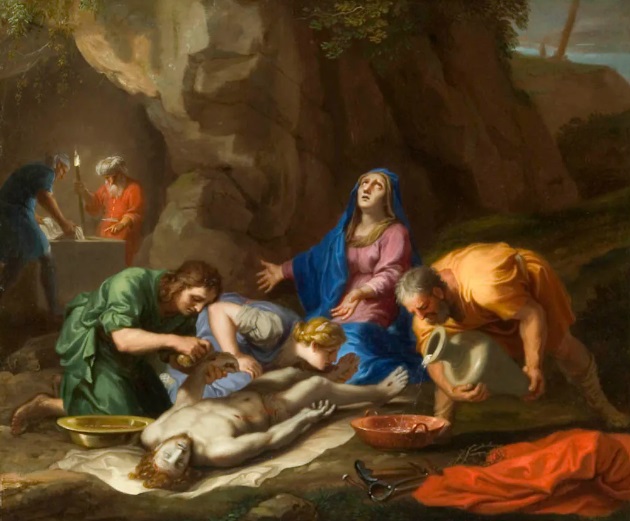
Lamenting our brokenness

Dancing in the Kingdom- Table of Contents

Dancing In the Kingdom – Part 3 – Dancing in the Kingdom– Chapter 14 – Remembering our creation

Lamenting our Brokenness[1]

[Bible references: Psalm 90; Lamentations 1-2; Matthew 26:36-46; 27:33-53; Luke 22:15; 1 Corinthians 14:12; Hebrews 12:2]

God made a good world, a world full of his glory. Sometimes, we can look at the beauty, the immenseness, the intricacy of what he has made all around us and be filled with awe and wonder. Unfortunately, what is also visible are the many ways in which things are not as they should be. As we consider all that we see and contemplate the kind of end that God intended, we find ourselves looking at a world that seems to be headed in the wrong direction. Instead of increasing shalom, there is violence, hatred, fear, disease, and brokenness. Pain. Shattered dreams. Loss of hope.

There are times when the brokenness around us and within us can overwhelm us. There may be times when God seems absent for long periods of times. This intense absence has brought some people to what they call the Dark Night of the Soul.[2]

The brokenness around us affects everyone, although some experience the brokenness more harshly than others. The Psalms are full of complaining about how the pain of sins’ consequences don’t seem to affect everyone equally. In Lamentations, that pain is captured in personification – the pain of an adulterous woman who is naked, unclean, scorned, and shamed, a victim of rape, a slave, helpless, isolated, unclean. Just as we all bear the guilt of sinful disobedience against God and neighbor. Not only do we bear the guilt of active rebellion against God, but we also bear the shame of being sinned against.

Throughout its history, the church has been concerned with the sin of people but has largely overlooked an important factor in human evil: the pain of the victims of sin. The victims of various types of wrongdoing express the ineffable experience of deep bitterness and helplessness. Such an experience of pain is called han in the Far East. Han can be defined as the critical wound of the heart generated by unjust psychosomatic repression, as well as by social, political, economic, and cultural oppression. It is entrenched in the hearts of the victims of sin and violence, and is expressed through such diverse reactions as sadness, helplessness, hopelessness, resentment, hatred, and the will to revenge.[3]

None of this is comfortable, our tendency is to use whatever devices we can to cover our feelings. We want to run and cling to the hope and joy of Christ, to rush past our uncomfortable guilt and shame. There is a part of us that would be happy to join Christ in His work in the world, as long as we can skip the confession of sin and guilt, but in doing so we would skip the richness of God’s mercy and the gift of shalom.

The depths of joy and hope are not just feelings for us to receive and enjoy. Rather, the depths of joy and hope are only found in acts of the will, in a persistent choosing to abandon our interests and instead to follow God.

Knowing what was before Him, Jesus chose to push His glory to the side and to take on the form of a human with all its physical inconveniences, to endure the ridicule of people who were not fit to tie his sandals, to spend years training 12 disciples all of whom he knew would abandon him in the time of his greatest suffering as he endured the agony of the cross. But in all of this, as he shared the last meal with his disciples before his time of passion, he could say, “I have eagerly desired to eat this Passover with you before my suffering.” The great joy that awaited Jesus and His disciples would be preceded by deep sorrow and great suffering.

“Throughout 1946 and 1947, Mother Teresa experienced a profound union with Christ. But soon after she left the convent and began her work among the destitute and dying on the street, the visions and locutions ceased, and she experienced a spiritual darkness that would remain with her until her death. It is hard to know what is more to be marveled at: that this twentieth-century commander of a worldwide apostolate and army of charity should have been a visionary contemplative at heart; or that she should have persisted in radiating invincible faith and love while suffering inwardly from the loss of spiritual consolation” [4]

As we consider in which ways we are called to “Dance in the Kingdom” with God, we need to keep the proper perspective. God’s work is to reconcile people and all of Creation to Himself. Whatever task He gives us to engage in, it will only ever be a portion of God’s work. Whatever task He has called us to is sufficient for us and He will supply whatever we need to accomplish the tasks He has provided. While some are called to do “bigger” tasks than others, we need to humbly accept whatever tasks God has called us to do. We also need to humbly submit to our need for one another and our need to combine whatever spiritual gifts God has given to us with the gifts He has given others as we build up one another. In the task of building up one another, we need to address another humility.

Our sin and our woundedness are deeper than we imagine. As we confess and acknowledge the sins we have committed and the shame we experience when others have sinned against us, our proper response is lament. We can neither undo what we have done nor what has been done to us. But we can take the next step. The path to restoration and reconciliation leads through a lament that must confront our brokenness and acknowledge the pain. In our lament we can recognize how we are corrupted by sin and that we are accountable for all the suffering caused by our sin.

For us to experience healing of shalom, we need to acknowledge the suffering we have caused, encounter the truth about our sins, and challenge the privileges we may have had over others. Shalom requires lament, a reminder not likely needed for those whose lives are marked by the injustice thrust upon them but is likely needed for those whose lives are marked by privilege.

“Lament in the Bible is a liturgical response to the reality of suffering and engages God in the context of pain and trouble. The hope of lament is that God would respond to the human suffering that is communicated through lament.”[5]


[1] Plantinga, Cornelius. Not the Way It’s Supposed to Be Eerdmans Publishing Co – A. Kindle Edition; Wolters, Albert M. Creation Regained Biblical Basics for a Reformational Worldview  William B. Eerdmans Publishing 1985, 2005. eBook

[2] Rah, Soong-Chan, “Prophetic Lament: A Call for Justice in Troubled Times” Intervarsity Press, 2015; Zaleski, Carol. “Dark Night of Mother Theresa;” St. John of the Cross, Dark Night of the Soul First Things, www.firstthings.com/article/2003/05/the-dark-night-of-mother-teresa

[3] Park, Andrew S. “The Wounded Heart of God: The Asian Concept of Han and the Christian Doctrine of Sin” Abingdon February 1, 1993

[4] Zaleski, Carol. “The Dark Night of Mother Teresa’s Soul” First Things, www.firstthings.com/article/2003/05/the-dark-night-of-mother-teresa

[5] Rah, Soong Chan. “Prophetic Lament: A Call for Justice in Troubled Times” Intervarsity Press, 2015

Reflect

What kinds of brokenness in the world do you notice the most?  For what do you lament?

Observe

Read Psalm 90. Is there any lament that touches your heart?

Mystery of sin, salvation, and sanctification

Dancing in the Kingdom- Table of Contents

Dancing In the Kingdom – Part 2 – The Kingdom Revealed – Chapter 13 – Distinctives within the body of Christ

Mystery of Sin, Salvation, and Sanctification

[Bible references: Ps 38:39; Is 12:2; 25:9; Zephaniah 3:17; Matthew 26:28; Luke 24:47; John 3:16; 10:9; Acts 2:38; 4:12; Romans 5; 6:23; 1 Corinthians 1:21; 15:2; Ephesians 2:8; 2 Tim 3:15]

How do we inherit sin?

There are two main views of how we inherit sin:

  • According to ancestral sin, Adam and Eve alone bear the full responsibility and guilt for the sin in the Garden, but we inherit mortality, the tendency to sin, and alienation from God and other people. Expulsion from the Garden was to prevent the humans from being eternally separated from God.
  • According to original sin, as Adam’s ancestors we inherit not only Adams’ sinful nature but his guilt as well. Expulsion from the garden was a punishment.

What did Jesus do to allow our relationship with him to be restored?[1]

By taking on human flesh the way that Jesus did and becoming fully human, he experienced all the temptations to sin that we face, but without succumbing to them. When he died on the cross as a perfect God-Man, he was able to overcome death and offer to restore our relationship with him. Different congregations have different ideas on how this transaction was able to actually work.

  • God paid a ransom to free us. Once the ransom was paid, justice was satisfied, and God was able to free us. There is a dispute about whether the ransom was paid to God or to the Devil.[2]
  • Christ is seen as the second Adam who is victorious where Adam failed and undoes what Adam did. The atonement of Christ has reversed the course of mankind from disobedience to obedience. Christ’s life recapitulated all the stages of human life and in doing so reversed the course of disobedience initiated by Adam.[3]
  • Just as Adam’s sins were imputed to us (original sin), when Jesus died on the cross, his righteousness was imputed to us.[4]
  • Christ suffered for everyone so that the Father could forgive the ones who repent and believe. Pardon and forgiveness cannot be brought to pass unless God’s righteous obligations as Moral Governor can be satisfied. Nor can it happen unless man is willing to repent and embrace the conditions of mercy. Man must identify himself in a committal of faith to the sufferings of Christ for his sins, as the only hope of his forgiveness and spiritual restoration from a state of ruin.[5]

What is the effect of sin on our bodies and on our world?

Despite the effects of sin, that we are image-bearers of God. This view creates a positive view of our bodies and is supportive of taking healthy care of our bodies and also the environment. However, there is a viewpoint originally developed by Greek philosophy that has continued to affect the church in many ways from the beginning is the idea that only spiritual things are good and physical things are bad.[6]

In regard to the body, this dualism leads to the view that sex is sinful and a general discomfort in talking about the body, preventing the church from counteracting the influence of the culture both within and outside the congregation. This dualism has led to many other errors as well, such as focusing on heaven as our final destination instead of a new creation, the need to deny oneself physical pleasure[7] in order to pursue the spiritual, and the neglect of our roles as stewards of our physical environment.

How are we saved from the consequences of our sins?

When the first people rebelled against God, they brought the penalty of death and eternal separation from God upon themselves. As descendants of those people, we inherited the corrupt nature that causes us to sin and therefore also brings the penalty of death and separation from God upon ourselves. Our salvation is only possible because of the death and resurrection of Jesus. The gift of salvation can be received when we confess our sins, acknowledge Jesus’ death on our behalf and accept God’s forgiveness for our own sins.

That said, there are two explanations about how we are saved that depend on how we think we inherited sin.

  • According to the doctrine of ancestral sin, salvation is a process of avoiding sin and becoming more like God,[8] a process which, for those who are baptized into Christ, will continue after our death and resurrection. God did not expel Adam and Eve out of the Garden of Eden and away from the Tree of Life as a punishment, but out of compassion, so that we would not be like the fallen angels and become immortal in sin.
  • According to the doctrine of original sin, Jesus’ death is considered to have paid the penalty for our sins. By receiving his forgiveness, we are legally justified before God, and he gives us his spirit so that we can begin the process of becoming more like him.

What is the role of grace in salvation?

In Reformed theology, God gives irresistible grace to those he chose before time began and gave them the will to respond to his call to repent so that they can be forgiven, and once forgiven, God will ensure that they will persevere in the faith.

In provisional theology all men are given a grace[9] that allows them free will to respond to God’s call to repent and be saved and also have God’s assurance that he will not let us go.[10]

In Arminian and Orthodox theology, it is by our free will that we accept God’s forgiveness and then also have the free will to abandon that faith later.

What does it mean to be saved by grace and yet have expectations to live righteously?

Some Christians think that once they are converted, that is they have received Christ’s gift of salvation, then they have done all they need to do. After that, some will either forget or neglect the entire process of being a disciple of Christ leaving the question of whether they were actually converted.

Some congregations believe that more than faith is required in order to receive salvation[11] and insist that salvation has not happened unless some specific things are done. The Orthodox tradition states that salvation is a process that begins with conversion but then continues with the process of becoming more like God. The Roman Catholic and Protestant traditions state that once we have been justified, then God can set us apart to be the type of people that he has intended us to be from the beginning.[12] In this condition, we can begin the process of growing in Christ, that is, becoming more like God.

We are living in the time between the first coming of Christ, where he conquered death and sin, and His second coming, when he will transform creation with a new heaven and earth, and we will have new resurrection bodies. In this in-between time, we still are living in corrupt bodies and in an earth corrupted by sin although we may have begun the process of being transformed more into the image of Christ. This does create some confusion.

Until the final resurrection we still sin and need to regularly be in an attitude of repentance, confessing our sin and turning back to God and acknowledging our need for God’s grace so that we can also be ready to give grace to others.

The Roman Catholics emphasize our need to not only confess our sins, but to do something tangible to express our repentance[13] and need to be purified more completely before we can appear before God. This requires a temporary stay in purgatory before we are allowed into heaven.

Viewing things in a more positive light, some congregations emphasize that while we may not actually free from sinning, that our hearts have been cleansed from sin by the grace of God.[14]

Since we are under grace, do the commandments still apply to us?

We are told that those who are born “of the Spirit” are not “under the law” because Jesus fulfilled the law. However, that does not mean that the law can be ignored. In fact, not only does the law provide guidance for us, but the expectations for our behavior are even more comprehensive. The New Testament explicitly tells us that:

  • hating our brother is equivalent to murdering our brother. 
  • we should not hate our enemy but love them.
  • looking at someone with lust is like committing adultery.
  • if we are forced to go one mile, then we should go two miles.

Our motivation should not come from trying to obey the external law “written in stone” but rather from the internal desires “written in our hearts” to love – love God and to love one another. To give a few examples: we should be.

  • Not driven to obey the Commandment to keep the Sabbath, but rather encouraged to live every day to God.
  • Not driven to obey the command to tithe, but rather encouraged to be generous.
  • Not driven to obey the command to not covet, but rather encouraged to promote the welfare of others.
  • Not driven to obey commandments, but rather encouraged to express the fruits of the Spirit.
  • Not driven to obey externally given commands, but rather encouraged to grow in our internal desire to love,
  • Not driven to avoid doing wrong, but rather encouraged to delight in finding the best way to do what is right

However, the relationship of the church to the law has been a point of contention in many congregations causing many congregations to adopt a legalistic framework. There is a tendency to consider the laws we call the Ten Commandments to be unlike the other laws in the Old Testament – to be “moral laws” that still apply. The New Testament, however, has not separated out the “moral law” from the rest of the laws (sometimes called civil and ceremonial laws) in the Old Testament. Some consider the Law to be good as it guides us away from idolatry, but others view the law to be bad as we should rather be relying on grace instead of the law which is considered to be oppressive.

The Ten Commandments, as we call them, are not numbered in the original texts (Exodus 20, Deuteronomy 5) but in the Biblical text are referred to as the Decalogue, which means “ten words.”[15] This has resulted in a couple of different numbering schemes for the “ten words.” One of the variations is influenced by iconoclasm, which makes “You shall not make any graven images …” the second commandment.


[1] Soteriology is the study of how we are saved

[2] Theopedia “Ransom”  Theopedia theopedia.com/ransom

[3] Theopedia “Recapitulation theory of atonement”  Theopedia theopedia.com/recapitulation-theory-of-atonement

[4] Theopedia “Penal substitutionary atonement”  Theopedia theopedia.com/penal-substitutionary-atonement

[5] Theopedia “Governmental theory of atonement” Theopedia theopedia.com/governmental-theory-of-atonement

[6] In Persia during the third century, Mani tried to synthesize all the known religions, including Gnosticism and Christianity into a religion known as Manichaeism. Gnostics think that there is a good spiritual world, and a bad physical world (aka Dualism).

[7] New Advent “Asceticism” New Advent newadvent.org/cathen/01767c.htm

[8] Theopedia “Theosis” Theopedia www.theopedia.com/theosis

[9] Prevenient grace means the grace of God that surrounds all, and is at work in all, even before we know or care about it.

[10] Spurgeon, C.H. “The Security of Believers – or, sheep who shall never perish”  Spurgeon Gems spurgeongems.org given 5 Sept 1889 www.spurgeongems.org/sermon/chs2120.pdf

[11] Theopedia “Legalism” Theopedia theopedia.com/legalism

[12] Sanctification is the process of being set apart for God’s use.

[13] Catholic Encyclopedia “Penance” Catholic Encyclopedia catholic.com/encyclopedia/Penance

[14] Theopedia. “Wesleyan perfectionism”  Theopedia www.theopedia.com/wesleyan-perfectionism. Wesleyan perfectionism, sometimes called entire sanctification, is a view held by John Wesley that taught that Christians could to some degree attain perfection in this life.

[15] Hale, Philip. “Numbering the Decalogue, Images, and Iconoclasm: A Historical and Theological Survey”  Nebraska Lutherans for Confessional Study, July 25, 2013

Observe

Read John 3:16; 10:9; Acts 2:38. How can we be reconciled to God?

Judgement Unfolds

Dancing in the Kingdom- Table of Contents

Dancing In the Kingdom – Part 1 – Shadows of the Kingdom – Chapter 9 – The Prophets and writings

Judgement Unfolds

[Bible references: I Kings 6:12; 2 Kings 17, 25; 2 Chronicles 36:15-16; Jeremiah 25:11-12]

The covenant God made with Israel had the proviso “if you follow my commands.” Israel continually demonstrated its inability to do that[1] and God’s judgment followed. The nation of Israel would suffer the consequences. The first sign of the consequences manifested itself in the splitting of Israel into two kingdoms.

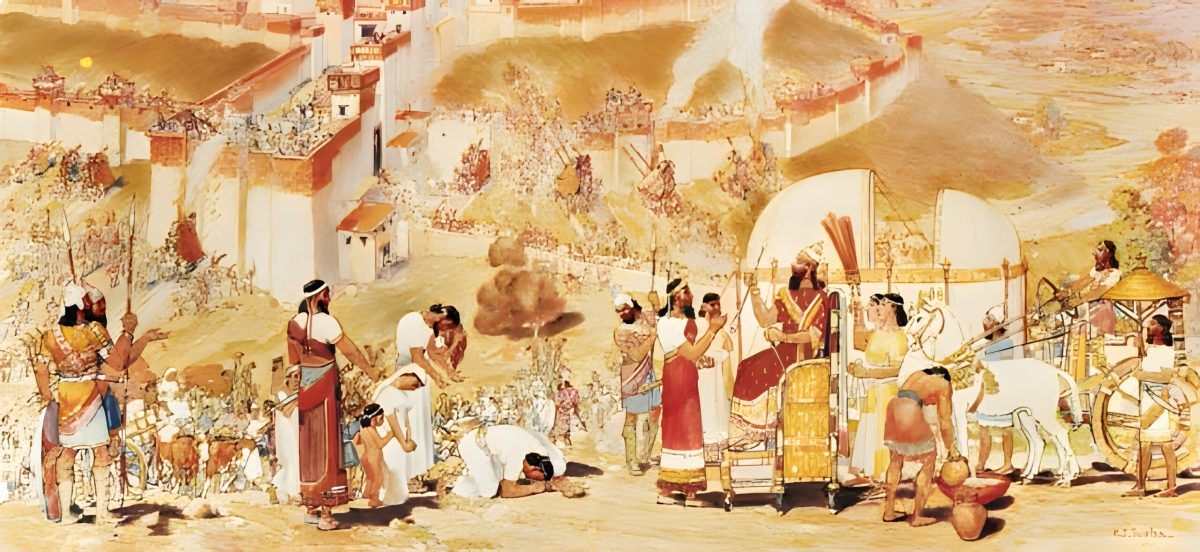
After that, the northern kingdom of Israel was the first to collapse in 722 BC with the invasion of the Assyrians whose policy was to scatter the captured inhabitants throughout their empire and replace them with Assyrians. These northern tribes seem to have been totally assimilated into the Assyrian empire and would not be heard from again in history.

In 586 BC, the Babylonians conquered the southern kingdom of Judah. The best and the brightest of Judah were taken as captives to the capital of Babylonia for “retraining” so that they could contribute to the Babylonian society. It was at this point that the nation of Israel would now be referred to Jews. It was from this point on that, despite the return of some of the Jews to their homeland, most Jews would now be living outside their homeland.


[1] Margalit, Ruth. “In Search of David’s Lost Empire” The New Yorker 22 June 2020 www.newyorker.com/magazine/2020/06/29/in-search-of-king-davids-lost-empire; Syace, A.H. “Polytheism in Primitive Israel” The Jewish Quarterly Review Oct 1889, Vol 2. No. 1 pp.25-26 University of Pennsylvania Press www.jstor.org/stable/1450128; Zevit, Ziony. Review of “The Religions of Ancient Israel: A Parallactic Approach” by Hess, Richard. Vol 5. Denver Journal 2002 denverseminary.edu/the-denver-journal-article/the-religions-of-ancient-israel-a-parallactic-approach/ Israel’s susceptibility to idol worship was so extensive, that archeological evidence indicates continuous polytheism. 

Observe

Read Jeremiah 25:11-12. It seemed hopeless. The unfaithful nation of Israel was no more. But promises were made by a faithful God who would eventually restore them. What are God’s promises to us?

Challenging Unfaithfulness

Dancing in the Kingdom- Table of Contents

Dancing In the Kingdom – Part 1 – Shadows of the Kingdom – Chapter 9 – The Prophets and writings

Challenging Unfaithfulness

[Bible references: Deuteronomy 16:18-20; 2 Chronicles 29:6; Isaiah 1; 56:1; Jeremiah 5:31; 28; Hosea 1:2; Amos 9:1-15; Zechariah 7]

Sometimes the prophet’s warnings would be not just for the kings but for everyone in the kingdom. The messages from the prophets often mixed the foretelling of the consequences for rejecting God with the hope that God will someday make things right. The most common offense cited by the prophets was the people’s lack of justice and the uselessness of their ritual sacrifices when they ignored justice. There were also diatribes against false prophets and against making idols. The most common metaphor used to describe Israel’s unfaithfulness to God and his commands was prostitution, even to the point where one prophet, Hosea, was told to marry an adulterous woman to be a visible reminder for Israel.

Observe

Read Zechariah 7. What words of warning are given to the people who were not faithful to God?

Repentance

Dancing in the Kingdom- Table of Contents

Dancing In the Kingdom – Part 1 – Shadows of the Kingdom – Chapter 8– Kings and kingdoms

Repentance

[Bible references: 1 Samuel 13:14; 2 Samuel 11:1-27; 12:1-14; Psalm 51:1-19; Acts 13:22]

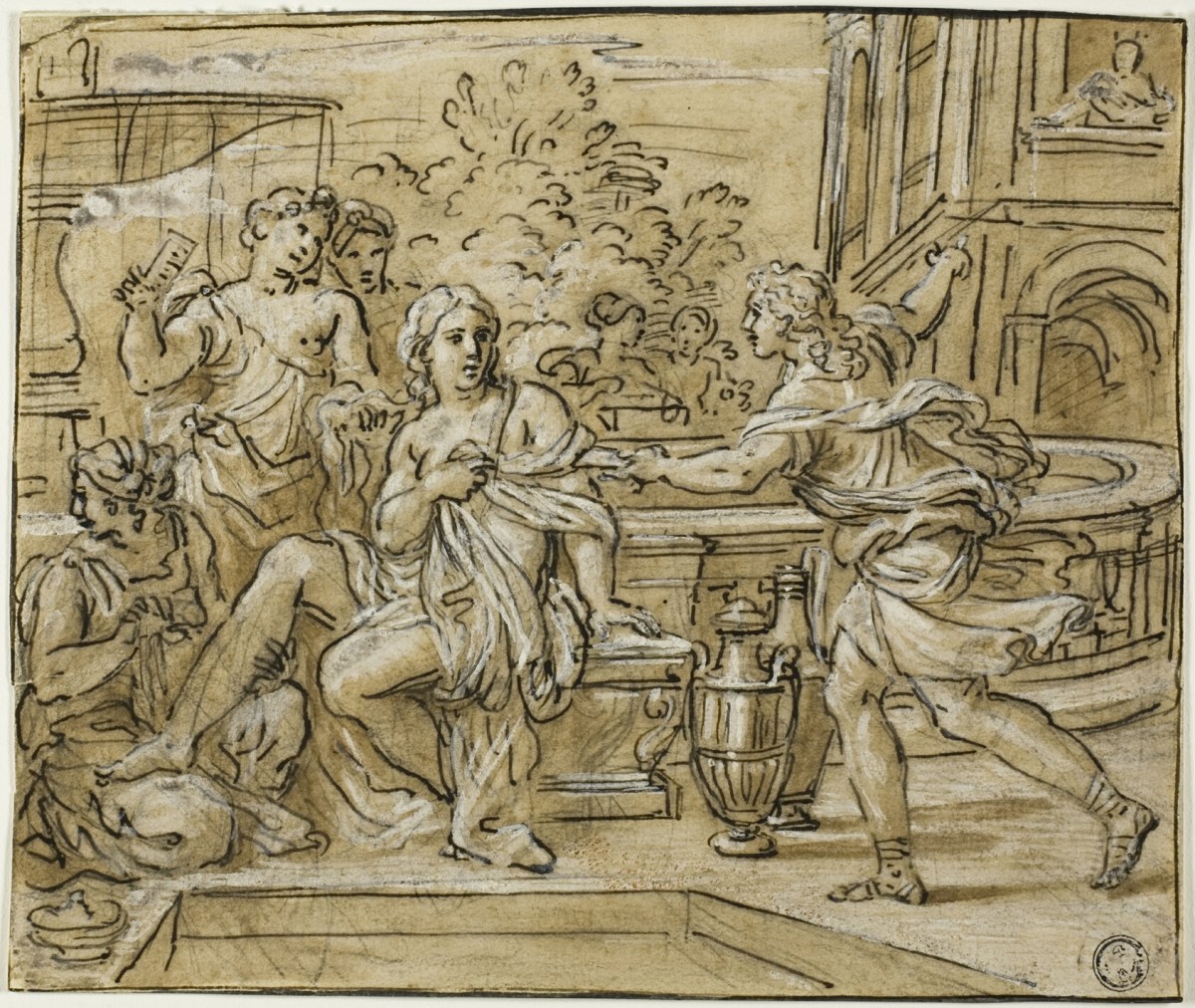
There were a couple of instances where David committed sin but, unlike Saul before him, David responded to Yahweh’s rebuke with repentance. The most egregious sin David committed was to have an affair with Bathsheba, the wife of one of his soldiers, getting her pregnant. Then when he failed to cover it up, he arranged for that soldier to be killed on the front lines. When the prophet, Nathan, confronted David about the sin, David repented and confessed his sin. The baby born from that affair died shortly after being born, but later David would have another child with Bathsheba, Solomon, setting up the next part of the story line.

Observe

Read 1 Samuel 13:14; Acts 13:22. Of the three kings of the united kingdom of Israel, only David had a pattern of recognizing his sins and repenting. He was also known as a man “after God’s own heart.”[1]


[1] Edmondson, Ron. “10 Reasons David is Called “A Man After God’s Own Heart” Bible Study Tools www.biblestudytools.com/blogs/ron-edmondson/10-reasons-david-is-called-a-man-after-god-s-own-heart.html; Got Questions “How could David be considered to be a man after God’s own heart?” Got Questions. www.gotquestions.org/man-after-God-heart.html

The War King

Dancing in the Kingdom- Table of Contents

Dancing In the Kingdom – Part 1 – Shadows of the Kingdom – Chapter 8– Kings and kingdoms

The War King

[Bible references: 1 Samuel 15-16; 2 Samuel 1-24]

In time, Saul did die, and David became king, although it would be in phases. Initially there was a civil war as people that were loyal to Saul did not pledge loyalty to David but to another king. As in many conflicts, in addition to overt conflict, there was much subterfuge and political intrigue as well which would have consequences later. Then, even after uniting the kingdom, David had to lead Israel through constant warfare as he expanded the kingdom. So even though David was called and anointed to be king, that did not mean that there was a clear path to becoming king and it did not mean that there would be no conflicts once he became king. It also did not mean that David would be perfect.

Reflect

Being called to a ministry or task does not mean that there is no waiting for God’s timing or that there will be no conflict involved. How does one then determine when you are being called to a ministry or a task?

Observe

Read 2 Samuel 24. Similar to Exodus, this chapter is out of order, possibly happening before 2 Samuel 13 when David’s family problems start to become highlighted. What does the placement at the end of 2 Samuel tell us about David?

Rampant evil

Dancing in the Kingdom- Table of Contents

Dancing In the Kingdom – Part 1 – Shadows of the Kingdom – Chapter 4– Retreating to chaos

Rampant evil

[Bible references: Genesis 6, 9]

So that we can know what terrible direction we are headed without that intervening grace, God initially allowed his image-bearers to live long lifespans. It seems that long lifespans delayed the penalty of physical death such a long time that the image-bearers behaved as if there were no consequences for their God-defiant behavior. The result was rampant unrestrained evil that infected nearly everyone, causing God to send a flood to destroy all but one family. Sadly, even with that severe penalty, it would not be long before our God-defiant behavior would threaten to be our undoing again, but God would continue intervening with grace as He would gradually work out His plan to restore us to Himself beginning with the rainbow as a sign of hope.

Observe

Read Genesis 6 and 9. God sent a flood to deal with the rampant sin in the world but it wasnot long after the flood that signs of human rebellion sprung up again in Noah’s family. What kind of trajectory did this indicate for humanity?

The plan to restore creation

Dancing in the Kingdom- Table of Contents

Dancing In the Kingdom – Part 1 – Shadows of the Kingdom – Chapter 4– Retreating to chaos

[Bible references: Genesis 3:13-15; 50:20; Isaiah 53; Micah 6:8; Zechariah 7:9; Matthew 10:28-31; Luke 19:11-27; 1 Corinthians 12; Galatians 3:13-14,23-29; Ephesians 1:11-12; Hebrews 1:1-3]

The apparent penalty for sin, physical death, was actually a blessing. Unlike the angels who rebelled against God, death provided the rebellious image-bearers a means of avoiding an eternity separated from the source of goodness and grace. But for the image-bearers, death provided a means where not only they but all of creation could be rescued from decay and death.

The plan of restoration slowly unfolded in ways that would sometimes be baffling and confusing and on a timetable that is beyond our comprehension. Over time though, God gradually revealed how he intended to restore our relation to him, to end our pain and suffering, and to overcome the evil that seems to pervade everything.

God started the process of revealing hints of how he would restore creation right at the beginning. God gave the initial clue in the curse given to the serpent, although the hint must have been a cryptic comment to His newly broken image-bearers. But since we have the privilege of looking back, we can see that God’s then cryptic reference was to the death and suffering of the character revealed in the Old Testament as the Messiah. As time went on, the Creator gradually revealed more and more clues about the plans He had to restore His creation. This gradual revelation was, and still is, a painfully slow time of waiting as we suffer the consequences of broken relations and a broken creation.

Fortunately, as we have waited in our broken universe, God’s grace has continued to intervene throughout history so that things are not as bad as they could possibly be. Our rebellion has not deterred God from providing for our everyday needs nor has he ceased to work on his plan to rejoin heaven and earth.

Meanwhile, God invites us to take part with him in the continued creation of the universe, bringing healing, health and hope directly into the midst of our now broken world, a task that he and we will continue until God fully restores his kingdom. Towards that end, he has provided spiritual gifts, gifts that we can share with one another, to build up one another and to bless the world as his ambassadors.

There are many things about the plans of God that we do not understand. God’s plans for us seem to be drawn out over a long time in which there is much suffering and pain. But even the suffering and pain we endure can be redeemed to help us become more like the Desire of our Hearts, the One who gave all Himself so that we all may become more like Him.

Reflect

What would the world look like if there was no goodness?

Observe

Read Isaiah 53. What did God need to do to restore our relation with Him?

Hope in the brokenness

Dancing in the Kingdom- Table of Contents

Dancing In the Kingdom – Part 1 – Shadows of the Kingdom – Chapter 4– Retreating to chaos

Hope in the brokenness

[Bible references: Genesis 2:16-17; 3:14-15, 23; Psalm 4; 102; Isaiah 1:26; Jeremiah 29:11; Acts:318-26; Galatians 3:13-14; Ephesians 1:11-12; Romans 5:12; 8:18-3; Hebrews 1:1-4]

Grief is the normal response to loss or separation. We may grieve when we lose dreams, jobs, health, family members or friends and many other things. Death is separation. Physical death is the separation of the soul from the body. Spiritual death is the separation of the soul from God.

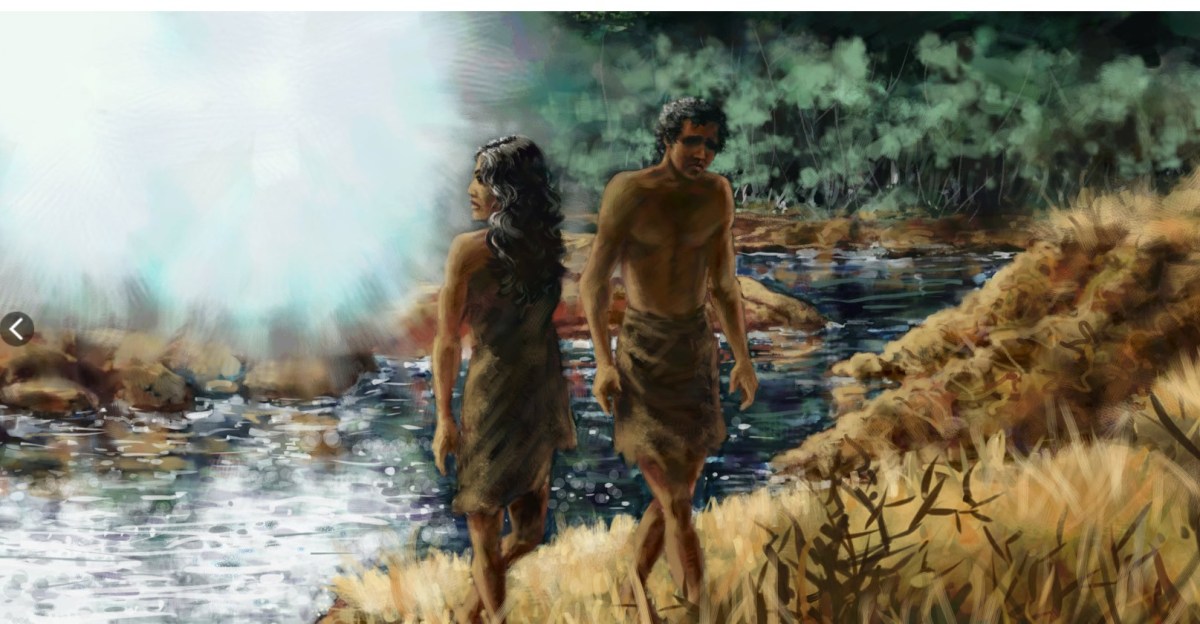
The first humans voluntarily separated themselves from God so that they could grab what they wanted. This was spiritual death. When the non-physical angels rebelled against God, they too suffered spiritual death. For the angels, the separation was permanent with no hope of reconciliation with their Creator. But the first humans were given the possibility of hope.

Humans were also physical creatures, with mortal bodies, physical bodies that could die. Indeed, the humans needed access to the Tree of Life in order to keep on living. When the humans rebelled, they immediately suffered spiritual death. When the humans were also denied access to the Tree of Life, then their physical death was ensured. Spiritual death followed by physical death. A double grief. But the double grief contained the possibility of hope.

The consequences of rebellions created a great tragedy that could not be undone, not by the image bearers. But even so, as we look around us, we can see that despite the tragedy around us, things aren’t totally bad. Even though evil is very evident around us, goodness is also evident. It is in that observation that we can glimpse the possibility of hope. Amidst the consequences of rebellion, there are hints of hope.

When God confronted the first humans with the consequences for their rebellion, He also gave them a hint of the undoing of death, a solution to the problem created by sin. This hint would only be the first of many other hints to come that we can see revealed in the Biblical text.

We can also see evidence for hope in the continued creation by God, as he continues to sustain the universe he created, continuing to create new living things, plants, and animals alike. There is also hope hidden in the mandate given to the image-bearers. Their mandate of stewardship of God’s creation was still in force, although there would now be suffering involved in the fulfillment of the mandate. There was hope hidden in the name of God’s Son.[1] There was also a strange hope in the banishment from the Tree of Life; the consequence of physical death would provide a way to free us from an eternity of being separated from God and open a way for our redemption.

The sacrifice of Jesus followed a life in which Jesus successfully waited to receive those things that His Father intended to give, resisting the temptation to grab those things for himself. In his life and death, Jesus successfully accomplished what Adam and all those who came after Adam had not.

In the beginning, we were eager to grasp for ourselves wisdom and the knowledge of good and evil on our own terms. What we didn’t plan on was the consequences that would follow. Sometimes God gives us what we think we want even though it would bring us the suffering that God was trying to steer us from. It’s a continuing pattern we see from the beginning until now, that it is not always a good thing when we get what we think we want.[2]

But Jesus life did not end with his crucifixion. Jesus’ resurrection was the proof of redemption and of the hope of restoration. Sin had corrupted all of creation and all of creation is groaning and awaiting its restoration.

The universe is not what it’s supposed to be. We are not what we are supposed to be. We are creatures created with the imprint of the image of God but broken in body, soul and spirit. Our brokenness shows up in our actions, words and thoughts. Our brokenness shows up in the way we are treated and the way we treat others. And our brokenness even shows up in the bodies we are born with. But in His death and resurrection, God is able to redeem and restore all of us, all of who we are, all of what we have done, all of what has been done to us, and even all of creation. God is able to use all of our suffering and use it for our good, making something beautiful out of what was broken.


[1] See Chapter 2, The Mystery of God’s Name

[2] See Chapter 8. Rejecting God as King

Reflect

It’s not hard to see signs of brokenness around us. Are there any signs of hope that can be seen?

Observe

Read Isaiah 1:26; Jeremiah 29:11; Matthew 17:11; Acts 3:18-26; Galatians 3:13-14; Ephesians 1:11-12;. Throughout the Bible, God has chosen to share his future plans in pieces at a time. What those plans are, have been the subject of much debate within the church. What is your understanding of God’s plans for the future?

Reflecting God’s paradoxes

Dancing in the Kingdom- Table of Contents

Dancing In the Kingdom – Part 1 – Shadows of the Kingdom – Chapter 3 – The image-bearers

Reflecting God’s paradoxes

[Bible references: Genesis 1:26-32; 2:4-7,15-25; Matthew 22:36-40; John 15:8-11; Romans 8:20-21; Galatians 5:22-23]

Understanding the character of God, can help us understand what he has intended for creatures that are made in his image. Image-bearing creatures are not gods or duplicates of God, but they are imbued with the character of the God that made them.

It was into this good universe that God prepared beforehand that God created creatures to bear his image. Good creatures, image-bearers, who were given the task of taking care of the good creation that God blessed them with – and God declared his creation to be very good. The image-bearing creatures were created in the complex image of God – the one God who was a community within Himself, the God who was immensely creative, the God who was generous and loving beyond imagination, the God who is sovereign over the universe, the God who is above all things.

There was a danger in God creating image-bearers. To make creatures that were lovers – just as He was a lover – meant giving these image-bearers the freedom to choose whom or what to love. Since we are created as lovers, we are compelled to love, so when we choose to not love one thing  or one person it is only because we have chosen to love someone or something else. Because God’s image-bearers were the capstone of creation, their option to love something more than God risked an awful catastrophe, a catastrophe that could affect the entirety of creation itself. The good creation, all of it, would become not so good.

And so it was, after creation was prepared for God’s image-bearers, those creatures who were created in the image of the loving God were given instructions to be stewards of the world God had made. Everything was good, and the first human couple had free access to the provisions in the garden prepared for them. Only one restriction was placed before them, a restriction not meant to deprive them of anything good but meant to provide the opportunity to test their love, by testing their obedience to the one who created them.

We all now know that those creatures failed their test, and we daily experience the consequences of that failure. We also daily experience our own incapacity to restore holiness on our own efforts, our own inability to love God with all our heart and soul and mind and our own inability to fully love God or to fully love our neighbors as ourselves.

The mystery of who we are has to worked out between all the goodness we are endowed with as creatures who bear the image of God and all the evil we are encumbered with as creatures who innately rebel against that same God. Traces of heaven and hell run through each of us and are manifested in our everyday lives. The tongues we praise God with also curse our neighbor. The selflessness we display to others is corrupted by the selfish desires that emerge from the same heart.

Observe

Read Genesis 1:28; 2:15. What tasks did God provide for the humans?

Generous and overflowing shalom

Dancing in the Kingdom- Table of Contents

Dancing In the Kingdom – Part 1 – Shadows of the Kingdom – Chapter 2 – The God who created

[Bible references: Genesis 1; Psalm 69:16; Zechariah 8; Luke 15:11-32; Romans 1:20; 8:18-23; 2 Corinthians 3:18; 9:8; Revelation 21-22] 

When God created the universe, he was creating order out of disorder, assigning purposes for everything in the universe. When he assigned purposes to the places and things in the universe, when things functioned according to how he created them … they were “good.”[1]  And when in the midst of all those good things he placed image-bearing creatures that also reflected his character, everything was “very good.”

God is good because he delights in the existence of something other than himself.[2]

However, when in the midst of that very good universe, those image-bearers rebelled, they and the world they inhabited suffered the consequences. Yet, in spite of that rebellion, God relentlessly pursued those image-bearers with the intent of restoring not only them but restoring all of creation to the good condition that He originally intended. The Bible is the story of how God’s original purposes will be carried out despite the constant rebellion of his image-bearing creatures – and how the good and very good, creation will endure the brokenness of the rebellion to be finally restored to the good and very good purpose that God had intended.

Within that story of creation and the relentless pursuit which followed, God’s character is revealed as he poured himself out even to the point of taking on the form of a man and the giving of himself to the humility and suffering of being tortured to death on a cross. Even though all of creation is now marred by the rebellion, it is possible to examine the character of God as it is revealed in this outpouring of himself into his creation and into his image-bearers.

Revisiting Genesis 1:1, we see God creating … everything in the heavens and the earth. The rest of that passage shows the orderliness in how the creation happened. We see that as God creates each set of creatures or things that God declares them to be good. Then after God creates humans, he declares “it was very good.” We will see later in Genesis those things got messed up, but at this point the core of everything in the universe, everything was good and beautiful and working as it should. Certainly, as we look around us now, it would be hard to say that everything is working as it should, but at the beginning, everything was good.

That goodness was further amplified when, despite the rebellion of his image-bearers, God tirelessly invited them over-and-over again to come back to him even though they would continue rebelling over-and-over again. The generous invitation and re-invitation would be highlighted by Jesus’ parable which has been commonly called the “Prodigal Son” (Luke 15:11-32) in reference to the wastefully spending son. But the parable could equally be called the “Prodigal God”[3] in reference to the father who represents extravagant giving of God.

These continuous and generous offers from God are meant to draw us to himself so that he could restore to us the good and generous life that God has intended from the beginning, life free from suffering and pain, life full of joy and peace, wholeness and health, contentment and completeness,[4] which is all captured by the Hebrew word, shalom.

“The webbing together of God, humans, and all creation in justice, fulfillment, and delight is what the Hebrew prophets call shalom. We call it peace, but it means far more than mere peace of mind or a cease-fire between enemies. In the Bible, shalom means universal flourishing, wholeness, and delight — a rich state of affairs in which natural needs are satisfied and natural gifts fruitfully employed, a state of affairs that inspires joyful wonder as its Creator and Savior opens doors and welcomes the creatures in whom he delights.” [5]


[1] Walton, John, H. “The Lost World of Adam and Eve: Genesis 2-3 and the Human Origins Debate. (Proposition 5) InterVarsity Press. 2015 Kindle Edition. “good” refers to a condition in which something is functioning optimally as it was designed to do in an ordered system – it is working the way God intended”

[2] Weil, Simone.

[3] Keller, Timothy. “The Prodigal God” Riverhead Books 2008, www.timothykeller.com/books/the-prodigal-god

[4] Refiners Fire ‘Meaning of the word “Shalom;”’ Blue Letter Bible “Word search: Shalom” Refiners Fire www.therefinersfire.org/meaning_of_shalom.htm

[5] Plantinga Jr., Cornelius. “Not the Way It’s Supposed to Be: A Breviary of Sin,” Eerdmans Publishing Co – A. Kindle Edition. (p. 10)

Observe

Read 2 Corinthians 3:18. Discipleship is a process of “being transformed”. Ultimately it is something that happens to us – but it is something we can co-operate with by engaging is spiritual disciplines. What kinds of changes need to happen in our lives that would make it natural to invite someone else into discipleship?

Diaspora

Dancing in the Kingdom – Table of contents

Part 1 – Shadows of the Kingdom, Chapter 9 – The Prophets and Writings

Intro

The term “diaspora” is usually reserved to refer to a group of people that has been scattered from a single location. In this case, the term is used to refer to the scattering of Jews from the Promised land. But this particular diaspora is only a part of God’s larger plans for His people.

Our God is a God of overflowing love. His love caused Him to create us so that His love could overflow from Himself to us. He wanted His image-bearers to carry out His mission of overflowing love and overflow from Eden to fill the entire earth. When we rebelled against His overflowing desire so that we could make a name for ourselves instead, He confused our language at Babel so that we would continue to flow out over the earth. When God wanted to prepare His Holy Nation for His mission, He scattered them to Egypt. When Israel rebelled against His mission of overflowing love, He scattered them from the Promised Land. The Son of God came in overflowing love to offer Himself in sacrifice in order to restore us to Himself. When the scattered Jews from many nations gathered for Pentecost, God reversed the action of Babel, and His message of overflowing love was shared in many languages so that the message of overflowing love would be carried to the Jews in many nations. To continue the overflow, God worked with Peter and Paul so that His love could flow out to the Gentiles as well. God further ensured the flowing out by using the Romans to scatter both Jews and Christians from Jerusalem. To this day, when our focus is more on building our Christian institutions, becoming too ingrown, God continues to scatter His people so that His message of overflowing love will reach more people in more places across the earth.

This program of overflowing creates a Dynamic Tension between our scattering and our unity. It would be well if our scattering was motivated by love so that we would continue to stay unified as we scatter. Sadly though, our scattering is often due to divisiveness rather than love, countermanding the intent that the world will recognize that we are disciples of Jesus because of our love.

Judgement Unfolds

[Bible references: I Kings 6:12; 2 Kings 17, 25; 2 Chronicles 36:15-16]

The covenant God made with Israel had the proviso “if you follow my commands.” Israel continually demonstrated its inability to do that[1] and God’s judgement followed. The nation of Israel would suffer the consequences. The first sign of the consequences manifested itself in the splitting of Israel into two kingdoms.

After that, the northern kingdom of Israel was the first to collapse in 535BC with the invasion of the Assyrians whose policy was to scatter the captured inhabitants throughout their empire and replace them with Assyrians. These northern tribes seem to have been totally assimilated into the Assyrian empire and would not be heard from again in history.

In 722BC, the Babylonians conquered the southern kingdom of Judah. The best and the brightest of Judah were taken as captives to the capital of Babylonia for “retraining” so that they could contribute to the Babylonian society. It was at this point that the nation of Israel would now be referred to Jews. It was from this point on that, despite the return of some of the Jews to their homeland, most Jews would now be living outside their homeland.

Worship in exile

[Bible references: Jeremiah 29:1-23; Daniel; Esther; Ezekiel]

During this exile, the Jews as they would now be called, had to become more deliberate if they were going to preserve their culture. It was during this time that the Jews would begin to collect all their writings in order to begin to determine what would be their scripture. They had the writings of Moses, but they had to determine what else should be included.[2]

During this time, they focused more seriously on worshipping Yahweh. Before this time, the biblical and archeological records indicate that Israel had a habit of adopting the worship of any idols of the culture they were in contact with.[3] But now they had to preserve their culture while living amid a dominant foreign culture. Although the origins are a little obscure, as temple worship was no longer available, synagogues as a permanent institution developed during the exile.[4]

The books of Daniel, Esther and Ezekiel give examples of how the Jews were able to thrive, even while experiencing opposition, while the nation was in exile: Daniel as an exceptional administrator, Esther as queen to the emperor and Ezekiel as a prophet.

From this time forward, most Jews have remained outside their homeland with no access to the one temple in Jerusalem. It was during this time that local synagogues were created, with worship now being focused either in the home or at the synagogue.


[1] Margalit, Ruth. “In Search of David’s Lost Empire;”Syace, A.H. “Polytheism in Primitive Israel;” Zevit, Ziony. Review of “The Religions of Ancient Israel: A Parallactic Approach” by Hess. Richard Israel’s susceptibility to idol worship was so extensive, that archeological evidence indicates continuous polytheism  

[2] Waltke, Bruce. “How We Got Our Old Testament;” Hirsch, Emil G. Blau L, Kohler, Kaufmann. Schmidt, Nathaniel “Bible Canon:”

[3] Gayle, Damien. “How idolatry continued in the Kingdom of Judah: Israeli dig uncovers temple and icons dating back to Old Testament era”

[4] Bacher, Wilhelm and Dembitz, Lewis N. “Synagogue”

Intro

Reflect

Biological life flourishes because of its diversity. Different types of plants and animals allow life to exist and even thrive in extremely different types of environments. How do different types of personalities allow groups of people to thrive?

Observe

Read John 13:35. How is our love strengthened by our learning to love people different from ourselves?

Judgement unfolds

Reflect

From the beginning of humanity we have resisted other people having authority over us. What can help us trust other authority?

Observe

Read Jeremiah 25:11-12. It seemed hopeless. The unfaithful nation of Israel was no more. But promises were made by a faithful God who would eventually restore them. What are God’s promises to us?

Worship in exile

Reflect

Synagogues were an innovation not even hinted at by Moses. Later on, Jesus gave no suggestion that He had a problem with synagogues. What does that suggest about innovations in the worship style of different congregations?

Observe

Read Jeremiah 29:1-23. What did Jeremiah say that the exiles were to do while they were in exile?