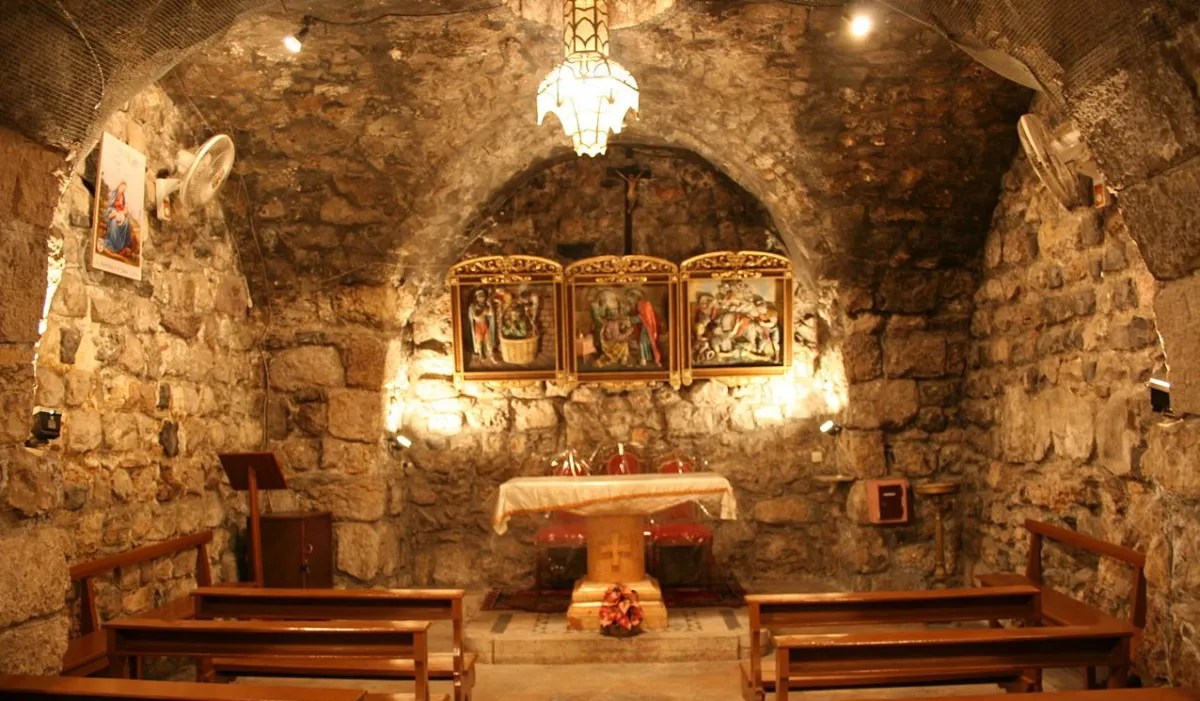
Reclaiming the institutional church

Dancing in the Kingdom- Table of Contents

Dancing In the Kingdom – Part 3 – Dancing in the Kingdom– Chapter 18 – Entering the Dance

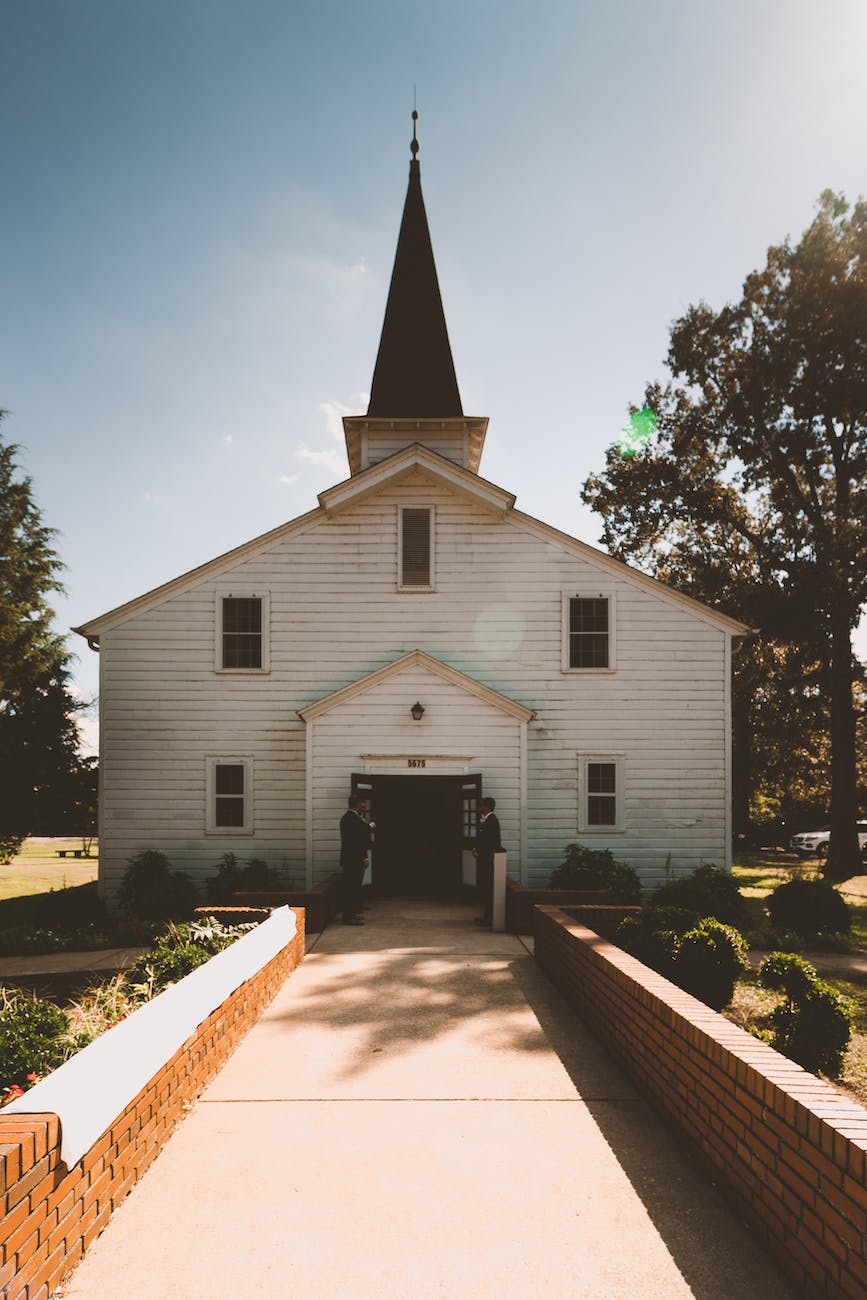
Reclaiming the institutional church

[Bible references: Matthew 5:1-16, 38-48; Luke 6:1-49; John 13:1-17, 34-35]

There are many people who claim to love Jesus but not His church (which is his body). But we need to keep in mind that every accusation we may choose to hold against the church is against us personally. The church is comprised of sinful people, and that includes us. The church has done inappropriate things in the past and so have we. As part of our, and the church’s, sinful behavior is the ease with which we focus on the things that have gone wrong while forgetting to examine the “log” in our own eye. A quote from an old cartoon strip is appropriate here, “We have met the enemy and he is us.”[1]

The second thing we need to hold onto is that as Jesus loved the world enough to die for – and redeem – the very people who rejected him. That includes the church – which includes us. If we are commanded to love our enemies, what should our attitudes be towards the group that we are part of? It is normal for us to have higher expectations towards our own family than those who are outside the family. Because of that, it is normal for us to be disappointed by or hurt more easily by people within our family than by anyone else.

Those hurts and disappointments can lead to us overlooking all the ways in which the church has, in its broken way, still managed to fulfill at least some of the intentions God has had for the church. Within the very messiness of church history, the church had not totally neglected its ability to show love to one another and to reach in love to those outside the church. It is through the church that we have the Bible and faithful Christians through the years that created hospitals and orphanages, taken care of the widows and others who need care. It is the church that made it possible for us to hear about the gospel and respond to Christ’s invitation to follow him.

The church is the body of Christ. We serve as the hands and feet, etc. of Christ, doing together what is not possible to do by ourselves. In the apostle Paul’s articulation of the Body of Christ, he notes how we all serve as different parts of the body, helping each other grow by serving in the unique ways God has prepared for us. Furthermore, Christ has told us that we will be recognized as his disciples by how we serve one another in love. This is one of the grand themes of the Bible, God has reached out to us in love, and we can respond by loving him in return; also loving one another. It is through our reflection of his love that others will respond to God in love as well.

On this side of the second coming of Christ, we all remain broken and so our institutions will remain broken. But that does not mean that Christ is unable to use us (as individuals or as part of an institutional church) for his purposes and that does not mean that the goodness of Christ is unable to be reflected through us as individuals or groups or through the institutions we create as his co-heirs to bring mercy and justice to his image-bearers and the world he has prepared for us.

In formal or informal ways, we create the institutional church to help us more effectively serve one another within the Body of Christ and to serve others outside the Body of Christ. As we take an historical look at the expected mixed record of the Body of Christ’s broken church (and, we must remember, our personal records as well), we need to cling to Christ, His love, His sustenance, and forgiveness us for all the ways we have failed to love each other within the church and outside the church.


[1] Kelly, Walt, From a Pogo strip, 22 Apr 1970 www.thisdayinquotes.com/2011/04/we-have-met-enemy-and-he-is-us.html

Reflect

Sometimes our church organizations can be hard to love. Nevertheless, we cannot truly love Christ without loving his church. How could you better express love for your local congregation this year?

Observe

Read John 13:1-17. How can we love and serve the church as Jesus showed us?

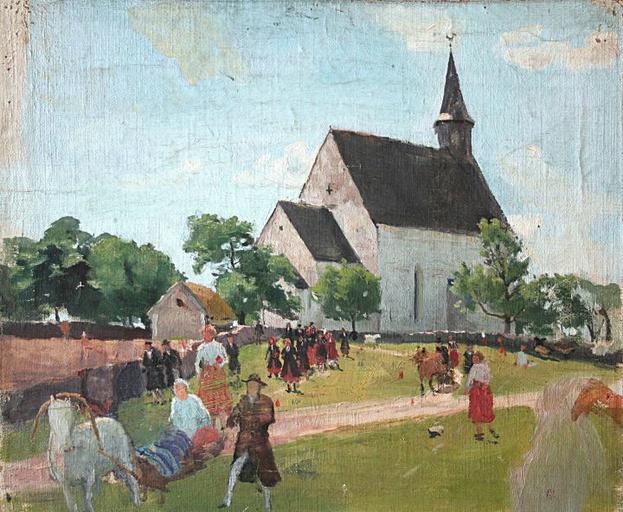
Assembly of God’s people

Dancing in the Kingdom- Table of Contents

Dancing In the Kingdom – Part 2 – The Kingdom Revealed – Chapter 12 – Launching the church

Assembly of God’s people

[Bible references: Isaiah 54; Matthew 5:44-48; 16:18; 18:17; 28:16-20; Luke 17:3; Acts 2:42-47; 11:22; Romans 16:5; 1 Corinthians 12; 14:19, 26, 35; Ephesians 5:32; James 5:13-20]

God did not create us to be isolated individuals. In fact, He created us in His image, a mysterious Triune God who is at once a person, God, and is also a community: God the Father, God the Son, God the Holy Spirit. To help us understand this complexity, the Bible uses a couple of metaphors that are used to describe the church. Sometimes scripture describes the church as a building of which Christ is the cornerstone, sometimes as a body with many parts that are all necessary for each other, and sometimes as a bride with Christ as the Bridegroom. All these metaphors give us different ways to think of how we connect to each other.

In the Old Testament the Hebrew word for assembly is “qahal,” and in the New Testament it’s the Greek word, “ecclesia.” In both the Old and New Testaments there were people who believed in God. These days we call the assembly of God’s people the “church,” but where did that word come from.

The word “church” is derived from the Scottish work “kirk” which is derived from the Greek word “kuriakon” which means belonging to the Lord (Greek “kyrios”). In the Bible, this word was used a couple of time to refer to “the Lord’s” supper and “the Lord’s” day.  In this same expression, sometimes the building where those “who belong to the Lord” meet is also called the church, where it’s the building that belongs to the Lord.

The word “church” is used in a variety of ways: the whole body of Christians in one city; a particular local congregation; or the whole body of believers on earth (past, present and future). Throughout this book, the word ‘church,’ using the lower case ‘c,’ refers to this whole body of believers. It might be clearer if, perhaps, we used the term am Yahweh (“people of Yahweh”) (Numbers 11:29) to refer to all believers through time, through Old and New Testaments.

There are also other words in the Bible that are used to describe Christians in general:

  • Brethren – those who belong to a spiritual brotherhood or fellowship.
  • Believers – those whose doctrine is faith in the Lord Jesus Christ.
  • Saints – Those who are consecrated to God, holy ones who are separated from the world and dedicated to God
  • The Elect – those who are chosen by God
  • Disciples – those who follow Jesus to learn from him.
  • Christians – those who belong to Christ
  • Those of the Way – those who follow Christ, live like Him

There are also metaphors used to refer to the church:

  • The Body of Christ – which refers to the many inter-related functions of the people in the church. Related to this is the way we sometimes say the church ought to be regarded more as an organism rather than an organization.
  • The Temple of God – which sometimes refers to the entire church being built on the cornerstone, “Jesus,” and sometimes to the individual believers in whom the Holy Spirit resides.
  • The Bride of Christ – which refers to the intimate relationship we all have with Jesus.
  • Pillar and buttress of the truth – which refers to the need to behave correctly and defend the truth.

All of this is to say that there are many ways to refer to “the church,” depending on what one wants to emphasize. But it is clear that the mission of “the church” is to

“Go therefore and make disciples of all nations, baptizing them in the name of the Father and of the Son and of the Holy Spirit, teaching them to observe all that I have commanded you. And behold, I am with you always, to the end of the age.” (Matt 28:19-20).

Making disciples, being a disciple, is a life-long process. It includes many things, the commands given to Adam to steward the earth and create a culture that glorifies God, all the ways in which we can love God with all our heart, mind, soul and strength, all the ways in which we can love our neighbor – and even our enemy, all the ways in which we can be a part of our church community that builds one another up, and all the ways in we can worship God in all we do.

Toward that end, God has given spiritual gifts to each one of us, so that in context of the community we can build each other up and help each other grow into the unity of the faith.

 “Local congregations … must resume the practice of making the spiritual formation of their members into Christlikeness their primary goal, the aim which every one of its activities serve” [1]

God has not supplied one person with all the gifts but has divided them among the disciples in a community so that together we might build one another up. The church is a community designed to worship together, to share the sacraments, to build one another up and hold each other accountable.

It is in the context of living in community that we can grow in love towards others as we learn to sacrifice ourselves for the sake of others, even those with whom we disagree and with those who are unable to respond equally. Our attitude should be the same as the attitude of our “good and overflowing God” to generously reach out to others with the good news of the gospel.


[1] Willhoit, James C. “Spiritual formation as if the church mattered” Willhoit, James C. “Spiritual formation as if the church mattered” Baker Academic 2008

Reflect

What groups of people do you identify with?

Observe

Read James 5:13-20. What power is there when people pray together?

The Spirit and the scattering

Dancing in the Kingdom- Table of Contents

Dancing In the Kingdom – Part 2 – The Kingdom Revealed – Chapter 12 – Launching the church

The Spirit and the Scattering

[Bible references: Acts 5:12-16; 6:1-15; 7:1-60; 8:1-3, 14-24; 10; 9:1-19; 13:16-47; 17:16-31]

Since Jesus focused his effort almost exclusively on the Jewish population, it was natural that in the early years of the church, nearly all the believers were Jewish. It also happened that the apostles started off by focusing on the area around Jerusalem. So, while the believers were Jewish, the opposition to the believers was primarily Jewish as well; particularly, the Sanhedrin which was heavily controlled by the non-resurrection-believing Sadducees. It was difficult for the Sanhedrin to control the apostles because their miraculous healings made them exceedingly popular among the people. Even the deacon, Stephen, who was performing signs and wonders was creating a problem for the Sadducees. So some men created a conspiracy against Stephen, creating lies that resulted in Stephen becoming the first recorded martyr for the faith. Stephen was quite eloquent in defending the faith before the Sanhedrin, laying out the history of Israel and then accusing the Sanhedrin of continuing the persecution of God’s prophets. This enraged the Sanhedrin so much, that even after Stephen was put to death, the persecution of the church began in earnest, causing the first scattering of the church, although the apostles remained in Jerusalem.

With the scattering came new opportunities and challenges. When it was discovered that the Samaritans had received the gospel, the apostles gladly received the news. But when some of the Samaritans received the Holy Spirit, there were some kinds of signs (we aren’t told what they were) that excited a magician, who was one of the ones who received Christ. The magician then offered money to the apostles so that he could get the power to lay his hands on people and give them the Holy Spirit. The apostles had to strongly rebuke him. He repented – but this was a sign of how things could go astray.

After sending the gospel to the Samaritans, the next step was to reach out to the Gentiles. This step was initiated by God who first worked with the apostle Peter and a devout Gentile man named Cornelius. God had given visions to both Cornelius and Peter to create a reason for them to meet. When Cornelius visibly received the gift of the Holy Spirit, Peter was convinced that the gospel was meant for the Gentiles as well.

To further spread the gospel among the Gentiles, God called Saul, a well-educated man who was familiar not only with the Jews but also with the Gentiles. Saul was a zealous Pharisee, whose zeal originally caused him to participate in the persecution of the church, but God used that same zeal to make Saul (also called Paul) not only one of the primary missionaries to the Gentiles but also a writer of half of the documents that comprise the New Testament. Even though Saul became converted after the ascension of Jesus, it was Jesus himself who encountered Saul who was on his way to persecute the Christians, making Saul a direct witness to the ministry of Jesus.

Whether the gospel was shared with the Jews or with the Gentiles there was a story to tell. The Jews needed to understand how the story of Jesus fit into their history – their story – and the Gentiles needed to know how it fit into their story. We all have a worldview – a story of the world that we use to interpret the world around us – and the gospel is most effectively shared when there’s a way to reach inside the others’ worldview.

Observe

Read Acts 13:1647; 17:16-31. What was the difference between how Paul told the gospel to people in the synagogue vs. the people in the Athens marketplace?

Diaspora

Dancing in the Kingdom- Table of Contents

Dancing In the Kingdom – Part 1 – Shadows of the Kingdom – Chapter 9 – The Prophets and writings

Diaspora

[Bible references: John 13:35]

The term “diaspora” is usually reserved to refer to a group of people that has been scattered from a single location. In this case, the term is used to refer to the scattering of Jews from the Promised land. But this particular diaspora is only a part of God’s larger plans for His people.

Our God is a God of overflowing love. His love caused Him to create us so that His love could overflow from Himself to us. He wanted His image-bearers to carry out His mission of overflowing love and overflow from Eden to fill the entire earth. When we rebelled against His overflowing desire so that we could make a name for ourselves instead, He confused our language at Babel so that we would continue to flow out over the earth. When God wanted to prepare His Holy Nation for His mission, He scattered them to Egypt. When Israel rebelled against His mission of overflowing love, He scattered them from the Promised Land. The Son of God came in overflowing love to offer Himself in sacrifice in order to restore us to Himself. When the scattered Jews from many nations gathered for Pentecost, God reversed the action of Babel, and His message of overflowing love was shared in many languages so that the message of overflowing love would be carried to the Jews in many nations. To continue the overflow, God worked with Peter and Paul so that His love could flow out to the Gentiles as well. God further ensured the flowing out by using the Romans to scatter both Jews and Christians from Jerusalem. To this day, when our focus is more on building our Christian institutions, becoming too ingrown, God continues to scatter His people so that His message of overflowing love will reach more people in more places across the earth.

This program of overflowing creates a Dynamic Tension between our scattering and our unity. It would be well if our scattering was motivated by love so that we would continue to stay unified as we scatter. It would be well if our scattering was to reflect and uplift the different cultural groups within the church. Sadly though, our scattering is often due to divisiveness rather than love, contrary to the intent that the world will recognize that we are disciples of Jesus because of our love.

Observe

Read John 13:35. How is our love strengthened by our learning to love people different from ourselves?

Playful and orderly

Dancing in the Kingdom- Table of Contents

Dancing In the Kingdom – Part 1 – Shadows of the Kingdom – Chapter 2 – The God who created

[Bible references: Genesis 1; 3:6; Job 26:7-14; Psalm 102:25-28; 104:26; Proverbs 8:30-31; Jeremiah 9:24; Zechariah 8:4; Romans 1:18-32; 5:12-20]

It would be more conventional to title this section, “Creative and Orderly,” but creativity is just a part of broader category of play. Although many experts disagree on how to define play[1], we may think of play as activity which is typically not productive and is done only because one wants to do it and is usually a fun activity involving other people and will typically help people bond together.

When it comes to the Creation, God did not have to create anything. God did not need the universe or anything in it – not the planets, nor the stars, nor the creatures. God created the heavens and the earth for the delight of it, and He did it because He wanted to share heaven and earth with his image-bearers. This spirit of playfulness is reflected in many of God’s creatures[2] including Leviathan and humans. God’s playfulness also shows up in other interesting places in the Bible.

When Job complains about the difficulties he is going through, God seems to admonish him by “putting Job in his place” and citing all the ways in which God’s ways are higher than Job’s ways. But God does not follow through with any discipline of Job but rather begins the process of restoring Job’s fortunes. In response, Job confesses, “I spoke of things I did not understand … I retract my words and I repent in dust and ashes.” … And yet, Job changes an interesting behavior – he no longer rose early in the morning to offer burnt offerings for all of his children, worrying that “perhaps they have sinned.” Job seems to have understood what Shams-ud-din Muhammed wrote later on:

the difference between our life and a saint’s is that the saint knows that the spiritual path is like a chess game with God and that God has made such a fantastic move that the saint trips over joy in surrender whereas we think we have a thousand serious moves.[3]

Another instance of playing occurs in Mark 6, when Jesus takes a late-night walk on a very windy lake, walking as if to go by his disciples. Of course, they were initially terrified, thinking they were seeing a ghost. But he got in the boat and the waters calmed down. He could have calmed the waters down before the disciples started to go on the lake. He could have chosen another way to make his point … but he decided to do it that way.

God’s creativity can be seen within the created world in the extremely diverse types of plants and animals: differences in colors and shapes; different ways of digesting food; different ways of moving and observing the environment to name a few. The creativity we see is awesome. From out of nothingness, from no previous model, God created a whole system of particles and energy fields that interact with each other to form the building blocks of subatomic particles which are used to form atoms, which are used to form molecules of all sorts of complexity, which are then used to form planets and stars (actually, the fusion reaction in stars is used to create larger molecules from smaller ones). And at least one planet was used to create living things like plants and animals in all their complexity and then those living things were used to create communities (ecosystems) that allowed living things to thrive and flourish.

Yet, within the overwhelming creativity displayed within all the diversity of living things there is an order that is imposed by natural processes, sometimes called scientific laws. Christians, like Francis Bacon, pursued these laws as an extension of God’s moral laws in the universe, which then led to the development of modern science.[4] It is within science that we examine orderly processes at work that we call the natural laws which describe how all physical things behave: like the forces of gravity, electrical forces, etc.

There is no disobeying these natural laws. If you think that you can try to violate them, you’d be wrong. For instance, if you are on earth and stand on the top of a table and then jump off with the assumption that you will not be subject to gravity but rather float around without falling to the floor, you’d be wrong. You can’t violate gravity. You can try to set up circumstances that will cause other forces to come into play – such as airplanes do when they use aerodynamic forces that counteract gravity – but you simply can’t violate gravity, and there will be consequences if you try.

By observing the laws of the created order, we can ascertain some aspects of the character of God. The natural laws that govern how things are supposed to behave reveals a God who expects things to behave, and that violations are not tolerated. But when image-bearers were brought into the world there was a new level of complexity added to this physical model constrained by natural, physical laws. Because image-bearers were created to reflect God’s transcendence, those image bearers were given moral freedom, the ability to accept or reject God’s rule, the ability to choose to be good or not good. And just like attempts to violate physical laws have consequences, so do attempts to violate moral laws. However, the framework that provides order is also the scaffolding for creativity and play. The order that allows us to study God’s ordered creation also allows us to observe the activity of the living God when He does the unexpected.


[1] Edgar, Brian. “The God Who Plays: A Playful Approach to Theology and Spirituality” Chapter 5: Theology: Ludic(rous) Thinking, Theories of Play Cascade Books 2017 (e-book)

[2] Yu, Alan. “Which animals play, and why?” WHYY 15 Aug 2019 whyy.org/segments/which-animals-play-and-why/

[3] Hafiz (or Shams-ud-din Muhammad Tripping over Joy (translated by Daniel Ladinsky) (c. 1320-1389) wrote about God as his Friend, the Beloved, the Beautiful One. from reference by Edgar, Brian “The God Who Plays: A Playful Approach to Theology and Spirituality” Chapter 4: Spirituality: Playing with friends, Competing with God

[4] Harrison, Peter, “Christianity and the rise of western science” ABC Religion and Ethics, 8 May 2012, www.abc.net.au/religion/articles/2012/05/08/3498202.htm; Armstrong, David, “Christianity Crucial to the origin of science,” Patheos, 18 Oct 2015, www.patheos.com/blogs/davearmstrong/2015/10/christianity-crucial-to-the-origin-of-science.html; Hannam, James. “How Christianity Led to the Rise of Modern Science” Christian Research Institute www.equip.org/articles/christianity-led-rise-modern-science/

Observe

Read Romans 1:18-32.  Reflect on how natural laws reflect the character of God. Based just on natural laws, what kind of character does that reveal about God?

Dancing through the pain

Dancing in the Kingdom- Table of Contents

Dancing In the Kingdom – Part 1 – Shadows of the Kingdom – Chapter 1 – Prelude

Dancing through the pain

[Bible references: Luke 17:20-21; Hebrews 12; Revelation 21:1-3; 22:1-5]

Right now, it might seem hard to see images of the Dance of God’s Kingdom. We look at the news and wonder where things are headed to. Sometimes we look at our own lives and wonder … If there is a God where is God? What’s His plan for the world – for the church – for us? Then we pick up a book called the Holy Bible and read the stories and wonder how they all fit together. Then we look at the church – well, churches, there are so many of them – and wonder why it’s so complicated and messy and wonder if anybody’s got it right. And, what about me, my story, my mess? How do I fit into it all that?

But hints of God’s activity with His people are there to be found. God has been working through and intervening in the lives of many people that have been dancing the Kingdom Dance through the years, bringing hope and healing to the world. Their stories can be found in the Bible and in the rest of history[1] and sometimes even inserted into the news of the day, in the middle of all the stories of our brokenness.

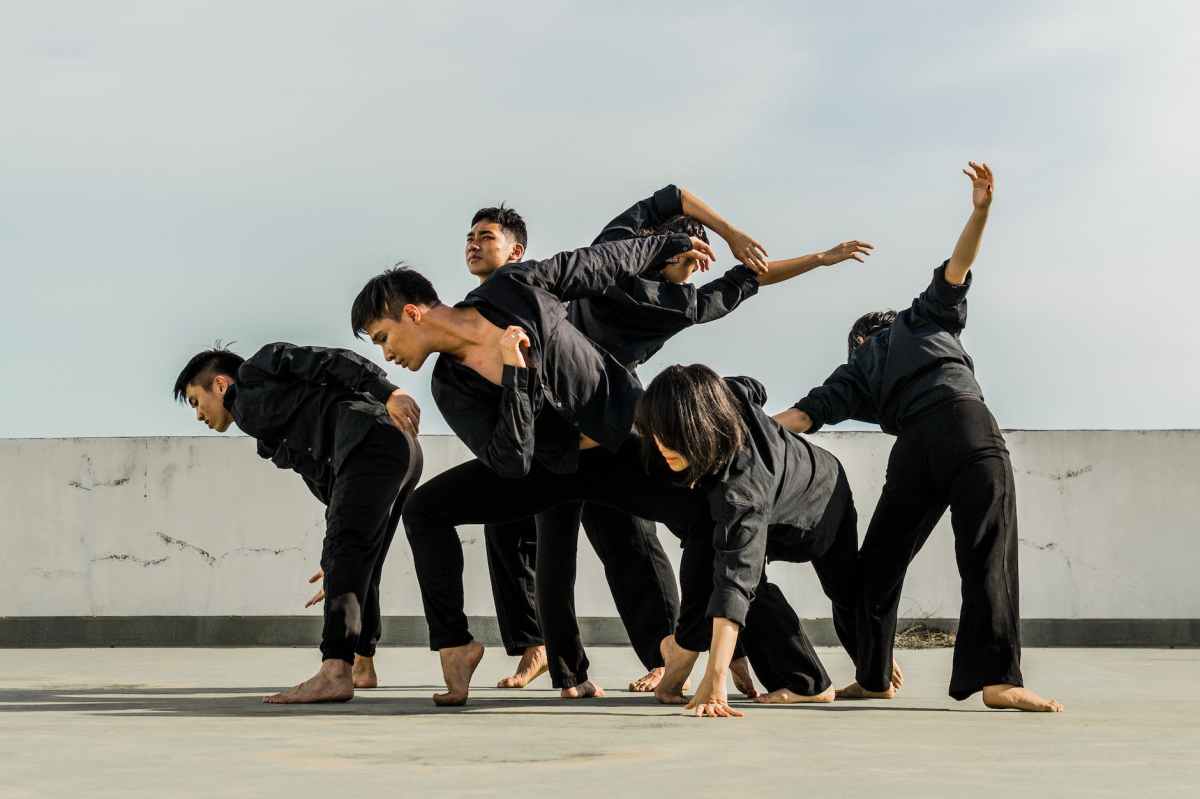
I dance because it makes me happy! My experience is that when I dance, I can express something from my heart to God that cannot be expressed in words. Dancing is a point of contact with God for me. It gives me an experience of God as the origin of creativity and beauty … “I dance because I want to spread a message of love, joy, hope and faith to the world … Among the dimensions added by the dance expression itself is the meta-message that there is room for the whole human being and life in its fullness in a Christian religious setting. Dance can teach children and adults a body-embracing way of living, believing and being in God’s world. One participant says that through dance in general, “we want to communicate heaven to people down here, the message of salvation, our freedom in God, the joy in God, and the joy of dancing with fellow Christians.” … Through dance these Christian dancers experience and practice their religion in a bodily way. This means that their spirituality takes an embodied form and that dance for them is not only a bodily practice, but also a spiritual one.[2]

Dancing seems to be a human attribute, not necessarily linked to just Christianity[3], it is a gift from God that can be used in the manner expressed here; to be a human means of expressing our God-given joy through our bodies. While dancing can be done alone, when done in community it can help to bind participants together. Joy and community are part of God’s purpose for us. We are tasked as God’s image-bearers to be his representatives and stewards. But our tasks are not to be burdensome but rather they are meant to be joyful. If you will, our tasks are meant to be a joyful dance we do with each other and with our Creator.

For us to dance the Kingdom Dance we don’t have everything figured out, He does. We don’t even have to worry about the results of the dance because the results are not dependent on us but on Him, who is working through us. As much as we have messed things up and will continue to do so, He will ultimately restore us and the rest of creation, making us all into what He had intended from the beginning.

Among all the creatures that God created, we are uniquely made, even if we are not the physical center of the universe as some people may have thought at one time. Through the pursuit of science, we now have instruments that make it very clear that we are not physically at the center of everything, not that we can prove anyway. We are only specks on a small planet spinning around a star in an apparently random solar system in an apparently random galaxy in a universe we cannot even see the edges of. Although we don’t know where the center is, the universe seems to have been created with us in mind. The properties of the universe, the physical constants, the atomic structures, were all created such that it would support our existence.[4] Interestingly, although we are creatures made of the stuff of the universe, not only can we study and reflect on the properties of that stuff, but we can also study and reflect on and even reflect the one who created us.

In the meantime, we do not know when He will return, and we find ourselves in the middle, in-between those two times, between the beginning of the restoration of God’s kingdom on earth and the time when it will be fully accomplished. In this in-between time, sometimes we see some signs of God’s restoration – and sometimes we can’t – and it’s hard to figure out what God is doing, especially when there are times that He seems to be absent. In those times, we need to call upon our faith to hold onto the hope that God is still working out His plans. We need to recall all the times that we did see Him at work, and then we also need to remember that getting to the end of the plans that He intends for us may require some pain on our part just as it required pain on His part. And like Him, our pain will be ultimately overwhelmed with the glory that will be revealed.

Our ultimate destination is not a mere returning to the way we started out, but to the full flourishing of our potential, where God will establish a kingdom of image-bearers released to display God’s character and reflect His glory.

“And salvation only does what it’s meant to do when those who have been saved, are being saved, and will one day fully be saved realize that they are saved not as souls but as wholes and not for themselves alone but for what God now longs to do through them. The point is this. When God saves people in this life, by working through his Spirit to bring them to faith and by leading them to follow Jesus in discipleship, prayer, holiness, hope, and love, such people are designed—it isn’t too strong a word—to be a sign and foretaste of what God wants to do for the entire cosmos. What’s more, such people are not just to be a sign and foretaste of that ultimate salvation; they are to be part of the means by which God makes this happen in both the present and the future. That is what Paul insists on when he says that the whole creation is waiting with eager longing not just for its own redemption, its liberation from corruption and decay, but for God’s children to be revealed.” [5]

With that in mind, we can not only wait and hope. We can participate with God in bringing His kingdom to earth and bringing a taste of healing and hope into a broken world that desperately needs it.

“Within the biblical story, the Christian discovers a constant call for justice on behalf of the weak and forgotten. In the biblical tradition, justice is an aspect of God’s shalom, a notion that carries with it the idea of completeness, soundness, well-being, and prosperity, and includes every aspect of life – personal, relational, and national.”[6]

The suffering and pain in the world can be overwhelming, challenging our ability to maintain hope and persist in our effort as we try to bring shalom. That challenge forces us to focus on the taste of shalom that God has given to us knowing that it is just a foretaste of the fullness of the shalom that awaits us in the fully restored earth.


[1] See Appendix G – The contributions of the Church for some examples

[2] Schurr, Hildegunn Marie T. “Dancing Towards Personal and Spiritual Growth” Nordic Journal of Dance – volume 3, 2012 (pp. 31-40)

[3] La Mothe, Kimerer. “The dancing species: how moving together in time helps make us human” Aeon aeon.co/ideas/the-dancing-species-how-moving-together-in-time-helps-make-us-human

[4] Slezak, Michael. “The human universe: Was the cosmos made for us?” New Scientist, 29 April 2015. www.newscientist.com/article/mg22630190-400-the-human-universe-was-the-cosmos-made-for-us

[5] Wright, N.T. Surprised by Hope, Rethinking Heaven, The Resurrection and the Mission of the Church. Harper Collins 2008. Kindle Edition

[6] Katongole, Emmanuel. Rice, Chris. “Reconciling All Things: A Christian Vision for Justice, Peace and Healing,” Intervarsity Press, 2009 (p. 72)

Reflect

Think about how the universe seems designed for us, our capacity to think about and explore it and then think about our capacity to reflect on the One who created it all. What does that suggest to you about what God has intended for us?

Observe

Read Hebrews 12. What does this passage say about how we should be living now?

New Testament Church

Dancing in the Kingdom- Table of Contents

Dancing In the Kingdom – Part 1 – Shadows of the Kingdom – Chapter 1 – Prelude

New Testament Church

[Bible references: Acts 1-7]                             

Jesus’ ministry was primarily to the Jews. After Jesus resurrection and return to heaven, the disciples, following Jesus’ instructions, waited for the Holy Spirit to come upon them. That did not happen until ten days after Jesus’ ascension to heaven during the feast of Pentecost.

With the power of the Holy Spirit, the church expanded. For nearly 14 years the focus was on expanding the church through the Jewish community, so the church primarily consisted of Jews who became followers of Christ. The church then was filled with practicing Jews who were also Christians.

 But then God intervened twice to refocus the church expansion to include the Gentiles. In the first case, through visions, God arranged a meeting between the apostle Peter and a centurion named Cornelius. In the second case, God called someone who was a persecutor of the church, Saul, to be an apostle to the Gentiles.

As Gentiles came into a church filled with practicing Jews, some people in the church thought that the Gentiles should also become Jewish in order to then become Christians. But in a church council, the church confirmed that Gentiles did not have to become Jews in order to follow Christ. James, acting as the leader of the council, quoted Amos 9:11-14, to confirm the ministry to the Gentiles.

Observe

Read Acts 2:42-47; 6:1-7. What would you be willing to do in order to be in a church like the one described here?

Interlude

Dancing in the Kingdom – Table of Contents

Dancing In the Kingdom – Part 1 – Shadows of the Kingdom Chapter 1 – Prelude

Interlude

As I was working one warm summer night at a convenience store with the door open, it was not unexpected to see a moth fly in through the door. Normally, moths are attracted to light sources, but this time the moth was attracted to the white top of a garbage container. The moth was distracted by the light reflected off the garbage container. I think that describes a lot of human behavior; we get distracted by the pretty garbage.

In the meantime, there is a story that began long ago when God brought into being creatures made in his image, a story about his plans for those creatures, plans for them to fill the earth and making the whole earth a place of love and goodness, but a place where that love and goodness would be disrupted by our rebellion. Fortunately, that disruption did not deter God from continuing his plans for his image-bearing creatures and that story is still in the making. That story is now our story.

For too many people, even Christians, the Old and New Testaments of the Bible can seem disconnected. Some people have even proposed that the God described in the Old Testament is different from the God in the New Testament. This is partly due to the issue of the cultural barriers between us and the Old Testament. One purpose of this book is to show the unity of both Testaments, how they help make sense of each other and how together they make one cohesive story, a story into which we can fit.

There is a further disconnect. Between us and the biblical writings is the long and messy history of the Church. The Church seems very divided on how to interpret those writings and how to live into them. It is downright confusing to sort out all the various interpretations and practices that seem to contradict one another. How is one supposed to make sense of it all?

This book’s purpose then, is to not just overview the Biblical story from Creation to Revelation, but to show how we, as part of God’s Church, are intended to participate. God did not need to create us or the universe, He did it out of a desire to share his love and delight. God’s creation was more an act of play than of work and He desires that we actively play with him, if you will, to dance with him in His Kingdom.

The Kingdom Dance is not meant to be a solo effort, we are to dance with God and with his people. To that end, while this book can simply be read as a solo exercise, there are additional ways to engage with the material.

  • Biblical references are provided extensively through the book. They are there to support the text. If you read them, take the time to slow down and let God the Spirit speak to you. The Bible has been described as ancient Jewish Meditation Literature.[1] It is best read when you give yourself time to absorb it.
  • There are extensive footnotes throughout the book. Whenever possible, I have provided hyperlinks to make the additional materials easily available to you. If you spend time investigating the footnotes, you will notice that I am not drawing from only one Christian tradition, but from a variety of them, allowing the richness of the different traditions to form a more complete story. To form a more complete story I also, particularly in the beginning, will use materials from the “Second Book of God” that is, book of Creation.[2]

“God has, in fact, written two books, not just one. Of course, we are all familiar with the first book he wrote, namely Scripture. But he has written a second book called creation.”[3]

  • For those who are not practiced in studying the Bible, Appendix A gives a summary of techniques that could be used to help understand scripture. This may prove useful for understanding when you study the Biblical references given throughout this book.
  • Reading the material with a group can make the most impact. The Dancing in the Kingdom Workbook provides exercises and questions to help process the material as a group. These exercises and questions will help you engage with the material by first asking you to think about how each section applies to your life and secondly to share your thoughts with others in the group so that together you can more thoughtfully “Enter the Dance” with God, with all the others that have come before, with those that are coming now and with that will continue to come until Heaven and Earth are reunited.
  • Finally, the best participation will be not to just read and reflect, but to dance the Kingdom dance with God. The last chapters of this book will suggest ways to take part in his activity in bringing healing to the world he loves, broken now but to be finally fully restored when He rejoins heaven and earth.

The Bible is a complex collection of literature, using many literary styles and techniques and it can be difficult to understand some parts, particularly when one part seems to contradict another part. I have found a useful principal in studying the Bible which I call “Conflicts are clues” which says that any apparent conflict or confusion in Scripture should be handled as clues to look further instead of thinking that the conflicts create contradictions which reduce the integrity of the Bible.

In our age, many regard science and theology to be in conflict. In years past, however, the issue was not about conflict but about which discipline rules over or undergirds all the other disciplines. These ideas were expressed in ways such as “theology is the queen of all sciences,” “math is the queen of all sciences,” “philosophy is the queen of all sciences,” “philosophy is the handmaid of all sciences.”

The biblical perspective is that God speaks to us both through two books, the book of Creation and the Bible. Theology’s main goal is to understand spiritual reality and science’s main goal is to understand physical reality, but both fields can inform the other about the nature of God.

This principle of “Conflicts are Clues” applies not just to the “First Book of God” (that is, Scripture) but also to the “Second Book of God” (that is, Creation) which is practiced by the testing and revisions of theories, but also between the Two Books. During the course of history, the study of the Two Books got separated and some of those in science rejected Scripture and some of those who were Christian rejected science, leaving conflicts unresolved as contradictions. But moving forward, this does not prevent us from considering apparent conflicts between the books as clues to be investigated further.


[1] Bible Project “Ancient Jewish Meditation Literature” Bible Project bibleproject.com/explore/video/bible-jewish-meditation-literature-h2r/

[2] Rusbult, Craig. “How should we interpret the Two Books of God, in Scripture & Nature” American Scientific Affiliation http://www.asa3.org/ASA/education/origins/two-books.htm

[3] Bacon, Francis. “The Two Books of Francis Bacon of the Proficience and Advancement of Learning, Divine and Human.” The First Book. Section.VI.Paragraph.16 1605

Reflections

Look at the four videos you can find at bibleproject.com/explore/category/how-to-read-bible-introduction/ for an overview of the Bible. How do these videos help you understand the larger context of the Bible?

Observe

Read 2 Timothy 3:14-16; Hebrews 4:12-13; Romans 15:1-6; 2 Peter 1:19-21. What is the purpose of the Bible?