
Dancing in the Kingdom- Table of Contents
Dancing In the Kingdom – Part 2 – The Kingdom Revealed – Chapter 13 – Distinctives within the body of Christ
Historical issues affecting the church
[Bible references: Matthew 5:14-16; 13; 24; 26:6-13; John 15; 17; Romans 12; 1 Corinthians 1:26-31; 3-7; Ephesians 6:10-20; Colossians 2; 1 John 4]
Overcurrents – Historical issues outside the church that impact the development of the church.
The development of the church doesn’t happen in a vacuum, it happens in the midst of governments rising and falling, conflicts within and between nations, in the culture of the people around the church influencing the culture within the church, in the plagues and catastrophes and other events that happen to society. Within those events, sometimes it’s the world that impacts the church and sometimes it is the church that impacts the culture around it.
The church initially developed during the time of Pax Romana in which a stable empire and its infrastructure enabled the missionary efforts of the apostles and others. That same empire was also responsible for various persecutions of the church. However, the response of the church to those persecutions sometimes profoundly impacted not only by those who became witnesses of God’s glory displayed by the courage of the martyrs, but also the courage of those who risked their own health and well-being to give aid to the helpless and sick.
Those persecutions unfortunately created tension within the church as it had to deal with those who succumbed to the pressure of the persecution and denied Christ (a problem that would occur in future persecutions in other places and times). Some persecutions almost totally eradicated Christian populations. This happened with the Church of the East which almost entirely disappeared in the 14th century. This happened even though the church, which was established in Persia in AD 410, grew to be the largest denomination in the world and whose influence extended to the east coast of China.
In the age of our hyper-individualism, it seems strange for us to imagine that it has been common throughout history for communities to identify themselves with a single religious identity. In the time of the early church, Christianity did not conform to the Roman religion which was cause for the persecution of the church. However, when Constantine became emperor of Rome (AD 306-337) and identified himself with Christianity, the church now found itself tied to the secular power of the government which changed dynamics within the church, with people now seeking identity with the church as a way of seeking power. Later on, as kings broke away from the empire and nation-states began to form (beginning in AD 1848), the religious ties to the state were often hijacked in order to accomplish the goals of the individual secular governments.
As the church spread, the different cultural environments and different languages spoken within the church created problems. Prominently, the Latin language and culture caused different developments than within the Greek language and culture. Emperor Constantine’s decision to create a separate capitol in Constantinople (AD 324) laid the groundwork for the creation of a bifurcated (Eastern and Western) Roman Empire. The Latin/Greek language problem worsened when the Western Roman Empire was overtaken by invaders from the north (AD 410), creating further isolation between East and West, and would eventually result in the formal East/West Schism in AD 1054.
Larger cultural events impacted the church as well. The contributions of Greek philosophers Plato and Aristotle impacted the development of science and philosophy for many years. The contributions of Greece and Rome would be redeveloped during the Middle Ages in the development of sciences, although the church’s attachment to Aristotle’s geocentrism would hinder the development of astronomy for a while.
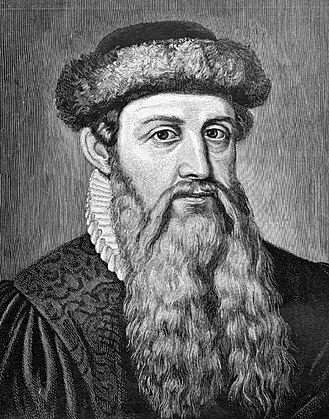
The invention of the printing press in 1439 supported the spread of ideas in science and humanism and would also be central to the Protestant revolution in the 1500s. During the same period, developments in shipbuilding and technology enabled the development of European empire and contributed to the age of Enlightenment (1714-1789) with the emphasis on reason having priority over theology, liberty, and progress[1].
Undercurrents – Issues within the church that have had a wide impact throughout the church
Christianity introduced new ways of thinking of the world, but those ideas did not change all patterns of thinking all at once. They needed a chance to develop and mature and then over time would challenge the older ways of thinking as the new patterns were gradually absorbed. In our current post-Christian era, new ways of thinking are developing, but the pattern continues. The now older Christian ideas are providing some of the framework for the current post-Christian ideas to build on, although the Christian contributions may not be recognized.
In that regard, as we examine the patterns of thought in Christian history, we find that there are various classic Greek ideas which have influenced the church. One of the classic Greek contributions, Platonism, developed into what has been termed Gnosticism. Within Gnosticism, one idea was that salvation is obtained through secret knowledge; this has led to the development of “secret” societies like the Freemason’s where only those within the society have that knowledge. Another gnostic idea is known as dualism, where spiritual things are considered to be good and material things are considered to be bad. The consequences of that thinking have led to heretical teachings about the nature of Jesus, severe asceticism, unhealthy thinking about sexuality, neglecting our stewardship of creation, rejection of the arts, etc.
Many disagreements have occurred through the years about the role of faith in respect to reason and revelation. When trying to balance these ideas with one another, some espoused fideism (in which faith is independent of and hostile to reason), some espoused special revelation (i.e., prophecies) over rationalism, and some espoused rationalism over faith or prophecies. These imbalances eventually fed into the conflict of faith vs. science in the 1800s highlighted by Darwin’s contribution to the evolution of species.[2]
There have been various moments in church life where there seems to have been a loss of focus on how Christianity is supposed to be lived out in our daily lives. When religious practices were perceived to be over-intellectualized, various pietistic movements were started where attention was paid to the spiritual aspects of the faith and on the transformation of our daily lives.
As the church grew it was natural that different personalities combined with different languages and cultures would result in differing ideas the nature of God and practice of Christianity. After all the apostles had died, the church had to learn how to determine which differences were acceptable and which differences were not. When someone’s practices seemed inappropriate the council would generate rules to address those practices. When ideas were taught that seemed to conflict with core beliefs of the church, the council created creedal statements, such as the Apostle’s Creed or Nicene Creed. The Creeds[3] were not designed to be all-inclusive statements of belief but were rather designed to address the emerging heresies of the moment.
Church developments outside the bounds of the Roman Empire, and eventually the fracturing of the Roman Empire itself, led to the fracturing of the church as well. The difficulty and sometimes outright inability of the church to hold a single large ecumenical council representing the whole church has contributed to the many branches of the church that can be seen today.
During the era of Enlightenment, reasoning and rationality were emphasized while the supernatural was rejected. In regard to the Bible, this meant that any miraculous events described in the Bible including miracles, healings, divine revelation, or God being active in any way in the world were rejected.
There was a view which postulated that God had created the world but then let it run according to natural laws without any further interference. This same viewpoint along with the acceptance of evolution, led to an evolutionary perception of historical and social development that led to the rejection of the traditional viewpoint of biblical development. One idea that became very popular in the 1800s (and is still popular today) was the idea that the Bible was created by piecing together various texts during Israel’s time of exile.[4]
Steering Currents
We should not assume that the church is dragged helplessly by overcurrents and undercurrents. Through all those influences, the Spirit of God is at work in the church. If the church sometimes behaves badly, it is a reminder that it is not the church that is the Savior of the world, that distinction belongs to God alone. Occasionally, even the church forgets that she is in daily need of a Savior as she brings the gospel to the world. Christ is the faithful one, not the church.
Those of us who are members of the visible church don’t even know with certainty which members of the visible church truly belong to Christ and who does not. Only God knows that. Only God knows whether we have the right balance of beliefs and practices,[5] and we most likely don’t. God’s ways are higher than the ways of those who are in the church as well as outside the church. This should call us to humility. But it should also call us to assurance that God is working His plan and His church even if we are broken and sometimes failing. The hope that we bring to the world is that God still works within us despite our weakness and failures.
In our unfaithfulness, we need to remember the words of Jeremiah. After many chapters of God accusing his chosen people, Israel, of prostituting herself to the love of other gods, at the end, God said, “Return, O virgin Israel …” Again, it is our faithful Yahweh who persists in seeking and holding onto us, despite our unfaithfulness – and yet He will cleanse us and put our unfaithful ways behind us. This is the good news that the church can receive and pass on to those not yet in the church. Our faithful Yahweh has not left us or abandoned us but leads us, able to redeem us even in our rebellion.
God loves His church, and He will restore us. We are therefore in no position to not love the church that God loves. He has not abandoned us but calls us by His Spirit. I have often said, “It is a miracle that the gospel has survived the church.” It is a miracle, and the miracle continues as it already has through the centuries. God will use the church and guide the church, despite herself. And there is the promise from Jesus to His followers, “Very truly I tell you, whoever believes in me will do the works I have been doing, and they will do even greater things than these, because I am going to the Father.”
[1] Martin, Bruce. “Science and Faith: The Enlightenment;” Encyclopedia.com “Enlightenment and Empire” Explorations in Life, Theology, and Creation rossway.net/science-and-faith-the-enlightenment
[2] Darwin, Charles. “On the Origin of Species” John Murray 1859
[3] See Appendix I – Creeds of the Church
[4] Graf-Wellhausen Documentary Hypothesis University of Maryland Department of Computer Science www.cs.umd.edu/~mvz/bible/doc-hyp.pdf
[5] orthodoxy and orthopraxy Learn Religion www.learnreligions.com/orthopraxy-vs-orthodoxy-95857
Observe
Read John 17:13-25. In His love towards us, God has created many things in the world for us to enjoy. However, the world’s hatred of the things of God is sometimes masked by the sweet enticements that lure us away the love of God towards the love of those things. How do we discern when we are being lured away from God?
 Dancing In The Kingdom