Lamenting our brokenness

Dancing in the Kingdom- Table of Contents

Dancing In the Kingdom – Part 3 – Dancing in the Kingdom– Chapter 14 – Remembering our creation

Lamenting our Brokenness[1]

[Bible references: Psalm 90; Lamentations 1-2; Matthew 26:36-46; 27:33-53; Luke 22:15; 1 Corinthians 14:12; Hebrews 12:2]

God made a good world, a world full of his glory. Sometimes, we can look at the beauty, the immenseness, the intricacy of what he has made all around us and be filled with awe and wonder. Unfortunately, what is also visible are the many ways in which things are not as they should be. As we consider all that we see and contemplate the kind of end that God intended, we find ourselves looking at a world that seems to be headed in the wrong direction. Instead of increasing shalom, there is violence, hatred, fear, disease, and brokenness. Pain. Shattered dreams. Loss of hope.

There are times when the brokenness around us and within us can overwhelm us. There may be times when God seems absent for long periods of times. This intense absence has brought some people to what they call the Dark Night of the Soul.[2]

The brokenness around us affects everyone, although some experience the brokenness more harshly than others. The Psalms are full of complaining about how the pain of sins’ consequences don’t seem to affect everyone equally. In Lamentations, that pain is captured in personification – the pain of an adulterous woman who is naked, unclean, scorned, and shamed, a victim of rape, a slave, helpless, isolated, unclean. Just as we all bear the guilt of sinful disobedience against God and neighbor. Not only do we bear the guilt of active rebellion against God, but we also bear the shame of being sinned against.

Throughout its history, the church has been concerned with the sin of people but has largely overlooked an important factor in human evil: the pain of the victims of sin. The victims of various types of wrongdoing express the ineffable experience of deep bitterness and helplessness. Such an experience of pain is called han in the Far East. Han can be defined as the critical wound of the heart generated by unjust psychosomatic repression, as well as by social, political, economic, and cultural oppression. It is entrenched in the hearts of the victims of sin and violence, and is expressed through such diverse reactions as sadness, helplessness, hopelessness, resentment, hatred, and the will to revenge.[3]

None of this is comfortable, our tendency is to use whatever devices we can to cover our feelings. We want to run and cling to the hope and joy of Christ, to rush past our uncomfortable guilt and shame. There is a part of us that would be happy to join Christ in His work in the world, as long as we can skip the confession of sin and guilt, but in doing so we would skip the richness of God’s mercy and the gift of shalom.

The depths of joy and hope are not just feelings for us to receive and enjoy. Rather, the depths of joy and hope are only found in acts of the will, in a persistent choosing to abandon our interests and instead to follow God.

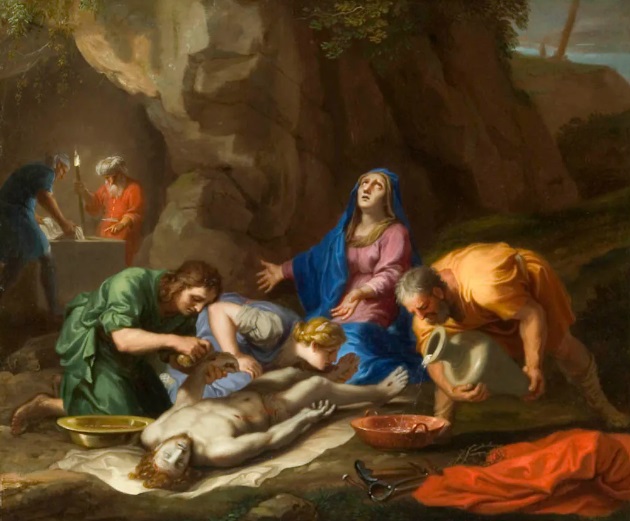
Knowing what was before Him, Jesus chose to push His glory to the side and to take on the form of a human with all its physical inconveniences, to endure the ridicule of people who were not fit to tie his sandals, to spend years training 12 disciples all of whom he knew would abandon him in the time of his greatest suffering as he endured the agony of the cross. But in all of this, as he shared the last meal with his disciples before his time of passion, he could say, “I have eagerly desired to eat this Passover with you before my suffering.” The great joy that awaited Jesus and His disciples would be preceded by deep sorrow and great suffering.

“Throughout 1946 and 1947, Mother Teresa experienced a profound union with Christ. But soon after she left the convent and began her work among the destitute and dying on the street, the visions and locutions ceased, and she experienced a spiritual darkness that would remain with her until her death. It is hard to know what is more to be marveled at: that this twentieth-century commander of a worldwide apostolate and army of charity should have been a visionary contemplative at heart; or that she should have persisted in radiating invincible faith and love while suffering inwardly from the loss of spiritual consolation” [4]

As we consider in which ways we are called to “Dance in the Kingdom” with God, we need to keep the proper perspective. God’s work is to reconcile people and all of Creation to Himself. Whatever task He gives us to engage in, it will only ever be a portion of God’s work. Whatever task He has called us to is sufficient for us and He will supply whatever we need to accomplish the tasks He has provided. While some are called to do “bigger” tasks than others, we need to humbly accept whatever tasks God has called us to do. We also need to humbly submit to our need for one another and our need to combine whatever spiritual gifts God has given to us with the gifts He has given others as we build up one another. In the task of building up one another, we need to address another humility.

Our sin and our woundedness are deeper than we imagine. As we confess and acknowledge the sins we have committed and the shame we experience when others have sinned against us, our proper response is lament. We can neither undo what we have done nor what has been done to us. But we can take the next step. The path to restoration and reconciliation leads through a lament that must confront our brokenness and acknowledge the pain. In our lament we can recognize how we are corrupted by sin and that we are accountable for all the suffering caused by our sin.

For us to experience healing of shalom, we need to acknowledge the suffering we have caused, encounter the truth about our sins, and challenge the privileges we may have had over others. Shalom requires lament, a reminder not likely needed for those whose lives are marked by the injustice thrust upon them but is likely needed for those whose lives are marked by privilege.

“Lament in the Bible is a liturgical response to the reality of suffering and engages God in the context of pain and trouble. The hope of lament is that God would respond to the human suffering that is communicated through lament.”[5]


[1] Plantinga, Cornelius. Not the Way It’s Supposed to Be Eerdmans Publishing Co – A. Kindle Edition; Wolters, Albert M. Creation Regained Biblical Basics for a Reformational Worldview  William B. Eerdmans Publishing 1985, 2005. eBook

[2] Rah, Soong-Chan, “Prophetic Lament: A Call for Justice in Troubled Times” Intervarsity Press, 2015; Zaleski, Carol. “Dark Night of Mother Theresa;” St. John of the Cross, Dark Night of the Soul First Things, www.firstthings.com/article/2003/05/the-dark-night-of-mother-teresa

[3] Park, Andrew S. “The Wounded Heart of God: The Asian Concept of Han and the Christian Doctrine of Sin” Abingdon February 1, 1993

[4] Zaleski, Carol. “The Dark Night of Mother Teresa’s Soul” First Things, www.firstthings.com/article/2003/05/the-dark-night-of-mother-teresa

[5] Rah, Soong Chan. “Prophetic Lament: A Call for Justice in Troubled Times” Intervarsity Press, 2015

Reflect

What kinds of brokenness in the world do you notice the most?  For what do you lament?

Observe

Read Psalm 90. Is there any lament that touches your heart?
Interlude

Dancing in the Kingdom- Table of Contents

Dancing In the Kingdom – Part 2 – The Kingdom Revealed – Chapter 13 – Distinctives within the body of Christ

Interlude

Many years ago, I was in a committee meeting with a group of people in a congregation, when the pastor started to walk by. He turned when he saw us, walked in with a warm effusive smile, and said, “Don’t you just love the church?” Then he turned around and went on his way.

I had been involved in the church for several years at that point, had served on the Elder board of a previous congregation, but had moved and now was involved in a different congregation. I had been in church leadership for long enough to be aware of the many difficulties to be found within congregations. Leading church congregations is difficult, particularly for the pastor.

And so it was, that at that moment in time, that question pierced my heart. I was certainly devoted to the church, but love the church in the way that the question was asked? And I knew that the long-serving pastor had been facing even more difficulties than I had – but I didn’t love the church – not like that. And at that moment, I did not know how to get to that kind of love.

Many years passed after that, and that moment became long forgotten.

The church had grown in size and staff. Then one day I was one of many people who experienced a betrayal of trust that hurt very deeply, causing many people to leave the congregation. Though I didn’t leave, I was still in a deep pain that lasted for years. But in those following years, I found myself in a position where I had the opportunity to help guide the congregation through a renewal process that made it healthier – and also made me healthier.

It was after all that process, that I remembered the incident of the question, “Don’t you just love the church?” But this time, by a path I had not chosen, I could say, “Yes.” I have learned to love the church. It was within the suffering and within the acceptance that although the church had problems, I too had problems.

Whether we are inside the church or outside the church looking in, we need to be careful where we point our fingers at the problems we identify. Like many in Israel in the time of the Judges, or many Jews in the time of Jesus, we like to point to somewhere else besides ourselves, like at the government, and say we need a new government, we need a new king. But the problem is actually within each of us. We all need a new heart.

We need the courage and humility of the prophet Isaiah, who when confronted with the presence of the Almighty God, said, “Woe to me! … I am a man of unclean lips and I live among a people of unclean lips.” Isaiah stood with his people in humility.

Maybe all the pain I suffered was due to the hardness of my heart which needed softening. But it took suffering for me to learn to truly love myself which then allowed me to truly love the church. That love gives me the freedom to look at all the issues of the church in all its brokenness and accept that I stand among the brokenness. And we are all fully loved and the One who made us, loves us, and guides us (though we don’t always follow).

Sometimes I cry when reading about the cruelty committed by the church I love, because we, the church, were so swayed by idols that we forgot our first love and our desire to bear the fruits of the Spirit. I also sometimes wonder if, in the same way that people like Simeon and Anna carried the hope of the Messiah amidst an unbelieving nation, that other mostly unnamed people walk among us, carrying the hope of the gospel amidst an unbelieving church.

Yet, we have the assurance that the One who has guided us, guides us still. So, as we begin to consider the myriad ways that different congregations within the church address the questions and practices of the church and have disagreements with each other about the way to address those questions and practices, we can be confident that the one who loves us all has not abandoned us and patiently, faithfully, persistently still calls us to follow Him. We have the assurance that all of us are created in His image and are bound together with common needs, that different languages are His idea despite the apparent confusions we have in understanding one another, that He is the provider of our intellect and is able to meet us in the midst our limited understandings, and that He provides His Spirit to guide us even in the midst of our confusions.

All the obstacles we have and the messes we see are continual reminders that the hope we have is not in the seemingly desperately confused church but rather in Him who provides for and guides us.

Co-sovereigns and servants

Dancing in the Kingdom- Table of Contents

Dancing In the Kingdom – Part 1 – Shadows of the Kingdom – Chapter 3 – The image-bearers

Co-sovereigns and servants

[Bible references: Genesis 1:26-28; 2:15; Exodus 19:6; Ezekiel 34:1-10; Matthew 23:11; Mark 10:35-45; Luke 22:26-27; Acts 2; 1 Corinthians 12:12-13; 1 Peter 2:9]

We are created in the image of the Creator, endowed with His attributes. With the attributes of God overflowing in our lives, He blessed us 1) with the pleasure of sex so that we would “be fruitful and multiply and fill the earth,” and 2) with the pleasure of acting on His behalf so that we would subdue it and rule over its creatures as His co-sovereigns. As creatures in His image, we have been given great abilities, and it is out of that mastery of those abilities that we have managed to use the resources of the earth to create all the technological advances that we have. Unfortunately, in many cases we have abused our abilities; abusing not just the resources of the earth but often abusing each other.

In our sinfulness, we typically appeal to our call to sovereignty while forgetting our call to service. This very issue Jesus took care to remind us of on many occasions. If we mistreat the earth that we are placed in or if we mistreat others, then we dishonor not only the one in whose image we are made but we also dishonor the other image-bearers of God. In fact, it is out of our call to sovereignty and service that we are called to love, to willingly give of ourselves to the service of God just as God gave of himself to us.

It is under the constraint of God’s love that he tells us to “subdue” and “have dominion” over his creation. As God’s stewards, our sovereignty means we have the responsibility to maintain the good in God’s creation, to bring order to it and to help his creatures flourish and fill the earth.

There are two dimensions to our responsibility to subdue and have dominion.

When Genesis 1 was written, it was hard work to cultivate the rocky soil and people had little control of the elements; people were more powerless than powerful. In that context we see the forceful aspect of radah (ruling the earth) that is evident in other instances in the Bible when that word is used. That is one dimension of our responsibility.

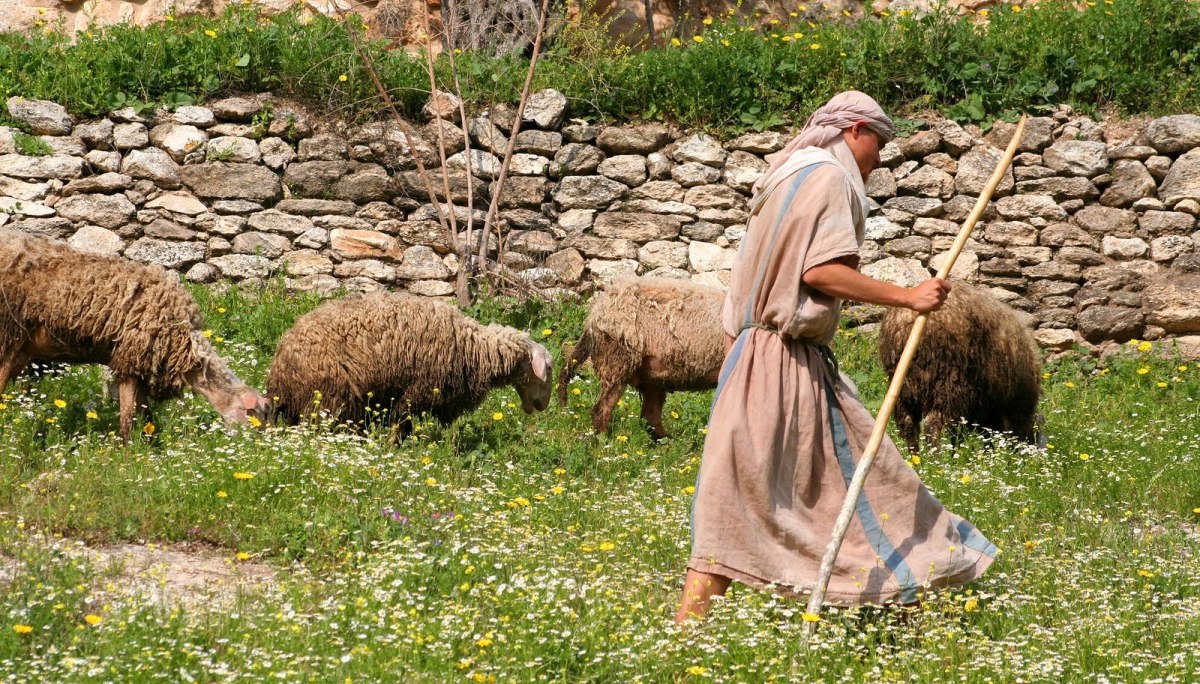
But another dimension of our responsibility to have “dominion” is tempered by gentleness, such as when God spoke through Ezekiel’s to the “shepherds of Israel” and reprimanded them for using cruelty and violence and caring more about themselves than the people they were responsible for, serving themselves instead of the people.

In our service, we are dependent on one another. We were not made to be self-sufficient; we not only need to have a relationship with God but also with each other. God allowed the first man to see that he needed another human before God presented the man with a woman to be his ‘ezer kegnedo. In Hebrew, ‘ezer is usually translated as “helper” or “deliverer” and is most often used to describe God delivering his people; kegnedo is usually translated as “in front of” or “opposite” or “parallel to.”[1]

Later on, in scripture we see that we are called to be a nation of priests and a body where all the different parts have a purpose as they work together. We are called not just to a restored relationship with the one who made us but are called together as a people to serve each other and to serve the world around us.


[1] Blue Letter Bible “ezer” Strong’s concordance, Blue Letter Bible   www.blueletterbible.org/lang/lexicon/lexicon.cfm?t=kjv&strongs=h5828; Bible Hub “Neged” Strong’s concordance, Blue Letter Bible www.blueletterbible.org/lexicon/h5048/kjv/wlc/0-1/

Reflect

God provides the model of servant-leadership (see Chapter 2). What are some ways in which that should affect the way we take care of the earth and each other?

Observe

Read Gen 1:26-28; 2:15. Gen 2:15 shows God putting people in the garden to (depending on your translation) dress/guard/work/till/cultivate/serve it and to keep/take care/guard/look after it. So these verses together talk about our authority over Creation and our obligation to serve it. How do we do both?