Created to gather and build

Dancing in the Kingdom- Table of Contents

Dancing In the Kingdom – Part 3 – Dancing in the Kingdom– Chapter 17 – Finding our place

Created to gather and build

[Bible references:  Romans 12:3-8; Ephesians 4:11-16; 5:18-19; Colossians 3:16; 1 Timothy 2:1-2; Hebrews 10:24-25; 1 Peter 4:10;]

When we become part of the Body of Christ, we are given spiritual gifts for the express purpose of building up one another so that we may serve each other, help each other become more unified in our faith and in the knowledge of Christ and ultimately more like Christ. And it is part of that great mystery that we experience God more fully in both the giving and receiving of God’s grace through each other.

Furthermore, it is as a community of believers that we participate in the sacraments of the church. We cannot baptize ourselves and we cannot share communion by ourselves. And then there are other aspects of worship, which although we can do at any time during the week, it is only when we come together to worship that we can build up one another. This worship includes participating in the sacraments, reading and preaching scripture with each other, praying with each other, and singing hymns and spiritual songs with each other. We need to gather regularly in order to effectively build one another up. That is why we are encouraged to gather with one another.

Observe

Read Ephesians 4:11-16; 1 Peter 4:10; Colossians 3:16; 1 Timothy 2:1-2; Hebrews 10:24-25. In what ways can we encourage one another when we gather together?

The Kingdom is Come and Not Yet

Dancing in the Kingdom- Table of Contents

Dancing In the Kingdom – Part 3 – Dancing in the Kingdom– Chapter 16 – Fixing our eyes

The Kingdom is Come and Not Yet

[Bible references: Matthew 6:9-13; 28:36-49; Romans 12:2; James 1:27; Revelation 21-22]

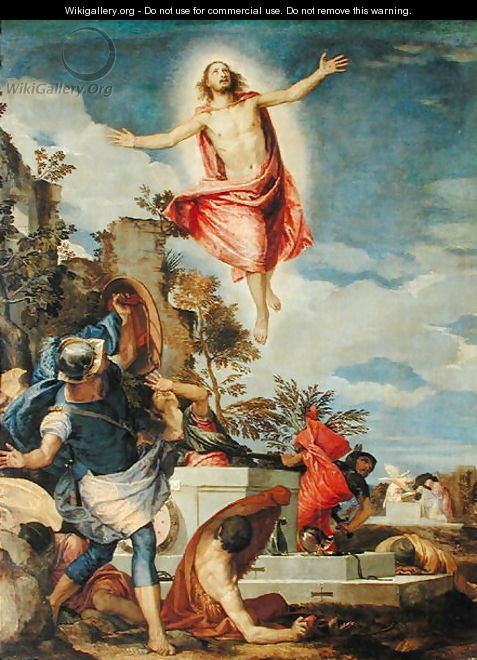
When Jesus came the first time, his healings and teachings began the ushering in of the Kingdom of God, a task He will complete when He returns to fully restore His Kingdom. When Jesus came the first time, He was resurrected, but when He comes a second time, there will be a new heaven and earth, and everyone will be resurrected. But what about now?

When Jesus ascended to heaven, he told the disciples to wait for the baptism of the Holy Spirit. It was then, through the power of the Holy Spirit, that the disciples of Jesus began the process of continuing the task of bringing Heaven to earth. In this in-between time, God is at work through the Holy Spirit, continuing to bring people to Himself, continuing to build His kingdom. The task that lies before us is to join Him in His work. The prayer He gave for us to say says, “your kingdom come, your will be done, on earth as it is in heaven.” This prayer asks that His kingdom be brought to earth, the Kingdom of justice and mercy.

Empowered by the indwelling of the Holy Spirit, it is our opportunity to do our part, with whatever ability He has given us, to work with Him in bringing His justice and mercy on earth: to look after the widows, orphans, the helpless, and the marginalized; to have compassion; to not lie about others; hate evil, love good; maintain justice in the courts; bringing the good news of Jesus to all. This is simply doing the task assigned to us from the beginning: to fill the earth and subdue it as his co-regents, to take care of the earth as farmer-priests representing Him on earth.

Our final destiny is not to a disembodied existence, but to a new, transformed body, transformed in the way that Jesus was when he was resurrected. Earth itself will also be transformed, with its corruption being removed, not back into a Garden of Eden, but into the earth as it was meant to become, filled, and civilized, with a new Jerusalem being brought from heaven to earth. We are not being sent to heaven; heaven will be coming to us.

Knowing that this end is coming upon us, in the present age we can be motivated to express our hope by living out our hope as in mentioned in The Lord’s Prayer, “thy kingdom come, thy will be done, on earth as it is in heaven.” This encourages us to do what we can to help usher in God’s kingdom now, if only in part. The full entry of the kingdom will not happen until the Lord returns and establishes a new heaven and earth, but we do not need to wait hopelessly as if there is nothing we can do. God has given everyone in his church gifts with which we can build each other up and take charge as His stewards of the earth.

But the task of transforming the earth needs to begin within us. We need to be transformed. In our sin, it is our tendency to always point to other things for the cause of the problems we see. But the cause of the corruption we see elsewhere begins with the corruption within ourselves.

“The line separating good and evil passes not through states, nor between classes, nor between political parties either – but right through every human heart…even within hearts overwhelmed by evil, one small bridgehead of good is retained. And even in the best of all hearts, there remains…an uprooted small corner of evil. [1]


[1] Solzhenitsyn, Aleksandr. “The Gulag Archipelago” Vintage Publishing 1974

Reflect

Reflect

In this time that we live in, the Kingdom of God has come but not yet completely. Our hearts reflect this time with our mixed desires – at once delighting in God’s law and at the same time waging war against that same law. The corruption in our hearts is reflected in the corruption we see in the world. How does that impact how we approach our task to join God in bringing His Kingdom into the world?

Observe

Read Revelation 21:22-24. Try to imagine what it means that “the kings of the earth will bring their splendor into the city.” What would that look like?

Lamenting our brokenness

Dancing in the Kingdom- Table of Contents

Dancing In the Kingdom – Part 3 – Dancing in the Kingdom– Chapter 14 – Remembering our creation

Lamenting our Brokenness[1]

[Bible references: Psalm 90; Lamentations 1-2; Matthew 26:36-46; 27:33-53; Luke 22:15; 1 Corinthians 14:12; Hebrews 12:2]

God made a good world, a world full of his glory. Sometimes, we can look at the beauty, the immenseness, the intricacy of what he has made all around us and be filled with awe and wonder. Unfortunately, what is also visible are the many ways in which things are not as they should be. As we consider all that we see and contemplate the kind of end that God intended, we find ourselves looking at a world that seems to be headed in the wrong direction. Instead of increasing shalom, there is violence, hatred, fear, disease, and brokenness. Pain. Shattered dreams. Loss of hope.

There are times when the brokenness around us and within us can overwhelm us. There may be times when God seems absent for long periods of times. This intense absence has brought some people to what they call the Dark Night of the Soul.[2]

The brokenness around us affects everyone, although some experience the brokenness more harshly than others. The Psalms are full of complaining about how the pain of sins’ consequences don’t seem to affect everyone equally. In Lamentations, that pain is captured in personification – the pain of an adulterous woman who is naked, unclean, scorned, and shamed, a victim of rape, a slave, helpless, isolated, unclean. Just as we all bear the guilt of sinful disobedience against God and neighbor. Not only do we bear the guilt of active rebellion against God, but we also bear the shame of being sinned against.

Throughout its history, the church has been concerned with the sin of people but has largely overlooked an important factor in human evil: the pain of the victims of sin. The victims of various types of wrongdoing express the ineffable experience of deep bitterness and helplessness. Such an experience of pain is called han in the Far East. Han can be defined as the critical wound of the heart generated by unjust psychosomatic repression, as well as by social, political, economic, and cultural oppression. It is entrenched in the hearts of the victims of sin and violence, and is expressed through such diverse reactions as sadness, helplessness, hopelessness, resentment, hatred, and the will to revenge.[3]

None of this is comfortable, our tendency is to use whatever devices we can to cover our feelings. We want to run and cling to the hope and joy of Christ, to rush past our uncomfortable guilt and shame. There is a part of us that would be happy to join Christ in His work in the world, as long as we can skip the confession of sin and guilt, but in doing so we would skip the richness of God’s mercy and the gift of shalom.

The depths of joy and hope are not just feelings for us to receive and enjoy. Rather, the depths of joy and hope are only found in acts of the will, in a persistent choosing to abandon our interests and instead to follow God.

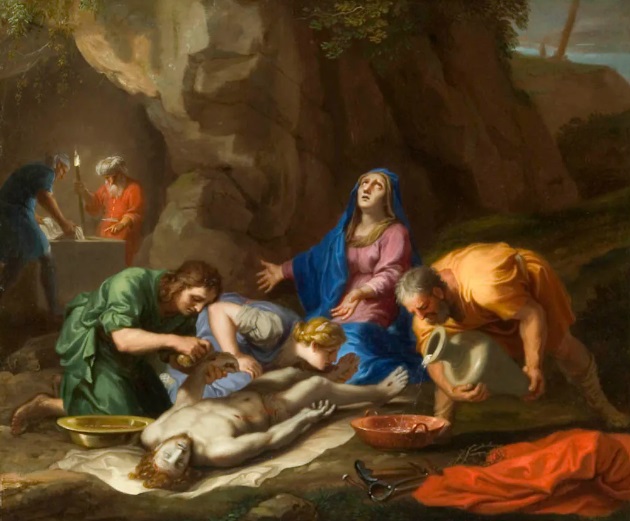
Knowing what was before Him, Jesus chose to push His glory to the side and to take on the form of a human with all its physical inconveniences, to endure the ridicule of people who were not fit to tie his sandals, to spend years training 12 disciples all of whom he knew would abandon him in the time of his greatest suffering as he endured the agony of the cross. But in all of this, as he shared the last meal with his disciples before his time of passion, he could say, “I have eagerly desired to eat this Passover with you before my suffering.” The great joy that awaited Jesus and His disciples would be preceded by deep sorrow and great suffering.

“Throughout 1946 and 1947, Mother Teresa experienced a profound union with Christ. But soon after she left the convent and began her work among the destitute and dying on the street, the visions and locutions ceased, and she experienced a spiritual darkness that would remain with her until her death. It is hard to know what is more to be marveled at: that this twentieth-century commander of a worldwide apostolate and army of charity should have been a visionary contemplative at heart; or that she should have persisted in radiating invincible faith and love while suffering inwardly from the loss of spiritual consolation” [4]

As we consider in which ways we are called to “Dance in the Kingdom” with God, we need to keep the proper perspective. God’s work is to reconcile people and all of Creation to Himself. Whatever task He gives us to engage in, it will only ever be a portion of God’s work. Whatever task He has called us to is sufficient for us and He will supply whatever we need to accomplish the tasks He has provided. While some are called to do “bigger” tasks than others, we need to humbly accept whatever tasks God has called us to do. We also need to humbly submit to our need for one another and our need to combine whatever spiritual gifts God has given to us with the gifts He has given others as we build up one another. In the task of building up one another, we need to address another humility.

Our sin and our woundedness are deeper than we imagine. As we confess and acknowledge the sins we have committed and the shame we experience when others have sinned against us, our proper response is lament. We can neither undo what we have done nor what has been done to us. But we can take the next step. The path to restoration and reconciliation leads through a lament that must confront our brokenness and acknowledge the pain. In our lament we can recognize how we are corrupted by sin and that we are accountable for all the suffering caused by our sin.

For us to experience healing of shalom, we need to acknowledge the suffering we have caused, encounter the truth about our sins, and challenge the privileges we may have had over others. Shalom requires lament, a reminder not likely needed for those whose lives are marked by the injustice thrust upon them but is likely needed for those whose lives are marked by privilege.

“Lament in the Bible is a liturgical response to the reality of suffering and engages God in the context of pain and trouble. The hope of lament is that God would respond to the human suffering that is communicated through lament.”[5]


[1] Plantinga, Cornelius. Not the Way It’s Supposed to Be Eerdmans Publishing Co – A. Kindle Edition; Wolters, Albert M. Creation Regained Biblical Basics for a Reformational Worldview  William B. Eerdmans Publishing 1985, 2005. eBook

[2] Rah, Soong-Chan, “Prophetic Lament: A Call for Justice in Troubled Times” Intervarsity Press, 2015; Zaleski, Carol. “Dark Night of Mother Theresa;” St. John of the Cross, Dark Night of the Soul First Things, www.firstthings.com/article/2003/05/the-dark-night-of-mother-teresa

[3] Park, Andrew S. “The Wounded Heart of God: The Asian Concept of Han and the Christian Doctrine of Sin” Abingdon February 1, 1993

[4] Zaleski, Carol. “The Dark Night of Mother Teresa’s Soul” First Things, www.firstthings.com/article/2003/05/the-dark-night-of-mother-teresa

[5] Rah, Soong Chan. “Prophetic Lament: A Call for Justice in Troubled Times” Intervarsity Press, 2015

Reflect

What kinds of brokenness in the world do you notice the most?  For what do you lament?

Observe

Read Psalm 90. Is there any lament that touches your heart?

The plan to restore creation

Dancing in the Kingdom- Table of Contents

Dancing In the Kingdom – Part 1 – Shadows of the Kingdom – Chapter 4– Retreating to chaos

[Bible references: Genesis 3:13-15; 50:20; Isaiah 53; Micah 6:8; Zechariah 7:9; Matthew 10:28-31; Luke 19:11-27; 1 Corinthians 12; Galatians 3:13-14,23-29; Ephesians 1:11-12; Hebrews 1:1-3]

The apparent penalty for sin, physical death, was actually a blessing. Unlike the angels who rebelled against God, death provided the rebellious image-bearers a means of avoiding an eternity separated from the source of goodness and grace. But for the image-bearers, death provided a means where not only they but all of creation could be rescued from decay and death.

The plan of restoration slowly unfolded in ways that would sometimes be baffling and confusing and on a timetable that is beyond our comprehension. Over time though, God gradually revealed how he intended to restore our relation to him, to end our pain and suffering, and to overcome the evil that seems to pervade everything.

God started the process of revealing hints of how he would restore creation right at the beginning. God gave the initial clue in the curse given to the serpent, although the hint must have been a cryptic comment to His newly broken image-bearers. But since we have the privilege of looking back, we can see that God’s then cryptic reference was to the death and suffering of the character revealed in the Old Testament as the Messiah. As time went on, the Creator gradually revealed more and more clues about the plans He had to restore His creation. This gradual revelation was, and still is, a painfully slow time of waiting as we suffer the consequences of broken relations and a broken creation.

Fortunately, as we have waited in our broken universe, God’s grace has continued to intervene throughout history so that things are not as bad as they could possibly be. Our rebellion has not deterred God from providing for our everyday needs nor has he ceased to work on his plan to rejoin heaven and earth.

Meanwhile, God invites us to take part with him in the continued creation of the universe, bringing healing, health and hope directly into the midst of our now broken world, a task that he and we will continue until God fully restores his kingdom. Towards that end, he has provided spiritual gifts, gifts that we can share with one another, to build up one another and to bless the world as his ambassadors.

There are many things about the plans of God that we do not understand. God’s plans for us seem to be drawn out over a long time in which there is much suffering and pain. But even the suffering and pain we endure can be redeemed to help us become more like the Desire of our Hearts, the One who gave all Himself so that we all may become more like Him.

Reflect

What would the world look like if there was no goodness?

Observe

Read Isaiah 53. What did God need to do to restore our relation with Him?