Essenes

Dancing in the Kingdom- Table of Contents

Dancing In the Kingdom – Part 2 – The Kingdom Revealed– Chapter 10 – The Class of Apparitions

Essenes

[Bible references: Leviticus 11; 15:31; Ezra 10:11]

And when they prepare the table to dine or the new wine for drinking, the priest shall stretch out his hand as the first to bless the first fruits of the bread {or the new wine for drinking, the priest shall stretch out his hand as the first to bless the first fruits of the bread} and of the new wine. [1]

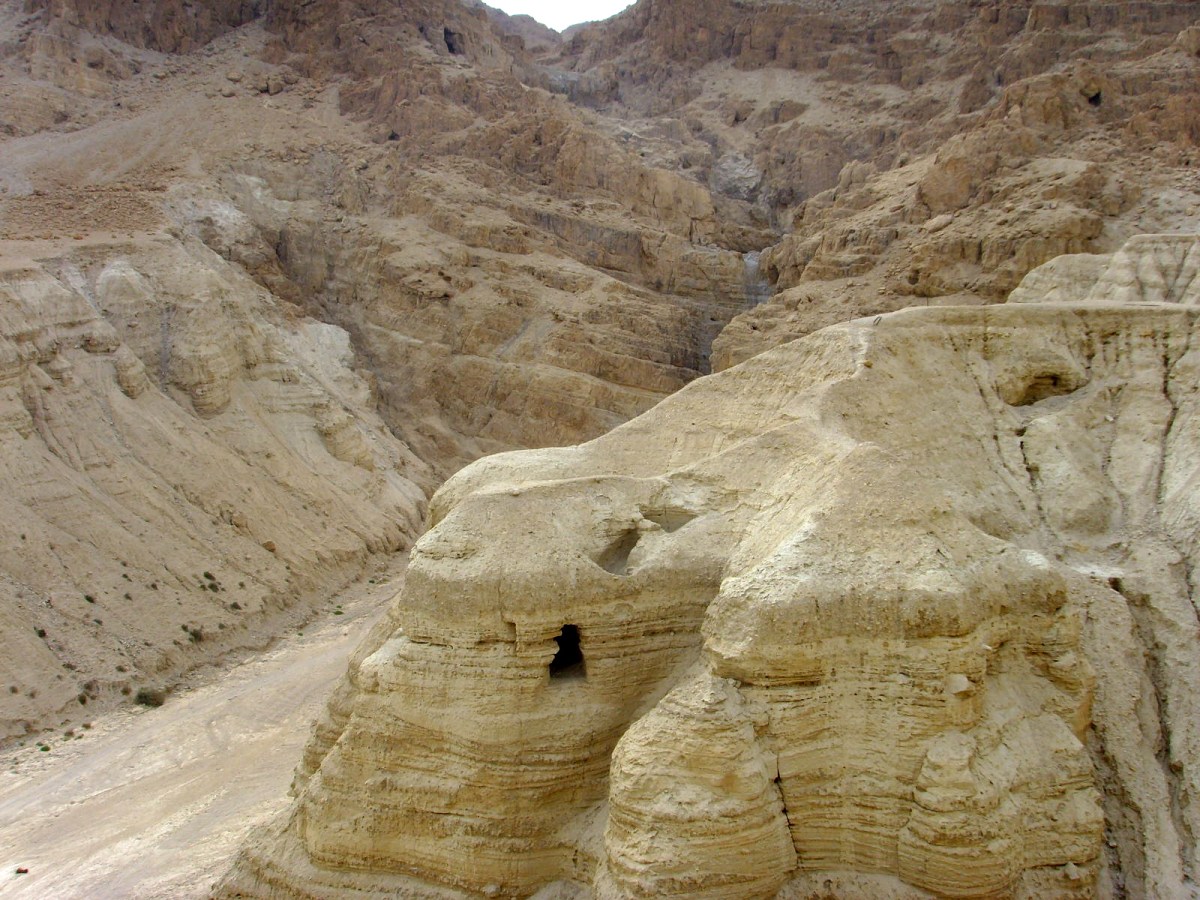
The origin of the Essenes[2] is somewhat mysterious and was largely unknown until the discovery of the Dead Sea Scrolls[3]. The Essenes were a sect that isolated themselves in the desert and maintained minimal contact with outsiders. They are possibly an offshoot of the “Hasideans” (aka “the pious ones”), mentioned in 1 Maccabees. They considered the temple and its practices to be corrupted and considered themselves to be the ‘chosen ones’ who would be saved at the end times. They lived communally and celibately and had a 3-year probationary process before accepting new members. There are unproven speculations that John the Baptist and Jesus were affiliated with the Essenes.

Although there is no direct evidence of Jesus interacting with the Essenes, the criticisms that Jesus raised against the Pharisees were similar to the criticisms that the Essenes had. Later on, as we examine the practices of the early church, we will also see parallels to the Essenes. Jesus’ followers and the Essenes anticipated an eschatological restoration of Israel, and both groups also believed in the necessity of national purification.


[1]  Martinez, Florentino Garcia. “The Dead Sea Scrolls Translated,” Community Rule 1QS Column 6:4-6 (p79)

[2] Riches, John. “The World of Jesus: First Century Judaism in Crisis,” Cambridge University Press, 1990; Gutierrez, Juan Marcos Bejarano. “The Judaisms of Jesus’ Followers” Yaron Publishing, 2017; Gutierrez, Juan Marcos Bejarano. “Forgotten Origins” Yaron Publishing, 2017; Crossan, John Dominic. “The Birth of Christianity” HarperSanFrancisco 1999; NIV Cultural Backgrounds Study Bible, Zondervan 2016 Kindle book (locations 214907, 22713); NIV First-Century Study Bible, Biblica 1973 Kindle book (Location: 91578)

[3][3] The Dead Sea Scrolls are considered by many to be the most significant archaeological find of the 20th century. From 1947 to 1956, thousands of scroll fragments were uncovered from the caves near Qumran, located on the northwestern shore of the Dead Sea. (Biblical Archaeology Society, “What are the Dead Sea Scrolls”  www.biblicalarchaeology.org/daily/biblical-artifacts/dead-sea-scrolls/what_are_the_dead_sea_scrolls.

Observe

Read Leviticus 11; 15:31; Ezra 10:11. The Israelites could not follow all the laws concerning cleanliness without keeping some degree of separation from cultures around them. But it seems that the Israelites kept getting drawn away from following Yahweh. What temptations draw Christians away from following Yahweh?

Future Hope

Dancing in the Kingdom- Table of Contents

Dancing In the Kingdom – Part 1 – Shadows of the Kingdom – Chapter 9 – The Prophets and writings

Future Hope

[Bible references: Jeremiah 29:10-15; Jonah]

But in the end was God’s promise to restore his kingdom and bless all those who repent. One prophet was even sent to a Gentile nation to call them to repent or be destroyed. When they did repent, God held back his punishment – although history tells us that they would go back to their old ways, and eventually be destroyed. But a greater hope lay beyond that.

Reflect

Despite Israel’s constant failure, God’s plan was to discipline, not destroy, them. Their discipline would eventually be followed by God’s plan to provide the Messiah, the Savior of the world. What might that mean about God’s plan for you?

Observe

Read Jeremiah 29:10-15. The hope presented here seems to be a temporary one, but does it point to a hope beyond that?

Walk of faith

Dancing in the Kingdom- Table of Contents

Dancing In the Kingdom – Part 1 – Shadows of the Kingdom – Chapter 5– Patriarchs

Walk of faith

[Bible references: Genesis 12:1-20; 15:1-6; 16:1-5; 17:1-14; 20:1-13; 22:1-18; 24:7; 28:16; 50:24; Romans 4:9; Hebrews 11:17]

Sometime after the scattering of nations, from the line of Shem and Noah, Yahweh called a man named Abram to leave his country in the Euphrates River Valley and go to a land “I will show you.” As Abram left his home country, at the age of seventy-five, God promised not only to bless Abram and his descendants but to bless the entire world though Abram. Despite his occasional failures, Abram (later named Abraham) is noted for his faith because he believed God and showed this by being obedient in following God’s instructions even when they didn’t make sense.

When Yahweh called Abram to journey to another land, we don’t know what particular experience Abram and brother and father had with Yahweh, but Genesis 24 and 31 indicates that they all knew of knew of Yahweh, even if they thought of Yahweh as one of many gods.[1] Even so, Abram must have had great faith when he took that journey to the Promised Land?[2] Then after Abram arrived in the Promised Land, what further questions may Abram have had when he experienced a deep drought in that same land, such that he needed to take a brief trip to Egypt?

After Yahweh told Abram, that he would make a great nation from him, Abram initially expressed his faith by his obedience when he took that journey to the Promised land. Again, when Yahweh showed him the stars and told him that his descendants would be as numerous as those stars, Abram believed, and Yahweh credited that to him as righteousness. Then Yahweh reiterated the promise again when Abram was 99 years old and changed Abram’s name (which meant exalted father) to Abraham (father of many nations).

God told Abraham that a great nation would come out of him and Sarah. Yet, this did not look promising when the only son born to Abraham and Sarah was Isaac who was not even born until Abraham was one hundred years old and Sarah was ninety. No wonder that Isaac was given a name that means “laughter.”


[1] Garris, Zachary. “Did Abraham Worship Yahweh Before His Call in Genesis 12?” Knowing Scripture knowingscripture.com/articles/did-abraham-worship-yahweh-before-his-call-in-genesis-12

[2] Although the term “Promised Land” is not used directly as the place of where Abram and his descendants were called to settle down in, there are several references to the “land that is promised you.”

Observe

Read Genesis 12:1-20. This renowned Patriarch of faith, Abram, believed Yahweh, and left his homeland to some destination that Yahweh would show to him. When Abram arrived at the place Yahweh led him to, he built an altar and set up his tent. Good start at a life of faith. Sometime afterwards, Abraham winds up in Egypt where he is now afraid for his life and asks his beautiful wife Sarah to say that she’s his sister instead of his wife, so that they people won’t kill him to get her. This does lead to complications we won’t discuss here but just to point out that we, never mind Abram, are subject to a wavering faith. Do you have incidents in your life where your faith wavered?

The plan to restore creation

Dancing in the Kingdom- Table of Contents

Dancing In the Kingdom – Part 1 – Shadows of the Kingdom – Chapter 4– Retreating to chaos

[Bible references: Genesis 3:13-15; 50:20; Isaiah 53; Micah 6:8; Zechariah 7:9; Matthew 10:28-31; Luke 19:11-27; 1 Corinthians 12; Galatians 3:13-14,23-29; Ephesians 1:11-12; Hebrews 1:1-3]

The apparent penalty for sin, physical death, was actually a blessing. Unlike the angels who rebelled against God, death provided the rebellious image-bearers a means of avoiding an eternity separated from the source of goodness and grace. But for the image-bearers, death provided a means where not only they but all of creation could be rescued from decay and death.

The plan of restoration slowly unfolded in ways that would sometimes be baffling and confusing and on a timetable that is beyond our comprehension. Over time though, God gradually revealed how he intended to restore our relation to him, to end our pain and suffering, and to overcome the evil that seems to pervade everything.

God started the process of revealing hints of how he would restore creation right at the beginning. God gave the initial clue in the curse given to the serpent, although the hint must have been a cryptic comment to His newly broken image-bearers. But since we have the privilege of looking back, we can see that God’s then cryptic reference was to the death and suffering of the character revealed in the Old Testament as the Messiah. As time went on, the Creator gradually revealed more and more clues about the plans He had to restore His creation. This gradual revelation was, and still is, a painfully slow time of waiting as we suffer the consequences of broken relations and a broken creation.

Fortunately, as we have waited in our broken universe, God’s grace has continued to intervene throughout history so that things are not as bad as they could possibly be. Our rebellion has not deterred God from providing for our everyday needs nor has he ceased to work on his plan to rejoin heaven and earth.

Meanwhile, God invites us to take part with him in the continued creation of the universe, bringing healing, health and hope directly into the midst of our now broken world, a task that he and we will continue until God fully restores his kingdom. Towards that end, he has provided spiritual gifts, gifts that we can share with one another, to build up one another and to bless the world as his ambassadors.

There are many things about the plans of God that we do not understand. God’s plans for us seem to be drawn out over a long time in which there is much suffering and pain. But even the suffering and pain we endure can be redeemed to help us become more like the Desire of our Hearts, the One who gave all Himself so that we all may become more like Him.

Reflect

What would the world look like if there was no goodness?

Observe

Read Isaiah 53. What did God need to do to restore our relation with Him?