Principles

Dancing in the Kingdom- Table of Contents

Dancing In the Kingdom – Part 3 – Dancing in the Kingdom– Chapter 18 – Entering the Dance

Principles

[Bible references: Genesis 1; Psalm 19:1-4; Isaiah 28:23-29; Romans 1:18-20; 2:14-15; 13:1-2; 1 Peter 2:13]

We cannot establish the kingdom of God nor overcome the powers of evil in our own power. While Jesus has overcome the powers of the world, we do not know when he will return to finish the deed to fully establish his kingdom and fully rid the world of the presence of evil. But we can continue to work on the mandates he gave us at the beginning and rephrased at the Great Commission to make disciples of all nations, teaching them to obey all that I have commanded you, which extends from our original directives to be fruitful and multiply and fill the earth, and to subdue it and rule over all the creatures.

From the beginning of the church, we can see that while some people were sent out with the express purpose of spreading the gospel, most people stayed within whatever vocation they had, living in their own communities, sharing their resources, and supporting one another. Those that stayed in their vocations, did not change their vocations although they may have changed the way they pursued their vocations.

Albert Wolters suggests several principles that can help guide the way in which we pursue our vocations:[1]

  • The universe that God created was good.
  • The structures/institutions created by people should reflect God’s character and his wisdom as revealed through creation and his word.
  • The structures/institutions created by people are vested with God’s authority.
  • The universe reveals God’s glory.
  • Wisdom is “ethical conformity to God’s creation.”
  • The will of God for our life can be known through his creation, our conscience, His word, spiritual discernment.
  • Since God’s initial creative activity in forming the universe, God has been creatively developing the universe either directly through his own work or indirectly through his people. Part of that development includes the development of societal and cultural institutions.
  • Even without the fall, people would still be expected to develop the garden and other aspects of civilization as part of our role in stewarding what God has given us
  • When Christ returns, He will restore the earth.[2]

Whether we are directly communicating the gospel in our vocation or not, we may hold the narrative of the gospel as public truth to be shared.[3] The first communicators of the gospel were eyewitnesses who could say, “That which we have seen and heard … we declare to you.” As the church, we are entrusted with the responsibility of sharing that same truth, not in a forceful way but in the way of Jesus and his apostles who affirmed what they knew and invited others to respond in dialog.


[1] Wolters, Albert M. Creation Regained: Biblical Basics for a Reformational Worldview, William B. Eerdmans Publishing 1985, 2005. eBook Chapter 2

[2] Wolters, Albert M. “Worldview and Textual Criticism in 2 Peter 3:10” Westminster Theological Journal 49 (1987) 405-413 allofliferedeemed.co.uk/Wolters/AMW2Peter3.pdf

[3] Newbigin, Leslie. . “An Introduction to the Theology of Religions: Biblical, Historical & Contemporary Perspectives” Gospel As Public Truth, Intervarsity Press 2003

Observe

Read Psalm 19:1-4. How can our work reflect the glory of God?

Discipline of Resting/Sabbath

Dancing in the Kingdom- Table of Contents

Dancing In the Kingdom – Part 3 – Dancing in the Kingdom– Chapter 15 – Reforming our Souls

Discipline of Resting/Sabbath

[Bible references: Exodus 20:8-11; Deuteronomy 5: 12-15; Mark 2:23-28; Hebrews 4:1-13]

We work to live

To understand the place of Sabbath we need to understand who we are and the place of our work (or play). The accumulation of archeological research in the last few decades has made it more possible to understand the Genesis creation account in the same way it was understood in the times of Moses. Creation was not primarily viewed as a physical event but rather the moment of being assigned a purpose. The creation account, understood this way, was a dedication of a temple, that is, a place where God would meet with his image-bearers. Those moments of dedication were done within the boundaries of days, “there was the evening and the morning.” After the temple was dedicated, it was now the time to live into the temple, to live into what it was designed for. The “rest” was not referring to a cessation of activity, but of doing the activity that the temple, in this case, the universe, was designed for.

The seventh day, as described in Genesis 2, was not assigned a beginning and an end. It was not designated with “and there was evening and there was morning.”  It continues now. Now is the time we live in the temple, doing that for which the temple was designed. Work has been designed for us, but we were not designed for work. Going back to Genesis 1 and 2, we see God was creating a place for him to reside and take control and for us to join him as co-regents. The seventh day, the sabbath, God had finished the dedication of the “temple,” but it was not a time where he ceased to do everything. Rather, it was the time where the “home” was now ready for God, and for us as co-regents, to begin the settling into our “home” and doing the things that our home was designed for. Jesus in John 5:1-7 clarified this idea where he explained, “My Father is always at his work to this very day, and I too am working.” Living into this sacred space would entail us taking part with God in his continual acts of creating and sustaining the universe. When Eve gave birth to Cain, she recognized that “I’ve created a man with Yahweh.”

The work that we were designed to do was more than just tending the garden. In Genesis 2:15, we were given a mandate to “work” and “take care of” the garden God had created. These tasks, again looked at in light of Ancient Near East culture, were more of a priestly nature, taking care of this temple where we reside with God. We were to take care of this place which was designed to be a “very good” place for us to flourish in, creating whatever structures we needed to “increase in number, fill the earth and subdue it.” This task, this mandate, meant that we would eventually go beyond the capacity of gardening and create not just a bigger garden but cities, a flourishing civilization as pictured in Revelation 21 and 22.

When examined closely, we can see the breadth of work committed to Adam and Eve. Subduing the earth would entail many physical, social, and intellectual activities. In the gardening we can see cultivation and farming; in taking care of the animals, we can see shepherding and domestication; in the naming of the animals, we can see a cultural and scientific activity which required understanding the nature and attributes of the animals and establishing authority over them. We can see that God had created things to be beautiful (Gen 3:6) and as his image-bearers we would be expected to also create beautiful things.

The introduction of sin has complicated this sense of work by corrupting the value of the good work that had been intended for us and by adding more types of work that are only necessary because we need to mitigate the effects of our sin (law enforcement, hospitals, military, etc.). But even to that work, we can join Christ in His work of redeeming creation.

We rest to remember

Having determined the nature and value of our work, we can now determine the place of sabbath rest. The discipline of Sabbath is a regular reminder that work may have a place for us, but we were created by God for God, we were not created by God for work. There is work designed by God for us to do, and even if we enjoy that work, we need the reminders that we were primarily made for our relationship with God. The Westminster Catechism states that we were designed to “enjoy God and glorify Him forever.” 

Our focus should be on God and not the work He has given us. In this world there is more than sufficient work to be done, but we are not created to be slaves to that work. The Sabbath is our opportunity to remember our dependence on God’s provision for us, leaning on His provision instead of our labors, trusting Him to provide for us instead of trusting in our work to provide for us. In that restful place we then have the opportunity to focus on our relationship with God. As Jesus pointed out, the Sabbath was made for us, for our benefit, for us to enjoy.

Observe

Read Exodus 20:8-11; Deuteronomy 5: 12-15; Mark 2:23-28; Hebrews 4:1-13. What is the reason for the Sabbath?

Mystery of the traditions and the Bible

Dancing in the Kingdom- Table of Contents

Dancing In the Kingdom – Part 2 – The Kingdom Revealed – Chapter 13 – Distinctives within the body of Christ

Mystery of the Traditions and the Bible

[Bible reference: Matthew 15:1-14; Mark 7:1-23; 2 Timothy 3:10-17]

What is the relation between the Bible and church traditions?

Christ came to establish the church, not the Bible. The Bible is the product of the church recognizing which of its writings should be considered to be inspired by God. Within the Orthodox and Roman Catholic traditions, there are unwritten as well as written traditions (including the Bible and other writings by the church Fathers) and both have equal weight. The Protestant denomination, reacting against the corrupted traditions of the Roman Catholic denomination, gave the Bible the authority over tradition.       

How were writings selected to get included in the Bible?

Throughout history, there were various “lists” denoting which books should be accepted as scripture.[1] Eventually, most congregations agreed on the New Testament writings, but there has been significant disagreement about which books to include in the Old Testament.

The Masoretic text is a set of writings that were preserved in oral form by the Jews until they were set in writing by Masoretes during the 6th through 10th centuries. This “Hebrew Bible” contains all the writings included in the current Protestant Bible and are arranged in three groups: the Torah, the Prophets and Writings.

The Roman Catholics and Orthodox use the Greek translations of the Hebrew scripture that were created around 200 BC.[2] The writings that are in the Septuagint that are not in the Masoretic canon but are accepted by the Orthodox as scripture are: I Esdras, Tobit, Judith, Wisdom of Solomon, Ecclesiastical by Sirach, Baruch, the Epistle of Jeremy, the First, Second and Third Books of Maccabees, and parts of Esther and Daniel. The Roman Catholic canon includes all those books except 3 Maccabees, Psalm 151, the Prayer of Manasseh in Chronicles, 1 Esdras.

The Protestants use the Masoretic texts but put the texts in the same order as the Septuagint[3].

How do we interpret the Bible?

The Bible was not constructed as a book of doctrines, but rather a collection of different types of poetry and prose: songs, wisdom literature, letters, civil and religious law and narratives, stories of God interacting with people and people trying to respond to God. More than that, each of those genres use a variety of literary techniques: hyperbole, poetry, allegories, anthropomorphisms, metaphors, etc.

That complexity, combined with the complexity of the historical context and language barriers, means that it is not straightforward as we try to use the Bible to construct theologies, statements of faith, and rules for behavior. The result is that many disagreements have arisen in how to interpret the Bible.[4] One of the current controversies has to do with that when we say that the Bible is true, how literal do we need to be in Bible interpretation.[5] That discussion is very serious as various heretical teachings have arisen when some individuals or groups put the community to the side and developed their own interpretations. For example, an individual, Marcion, rejected the Old Testament entirely and most of the New Testament except for what Paul had written.

The main types of interpretative principles used by various church communities are:

  • Interpreting the Bible according to its historical, socio-political, geographical, cultural, and linguistic / grammatical context.[6]
  • Analyzing the Bible by applying various literary genres that it uses,[7] including the differing levels of symbology, allegory, figurative language, metaphors, similes, and literal language. Also, each verse should be analyzed in context of surrounding chapter and book.
  • Presuming that the original texts of the Bible are without error or contradiction.[8]
  • Presuming that the basic message of the Bible can be easily understood by the average person.[9]
  • While some basic content can be understood by the average person, those understandings need to subject the expert knowledge of those who are trained in Bible interpretation.
  • While there are many academic disciplines used in interpreting scripture, proper interpretation can only be done by those who are spiritually discerning. The main goal of Bible study is not to gain knowledge but to gain sanctification.

How do you apply Biblical views to todays’ issues when the Bible is silent on those issues?

Particularly in regards in how to do worship, there are two main schools of thought on how to apply scripture: that we are allowed to do whatever is not specifically restricted by Scripture, or we cannot do anything that is not specifically permitted by Scripture.[10]


[1] Canonical books are the writings that are accepted as scripture from God

[2] Septuagint, a translation form Hebrew into Greek which was created by seventy-two scholars in the 2nd and 3rd century BC.

[3] Oakes, John. “When was the Old Testament Canon Decided?” Evidence for Christianity 3 Dec 2013 evidenceforchristianity.org/when-was-the-old-testament-canon-decided-was-it-at-the-council-of-jamnia

[4] The technique of interpreting the Bible is called hermeneutics, with the first step of hermeneutics being exegesis which means to interpret a text by way of a thorough analysis of its content.

[5] Christian Bible Reference Site. “Should the Bible Be Interpreted Literally?” christianbiblereference.org www.christianbiblereference.org/faq_BibleTrue.htm#:~:text=Literal%20Bible%20Interpretation%20Many%20fundamentalists%20believed%20the%20Holy,true.%20Anything%20less%20would%20be%20unworthy%20of%20God Different Church communities have different ideas on how to use a high level of literal interpretation or whether to use allegorical interpretation in various sections of Scripture; Bible Project “How To Read the Bible” Podcast Series bibleproject.com/podcast/series/how-to-read-the-bible-series

[6] Historical-grammatical Interpretation considers the historical, socio-political, geographical, cultural, and linguistic / grammatical context.

[7] Literary analysis – Each genre of Scripture (narratives, histories, prophecies, apocalyptic writings, poetry, psalms, and letters) has a different set of rules that applies to it.

[8] The principle of Inerrancy – The original autographs were without error or self-contradiction or contrary to scientific or historical truth (when the original authors intended historical or scientific truth to be portrayed).

[9] Principle of perspicuity

[10] Jackson, Wayne. “The Silence of the Scriptures: Permissive or Prohibitive”; also known as permissive view of scripture vs the restrictive view Christian Courier christiancourier.com/articles/the-silence-of-the-scriptures-permissive-or-prohibitive

Mystery of our humanity

Dancing in the Kingdom- Table of Contents

Dancing In the Kingdom – Part 2 – The Kingdom Revealed – Chapter 13 – Distinctives within the body of Christ

Mystery of our humanity

[Bible references: Genesis 1:26-28; 2:18-25; Isaiah 59:1-21; Matthew 5:32; 19:4-6; John 8:31-47; Romans 5:12-21; 6:1-23; 7:1-25; 8:18-25; 12:3-8; I Corinthians 2:14; 7:1-40; 12:1-31; Ephesians 2:1-3; 4:11-16; 5:21-33; Hebrews 3:12-14; 3:4]

What is the role of spiritual gifts?

God gives spiritual gifts that to different individuals for the building of the body of Christ. These gifts include exhortation, giving, leadership, mercy, prophecy, service, teaching, administration, apostle, discernment, faith, healings, helps, knowledge, miracles, prophecy, teaching, tongues, tongues interpretation, wisdom, apostle, evangelism, pastor, prophecy, teaching, celibacy, hospitality, martyrdom, missionary, voluntary poverty. Different congregations stress different sets of gifts and some congregations will claim that some of the gifts have ceased.

What are the roles of families, marriage, and singleness?

There is a sense in which the church family transcends the biological family. The church family consists of every baptized adult, single or married and all adults can be considered as a parent to all those who are baptized after their own baptism. In a healthy congregation, the single and married adults socialize and serve together.[1]

There has been some contention regarding the roles of male and female. In some congregations, male and female are considered to be equal in all ways, but in others, they consider men and women to have equal value but complementary roles in marriage and within the congregation, where women are not allowed to have authority over men.[2]

Some congregations exalt the value of marriage and the value of procreation. Certainly, marriage reflects the Trinity, but the exaltation of marriage is sometimes done to the denigration of singleness, where the unmarried are not considered to be as mature or fulfilled as the married. In the other direction, singleness is sometimes held in high view, as the unmarried are seen as available to serve the church more whole-heartedly without the distractions that come with marriage. This view is particularly seen in the Roman Catholic denomination where convents and monasteries are available for the unmarried to serve the church and where unmarried men are available to serve as priests and bishops.

What is the role of sexuality?

Most of the church has regarded heterosexual sex within the bond of marriage and celibacy outside of marriage to be the norm, but an increasing number of congregations have become affirming of same-sex marriage. Added to that, post-modern thinking has led to the degradation of gender identification according to biological characteristics while promoting gender identification according to cultural or personal feelings. This transition has led to a rejection of the traditional male/female identification in favor of an unending array gender identities and to an increasing acceptance of transsexuality even within parts of the church.

Some congregations have fallen into the habit of choosing to simply reject people who don’t conform to the overall culture of the congregation, with this rejection being amplified by those people who don’t conform to the congregation’s sexual or gender norms. This is contrasted to other congregations that while not affirming non-heterosexual sexuality or the non-binary gender identification, desire to show acceptance to people who experience same-sex attraction or gender dysphoria without outrightly affirming same-sex marriage or gender transitioning.

How is our sexuality not just a physical issue but also a spiritual one?

There is a profound difference between human sexuality and the sexuality of other creatures. Because humans are made in the image of God, the union of husband and wife reflects the union of Christ and the church. The physical and emotional intimacy and intensity reflects of the intimacy and intensity between Christ and the church. The love and sacrifice of Christ for the church should be reflected in the love and sacrifice of the husband for his wife. The sexual union is not just a physical union, but it is a spiritual one.


[1] Hackman, Gordon. “Hauerwas on Marriage, Singleness, and the Church as First Family”North of the Tracks 3 Mar 2007 gordonhackman.blogspot.com/2007/03/hauerwas-on-marriage-singleness-and.html ; Griffith, Ryan. “Single in a Church of Families” Desiring God 16 July 2021 www.desiringgod.org/articles/single-in-a-church-of-families; Ware, Graham. “Marriage, Singleness, “Family Values,” and the Church” Pass the Salt Shaker 19 Mar 2015 www.desiringgod.org/articles/single-in-a-church-of-families; Treweek, Dani. “Singleness Lessons I Learned from the Early Church” Christianity Today 2 December 2021 www.christianitytoday.com/ct/2021/december-web-only/celibacy-singleness-early-church-lessons.html

[2] Roat, Alyssa. “What are Complementarianism and Egalitarianism? What’s the Difference?” Christianity.com www.christianity.com/wiki/christian-terms/what-are-complementarianism-and-egalitarianism-what-s-the-difference.html

Observe

Read I Corinthians 12:1-31. How does the distribution of spiritual gifts relate to the church as a body?

Mystery of the church

Dancing in the Kingdom- Table of Contents

Dancing In the Kingdom – Part 2 – The Kingdom Revealed – Chapter 13 – Distinctives within the body of Christ

Mystery of the church

[Bible references: Acts 2:42-47; 1 Corinthians 12:17, 27; 2 Corinthians 5:20; 1 Peter 2:9]

What is the church?

As commonly used in current times, the “church” is a building to go to. In biblical terms it referred to an assembly of believers (called out ones).[1] How we understand this idea can influence our behavior. There are a few biblical metaphors that describe the church.

  • The body of Christ – This metaphor brings the ideas: that Christ is the head of the church, and we are His presence in the world, that each of us has a unique role in bringing Christ’s presence in the world. Our unique roles are distinguished by the spiritual gifts imparted to each of us to enable us to build each other in our faith.
  • A holy priesthood – This metaphor brings the idea that we have a relationship with God and can act as intermediaries.
  • A temple – This metaphor describes each individual as a stone in the temple and that it is all of us together who make up the temple, that is, the place where God resides on earth.
  • Ambassadors – This metaphor highlights our role in representing God’s to those not reconciled to God.

In the beginning, the organization of the church was not given in detail but seemed to be a cohesive group that “devoted themselves to the apostles’ teaching and to fellowship, to the breaking of bread and to prayer … had everything in common … broke bread in their homes and ate together with glad and sincere hearts.”

Is the church more than a Jewish sect?

[Bible references: Romans 11:17; Ephesians 3:6]

At first the church was mainly a Jewish sect. Jesus focused his ministry within the borders of Israel and his disciples were mainly Jewish. After Jesus died, that situation did not change much until Jesus took definitive steps with Peter and Paul to reach the non-Jews (Gentiles). Until that happened, the church mainly consisted of Jews who happened to also be believers, and as Jews, kept up many Jewish practices. But when Gentiles started to be included, there was the question of whether they needed to become Jewish to belong. It took a council of the church to determine that Gentiles were not bound by the Jewish practices. But even after that council, the debate persisted.[2]

In the Old Testament, we are told that Israel will be a blessing to the rest of the world, but it was not revealed just how that would happen. In Ephesians 3, the apostle Paul explains that “through the gospel the Gentiles are heirs together with Israel, members together of one body, and sharers together in the promise in Christ Jesus.” And then in Romans 11, Paul explains that the Gentiles were “grafted” into the family of believing Jews, of whom Abraham is the root, so that the Gentiles may receive all the same blessings.

What is the visible and invisible church?

The invisible church consists of all those, past, present, and future, who have put their trust in Christ. Only God knows who they all are. The visible church is the groups of people gathered together as communities. Both believers and unbelievers may be in the visible church.

Some congregations/ denominations are very strict about how to interpret scripture and/or have a limited view of forgiveness, and so would put limits on who they would consider to be in the church.[3] Other congregations/denominations have an extreme view that all of society should be under Christian rule[4] and then misused Luke 14:23, “Go out into the highways and hedges and compel them to come in,” that they would even resort to torture in order to persuade a people to make a “confession of faith.” Then there are those who think that everyone will ultimately be saved.[5]

Who has authority in the church?

As the church grew and spread throughout the Roman Empire, the natural development was to “institutionalize” the church, trying to make the church more effective with more formal organization. While the apostles were still alive, it was possible to unify the church around the apostles, but of course that was temporary.

Over time, different governance models emerged within the church as there was no model within the church except for the synagogue. In the episcopal model, there is a single leader, or bishop, who oversees a group of congregations and selects the pastors for each congregation. In the presbyterian model, there is a “plurality” of elders, who oversee a congregation or a group of congregations – the congregation may elect their pastor, but the Presbytery has to approve whoever is selected. In the congregational model, the congregation itself is its ultimate overseer and selects its pastor.

Some congregations are independent from one another, and some are affiliated with other congregations. The affiliation may be a denomination where there is strong oversight by the denomination over the individual congregations, but some affiliations are mainly an association for the purpose of sharing resources, but the association has no oversight function.

Some congregations emphasize the importance of maintaining apostolic authority by maintaining the transfer of authority of the apostles and trace the leadership of the church from one generation to the next beginning with the apostles.[6] The Roman Catholic denomination further emphasizes their authority is transferred from the apostle Peter, whom they think was given the most authority from Jesus. Other denominations will maintain that they are apostolic because of their faithfulness to scripture and therefore to the apostolic teachings.

One issue related to authority within the church is related to gender roles. Due to apparent conflicts in some Bible passages, two main views have emerged regarding the role of women in the church On one side, there is no restriction of ministry roles because of gender, but on the other side, women are restricted from any role in which they have spiritual authority over men.

What is the role of elder, bishop, deacon, priest?

The New Testament doesn’t clearly specify how to organize a congregation and that has resulted in congregations organizing themselves in a variety of ways. The New Testament does show examples of elders (aka bishops) serving as spiritual leaders of a congregation and deacons serving the physical needs of the congregation. Priests, in the Old Testament performed duties for God on behalf of the other people. The New Testament talks about Christ being the high priest for all of us but then talks about all Christians as being priests since we all have direct access to God and our role as Christians is to present ourselves as a living sacrifice to God.

The first denominations that emerged did keep the title of a priest, no longer offering the Old Testament sacrifices but rather now sharing the sacrament of the Last Supper. The Orthodox and Catholic traditions consider the bishops who oversee the priests to be the elders of the denomination. The priests are chosen to serve the sacraments, although they also serve in other ways with deacons helping the priests in carrying out the liturgy in the worship service or serving in other ways as well. In this context, the spiritual leadership of bishops or priests is recognized by the use of honorific titles such as Reverend or Father.

Protestant traditions vary. Anglican and Episcopal congregations retain the title of priest, while in other Protestant traditions congregations are led by pastors or elders.[7]

In some congregations, the pastor is considered to be the elder and the lay leaders are considered to be deacons. In other congregations the pastor is considered to be a teaching elder (if that title is used) while the lay leaders are considered to be ruling elders, or just elders. Some congregations are governed primarily by the pastor, some by a group (plurality) of elders, and some by the congregation itself.

What is the function of a creed?

As explained at the beginning of this chapter, there is much of God that is beyond comprehension. So, when God revealed himself through the prophets, the revelations were more in the form of stories and the interactions of God with the world than a spelled-out theology. That type of revelation requires us to do some of amount of interpretation as we try to better understand God, and that process of interpretation has been the function of the church at large. However, some individuals in the church came up with teachings that seemed to be more than minor differences and actually opposed the more accepted teachings of the church. Those ideas were considered to be heretical. Over time, to combat the heresies that arose, the church developed abbreviated teachings of the church called creeds.

As conflicts within the church developed, different sets of creeds started to emerge. The Protestant section of the church caused even more divergence with the creation of more detailed creedal statements called “confessions of faith,” while other congregations claimed to be non-creedal, stating that the Bible as a whole was their creed because creedal statements are limited and could never present a comprehensive theology of the church.

How can broken people within broken congregations can be instruments of God?

[Bible references: Romans 7:7-25; 1 Timothy 5:10; 2 Timothy 2:21; 3:17; Ephesians 2:10; Colossians 1:10; Hebrews 13:21]

In this time between the Kingdom has come and is yet to come in full, even those of us who trust in Christ have wills that are internally divided between the desire to do good and the desire to do evil. Despite our brokenness, God still desires to use us to accomplish His will on earth. He did not remove the mandates given to us back in Genesis. We may be broken instruments, but God knows how to use broken instruments.

Is the church an Organism or an Organization?

[Bible references: Matthew 28:16-20; 1 Timothy 3:1-6; Titus 1:6-9; 1 Peter 5:1-3]

When Jesus gave the command to “go into all the world” he didn’t specify how to do it, particularly how they should organize themselves to do it. They were to be his body, that is, his hands, feet, legs, eyes, ears, etc. on the earth to continue to do what he had begun. He left no instructions that we know of on how to organize themselves to complete the mission.

The apostles did have the model of synagogue that they could refer to.[8] The first people they reached out to were already in synagogues. But the Bible makes no specific mention of them using that model to organize themselves. In the apostles’ letters to churches and individuals that we have preserved in the Bible, there are some details from which various organizational models have been proposed, ranging from congregation choosing their own leaders to leaders over the congregations choosing leaders for each congregation.

What the Bible is clear on, is the qualifications for those who would lead the church. Some of those qualifications are to be blameless, even tempered, hospitable, to love what is good, to be disciplined, and to encourage others with sound doctrine. The biblical focus seems not to be on how leaders organize their congregations but on the qualifications that those leaders should have.


[1] Biblehub. “1577. Ekklesia” Bible Hub biblehub.com/Greek/1577.htm

[2] Marcos, Juan. Gutierrez, Bejarano. “The Judaisms of Jesus’ Followers” (Chapter 10, The Church Fathers and Jesus Oriented Judaisms) Yaron Publishing, 2017. Nazarenes held orthodox beliefs except in their adherence to Jewish law. Not deemed heretical until the fourth century. Ebionites, possibly a splinter group from the Nazarenes held that circumcision is necessary for salvation.

[3] This “rigorist” viewpoint was held by various people such as the “Novationists” (third century) and “Donatists” (fourth century).

[4] This idea is known as Christendom. Mere Orthodoxy mereorthodoxy.com/christendom-1200-words-give-take/

[5] Encyclopedia Britannica, “Universalism” Encyclopedia Britannia www.britannica.com/place/Universalism

[6] Encyclopedia Britannia “Apostolic succession” Encyclopedia Britannia www.britannica.com/topic/apostolic-succession

[7] Whitaker, Alexander. “The Protestant Problem with Priesthood” The North American Anglican 8 June 2020 northamanglican.com/the-protestant-problem-with-priesthood; Patheos “Leadership”

[8] Burtchaell, James Tunstead. “From Synagogue to Church: Public Services and Offices in the Earliest Christian Communities” Cambridge University Press 1992 (pp.349-352)

Reflect

The quality of church governance is more dependent on the quality of the leaders than the type of governance structure. What qualities do you think church leaders should have?

Observe

Read 1 Corinthians 12:17, 27; 2 Corinthians 5:20; 1 Peter 2:9. How does the different metaphors for the church help you to understand the church?


Kingdom of God

Dancing in the Kingdom- Table of Contents

Dancing In the Kingdom – Part 2 – The Kingdom Revealed – Chapter 12 – Launching the church

Kingdom of God

[Bible references: Matthew 4:12-23; 5:43-48; 6:31-34; 13:1-9; Mark 1:15; 4:1-33; Luke 4:17-22; 17:20-21; 18:16-18; 1 John 5:3-5; Romans 14:17]

“The primary idea of the Kingdom of God in Scripture is that of the rule of God established and acknowledged in the hearts of sinners by the powerful regenerating influence of the Holy Spirit, insuring them of the inestimable blessings of salvation, — a rule that is realized in principle on earth, but will not reach its culmination until the visible and glorious return of Jesus Christ.”[1]

The Kingdom of God (Kingdom of Heaven) is broadly wherever the rule of God is in the universe[2] or spiritually in the hearts of those who do His will. Although the Kingdom of God has arrived already, it has not yet arrived in its fulness. That won’t happen until Christ returns. There are some who make the Kingdom of God synonymous with the institutional church, however, the church itself belongs to the Kingdom. When Christians do anything under the authority of God, then they are making manifest the Kingdom of God[3]. Believers belong to the Kingdom when they receive God as their ruler, and they belong to the church in the separateness from the world in devotion to God and in their union with one another. As a church they are called to be God’s instrument in bringing in the Kingdom.

The Kingdom then is not defined by any physical location, nor does it have physical boundaries, rather it exists wherever God’s rule is in heaven or in earth. At the beginning of his ministry Jesus declared that the Kingdom has come near and then he described it in terms of healing the sick, loving enemies as well as neighbors, righteousness, freedom for prisoners, giving sight to the blind, and setting the oppressed free, that it must be received as a child, that it requires repentance to receive it, that it’s like a seed on the ground that falls on various kinds of soil.


[1] Louis Berkoff. Systematic Theology William B. Eerdmans 1974 (Kindle Locations 14321-14324)

[2] Bible Study Tools “Kingdom of God” Biblestudytools www.biblestudytools.com/bible-study/explore-the-bible/what-is-meant-by-the-kingdom-of-god-10-things-to-know.html

[3] Christianity.com “What is the Kingdom of God? Understanding its Meaning” Christianity.com www.christianity.com/wiki/god/what-is-the-kingdom-of-god-understanding-it-s-meaning.html

Observe

Read Luke 17:20-21. Where do you see the Kingdom of God?

The Kingdom expands

Dancing in the Kingdom- Table of Contents

Dancing In the Kingdom – Part 2 – The Kingdom Revealed – Chapter 11 – The Kingdom Enters

The Kingdom expands

[Bible references: Matthew 8:5-13; 15:21-28]

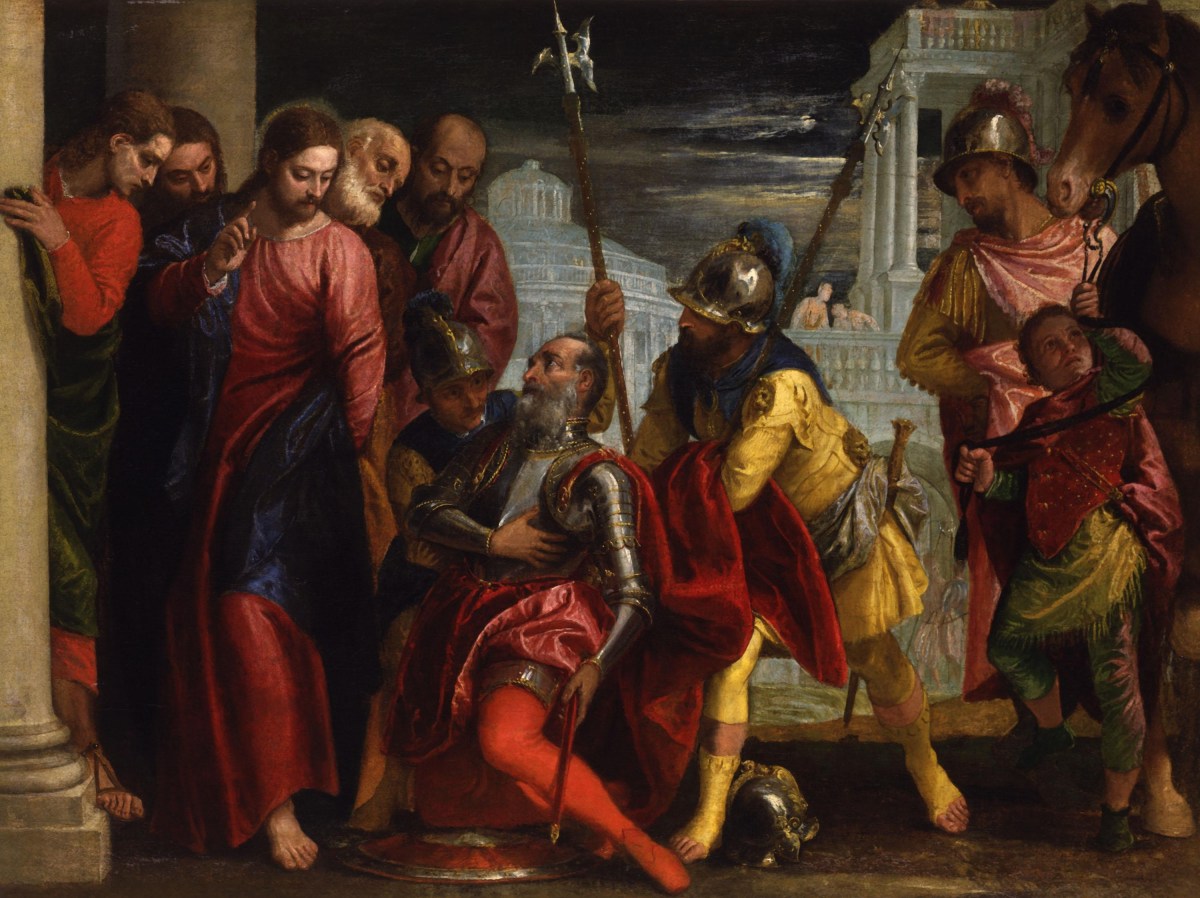
Jesus did not travel far. He spent most of the time in the area around Jerusalem and around Galilee. His focus was on teaching and serving the Jews. However, there were a few occasions when Jesus did interact with the Gentiles, and those occasions showed that the Gentiles were capable of great faith. There was a case of a centurion who recognized the authority that Jesus had. The centurion did not ask Jesus to come to his household to heal his child, but rather asked Jesus to heal his daughter from wherever Jesus was. In another case, Jesus had gone to Tyre, and there a Syrophoenician woman who, knowing Jesus ministered mainly to the Jews, still asked for Jesus to cure her daughter with the humble attitude that “even dogs eat the children’s crumbs.”

Observe

Read Matthew 8:5-13; 15:21-28. How do these vignettes challenge our faith?

Kingdom questions and parables

Dancing in the Kingdom- Table of Contents

Dancing In the Kingdom – Part 2 – The Kingdom Revealed – Chapter 11 – The Kingdom Enters

Kingdom questions and parables

[Bible references: Matthew 13:11-17; 21:18-46; Romans 1:18-21]

One time, some people challenged Jesus about the source of his authority. Jesus challenged them back with a question about where they thought the baptism of John was from, “Was it from heaven or earth?” That was only one of many times when Jesus would answer questions with questions.[1] Jesus’ questions were not to gather information for himself but for other reasons: sometimes to force the questioners to deal with their own hearts and motivations.[2] Jesus even sometimes asked if people really wanted to be healed; we know that sometimes people don’t like to change or to take up new responsibilities.

Jesus taught the crowds about the values of the kingdom and the attitude of those in the kingdom by using parables. Many things about the kingdom were quite different from conventional values – they sometimes seemed to be upside-down.[3] Parables used everyday metaphors and examples that could be understood by those whose hearts are open.[4] However, those whose hearts are not open cannot understand the parables. This is like the testimony of those who look at creation: those whose hearts are open can look at creation and see the handiwork of God, but others, whose hearts are not open will not see the handiwork of God – yet no one will have excuse.


[1] Pope, Charles. “100 Questions Jesus Asked and You Should Answer” Community In Mission, Archdiocese of Washington 18 April 2021 blog.adw.org/2021/04/100-questions-jesus-asked-and-you-should-answer.

[2] Arch, David “Ask Questions Like the Master Teacher” Christianity Today www.christianitytoday.com/biblestudies/articles/churchhomeleadership/040602.htm

[3] Thompson, Mark. “Upside Down Kingdom Parables: The Lavish Love of God” Remedy Church 29 Oct 2017 remedylodi.com/upside-down-kingdom-parables-the-lavish-love-of-god

[4] Blue Letter Bible “Our Lord’s Parables” Blue Letter Bible www.dailywordofgodgroup.com/why-jesus-taught-in-parables.htm; Edersheim, Alfred. “Why did Jesus teach in Parables?” Christianity.com www.christianity.com/jesus/life-of-jesus/parables/why-did-jesus-teach-in-parables.html

Observe

Read Matthew 21:23=27. Jesus’ questions are often used to pierce to our hearts. How do you answer Jesus’ question in this passage?

The kingdom arrives

Dancing in the Kingdom- Table of Contents

Dancing In the Kingdom – Part 2 – The Kingdom Revealed – Chapter 11 – The Kingdom Enters

The Kingdom Arrives

[Bible references: Isaiah 61:1-2; Matthew 8:16, 28-34; 9:6; 10:1; 28:18; Luke 4:14, 18-19, 32; 5:21; 6:6-7; 7:1-10, 29-30; 9:1-6; John 5:14; 10:11-18; 14:9; Acts 10:38; 1 Corinthians 15:24]

When Jesus broke into history, we no longer saw the kingdom of God overlapping the earth in a place as in the Garden of Eden or a place in the Holy of Holies. This time the kingdom of God had entered by a person, Jesus, who was anointed with the power of the Spirit. His next goal then was to invade the earth with his kingdom by that same Spirit entering our lives, by the overlapping of Heaven and Earth within each of us as Heaven and Earth overlapped within Jesus.

“God’s kingdom” in the preaching of Jesus refers not to postmortem destiny, not to our escape from this world into another one, but to God’s sovereign rule coming “on earth as it is in heaven.” [1]

When Jesus began his ministry, he quoted from the book of Isaiah to declare how he had come to fulfill that prophecy. Then there were many times throughout his ministry when he declared the reason he had come.

Left to our own resources, we cannot, on our own, correct our relationship to Yahweh; we cannot find our way back to a good relationship with him. We are lost to sin and unable to find our way back to Yahweh, the good shepherd.

Even though His power was evident in the teachings alone, His power was testified to by healing all sorts of diseases[2] including physical or spiritual blindness, casting out spirits (all these things that not only Jesus did but his disciples as well), proclaiming freedom for those in prisons, and setting the oppressed free. But even above providing hope and healing, Jesus offered forgiveness for sin and admonitions to turn away from sin. Jesus came to make us whole in body, mind, and spirit, to experience shalom. Sadly, even though some Gentiles recognized Jesus’ power and authority, some of the chief priests and elders did not want to recognize it themselves, remaining trapped and oppressed in their sin.


[1] Wright, N.T. Surprised by Hope: Rethinking Heaven, the Resurrection, and the Mission of the Church Harper Collins 2008. Kindle Edition (p 19.).

[2] Walk with the WiseEvery instance of Jesus Healing in the Bible: What they all had in common” Walk with the Wise walkwiththewise.org/every-instance-of-jesus-healing-in-the-bible-what-they-had-in-common

Reflect

How do we participate with Jesus in bringing His Kingdom to the earth?

Observe

Read Matthew 10:1; 28:18-20; Luke 9:1-6. How do we participate with Jesus in bringing His Kingdom to the earth?

Looking for Messiah

Dancing in the Kingdom- Table of Contents

Dancing In the Kingdom – Part 2 – The Kingdom Revealed – Chapter 11 – The Kingdom Enters

Looking for Messiah

[Bible references: 1 Samuel 8:5; 2 Samuel 7:12-13; Isaiah 9:6-7; 52:13-53:12; Matthew 2:2; 3:16; Luke 1:23-33; 1 Peter 2:24; John 6:15; 1 John 5:1-13]

During all the messy history, Yahweh was working to bring his plan into fruition. His end goal was to create a new heaven and a new earth but there were things that needed to happen first, including the removal of the power of sin over his people. His solution was to lay aside some of his power and enter history as a human, not only so that he could identify with his image-bearers but so that we would be challenged to choose his authority as a matter of faith – not a blind faith, but a faith based upon recognizing God’s work.

In the writings of Hebrew scripture there were clues and prophecies about the Redeemer that Yahweh would provide: the Redeemer that would be anointed by God, the Redeemer would rescue people from sin and the Redeemer would restore their relationship with Yahweh. The charts in Appendix D show many of those prophecies. These prophecies created an air of expectation. While it’s easier for us who are looking back to see how Jesus fulfilled the Old Testament prophecies, at the time that Jesus was born there were differing expectations about how those prophecies would be fulfilled.

One thousand years previous to Jesus’ birth, the Israelites thought that their problem was that they didn’t have a king “like everybody else” Now once again, many still thought that their problem was still a political one and that what they needed was the kind of Messiah that would throw out the Roman government.[1] (There were also some other various controversies swirling around which we will discuss in more detail in the next chapter.) Nevertheless, people were looking for a Messiah.


[1] Bible Study Tools “John 6:15” Bible Study Tools www.biblestudytools.com/commentaries/gills-exposition-of-the-bible/john-6-15.html

Observe

Read 2 Samuel 7:12-13; Isaiah 9:6-7; 52:13-53:12; Matt 3:16; Luke 1:23-33; 1 Peter 2:24. What kind of Messiah was expected to come?

Spurning love

Dancing in the Kingdom- Table of Contents

Dancing In the Kingdom – Part 1 – Shadows of the Kingdom – Chapter 4– Retreating to chaos

Spurning love

[Bible references: Genesis 3:1-7]

God created His image-bearing creatures so that they could receive love and respond in love. He provided those creatures with an ideal environment in which to thrive. These creatures knew the One who created and loved them and yet they chose to reject that love. As the descendants of the original image-bearers, we know that impulse all too well, the compelling urge to distrust others and to rely on our own resources, the desire to clutch power to ourselves and reject any claim to another’s authority over us. These urges and desires seem to overwhelm the opportunity to receive the love offered to us and thus removing our ability to respond by offering love.

We are marked by our continued failure to resist the temptation to grab what we want instead of waiting to receive what we want from God. In spurning God’s love, in rebelling against His authority, we break the bonds that hold us to each other and to God, and in doing so breaking what bound the Kingdom of Heaven to Creation.

In all of human history, Jesus was the only one able to successfully resist the temptation to grab for himself instead of waiting for the Father to provide. His success began the restoration of the Kingdom of Heaven on earth, a restoration that will not be complete until He comes again to fully reunite Heaven and Earth. Until heaven and earth are fully reunited, we will not fully experience the overflowing shalom that God has intended for us. Until that time, the broken earth will be separated from heaven and allowed to sink into disorder and chaos. Until that time, the overflowing goodness and shalom that God had provided will be masked by the brokenness of not just Creation but also by the brokenness of the co-creators. Look at what we have done!

We were meant to be in communion with each other and with God. We were meant to be “gardening” with God to make our place, a place of thriving and abundance in concord with the type of thriving and abundance with which God originally made the universe. God intended for us to be connected to Him and to be filled with His Spirit so that we would be fully enabled to be co-creators with Him of good works. But until then, we are in a state of rebellion, separated from the one who is the source of goodness. In that sense, we are less human than we should be.

Reflect

It seems to be part of human nature, to be suspicious of those things or those people who are different than us. The question is, when does doubting someone else’s motives become an act of sin?

Observe

Read Genesis 3:1-7. What hidden desires may cause us to distrust someone?

Scope and direction of sin’s consequence

Dancing in the Kingdom- Table of Contents

Dancing In the Kingdom – Part 1 – Shadows of the Kingdom – Chapter 1 – Prelude

Scope and direction of sin’s consequence

[Bible references: Genesis 2:16-17; 3:14-15, 23; 6:5; Romans 8:19-28]

And so, it happened. The one thing that could create the ultimate catastrophe did happen. The good Creator, who only intended good things, allowed his image-bearers to give into their temptation, to put their own authority above His and violate the one restriction placed before them. This violation by the stewards of His creation broke everything: the relationship between themselves, the relationship between them and Him, the relationship between them and creation. All of creation was affected and is even now waiting for things to be made right again.

Everything in creation had been designed to be good, to reflect the good character of the good God. Creation was designed to be a place where God and his image-bearers could keep on creating good things and bring increasing glory to God. But now, although the ultimate structure of creation was still good, it was headed in the wrong direction. The broken universe would now cause things to move away from God’s glory.

“Anything in creation can be directed either toward ward or away from God – that is, directed either in obedience or disobedience to his law. This double direction applies not only to individual human beings but also to such cultural phenomena as technology, art, and scholarship, to such societal institutions as labor unions, schools, and corporations. and to such human functions as emotionality, sexuality, and rationality. To the degree that these realities fail to live up to God’s creational design for them, they are misdirected, abnormal, distorted. To the degree that they still conform to God’s design, they are in the grip of a countervailing force that curbs or counteracts the distortion. Direction therefore fore always involves two tendencies moving either for or against God.” [1]

In our current times, we can get things so quickly and easily compared to times in the past. We want what we want, and we want it now. Our desire to get what we want now overwhelms our capacity to think of others, as we put ourselves at the center of our part of the universe, replacing God with ourselves. In the case of the first humans, they wanted to grab knowledge and wisdom for themselves instead of waiting to receive it from God.

Everything was broken and separated from God. Spiritual death, the impaired relation between God and His image-bearers was immediate and would be mirrored by the physical death caused by separation of the people who would no longer have access to the Tree of Life. This was a great tragedy that could not be undone, not by the image bearers. But as we look around us, we can see that, despite the tragedy around us, things aren’t totally bad. Even though evil is very evident around us, there is still some goodness that is evident. It is in that observation that we can glimpse the possibility of hope.

God had ordained the penalty of death to be the consequence of turning away from him. Sin resulted in spiritual death, the immediate separation God’s image-bearers from God, nevertheless, the people did not die physically right away. Instead, what God did, was to apply discipline to his image-bearers. He also gave a hint of the solution to the problem created by sin, the first of many other hints that were to come.


[1] Wolters, Albert M. “Creation Regained: Biblical Basics for a Reformational Worldview (Kindle Locations 685-689). Kindle Edition.

Observe

Read Romans 8:19-28. How has sin affected you and the one’s you love?