The Kingdom is Come and Not Yet

Dancing in the Kingdom- Table of Contents

Dancing In the Kingdom – Part 3 – Dancing in the Kingdom– Chapter 16 – Fixing our eyes

The Kingdom is Come and Not Yet

[Bible references: Matthew 6:9-13; 28:36-49; Romans 12:2; James 1:27; Revelation 21-22]

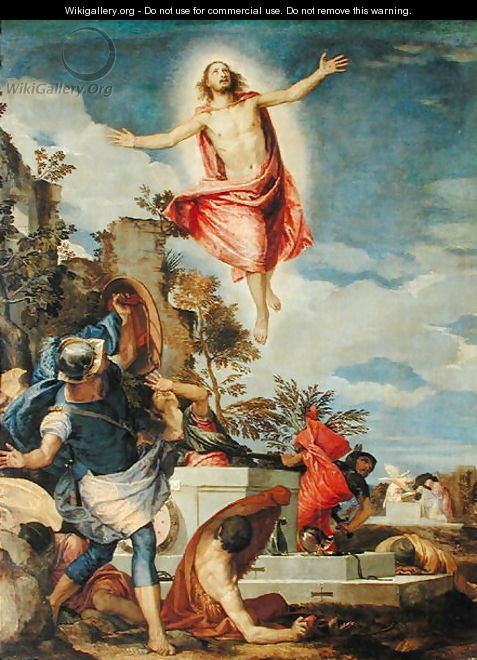
When Jesus came the first time, his healings and teachings began the ushering in of the Kingdom of God, a task He will complete when He returns to fully restore His Kingdom. When Jesus came the first time, He was resurrected, but when He comes a second time, there will be a new heaven and earth, and everyone will be resurrected. But what about now?

When Jesus ascended to heaven, he told the disciples to wait for the baptism of the Holy Spirit. It was then, through the power of the Holy Spirit, that the disciples of Jesus began the process of continuing the task of bringing Heaven to earth. In this in-between time, God is at work through the Holy Spirit, continuing to bring people to Himself, continuing to build His kingdom. The task that lies before us is to join Him in His work. The prayer He gave for us to say says, “your kingdom come, your will be done, on earth as it is in heaven.” This prayer asks that His kingdom be brought to earth, the Kingdom of justice and mercy.

Empowered by the indwelling of the Holy Spirit, it is our opportunity to do our part, with whatever ability He has given us, to work with Him in bringing His justice and mercy on earth: to look after the widows, orphans, the helpless, and the marginalized; to have compassion; to not lie about others; hate evil, love good; maintain justice in the courts; bringing the good news of Jesus to all. This is simply doing the task assigned to us from the beginning: to fill the earth and subdue it as his co-regents, to take care of the earth as farmer-priests representing Him on earth.

Our final destiny is not to a disembodied existence, but to a new, transformed body, transformed in the way that Jesus was when he was resurrected. Earth itself will also be transformed, with its corruption being removed, not back into a Garden of Eden, but into the earth as it was meant to become, filled, and civilized, with a new Jerusalem being brought from heaven to earth. We are not being sent to heaven; heaven will be coming to us.

Knowing that this end is coming upon us, in the present age we can be motivated to express our hope by living out our hope as in mentioned in The Lord’s Prayer, “thy kingdom come, thy will be done, on earth as it is in heaven.” This encourages us to do what we can to help usher in God’s kingdom now, if only in part. The full entry of the kingdom will not happen until the Lord returns and establishes a new heaven and earth, but we do not need to wait hopelessly as if there is nothing we can do. God has given everyone in his church gifts with which we can build each other up and take charge as His stewards of the earth.

But the task of transforming the earth needs to begin within us. We need to be transformed. In our sin, it is our tendency to always point to other things for the cause of the problems we see. But the cause of the corruption we see elsewhere begins with the corruption within ourselves.

“The line separating good and evil passes not through states, nor between classes, nor between political parties either – but right through every human heart…even within hearts overwhelmed by evil, one small bridgehead of good is retained. And even in the best of all hearts, there remains…an uprooted small corner of evil. [1]


[1] Solzhenitsyn, Aleksandr. “The Gulag Archipelago” Vintage Publishing 1974

Reflect

Reflect

In this time that we live in, the Kingdom of God has come but not yet completely. Our hearts reflect this time with our mixed desires – at once delighting in God’s law and at the same time waging war against that same law. The corruption in our hearts is reflected in the corruption we see in the world. How does that impact how we approach our task to join God in bringing His Kingdom into the world?

Observe

Read Revelation 21:22-24. Try to imagine what it means that “the kings of the earth will bring their splendor into the city.” What would that look like?

Basics of the faith

Dancing in the Kingdom- Table of Contents

Dancing In the Kingdom – Part 2 – The Kingdom Revealed – Chapter 12 – Launching the church

Basics of the faith

[Bible references: Acts 1:12-26; 2:42-47; 4:32-37; 6:1-6; 8:14-17; 9:26-31; 11:1-18; 13:1-3; 15;1-29, 36-41; 1 Corinthians 1:10-17; 5:1-13; 6:1-11; 10:1-22; Galatians 2:1-14; 3:10-14. James 2:1-13; 3:1-12; 4:1-16; 2 Peter 2:1-22]

There are many aspects of the gospel, but it is nothing if it is not grounded in truth, about God and about us. But the truth is not the only thing, in fact, the whole truth of the gospel must be grounded in God’s character. The gospel is not just a set of facts that need an intellectual assent but good news that calls us to make an honest assessment of ourselves and to make a change of trust and allegiance.

The gospel is good news.

  • The gospel is the good news that God created us to pour his love into us.
  • The gospel is the good news that even though we are born in rebellion against God and are unable to keep doing things that separate us from him, that he has taken upon himself the punishment we deserve so that we don’t have to.
  • The gospel is the good news that when Jesus was resurrected and ascended into heaven, He went prepare a place for us there.
  • The gospel is the good news that if confess our sins then He is faithful and just and will forgive us our sins and cleanse us from all unrighteousness.
  • The gospel is the good news that once we begin our journey of trusting Jesus, then we begin the process of becoming more like Jesus.
  • The gospel is the good news that all of that and more is true.

There are various reasons that we sometimes don’t want to accept the good news. One of the biggest reasons is that we don’t want to acknowledge how bad we are and how deeply sin affects us. When we feel that way, we can start to imagine that we can balance out the good things we do with the bad things we do, and we’ll end up all right and God will be happy with that. But the gospel message is that,

  • the bad news is that our very nature is in rebellion against God and no amount of good works can make us unrebellious.
  • the bad news is that we can’t earn our way to a right relationship with God.
  • the bad news is that if we are not made right before God then we will suffer God’s judgement and wrath.
  • the good news is that Jesus paid the penalty for all our sins, past, present, and future.
  • the good news is that we can be made righteous through faith.
  • the good news is that it is by God’s grace that we are saved through faith. It is a gift – in fact, it can’t be something we earn.
  • the good news is that we only need to repent and confess our sins and receive His forgiveness.
  • the good news is that we can allow God to transform our lives and enable us to live lives that are pleasing to him.
  • the good news is that once God imparts his righteousness to us, we become his heirs.

Once we put our trust in Him, he does not automatically make us sinless. That won’t happen until he returns; and we all are resurrected with new, transformed bodies. It is through our untransformed bodies that we inherit the sin nature.

  • The good news is that the day of resurrection will happen.
  • The good news is that, between now and then, we can offer ourselves to God and He will, over time, begin the transformation process here in this life.
  • The bad news is that until then we will continue to rebel against God.
  • The good news is that in this in-between life that God can use our current struggles to strengthen us.
  • The bad news is that unbelievers will regard us as foolish.
  • The good news is that our apparent foolishness in committing our lives to Jesus is actually wisdom.

There is a lot of good news for us, and it’s based upon the truth of Jesus. Truth is important for Jesus, and in fact, he claims that He himself is the truth. The gospel is based on the truth, so it matters that we get the facts straight. That is why, one of the concerns expressed in the New Testament is the need to hold onto sound doctrine.

Read Galatians 3:1-12. What part of the gospel were the Galatians struggling with?

The Spirit and the power

Dancing in the Kingdom- Table of Contents

Dancing In the Kingdom – Part 2 – The Kingdom Revealed – Chapter 12 – Launching the church

The Spirit and the power

[Bible references: Genesis 25-19-21; 1 Samuel 1;1-20; 2 Samuel 7; Proverbs 2:1-5; Matthew 7:7-8; Mark 11:12-26; Luke 11:113; 12-26; John 20:21-23; 3:14-16; Acts 1:1-14; 2:1-41; 1 Peter 5:6-7]

There are remarkable parallels between Genesis 2:7 and John 20:22. We see from Chapter 2 that in Genesis 2, God breathed life into Adam who was then commissioned to take care of the sacred space that God had created. That sacred space was initially identified as the Garden of Eden, but we know from Genesis 1 that God had dedicated the entire universe as his temple. We also know that since God’s image-bearers were given the commission to “be fruitful and fill the earth” that the sacred space allotted to the care of the image-bearers was intended to be the entire earth.

After the resurrection, when Jesus met with the apostles in a locked room, He breathed on (or into) them.[1] This is the same word used in the Septuagint version of the Old Testament describing God breathing life into Adam and thereby giving him life. Immediately after this gesture, Jesus instructed the apostles to “Receive the Holy Spirit” who were then commissioned to continue the task that Jesus had begun.[2]

“The very same Greek verb (here only in N.T.) is used by the LXX. in Genesis 2:7 (Wis 15:11) of breathing life into Adam. This Gospel of the new Creation looks back at its close, as at its beginning (John 1:1), to the first Creation. We are probably to regard the breath here not merely as the emblem of the Spirit (John 3:8), but as the means by which the Spirit was imparted to them. ‘Receive ye,’ combined with the action of breathing, implies this. This is all the more clear in the Greek, because pneuma means both ‘breath’ and ‘spirit,’ a point which cannot be preserved in English; but at least ‘Spirit’ is better than ‘Ghost’ We have here, therefore, an anticipation and earnest of Pentecost; just as Christ’s bodily return from the grave and temporary manifestation to them was an anticipation of His spiritual return and abiding Presence with them ‘even unto the end of the world.’” [3]

Previously, in John’s gospel, we saw that “the Son of Man must be lifted up, that everyone who believes may have eternal life in him.” Now that Jesus was crucified and was soon ascend to heaven, the apostles were given the task of sharing the gospel so that people may believe unto eternal life. It is at this moment, in the locked room, that the apostles were given the commission to share the news of forgiveness.

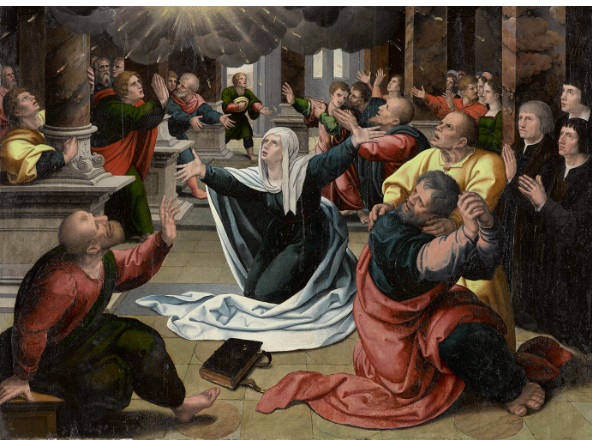
Ten days after Jesus ascended, fifty days after Passover, the disciples were gathered in Jerusalem, waiting for “what the Father had promised.” It was the time of Shavuot, which was known in Greek as the Pentecost. Shavuot is one of three pilgrimage festivals where Jews are supposed to travel to Jerusalem so Jews from all over the Roman Empire were in Jerusalem.

It was at this gathering that Spirit came upon the disciples in great power, revealing the fulfillment of Shavuot. While the disciples were gathered in a room, the Holy Spirit manifested himself with a great wind and tongues of fire that touched the apostles. The apostles then proceeded to prophecy and the people who were there from around the world were able to hear them speaking in their own languages. On that day 3000 people accepted Jesus as their Lord.

The full meaning of Passover and Shavuot was now revealed.

  • Jesus was executed on Passover, a holiday commemorating the celebration of freedom from slavery in Egypt which was observed by the slaying of the Passover lamb whose blood protected all the Israelites from the angel of death who had killed all the firstborn children in Egypt.
  • The miraculous outpouring of the Holy Spirit on the apostles which enabled them to speak in many different languages occurred on Shavuot, which had many different meanings for the Jews. Shavuot was associate with:

  • the giving of the commandments 50 days after the liberation from Egypt. Now the commandments were written on hearts instead of stone.
    • the first harvest of crops in the year, with those first portions being given to God, the provider of harvest. There were now 3000 souls harvested for God.
    • marriage, where Passover was considered the betrothal and Shavuot the marriage where the bride and groom commit themselves to each other. The period in-between the betrothal and marriage can be considered as a time of testing and waiting as the bride and groom prepare for life together. With His sacrifice, Jesus, the Bridegroom committed himself to the Church, His Bride.

Waiting. The virtue we want to bypass. Yet even though God has set seasons and times before us and insists on letting his ordained processes complete, from the beginning, we have wanted things immediately and we have been paying the price ever since. But there was a process God wanted to complete. After His resurrection, Jesus waited for the apostles to gather before He came to them, Jesus waited for many days to go by while He interacted with various groups of his disciples, then after His ascension, Jesus waited for his disciples to stay in Jerusalem, while they waited for the “gift His Father promised … to be baptized with the Holy Spirit.” And so, the apostles waited and prayed.


[1] Biblehub ἐνεφύσησεν Bible Hub biblehub.com/greek/enephyse_sen_1720.htm

[2] Scrivener, Glen. “What does John 20:21-23 mean” Christ the Truth christthetruth.net/2013/03/26/what-does-john-2021-23-mean; Skinner, Matt. “Commentary on John 20:19-23” Working Preacher www.workingpreacher.org/preaching.aspx?commentary_id=887; Lewis, Karoline. “Commentary on John 20:19-23” Working Preacher www.workingpreacher.org/preaching.aspx?commentary_id=76; Flattery, George. “John 20:19-23 Receive the Holy Spirit” Global Christian globalchristiancenter.com/sermons/dr-g-flattery-sermons-on-gospel-of-john/26192-john-2019-23-receive-the-holy-spirit

[3] Biblehub “John 20:22”Cambridge Bible for Schools and Colleges biblehub.com/commentaries/john/20-22.htm

Reflect

There are times when we need to take action and times when we need to wait for maturity or for “the fullness of time.” How can we discern the difference?

Observe

Read Mark 11:12-26; Luke 11:1-13. What should we expect when we pray?

No detailed strategic plan, but promises and presence

Dancing in the Kingdom- Table of Contents

Dancing In the Kingdom – Part 2 – The Kingdom Revealed – Chapter 12 – Launching the church

No detailed strategic plan, but promises and presence

[Bible references: Genesis 12:1-4; Matthew 13:15; 26:56; 26:69-74; 28:16-20; Mark 16:1-3; John 20:19; 12:31-36; Acts 1:4-9]

When Jesus had ascended to heaven, he had left a group of bewildered disciples who had no idea about the kind of enterprise they were going to launch. They were all missing pieces of the puzzle. Although Jesus had been explicit about his suffering and dying and resurrecting, the disciples did not fully grasp what had happened until they witnessed his appearance after the resurrection. A few days before his crucifixion, when he told about the death he would die, i.e., “when I am lifted up” which people knew meant crucifixion, the people protested saying they knew that the Law said the Christ remains forever, so how could that be?

Even the chosen apostles were unprepared. Upon Jesus being arrested, they fled and hid and, in the case of Peter, even denied knowing Jesus. They fearfully gathered behind locked doors, not knowing their next steps. Even those women who were close to Jesus thought they needed to anoint his deceased body. The words of the prophet Isaiah, “He has blinded their eyes and hardened their heart, lest they see with their eyes and understand with their heart,” seemed to apply just as fully to Jesus’ closest disciples.

What the evidence displays is that the program and order of Christian communities originate in direct continuity with the synagogue communities of Israel … These communities had assemblies, elders, presiding elders, deacons and a full program of worship, common policy-making, social welfare and interurban alliances. They lacked the authorization to govern themselves on behalf of the empire. But in other respects they developed patterns of community organization that were traditional to their Jewish origins and members.[1]

Even after his resurrection, when Jesus appeared again, he apparently did not give any instructions about how to organize the church, particularly for the next 2000+ years. The evidence we do have shows that early church organizational structure was based on the organizational structure of the synagogue. In fact, the first explicitly Christian assemblies were split offs from the Jewish assemblies. What they did have, and what they and their successors did build on, was the liturgical and governmental structure of the synagogue.

Jesus instigated no characteristic new organization or anarchy among those who shared faith in him. They proceeded from where they found themselves. And they found themselves in the synagogue. The synagogue became the church, not by dint of a new social format, but in virtue of new convictions within its members. It developed and adapted and consolidated and searched for its own authenticity. We claim here only that to study the energetic development we must know that it proceeded form the organization of the synagogue. [2]

In fact, there seemed to be some hints that the final consummation of the kingdom would occur in their earthly lifetimes. The main preparation of his disciples seems to have been spending time with Jesus, listening to Jesus’ descriptions of the kingdom of God and seeing (and sometimes participating with) Jesus in the inbreaking of the Kingdom through teaching, healing, compassion, and casting out demons.

After the resurrection Jesus spent times with various groups of his disciples during the next forty days. Then just before he was to “ascend to heaven,” he gave his apostles one last charge. “But you will receive power when the Holy Spirit has come upon you, and you will be my witnesses in Jerusalem and in all Judea and Samaria and to the end of the earth. Make disciples of all nations, baptizing them in the name of the Father, Son, and Holy Spirit, teaching them to observe all that I have commanded you. And behold, I am with you always, to the end of the age.”

Before he was to visibly leave the earth, he had given the promise to be with them … always. The living God was not going to be present in a physical body nor would the living God leave any instructions in a written document, instead the living God would be present by means of the Holy Spirit.


[1] Burtchaell, James Tunstead. “From Synagogue to Church: Public Services and Offices in the Earliest Christian Communities” Cambridge University Press 1992 (pp. 334-336)

[2] Burtchaell, James Tunstead. “From Synagogue to Church: Public Services and Offices in the Earliest Christian Communities” Cambridge University Press 1992 (pp.349-352)