Re-envisioning our inhabited environment

Dancing in the Kingdom- Table of Contents

Dancing In the Kingdom – Part 3 – Dancing in the Kingdom– Chapter 18 – Entering the Dance

Re-envisioning our inhabited environment

[Bible references: Exodus 25:1-9; 31:1-11; 35:30-36:7; Isaiah 65:17-25; Revelation 21:24-26]

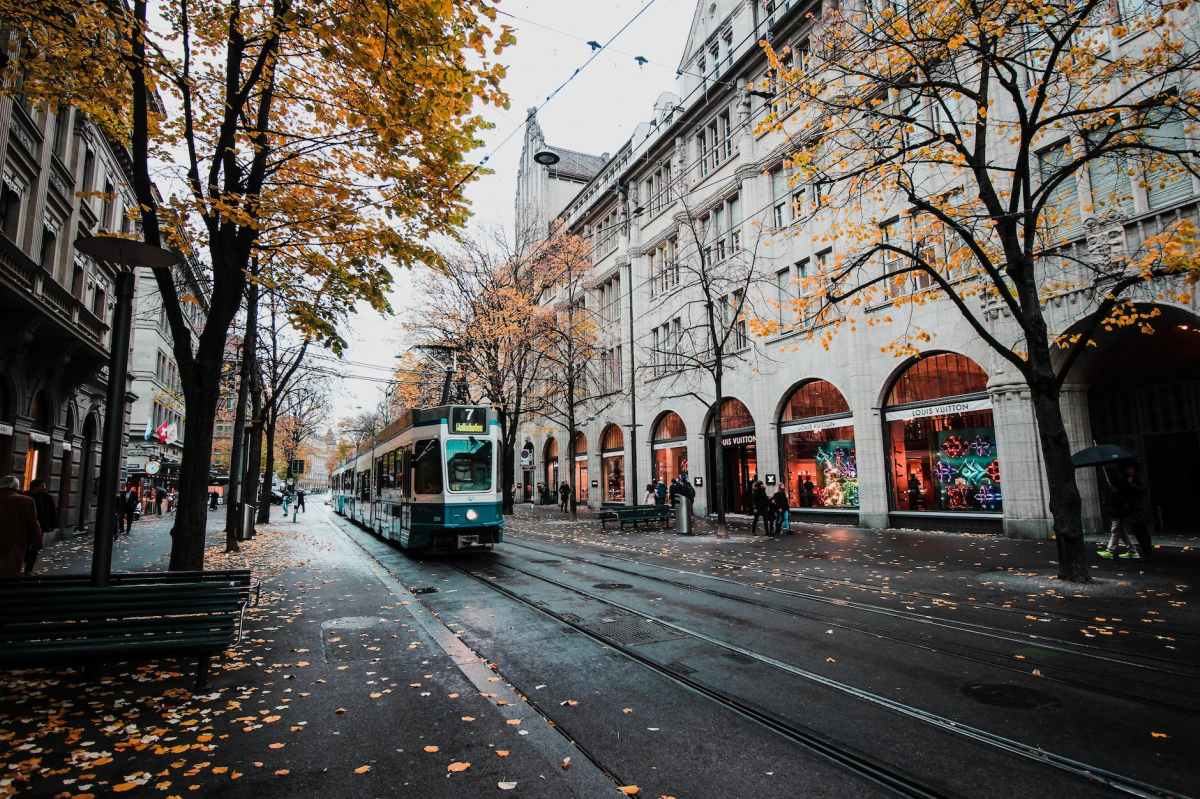
Within our given environment, we create communities, culture, and institutions to support all that. Our homes, neighborhoods, towns, and cities reflect our potential to create either beauty or corruption. The power we have as bearers of God’s image which provides our God-given ability to transcend our environment, is the source of great good or great sin.

“And decades of persuasive experiments have shown that built environments can be a factor in shaping us in ways that have significant long-term implications, in educational or workplace performance, or our physical and mental health and wellness. The point is that architecture, an integral part of essentially all cultures, is one of many interacting cultural factors—like entertainment and marketing, politics, belief systems, or charismatic individuals, for example—that together, in large and small ways, are involved in shaping behavior and who we are over a lifetime.” [1]

“On the night of May 10, 1941, with one of the last bombs of the last serious raid, our House of Commons was destroyed by the violence of the enemy, and we have now to consider whether we should build it up again, and how, and when. We shape our buildings, and afterwards our buildings shape us.”[2]

We possess the abilities to create works of art, some of which are designed simply to be enjoyed or give us cause to think and some of which have practical uses such as buildings we live, work, or play in, the outdoor areas between those buildings that can serve to connect us together, the vehicles which transport us. These practical works of art also require feats of all sorts of engineering, technical and organizational skills.

It is also clear that those same abilities are regularly misused, and our constructions look less like works of art and more like works of neglect and corruption. Instead of works which build us up and add to the flourishing of all, our works sometimes are simply not as helpful as they can be and sometimes even outrightly abuse our environment as well as our fellow humans.[3] Poor building design sped up Covid spread.[4]

 A Christian architect, Dave Greusel, suggests that we should construct our buildings with the attitude that they serve as “gifts to the community,” purposely constructed to advance God’s Kingdom, expressing grace, beauty, justice, creativity.[5] There are many different ways in which we enhance the quality of life not only within the buildings we create, but also the environment around those buildings, designing our spaces with consideration for how we live not only in, but around our buildings.

In the U.S., planning our cityscape around automobiles has seemed natural because of the way that our automotive technology has allowed us to flexibly expand in the large space afforded by our country. Sadly, that type of planning has caused us to sometimes neglect the way that life is normally lived with the communities of the city. Sometimes, it has been after the fact that cities have paid attention to how to better design the city spaces for people to navigate on foot or bicycle and to live in community.

Enacted space is “activated by the people using it.” that is, it is not enough to design particular spaces, but to make them attractive so that people use them. [6]

Additional features that can be considered for our spaces are how we situate housing for people and where they work, how we create enclosed spaces that give a sense of protection and safety, monuments that provide particular spaces with meaning and the thresholds (doorways or openings) between the building interiors and the spaces outside.[7]

“Connectivity is measured by the number of intersections per square mile. One hundred fifty connections per square-mile is considered to be the minimum for a vibrant community.” [8]


[1] Hart, Robert Lamb. “How Buildings Shape Us” Common Edge commonedge.org/how-buildings-shape-us

[2]Churchill, Winston. Made in a speech in the House of Commons on October 28,1943 about replacing the bombed-out House of Commons chamber. Quote given Automated Buildings automatedbuildings.com/news/aug20/articles/lynxspring/200721102909lynxspring.html

[3] Rethinking the Future. “Some Examples of Bad Architecture Ideas” Rethinking the Future www.re-thinkingthefuture.com/article/some-examples-of-bad-architecture-ideas; Staczek, David. “Is Bad Architecture Harmful to Our Health” Architizer architizer.com/blog/inspiration/stories/bad-architecture-harmful-to-health; Husock, Howard. “How Public Housing Harms Cities” City Journal Winter 2003 www.city-journal.org/html/how-public-housing-harms-cities-12410.html

[4] Ing, Will. Architects’ Journal 3 Oct 2021; www.architectsjournal.co.uk/news/poor-building-design-sped-up-covid-spread-says-academic 2021

[5] Greusel, Dave. “Architecture for Human Flourishing” Denver Institute for Faith and Work 15 Apr 2015 denverinstitute.org/david-greusel-architecture-for-human-flourishing-videos

[6] Jacobsen, Eric O. The Space Between  A Christian Engagement with the Built Environment” Baker Academic, 2012 (p. 17).

[7] Jacobsen, Eric O. The Space Between  A Christian Engagement with the Built Environment” Baker Academic, 2012 (Chapter 2)

[8] Jacobsen, Eric O. The Space Between  A Christian Engagement with the Built Environment” Baker Academic, 2012 (p. 43)

Reflect

As you consider the town or city you live in, what might be done better to make the places we live and work to be a gift to the entire community?

Observe

Read Isaiah 65:17-25. How can we build things that point to our future hope?
Living temples

Dancing in the Kingdom- Table of Contents

Dancing In the Kingdom – Part 1 – Shadows of the Kingdom – Chapter 3 – The image-bearers

Living temples

[Bible references: Genesis 1; 3:6; Isaiah 35; 54:10; 60; Jeremiah 29:1-23; John 2:19-21; 1 Corinthians 3:16; 6:19-20; 2 Corinthians 6:16; Ephesians 2:21; Revelations 15:8; 21:22]

Although God’s first image-bearers had close, unhindered, intimate contact with their Creator, there was enough space given them to think freely, as if they were not being watched all the time. It was in this space that they – and we – were given several blessings: the freedom to procreate (be fruitful and multiply), to oversee God’s creation (subdue the earth and have dominion over its creatures), and to nurture God’s creation (work it and take care of it).[1] We were given the assignment to be fruitful, to fill all the earth, discover its possibilities and care for the world in the same way that God would care for the world.[2] Just as God continues to create more living things and sustain all that he has created, we as his co-regents[3], can join him in sustaining and creating those things entrusted to our care.

  “There are two ways in which God imposes his law on the cosmos, two ways in which his will is done on earth as in heaven. He does it either directly, without mediation, or indirectly, through the involvement of human responsibility. Just as a human sovereign does certain things himself, but gives orders to his subordinates for other things, so with God himself. He put the planets in their orbits, makes the seasons come and go at the proper time, makes seeds grow and animals reproduce, but entrusts to mankind the tasks of making tools, doing justice, producing art, and pursuing scholarship. In other words, God’s rule of law is immediate in the nonhuman realm but mediate in culture and society. In the human realm men and women become coworkers with God; as creatures made in God’s image, they too have a kind of lordship over the earth, are God’s viceroys in creation.” [4]

We were also given the responsibility to subdue the earth and have dominion over its creatures. When there is resistance, we still have the responsibility to bring the rule of God to the world. Then we are given the responsibility to work and take care of the earth, starting in the Garden of Eden and then expanding to all of God’s creation. Implied in all these things is that we should do everything in context of God’s love, to care for each other and to care for the earth and its creatures with the mind of the God who created us for love.

The work that we were designed to do was more than just tending the garden. In Genesis 2:15, we were given a mandate to “work” and “take care of” the garden God had created. These tasks in light of Ancient Near East culture, were more of a priestly nature, taking care of this temple where we reside with God.

“The verbs ʿbd and šmr (NIV: “work” and “take care of”) are terms most frequently encountered in discussions of human service to God rather than descriptions of agricultural tasks… ‘bd can refer to … work connected with one’s vocation, to religious service deemed worship … šmr is used in the contexts of the priestly responsibility of guarding sacred space, as well as in the sense of observing religious commands and responsibilities … it is likely that the tasks given to Adam are of a priestly nature: caring for sacred space. In ancient thinking, caring for sacred space was a way of upholding creation.”[5]

We were to take care of this place which was designed to be a “very good” place for us to flourish in, creating whatever structures we needed to “increase in number, fill the earth and subdue it.” This task, this mandate, meant that we would eventually go beyond the capacity of gardening and create not just a bigger garden but cities, a flourishing civilization as pictured in Revelation 21 and 22.[6]

When examined closely, we can see the breadth of what was committed to Adam and Eve. Subduing the earth would entail many physical, social, and intellectual activities. In the gardening we can see cultivation and farming; in taking care of the animals, we can see shepherding and domestication; in the naming of the animals, we can see a cultural and scientific activity which required understanding the nature and attributes of the animals and establishing authority over them. We can see that God had created things to be beautiful and as his image-bearers we would be expected to also create beautiful things.

As we look forward to the new earth which will manifest when Jesus comes again, nature’s comeliness will reach its pinnacle; the wilderness itself will burst into blossom, and streams will gush in the desert. To complement all this natural beauty, human culture will flourish. All the great creativity of humankind-artistry in music, dance, painting, woodcrafts, sculpture, architecture and more-will be brought into the New Jerusalem.[7]

There is a sense in which we, as members of the Kingdom of God, now seem to be living in a foreign land. This puts us in a position similar to the Israelites when they were taken in exile into Babylonia. During their stay in Babylonia, God’s instructions were to settle down, build houses, get married, have children and to seek the prosperity of the city they were sent to, for “if it prospers, you too will prosper.”

But above all these things we can do, we should not lose focus on who we are. We are creatures designed by God to be like God to be in relationship with Him, the God who is a community in Himself: Father, Son, and Holy Spirit. Everything we do should be done in context of who we are. We should remember that we were designed to be human “beings,” not human “doings.” This viewpoint become clear when we compare the Biblical view of creation to the view of other Ancient Near East cultures. For the surrounding cultures humans beings were created to feed the gods and serve the gods who created them, whereas the Biblical viewpoint sees God being the provider for the people.[8]

Originally, we see Creation designed as a temple, a place for us to “be” with God. Later on, Jesus refers to himself as the temple, a human in whom God resides. Later on, Paul declares that our own bodies are a temple of the Holy Spirit. So here again, we see the mystery of perichoresis, where we are distinct from the Holy Spirit, yet the Holy Spirit becomes a part of who we are. In this we see the mystery of perichoresis unifying the persons within God, unifying the body, soul and spirit within humans, and unifying God and humans.


[1] Jacobsen, Eric O. The Space Between: A Christian Engagement with the Built Environment, Baker Academic, 2012, (Page 20 )

[2] Crouch, Andy. “What is the Cultural Mandate” The Village Church, 6 Jan 2017 www.tvcresources.net/resource-library/talks/what-is-the-cultural-mandate

[3] Walton, John H. “The Lost World of Adam and Eve: Genesis 2-3 and the Human Origins Debate (Proposition 4) InterVarsity Press. 2015 Kindle Edition

[4] Albert M. Wolters. Creation Regained: Biblical Basics for a Reformational Worldview William B. Eerdmans Publishing 1985, 2005. eBook(Locations 203-208)

[5] Walton, John H. The Lost World of Adam and Eve: Genesis 2-3 and the Human Origins Debate Edition(p. 105-106).

122 Buzenitz, Nathan. “The New Jerusalem”

[7] Sherman, Amy L. Kingdom Calling: Vocational Stewardship for the Common Good. Intervarsity Press, 2011 eBook location 291

[8] Walton, John. “The Lost World of Adam and Eve,” I “Proposition 12: Adam is Assigned as Priest in Sacred Space, with Eve to Help” (p.104)

Observe

Read Genesis 1; 1 Corinthians 3:16; 6:19-20; 2 Corinthians 6:16. What difference does it make if the universe is God’s temple or that our bodies are God’s temple?