Moses and the Exodus

Dancing in the Kingdom- Table of Contents

Dancing In the Kingdom – Part 1 – Shadows of the Kingdom – Chapter 1 – Prelude

Moses and the Exodus

[Bible references: Exodus 8-11; 14-15; Numbers 13-14; Deuteronomy 1]                                      

430 years would pass after the promise was given to Abraham, that his people, now named after his grandson, Israel, would walk out of Egypt. God told Abraham that his descendants would be enslaved in Egypt for four generations[1] before they return to the Promised Land at which time the “sin of the Amorites would be complete.”

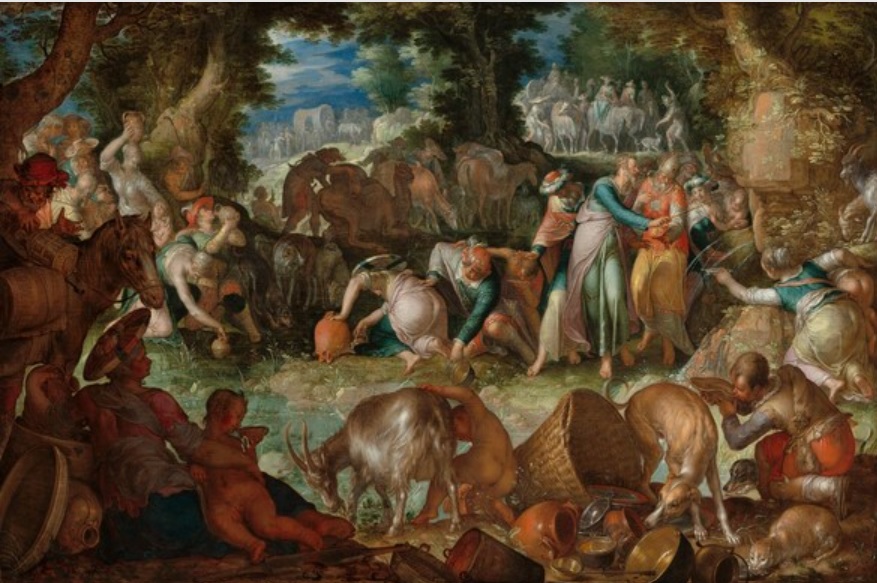
At the scheduled time, God called Moses to lead the Israelites out of Egypt, and it would take 10 plagues, including the death of the firstborn, to convince the Pharaoh to let Israel go. Moses led the people out of Egypt by way of the “Red Sea.” The Commandments were given, and the building of the Tabernacle occurred, at Mt Sinai, location uncertain, before Israel would leave for the “Promised Land.”  When 12 spies were sent into the land, 10 of them focused on the difficulty of taking the land, inspiring fear among the people and causing God to consign Israel to wander in the wilderness for 40 years where all the adults 20 and over would die before Israel would finally go into the Promised Land.


[1] LeBrun, Ken. “The 400-Year Prophecy and the Fourth Generation”” Thoughtlines www.thoughtlines.org/2013/09/the-400-year-prophecy-and-fourth.html; BibleAsk “Did the Israelites spend 400 years in Egypt?” BibleAsk bibleask.org/did-the-israelites-spend-400-years-in-egypt/; Glatt-Gilad, David. “How Many Years Were the Israelites in Egypt?” TheTorah.com www.thetorah.com/article/how-many-years-were-the-israelites-in-egypt; Got Questions. “How many Israelites left Egypt in the exodus?” Got Questions www.gotquestions.org/Israelites-exodus.html; It would be 430 years from the time Abraham’s son Isaac was born but the time spent in Egypt would only be for four generations. Linked to that is the apparent size of the Israelite people leaving Egypt. Allowing for only 4 generations in slavery and, starting with a population of 70 people, something less than 10,000 people would have left Egypt with Moses. This helps to make sense of the Biblical events in the Promised Land and also of the archaeological evidence now available.

Reflect

Think of situations where you had to overcome fears in order to spiritually grow.

Observe

Read Genesis 15. Abram was living in the land of Canaanites which the Lord had promised to give to Abram’s descendants, but in a dream the Lord about how Abram’s descendants would first be enslaved and then return to the Promised Land, but only after “the sin of the Amorites reached its full measure. What does that say about how God works in the present day?
The Patriarchs

Dancing in the Kingdom- Table of Contents

Dancing In the Kingdom – Part 1 – Shadows of the Kingdom – Chapter 1 – Prelude

The Patriarchs

[Bible references: Genesis 12-50]                                    

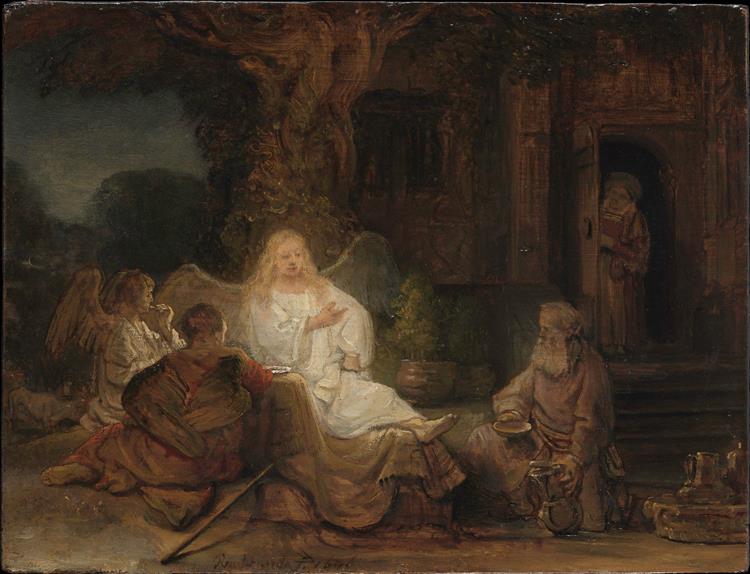
Approximately 2000 B.C., a man named Abram[1] lived in the city of Ur (at that time a coastal city on what is now the Persian Gulf). Abram’s father took his family up the Euphrates River to the city that would be named after Abram’s brother, Haran and settled there. When Abram was 75, God called him to go to another country. When he arrived in Shechem, God told him that this would be the land given to his offspring. Abram did go down to Egypt briefly, but then returned to Shechem. By that point in time, the herds were so large that it was necessary for Abram and his nephew Lot to split up. Abram’s nephew Lot chose to move down to the valley of Sodom and Gomorrah.

When Abram was 90 years old, God told Abram that he would be the father of many nations, renaming him Abraham. But Abram would be 100 years old before his son, Isaac, was born. Abram did have a son, Ishmael, through his wife’s servant, but Ishmael would be sent away, becoming the father of the Arabs.

Isaac didn’t get married until he was 40. He was 60 by the time his only sons, the twins, Esau and Jacob were born.

Jacob had 12 sons and a daughter by 2 wives and 2 concubines. At one point, Jacob wrestled with an angel, who gave him the name, Israel (“struggles with God”).

Jacob’s son, Joseph, was sold as a slave by his brothers to a trader passing through to Egypt, where, through interesting circumstances he became 2nd in charge to the Pharaoh. Years of droughts led to Israel and his other sons moving to Egypt.


[1] To see how Biblical events fit into the history of the Middle East empires see Appendix B, “Timeline for Middle East Empires.”

Observe

Read Genesis 17. Abram was 99 years old and still had no son with his wife Sarah when God renamed him Abraham (“father of many nations.”) and then repeated his promise to Abram 24 years earlier. What does this tell you about patience and faith?

Breathed by God, Written by Human Hands

Dancing in the Kingdom- Table of Contents

Dancing In the Kingdom – Part 1 – Shadows of the Kingdom – Chapter 1 – Prelude

Breathed by God, Written by Human Hands

[Bible references: Genesis 2:7; Acts 15:1-35; 2 Corinthians 4:1-4; 2 Timothy 3:14-17]

It is God who gives life, breathes life. The Hebrew word for Spirit, ruach, is the same word for wind. God breathed life into the creatures of the earth and then into the first people, creating them as images of himself who could serve as priests and stewards of His Creation.

God’s Spirit guided Abraham to leave for the Promised Land, guided Moses to lead his people out of Egypt, guided Joshua to lead his people back into the Promised land, guided leaders who were identified as judges to guide his people, guided kings to rule over his people, guided prophets to exhort His people and inspired them to record the words he spoke, guided disciples to become apostles to further the project of bringing his kingdom into the world. God inspired disciples to write biographies of his life and letters to the churches. After the apostles had died, that same Spirit raised other leaders to disciple the church and guide the church in how to live and practice its faith, to become mature disciples of Christ, guiding church councils to discern truth from error and to discern what writings should become the scripture for the church.

God had inspired (“God-breathed”) those who had written scripture, but Spirit-led guidance is just that, guidance. How we respond to God’s guidance is up to us. So even if we receive Spirit-led guidance, we need to grapple with a couple of problems. The first problem is that everyone only incompletely understands who God is and different people come to different and incomplete understandings. The second problem is our sin and rebellion against God causes us to deceive ourselves and others, and to fall further from God.

To help overcome these problems, the church has learned to come together in councils. By gathering in councils, church leaders guided by the God’s Spirit have helped each other discern the truth, grow in the faith and bond together in unity. Over time though, as the church expanded into different parts of the world, different languages and cultures added to mix of differences that were already mentioned, which led to apparently irresolvable differences that has resulted in the fracturing of the church, a fracturing that has continued to this day. Despite that fracturing, different parts of the church have still found benefit in gathering in their separate councils to determine what doctrines and practices are correct. While there are forces at work to further fracture the church and disrupt its unity, the Holy Spirit is at work throughout the Church, preserving the Biblical message and creating a unity that is hidden behind the fractured and broken church. The obvious message is that the Church is not the Savior but needs the Savior as much as those who are not yet in the Church. This allows the Church to invite others to come alongside as together we all learn how to Dance.

Observe

Read Acts 15:1-35. What is the power of having a council making a decision together? In what situations do you seek a decision from a group?