Reconciliation

Dancing in the Kingdom- Table of Contents

Dancing In the Kingdom – Part 3 – Dancing in the Kingdom– Chapter 18 – Entering the Dance

Reconciliation

[Bible references: Luke 19:11-27; John 13:34-35; 14:15-31; 16:7-15, 33; Romans 5:1-11]

Keeping in mind that we serve as Christ’s ambassadors to the world with the message of reconciliation, Emmanuel Katongole and Chris Rice have summarized ten aspects of that reconciliation:[1]

  • Reconciliation is God’s gift to the world. Healing of the world’s deep brokenness does not begin with us and our action, but with God and God’s gift of new creation.
  • Reconciliation is not a theory, achievement, technique, or event, It is a continuous process, a dance if you will, with our fellow image-bearers.
  • The end toward which the journey of reconciliation leads is the shalom of God’s new creation — a future not yet fully realized, but holistic in its transformation of the personal, social, and structural dimensions of life.
  • The journey of reconciliation requires the discipline of lament.
  • In a broken world God is always planting seeds of hope, though often not in the places we expect or even desire.
  • There is no reconciliation without memory, because there is no hope for a peaceful tomorrow that does not seriously engage both the pain of the past and the call to forgive.
  • Reconciliation needs the church, but not as just another social agency or NGO,
  • The ministry of reconciliation requires and calls forth a specific type of leadership that is able to unite a deep vision with the concrete skills, virtues, and habits necessary for the long and often lonesome journey of reconciliation.
  • There is no reconciliation without conversion, the constant journey with God into a future of new people and new loyalties.
  • Imagination and conversion are the very heart and soul of reconciliation.

The heart of reconciliation is love. When we love and reconcile one another with others in the body of Christ, that is, if we can love the people we don’t like and become reconciled, that becomes the visible grace of God that can even be recognized by those outside the church and draws them to that same love and grace of God. Our task from the beginning was to serve the earth. Jesus lived that out, not by growing crops but by healing the sick and loving the outcasts. We continue that task by “Dancing in the Kingdom,” expanding God’s flourishing glory as we respond to Jesus’ call to us to “occupy till I come.”


[1] Katongole, Emmanuel & Rice, Chris. Reconciling All Things: A Christian Vision for Justice, Peace, and Healing Intervarsity Press, 2009

Observe

Read Romans 5:1-11. How do we prepare ourselves for the work of reconciliation?

Principles

Dancing in the Kingdom- Table of Contents

Dancing In the Kingdom – Part 3 – Dancing in the Kingdom– Chapter 18 – Entering the Dance

Principles

[Bible references: Genesis 1; Psalm 19:1-4; Isaiah 28:23-29; Romans 1:18-20; 2:14-15; 13:1-2; 1 Peter 2:13]

We cannot establish the kingdom of God nor overcome the powers of evil in our own power. While Jesus has overcome the powers of the world, we do not know when he will return to finish the deed to fully establish his kingdom and fully rid the world of the presence of evil. But we can continue to work on the mandates he gave us at the beginning and rephrased at the Great Commission to make disciples of all nations, teaching them to obey all that I have commanded you, which extends from our original directives to be fruitful and multiply and fill the earth, and to subdue it and rule over all the creatures.

From the beginning of the church, we can see that while some people were sent out with the express purpose of spreading the gospel, most people stayed within whatever vocation they had, living in their own communities, sharing their resources, and supporting one another. Those that stayed in their vocations, did not change their vocations although they may have changed the way they pursued their vocations.

Albert Wolters suggests several principles that can help guide the way in which we pursue our vocations:[1]

  • The universe that God created was good.
  • The structures/institutions created by people should reflect God’s character and his wisdom as revealed through creation and his word.
  • The structures/institutions created by people are vested with God’s authority.
  • The universe reveals God’s glory.
  • Wisdom is “ethical conformity to God’s creation.”
  • The will of God for our life can be known through his creation, our conscience, His word, spiritual discernment.
  • Since God’s initial creative activity in forming the universe, God has been creatively developing the universe either directly through his own work or indirectly through his people. Part of that development includes the development of societal and cultural institutions.
  • Even without the fall, people would still be expected to develop the garden and other aspects of civilization as part of our role in stewarding what God has given us
  • When Christ returns, He will restore the earth.[2]

Whether we are directly communicating the gospel in our vocation or not, we may hold the narrative of the gospel as public truth to be shared.[3] The first communicators of the gospel were eyewitnesses who could say, “That which we have seen and heard … we declare to you.” As the church, we are entrusted with the responsibility of sharing that same truth, not in a forceful way but in the way of Jesus and his apostles who affirmed what they knew and invited others to respond in dialog.


[1] Wolters, Albert M. Creation Regained: Biblical Basics for a Reformational Worldview, William B. Eerdmans Publishing 1985, 2005. eBook Chapter 2

[2] Wolters, Albert M. “Worldview and Textual Criticism in 2 Peter 3:10” Westminster Theological Journal 49 (1987) 405-413 allofliferedeemed.co.uk/Wolters/AMW2Peter3.pdf

[3] Newbigin, Leslie. . “An Introduction to the Theology of Religions: Biblical, Historical & Contemporary Perspectives” Gospel As Public Truth, Intervarsity Press 2003

Observe

Read Psalm 19:1-4. How can our work reflect the glory of God?

Re-envisioning our inhabited environment

Dancing in the Kingdom- Table of Contents

Dancing In the Kingdom – Part 3 – Dancing in the Kingdom– Chapter 18 – Entering the Dance

Re-envisioning our inhabited environment

[Bible references: Exodus 25:1-9; 31:1-11; 35:30-36:7; Isaiah 65:17-25; Revelation 21:24-26]

Within our given environment, we create communities, culture, and institutions to support all that. Our homes, neighborhoods, towns, and cities reflect our potential to create either beauty or corruption. The power we have as bearers of God’s image which provides our God-given ability to transcend our environment, is the source of great good or great sin.

“And decades of persuasive experiments have shown that built environments can be a factor in shaping us in ways that have significant long-term implications, in educational or workplace performance, or our physical and mental health and wellness. The point is that architecture, an integral part of essentially all cultures, is one of many interacting cultural factors—like entertainment and marketing, politics, belief systems, or charismatic individuals, for example—that together, in large and small ways, are involved in shaping behavior and who we are over a lifetime.” [1]

“On the night of May 10, 1941, with one of the last bombs of the last serious raid, our House of Commons was destroyed by the violence of the enemy, and we have now to consider whether we should build it up again, and how, and when. We shape our buildings, and afterwards our buildings shape us.”[2]

We possess the abilities to create works of art, some of which are designed simply to be enjoyed or give us cause to think and some of which have practical uses such as buildings we live, work, or play in, the outdoor areas between those buildings that can serve to connect us together, the vehicles which transport us. These practical works of art also require feats of all sorts of engineering, technical and organizational skills.

It is also clear that those same abilities are regularly misused, and our constructions look less like works of art and more like works of neglect and corruption. Instead of works which build us up and add to the flourishing of all, our works sometimes are simply not as helpful as they can be and sometimes even outrightly abuse our environment as well as our fellow humans.[3] Poor building design sped up Covid spread.[4]

 A Christian architect, Dave Greusel, suggests that we should construct our buildings with the attitude that they serve as “gifts to the community,” purposely constructed to advance God’s Kingdom, expressing grace, beauty, justice, creativity.[5] There are many different ways in which we enhance the quality of life not only within the buildings we create, but also the environment around those buildings, designing our spaces with consideration for how we live not only in, but around our buildings.

In the U.S., planning our cityscape around automobiles has seemed natural because of the way that our automotive technology has allowed us to flexibly expand in the large space afforded by our country. Sadly, that type of planning has caused us to sometimes neglect the way that life is normally lived with the communities of the city. Sometimes, it has been after the fact that cities have paid attention to how to better design the city spaces for people to navigate on foot or bicycle and to live in community.

Enacted space is “activated by the people using it.” that is, it is not enough to design particular spaces, but to make them attractive so that people use them. [6]

Additional features that can be considered for our spaces are how we situate housing for people and where they work, how we create enclosed spaces that give a sense of protection and safety, monuments that provide particular spaces with meaning and the thresholds (doorways or openings) between the building interiors and the spaces outside.[7]

“Connectivity is measured by the number of intersections per square mile. One hundred fifty connections per square-mile is considered to be the minimum for a vibrant community.” [8]


[1] Hart, Robert Lamb. “How Buildings Shape Us” Common Edge commonedge.org/how-buildings-shape-us

[2]Churchill, Winston. Made in a speech in the House of Commons on October 28,1943 about replacing the bombed-out House of Commons chamber. Quote given Automated Buildings automatedbuildings.com/news/aug20/articles/lynxspring/200721102909lynxspring.html

[3] Rethinking the Future. “Some Examples of Bad Architecture Ideas” Rethinking the Future www.re-thinkingthefuture.com/article/some-examples-of-bad-architecture-ideas; Staczek, David. “Is Bad Architecture Harmful to Our Health” Architizer architizer.com/blog/inspiration/stories/bad-architecture-harmful-to-health; Husock, Howard. “How Public Housing Harms Cities” City Journal Winter 2003 www.city-journal.org/html/how-public-housing-harms-cities-12410.html

[4] Ing, Will. Architects’ Journal 3 Oct 2021; www.architectsjournal.co.uk/news/poor-building-design-sped-up-covid-spread-says-academic 2021

[5] Greusel, Dave. “Architecture for Human Flourishing” Denver Institute for Faith and Work 15 Apr 2015 denverinstitute.org/david-greusel-architecture-for-human-flourishing-videos

[6] Jacobsen, Eric O. The Space Between  A Christian Engagement with the Built Environment” Baker Academic, 2012 (p. 17).

[7] Jacobsen, Eric O. The Space Between  A Christian Engagement with the Built Environment” Baker Academic, 2012 (Chapter 2)

[8] Jacobsen, Eric O. The Space Between  A Christian Engagement with the Built Environment” Baker Academic, 2012 (p. 43)

Reflect

As you consider the town or city you live in, what might be done better to make the places we live and work to be a gift to the entire community?

Observe

Read Isaiah 65:17-25. How can we build things that point to our future hope?

Re-envisioning our given environment

Dancing in the Kingdom- Table of Contents

Dancing In the Kingdom – Part 3 – Dancing in the Kingdom– Chapter 18 – Entering the Dance

Re-envisioning our given environment

[Bible references: Genesis 1-2]

“An important distinction exists between the concepts of nature and creation. There is no concept of nature in the Old Testament. Nature, derived from the Greek worldview, is by scientific definition a self-sustaining system replete with its own internal laws. Creation, a biblical-theological concept, recognizes that creation is not self-sustaining but is continually dependent on the presence of God.” [1]

In Genesis we explored how God had fashioned the cosmos to be a temple, a place where he would meet with his image-bearing creatures. This cosmos, and in particular, this world that we live in, ultimately belongs to him, for he built it with materials that he provided.

It was his intention, though, to not only share this temple with us, but to give us responsibilities within it. We know the story of how we rebelled against the responsibilities he gave us, and we know of the outpouring of patient love which he has endured and continues to endure as he works out his plan to restore our relationship with him. He still intends the cosmos to be his temple where he meets with us.

The theme of the temple began in the first chapters of the Bible with the temple dedication, the temple sanctuary in the Garden of Eden, and the charge he gave to his image-bearers to be the stewards of his temple and to fill the earth, expanding the sanctuary, the place he meets with us, to fill the entire earth.

The temple theme concludes in the last chapters of the Bible, revealing our intended destination, not just a primeval garden, but a garden with a city. It’s a city he built, for we, in and of ourselves, cannot build a city where there are no tears of sorrow, where there is no rebellion, where we can experience the entire fulness of shalom.

We don’t know when that time will come, but we do know the responsibility he gave us from the beginning, to be the stewards of what he has given us, to nurture, sustain, care for, and protect the world he provided.


[1] Bukus, Russell A. “The Stewardship of Creation” The Center for Christian Ethics at Baylor University, 2002 www.baylor.edu/ifl/christianreflection/CreationarticleButkus.pdf

Observe

Read Genesis 1:26-30; 2:1-15.  How do we best take care of the space Yahweh provided for us, with his intentions for its flourishing and with our role as stewards of this space?

Re-envisioning our culture

Dancing in the Kingdom- Table of Contents

Dancing In the Kingdom – Part 3 – Dancing in the Kingdom– Chapter 18 – Entering the Dance

Re-envisioning our culture

[Bible references: Isaiah 61:1-11; Ezekiel 16:1-19; 1 Peter 3:1-22]

In Culture Care,[1] Fujimura tries to get us to think holistically, in terms of restoring beauty as a means of invigorating culture so that people can thrive. This “Generative Thinking” looks beyond the resources right in front of us and recognizes the transcendence of God in our midst, which then allows us to think and behave generously and then also allows us to think beyond the immediate future and instead think in terms of generations to come. This contrasts with the attitude that resources are scarce and therefore must be handled in utilitarian and economic ways.

As creatures made in the image of our transcendent God, we have been given the capability to detect that transcendence in the form of beauty. As creatures made in the image of our creator God, we have been given the ability to create beautiful artifacts. Beauty is a characteristic that points beyond creation itself, for beauty has no utilitarian value. The beauty we see around us reflects the generous and gratuitous nature of God who intends that we do more than just survive, but rather to flourish in the abundance of His provision. Even more than that, Beauty is a characteristic that encompasses more than what we can look at or hear, but it is enfolded in the spiritual values of justice and morality.

Although, we all have the capacity to create beauty, there are those people who are called to focus on making works of art. Fujimuraviews those artists as the catalysts, leaders that challenge us to think less colloquially but more imaginatively, to look beyond ourselves and our local groups and rather to look to the whole of society. Artists are positioned to do this, because their dispositions usually place them at the fringes of society where they can serve as “border-walkers”[2] allowing them to at once look at their own social group from the fringes and also to connect to other social groups. Fujimura then challenges the rest of society to create an environment for these artists, these “border-walkers,” to be trained in their roles and to thrive. Part of the challenge is to recognize that, for society to flourish, we need the art economy, which by definition is a non-utilitarian economy. Towards this end, artists should be trained to be effective stewards of their gifts and society needs to learn how to be stewards of the artists, by creating environments for art, and Beauty, to flourish. Fujimura proposes that art can even help us create a healing environment in our current culture wars. Participants in culture wars employ language that reduces the enemy to a caricature. Instead, culture should not be handled as a territory to be won or lost but a resource we are called to steward and cultivate. Artists can become known as “citizen artists” who lead in society with their imagination and their work – creating opportunities for genesis moments in culture – moments in which dialogue can happen, caricatures can be discarded, and deeper concerns can be addressed. But for this to happen, we need vision, courage, and perseverance and a focused effort to pay attention to the care and cultivation of the soul.


[1] Fujimura, Makoto. Culture Care: Reconnecting with beauty for our common life.  Intervarsity Press 2014

[2] Also called “mearcstapas” in Beowulf, seventh century

Reflect

We may not all be artists, but we all have some creative capabilities as co-creators with God. We all have the capacity to create beauty: acts of generosity, bringing the life of the Spirit into a spiritually dark place, letting God’s love flow through you to another. How can you bring beauty into the world?

Observe

Read Ezekiel 16:1-19. It is probably not hard to envision the community outside the church as the “adulterous wife.” How can we “clothe” our community?

Reclaiming the institutional church

Dancing in the Kingdom- Table of Contents

Dancing In the Kingdom – Part 3 – Dancing in the Kingdom– Chapter 18 – Entering the Dance

Reclaiming the institutional church

[Bible references: Matthew 5:1-16, 38-48; Luke 6:1-49; John 13:1-17, 34-35]

There are many people who claim to love Jesus but not His church (which is his body). But we need to keep in mind that every accusation we may choose to hold against the church is against us personally. The church is comprised of sinful people, and that includes us. The church has done inappropriate things in the past and so have we. As part of our, and the church’s, sinful behavior is the ease with which we focus on the things that have gone wrong while forgetting to examine the “log” in our own eye. A quote from an old cartoon strip is appropriate here, “We have met the enemy and he is us.”[1]

The second thing we need to hold onto is that as Jesus loved the world enough to die for – and redeem – the very people who rejected him. That includes the church – which includes us. If we are commanded to love our enemies, what should our attitudes be towards the group that we are part of? It is normal for us to have higher expectations towards our own family than those who are outside the family. Because of that, it is normal for us to be disappointed by or hurt more easily by people within our family than by anyone else.

Those hurts and disappointments can lead to us overlooking all the ways in which the church has, in its broken way, still managed to fulfill at least some of the intentions God has had for the church. Within the very messiness of church history, the church had not totally neglected its ability to show love to one another and to reach in love to those outside the church. It is through the church that we have the Bible and faithful Christians through the years that created hospitals and orphanages, taken care of the widows and others who need care. It is the church that made it possible for us to hear about the gospel and respond to Christ’s invitation to follow him.

The church is the body of Christ. We serve as the hands and feet, etc. of Christ, doing together what is not possible to do by ourselves. In the apostle Paul’s articulation of the Body of Christ, he notes how we all serve as different parts of the body, helping each other grow by serving in the unique ways God has prepared for us. Furthermore, Christ has told us that we will be recognized as his disciples by how we serve one another in love. This is one of the grand themes of the Bible, God has reached out to us in love, and we can respond by loving him in return; also loving one another. It is through our reflection of his love that others will respond to God in love as well.

On this side of the second coming of Christ, we all remain broken and so our institutions will remain broken. But that does not mean that Christ is unable to use us (as individuals or as part of an institutional church) for his purposes and that does not mean that the goodness of Christ is unable to be reflected through us as individuals or groups or through the institutions we create as his co-heirs to bring mercy and justice to his image-bearers and the world he has prepared for us.

In formal or informal ways, we create the institutional church to help us more effectively serve one another within the Body of Christ and to serve others outside the Body of Christ. As we take an historical look at the expected mixed record of the Body of Christ’s broken church (and, we must remember, our personal records as well), we need to cling to Christ, His love, His sustenance, and forgiveness us for all the ways we have failed to love each other within the church and outside the church.


[1] Kelly, Walt, From a Pogo strip, 22 Apr 1970 www.thisdayinquotes.com/2011/04/we-have-met-enemy-and-he-is-us.html

Reflect

Sometimes our church organizations can be hard to love. Nevertheless, we cannot truly love Christ without loving his church. How could you better express love for your local congregation this year?

Observe

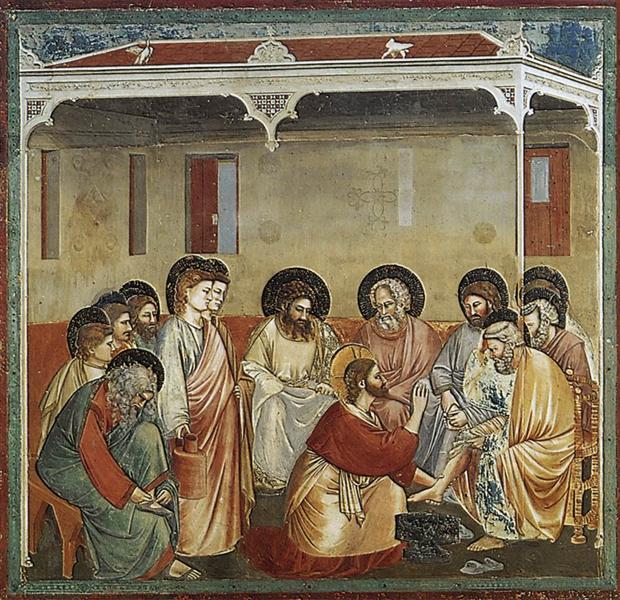
Read John 13:1-17. How can we love and serve the church as Jesus showed us?

Reorienting our institutions

Dancing in the Kingdom- Table of Contents

Dancing In the Kingdom – Part 3 – Dancing in the Kingdom– Chapter 18 – Entering the Dance

Reorienting our institutions

[Bible references: Jeremiah 29:1-14]

It is normal to organize ourselves to do as a group what we cannot do, or at least do as well, as individuals. Families can undertake the task of running a farm or a ranch better than any one individual. Communities can better protect themselves or do things like barn-raisings to replace a barn that had been destroyed. Communities also allow for the possibility for people with specialized abilities to earn income from the specialty while allowing others to focus on their own businesses more successfully. Businesses are organized to create products or services that could not otherwise be produced. Civic organizations are organized to handle various problems within our society and cultural organizations help our society to flourish. Governments allow communities to pool resources, create infrastructure to support our society and to provide law enforcement to keep the peace within communities.

It is to God’s glory that his image-bearing creatures can create organizations that exemplify our reflections of God’s creativity and transcendence and allow us to do all the sorts of things that help fulfill his intention for us to fill the earth and steward its resources. However, in our fallen world, the very large and pervasive problem with any institution we create is that communities and organizations are made up of people and – we must remember – all people, including ourselves, are sinful.

It then becomes our sinful tendency to dislike organizations, institutions, in general. One of the unfortunate organizations many of us tend to dislike – is the organized church. So, before we address other organizations, we need to address our attitudes towards the institution we call the church.

Emily Rose Gum suggests that it is from the creation narrative that we can see that God wants us to thrive in a way that allows our personal good and the common good to reinforce one another. But we and the institutions we create are fallen and need to be re-oriented toward the common good. Sometimes we need to create new institutions but sometimes we need to reinvigorate and restore fractured ones, such as our public education schools which provide education to our poorest neighbors. [1]

In the larger picture of reclaiming our institutions, Vincent Bacote reminds us of our dependence on the Spirit. It was the Spirit “hovering over the face of the waters” bringing life into creation and it is the Spirit who enables us to carry out the mandates of God, including the building of institutions to carry out those mandates.[2]

“The mandate of creation is central to who Christians are before God. This mandate calls for obedience, yes, but this should not be viewed as a heavy burden. Indeed, in fulfilling this mandate Christian believers become more of who God intends them to be. Importantly, this is not a mandate for a few but for all—all are participants, all are enjoined to participate in ways framed by the revelation of God’s word in the creative and renewing work of world-making and remaking. And it is in the divine nature of this work that vocation is imbued with great dignity. It is, in part, the appeal to every person, regardless of stature, giftedness, achievement, wealth, power, or personality that makes the Gospel so radical. Every person is made in God’s image and every person is offered his grace and, in turn, the opportunity to labor together with God in the creation and recreation of the world.” [3]

As we look beyond the church itself, we see that God has designated other organizations for service as well. Even those of God’s image-bearers who are not of the church may respond to God’s call to all of us to tend to His creation, however they may understand it. And just as God’s own church has a mixed record of accomplishment, these other organizations/institutions will certainly have a mixed record as well. We cannot assume, that despite not completely understanding God’s creation mandate, that within these organizations outside the church there is no good intended by them, and that God is not able to use them.

These “outside” organizations may include government, civic, cultural, and social organizations and are part of the ways in which God’s image-bearers are fulfilling his purpose for his creation. Humans cannot create institutions without some basis in faith, even if they try to ignore it. What we can do as Christians is bring to those institutions the sensibilities that are based on our faith.[4] While we cannot make these institutions perfect (after all, even we are not yet perfect) we can help instill grace, mercy, and justice in whatever capacity we can.

Institutions sometimes try to re-organize their structure to make themselves better in some fashion, but structure cannot override the character of the people within the organization. In whatever capacity we have, if we are present in an organization, we can be the “salt” that preserves and adds spiritual taste to the organization.


[1] Gum, Emily Rose. “Recovering an Institutional Imagination” Comment Magazine comment.org/recovering-an-institutional-imagination p.28

[2] Bacote, Vincent. “The Spirit and Institution Building” Comment Magazine, Sept 2005, comment.org/the-spirit-and-institution-building

[3] Hunter, James Davison. To Change the World: The Irony, Tragedy and Possibility of Christianity in the Late Modern World  Oxford University Press 2010

[4] Chaplin, Jonathan. “Loving Faithful Institutions: Building Blocks of a Just Global Society” The Other Journal 15 Mar 2010 theotherjournal.com/2010/04/15/loving-faithful-institutions-building-blocks-of-a-just-global-society/Chechowich

Observe

Read Jeremiah 29:1-14. How should we try to influence the organizations in which we work?

vocational stewardship

Dancing in the Kingdom- Table of Contents

Dancing In the Kingdom – Part 3 – Dancing in the Kingdom– Chapter 18 – Entering the Dance

Vocational stewardship

[Bible references: Ephesians 6:5-9; Colossians 3:1-17]

In-between those basic strategies, the question we all need to discover is, within the context we find ourselves in, what are the practical ways for us to use the gifts and talents God has equipped us with. For some of us, we can find ways to use our gifts and talents directly within the church. But all work, whether done in the church or outside can be done as unto the Lord. For others, Amy Sherman has identified four different strategies outside the church itself for us to consider.[1]

  • Promote the kingdom in and through your daily work
  • Volunteer your skills to an agency outside your employer.
  • Launch your own social enterprise
  • Participate in your church’s targeted initiative.

Whatever strategy we use, the goal is to bring hope to the world around us by bringing in Kingdom values of justice, righteousness, and peace.[2]

We do have to consider the reality that many of us have jobs that consign workers to demeaning labor: either doing tasks that treat workers as if they were biological robots on an assembly line doing repetitive tasks, or just doing unskilled tasks that require no creativity and that fail to regard the humanity of those workers.[3] Then sometimes, we simply find ourselves in a job which could easily be more meaningful if we were appreciated. What should we do then? Dorothy Sayers’ position is that we should have the same attitude as given to us in Genesis 2, we should serve the work. We can hope that the work was designed to serve the community, so that in serving the work we serve the community.

“The only true way of serving the community is to be truly in sympathy with the community, to be oneself part of the community and then to serve the work without giving the community another thought. Then the work will endure, because it will be true to itself. It is the work that serves the community; the business of the worker is to serve the work.”[4]


[1] Sherman, Amy. Kingdom Calling: Vocational Stewardship for the Common Good. Intervarsity Press, 2011 eBook Chapters 9-13

[2] Sherman, Amy. Kingdom Calling: Vocational Stewardship for the Common Good. Intervarsity Press, 2011 eBook Chapter 1

[3] Smith, James K.A. “The Beauty of Work, the Injustice of Toil” Comment comment.org/the-beauty-of-work-the-injustice-of-toil/

[4] Sayers, Dorothy. “Why Work” in Letters to a Diminished Church: Passionate Arguments for the Relevance of Christian Doctrine Villanova University www1.villanova.edu/content/dam/villanova/mission/faith/Why%20Work%20by%20Dorothy%20Sayers.pdf

Reflect

How might you use your vocational stewardship?

Observe

Read Ephesians 6:5-9. How do we serve “as unto the Lord” at whatever our vocation is?

Top-down strategy

Dancing in the Kingdom- Table of Contents

Dancing In the Kingdom – Part 3 – Dancing in the Kingdom– Chapter 18 – Entering the Dance

Top-down strategy

[Bible references: Numbers 22-24; Deuteronomy 8; Psalm 27; Nehemiah 1-2; 1 Timothy 4:3; stories of King David and Solomon (2 Samuel; 1 Kings 1-11)]

The top-down strategy tries to reach individuals by affecting the culture. Even if people don’t respond to the cultural change, God can be glorified by the display of his kingdom values in society.

James Hunter examined how culture changes and saw the mixed results of the bottom-up approach. He saw that some small groups of people (e.g., gays, Jews) have had a relatively large impact on the culture while larger groups (e.g., evangelicals) are losing their impact on the culture. Hunter discovered that cultures usually are changed from the top-down, most influenced by elites who are somewhat outside the center of influence but having a network of connections to other elites and who can withstand the resistance from the centers of influence.

Culture is about how societies define reality—what is good, bad, right, wrong, real, unreal, important, unimportant, and so on. This capacity is not evenly distributed in a society but is concentrated in certain institutions and among certain leadership groups and that cultural change is most enduring when it penetrates the structure of our imagination, frameworks of knowledge and discussion, the perception of everyday reality.[1]

Very few Christians are in a position to exercise a top-down strategy. The few people who do have such influence are typically subject to the temptations that come with such power, and all too often succumb to sin and become disqualified or become abusive in the exercise of such power.


[1] Hunter, James Davison. To Change the World: The Irony, Tragedy, and Possibility of Christianity in the Late Modern World. Oxford University Press 2010

Observe

Read Nehemiah 1-2. What factors were involved in Nehemiah’s influence on King Artaxerxes?

Bottom-up strategy

Dancing in the Kingdom- Table of Contents

Dancing In the Kingdom – Part 3 – Dancing in the Kingdom– Chapter 18 – Entering the Dance

Bottom-up strategy

[Bible references: Romans 5:1-11; 10:11-15; 1 Corinthians 13; 2 Corinthians 8:1-14; 1 John 4:21]

There are two strands of strategy that can be seen in attempts of Christians to influence culture. In the bottom-up type of strategy, Christians reach out to individuals, with the thought that “transformed people transform cultures.”

“Discipled leaders transform cultures through their own transformed lives” [1]

But the evidence shows mixed results. For example, in America, as late as 2015, 89 percent of the people believed in God, but in government, academia, popular entertainment, were in process of becoming increasingly materialistic and secular. On the other hand, we see that Jews, who have never comprised more than 3.5 percent of the population, have had very strong contributions to many areas such as science, literature, music, and film.[2]

“The share of U.S. adults who say they believe in God, while still remarkably high by comparison with other advanced industrial countries, has declined modestly, from approximately 92% to 89%, since Pew Research Center conducted its first Landscape Study in 2007” [3]

We should keep in mind that historical records are not good at showing how the quiet contributions of individual Christians have made a difference in lives of other individuals who were not in positions of power, nor how such combined contributions may have impacted parts of society until such changes affect those in power. That does not mean that bottom-up transformation is without merit.

We certainly should not forget the importance of conventional methods of evangelism and missions which focus on outreach to individuals at all levels of society. After all, the change we most want to see are the hearts of individuals changed in direct response to the gospel message. In that regard, we are more concerned about heart transformations than the cultural transformation that should result from heart transformations.

Another bottom-up strategy in that regard is for a local church to “preach” to the culture around it by simply living as a Christian community, drawing individuals who respond to seeing how the Christian life can be lived out.


[1] Poore, Preston. “Transforming Culture through a Transformed Life” Preston Poore and Associates, 31 May 2020 prestonpoore.com/transforming-culture-through-a-transformed-life

[2] Hollinger, David. Science Jews, and Secular Culture Princeton University Press, 1996

[3] Pew Research Center. “U.S. Public Becoming Less Religious”3 Nov 2015 www.pewforum.org/2015/11/03/u-s-public-becoming-less-religious

Observe

Read Romans 5:1-11. How can the Christian life impact those who see it?

Occupy Till I Come

Dancing in the Kingdom- Table of Contents

Dancing In the Kingdom – Part 3 – Dancing in the Kingdom– Chapter 18 – Entering the Dance

Occupy Till I Come

[Bible references: Jeremiah 29; Luke 19:11-27]

On His way to Jerusalem the last time before His triumphal entry, Jesus knew the kind of expectations the people had about how the Kingdom of God would appear. To prepare them for the long wait between His resurrection and His return to fully restore the Kingdom of God, He told them a parable about a nobleman who would, before going into a far country, give his servants some money with instructions to engage in business while he was gone. The parable ended with rewards given to those who made profits and penalties for those who did not.

This then is our instruction, to make use of what God has given each of us to ‘engage in business,’ (KJV “Occupy Till I Come”) that is, we are called to help advance the kingdom until He returns.

When Jesus came two thousand years ago, he announced the beginning of a new age, “The Kingdom is here … The Kingdom of heaven is near … The Kingdom of God has come.” As disciples of Jesus we can say, “The Kingdom of God is within us.” Then, with our hearts changed by Jesus, we are charged to go and make disciples, to do justly, love mercy and to walk humbly with our God.

As we then join Jesus in bringing His kingdom into the world, we need to remember our humble estate …We cannot even change our own hearts, never mind the hearts of others. Certainly, we cannot change our culture. It is up to our Savior to change our hearts, and even more so to change the culture around us.

Jesus and his disciples lived more as servants or slaves within the Roman Empire. They had no political influence. But as the disciples lived transformed lives, living as well as preaching the Gospel, and showed the power of sacrificial love, their Spirit empowered lives opened the way for the Spirit of God to change the hearts of many throughout the Roman Empire, eventually moving the heart of a Roman Emperor, Constantine.

History has shown the mixed results of combining the power of state and church, but the teachings of Jesus have penetrated even our secular postmodern culture in ways that are not widely recognized as such. Despite the church’s own history of abusing and misusing power, Jesus’ concepts of using power to serve others, even one’s enemies still managed to occasionally penetrate the halls of power – in imperfect form to be sure, just as the ideas expressed in the Enlightenment imperfectly expressed ideas from Christianity.

“Reparations let’s say for slavery or in New Zealand reparations to the Māori or in Australia reparations to the Aboriginal even for native indigenous American Indians. And this language is actually not a historic language. This is a language since Jesus. See, because Genghis Khan never worried about reparations. He never felt he had any moral responsibility to somehow make it right for all the women he raped and all the men he killed and all the families destroyed and all the villages he burned down. We have Caesar or Alexander, they never really had remorse for anything they conquered or anything they destroyed or any people whose lives they overthrew. This concept of justice of using power well is a concept that only emerges because Jesus lived 2,000 years ago. He revolutionized the entire understanding of power. The idea that a government should actually care about its citizens is really, it’s not a historic human concept. This concept is infused by the ethics that Jesus brought to the understanding of power that it says when Jesus had all power and all authority, he ties a towel around his waist and he washes his disciples’ feet. This is a reinvention of power. … if you go back to World War II … when you look at the American response to conquering Germany and conquering Japan, and how within a decade or two, both of them became two of the greatest economies in the world … You get to see what happens when you’re conquered from a Christian mindset world with West Germany. You realize that Japan becomes one of our greatest allies. That doesn’t happen historically. You do not conquer a nation and then rebuild it to feel a moral obligation to re-establish that country better than it was before. Even what we’ve done historically has been informed by a Christian worldview. I’m not saying that England or United States or any Western nation is a Christian nation. What I’m saying is the conversations we’re having are informed by Jesus’s revolutionary, brilliant genius thoughts about power.” [1]

There are debates on the ideas expressed above, often fraught with ideas of self-interest[2] and ideology, about how to provide for populations that have experienced oppression or how to manage the after-effects of war. But these ideas and other expressions of compassion and justice – like hospitals, orphanages, the concept of “war crimes,” or the many ways to carry out “social justice” (that is, God’s expression of compassion and justice) – are ideas not found in history until God introduced them first to his chosen people, Israel, and then through the person of Jesus to His Body. As God’s image-bearers

Unfortunately. the church often abused its privilege, often succumbing to the worldly temptations of power and ignoring its mandate to steward God’s world with compassion and justice. But even though the church has stumbled, it has still managed to live out, admittedly imperfectly, its mandate of compassion and justice. And the world has noticed. Bu interestingly, many have adopted those same values even though they choose to ignore the source of our mandate.


[1] Mcmanus, Erwin. Interview with Carey Nieuwhof, CNLP 452: Erwin McManus on the Future of the Church, How to do Evangelism More Effectively, Authenticity and Reflections on Being Labeled a Heretic Carey Nieuwhof careynieuwhof.com/episode452

[2] Niebuhr, Reinhold.  “Editorial Notes” republished as Christianity and Crisis Magazine providencemag.com/2022/06/christian-realism-enlightened-self-interest-marshall-plan-emerges-reinhold-niebuhr/ 17 Jun 2022

Reflect

In what ways have you lived out a sacrificial love?

Observe

Read Jeremiah 29; Luke 19:11-27. What do we need to do to live transformed lives, living and preaching the Gospel, and show the power of sacrificial love with Spirit empowered lives?

Beyond winsomeness

Dancing in the Kingdom- Table of Contents

Dancing In the Kingdom – Part 3 – Dancing in the Kingdom– Chapter 17 – Finding our place

Beyond winsomeness

[Bible references: Deuteronomy 18:15-19; Proverbs 21:22; Acts 3:22; 4:1-22; 12:1-19; 16:16-40; Romans 13:1-7; Ephesians 6:11-13]

Oftentimes, our first impulse when confronting evil in the world is to resort to the world’s tactics. It can seem more expedient to respond to evil with physical force or displays of anger – and there are occasions when such responses are justified – but wisdom is called for. We need to remember that our real enemy is not our “flesh and blood” fellow image-bearer but the forces of darkness. We also need to discern between when it is time for God to act and for us to act.

After David was anointed to be the future king, he had to wait several years during which period King Saul pursued David intending to kill him. Even though there were a couple of occasions when David could have killed Saul, he did not think it was his to take – he waited for the kingship to be given to him. Ever since Moses, Israel had been waiting for “one like Moses”. But David’s refusal to “take” the kingship is likely part of the reason that David was called a “man after God’s own heart,” because unlike those who came before him, he did not (at least in this case) succumb to the impulse to “see, desire, take.”

God has established government to keep the peace. What is our role if the government carries out its duty, what action should we take in support of it? What is our role if the government abuses its duty, what action should we take in opposition to it? The apostles defied the authority of the Sanhedrin and the Roman government, with God even releasing Peter from prison on one occasion and Paul in another. But on another occasion, Paul submitted to the Roman government as a means to get to Rome to continue his work there. Is there ever cause for a Christian to participate in violence? There is a debate in the Christian community about these questions that calls us to seek wisdom in our different situations.

Observe

Read Ephesians 6:11-13. How might “putting on the armor of God” help us determine when to take action or to wait for God?

Listening to our culture

Dancing in the Kingdom- Table of Contents

Dancing In the Kingdom – Part 3 – Dancing in the Kingdom– Chapter 17 – Finding our place

Listening to our culture

[Bible references: Proverbs 12:15; Isaiah 5:20; Luke 10:25-37; Acts 17:16-34; Galatians 5:16-23; James 1:29; 1 John 4:1]

Outside of providing a healthy, flourishing place within the church community, how can we be more deliberate in engaging with those outside the church. Like the Apostle Paul engaging with the citizens of Athens, we must know what it is we believe then take the time to understand what the others believe and what their needs are so that we can begin the conversation. We can speak better after we have listened.

Listening to voices from outside the church can be challenging because their value systems and world views are so different. We saw in Chapter 13 how different experiences and viewpoints within the church have affected how they answer the various questions asked by the church. We do need to be aware of the different values and world views because, on the one hand, they may add useful understanding to our faith, then on the other hand, they can also distort the values and world views we have within the church.

“A newly released survey reveals that the ideologies of postmodernism and secular humanism have a noticeable influence on how Americans make decisions. The Cultural Research Center at Arizona Christian University released the eighth report of its 2021 American Worldview Inventory Tuesday. The report was based on responses collected from 2,000 American adults in February as part of a more extensive survey with a margin of error of +/- 2 percentage points. The survey found that although 2% of Americans have adopted secular humanism as their dominant worldview, a significantly higher share of the population (16%) actively embrace principles associated with the worldview. Similarly, while just 1% of Americans have adopted postmodernism as their dominant worldview, 16% frequently make decisions indicating that the philosophy plays an important role in shaping their day-to-day actions.” [1]

What is apparent from the study done by the Cultural Research Center at Arizona Christian University, is that there is a small percentage of Americans who are aligned with one particular ideology, but many of us, including many within the church, have adapted only various pieces of various ideologies. Before we figure on how to bring the gospel to or culture, we may first need to understand how our culture has affects our understanding of the gospel[2] so we can communicate clearly about what the gospel is.

According to Timothy Sheriden and Michael Goheen, there are four theological considerations:

“The first is an understanding of the gospel as the good news of the kingdom …God is restoring his gracious and loving rule over the whole of creation and every aspect of human life. … The second is an understanding of the comprehensive and restorative nature of salvation … the whole of human life … the restoration of this creation … The third is the lordship of Jesus Christ … He is more than a personal savior; he is Lord of all. Fourth, the church is the new humanity that shares in the future life of the kingdom now, as sign, foretaste, and instrument.” [3]

Once we are clear on what the gospel message is, then we are prepared to first express love by listening to our “neighbor,”[4] so that we then address our neighbor’s needs as we share the gospel. The very short following list highlights just a very few of the predominant cultural ideologies that have influenced our neighbors.

  • The church should not influence the government.
  • Religious ideas are to be kept as private ideas not to be discussed in public
  • Rejection of any knowledge other than what is available by science.
  • Humanity is always getting better.
  • All knowledge, hence, all truth, is relative.

When we talk with fellow image-bearers of God, we need to remember our common humanity,[5] that despite our differences there are many things that we share together. We were all intended to create good, and we are all broken in our attempts to do that good. Our society tends to put labels on ideas, such as those listed above, but those labels tend to be unhelpful because we then create divisiveness by using them to label people.

Whatever ideologies we may encounter in our conversations, we should remember that people are usually not as responsive to attacks on their ideas when they feel they are being listened to. When we are listened to, we may find each other more receptive as we each express our convictions sincerely in context of a polite conversation.

One way of loving our neighbor is suggested by Richard Mouw. Convicted Civility,[6] is a civility that begins with kindness, grace, patience, generosity, and caring for the other paired with a conviction that is not being relativistic, but truthful about what you don’t approve. Jesus showed most of his criticism to people within the religious establishment but was gracious to the “sinners.”


[1] Foley, Ryan. “Postmodernism, secularism have increasing influence over Americans’ decision-making: report” Christian Post, 10/22/2021 www.christianpost.com/news/peoples-choices-influenced-by-postmodernism-secularism-report.html

[2] Mattera, Joseph. “Why Your Faith is More Influenced by Culture than the Bible” JosephMattera.org 31 Aug 2017 josephmattera.org/faith-influenced-culture-bible

[3] Finn, Nathan A, Whitfield, Keith S. “Chapter 5 Missional Spirituality and Cultural Engagement” IVP Academic 2017IVP Academic 2017

[4] This parable helps us to understand that our “neighbor” includes anyone we encounter.

[5] Warren, Tish Harrison. “We Need to Talk How Americans Can Learn to Live Together Again” New York Times, 10/24/2021

[6] Mouw, Richard J. Uncommon Decency: Christian Civility in an Uncivil World. IVP Books 2010

Observe

Read Luke 10:25-37. Jesus told the story with characters his audience could identify with. What characters would you choose to tell the same kind of story today?

Flourishing community

Dancing in the Kingdom- Table of Contents

Dancing In the Kingdom – Part 3 – Dancing in the Kingdom– Chapter 17 – Finding our place

Flourishing community

[Bible references: Proverbs 17:17; 27:10; Ecclesiastes 4:9-10; Romans 12; Philippian 4:4-9; Hebrews 10:19-25; 13:2;1 Peter 1:12 22; 4:9; 2 Peter 1:3-11]

One mark of the Kingdom of God is the presence of communities that flourish. In this in-between time, these communities will not be any more perfect than the individuals within the community. But there are practices that we can engage in that will help our communities flourish. How we share our lives as individuals, congregations, or families will either draw people in or push them away. Within the culture that surrounds us, there are many practices that serve to isolate individuals, creating loneliness and emotional fragility. However, within the context of healthy congregations, there are various practices that serve not only to build us up within the church community but can also impact the communities around us. Christine Pohl has identified four characteristics that will sustain flourishing communities:[1]

  1. Gratefulness: As much as we are aware of how God has provided for us and we are secure in that knowledge, our gratitude can flourish. When we have gratitude, our lives will be enhanced by being more likely to notice what is good and beautiful around us. When our hearts are grateful, we are enabled to increase our ability to love and to offer grace to one another.

“Be thankful for the smallest blessing, and you will deserve to receive greater. Value the least gifts no less than the greatest, and simple graces as especial favors. If you remember the dignity of the Giver, no gift will seem small or mean, for nothing can be valueless that is given by the most high God.” [2]

2. Making and keeping promises: We arrange much of our lives according to our expectations of others’ behavior and the promises they make. Broken promises lead to a sense of betrayal and disappointment to the loss of integrity of the promise maker. On the other hand, promises that are kept strengthen our commitment and love with one another and provides stability for the community.[3]

“The history of the human race, as well as the story of any one life, might be told in terms of commitments. . .  At the heart of this history . . . lies a sometimes hidden narrative of promises, pledges, oaths, compacts, committed beliefs, and projected visions.” [4]

3. Truth-filled lives:[5] Without expectations of truth, there can be no trust. One need only to look at the broken social and political environment that we have today and see the consequences of a society in which trust is broken.

4. Hospitality:[6] To be truly hospitable is to recognize each other’s common humanity, to set aside the priorities of efficiency and instead, to care for and nurture one another, to prioritize our needs for rest and renewal. According to a tradition in Africa, no one individual is a host but the rather it is the community that offers hospitality.

“Welcome is one of the signs that a community is alive. To invite others to live with us is a sign that we aren’t afraid, that we have a treasure of truth and of peace to share.;” Ogletree, Thomas. Hospitality to the Stranger (Fortress Press, 1985) “to be moral is to be hospitable to the stranger.” [7]

All the characteristics mentioned above should ideally be present in the Christian community. When we notice their absence from the communities around us, we can see the destruction created by their absence. A healthy church then has the opportunity to bring a healing influence into the communities around us. As Leslie Newbigin has stated, “the presence of a new reality will be made known by the acts that originate from it.”[8]

One of the challenges/opportunities for the church is to maintain those healthy characteristics across all the boundaries of the different groups within the church so that there is healthy interaction between married and single adults, between adults and children, between different ethnic groups. Paying attention to those interactions within the church will help to navigate those interactions with those outside the church.

Linked to the gift of hospitality is the gift of friendship. Because this gift is costly in the amount of time and energy that we devote to someone else, exercising this gift outside the bounds of the church will usually require significant intentionality,


[1] Pohl, Living into Community, Cultivating Practices that Sustain us William B. Eerdmans Publishing Company 2012. eBook

[2] Kempis, Thomas à. The Imitation of Christ early 15th century (Chapter 35)

[3] Arendt, Hannah. The Human Condition University of Chicago Press, 1958, p.244

[4] Farley, Margaret A. Personal Commitments: Beginning, Keeping, Changing Harper & Row, 1986,pp. 12-13, 34, 38

[5] Aquinas, Thomas, Summa Theologica, Vol 2, Question109: “Of Truth”

[6] Vanier, Jean, Community and Growth 1979

[7] Turyomumazima, Bonaventure, “Africa Files – Christ in Africa: Stranger, Guest, Host” www.africafiles.org/printableversion.asp?id=14009 (no longer available); De Vries, Roland. Becoming a Guest: Christology and Ecclesiological Identity Erudit Volume 25, Numero 2, 2017 p. 165-184 www.erudit.org/fr/revues/theologi/2017-v25-n2-theologi04371/1056942ar (p. 165-184)

[8] Chilcote, Paul and Warner, Laceye” The Study of Evangelism: Exploring a Missional Practice of the Church. Wm B Eerdmans Publishing Co. 2008 Chapter Four, Leslie Newbigin. Evangelism in the context of secularization.

Reflect

Of the characteristics mentioned by Pohl, which are evident in your local church community? 

Observe

Read 2 Peter 1:3-11. What would a community look like if everyone was living out this passage?

Preparing to engage with those outside the Church

Dancing in the Kingdom- Table of Contents

Dancing In the Kingdom – Part 3 – Dancing in the Kingdom– Chapter 17 – Finding our place

Preparing to engage with those outside the church

[Bible references: Matthew 9:35-38; 13:1-30; 22:34-40; John 3:16]

When talking with someone for the first time, we never know what experiences the person has gone through in which the Spirit of God was already at work. If we take the time to listen, then we can share the Gospel more effectively. Some will be immediately ready to receive the Gospel, and some will need more caring for. In either case, if we remember that our primary directive is to love God and love our neighbor, we must be ready to bear the cost of that love.

“For God so loved the world that he gave his only Son … (John 3:16, ESV)”

What costs are we prepared to bear for our neighbor? Are we prepared to bear the cost of loving those within the church so that we can provide a loving, united atmosphere to invite someone from the outside? Are we prepared to bear the cost of friendship with those outside the church so that they can witness what is means for us to have Jesus as our friend? Are we prepared to listen to the concerns of our neighbor so that we can model how God listens to us?

Reflect

What cost are you prepared to pay for the sake of loving your neighbor?

Observe

Read Matthew 13:1-30. How can we be “sowing seed” in all the different “fields” of our community?

Not yet, but Already

Dancing in the Kingdom- Table of Contents

Dancing In the Kingdom – Part 3 – Dancing in the Kingdom– Chapter 17 – Finding our place

Not Yet, But Already

[Bible references: Matthew 6; John 15:1-17; 1 Corinthians 3; Revelation 21-22]

Sincere prayer has a habit of changing us. When we commune with God as a friend, we learn his business and desire to join in His work; the work of God calling people to Himself in love and bringing them healing. We also know His desire to restore the earth so that is rejoined to heaven, making the whole earth a temple, a place where he will be with all His people. When He came the first time, He began that work of restoration and when He comes again, He will complete it. In the meantime, He has left us here as His stewards. There are some things that only He can do, but that does not mean there is nothing for us to do. In this time where He has not yet returned, He has already begun a work that He invites us to join with Him, calling people to Him and restoring the earth, bringing healing, wholeness, and hope to the world.

The gifts He has given us can not only be used to serve and build up those already within the church community, but as Christ’s ambassadors, we can bring tangible signs of love and hope into the world around us, to show God’s love and care that He has for not only the smallest things in our lives but for all of creation. As we live in the world as it now is, we can bring the love of God into our relationships, our vocations, our hobbies, etc. Our efforts will be incomplete because Christ has not yet returned. But the work that we do now can demonstrate the hope and confidence that we have because Christ has already come.

There is a call for those who can carry a prophetic message, going and preaching the gospel to those outside the church. For those who do that work, they need to remember that when Jesus called us to go the fields that are “white unto harvest,” he implied that some preparation had been done beforehand, the crops were already planted, fertilized, weeded, and supplied with sun and water. Much work had been done and therefore the crops were ready for harvesting. While not all of us have the gift of evangelism or prophecy, we should be open to what we are called to do.

Observe

Read Matthew 6. How are giving, prayer and generosity linked?

Community of persons, not groups

Dancing in the Kingdom- Table of Contents

Dancing In the Kingdom – Part 3 – Dancing in the Kingdom– Chapter 17 – Finding our place

Community of persons, not groups

[Bible references: 1 Corinthians 12]

It would be more typical to frame our relationships in a widening circle that centers on God and ourselves, then widens to family and then widens to the church. That would certainly fit the way we normally prioritize things. This is in the context of a culture with an increasingly self-centric consumer mentality that focuses on addressing our individual needs over the needs of the community. A typical response of organizations, including the church, is to identify which groups people are in and the provide a product or service to meet that needs of those groups such as children, youth, adults, married, single, etc.

While it is proper to identify common needs of various groups, care needs to be taken that we serve as individuals serving other individuals, not as one subcommunity in the church serving another subcommunity within the church. Both those who serve and those who are served are image-bearers who are individually valuable to the God who values each of us as individuals.

Observe

Read 1 Corinthians 12. What is it that we can do as an entire Body of Christ that we cannot do well as one part of the Body by itself?

Created to gather and build

Dancing in the Kingdom- Table of Contents

Dancing In the Kingdom – Part 3 – Dancing in the Kingdom– Chapter 17 – Finding our place

Created to gather and build

[Bible references:  Romans 12:3-8; Ephesians 4:11-16; 5:18-19; Colossians 3:16; 1 Timothy 2:1-2; Hebrews 10:24-25; 1 Peter 4:10;]

When we become part of the Body of Christ, we are given spiritual gifts for the express purpose of building up one another so that we may serve each other, help each other become more unified in our faith and in the knowledge of Christ and ultimately more like Christ. And it is part of that great mystery that we experience God more fully in both the giving and receiving of God’s grace through each other.

Furthermore, it is as a community of believers that we participate in the sacraments of the church. We cannot baptize ourselves and we cannot share communion by ourselves. And then there are other aspects of worship, which although we can do at any time during the week, it is only when we come together to worship that we can build up one another. This worship includes participating in the sacraments, reading and preaching scripture with each other, praying with each other, and singing hymns and spiritual songs with each other. We need to gather regularly in order to effectively build one another up. That is why we are encouraged to gather with one another.

Observe

Read Ephesians 4:11-16; 1 Peter 4:10; Colossians 3:16; 1 Timothy 2:1-2; Hebrews 10:24-25. In what ways can we encourage one another when we gather together?

Created as parts of a body

Dancing in the Kingdom- Table of Contents

Dancing In the Kingdom – Part 3 – Dancing in the Kingdom– Chapter 17 – Finding our place

Created as parts of a body

[Bible references: Romans 12:3-8; 1 Corinthians 12; Ephesians 4:1-16]

We were created to be connected. We have individual identities and desires, but we were created for love by the God of love. As God’s image-bearers, we are intended to love one another just as love is shared between Father, Son, and Holy Spirit. The greatest commandments are to love God and to love our neighbor. We are told that the world will know us by our love.

Through a process we cannot understand, the Son of God, Jesus, the Christ, appeared in the flesh two thousand years ago. After His resurrection and He “returned to heaven,” He then sent the Holy Spirit who entered into His disciples. His disciples then, as Christ’s ambassadors, became His body, creatures filled with His very Spirit who were then His feet and hands, even His voice, on the earth. And it is through His body that we and others may come to know about Christ. Sometimes we come to know Christ directly through a member of His body or indirectly by what someone recorded for us. And when we respond to His call through the body of Christ, we also become part of that same great body.

We come to Christ in response to His Spirit connecting with our spirit. But the means of that connection is through the Body of Christ. As we understand how even the set of writings, we call the Bible, was written and compiled by that great body, we can grasp the dependence that we have on His body to even to come to Him. That dependence does not end after we respond to Him but enters us into an interdependence with each other: We are dependent on each other to more fully learn how to love God and love neighbor, we are dependent on each other to build each other up.

Reflect

How can you foster the need that the church has for us to be interdependent with each other?

Observe

Read 1 Corinthians 12. If someone tries to be a “part time” church member, how does that affect everyone else?