Ordinary believers

Dancing in the Kingdom- Table of Contents

Dancing In the Kingdom – Part 1 – Shadows of the Kingdom – Chapter 5– Patriarchs

Ordinary believers

[Bible references: Genesis 17:17; 21:5; 21:1-7; 24; 25; 26:1-11; 27:1-29]

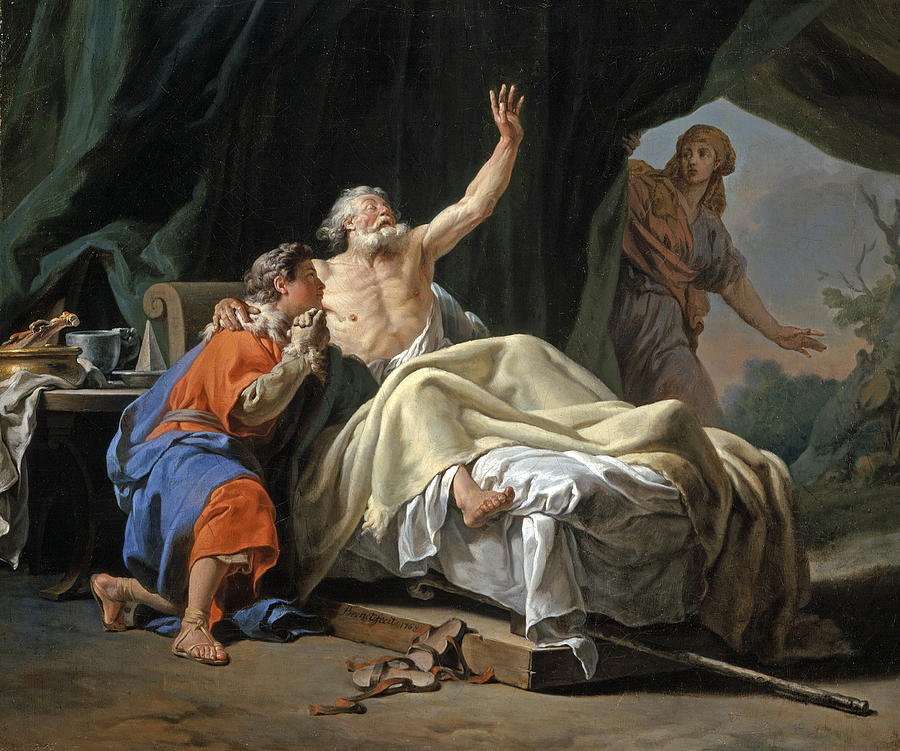
Meanwhile, the Biblical record for life of Isaac is unremarkable. God had blessed Isaac with wealth, however, the most notable events in his life were 1) failing just as his father Abraham had failed, Isaac also fearing that a local king kill him to get his wife, so Isaac, like Abraham, claimed that his wife was his sister and 2) when Isaac was preparing to die, he got fooled by Jacob into giving Jacob the primary blessing instead of his older twin brother, Esau. This incident just highlighted the favoritism Isaac showed to Esau and the favoritism his wife Rebekah showed to Jacob. Blessed, fallible, unremarkable, yet still used by Yahweh to accomplish Yahweh’s will.

Reflect

What is our prayer when we know that our time in this life is limited and most of us will not accomplish anything spectacular, and yet, God may use our life to achieve a greater impact than we realize?

Observe

Read Genesis 25:21-23; 27:1-29. What seems ordinary about how Rebekah interacted with Isaac in the way that would fulfill Yahweh’s prophecy?

Slow and steady

Dancing in the Kingdom- Table of Contents

Dancing In the Kingdom – Part 1 – Shadows of the Kingdom – Chapter 5– Patriarchs

Slow and steady

[Bible references: Genesis 17:5; 21:4-5; 26:34; Psalm 6; 2 Peter 3:8]

Yahweh said that Abraham would be the “father of many nations, ” but there was only one child born to Abraham and Sarah – and that child, Isaac, was born to him and very late in his life. Isaac would have only twins. And Isaac’s only children, Esau and Jacob were born late in Isaac’s life, so the “father of many nations” would die only seeing two grandchildren.

Reflect

God answers prayers on his timeline, not ours. He will fulfill his purpose for us – also on his timeline. Does that make you frustrated or assured?

Observe

Read Psalm 6. Sometimes we suffer long. What keeps us going in such times?

Faith and obedience

Dancing in the Kingdom- Table of Contents

Dancing In the Kingdom – Part 1 – Shadows of the Kingdom – Chapter 5– Patriarchs

Faith and obedience

[Bible references: Genesis 22:1-19; 1 Corinthians 10:13 ]

In one of the most controversial events, God called Abraham to take Isaac and go to a mountain, build an altar, and then offer Isaac as a sacrificial offering. Abraham must have severely tested, but Abraham did as he was told and went through the whole process to the point where he was about slay Isaac when God provided a substitute, a ram. Isaac would indeed be the next link in the genealogical chain connecting Abraham ultimately to the birth of the Messiah 2000 years later.

Observe

Read Genesis 22:1-19; 1 Corinthians 10:13. Theologians have wrestled with this passage in Genesis as we cannot fathom how God could command a human sacrifice, even if He knew how He would intervene before it would happen. How confident are you that God will provide for you in the midst of difficult decisions?

Pleading to God

Dancing in the Kingdom- Table of Contents

Dancing In the Kingdom – Part 1 – Shadows of the Kingdom – Chapter 5– Patriarchs

Pleading to God

[Bible references: Genesis 18:16-33; 1 Samuel 7:1-9; 2 Chronicles 30:1-20; Nehemiah 1:1-2:10; Philippians 1:3-10]

We don’t know the moment that Abraham recognized that one of the visitors was Yahweh, but it apparently happened by the time the visitors talked about Sodom and Gomorrah, which they were going to destroy. Concerned about his nephew Lot, who was living down there, Abraham made a plea to save the city if there were righteous people living in the city. At first, Abraham asked what if there were fifty righteous people living there, would they still destroy everyone there. When Yahweh said no, then Abraham asked, what about if there were 45 or 30 or 20 righteous people there.[1] Each time, Yahweh said that he would not wipe out everybody if there were only that many righteous people there. As it turned out, both Sodom and Gomorrah were destroyed after Lot and his daughters were given the chance to escape.


[1] De Young, Kevin. “Passionately Pleading with God is a Good Thing” The Gospel Coalition.org www.thegospelcoalition.org/blogs/kevin-deyoung/passionately-pleading-with-god-is-a-good-thing/

Observe

Read Genesis 18:16-33; 1 Samuel 7:1-9; 2 Chronicles 30:1-20; Nehemiah 1:1-2:10; Philippians 1:3-10. How are we encouraged to plead to God?

Hospitality

Dancing in the Kingdom- Table of Contents

Dancing In the Kingdom – Part 1 – Shadows of the Kingdom – Chapter 5– Patriarchs

Hospitality

[Bible references: Genesis 18:1-8; Hebrews 13:1-2]

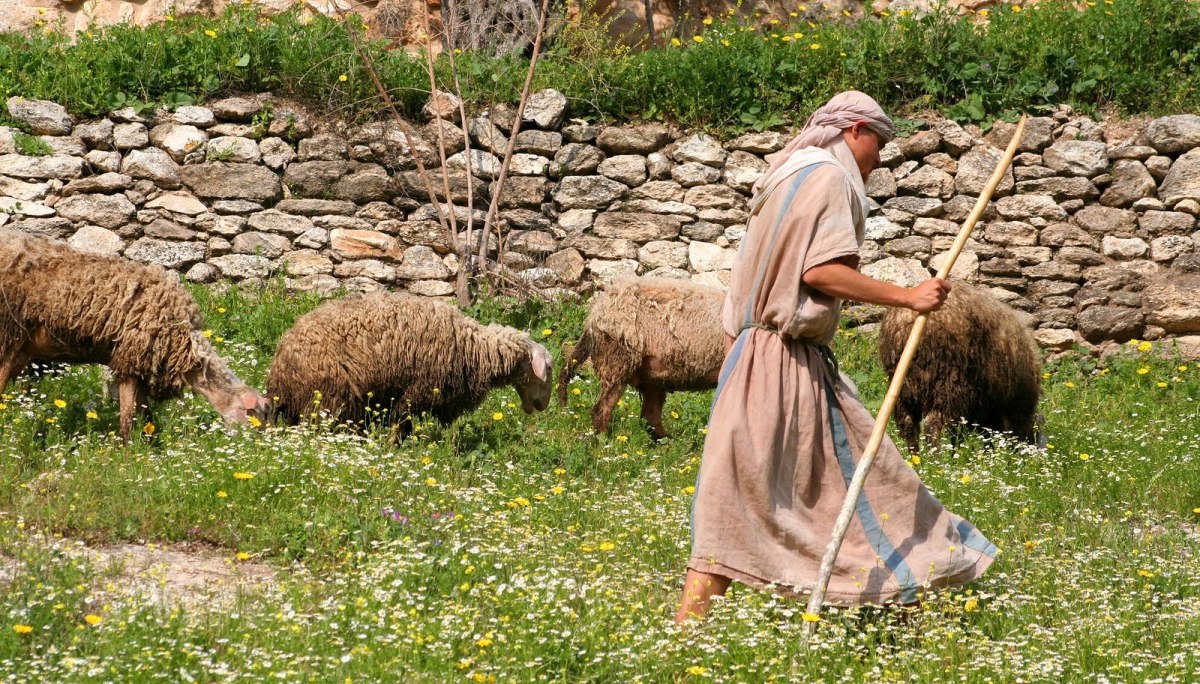
One day, while Abraham was sitting in the entrance to his tent, he saw three visitors approaching and offered them water to wash their feet and then made much effort to offer them something to eat and drink. As we read this description of Abraham’s greeting his visitors, it may sound extravagant to us, but would have been normal for the culture of the time. The normal custom was to regard visitors as those who have been sent by God.[1]


[1] Wight, Fred H. Manners and Customs of Bible Lands . 1953. Kindle Edition. (Kindle Locations 863)

Observe

Read Genesis 18:1-8; Hebrews 13:1-2. In the nomadic culture, hospitality was readily shown to any visitors as they were regarded as visitors from God. What keeps us from exhibiting the same attitude?

Walk of faith

Dancing in the Kingdom- Table of Contents

Dancing In the Kingdom – Part 1 – Shadows of the Kingdom – Chapter 5– Patriarchs

Walk of faith

[Bible references: Genesis 12:1-20; 15:1-6; 16:1-5; 17:1-14; 20:1-13; 22:1-18; 24:7; 28:16; 50:24; Romans 4:9; Hebrews 11:17]

Sometime after the scattering of nations, from the line of Shem and Noah, Yahweh called a man named Abram to leave his country in the Euphrates River Valley and go to a land “I will show you.” As Abram left his home country, at the age of seventy-five, God promised not only to bless Abram and his descendants but to bless the entire world though Abram. Despite his occasional failures, Abram (later named Abraham) is noted for his faith because he believed God and showed this by being obedient in following God’s instructions even when they didn’t make sense.

When Yahweh called Abram to journey to another land, we don’t know what particular experience Abram and brother and father had with Yahweh, but Genesis 24 and 31 indicates that they all knew of knew of Yahweh, even if they thought of Yahweh as one of many gods.[1] Even so, Abram must have had great faith when he took that journey to the Promised Land?[2] Then after Abram arrived in the Promised Land, what further questions may Abram have had when he experienced a deep drought in that same land, such that he needed to take a brief trip to Egypt?

After Yahweh told Abram, that he would make a great nation from him, Abram initially expressed his faith by his obedience when he took that journey to the Promised land. Again, when Yahweh showed him the stars and told him that his descendants would be as numerous as those stars, Abram believed, and Yahweh credited that to him as righteousness. Then Yahweh reiterated the promise again when Abram was 99 years old and changed Abram’s name (which meant exalted father) to Abraham (father of many nations).

God told Abraham that a great nation would come out of him and Sarah. Yet, this did not look promising when the only son born to Abraham and Sarah was Isaac who was not even born until Abraham was one hundred years old and Sarah was ninety. No wonder that Isaac was given a name that means “laughter.”


[1] Garris, Zachary. “Did Abraham Worship Yahweh Before His Call in Genesis 12?” Knowing Scripture knowingscripture.com/articles/did-abraham-worship-yahweh-before-his-call-in-genesis-12

[2] Although the term “Promised Land” is not used directly as the place of where Abram and his descendants were called to settle down in, there are several references to the “land that is promised you.”

Observe

Read Genesis 12:1-20. This renowned Patriarch of faith, Abram, believed Yahweh, and left his homeland to some destination that Yahweh would show to him. When Abram arrived at the place Yahweh led him to, he built an altar and set up his tent. Good start at a life of faith. Sometime afterwards, Abraham winds up in Egypt where he is now afraid for his life and asks his beautiful wife Sarah to say that she’s his sister instead of his wife, so that they people won’t kill him to get her. This does lead to complications we won’t discuss here but just to point out that we, never mind Abram, are subject to a wavering faith. Do you have incidents in your life where your faith wavered?

God working through broken individuals and communities

Dancing in the Kingdom- Table of Contents

Dancing In the Kingdom – Part 1 – Shadows of the Kingdom – Chapter 5– Patriarchs

God working through broken individuals and communities

[Bible references: Genesis 20; Psalm 51:17; Isaiah 40:8; 58:1-14; Jeremiah 5:19; Philippians 3:20-21]

Although the all-powerful Creator and Sustainer of the universe is capable of simply doing things by a show of great power and irresistible force,[1] he usually chooses to work through His image-bearers.[2] He can work through individuals or groups, although even when he works through groups it’s typically through individuals within those groups.[3] Most surprising is that even though all his image-bearers have flaws, God has still chosen to do His work within those flaws.[4] Despite our persistent failures, not only does God patiently empower us to fulfill the responsibility of stewardship of Creation that He gave us from the beginning, but He also empowers us to participate in His work of restoring the universe.


[1] Spurgeon, C.H. “The Power of Christ Illustrated by the Resurrection” Biblehub biblehub.com/library/spurgeon/spurgeons_sermons_volume_17_1871/the_power_of_christ_illustrated.htm

[2] Welchel, Hugh, “Three Key Passages Concerning Stewardship in the Bible” The Institute of Faith, Works & Economics 19 Oct 2016 tifwe.org/stewardship-in-the-bible

[3] Cole, Stephen J. “Lesson 51: How God Uses Ordinary People (Genesis 26:1-35)” Bible.org 29 Aug 2013 bible.org/seriespage/lesson-51-how-god-uses-ordinary-people-genesis-261-35

[4] Wilson, Jarrid, “God Uses Flawed People To Share Hope To a Flawed World” jarridwilson.com 16 Mar 2014 jarridwilson.com/god-uses-flawed-people-to-share-hope-to-a-flawed-world/

Reflect

What does it mean to you that the One who has all knowledge prefers to carry out his plans for us through us who not only have incomplete knowledge but have corrupted intentions?

Observe

Read Isaiah 58:1-14.This passage describes the difference between who we are now and what we should be. What can we be doing better?

Tower of Babel

Dancing in the Kingdom- Table of Contents

Dancing In the Kingdom – Part 1 – Shadows of the Kingdom – Chapter 4– Retreating to chaos

Tower of Babel

[Bible references: Genesis 11:1-8; Genesis 12:1-3]

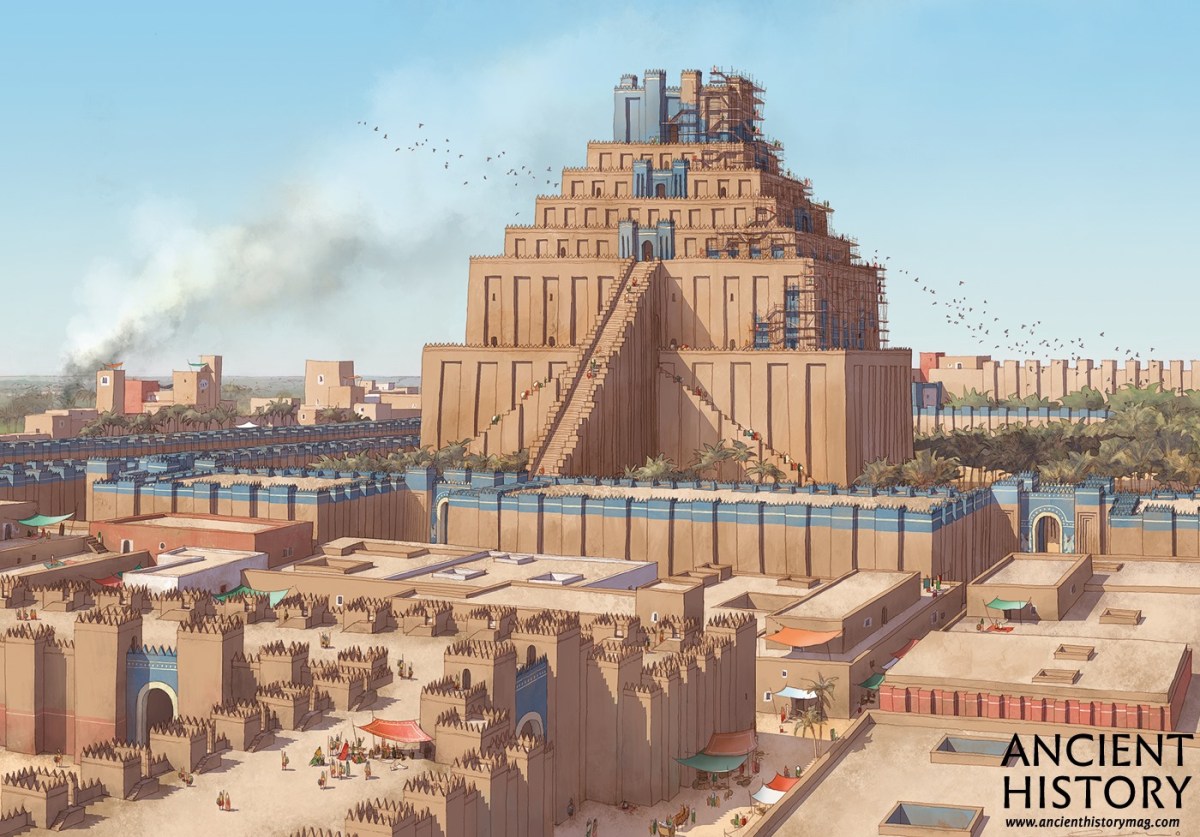
Despite the catastrophic destruction that destroyed all people except Noah and his family, the image-bearers’ defiance would emerge again. Instead of glorifying God, they attempted to “make a name” for themselves and not the God who provided their language and all the other skills with which they would try to build a tower, which would be a monument to their own God-given abilities.

God’s response was very measured. By causing them to speak different languages so that they could no longer communicate with each other, the image-bearers would no longer be able to come together to complete the tower, rather they were now forced to divide into seventy different groups and spread out across the earth, creating different nations.

From one of those nations, God would choose a man who was not out to make a name for himself, someone who did not put his faith in himself but would be willing to put his trust in God. It would be through this one man and his wife that God would form a nation for himself, a nation through which the whole world would be blessed, a nation through whom one called the Messiah would come, the anointed one through whom God would begin His work of restoration.

Reflect

Even within a family, different experiences cause people to think differently causing conflict. They all use the same words but have different thoughts about what is right. Larger problems occur when people grow up in entirely different environments. When people use different languages, those different languages amplify the differences in how people think. In your own situation, what different cultures do you interact with and how do you process conflicts with people in those cultures?

Observe

Read Genesis 11:1-8. What was the wrong motive for building the tower?

Rampant evil

Dancing in the Kingdom- Table of Contents

Dancing In the Kingdom – Part 1 – Shadows of the Kingdom – Chapter 4– Retreating to chaos

Rampant evil

[Bible references: Genesis 6, 9]

So that we can know what terrible direction we are headed without that intervening grace, God initially allowed his image-bearers to live long lifespans. It seems that long lifespans delayed the penalty of physical death such a long time that the image-bearers behaved as if there were no consequences for their God-defiant behavior. The result was rampant unrestrained evil that infected nearly everyone, causing God to send a flood to destroy all but one family. Sadly, even with that severe penalty, it would not be long before our God-defiant behavior would threaten to be our undoing again, but God would continue intervening with grace as He would gradually work out His plan to restore us to Himself beginning with the rainbow as a sign of hope.

Observe

Read Genesis 6 and 9. God sent a flood to deal with the rampant sin in the world but it wasnot long after the flood that signs of human rebellion sprung up again in Noah’s family. What kind of trajectory did this indicate for humanity?

Turning from shalom

Dancing in the Kingdom- Table of Contents

Dancing In the Kingdom – Part 1 – Shadows of the Kingdom – Chapter 4– Retreating to chaos

Turning from shalom

[Bible references: Genesis 3; Psalm 53:1-3]

Although we try to cling to the hope of God and our final restoration, we, in our sin, face a world that is broken by sin. While waiting for the restoration of creation, we find ourselves continually turning from God and to bringing further destruction into God’s good creation. We seem to be constantly bent on turning from shalom and substitutes that give us pain and despair. The history of the world is filled with the flourishing of evil and injustice. The consequence of choosing to go our own way has put us on a path where we continue to separate ourselves from the source of goodness and shalom. Indeed, we find ourselves on a path of destruction despite God’s continual provision for us as he continuously and unrelenting pursues us and pours out his limitless grace. And so it is, that we find ourselves in a world where both good and evil abound, where the good things God created are corrupted, and we continue to turn away from God.[1]


[1] Brister, Tim. “6 Destructive Ways We Minimize Our Own Sin” Bible Study Tools www.biblestudytools.com/bible-study/topical-studies/6-destructive-ways-we-minimize-our-own-sin.html

Reflect

Think about some things that should be inherently good but are used for evil purposes.

Observe

Read Psalm 53:1-3. What is the only way for us to seek what is good?

The plan to restore creation

Dancing in the Kingdom- Table of Contents

Dancing In the Kingdom – Part 1 – Shadows of the Kingdom – Chapter 4– Retreating to chaos

[Bible references: Genesis 3:13-15; 50:20; Isaiah 53; Micah 6:8; Zechariah 7:9; Matthew 10:28-31; Luke 19:11-27; 1 Corinthians 12; Galatians 3:13-14,23-29; Ephesians 1:11-12; Hebrews 1:1-3]

The apparent penalty for sin, physical death, was actually a blessing. Unlike the angels who rebelled against God, death provided the rebellious image-bearers a means of avoiding an eternity separated from the source of goodness and grace. But for the image-bearers, death provided a means where not only they but all of creation could be rescued from decay and death.

The plan of restoration slowly unfolded in ways that would sometimes be baffling and confusing and on a timetable that is beyond our comprehension. Over time though, God gradually revealed how he intended to restore our relation to him, to end our pain and suffering, and to overcome the evil that seems to pervade everything.

God started the process of revealing hints of how he would restore creation right at the beginning. God gave the initial clue in the curse given to the serpent, although the hint must have been a cryptic comment to His newly broken image-bearers. But since we have the privilege of looking back, we can see that God’s then cryptic reference was to the death and suffering of the character revealed in the Old Testament as the Messiah. As time went on, the Creator gradually revealed more and more clues about the plans He had to restore His creation. This gradual revelation was, and still is, a painfully slow time of waiting as we suffer the consequences of broken relations and a broken creation.

Fortunately, as we have waited in our broken universe, God’s grace has continued to intervene throughout history so that things are not as bad as they could possibly be. Our rebellion has not deterred God from providing for our everyday needs nor has he ceased to work on his plan to rejoin heaven and earth.

Meanwhile, God invites us to take part with him in the continued creation of the universe, bringing healing, health and hope directly into the midst of our now broken world, a task that he and we will continue until God fully restores his kingdom. Towards that end, he has provided spiritual gifts, gifts that we can share with one another, to build up one another and to bless the world as his ambassadors.

There are many things about the plans of God that we do not understand. God’s plans for us seem to be drawn out over a long time in which there is much suffering and pain. But even the suffering and pain we endure can be redeemed to help us become more like the Desire of our Hearts, the One who gave all Himself so that we all may become more like Him.

Reflect

What would the world look like if there was no goodness?

Observe

Read Isaiah 53. What did God need to do to restore our relation with Him?

Hope in the brokenness

Dancing in the Kingdom- Table of Contents

Dancing In the Kingdom – Part 1 – Shadows of the Kingdom – Chapter 4– Retreating to chaos

Hope in the brokenness

[Bible references: Genesis 2:16-17; 3:14-15, 23; Psalm 4; 102; Isaiah 1:26; Jeremiah 29:11; Acts:318-26; Galatians 3:13-14; Ephesians 1:11-12; Romans 5:12; 8:18-3; Hebrews 1:1-4]

Grief is the normal response to loss or separation. We may grieve when we lose dreams, jobs, health, family members or friends and many other things. Death is separation. Physical death is the separation of the soul from the body. Spiritual death is the separation of the soul from God.

The first humans voluntarily separated themselves from God so that they could grab what they wanted. This was spiritual death. When the non-physical angels rebelled against God, they too suffered spiritual death. For the angels, the separation was permanent with no hope of reconciliation with their Creator. But the first humans were given the possibility of hope.

Humans were also physical creatures, with mortal bodies, physical bodies that could die. Indeed, the humans needed access to the Tree of Life in order to keep on living. When the humans rebelled, they immediately suffered spiritual death. When the humans were also denied access to the Tree of Life, then their physical death was ensured. Spiritual death followed by physical death. A double grief. But the double grief contained the possibility of hope.

The consequences of rebellions created a great tragedy that could not be undone, not by the image bearers. But even so, as we look around us, we can see that despite the tragedy around us, things aren’t totally bad. Even though evil is very evident around us, goodness is also evident. It is in that observation that we can glimpse the possibility of hope. Amidst the consequences of rebellion, there are hints of hope.

When God confronted the first humans with the consequences for their rebellion, He also gave them a hint of the undoing of death, a solution to the problem created by sin. This hint would only be the first of many other hints to come that we can see revealed in the Biblical text.

We can also see evidence for hope in the continued creation by God, as he continues to sustain the universe he created, continuing to create new living things, plants, and animals alike. There is also hope hidden in the mandate given to the image-bearers. Their mandate of stewardship of God’s creation was still in force, although there would now be suffering involved in the fulfillment of the mandate. There was hope hidden in the name of God’s Son.[1] There was also a strange hope in the banishment from the Tree of Life; the consequence of physical death would provide a way to free us from an eternity of being separated from God and open a way for our redemption.

The sacrifice of Jesus followed a life in which Jesus successfully waited to receive those things that His Father intended to give, resisting the temptation to grab those things for himself. In his life and death, Jesus successfully accomplished what Adam and all those who came after Adam had not.

In the beginning, we were eager to grasp for ourselves wisdom and the knowledge of good and evil on our own terms. What we didn’t plan on was the consequences that would follow. Sometimes God gives us what we think we want even though it would bring us the suffering that God was trying to steer us from. It’s a continuing pattern we see from the beginning until now, that it is not always a good thing when we get what we think we want.[2]

But Jesus life did not end with his crucifixion. Jesus’ resurrection was the proof of redemption and of the hope of restoration. Sin had corrupted all of creation and all of creation is groaning and awaiting its restoration.

The universe is not what it’s supposed to be. We are not what we are supposed to be. We are creatures created with the imprint of the image of God but broken in body, soul and spirit. Our brokenness shows up in our actions, words and thoughts. Our brokenness shows up in the way we are treated and the way we treat others. And our brokenness even shows up in the bodies we are born with. But in His death and resurrection, God is able to redeem and restore all of us, all of who we are, all of what we have done, all of what has been done to us, and even all of creation. God is able to use all of our suffering and use it for our good, making something beautiful out of what was broken.


[1] See Chapter 2, The Mystery of God’s Name

[2] See Chapter 8. Rejecting God as King

Reflect

It’s not hard to see signs of brokenness around us. Are there any signs of hope that can be seen?

Observe

Read Isaiah 1:26; Jeremiah 29:11; Matthew 17:11; Acts 3:18-26; Galatians 3:13-14; Ephesians 1:11-12;. Throughout the Bible, God has chosen to share his future plans in pieces at a time. What those plans are, have been the subject of much debate within the church. What is your understanding of God’s plans for the future?

Spurning love

Dancing in the Kingdom- Table of Contents

Dancing In the Kingdom – Part 1 – Shadows of the Kingdom – Chapter 4– Retreating to chaos

Spurning love

[Bible references: Genesis 3:1-7]

God created His image-bearing creatures so that they could receive love and respond in love. He provided those creatures with an ideal environment in which to thrive. These creatures knew the One who created and loved them and yet they chose to reject that love. As the descendants of the original image-bearers, we know that impulse all too well, the compelling urge to distrust others and to rely on our own resources, the desire to clutch power to ourselves and reject any claim to another’s authority over us. These urges and desires seem to overwhelm the opportunity to receive the love offered to us and thus removing our ability to respond by offering love.

We are marked by our continued failure to resist the temptation to grab what we want instead of waiting to receive what we want from God. In spurning God’s love, in rebelling against His authority, we break the bonds that hold us to each other and to God, and in doing so breaking what bound the Kingdom of Heaven to Creation.

In all of human history, Jesus was the only one able to successfully resist the temptation to grab for himself instead of waiting for the Father to provide. His success began the restoration of the Kingdom of Heaven on earth, a restoration that will not be complete until He comes again to fully reunite Heaven and Earth. Until heaven and earth are fully reunited, we will not fully experience the overflowing shalom that God has intended for us. Until that time, the broken earth will be separated from heaven and allowed to sink into disorder and chaos. Until that time, the overflowing goodness and shalom that God had provided will be masked by the brokenness of not just Creation but also by the brokenness of the co-creators. Look at what we have done!

We were meant to be in communion with each other and with God. We were meant to be “gardening” with God to make our place, a place of thriving and abundance in concord with the type of thriving and abundance with which God originally made the universe. God intended for us to be connected to Him and to be filled with His Spirit so that we would be fully enabled to be co-creators with Him of good works. But until then, we are in a state of rebellion, separated from the one who is the source of goodness. In that sense, we are less human than we should be.

Reflect

It seems to be part of human nature, to be suspicious of those things or those people who are different than us. The question is, when does doubting someone else’s motives become an act of sin?

Observe

Read Genesis 3:1-7. What hidden desires may cause us to distrust someone?

Living temples

Dancing in the Kingdom- Table of Contents

Dancing In the Kingdom – Part 1 – Shadows of the Kingdom – Chapter 3 – The image-bearers

Living temples

[Bible references: Genesis 1; 3:6; Isaiah 35; 54:10; 60; Jeremiah 29:1-23; John 2:19-21; 1 Corinthians 3:16; 6:19-20; 2 Corinthians 6:16; Ephesians 2:21; Revelations 15:8; 21:22]

Although God’s first image-bearers had close, unhindered, intimate contact with their Creator, there was enough space given them to think freely, as if they were not being watched all the time. It was in this space that they – and we – were given several blessings: the freedom to procreate (be fruitful and multiply), to oversee God’s creation (subdue the earth and have dominion over its creatures), and to nurture God’s creation (work it and take care of it).[1] We were given the assignment to be fruitful, to fill all the earth, discover its possibilities and care for the world in the same way that God would care for the world.[2] Just as God continues to create more living things and sustain all that he has created, we as his co-regents[3], can join him in sustaining and creating those things entrusted to our care.

  “There are two ways in which God imposes his law on the cosmos, two ways in which his will is done on earth as in heaven. He does it either directly, without mediation, or indirectly, through the involvement of human responsibility. Just as a human sovereign does certain things himself, but gives orders to his subordinates for other things, so with God himself. He put the planets in their orbits, makes the seasons come and go at the proper time, makes seeds grow and animals reproduce, but entrusts to mankind the tasks of making tools, doing justice, producing art, and pursuing scholarship. In other words, God’s rule of law is immediate in the nonhuman realm but mediate in culture and society. In the human realm men and women become coworkers with God; as creatures made in God’s image, they too have a kind of lordship over the earth, are God’s viceroys in creation.” [4]

We were also given the responsibility to subdue the earth and have dominion over its creatures. When there is resistance, we still have the responsibility to bring the rule of God to the world. Then we are given the responsibility to work and take care of the earth, starting in the Garden of Eden and then expanding to all of God’s creation. Implied in all these things is that we should do everything in context of God’s love, to care for each other and to care for the earth and its creatures with the mind of the God who created us for love.

The work that we were designed to do was more than just tending the garden. In Genesis 2:15, we were given a mandate to “work” and “take care of” the garden God had created. These tasks in light of Ancient Near East culture, were more of a priestly nature, taking care of this temple where we reside with God.

“The verbs ʿbd and šmr (NIV: “work” and “take care of”) are terms most frequently encountered in discussions of human service to God rather than descriptions of agricultural tasks… ‘bd can refer to … work connected with one’s vocation, to religious service deemed worship … šmr is used in the contexts of the priestly responsibility of guarding sacred space, as well as in the sense of observing religious commands and responsibilities … it is likely that the tasks given to Adam are of a priestly nature: caring for sacred space. In ancient thinking, caring for sacred space was a way of upholding creation.”[5]

We were to take care of this place which was designed to be a “very good” place for us to flourish in, creating whatever structures we needed to “increase in number, fill the earth and subdue it.” This task, this mandate, meant that we would eventually go beyond the capacity of gardening and create not just a bigger garden but cities, a flourishing civilization as pictured in Revelation 21 and 22.[6]

When examined closely, we can see the breadth of what was committed to Adam and Eve. Subduing the earth would entail many physical, social, and intellectual activities. In the gardening we can see cultivation and farming; in taking care of the animals, we can see shepherding and domestication; in the naming of the animals, we can see a cultural and scientific activity which required understanding the nature and attributes of the animals and establishing authority over them. We can see that God had created things to be beautiful and as his image-bearers we would be expected to also create beautiful things.

As we look forward to the new earth which will manifest when Jesus comes again, nature’s comeliness will reach its pinnacle; the wilderness itself will burst into blossom, and streams will gush in the desert. To complement all this natural beauty, human culture will flourish. All the great creativity of humankind-artistry in music, dance, painting, woodcrafts, sculpture, architecture and more-will be brought into the New Jerusalem.[7]

There is a sense in which we, as members of the Kingdom of God, now seem to be living in a foreign land. This puts us in a position similar to the Israelites when they were taken in exile into Babylonia. During their stay in Babylonia, God’s instructions were to settle down, build houses, get married, have children and to seek the prosperity of the city they were sent to, for “if it prospers, you too will prosper.”

But above all these things we can do, we should not lose focus on who we are. We are creatures designed by God to be like God to be in relationship with Him, the God who is a community in Himself: Father, Son, and Holy Spirit. Everything we do should be done in context of who we are. We should remember that we were designed to be human “beings,” not human “doings.” This viewpoint become clear when we compare the Biblical view of creation to the view of other Ancient Near East cultures. For the surrounding cultures humans beings were created to feed the gods and serve the gods who created them, whereas the Biblical viewpoint sees God being the provider for the people.[8]

Originally, we see Creation designed as a temple, a place for us to “be” with God. Later on, Jesus refers to himself as the temple, a human in whom God resides. Later on, Paul declares that our own bodies are a temple of the Holy Spirit. So here again, we see the mystery of perichoresis, where we are distinct from the Holy Spirit, yet the Holy Spirit becomes a part of who we are. In this we see the mystery of perichoresis unifying the persons within God, unifying the body, soul and spirit within humans, and unifying God and humans.


[1] Jacobsen, Eric O. The Space Between: A Christian Engagement with the Built Environment, Baker Academic, 2012, (Page 20 )

[2] Crouch, Andy. “What is the Cultural Mandate” The Village Church, 6 Jan 2017 www.tvcresources.net/resource-library/talks/what-is-the-cultural-mandate

[3] Walton, John H. “The Lost World of Adam and Eve: Genesis 2-3 and the Human Origins Debate (Proposition 4) InterVarsity Press. 2015 Kindle Edition

[4] Albert M. Wolters. Creation Regained: Biblical Basics for a Reformational Worldview William B. Eerdmans Publishing 1985, 2005. eBook(Locations 203-208)

[5] Walton, John H. The Lost World of Adam and Eve: Genesis 2-3 and the Human Origins Debate Edition(p. 105-106).

122 Buzenitz, Nathan. “The New Jerusalem”

[7] Sherman, Amy L. Kingdom Calling: Vocational Stewardship for the Common Good. Intervarsity Press, 2011 eBook location 291

[8] Walton, John. “The Lost World of Adam and Eve,” I “Proposition 12: Adam is Assigned as Priest in Sacred Space, with Eve to Help” (p.104)

Observe

Read Genesis 1; 1 Corinthians 3:16; 6:19-20; 2 Corinthians 6:16. What difference does it make if the universe is God’s temple or that our bodies are God’s temple?

Self-sacrificing and forgiving

Dancing in the Kingdom- Table of Contents

Dancing In the Kingdom – Part 1 – Shadows of the Kingdom – Chapter 3 – The image-bearers

Self-sacrificing and forgiving

[Bible references: Romans 6:4-5; 12:1-21; James 2:12-14; 1 Peter 2:10-12]

Our life in God does not begin with anything we have done but rather with the sacrifice made by Christ Jesus, the perfect sacrifice that was made on our behalf to reconcile us to God. When by baptism we join him in his death, we can also be united with him in his resurrection. It is that resurrection power that enables us to present ourselves as living sacrifices, to worship him by continually dying to our sins[1] and offering ourselves to the service of God and to others. And just as the mercies of God flow into our lives, so those mercies should flow over into the mercy we extend to others on God’s behalf.


[1] Piper, John, “Present your bodies as a living sacrifice” Desiring God, 13 June 2004, www.desiringgod.org/messages/present-your-bodies-as-a-living-sacrifice-to-god; Wayne, Luke. “What does it mean to be a living sacrifice” Carm carm.org/about-bible-verses/what-does-it-mean-to-be-a-living-sacrifice/; Gidley, James S. “A Living Sacrifice,” Orthodox Presbyterian Church opc.org/cce/livingsacrifice.html

Reflect

God did not need to rescue us, but He did, even though it required great sacrifice. As you ponder that, think of how you can show love to those around you?

Observe

Read James 2:12-14. Can a person who exhibits no mercy truly have faith in Jesus?

Trustworthy and faithful

Dancing in the Kingdom- Table of Contents

Dancing In the Kingdom – Part 1 – Shadows of the Kingdom – Chapter 3 – The image-bearers

Trustworthy and faithful

[Bible references: Exodus 18:21; Deuteronomy 7:9; Psalm 86:15; 111:7; 117:2; Proverbs 20:6; Luke 16:10-12; 1 Timothy 1:15; Hebrews 11:1-40; Revelation 21:5]

We can’t seem to avoid breaking promises; whether it’s the promises  others make to us or the promises that we make to others. We usually expect broken promises from some people because we know they lack sincerity. Then sometimes we experience broken promises because things happen beyond our control, circumstances change, priorities are changed, or other things happen. Yet, in the midst of all that, we are called as God’s ambassadors to reflect his faithfulness to us. We are called to faithfulness in all things, whether it’s in truth-telling, in love, in doing good, in prayer, in doing the work of the Lord, or in confirming our calling, to mention a few. As we attempt to be faithful and trustworthy in all things and fall short – as we surely will – we can still point to the trustworthiness and faithfulness of the Lord. The point must always be to not point to ourselves but to the Lord – we are called to trust Him, be dependent on Him, put our confidence in His faithfulness and His sacrifice on our behalf.

Observe

Read Exodus 18:21; Luke 16:10-12. In what ways can we be challenged to be more faithful?

Generous and overflowing shalom

Dancing in the Kingdom- Table of Contents

Dancing In the Kingdom – Part 1 – Shadows of the Kingdom – Chapter 3 – The image-bearers

Generous and overflowing shalom

[Bible references: Deuteronomy 30:9; Psalm 37; 65; 72; 92; Isaiah 9:6; John 10:10; 14:25-31; 20:19-23; Philippians 4:4-9]

The church has a stake in human flourishing. The challenge for the church is to define and promote human flourishing (which we might otherwise describe as human well-being, human happiness) in accordance with biblical teaching, to present and commend its alternative approach to human flourishing in the face of competing cultural visions, and to embody human flourishing in the presence of God amid a culture of death and destruction. Christian theology has a role to play in assisting the church to meet this challenge.[1]

“God made us: invented us as a man invents an engine. A car is made to run on petrol, and it would not run properly on anything else. Now God designed the human machine to run on Himself. He Himself is the fuel our spirits were designed to burn, or the food our spirits were designed to feed on. There is no other. That is why it is just no good asking God to make us happy in our own way without bothering about religion. God cannot give us a happiness and peace apart from Himself because it is not there.”[2]

Goodness, generosity and shalom all fit together. We begin with the premise that we are representatives of the Prince of Peace. Scripture is full of encouragement for us to live in peace because it is through shalom that much else flows, including goodness and generosity. Goodness flows out of the shalom which is concerned with the overall well-being of others and is necessarily linked to justice, mercy, and humility – and we are not to be content with helping God to usher in only the minimal amounts of justice, mercy into the world but the fullness of justice and mercy that stems from the overflowing goodness of God.

Our Creator and Temple-maker intended for us to enjoy his overflowing love and goodness. He provided us with a place of abundance where all our needs could be met, where He had a purpose for us as His stewards and His co-creators and where we could enjoy him and enjoy each other. This overflowing can actually be overwhelming when we consider the breadth, the beauty, the abundance, and the complexity of this temple he has provided. And we can marvel at the breadth, the beauty, the abundance and the complexity of the skills and abilities He has provided for us as his stewards and co-creators. Just look at what He has done and what we have done with what He has given us!


[1] Swain, Scott. “Psalm 19 and human flourishing” Reformation21 www.reformation21.org/blogs/psalm-19-and-human-flourishing.php

[2] Lewis, C.S. “Mere Christianity” Samizdat 2014 (p. 31)

Reflect

In what ways can the shalom of God flow over from our lives to the lives of others?

Observe

Read Psalm 37. How do we experience shalom when we see injustice?

Playful and orderly

Dancing in the Kingdom- Table of Contents

Dancing In the Kingdom – Part 1 – Shadows of the Kingdom – Chapter 3 – The image-bearers

Playful and orderly

[Bible references: Deuteronomy 12; Exodus 35:30-38; 2 Kings 17:1-41; Nehemiah 8:1-9:38; Psalm 100; John 4:23-24; Acts 6:1-7; 15:1-35; Romans 12:1-2; 1 Corinthians 14:1-40]

There is much that is wrong in the world. People endure pain and suffering sometimes from natural happenings and sometimes from the actions of others. Evil seems persistent and never-ending. When we are called to serve God in this world, we can become overwhelmed by all the work that is to be done. Playfulness can seem out of place. Particularly, any playfulness that emerges from self-centeredness or obsessiveness.

Actually, that is the point we need to assert. Playfulness can be out of place in a world of sin and evil. But playfulness can also be a reminder that the reality in front of us is not the total reality. Our playfulness arises out of the relationship we have with God, the one who has overcome the evil in the world, who will end the suffering and who will restore us and world to be what he intended from the beginning. Playfulness arises out of the hope and joy we have in knowing that the reality in front of us is not the whole reality.

Our imagination can be helpful in this play. As children, we can pretend there is another world and do something like taking a cardboard box and imagining it to be a spaceship and accepting the rules of living in that spaceship. Family traditions (or even community or national traditions) are a form of play, they do not serve a utilitarian purpose, but stem from the creative ways we wish to remember our unique heritage.

This same imaginative playfulness can be useful in reminding us of the reality that lies behind our current reality. Our traditions of worship are a form of play, albeit a more serious play. Our worship traditions represent ways for us to remember our spiritual heritage or to provide imaginative ways to perform biblical sacraments about which we have sparse details on how to perform them. These traditions and liturgies help us point to that other reality, a new Kingdom that began breaking into this world with the incarnation of Jesus.

Christian worship was in fact and from the beginning a festival:  the festival of Christ’s resurrection from the dead … Easter begins with a feast, for Easter is a feast and makes the life of those who celebrate it a festal life … Jesus himself compared the presence of God, which he proclaimed and lived, with the rejoicing over a marriage. His earthly life was a festal life, even if it ended in suffering and death … the early Christians have understood his raising from the dead and the presence of the now-exalted Christ as the beginning of an unending joy and a happiness without end … the risen Christ as ‘the first among those who had fallen asleep’ and as the leader of life; as the leader in the mystic dance and himself as the bride who dances with the others, as the church father Hippolytus put it.  Long before the somber dances of death were painted in medieval times of plague, the figure of the resurrection dance can be seen in the old churches. The modern Shaker song ‘The Lord of the Dance’ brings out very well the dancing Christ:

I am the life that’ll never, never die;
I’ll live in you if you’ll live in me,
I am the Lord of the Dance, said he.[1]

We hope to participate in the inbreaking of the new Kingdom by living according to its rules. When we pray or worship, we are participating in the rules of that new Kingdom. When we come to others and share with them the hope that we have, we ask them to use their imagination to look beyond the current reality and envision the new Kingdom that is already here and is yet to come. When we accept contentment in all situations, when we trust in God, when we comfort others with the hope we have, we are living according to the rules of the new Kingdom.[2]

It is also true, that In this present life there are endless encounters with grief. Although we acknowledge the pain and suffering of that grief, whether that grief is ours or others, we can encompass that grief with hope. Even amid grief we can choose to cling to God and to the hope He brings us. If we can live under the rules of the new Kingdom, we can have assurance that the current grief will pass and will be replaced by future joy and laughter and that every tear that we have cried and will cry and even now cry will be wiped away.

Our hope of the new Kingdom allows us to endure the current pain and suffering knowing that the hard experiences can be redeemed and to be used for good. God can take the pain and suffering we endure to transform us to be more like Christ, who himself suffered for us, transforming the very evil intended for him into the final victory that shall ultimately also make us victorious. This hopeful living then is also a form of play, accepting the rules of a reality we cannot see and choosing to live according to the rules of a Kingdom that we can only realize in part.

That playfulness also emerges in our creativity, which erupts early on in our lives as our desire as children to play and also in the desire we have as parents to play with our children.[3] There is no doubt about how uniquely creative we are in the way we express ourselves, not only in all the various art forms we use but in the ways we can solve all sorts of problems[4] – even to the creative ways we try to cover up our sins.[5] No other creature can come close to expressing creativity the way we can.

Our ability to create and even detect order is also unmatched.[6] Our ability to detect order is evident in the way we can detect patterns in sight or sound. The sense of order is evident in our ability to recognize faces, our ability to recognize the voices of our mothers or fathers as infants and even before we are born.[7] Our sense of order is seen as we grow in our ability to recognize the patterns of letters and sounds and to recognize and respond to language – even languages.

Our sense of order becomes more evident in our ability to create order out of many abstract concepts such as math, science, philosophy, and many other areas.[8] It is our sense of order that allows us to create businesses, governments, and civic organizations to make society productive. When we bring order to farmland, we increase the productivity of the farm.

The visible order within Creation inspired Christians in the past to study Creation. Order within Scripture helps the Bible to be meaningfully used as meditative literature. In the same way, order during worship also helps us to avoid confusion and to focus on God.


[1] Moltmann, Jürgen. “The Living God and the Fullness of Life” trans. Margaret Kohl Westminster John Knox Press, 2015, p.192; Carter, Sydney. Lyrics “Lord of the Dance” (1963) Genius genius.com/Sydney-carter-lord-of-the-dance-lyrics; Tune “Simple Gifts” Brackett Jr., Joseph. (1848) Praise gathering www.praisegathering.com/media-files/pdf/a08380_lyrics.pdf

[2] Edgar, Brian. “The God Who Plays: A Playful Approach to Theology and Spirituality” Cascade Books 2017 (e-book)

[3] Gowman, Vince. “Playful quotes for the child in your heart” Vince Gowman www.vincegowmon.com/playful-quotes-for-the-child-in-your-heart/

[4] Baumgartner, Jeffrey. “The Basics of Creative Problem Solving – CPS” Innovation Management, innovationmanagement.se/imtool-articles/the-basics-of-creative-problem-solving-cps/

[5] Brister, Tim. “6 Destructive Ways We Minimize Our Own Sin” Bible Study Tools www.biblestudytools.com/bible-study/topical-studies/6-destructive-ways-we-minimize-our-own-sin.html

[6] Basulto, Dominic. “Humans Are the World’s Best Pattern-Recognition Machines, But for How Long?” Big Think 24 July 2013 bigthink.com/endless-innovation/humans-are-the-worlds-best-pattern-recognition-machines-but-for-how-long

[7] Pfaff, Leslie Garisto. “6 things you may not know your baby can do” Parents www.parents.com/baby/development/intellectual/6-things-you-may-not-know-your-baby-can-do/

[8] Armstrong, David. “Christianity Absolutely Critical to Origin of Science” Patheos, 18 Oct 2015, www.patheos.com/blogs/davearmstrong/2015/10/christianity-crucial-to-the-origin-of-science.html

Observe

Read Deuteronomy 12; 1 Corinthians 14. These chapters contain explicit instructions about how and how not to worship.  Since we do not yet experience the fullness of the new Kingdom, how can our imagination help us more actively engage in worship?

Merciful and just

Dancing in the Kingdom- Table of Contents

Dancing In the Kingdom – Part 1 – Shadows of the Kingdom – Chapter 3 – The image-bearers

Merciful and just

[Bible references: Psalm 33:5; Proverbs 2:9; Isaiah 1:17; 56:1; Jeremiah 22:3; Micah 6:8; Matthew 18:21-35]

There is much in this world that is not just or righteous. As God’s servants, we are called to seek both. But just like the servant in the parable of the unmerciful servant we can forget the mercies shown to us when we are dealing with each other. There is much that makes us yearn for justice in a world filled with cruelty, but we need to remember that as God acted on his own demands of justice, he yet found a way to bestow great mercy on us.

The prophets of Israel, and even Jesus, condemned those people who acted in self-righteousness and did not seek justice and mercy for those around them. In our own search for justice, we should remember the entreaty in Micah 6:8, “What does the Lord require of you, but to do justly, love mercy, and walk humbly with your God.”[1]


[1] Owens, Nellie. “Four things everyone should know about humility” Activechristianity.com   activechristianity.org/4-things-everyone-should-know-about-humility: Britton, Doug. “The Bible shows the power in humility” Doug Britton books www.dougbrittonbooks.com/onlinebiblestudies-selfworthandrespect/meaningofhumilityinthebible-humbleinbible/

Observe

Read Isaiah 1:17; Micah 6:8. Think about how humility relates to both mercy and justice. What implications does that have for how we treat others?

Co-sovereigns and servants

Dancing in the Kingdom- Table of Contents

Dancing In the Kingdom – Part 1 – Shadows of the Kingdom – Chapter 3 – The image-bearers

Co-sovereigns and servants

[Bible references: Genesis 1:26-28; 2:15; Exodus 19:6; Ezekiel 34:1-10; Matthew 23:11; Mark 10:35-45; Luke 22:26-27; Acts 2; 1 Corinthians 12:12-13; 1 Peter 2:9]

We are created in the image of the Creator, endowed with His attributes. With the attributes of God overflowing in our lives, He blessed us 1) with the pleasure of sex so that we would “be fruitful and multiply and fill the earth,” and 2) with the pleasure of acting on His behalf so that we would subdue it and rule over its creatures as His co-sovereigns. As creatures in His image, we have been given great abilities, and it is out of that mastery of those abilities that we have managed to use the resources of the earth to create all the technological advances that we have. Unfortunately, in many cases we have abused our abilities; abusing not just the resources of the earth but often abusing each other.

In our sinfulness, we typically appeal to our call to sovereignty while forgetting our call to service. This very issue Jesus took care to remind us of on many occasions. If we mistreat the earth that we are placed in or if we mistreat others, then we dishonor not only the one in whose image we are made but we also dishonor the other image-bearers of God. In fact, it is out of our call to sovereignty and service that we are called to love, to willingly give of ourselves to the service of God just as God gave of himself to us.

It is under the constraint of God’s love that he tells us to “subdue” and “have dominion” over his creation. As God’s stewards, our sovereignty means we have the responsibility to maintain the good in God’s creation, to bring order to it and to help his creatures flourish and fill the earth.

There are two dimensions to our responsibility to subdue and have dominion.

When Genesis 1 was written, it was hard work to cultivate the rocky soil and people had little control of the elements; people were more powerless than powerful. In that context we see the forceful aspect of radah (ruling the earth) that is evident in other instances in the Bible when that word is used. That is one dimension of our responsibility.

But another dimension of our responsibility to have “dominion” is tempered by gentleness, such as when God spoke through Ezekiel’s to the “shepherds of Israel” and reprimanded them for using cruelty and violence and caring more about themselves than the people they were responsible for, serving themselves instead of the people.

In our service, we are dependent on one another. We were not made to be self-sufficient; we not only need to have a relationship with God but also with each other. God allowed the first man to see that he needed another human before God presented the man with a woman to be his ‘ezer kegnedo. In Hebrew, ‘ezer is usually translated as “helper” or “deliverer” and is most often used to describe God delivering his people; kegnedo is usually translated as “in front of” or “opposite” or “parallel to.”[1]

Later on, in scripture we see that we are called to be a nation of priests and a body where all the different parts have a purpose as they work together. We are called not just to a restored relationship with the one who made us but are called together as a people to serve each other and to serve the world around us.


[1] Blue Letter Bible “ezer” Strong’s concordance, Blue Letter Bible   www.blueletterbible.org/lang/lexicon/lexicon.cfm?t=kjv&strongs=h5828; Bible Hub “Neged” Strong’s concordance, Blue Letter Bible www.blueletterbible.org/lexicon/h5048/kjv/wlc/0-1/

Reflect

God provides the model of servant-leadership (see Chapter 2). What are some ways in which that should affect the way we take care of the earth and each other?

Observe

Read Gen 1:26-28; 2:15. Gen 2:15 shows God putting people in the garden to (depending on your translation) dress/guard/work/till/cultivate/serve it and to keep/take care/guard/look after it. So these verses together talk about our authority over Creation and our obligation to serve it. How do we do both?