Dreams come true

Dancing in the Kingdom- Table of Contents

Dancing In the Kingdom – Part 1 – Shadows of the Kingdom – Chapter 5– Patriarchs

Dreams come true

[Bible references: Genesis 15:12-21; 42-46; 50:15-21]

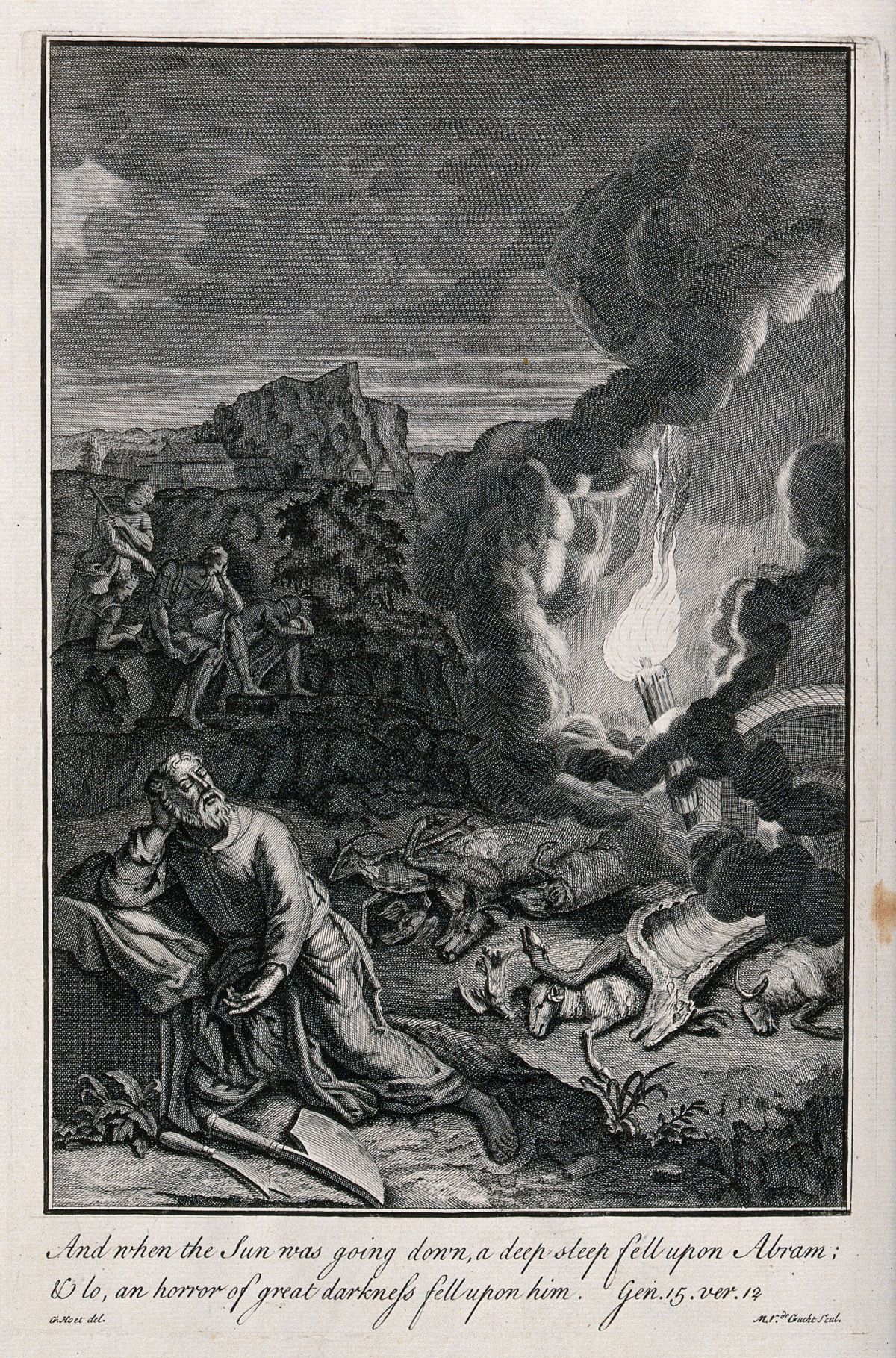
The drought extended up to the Promised Land where Israel was living. This gave the opportunity for Joseph to invite Israel and all the rest of the family to come to Egypt so that Joseph could support them. Joseph was able to see that while his brothers had intended to harm him, Yahweh was able to turn their evil intentions into a good thing. For a moment, Egypt seemed to be promising, but it wasn’t the final destination – it wasn’t the Promised Land. In fact, this provided the setting that Yahweh had revealed to Abraham in a troubling dream, that his descendants would be strangers in a land not their own and that dark times lay ahead before they would finally return to the Promised Land.

Observe

Read Genesis 50:15-21. Back in Canaan, Joseph used his dreams to put down his brothers, who responded by selling him into slavery. But when it came time for the dreams to be re-enacted in real life, he had a different attitude about those dreams. How does Joseph’s experience affect the way you view the events of life?

Bloom where you are

Dancing in the Kingdom- Table of Contents

Dancing In the Kingdom – Part 1 – Shadows of the Kingdom – Chapter 5– Patriarchs

Bloom where you are

[Bible references: Genesis 39:21-23; 40; 41]

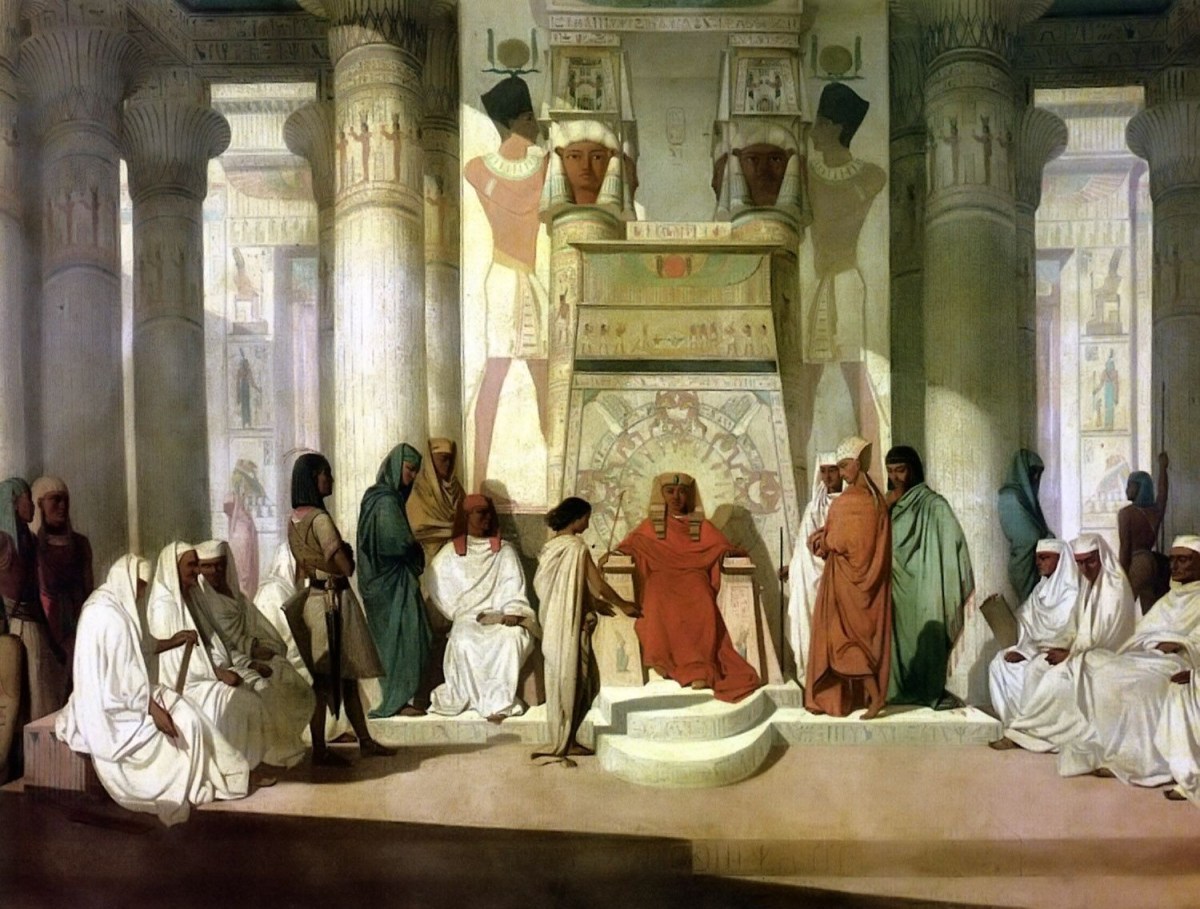
While Joseph was in prison, Yahweh continued to cause Joseph to prosper, inspiring the warden to entrust many things to Joseph. A couple of the prisoners had dreams to which Yahweh gave Joseph the interpretations. The predictions Joseph revealed to the prisoners did come true. Sometime later, when the Pharaoh had dreams that he wanted to have interpreted, he was informed about Joseph. Through the help of Yahweh, Joseph was able to interpret the Pharoah’s dreams as well. This led to Joseph being put in second-in-command to the Pharaoh through which he was able to oversee the harvesting and the storage of grain in preparation of a coming seven-year drought.

Observe

Read Genesis 37; 39-41. Because Joseph was the oldest son of Jacob’s favorite wife, Jacob made Joseph his favorite son – and spoiled him. It didn’t help when Joseph flaunted some dreams in front of his brothers who then found an opportunity to sell him as a slave. How did the hardship of slavery mold Joseph’s character?

Discipline and character development

Dancing in the Kingdom- Table of Contents

Dancing In the Kingdom – Part 1 – Shadows of the Kingdom – Chapter 5– Patriarchs

Discipline and character development

[Bible references: Genesis 37:1-11, 28-36; 39:1-20: 50:20]

Of Jacob’s 12 sons, Joseph was the most notable. Joseph was treated as Jacob’s favorite son and consequently developed a sense of self-importance which caused his brothers to become jealous. That led his brothers to sell him off to merchants traveling to Egypt where Joseph was sold as a slave to a captain of the Pharaoh’s guard. Yahweh blessed Joseph as the captain’s slave so that Joseph prospered in whatever he took care of, inspiring the captain to trust everything to Joseph. However, an unjust charge by the captain’s wife caused Joseph to be imprisoned.

Observe

Read Genesis 37, 41, 40. Joseph’s discipline involved finding God in the midst of difficult circumstances and discovering how God could use him there. Are there any difficult circumstances you struggle with? [1]

[1] One goal in the Benedictine order is stability. The idea is that God is everywhere and if you can’t find him where you are then you won’t find him anywhere. deWaal, Esther. “Seeking God”)

Nation of wrestlers

Dancing in the Kingdom- Table of Contents

Dancing In the Kingdom – Part 1 – Shadows of the Kingdom – Chapter 5– Patriarchs

Nation of wrestlers

[Bible references: Genesis 31:25-45; 28:3-4; 27:42-45; 28:10-22; 32:22-32; 35:22-26; 30:21; 32:1-5]

After the deception of Isaac, Jacob’s would continue his pattern of deception. Yet, despite that character flaw, God would continue to bless Jacob with success just as he had blessed Abraham and Isaac. Jacob’s deceit with Isaac and Esau forced him to leave home and visit his uncle Laban, in Haran for many years. On the journey to Laban, Yahweh shared with Jacob the promise he made with Abraham and with Isaac, that “all the people on earth would be blessed through you.”

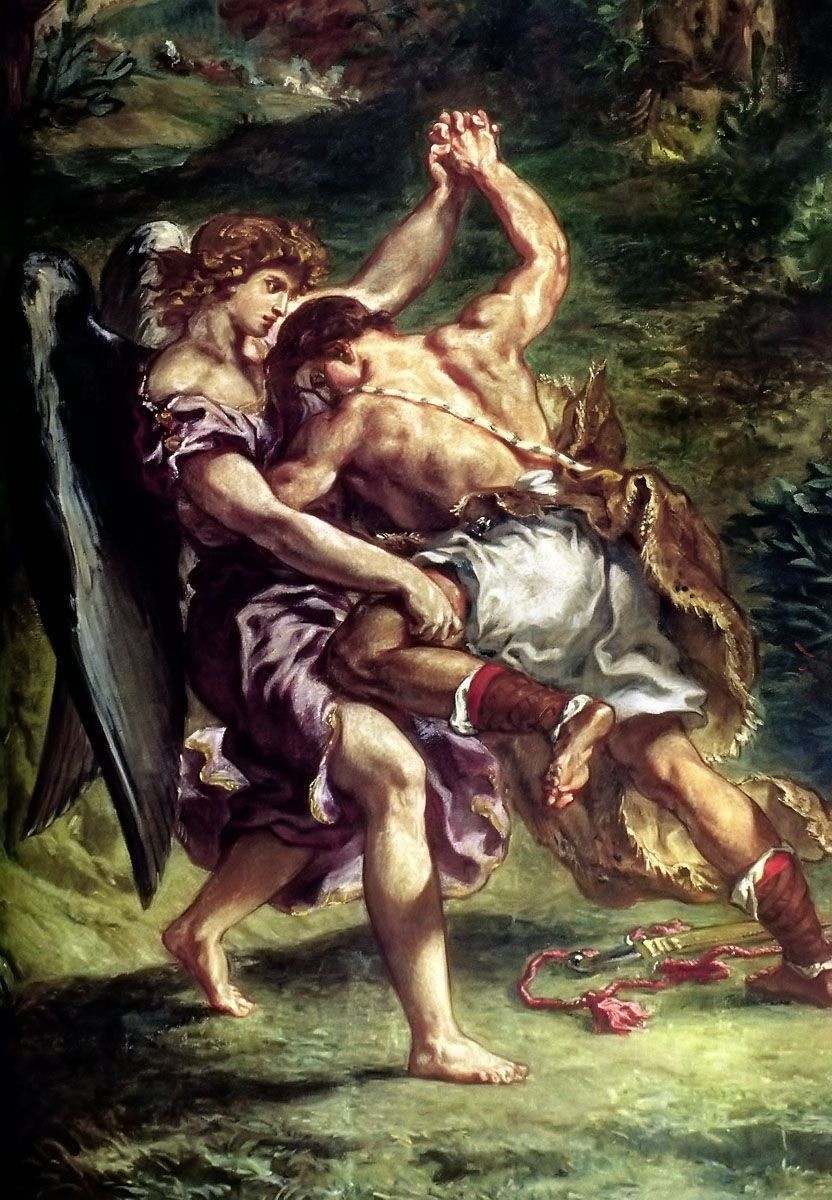
While staying with Laban, Jacob would continue his deceit to take advantage of Laban, although Laban would try return the favor. Jacob left Laban to return to the Promised Land, Jacob found himself in a wrestling match with a man that Jacob learns was God.[1] During that struggle, Jacob was forced to confess his character by admitting that his name means “deceiver,” after which the “deceiver” was given a new name, Israel (which means “wrestles with God”). Wrestling with God became a hallmark of Israel’s descendants.[2]


[1] Sproul, RC “A Wrestling People” Ligonier Ministries ligonier.org/learn/devotionals/wrestling-people

[2] Although there are many examples of people questioning God, the Psalms contain many examples.

Reflect

God is able to fulfill his purposes as we wrestle with him. Do you feel compelled to wrestle with God about anything?

Observe

Read Genesis 32:22-28. A rabbi once said that “In Judaism, not having questions is not a sign of faith but of lack of depth.” How does wrestling with God strengthen instead of weaken our faith?

A higher order

Dancing in the Kingdom- Table of Contents

Dancing In the Kingdom – Part 1 – Shadows of the Kingdom – Chapter 5– Patriarchs

A higher order

[Bible references: 1 Samuel 3-4, 15-16; Matthew 8:5-13]

The case of Jacob and Esau is not the only example where Yahweh would choose to upset the common order of things. In this case, it was side-stepping the normal primogeniture and instead having the older sibling serving the other sibling. In other times it would be stronger serving the weaker, or sons being displaced by someone outside the family. This occurred when Samuel became high priest after Eli instead of Eli’s sons and when David became king after Saul instead of Saul’s son. In all these cases, we see God preparing someone new to lead while he arranged to end another’s leadership.

Reflect

Sometimes what looks like chaos to us is actually a pattern that we haven’t figured out. One example is encoded messages – we can’t read them without knowing the underlying order. What patterns from God confuse you?

Observe

Read 1 Samuel 3-4, 15-16; Matthew 8:5-13. The role of priest passed down from generation to generation, but God interrupted the process at least twice. How did that prepare the way for this story in Matthew?

Deceit instead of faith

Dancing in the Kingdom- Table of Contents

Dancing In the Kingdom – Part 1 – Shadows of the Kingdom – Chapter 5– Patriarchs

Deceit instead of faith

[Bible references: Genesis 25:29-34; 25:23; 27:1-40]

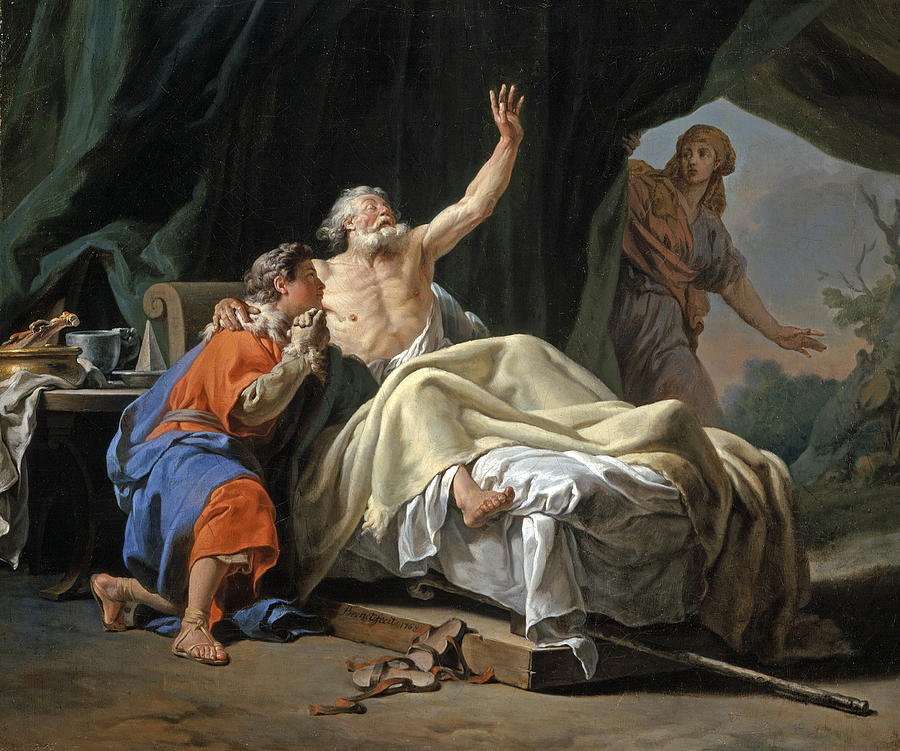
The biblical descriptions of Jacob and his twin brother Esau are not flattering. Esau is the older twin brother, but for a pot of porridge Esau was willing to give up his birthright. Later on, Jacob conspired with his mother, Rebekah, to deceive Isaac so that Jacob would receive the primary blessing from Isaac, instead of Esau.  Later on, Jacob would act deceitfully with his uncle, Laban. Then, like his father, Jacob would play favorites with his wives and his children.

Observe

Read Genesis 25:21-34; 27:1-40. The family dynamics in Isaac’s family were typically messy and complicated as many real families are and yet God will carry out his purposes. How can we use the example of Isaac and his family to give us confidence that God is able to carry out his purpose for us?

Ordinary believers

Dancing in the Kingdom- Table of Contents

Dancing In the Kingdom – Part 1 – Shadows of the Kingdom – Chapter 5– Patriarchs

Ordinary believers

[Bible references: Genesis 17:17; 21:5; 21:1-7; 24; 25; 26:1-11; 27:1-29]

Meanwhile, the Biblical record for life of Isaac is unremarkable. God had blessed Isaac with wealth, however, the most notable events in his life were 1) failing just as his father Abraham had failed, Isaac also fearing that a local king kill him to get his wife, so Isaac, like Abraham, claimed that his wife was his sister and 2) when Isaac was preparing to die, he got fooled by Jacob into giving Jacob the primary blessing instead of his older twin brother, Esau. This incident just highlighted the favoritism Isaac showed to Esau and the favoritism his wife Rebekah showed to Jacob. Blessed, fallible, unremarkable, yet still used by Yahweh to accomplish Yahweh’s will.

Reflect

What is our prayer when we know that our time in this life is limited and most of us will not accomplish anything spectacular, and yet, God may use our life to achieve a greater impact than we realize?

Observe

Read Genesis 25:21-23; 27:1-29. What seems ordinary about how Rebekah interacted with Isaac in the way that would fulfill Yahweh’s prophecy?

Slow and steady

Dancing in the Kingdom- Table of Contents

Dancing In the Kingdom – Part 1 – Shadows of the Kingdom – Chapter 5– Patriarchs

Slow and steady

[Bible references: Genesis 17:5; 21:4-5; 26:34; Psalm 6; 2 Peter 3:8]

Yahweh said that Abraham would be the “father of many nations, ” but there was only one child born to Abraham and Sarah – and that child, Isaac, was born to him and very late in his life. Isaac would have only twins. And Isaac’s only children, Esau and Jacob were born late in Isaac’s life, so the “father of many nations” would die only seeing two grandchildren.

Reflect

God answers prayers on his timeline, not ours. He will fulfill his purpose for us – also on his timeline. Does that make you frustrated or assured?

Observe

Read Psalm 6. Sometimes we suffer long. What keeps us going in such times?

Faith and obedience

Dancing in the Kingdom- Table of Contents

Dancing In the Kingdom – Part 1 – Shadows of the Kingdom – Chapter 5– Patriarchs

Faith and obedience

[Bible references: Genesis 22:1-19; 1 Corinthians 10:13 ]

In one of the most controversial events, God called Abraham to take Isaac and go to a mountain, build an altar, and then offer Isaac as a sacrificial offering. Abraham must have severely tested, but Abraham did as he was told and went through the whole process to the point where he was about slay Isaac when God provided a substitute, a ram. Isaac would indeed be the next link in the genealogical chain connecting Abraham ultimately to the birth of the Messiah 2000 years later.

Observe

Read Genesis 22:1-19; 1 Corinthians 10:13. Theologians have wrestled with this passage in Genesis as we cannot fathom how God could command a human sacrifice, even if He knew how He would intervene before it would happen. How confident are you that God will provide for you in the midst of difficult decisions?

Pleading to God

Dancing in the Kingdom- Table of Contents

Dancing In the Kingdom – Part 1 – Shadows of the Kingdom – Chapter 5– Patriarchs

Pleading to God

[Bible references: Genesis 18:16-33; 1 Samuel 7:1-9; 2 Chronicles 30:1-20; Nehemiah 1:1-2:10; Philippians 1:3-10]

We don’t know the moment that Abraham recognized that one of the visitors was Yahweh, but it apparently happened by the time the visitors talked about Sodom and Gomorrah, which they were going to destroy. Concerned about his nephew Lot, who was living down there, Abraham made a plea to save the city if there were righteous people living in the city. At first, Abraham asked what if there were fifty righteous people living there, would they still destroy everyone there. When Yahweh said no, then Abraham asked, what about if there were 45 or 30 or 20 righteous people there.[1] Each time, Yahweh said that he would not wipe out everybody if there were only that many righteous people there. As it turned out, both Sodom and Gomorrah were destroyed after Lot and his daughters were given the chance to escape.


[1] De Young, Kevin. “Passionately Pleading with God is a Good Thing” The Gospel Coalition.org www.thegospelcoalition.org/blogs/kevin-deyoung/passionately-pleading-with-god-is-a-good-thing/

Observe

Read Genesis 18:16-33; 1 Samuel 7:1-9; 2 Chronicles 30:1-20; Nehemiah 1:1-2:10; Philippians 1:3-10. How are we encouraged to plead to God?

Hospitality

Dancing in the Kingdom- Table of Contents

Dancing In the Kingdom – Part 1 – Shadows of the Kingdom – Chapter 5– Patriarchs

Hospitality

[Bible references: Genesis 18:1-8; Hebrews 13:1-2]

One day, while Abraham was sitting in the entrance to his tent, he saw three visitors approaching and offered them water to wash their feet and then made much effort to offer them something to eat and drink. As we read this description of Abraham’s greeting his visitors, it may sound extravagant to us, but would have been normal for the culture of the time. The normal custom was to regard visitors as those who have been sent by God.[1]


[1] Wight, Fred H. Manners and Customs of Bible Lands . 1953. Kindle Edition. (Kindle Locations 863)

Observe

Read Genesis 18:1-8; Hebrews 13:1-2. In the nomadic culture, hospitality was readily shown to any visitors as they were regarded as visitors from God. What keeps us from exhibiting the same attitude?

Walk of faith

Dancing in the Kingdom- Table of Contents

Dancing In the Kingdom – Part 1 – Shadows of the Kingdom – Chapter 5– Patriarchs

Walk of faith

[Bible references: Genesis 12:1-20; 15:1-6; 16:1-5; 17:1-14; 20:1-13; 22:1-18; 24:7; 28:16; 50:24; Romans 4:9; Hebrews 11:17]

Sometime after the scattering of nations, from the line of Shem and Noah, Yahweh called a man named Abram to leave his country in the Euphrates River Valley and go to a land “I will show you.” As Abram left his home country, at the age of seventy-five, God promised not only to bless Abram and his descendants but to bless the entire world though Abram. Despite his occasional failures, Abram (later named Abraham) is noted for his faith because he believed God and showed this by being obedient in following God’s instructions even when they didn’t make sense.

When Yahweh called Abram to journey to another land, we don’t know what particular experience Abram and brother and father had with Yahweh, but Genesis 24 and 31 indicates that they all knew of knew of Yahweh, even if they thought of Yahweh as one of many gods.[1] Even so, Abram must have had great faith when he took that journey to the Promised Land?[2] Then after Abram arrived in the Promised Land, what further questions may Abram have had when he experienced a deep drought in that same land, such that he needed to take a brief trip to Egypt?

After Yahweh told Abram, that he would make a great nation from him, Abram initially expressed his faith by his obedience when he took that journey to the Promised land. Again, when Yahweh showed him the stars and told him that his descendants would be as numerous as those stars, Abram believed, and Yahweh credited that to him as righteousness. Then Yahweh reiterated the promise again when Abram was 99 years old and changed Abram’s name (which meant exalted father) to Abraham (father of many nations).

God told Abraham that a great nation would come out of him and Sarah. Yet, this did not look promising when the only son born to Abraham and Sarah was Isaac who was not even born until Abraham was one hundred years old and Sarah was ninety. No wonder that Isaac was given a name that means “laughter.”


[1] Garris, Zachary. “Did Abraham Worship Yahweh Before His Call in Genesis 12?” Knowing Scripture knowingscripture.com/articles/did-abraham-worship-yahweh-before-his-call-in-genesis-12

[2] Although the term “Promised Land” is not used directly as the place of where Abram and his descendants were called to settle down in, there are several references to the “land that is promised you.”

Observe

Read Genesis 12:1-20. This renowned Patriarch of faith, Abram, believed Yahweh, and left his homeland to some destination that Yahweh would show to him. When Abram arrived at the place Yahweh led him to, he built an altar and set up his tent. Good start at a life of faith. Sometime afterwards, Abraham winds up in Egypt where he is now afraid for his life and asks his beautiful wife Sarah to say that she’s his sister instead of his wife, so that they people won’t kill him to get her. This does lead to complications we won’t discuss here but just to point out that we, never mind Abram, are subject to a wavering faith. Do you have incidents in your life where your faith wavered?

God working through broken individuals and communities

Dancing in the Kingdom- Table of Contents

Dancing In the Kingdom – Part 1 – Shadows of the Kingdom – Chapter 5– Patriarchs

God working through broken individuals and communities

[Bible references: Genesis 20; Psalm 51:17; Isaiah 40:8; 58:1-14; Jeremiah 5:19; Philippians 3:20-21]

Although the all-powerful Creator and Sustainer of the universe is capable of simply doing things by a show of great power and irresistible force,[1] he usually chooses to work through His image-bearers.[2] He can work through individuals or groups, although even when he works through groups it’s typically through individuals within those groups.[3] Most surprising is that even though all his image-bearers have flaws, God has still chosen to do His work within those flaws.[4] Despite our persistent failures, not only does God patiently empower us to fulfill the responsibility of stewardship of Creation that He gave us from the beginning, but He also empowers us to participate in His work of restoring the universe.


[1] Spurgeon, C.H. “The Power of Christ Illustrated by the Resurrection” Biblehub biblehub.com/library/spurgeon/spurgeons_sermons_volume_17_1871/the_power_of_christ_illustrated.htm

[2] Welchel, Hugh, “Three Key Passages Concerning Stewardship in the Bible” The Institute of Faith, Works & Economics 19 Oct 2016 tifwe.org/stewardship-in-the-bible

[3] Cole, Stephen J. “Lesson 51: How God Uses Ordinary People (Genesis 26:1-35)” Bible.org 29 Aug 2013 bible.org/seriespage/lesson-51-how-god-uses-ordinary-people-genesis-261-35

[4] Wilson, Jarrid, “God Uses Flawed People To Share Hope To a Flawed World” jarridwilson.com 16 Mar 2014 jarridwilson.com/god-uses-flawed-people-to-share-hope-to-a-flawed-world/

Reflect

What does it mean to you that the One who has all knowledge prefers to carry out his plans for us through us who not only have incomplete knowledge but have corrupted intentions?

Observe

Read Isaiah 58:1-14.This passage describes the difference between who we are now and what we should be. What can we be doing better?

Joseph

Dancing in the Kingdom – Table of Contents

Part 1 – Shadows of the Kingdom, Chapter 5 – Patriarchs

Discipline and character development

[Bible references: Genesis 37:1-11, 28-36; 39:1-20: 50:20]

Of Jacob’s 12 sons, Joseph was the most notable. Between being treated as Israel’s favorite son and then having a sense of self-importance, he created a sense of jealousy among his brothers. So, on one occasion while out tending flocks on one opportune occasion his jealous brothers sold him off to merchants traveling to Egypt. In Egypt, he was sold to a captain of the Pharaoh’s guard as a slave. While he was a slave to the captain, Yahweh caused Joseph to prosper in whatever he took care of, inspiring the captain to trust everything to Joseph. However, an unjust charge by the captain’s wife caused Joseph to be imprisoned.

Bloom where you are

[Bible references: Genesis 39:21-23; 40; 41]

While Joseph was in prison, Yahweh continued to cause Joseph to prosper, inspiring the warden to entrust many things to Joseph. A couple of the prisoners had dreams to which Yahweh gave Joseph the interpretations. The predictions Joseph revealed to the prisoners did come true. Sometime later, when the Pharaoh had dreams that he wanted to have interpreted, he was informed about Joseph. Through the help of Yahweh, Joseph was able to interpret those dreams. This led to Joseph being put in second-in-command to the Pharaoh through which he was able to oversee the harvesting and storage of grain in preparation of a coming 7-year drought.

Dreams come true

[Bible references: Genesis 15:12-14; 15:12-21; 42-46; 50:15-21] The drought extended up to the Promised Land, Canaan, where Israel was living. This gave the opportunity for Joseph to invite Israel and all the rest of the family to come to Egypt where Joseph could see they were supported. Joseph was able to see that while his brothers had intended to harm him, Yahweh was able to use for the good. In fact, this provided the setting that Yahweh had revealed to Abraham in a troubling dream, that “your descendants will be strangers in a land not their own.” For a moment, Egypt seemed to be promising, but it wasn’t the final destination. It particularly wasn’t the promised land. More than that, God warned that dark times lay ahead before they would arrive there.

Reflect

In academic disciplines, we train our minds in order to become doctors, lawyers, engineers, etc. These disciplines are usually evaluated by written tests and practicums. What are some spiritual disciplines and how do we evaluate our progress?

Observe

Read Genesis 37, 41, 40. Joseph’s discipline involved finding God in the midst of difficult circumstances and discovering how God could use him there. Are there any difficult circumstances you struggle with? (NOTE: One goal in the Benedictine order is stability. The idea is that God is everywhere and if you can’t find him where you are then you won’t find him anywhere. deWaal, Esther. “Seeking God”)

Reflect

Complaint is the usual response to unjust treatment. But although Joseph was enslaved, he took his stewardship responsibilities and then when imprisoned he was open to God’s interpretation of dreams. What do you think Joseph learned?

Observe

Read Genesis 37; 39-41. Because Joseph was the oldest son of Jacob’s favorite wife, Jacob made Joseph his favorite son – and spoiled him. It didn’t help when Joseph flaunted some dreams in front of his brothers who then found an opportunity to sell him as a slave. How did the hardship of slavery mold Joseph’s character?

Reflect

What are your visions of what the future will look like?

Observe

Read Genesis 50:15-21. Back in Canaan, Joseph used his dreams to put down his brothers, who responded by selling him into slavery. But when it came time for the dreams to be re-enacted in real life, he had a different attitude about those dreams. How does Joseph’s experience affect the way you view the events of life?

Jacob

Dancing in the Kingdom – Table of Contents

Part 1 – Shadows of the Kingdom, Chapter 5 – Patriarchs

Deceit instead of faith

[Bible references: Genesis 25:29-34; 25:23; 27:1-40]

The biblical descriptions of Jacob and his twin brother Esau are not flattering. Esau is the older twin brother, but for a pot of porridge Esau was willing to give up his birthright. To seal the deal, Jacob and his mother, Rebekah, would conspire to deceive Isaac: They would take advantage of Isaac’s blindness by deceiving Isaac and setting it up for Jacob instead of Esau to receive the primary blessing from Isaac. This deceit happened even though when Rebekah was pregnant with the twins that Yahweh had told her that “the older would serve the younger,” so it is curious that Isaac still insisted on giving the primary blessing to Esau instead of Jacob and that Rebekah saw fit to use deceit to help Jacob receive that important blessing.

A higher order

[Bible references: 1 Samuel 3-4, 15-16]

The case of Jacob and Esau is not the only example where Yahweh would choose to upset the common order of things. In this case, it was side-stepping the normal primogeniture and instead have the older sibling serving the other sibling. In other times it would be stronger serving the weaker, the sons being displaced by someone outside the family. This pattern of displacing the normal order of primogeniture and inheritance is repeated later in Samuel following Eli instead of his sons Hophni and Phineas and in David replacing Saul instead of Saul’s son Jonathan. And in all these cases, we see God preparing someone new to lead while he arranges to end another’s leadership.

Nation of wrestlers

[Bible references: Genesis 31:25-45; 28:3-4; 27:42-45; 28:10-22; 32:22-32; 35:22-26; 30:21; 32:1-5]

After the deception of Isaac, Jacob’s would continue his pattern of deception. Yet, despite that character flaw, God would continue to bless Jacob with success just as he had blessed Abraham and Isaac. Jacob’s deceit with Isaac and Esau forced him to leave home and visit his uncle Laban, in Haran for many years. On the journey to Laban, Yahweh shared with Jacob the promise he made with Abraham and with Isaac, that “all the people on earth would be blessed through you.”

While staying with Laban, Jacob would continue his deceit to take advantage of Laban. Then years later, when Jacob left Laban to return to the promised land, God saw fit to engage with Jacob on both the journey to and from home. On the journey home, Jacob now has two wives and two concubines, thirteen children and a great wealth in flocks, herds, and servants. On that trip home, Jacob finds himself in a wrestling match with a man that Jacob learns was God.[1] During that struggle, Jacob was forced to confess his character by admitting that his name means “deceiver,” but then was given a new name, Israel (which means “wrestles with God”). Wrestling with God would become a hallmark of Israel’s descendants (that is, the nation of Israel) and is evident throughout the Old Testament.[2]


[1] Sproul, RC “A Wrestling People” ligonier.org/learn/devotionals/wrestling-people.

[2] Although there are many examples of people questioning God, the Psalms contain many examples.

Reflect

What things in our life do we tend to “help God with” rather than figure out what his ways are?

Observe

Read Genesis 25:21-34; 27:1-40. The family dynamics in Isaac’s family were typically messy and complicated as many real families are and yet God will carry out his purposes. How can we use the example of Isaac and his family to give us confidence that God is able to carry out his purpose for us?

Reflect

Sometimes what looks like chaos to us is actually a pattern that we haven’t figured out. One example is encoded messages – we can’t read them without knowing the underlying order. What patterns from God confuse you?

Observe

Read 1 Samuel 3-4; 1 Samuel 15-16. These passages illustrate how God continues to carry out his will despite the messiness of our lives. How does that affect how you pray?

Reflect

God is able to fulfill his purposes as we wrestle with him. Do you feel compelled to wrestle with God about anything?

Observe

Read Genesis 32:22-28. God would rename Jacob to Israel, which means “wrestles with God,” which would eventually become the name of the nation descended from Jacob, and the nation through which the Messiah would come. Can we be strong in our faith in God, if we have not wrestled with God?

Isaac

Dancing in the Kingdom – Table of Contents

Part 1 – Shadows of the Kingdom, Chapter 5 – Patriarchs

Ordinary believers

[Bible references: Gen 17:17; 21:5; 21:1-7; 25:21; 26:1-11; 27:1-29]

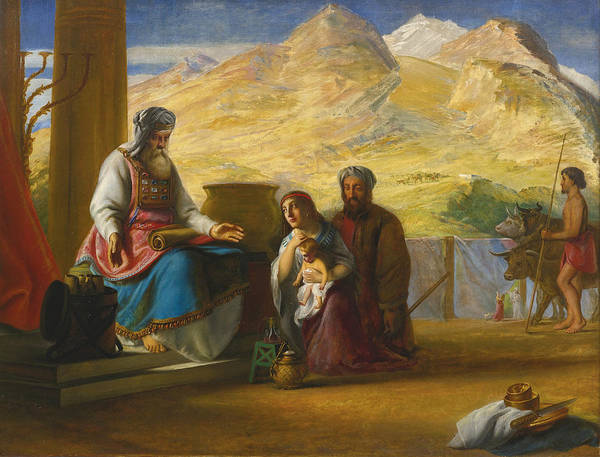
Meanwhile, the Biblical record for life of Isaac is unremarkable. God had blessed Isaac with wealth, however, the most notable events in his life were 1) failing just as his father Abraham had done in fearing that king Abimelech might kill him to get his wife, so he claimed that his wife was his sister and 2) when he was preparing to die, he got fooled by Jacob into giving Jacob the primary blessing instead of his older twin brother, Esau. Blessed, fallible, unremarkable, yet still used by Yahweh to accomplish Yahweh’s will.

Reflect

What is our prayer when we know that our time in this life is limited and most of us will not accomplish anything spectacular, and yet, God may use our life to achieve a greater impact than we realize?

Observe

Read Genesis 24-25. We can never know how God will use the ordinary things in our lives to fulfill his purposes. How does that knowledge help you look at your own life?