Confronting our freedom

Dancing in the Kingdom- Table of Contents

Dancing In the Kingdom – Part 1 – Shadows of the Kingdom – Chapter 1 – Prelude

Confronting our freedom

[Bible references: Genesis 3:1-24; Deuteronomy 7:6-14; 30:18-20; Joshua 24:14-16; John 7:17; 15:16]

To be creatures designed in the image of the transcendent creative, loving God, we needed a kind of independence so that we could choose to love – or not love – and to be free to imagine and create wildly new and different things as proper for God’s image-bearing creatures. We were free to do this in a place where everything was very good and designed so that we could flourish. However, that very freedom which gave image bearers the possibilities of independent thoughts, also gave those image-bearers the opportunity to also confront temptation.

While the image-bearers were given the opportunity to meet with God and to walk with him in a specially designed garden, they were also allowed the opportunity for questions. They could even question the motives of the God who made them: 

  • Was something good being withheld from them?
  • Were they being deprived of some power?
  • What would be available to them if they violated the restriction?
  • Would they actually die?
  • What special knowledge were they being deprived of – particularly this knowledge of good and evil?
  • Everything they had encountered had been good, why would their thinking about violating this one restriction not be good?
  • Was the Creator so good anyway?”

Observe

Read Deuteronomy 7:7; 30:18-20; Joshua 24:14-16. The ability to love is not possible without the ability to choose. What did the Israelites choose to love (or not love)?

Creation

Dancing in the Kingdom- Table of Contents

Dancing In the Kingdom – Part 1 – Shadows of the Kingdom – Chapter 1 – Prelude

Creation

[Bible references: Genesis 1:26:28; 2:15; 3:6; Jeremiah 29:11; Revelation 21; 22]

Studies of Ancient Near East cultures have found that the creation account could be looked at as the dedication of a temple, where God was creating a place for him to reside with us and we would join him as co-regents[1]. On the seventh day, God had finished the dedication of the “temple,” but it was not a time where He ceased to do everything. Rather, it was the time where the “temple” was now ready, both for God and for us as co-regents, to begin settling in and doing the things that the temple was designed for. Jesus in John 5:1-7 clarified this idea where he explained, “My Father is always at his work to this very day, and I too am working.” Living into this sacred space would entail us taking part with God in his continual acts of creating and sustaining the universe. When Eve gave birth to Cain, she recognized that “I’ve created a man with Yahweh.”[2]

Although these image-bearers had close, unhindered, intimate contact with their Creator, there was enough space given them to think freely, as if they were not being watched all the time. It was in this space that they – and we – were given the responsibility of being stewards over all the earth and over all other creatures. We were given the assignment to fill all the earth, discover its possibilities and care for the world in the same way that God would care for the world[3]. Just as God continues to create more living things and sustaining all that he has created, we can join him in creating  and in sustaining those things entrusted to our care.

There are two ways in which God imposes his law on the cosmos, two ways in which his will is done on earth as in heaven. He does it either directly, without mediation, or indirectly, through the involvement of human responsibility. Just as a human sovereign does certain things himself, but gives orders to his subordinates for other things, so with God himself. He put the planets in their orbits, makes the seasons come and go at the proper time, makes seeds grow and animals reproduce, but entrusts to mankind the tasks of making tools, doing justice, producing art, and pursuing scholarship. In other words, God’s rule of law is immediate in the nonhuman realm but mediate in culture and society. In the human realm men and women become coworkers with God; as creatures made in God’s image they too have a kind of lordship over the earth, are God’s viceroys in creation. [4]

The work that we were designed to do was more than just tending the garden. In Genesis 2:15, we were given a mandate to “work” and “take care of” the garden God created[5]. These tasks, looked at in light of Ancient Near East culture, were more of a priestly nature[6], taking care of this temple where we reside with God. We were to take care of this place which was designed to be a “very good” place for us to flourish in, and for us to create whatever structures we needed to as we would “increase in number, fill the earth and subdue it.” This task, this mandate, meant that we would eventually go beyond the capacity of gardening and create not just a bigger garden but cities, a flourishing civilization as pictured in Revelation 21 and 22[7].

When examined closely, we can see the breadth of work committed to Adam and Eve. Subduing the earth would entail many physical, social and intellectual activities. In the gardening, we can see cultivation and farming; in the taking care of the animals, we can see shepherding and domestication; in the naming of the animals, we can see a cultural and scientific activity which required understanding the nature and attributes of the animals and establishing authority over them. We can see that God had created things to be beautiful and as his image-bearers we would be expected to also create beautiful things. Later on, in scripture we will see even more extended uses of the work God has intended for us.


[1] Walton, John H. “In Genesis 1, God Orders the Cosmos as Sacred Space” The Lost World of Adam and Eve: Genesis 2-3 and the Human Origins Debate InterVarsity Press. Kindle Edition.

[2] Friedman, Richard Elliot, Commentary on the Torah, Location 6942 of 37412, Harper Collins, 2003

[3] Crouch, Andy. “What is the Cultural Mandate,”,” The Village Church, 6 Jan 2017 www.thevillagechurch.net/resources/videos/what-is-the-cultural-mandate

[4] Wolters, Albert M. Creation Regained: Biblical Basics for a Reformational Worldview” William B. Eerdmans Publishing 1985, 2005. eBook (Kindle Locations 203-208).

[5] Walton, John H. The Lost World of Adam and Eve: Genesis 2-3 and the Human Origins Debate (p. 105-106). InterVarsity Press. Kindle Edition. The verbs ʿbd and šmr (NIV: “work” and “take care of”) are terms most frequently encountered in discussions of human service to God rather than descriptions of agricultural tasks… ‘bd can refer to … work connected with one’s vocation.. to religious service deemed worship … šmf is used in the contexts of the Levitical responsibility of guarding sacred space, as well as in the sense of observing religious commands and responsibilities.

[6] Walton, John H. The Lost World of Adam and Eve: Genesis 2-3 and the Human Origins Debate (p. 106). InterVarsity Press. Kindle Edition. “it is likely that the tasks given to Adam are of a priestly nature: caring for sacred space. In ancient thinking, caring for sacred space was a way of upholding creation.”

[7] Buzenitz, Nathan. “The New Jerusalem”, Cripplegate, 8 April 2017 thecripplegate.com/the-new-jerusalem-2/

Observe

Read Genesis 1:26-28. How do we fulfill the instructions to rule over the other creatures?

Biblical eras

Dancing in the Kingdom- Table of Contents

Dancing In the Kingdom – Part 1 – Shadows of the Kingdom – Chapter 1 – Prelude

Biblical eras

The following table provides a quick outline of the different periods of history covered in the Bible and can serve as a guide as you read different sections of the Bible. The table is followed by a brief outline just a bit to help see the larger story whose details are filled out in the rest of the book.[1]

Biblical eventSummary
CreationGod dedicates the universe as His temple, a place for him to be with his people.
SinGod created us in his image, which included the ability to freely love. But we freely to not love God with devastating consequences
NationsGod floods the world and restarts the human project. The beginning of nation forming.
PatriarchsOut of all the nations, God chooses one nation through whom his people can be redeemed. The new nation, which is promised a land of their own, starts with the family line of Abraham, Isaac, Jacob
ExodusGod’s new nation begins its formation in Egyptian slavery and then leads them out to the land he promised them.
JudgesOnce settled in the Promised Land, God raises up people to lead and administer justice
KingsThe people reject God’s kingship and demand human kings like the nations around them. Sin initially causes the kingdom to be split into two and further sin causes the two kingdoms to be sent into exile
ExileThe Northern kingdom is captured by and exiled into Assyria then disappears from history, leaders from the Southern kingdom are brought into Babylon. which is eventually overtaken by the Persians who allow the exiles to return home
Return from exileOnly some of the exilees return. Against opposition they attempt rebuild the temple and the wall around Jerusalem, but not to its previous splendor
IntertestamentThere is a gap between the last inspired text written in the Old Testament and first inspired texts written for the New Testament
GospelsGod takes on human form in Jesus, grows up in Galilee, begins his ministry and then is executed and resurrected
ChurchUpon receiving the Spirit, the apostles begin building the church
MissionsThe church is scattered and begins spreading around the Roman Empire
End timesJesus’ return and His restoration of the Kingdom

[1] For a more detailed timeline see Appendix E – Bible Timeline

Breath to breath

Dancing in the Kingdom- Table of Contents

Dancing In the Kingdom – Part 1 – Shadows of the Kingdom – Chapter 1 – Prelude

Breath to breath

[Bible ref: 2 Timothy 3:16; Romans 15:4; Hebrews 4:12; Psalm 19:7-11]

We say that the Bible is inspired, God-breathed. That is, God breathed His words to the human writers of the Bible, who then wrote down what “God breathed” into them. But how is that revelation, that communication, of God which was written by human authors, breathed into us so that we can respond to the hearing of God’s inspired word and live it out, breath it out if you will, out into the world around us as we participate with God in bringing His Kingdom into the world?

Old Testament authors used scrolls made of papyrus reeds to record his inspirations from God. But making copies of manuscripts was labor intensive and would take a long time, so most people did not have written copies of what Moses wrote. Most people only heard as others read it out loud. Reading out loud in community was the normal way to read until the invention of the printing press.

The people hearing the inspired word then learned to memorize and meditate on what they heard. The Hebrew word for “hear” is “shema.” Shema implies not just passively hearing or listening but also implies obedience. So, to “shema” the inspired Word is not just to hear it but to obey it.

When the New Testament manuscripts began to be produced, the copies could now be put into a codex, which is similar to modern-day books. The codex manuscripts were then more easily stored and carried. But again, few people had written copies and most people still relied on hearing the word and memorizing and meditating on it. The codex technology did allow for the integration of such things as parallel columns and reference notes for the few people who had access to the written Bibles.

The invention of the printing press in the 1400s now allowed copies to be easily and cheaply mass produced so that more people could now have access to the written Bible. It was at this time that the Biblical writings were now divided into chapters and verses. This allowed the average person to more easily refer to specific passages. Before the chapter and verse notations were added to the Bible, people could only refer to particular passages by quoting them – which was manageable if people were in the habit of memorizing those writings. Printed Bibles with chapters and verses now allowed people to use the Bible without as much need for memorizing Bible passages.

The Protestant Reformation’s rebellion against the authority of the (Roman Catholic) church was enabled by the availability of the Bible to the common person. In addition to Bibles, Bible reference books such as concordances and Bible dictionaries were produced, allowing the average person to study the Bible on their own.

When home computers became available in the 1980’s, electronic version of the Bible and Bible references were produced, making those resources more available to the average user. Access to the World Wide Web began in the 1990’s which made even more resources easily available. Mobile devices even added more convenient access beginning in the 2000’s. All these new technologies make it possible to learn and use the Bible in different ways.

In this digital era, I would encourage you to mix old and new, memorize not just search, meditate not just share, listen not just read, do not just hear. As you use different forms of media to encounter Scripture, reflect on them with others in your faith community and work together to make choices out of conviction rather than convenience alone.[1]

We now have many options available for connecting with the Biblical text. But knowing the Bible is not the same as engaging is spiritual disciplines to open oneself to being transformed and to better  know God and it’s not the same as participating with a community of believers building up one another.


[1] Dyer, John. “Bible Apps are the new Printing Press” Christianity Today www.christianitytoday.com/ct/2022/december/dyer-bible-apps-software-screen-printing-press.html

Observe

Read 2 Timothy 3:16. How does the definition of the Hebrew word, “shema,” fit with the statement in 2 Timothy 3:16?

The library

Dancing in the Kingdom- Table of Contents

Dancing In the Kingdom – Part 1 – Shadows of the Kingdom – Chapter 1 – Prelude

The library

[Bible references: Daniel 9:2; Jeremiah 31:31, Matthew 21:42; 26:28; Mark 12:24; Luke 4:21; 24:13-35; John 2:22; 5:39]

The Bible we have now is in one binder, but it was not written that way. It was not written as one book by one person at one time with a series of chapters. The Bible actually contains a library of different texts written by different people in different time periods. Originally, those texts were written on individual scrolls and over time people collected those scrolls to make a little library of scrolls, or what we now call “books.”

The term, “Bible,” comes from ” the Phoenician word for “reed,” byblos.” Later on, that word was transliterated into Greek as “ta Biblia,” which means “the books” or “the library”. After that when the word was translated in Latin as “Biblia” and in English as “Bible.” The Bible then is a collection of “books” which were first written on scrolls.[1] In New Testament times, Christians started to make copies of the Bible texts in a “codex” form, sort of like today’s books. This format allowed multiple texts to be put in a single codex.[2]

The “books” within the first part of the Bible, before Jesus was born, were written mostly in Hebrew over a period of 1500 years and we call that set of books the “Old Testament.” The books written after that were written mostly in Greek over a period of 50 years and we call that set of books, the “New Testament.”  In all the major Christian traditions, the New Testament has 27 books while the number of books in the Old Testament have at least 39 books.[3]

The word testament means either 1) a disposition or will or 2) a covenant or an agreement. We get the term “New Testament” from the book of Jeremiah 31:31(NIV) “The days are coming,” declares the Lord, “when I will make a new covenant with the people of Israel and with the people of Judah.”

The books in our biblical library contain many kinds of literature, there is historical narrative, biography, prophecy, poetry, letters written to and from various people, various kinds of wisdom literature, rules of conduct, instructions for how to build things, interpretations of things previously written. All that complexity makes it difficult for people to figure out how to use the Bible. But at the same time, despite all its complexity, the essence of what we need to know can be known by the average person.[4]

The Old Testament writings centered around God’s covenant of Israel as mediated by Moses. The Hebrew Bible contains 5 books in the Torah, 8 Books in the Prophets, 11 books in the Writings.  In the Protestant version of the Bible, the Old Testament contains 5 books of the Law; 12 historical books, 5 poetical books and 17 prophetic books. The Roman Catholic and Eastern Orthodox version also contain other books which were accepted by the Jews in Egypt but not by the Jews in Palestine[5].

The “New Testament” writings written after the death of Jesus centered around God’s covenant to the world as mediated by Jesus. It contains 4 Gospels (“Good News” about Jesus), 1 history book, 21 letters (some written by Paul to various churches, some written by Paul to individuals, and some written by other apostles to the churches), and 1 prophecy book (which is also written as a letter).


[1] Soroski, Jason. “What does ‘Bible’ mean and how did I get that name?” Bible Study Tools www.biblestudytools.com/bible-study/explore-the-bible/what-does-bible-mean.html

[2] Encyclopedia Britannica “codex manuscript” Encyclopedia Britannia Britannica.com/topic/codex-manuscript

[3] See Appendix C – Books of the Bible

[4] Got Questions “What is the doctrine of the perspicuity of Scripture?” Got Questions www.gotquestions.org/perspicuity-of-Scripture.html

[5] These were known as the Deuterocanonical (second canon) Books, although the Protestants call them the Apocrypha. (See Appendix C – Books of the Bible)

Observe

Read Luke 24:13-35. We don’t know all the scriptures that Jesus was explaining to the two disciples, although Appendix D may provide some of those passages. What scripture passages “burn” in your heart?

The paradox of authority

Dancing in the Kingdom- Table of Contents

Dancing In the Kingdom – Part 1 – Shadows of the Kingdom – Chapter 1 – Prelude

The paradox of authority

[Bible references: Jeremiah 29:7; Matthew 18:16-20, 21:22-24; 28:16-20; Romans 13:1-3; 1 Corinthians 2:6-13; 13:9-11; 1 Timothy 3:1-12; 1 Peter 2:12-14]

On the one hand, we consider scripture to be inspired by God and therefore to be authoritative and a means by which God can speak to each of us. On the other hand, scripture was determined by the operation and traditions of the church because the church, as the Body of Christ was given the authority to preserve, teach and preach God’s Word.[1] This process creates a tension concerning authority when there is an apparent conflict between the authority of scripture and the traditions of the church. One of those conflicts resulted in the Protestant Reformation when the Reformers, seeing the corruption inside the Roman Catholic Church, wanted to place the Bible’s authority over the traditions of the Church.[2]


[1] Terry, Tom. “The Power and the Authority of the Church” Preachitteachit, preachitteachit.org/archives/12186; Uttinger, Greg “The Power and Authority of the Church” Chalcedon Foundation, chalcedon.edu/resources/articles/the-power-and-authority-of-the-church

[2] History.com “The Reformation” History.com, www.history.com/topics/religion/reformation

Reflect

When you assemble a gathering of imperfect Christians, they will make an imperfect congregation. And yet, as a part of the Body of Christ, they have the authority to preserve, teach and preach God’s Word. In our current day, many people are dissatisfied with the organized church. Why do you think this is?

Observe

Read Matthew 28:16-20; Romans 13:1-3. What do we do if there is a conflict between the authority of the government with our authority as Jesus’ disciples to make disciples?

Breathed by God, Written by Human Hands

Dancing in the Kingdom- Table of Contents

Dancing In the Kingdom – Part 1 – Shadows of the Kingdom – Chapter 1 – Prelude

Breathed by God, Written by Human Hands

[Bible references: Genesis 2:7; Acts 15:1-35; 2 Corinthians 4:1-4; 2 Timothy 3:14-17]

It is God who gives life, breathes life. The Hebrew word for Spirit, ruach, is the same word for wind. God breathed life into the creatures of the earth and then into the first people, creating them as images of himself who could serve as priests and stewards of His Creation.

God’s Spirit guided Abraham to leave for the Promised Land, guided Moses to lead his people out of Egypt, guided Joshua to lead his people back into the Promised land, guided leaders who were identified as judges to guide his people, guided kings to rule over his people, guided prophets to exhort His people and inspired them to record the words he spoke, guided disciples to become apostles to further the project of bringing his kingdom into the world. God inspired disciples to write biographies of his life and letters to the churches. After the apostles had died, that same Spirit raised other leaders to disciple the church and guide the church in how to live and practice its faith, to become mature disciples of Christ, guiding church councils to discern truth from error and to discern what writings should become the scripture for the church.

God had inspired (“God-breathed”) those who had written scripture, but Spirit-led guidance is just that, guidance. How we respond to God’s guidance is up to us. So even if we receive Spirit-led guidance, we need to grapple with a couple of problems. The first problem is that everyone only incompletely understands who God is and different people come to different and incomplete understandings. The second problem is our sin and rebellion against God causes us to deceive ourselves and others, and to fall further from God.

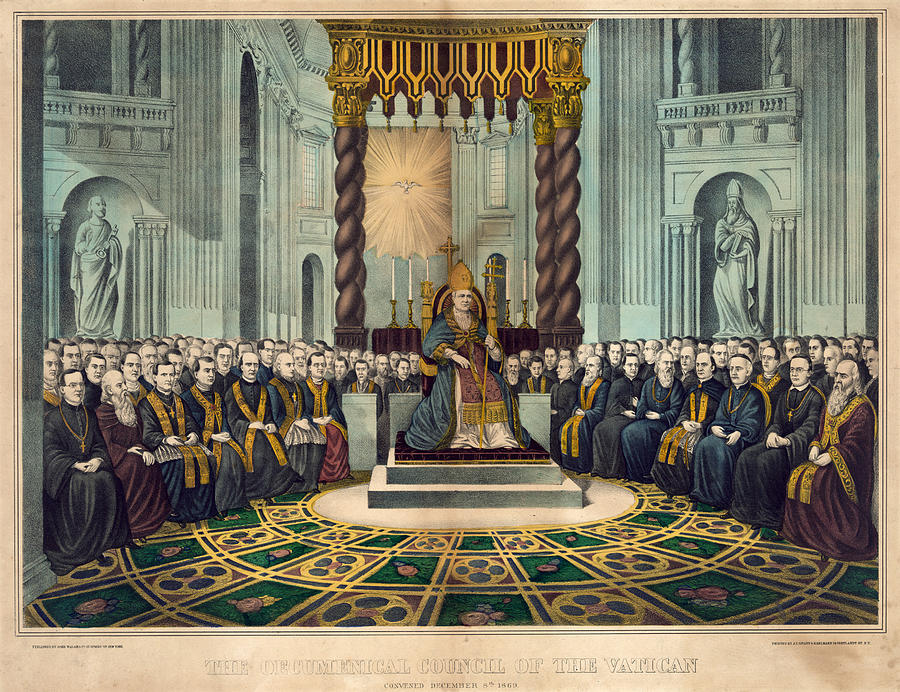
To help overcome these problems, the church has learned to come together in councils. By gathering in councils, church leaders guided by the God’s Spirit have helped each other discern the truth, grow in the faith and bond together in unity. Over time though, as the church expanded into different parts of the world, different languages and cultures added to mix of differences that were already mentioned, which led to apparently irresolvable differences that has resulted in the fracturing of the church, a fracturing that has continued to this day. Despite that fracturing, different parts of the church have still found benefit in gathering in their separate councils to determine what doctrines and practices are correct. While there are forces at work to further fracture the church and disrupt its unity, the Holy Spirit is at work throughout the Church, preserving the Biblical message and creating a unity that is hidden behind the fractured and broken church. The obvious message is that the Church is not the Savior but needs the Savior as much as those who are not yet in the Church. This allows the Church to invite others to come alongside as together we all learn how to Dance.

Observe

Read Acts 15:1-35. What is the power of having a council making a decision together? In what situations do you seek a decision from a group?

Old and relevant

Dancing in the Kingdom- Table of Contents

Dancing In the Kingdom – Part 1 – Shadows of the Kingdom – Chapter 1 – Prelude

Old and relevant

[Bible references: Hebrews 13:1-8]

How can the Bible, written so long ago be relevant to our lives today? It’s not written like a normal textbook, and it seems that many different people think it says many different things,[1] so then how are we supposed to make sense of it? Those are all good questions and hopefully by the time you finish reading Dancing in the Kingdom you will have some understanding. The goal of Dancing in the Kingdom is move between the extreme of under-reading the Bible and making it too simple and the extreme of diving in so deeply that one needs a seminary education. To do that we’ll lay out the big picture of the Bible and the church while spending time of some details that help to flesh out the deeper meanings within the Biblical story. One avenue to explore is the Bible’s stories about people, people who have temptations, weaknesses, struggles and emotions that we call can relate to. And as we see God interact with those people, we can see ways in which God can interact with us.


[1] Storms, Sam. “Why are there so many different interpretations of the Bible?” samstorms.comwww.samstorms.org/enjoying-god-blog/post/why-are-there-so-many-different-interpretations-of-the-bible-the-problem-of–pervasive-interpretive-pluralism-

Observe

Read Hebrews 13:1-8. Paul gives a lot of different kinds of advice on how to behave in different areas; then he says, “Jesus Christ is the same yesterday, and today and forever.” Why does he say that? Which advise might you need to heed?

A meaning in the patterns

Dancing in the Kingdom- Table of Contents

Dancing In the Kingdom – Preface

A meaning in the patterns

One of the patterns of history is that humans have been a mess since the beginning of humanity. The mess shows up throughout biblical history, church history, and even today. Another pattern is how God has been working his plan throughout that messy history – and his plan uses those messy humans to carry out his plan. The charge He gave to the first humans to be stewards of His creation was never revoked. Neither was His love and faithfulness that has persisted despite the persistent rebellion of generations of His image-bearers. And biblical history and church history and the history we make today reveals the pattern of His continued faithfulness.

Patterns of community

Dancing in the Kingdom- Table of Contents

Dancing In the Kingdom – Preface

Patterns of community

[Bible ref: Hebrews 10:23-25]

After decades of learning the Bible and church history, I could see the pattern of how the everything connected all the way from Genesis to Revelation and to all of church history, past and present. In preparing this project, all those patterns were reinforced in ways I never expected. One of the patterns that we see from the beginning is the use of stories. God is complicated and we are complicated, and we find that stories are sometimes the best way to explain everything from who God is to who we are.

To best understand the complications of who God is and who we are, this book is best processed in a small group setting so that we can work our own ideas with the ideas from other people. Furthermore, in our Western culture which prioritizes individuality, we sometimes find it hard to see the significance of the Biblical texts being addressed to the church rather to individuals within the church. We can better understand the texts if we can grasp that aspect.
Lastly, as we study the Bible, we need to remember that the goal of any Bible study is not to love the Bible but rather the One who gave it to us. That means, though, that we should love the church, which is Christ’s Body, Christ’s assembly of believers whom He loves.

And that love is not just an emotion or an idea, but a lifestyle of joy and self-sacrifice, receiving and giving, caring in word and deed, engaging with an interdependent community and with God in a dance, the Kingdom Dance, participating with God in restoring the Kingdom, turning the mourning of a broken world into the joy of a reunited heaven and earth.

Reflections – The Life Map exercise

The first step to see how our life’s story fits into God’s story, is to take the time to see how God may have already been working in your life. Plan on at least a half hour for this exercise.

Brainstorming:

Use only single words, short phrases or quick sketches to make these lists. Jot these items down as they come to you.

  • Make a list of significant things (events, people, places, etc.) in your life. People may include family members, influential people, teachers, authors, or influencers. Places may include where you’ve lived, places you’ve visited, places you want to go. Events may include family life and traditions, marriages, divorces, education, church, social organizations, jobs, or hobbies.
  • Make a list of successes or failures. These can include things that delighted you or disappointed you, relationships, things that you’ve done or things that have happened to you.

Rearrange the items in these lists in chronological order. Take some time to think of how God may have directed you in the midst of your story and talk to him about it. Think of how you would tell this story to other people.

There are other resources on the internet about make Life Maps:

Revisit in the future: As you work your way through Dancing in the Kingdom, you may want to further reflect on or revise your Life Map.

Patterns in the text

Dancing in the Kingdom- Table of Contents

Dancing In the Kingdom – Preface

Patterns in the text

[Bible references: 2 Samuel 11]

It should not be a surprise that although the Bible has some facts about the nature of the world, it is not a science text. Neither should it be a surprise that although the bible contains narratives of historical events, that it is not a history book. It should make sense that the Bible is primarily a theological text. When read carefully, the biblical text reveals patterns, patterns that are not only in the text (and they are abundant), but patterns for us to live into.

The careful attention to the sevenfold structure indicates that Genesis in its final form is a liturgical text. We may go further and state that, in fact, Genesis 1 reads as a sort of liturgical hymn.[1]

One of the problems that has obscured our understanding of the biblical text is the way we tend to read that text through modern western eyes instead of how the text was meant to be read when it was written 2000-3500 years ago. The historical accounts contained in the Hebrew Bible are not framed in a modern historical chronological framework, but are historical accounts written in a theological framework.

Biblical authority is tied inseparably to the author’s intention … when we read Genesis, we are reading an ancient document and should begin by using the assumptions that would be appropriate for the ancient world. We must understand how the ancients thought and what ideas underlay their communications … although the Bible is written for us (indeed, for everyone), it is not written to us … If we read modern ideas into the text, we skirt the authority of the text and in effect compromise it.[2]

This is not to say that the chronological and other details or those accounts did not happen as recounted but were framed for us to remember within a theological framework. The Bible is, in fact, a sophisticated book using literary techniques that were ahead of its time.

The Bible’s verbal artistry, without precedent in literary history and unrivaled since, operates by passing off its art for artlessness, its sequential linkages and supra-sequential echoes for unadorned parataxis, its density of evocation for chronicle-like thinness and transparency. Yet those who are take in will rarely fell the difference, however much they may miss, because they will not feel out of their depth.[3]

One such technique that is remarkably present in the book of Mark,[4] but also is used in the Hebrew Bible, is the technique of inserting a story within a story, and done is such a way, that sometimes it is obvious that the way the story is presented is not the exact chronological sequence of events.

Another technique is the heavy use of patterns such as the pattern of 7[5]. In Genesis 1 there are several items that occur 7 (or a multiple of 7) times:

  • 7 words in Gen 1:1,
  • 14 words in Gen 1:2,
  • 7 commands “let there be”
  • 7 paragraphs in Gen 1:1-2:3 marked by the phrase “evening and morning,” 
  • With the concluding (7th) paragraph begins with 3 lines of 7 words
  • the words “God” appears (7×5) 35 times, “land” (7×3) 21 times, “skies” (7×3) 21 times.

The ubiquitous use of these patterns can make one wonder whether such details exactly portray what really happened or whether the narrator of the Biblical text adapted the details to make a particular theological point. While it is impossible to verify what actually happened, we don’t need to question the reality of the basic events recounted but we can accept the events as given, trying to understand the theological points being presented. So, as we encounter patterns within the historical accounts, we should keep in mind that events are not necessarily organized in a chronological framework, but rather organized in a thematic framework, where themes are used to organize how events are presented, in our case, theological themes. The chronological context of the biblical narration is secondary to theological themes.

In modern days, we sometimes remember events, not on the actual calendar date of the events but according to some other scheme, like we want to remember the event on a Monday because of the priority of the weekend. It is similar In Biblical texts, where events are remembered in a theological context. This is particularly evident in Exodus where theologians through the years have recognized that the events are not narrated in the actual chronological order. [6]

Another aspect to consider is that the Hebrew Bible, more typically referred to by Christians as the Old Testament, is a collection of Ancient Near East texts that were originally not so much designed to be read but rather to as to be listened to and meditated upon. If we examine those texts in that light, we can see how literary techniques are used to connect passages together and deepen the meaning each text.[7]

As you study scripture, be on the lookout for themes that get repeated.

———————

You will find that there are patterns in this book as well. They are there for a reason. There are many ways to tell our own story and God’s story and one goal is to give everyone an opportunity to see different ways to see God’s story so that we can figure out how to fit our story into God’s story. It turns out that most of us learn best by hearing stories which is why TV channels are primarily filled with different kinds of stories. So we can best understand God’s story if we can see how our story fits into it.


[1] Morrow, Jeff. “Creation as Temple-Building and Work as Liturgy in Genesis 1-3” Wisdom in Torah Seton Hall University www.wisdomintorah.com/wp-content/uploads/Creation-as-Temple-Building-and-Work-as-Liturgy-in-Genesis-1-31.pdf

[2] Walton, John. “The Lost World of Adam and Eve: Proposition 1: Genesis is an Ancient Document” InterVarsity Press. 2015 Kindle Edition.

[3] Sternberg, Meir. “The Poetics of Biblical Narrative” Ecosophia 2004 www.ecosophia.net/civilizations-fall-theory-catabolic-collapse

[4] Edwards, James R. “Markan Sandwiches: The Significance of Interpolations in Markan Narratives” 1989 Novum Testamentum XXXI, 3 193-216 jbburnett.com/resources/mark/Edwards_Markan-Sandwiches.pdf

[5] Rodriguez, Angel Manuel. “Genesis 1 and the building of the Israelite sanctuary” Ministry: International Journal for Pastors Feb 2002 www.ministrymagazine.org/archive/2002/02/genesis-1-and-the-building-of-the-israelite-sanctuary.html

[6] Sailhammer, John. “Introduction to Old Testament Theology: Appendix B: Compositional Strategies in the Pentateuch ” Zondervan 2010.  This thematic arrangement is also evident in the different Gospel accounts where the different authors related the events of Jesus’ life according to their own particular theological context.

[7] Palmer, Stephen. “Biblical Chiasm Exchange”; Christadelphians www.chiasmusxchange.com. One of the common literary techniques is the use of Chiasms. This website shows the extensive use of chiasms throughout both the Old and New Testaments.

Patterns of history

Dancing in the Kingdom- Table of Contents

Dancing In the Kingdom – Preface

Patterns of history

[Bible references: Ecclesiastes 1:9; Judges 1-21]

But when we look for patterns of love, we find them to be obscured and confused. Our rebellion against God keeps leading us to destructive, even self-destructive behavior. The signs of rebellion are everywhere.

As we examine human history for signs of progress, we instead find ourselves repeating patterns of destructive rebellion that keep us from progressing.[1] But overlaid on those patterns, we find that other patterns have been laid out for us; Patterns that lead beyond our self-destruction; Patterns laid out from creation that lead us through the times of our rebellion to the restoration of heaven and earth.

If we are honest with ourselves, we can admit that we also feel the continuous inward push against authority, even when we know that such authority is designed to be helpful, and even when we know that our rebellion will make things worse. The world around us reveals that the rebellion is universal – and devastating. The violence of wars and famine covers the world. Those in positions of authority are continually subject to the temptation to abuse that authority and to the illusion that the ability to exert force means that they are in control of their life.

But we can also see countervailing forces to that rebellion. Selflessness erupts around us with bursts of kindness and compassion, showing that love is still possible even in the most difficult of times.

The history of humankind reveals a constant battle between the forces of rebellion and selflessness. Sometimes one force seems to momentarily prevail against the other, but in the long run, nothing seems to change. Historical cycles seem to just keep on going, optimism gives way to pessimism which gives way to optimism, nations rise and fall, one after another. While history never exactly repeats itself, the patterns are there.[2]


[1] Verstappen, Stefan. “Historical Cycles: are we doomed to repeat the past?”; Hanson, Victor Davis. “Repeating historical patterns rooted in human nature”; Stratton, Geoff. “How Civilizations Fall: A Theory of Catabolic Collapse”

[2] Dyer, Geoff. “The day that killed optimism”; Digital History Reader. “Module 4: The End of Optimism? The Great Depression in Europe”; Acreman, Thomas. “Western Civilization prior to World War I”; McKay, Brett & Kate. “How the Generational Cycle of History Explains Our Current Crisis”; IGI Global. “Civilization Life Cycle: Introduction”;

Pattern finding creatures

Dancing in the Kingdom- Table of Contents

Dancing In the Kingdom – Preface

[Bible references: Genesis 1:26-28; 2:15; Psalm 33:1-22]

Pattern finding creatures

Humans are particularly good at finding patterns[1], even to the point of finding what appear to be patterns when there are none.[2] The pattern finding ability gives us the ability to learn various languages even while we are young children. We have the capability of visualizing someone’s prominent features, drawing those features in simple but exaggerated ways as a caricature, and then other people are able recognize who the caricatures represent.[3] This pattern finding (and conversely, pattern creating) ability extends into all sorts of areas and at many levels of abstraction.

Our exceptional pattern-finding, pattern-creating ability comes from our role as creatures who are privileged to bear within our own being, patterns of the image of the very One who designed and created the cosmos, who gave us the ability to love even as He loves. We are also given the ability to be stewards for the Creator, assisting Him in work of creating a flourishing, ordered and amazingly complex world.[4]


[1] Barkman, Robert C. “Why the Human Brain Is So Good at Detecting Patterns” ” Psychology Today 19 May 2021 www.psychologytoday.com/us/blog/singular-perspective/202105/why-the-human-brain-is-so-good-detecting-patterns

[2] Peterson, Ashley L. “What is … Aophenia (Finding Patterns Where None Exist) Mental Health @ Home 10 Dec 2021 mentalhealthathome.org/2021/12/10/what-is-apophenia

[3] Lorussa, Lorenzo., Lorch, Marjorie., Wade, Nick. “Seeing Caricatures” Neuroscience by Caricature in Europe throughout the ages neuro-caricatures.anaath.at/seeing-caricatures

[4] Ritenbaugh, Richard T. “What the Bible says about Stewardship” Bible Tools www.bibletools.org/index.cfm/fuseaction/Topical.show/RTD/cgg/ID/2166/Stewardship.htm

Patterns of love

The young women will dance for joy, and the men—old and young—will join in the celebration. I will turn their mourning into joy. I will comfort them and exchange their sorrow for rejoicing. (Jeremiah 31:13, New Living Translation)

Dancing in the Kingdom- Table of Contents

Dancing In the Kingdom – Preface

Patterns of love

[Bible references: Exodus 34:6; Numbers 14:19; Deuteronomy 4:37; 5:10; 6:5; 7:8-9; 10:12, 15; 13:1-4; 30:6,16-20; 1Kings 8:23; Nehemiah 9:17, 32; Psalm 17:7; 23:6; 33:18; 36:5; 103:1-17; Lamentations 3:22, 32]

The theme is love

The hardest thing to understand is the one thing we need to understand for the world to be understandable, to make us understandable, and it provides the themes for what we write the most poetry and songs and fiction about. And it’s even the hidden feature behind many non-fiction books.

We have this desire to express love and be loved but most of the time we are confused about what love actually is. We sometimes get analytical about it but only to wind up with a mix of

  • it’s an emotion that happens to us,
  • it’s something we choose to do,
  • we just fall in it,
  • we have to grow into it

We can’t pin it down, but it’s so much of who we are that we end up writing stories about it. The interesting thing about those stories is that we are creatures who desire to love and be loved but we all seem to be broken when we try to give and receive that love.

That brings us to another thing that seems so hard. Most of us are aware of this thing called “the Bible” or “the Holy Bible” but there seem to be confusing things about that Bible that seem to lead to many ways of trying to interpret it—and if “experts” can’t agree about it what chance do most of us have?

The Bible is about love as well, but it doesn’t get analytical about it, it basically just tells stories:

  • stories about God and the creatures he designed for love,
  • the Kingdom he desired to build with them,
  • how that love got broken,
  • and how God put a plan in place to restore that love and restore His Kingdom.

From the beginning, the Bible lays out patterns of all the practical ways to live out the Christian faith today. These patterns can be followed through the Bible itself as well as through church history. At one level, those patterns make it possible for the average reader to discover the Bible’s basic meanings while, at another level, scholars can discover the Bible’s richly intricately woven literary text and its patterns of clues and links that can lead to deeper understandings of God, of His Creation and of us.

The goal is of this book is to allow a more average reader to begin to uncover some of the literary richness of the Bible and see how the patterns laid out in Genesis trace not just through the rest of the Bible but also through church history and even provide guidance for us to live today.

Once we begin the process of finding pattern and discovering their meanings, we can discover that God of Creation has provided abundant patterns that could fill an encyclopedia, more than enough to fill our lifetimes. The full complexity of who God is, of His Creation and who we are is beyond our grasp, but He created us to be His Friends and the Stewards of His Creation. We can look forward to a joyous eternity of discovering and living out all He has laid out before us.

For people who want to love

Many of us look at the Bible and we can love some things … but other things are not so easy. Most of the time we find it easy to love Jesus … most of the time. But some things that the apostle Paul writes about? And the Old Testament can be tough; some things are so violent and there are those religious practices that we can’t relate to.  Are they even relevant?

How are we to understand how the apparent conflicts in the Bible: the stories of an angry God in the Old Testament and the merciful Jesus in the New Testament, the violence in the Old Testament and the message of peace in the New Testament; a story of creation that doesn’t seem to match the findings of science; the meaning of the laws in the Old Testament when the New Testament tells us we are not under the law; why Christianity of the New Testament seems so disconnected from our Jewish roots in the Old Testament.

And then, if we can get by all that and learn how to love the Bible, how do we move beyond that and love the church when so many people over so many years seemed to do so many wrong things. And even if we manage to love some of our people in the church, all those other people in the church are hard to love. It doesn’t help that over the years it has seemed that the church has divided up into so many denominations that we can’t even count them never mind trying to get to the point where we could love them.

On top of all this, who has the time to do all the reading to put all this together enough so that we can understand how the processes God’ started with image-bearing creatures in Genesis follow through to Revelation and then through church history to the processes and problems we can follow today.

From a writer who loves

More than 45 years ago, I was, in one moment, in such a bitter spirit that my brother warned his Christian friends to stay away from me, then in another moment I found myself sneaking into his room to start reading some of my brother’s books like Basic Christianity, Mere Christianity, Knowing God, and Evidence that Demands a Verdict. Somewhere in that reading my heart softened until I acknowledged Jesus as my Lord. Somewhere in that reading I also seemed to grasp that the story of Jesus began in Genesis and that the Old and New Testaments made a complete set.

In my first year as a Christian, I found myself in a small group that took an entire year to work their way through the four-page book of Philippians because Philippians seemed to be a portal to many other parts of Scripture and also to their lives. Also, in that first year (in fact, the first semester of that year), I had a Sunday School teacher who assigned a five-page writing assignment on one of the attributes of God. I didn’t know any better about how unusual all of that was. I just soaked it all in.

Since then, I’ve had the opportunity for more than 45 years to serve the church in different ways including church governance and teaching different levels of Sunday School and Bible studies. I was ever curious to learn and to read about the Bible and the church because to me it always seemed that there must be a whole story to connect from Genesis to today even if I didn’t know all the pieces.

It seemed like such a large task. I also had a large problem which I will share later in the book. As we all know, the ones you love the most can hurt you the most. And so, in the reality of church family, as in all families, there is ample opportunity to get hurt. It is in the processing of that hurt that gave me a chance to learn how to truly love the church.

The impetus for this book started in 2017, when I participated in a 9-month (12 if you include the pre-class summer reading) journey in theology. The course was designed to provide, through group discussions, readings and practice of the spiritual disciplines an

“understanding of the scope of the Good News of Jesus Christ: By his death and resurrection, his renewing his people and the world. We want participants to see how their individual faith stories are part of the larger story of God’s redemption so that they find new freedom and boldness to serve the church and to engage every aspect of culture.”[1]

The intensive course required 4000 pages of reading, but I even read more. I also had the desire to bring this kind of knowledge to others who did not have the time for such expansive reading. It is therefore, the intention of this book to provide a manageable way for the average person to explore breadth and continuity of the biblical story, how that story has been expressed by the church through the years and how our individual stories can fits into that original story, so that we can look forward to participating with God in bringing His kingdom into the world.

This book can be read at different levels. To make this book more accessible, most theological terminology is minimized while at the same time terms that are commonly used (e.g., church, bible, etc.) are explained. People who have less background or have less time can get all the essential information by simply reading through the text without using footnotes or appendices. Those who have more background or have more time can explore the Bible references, appendices and more than 500 footnotes. Again, to make the book accessible, the footnotes point to online resources whenever possible.

For deeper exploration, discussion points are available at the end the chapters which have thought provoking questions designed for group study, challenging readers to engage scripture and their own thoughts and to share thoughtful responses within a group. This approach recognizes the value we have as interdependent parts of the Body of Christ and the value we each have as creative and capable image-bearers of God.

There is also a journal available, Dance Steps, for a day-by-day closer reading of the book and how it may apply to your life.

I bring no special academic credentials to this project. I do bring a love of the church, of teaching, and of reading widely. The research needed to create even this short book is shown by the extensive footnotes referring to experts from many different fields such as biblical studies, ancient near east languages and cultures, linguistics, church history, anthropology, psychology, science, Judaism, philosophy, etc.

I love the Bible, the church and the One who gave us both. I love reading, and teaching and the One who gave me both abilities.


[1] The class, called Brooklyn Fellows, was offered by a church network, Resurrection Brooklyn in Brooklyn NY. Special thanks to Marc Choi who led the class and my fellow students who gave their time and attention to all the necessary reading and gave their input and questions. The journey of the church network that gave rise to Brooklyn Fellows has ended, but God continues his work through those people.